
Unlikely Allies Forge Powerful Success with Unique Skills and Harmony!
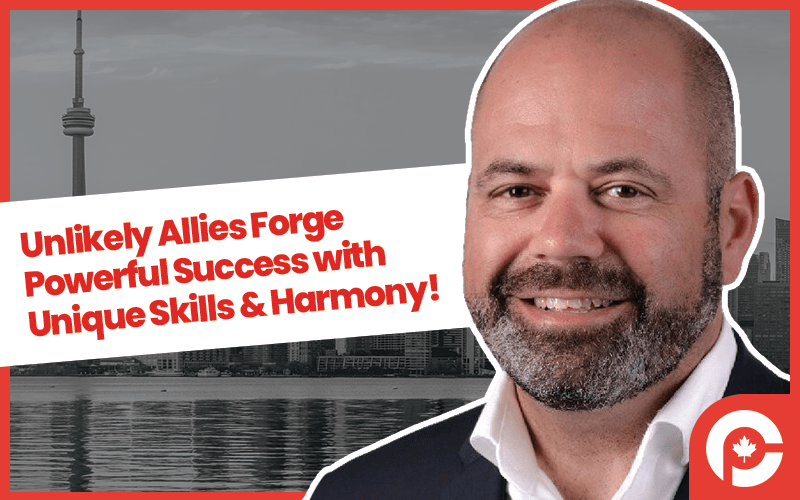
Episode
Tim Weber is CEO and Co-Founder of Diverso Energy, which helps developers of multi-family and commercial office buildings achieve...
Key takeaways
- Choose business partners with complementary skills rather than similar backgrounds, as diverse expertise fills gaps and creates a stronger foundation for success.
- When introducing innovative technology to traditional industries, understand that removing financial barriers alone won't drive adoption if there's no policy pressure or market demand forcing change.
- Before starting a business, have an honest conversation with your family about the real risks, including the possibility of losing everything, as entrepreneurship often requires years of sacrifice and uncertainty.
- Deep understanding of your client's actual pain points and barriers is critical—surface-level questions often yield surface-level answers that can lead you in the wrong direction.
- Tenacity and unwillingness to give up can compensate for many shortcomings in entrepreneurship, especially when quitting isn't an option and you're too far invested to turn back.
Transcript
Full transcript page · Interactive episode
============================================================
TRANSCRIPTION WITH SPEAKERS
============================================================

[00:00] SPEAKER_02: Welcome to Canada's podcast.
[00:06] SPEAKER_02: Hi, I'm Phil Bliss, co-founder of Canada's podcast and today we're coming to you from Toronto.
[00:12] SPEAKER_02: And we're going to meet Tim Weber, the CEO and co-founder of Diversal Energy.
[00:17] SPEAKER_02: Diversal helps developers of multi-family and commercial office buildings achieve sustainability
[00:23] SPEAKER_02: and energy reduction targets without the capital cost.
[00:28] SPEAKER_02: Diversal Energy also offers a unique geotherm utility model
[00:33] SPEAKER_02: converting the upfront costs to long-term operating expenses.
[00:38] SPEAKER_02: Tim has 25 years in the HVAC industry and 15 of those exclusively on geothermals.
[00:45] SPEAKER_02: Obviously, it has a broad knowledge of HVAC design and applications.
[00:49] SPEAKER_02: And I think it's going to be a very interesting interviewer.
[00:54] SPEAKER_02: This is a big area.
[00:56] SPEAKER_02: So Tim, welcome. It's great to meet you.
[01:00] SPEAKER_02: I'm looking forward to learning a little bit more about you.
[01:06] SPEAKER_02: And the energy business and specifically geothermal.
[01:11] SPEAKER_02: Because I don't think I think that's something nobody knows much about.
[01:14] SPEAKER_02: So it's kind of interesting to find out.
[01:18] SPEAKER_02: But before we get into that side of things, why don't you tell us a little bit about yourself,
[01:23] SPEAKER_02: who Tim is, what you do, how you got here today kind of thing.
[01:28] SPEAKER_00: Yeah, sure. Well, thank you for having me, Phil. It's pleasure to be here.
[01:32] SPEAKER_00: A little bit of background on myself and how it kind of ended up in this position.
[01:37] SPEAKER_00: I originally in my previous life was a heating air conditioning,
[01:43] SPEAKER_00: refrigeration technician. So I took the route of a trade after school.
[01:49] SPEAKER_00: And I did that for about 12 years.
[01:51] SPEAKER_00: And that point I had an opportunity to transition into the geothermal space.
[01:56] SPEAKER_00: So it was sort of a technical role training that kind of morphed into sales.
[02:02] SPEAKER_00: And then that morphed into more commercial industrial sales, both here in Canada and the US.
[02:08] SPEAKER_00: And as we're on that time, I realized this technology has a real problem.
[02:13] SPEAKER_00: We're trying to sell a technology that has a 40, 50, 60 year benefit.
[02:19] SPEAKER_00: But we're expecting someone to pay for it up front and realize no, no other energy source requires that.
[02:25] SPEAKER_00: You don't pay for 50 years worth of natural gas infrastructure up front or electricity.
[02:30] SPEAKER_00: You don't even buy cars that way, let alone energy.
[02:34] Speaker UNKNOWN: Yeah, so.
[02:35] SPEAKER_02: Yeah.
[02:36] SPEAKER_00: So, you know, at that point, I realized, you know, we had opportunities projects in the US where there was a three, four year payback or 20, 30, 40% return on investment.
[02:46] SPEAKER_00: And these clients still weren't doing it.
[02:49] SPEAKER_00: And a lot of the head to do with it wasn't that financially didn't make sense.
[02:53] SPEAKER_00: And they recognized the carbon and environmental benefits suggest did not work within the financial perform of their project didn't have backstats to the Capitol or they were concerned about the risk.
[03:02] SPEAKER_00: So in late 2014 decided to start a business called diverse energy where we essentially acted as a geothermal utility.
[03:14] SPEAKER_00: So the idea was to remove some of those, you know, perceived roadblocks or barriers to entry for the technology.
[03:21] SPEAKER_00: And we launched, I think early 2015 found a financial partner out of Quebec.
[03:29] SPEAKER_00: And that's kind of where we ended up today.
[03:32] SPEAKER_00: So that was the transition.
[03:43] SPEAKER_02: So when you say you, I'm interested in the business model.
[03:49] SPEAKER_02: When you say you're a utility, I mean, I looked at some of the background of the company and you're working with, you know,
[03:58] SPEAKER_02: large developers, what, I mean, who are you utility for those developers, the people in the building, things, what's this scenario?
[04:12] SPEAKER_00: Yeah, not much different than a conventional, you know, fossil fuel based or really any energy source.
[04:19] SPEAKER_00: We're utility in the fact that we design, we build the geothermal infrastructure that goes underneath the building, that geothermal energy source.
[04:28] SPEAKER_00: We pay for it, we own it.
[04:30] SPEAKER_00: And we essentially turn what would have normally been a capital expenditure into a long-term operational expense or an energy expense.
[04:38] SPEAKER_00: And the client is essentially is the developer or the owner of the building, whether it's a condo corporation or a rental.
[04:46] SPEAKER_00: And the idea was that, you know, removes that period entry and allowing geothermal to become mainstream.
[04:54] SPEAKER_00: At least that was the idea.
[04:56] SPEAKER_00: And as it turns out, we were completely wrong because nobody really wanted it.
[05:01] SPEAKER_00: And that's a whole other story.
[05:02] SPEAKER_00: But, you know, it's almost like, you know, when you think you, when you, when you think you've solved the problem, recognizing that the problem is actually something completely different.
[05:14] SPEAKER_00: So essentially, we created a really great Tylenol, not realizing no one had a headache.
[05:19] SPEAKER_00: Nobody needed to go green. Everyone said they wanted to go green.
[05:23] SPEAKER_00: As soon as those barriers, there was a little bit of, well, yeah, that's a great idea.
[05:28] SPEAKER_00: But, you know, we've been doing this the same way for 50 years.
[05:32] SPEAKER_00: Our condos, and this is the height of the condo boom in Toronto.
[05:36] SPEAKER_00: The condo selling out in a weekend.
[05:39] SPEAKER_00: There's no policy, no pressure.
[05:41] SPEAKER_00: And even though we removed the financial barriers and the risk, we still created a departure from the norm.
[05:48] SPEAKER_00: And, you know, not too much different than the automotive industry.
[05:52] SPEAKER_00: It didn't, didn't change for a long time until policy or, you know, someone like Tesla kind of forced that change.
[05:59] SPEAKER_00: And we were sort of at this early adoption stage where, you know, fortunately for us, there was a few early adopters out there, enough for us to keep the lights on and build a bit of momentum and a proof of concept.
[06:11] SPEAKER_00: Early days, but it was a real, it was a real challenge early days.
[06:16] SPEAKER_02: But, you know, you sort of got trained in an extremely good trade and knowing a few people in it and a fairly well paying trade for technicians.
[06:32] SPEAKER_02: What, why did you move to, you know, to entrepreneurship to risk?
[06:36] SPEAKER_00: Yeah, it wasn't intended. I found myself in a bit of a crossroad where I had this idea.
[06:44] SPEAKER_00: The company I was working with out of the US was essentially folding.
[06:48] SPEAKER_00: So I had, do I go back on the tools or go back to the residential geothermal market in Ontario was sort of, you know, I had kind of the industry of falling off a cliff.
[06:59] SPEAKER_00: And part of the Genesis business model as well was, you know, when I was in residential geothermal single family homes, there was a government incentive and the, you know, we could do no wrong.
[07:09] SPEAKER_00: I would argue we were successful in spite of ourselves.
[07:12] SPEAKER_00: And looking back, you know, that's what happens when you have a government incentive.
[07:17] SPEAKER_00: It's, it's a double edge sort. You kind of live and die by that same sort. And we marketed it very well.
[07:22] SPEAKER_00: And we did well. The minute that incentive disappeared, the industry went into a vacuum and and I kind of found myself transitioning into the commercial space.
[07:32] SPEAKER_00: That business folded. So either I go back on the tools or I move forward.
[07:37] SPEAKER_00: So it wasn't really something I intended on doing. It just, I didn't really have much of a choice back was a little bit against the wall.
[07:45] SPEAKER_00: And I also really believed in the business model, you know, as much as we were early, I really did believe it made sense.
[07:51] SPEAKER_00: And I really did believe that, you know, this is the way geothermal is going to become a mainstream technology.
[07:58] SPEAKER_00: And we were just probably six, seven years too early.
[08:04] SPEAKER_02: So, you know, you mean based on the number of developments you've done.
[08:12] SPEAKER_02: What's the greatest challenge you've faced in growing the business today?
[08:18] SPEAKER_00: Yeah, it's a great question. You know, there was multiple challenges.
[08:22] SPEAKER_00: I think one was just understanding our clients being, you know, real estate developers and, you know, what keeps them up at night and.
[08:31] SPEAKER_00: And, you know, what are their pressure points, pinch points and, you know, is really our objective to understand their business so we could rather than adding more to their already full plates.
[08:42] SPEAKER_00: How can we take things off of their plate?
[08:45] SPEAKER_00: And a lot of it to our biggest challenge to be honest with just apathy that a lot of developers, you know, we got probably 90 to 90 by 5% of meetings we would.
[08:54] SPEAKER_00: And everyone was willing to meet with us, but it was a pretty consistent response of love.
[08:58] SPEAKER_00: What you're doing, great business model, great idea. I'll call you when I have to do this. But in the meantime, I don't really want to change.
[09:06] SPEAKER_00: So, so selling it was a challenge. And then the other issue was just, you know, growing the business geothermal is incredibly complicated.
[09:13] SPEAKER_00: We're drilling 150 holes underneath a 3040 story building. We're doing an advance of construction. We're in the critical path.
[09:23] SPEAKER_00: And at the time we were outsourcing everything. So we were relying on, you know, outside trades, drillers and contractors.
[09:30] SPEAKER_00: You know, we did the design ourselves from our previous experience might, you know, two partners and I, but.
[09:35] SPEAKER_00: But relying on outside trades was a challenge. Selling was a challenge. Working with condoloyers because they've never seen this before was a challenge.
[09:45] SPEAKER_00: Construction managers were a huge challenge because this was all new to them. And again, the lawyers, developers, mechanical engineers, construction managers, those are all industries that are very resistant to change.
[09:56] SPEAKER_00: They're not known as being overly innovative. And we're introducing a very, very new, significant technology that represents significant change in a departure from the norm.
[10:07] SPEAKER_00: So we got, we kind of got resistance and kicked down from every direction. Really, it was, it was tough.
[10:16] SPEAKER_03: Don't be there having got there. It is a some kind of.
[10:21] SPEAKER_03: You know, key ingredient, if you like, that from that tough.
[10:28] SPEAKER_03: You know, slow start.
[10:31] SPEAKER_03: That.
[10:33] SPEAKER_02: Get you, you know, over the finish line service.
[10:38] SPEAKER_02: Yeah, it's.
[10:39] SPEAKER_00: If you're over over the finish line, I don't know. Well, yeah, I think we're over the finish line now as far as momentum and not feeling the pressure that, you know, you're going to lose your home and what have I done to my poor family.
[10:52] SPEAKER_00: But I think that is also the same thing that keeps you going. It, you realize, I think it's probably.
[10:59] SPEAKER_00: Results in the success of entrepreneurs, but also the fate of a lot of entrepreneurs, where you're so far. It's a bit of an infra a penny in for a pound, right?
[11:07] SPEAKER_00: And find yourself so far in that turning back is not an option. And I think, you know, in this case, that was a good thing because if I would have gone into this with a large safety net, I'm pretty confident.
[11:19] SPEAKER_00: I would have quit long before now. It was just too hard. But quitting wasn't really, you know, it's a bit of a cliche, but quitting wasn't really an option.
[11:26] SPEAKER_00: And I think without that, I'm not sure we'd be where we are today.
[11:31] SPEAKER_01: Join our thriving community of like-minded individuals who share a passion for success and innovation.
[11:37] SPEAKER_01: Canada's podcast.com subscribe now.
[11:39] SPEAKER_02: It is, I mean, within within the business itself, is this some key success factors that you found that have made success possible?
[11:53] SPEAKER_00: Yeah, for sure. I think the biggest one for me is is my partners. We have two partners and all three of us are our backgrounds are very different.
[12:02] SPEAKER_00: Our skill sets are very different. Philosophically, how we look at things are very different. I mean, there's enough overlap that it works.
[12:11] SPEAKER_00: But you realize business is a lot like a marriage and you don't want two people that are exactly the same because you don't accomplish much that way.
[12:19] SPEAKER_00: But, you know, I think between the three of us, there wasn't a lot of gaps. You know, whether, you know, one partner is an engineer and he's incredibly technically probably knows more about geothermal technically than anyone in North America.
[12:31] SPEAKER_00: He had done hundreds of systems. My strengths were understanding the market. I'm more of a 30,000-foot visionary learning how to sell, learning the industry, the opportunities, how to create value.
[12:43] SPEAKER_00: And the third partner is, you know, finance legal kind of the back end stuff and he's really good at that.
[12:49] SPEAKER_00: So we can't between the three of us, we were a pretty well oil machine and a pretty powerful force.
[12:54] SPEAKER_00: But, you know, we'd again just waiting for the market to catch up and, you know, to be able to leverage that.
[13:01] SPEAKER_00: So that, that was a, I think without that, we would not have been successful and is a lesson for me.
[13:07] SPEAKER_00: I talked to people, if you're going to pick a partner in business, do not pick someone the same as yourself.
[13:12] SPEAKER_00: Two engineers should not start an engineering firm. You know, an engineer in accounting, maybe, but not two engineers.
[13:20] SPEAKER_02: Those are business partners, so they're obviously shareholders like yourself.
[13:25] SPEAKER_02: I mean, is it, is this something you could have done, you know, as a solo pro no, or did you think it needs that?
[13:33] SPEAKER_00: I know. Not, no, not in zero percent chance. I would have been successful on my own.
[13:39] SPEAKER_00: And I, I don't know if I would have seen that at the time, I might have been bold enough to try, but looking back now, realizing what it took to get here.
[13:48] SPEAKER_00: There's zero percent chance I could have done it somewhere on.
[13:52] SPEAKER_02: So, you know, you, you've probably got some stuff that you've gotten, you know, mentorship, you know, the things that you, you, you use.
[14:03] SPEAKER_02: What's the best piece of advice that you've ever received that you can carry around in your back pocket and it's there kind of thing?
[14:14] SPEAKER_00: Yeah, I, I remember having a conversation with someone who started a similar business and he, he warned me that essentially, you know, when you're trailblazing, you basically, you know, you take all the heat, you take all the crap, right?
[14:31] SPEAKER_00: And, and you're going to pave the way and others are going to come along after you and you're going to be frustrated that it's easy for them because you did all the heavy lifting.
[14:40] SPEAKER_00: And there's just no way around that. And I think it just helped me mentally prepare for that.
[14:45] SPEAKER_00: And accept the fact that, you know, nobody asked us or told us to do this. We did it on our own accord and we took on the burden of being first in the industry.
[14:57] SPEAKER_00: And now that we are, we are, I realize there's a sense of pride and I wear that, you know, it's a little bit of a badge of honor even though, you know, it was required a lot.
[15:07] SPEAKER_00: We stubbed our toe a lot. There was a lot of, you know, failing forward just to use the usual cliches.
[15:14] SPEAKER_00: And, but, you know, I guess like anything in life, you know, if it's something you're truly proud of, it usually doesn't come easy.
[15:22] SPEAKER_00: Those things normally often, you know, mutually exclusive, right?
[15:29] SPEAKER_02: What do you see as your biggest challenge in, in, you know, your future as an entrepreneur?
[15:39] SPEAKER_00: Well, I don't know if I have a future as an entrepreneur. I feel like I've been there and done that. Now I just turned 51.
[15:48] SPEAKER_00: You know, I really now want to enjoy the business that I'm in and the market in our businesses at a point of maturity.
[15:57] SPEAKER_00: We recently, we sold a majority share of our business to a large fund out of Europe back in April.
[16:04] SPEAKER_00: And that's really given us the horse power to accomplish what we've always wanted to accomplish.
[16:09] SPEAKER_00: We've, our own drill rigs and we're growing very quickly.
[16:12] SPEAKER_00: And we now have access to both, you know, human and financial resources we didn't have before.
[16:18] SPEAKER_00: So I'm just, I'm just enjoying myself now. I'm kind of along for the ride.
[16:24] SPEAKER_00: So you're on the next phase basically.
[16:26] SPEAKER_00: Under the next phase and I'm quite happy to hand over the reins and just be part of it and enjoy the momentum that, you know, we worked so hard to create over the last decade.
[16:37] SPEAKER_02: That's cool.
[16:38] SPEAKER_02: Let's have some fun questions. Some, some really good, that, thank you. That was, that was some good, good stuff in there for people.
[16:47] SPEAKER_02: If you were kind of following on what you were saying, if you weren't doing what you're doing now, what would you be doing instead?
[16:56] SPEAKER_00: Yeah, you know, I looked back at my life before I got into business and when I was in the trade and, you know, I'm glad.
[17:05] SPEAKER_00: I'm certainly glad I had the opportunities I had and took advantage of those opportunities. But, you know, there's pros and cons.
[17:13] SPEAKER_00: There was so many days when there was no income coming in.
[17:17] SPEAKER_00: How do I pay the bills? How do I buy food? And I looked at these vans going by with ladders on the roof and I was incredibly jealous that they knew what they were doing that day.
[17:28] SPEAKER_00: They knew where their paycheck was coming. And I remembered back, you know what that, there's nothing wrong with that life.
[17:33] SPEAKER_00: I was completely content and happy working in that trade.
[17:36] SPEAKER_00: What I traded for what I have now, absolutely not. But I would have gone on and my life would have been fine and I would have been happy and content.
[17:47] SPEAKER_00: And, you know, it was, it was perfect.
[17:50] SPEAKER_02: Well, I mean, you built a business that, you know, realized through a degree on your technical background and understanding.
[17:56] SPEAKER_02: So I think that's, that's cool. So, so, yeah.
[18:00] SPEAKER_00: But you also, I think people don't often see, you know, and end it. And this, you know, that doesn't obviously apply to all businesses and all experiences.
[18:09] SPEAKER_00: But I think it applies to many. You also lose many years. And I think you have to ask yourself, how many years are you willing to compromise relationships, physical health, you know, the stress that this causes and the unknown.
[18:23] SPEAKER_00: And it's really, really hard. And, you know, if you can plow through that quick enough where it's sort of a blip and time and your overall life and then it's worth it.
[18:31] SPEAKER_00: But, you know, I think it's the reality you need to accept pointing into business. And I was talking to somebody recently about this. They were thinking also going into business.
[18:41] SPEAKER_00: And I kind of understanding what they were doing. Like that's a big leap. I just asked them straight up, you know, are you and your wife? If you talk to your wife, are you prepared to lose your house?
[18:50] SPEAKER_00: And it's a real question you both need to have and you both need to acknowledge that and say, like, yes, we understand this may involve losing everything.
[19:00] SPEAKER_00: You can't wait that question. I'm not saying it's going to happen, but it is something you need to wrap your head around going in.
[19:07] SPEAKER_02: Yeah, my father lost his house in the business.
[19:11] SPEAKER_02: There you go. I've run my businesses, but the house has never been on the line.
[19:15] SPEAKER_02: So I learned I learned always to have that in reserve away somewhere else.
[19:24] SPEAKER_02: Just a bit of fun. Are you a morning or a night person?
[19:29] SPEAKER_00: I don't really know if I'm either to be honest.
[19:31] SPEAKER_00: I'm certainly not a morning person.
[19:36] SPEAKER_00: I'm not one of those entrepreneurs who work 20 hours a day. I don't have those bragging rights.
[19:43] SPEAKER_00: You know, I had a family. I tried my best to balance my time.
[19:49] SPEAKER_03: Yeah.
[19:50] SPEAKER_03: You know, if you had to pick one word to describe him.
[19:56] SPEAKER_03: What word would it be and why?
[20:00] SPEAKER_03: Sorry, one word to describe you, me.
[20:04] SPEAKER_00: Oh, I think according to my mother ever since I was little, I was incredibly tenacious.
[20:12] SPEAKER_00: When I had my mind set on something, it was very difficult for my parents to convince me to move away.
[20:19] SPEAKER_00: And I think that tenacity and unwillingness to give up is probably what God has here today.
[20:26] SPEAKER_00: So I think, you know, I think probably, you know, I made up for a lot of shortcomings and just pure willpower and tenacity and grit, I guess.
[20:36] SPEAKER_01: With over 700 episodes and 500 news articles, we are your go-to source for all things entrepreneurship.
[20:44] SPEAKER_01: Canada's podcast.com subscribe now.
[20:47] SPEAKER_01: Well, I'm one last piece of advice to pass on.
[20:53] SPEAKER_03: What do you know now that you wish you'd known when you started the business?
[21:01] SPEAKER_03: Yeah, great question. I think.
[21:05] SPEAKER_03: Yeah.
[21:09] SPEAKER_00: I think probably the biggest one is, and it was a slow learn, but, you know, when you start a business where you're offering a service, especially something new, like what we were doing, you know, early days, I wish I would have had a better understanding of what those barriers were.
[21:29] SPEAKER_00: And kind of, you know, an opportunity to open the hood and really understand the real estate world, understand my clients.
[21:36] SPEAKER_00: And I kind of thought I understood them, but I really did it.
[21:41] SPEAKER_00: And I didn't go deep enough. I asked them some questions and they gave me answers.
[21:45] SPEAKER_00: And I thought those answers were real and they weren't. And I wish I would have had the opportunity to go deeper, because I would have done things very differently, much quicker.
[21:53] SPEAKER_00: I think it would have just, you know, accelerated what we were doing.
[21:59] SPEAKER_02: Interesting. Final question. What's keeping you up at night?
[22:05] SPEAKER_00: From a business perspective, it's the real estate market.
[22:10] SPEAKER_00: You know, we're at this interesting time right now where here in the greater Toronto area, there's policies in place, which have been amazing for us.
[22:20] SPEAKER_00: We're developers can no longer, you know, ignore technologies like geo-plurmal.
[22:25] SPEAKER_00: They're being, they now finally have that headache that we wish they had when we created our Tylenol.
[22:30] SPEAKER_00: Nine years ago, now they're coming, now they're coming looking for a solution.
[22:34] SPEAKER_00: So that's great. But at the same time that these policies kicked in, we saw a downturn, the real estate market, interest rates went up.
[22:42] SPEAKER_00: The condom market essentially fell off a cliff.
[22:44] SPEAKER_00: You know, those large pipeline of projects that are sitting on hold.
[22:49] SPEAKER_00: So I think, you know, we have this, we have money now, we have resources, we have momentum, we have a really well-willed machine, a fully baked business model.
[22:58] SPEAKER_00: But the industry that we're in is sort of on plots.
[23:04] SPEAKER_00: So that's a bit concerning. And I think it'll come around.
[23:08] SPEAKER_00: It's now, you know, can I find the patience to wait and can we as a business find the patience to wait?
[23:14] SPEAKER_00: I think, you know, 2025 will be a very different year, fingers crossed.
[23:18] SPEAKER_00: But the uncertainty around that and the fact we're spending a lot of money on resources, that's really what keeps me up at night.
[23:29] SPEAKER_02: Then, you know, how can people get a hold of you?
[23:33] SPEAKER_02: There's some very interesting stuff there. And you know, we have a large listener and viewer, viewer following.
[23:41] SPEAKER_02: If someone listens to this and wants to get a hold of you, what's the best way?
[23:46] SPEAKER_00: I mean, you're more than happy to pass on my email address. I'm on LinkedIn.
[23:52] SPEAKER_00: A lot of people reach out to me on LinkedIn. It's probably the easiest.
[23:58] SPEAKER_02: Well, you know, thanks very much for coming on Canvas Podcast.
[24:02] SPEAKER_02: I was really, there's some really great stuff that I really enjoyed.
[24:08] SPEAKER_02: It's a big business and it's interesting to hear how you have managed the growth.
[24:16] SPEAKER_02: It's very cool.
[24:17] SPEAKER_02: Yeah.
[24:17] SPEAKER_00: Well, I couldn't have done it without my partners and I couldn't have done it without the early adopters, you know, a bit of that shout out to firms like, you know, camera us and collective and, you know, when milled developments, you know, every entrepreneur with the new technology needs early adopters and fortunately found a few of those early adopters and, you know, without them, I don't think we could have kept the lights on.
[24:46] SPEAKER_02: Great Tim. Thank you very much. It's been great meeting you.
[24:49] SPEAKER_00: Yeah, it's quite a pleasure meeting you, Phil.