
Sugeevan Shanmuganathan
Episode
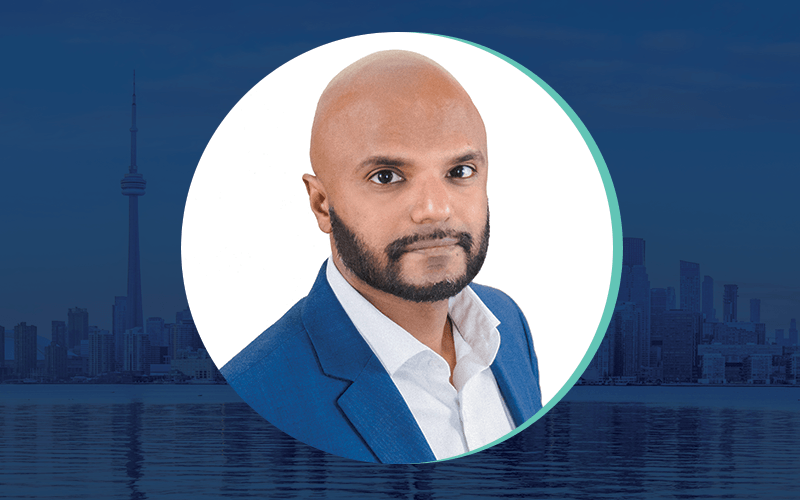
Sugeevan Shanmuganathan is Founder and CEO of The Dunya Project. The Dunya Project is designed to provide villages the power, technology...
Key takeaways
- Looking at nature and biomimicry can provide innovative solutions to complex problems, as demonstrated by the honeycomb-inspired design for scalable hydroponic systems.
- Building a strong support network of family, friends, and local accelerators like CSI and DMZ is essential for startup success, especially when working with limited resources.
- Start with short-term objectives and weekly targets to maintain momentum and hit milestones while developing long-term vision.
- Toronto offers unique advantages as a tech hub with its diversity, acting as "the world put together in a small space" with strong government support and accelerator programs.
- Prototyping doesn't require expensive infrastructure—testing your concept in available spaces like a garage can validate your technology before scaling to manufacturing.
Transcript
Full transcript page · Interactive episode
============================================================
TRANSCRIPTION WITH SPEAKERS
============================================================

[00:00] SPEAKER_01: It's Toronto's podcast on the Canada's podcast network.
[00:04] SPEAKER_01: Hi, I'm Angela Feibarnard coming to you from Canada's podcast
[00:07] SPEAKER_01: where you can listen, discover and engage.
[00:11] SPEAKER_01: We're talking to entrepreneurs who are making it happen here in Canada.
[00:15] SPEAKER_01: And today we're on location at the collision conference in Toronto
[00:18] SPEAKER_01: and I'm super excited to introduce Sanjeevan.
[00:23] SPEAKER_00: Sanjeevan, Shanmuganath.
[00:25] SPEAKER_00: Sanjeevan, Shanmuganath.
[00:28] SPEAKER_01: Shanmuganath.
[00:28] SPEAKER_00: There you go, you got it.
[00:29] SPEAKER_01: Say that three times fast, that's fantastic.
[00:31] SPEAKER_01: Originally, family from Sri Lanka,
[00:34] SPEAKER_01: but moved here to Canada when you were three.
[00:36] SPEAKER_01: Right?
[00:37] SPEAKER_01: So pretty much raised.
[00:38] SPEAKER_00: We were in Montreal for a while and then basically came to Toronto
[00:41] SPEAKER_00: for a sense thing.
[00:42] SPEAKER_01: So apologies for not getting it quite right, Moody.
[00:45] SPEAKER_00: You were super close.
[00:46] SPEAKER_01: A little bit about him, a bio.
[00:49] SPEAKER_01: So he is a founder and CEO.
[00:51] SPEAKER_01: I look forward to talking a little bit about your business here in Agtech.
[00:54] SPEAKER_01: As an innovator, he's traveled globally and seen the devastation
[00:59] SPEAKER_01: that food scarcity has on vulnerable communities,
[01:02] SPEAKER_01: sinking to provide a solution with the Dunya Project.
[01:06] SPEAKER_01: Dunya Project.
[01:07] SPEAKER_01: Dunya Project.
[01:08] SPEAKER_01: Prior to returning to school to complete a degree in digital futures,
[01:12] SPEAKER_01: he was a mechanical and piping designer for AMEC Foster Wheeler,
[01:17] SPEAKER_01: working an international mining and construction project for eight years.
[01:21] SPEAKER_01: So lots of manufacturing, engineering, and gather-than-air.
[01:24] SPEAKER_01: His background includes design engineering,
[01:26] SPEAKER_01: and he's worked on programming for robotic arms, prototyping,
[01:29] SPEAKER_01: 3D printing technology, motion caption sensors,
[01:34] SPEAKER_01: and is a former member of the Canadian Military Reserve.
[01:37] SPEAKER_01: So welcome to Canada's podcast.
[01:39] SPEAKER_00: Thank you for having us, Andrew.
[01:40] SPEAKER_01: So tell me a little bit, I mean, that's quite a background.
[01:43] SPEAKER_01: Wow, fantastic.
[01:44] SPEAKER_01: I just love to get inside your mind.
[01:46] SPEAKER_01: Can you tell me a little bit about your entrepreneurial journey?
[01:48] SPEAKER_00: So I started working at AMEC when I was 23,
[01:51] SPEAKER_00: worked my way up to become a mechanical designer there.
[01:54] SPEAKER_00: I was there for eight years, and then the recession hit.
[01:56] SPEAKER_00: Got laid off.
[01:57] SPEAKER_00: I didn't know what to do.
[01:59] SPEAKER_00: Decided to do photography.
[02:00] SPEAKER_00: Did that for a while.
[02:02] SPEAKER_00: I found OCAD.
[02:02] SPEAKER_00: I was like, you know what?
[02:03] SPEAKER_00: I'm going to go finish my degree at OCAD University.
[02:07] SPEAKER_00: And then we got into that.
[02:08] SPEAKER_00: And then in third year, there's the Halt Competition,
[02:10] SPEAKER_00: which is through the Clinton Foundation.
[02:12] SPEAKER_01: What was the composition?
[02:13] SPEAKER_00: The Halt Competition.
[02:14] SPEAKER_00: OK.
[02:15] SPEAKER_00: So it's through the Clinton Foundation.
[02:16] SPEAKER_00: It's about 10,000 schools around the world.
[02:18] SPEAKER_00: And their mandate was, how can you help refugees around the world?
[02:21] SPEAKER_00: And we came up with, OK, let's do hydroponics
[02:25] SPEAKER_00: to help people in refugee camps.
[02:27] SPEAKER_00: Because at the same time, my dad was back in Sri Lanka,
[02:30] SPEAKER_00: and he was building greenhouses to teach the local villages
[02:33] SPEAKER_00: how to farm and sell produce.
[02:36] SPEAKER_00: But those greenhouses were still affected
[02:38] SPEAKER_00: by the outside environment.
[02:39] SPEAKER_00: So drought would come, and it would fail.
[02:42] SPEAKER_00: So we looked at B-hives and bio-memory creed.
[02:46] SPEAKER_00: So we catered one unit.
[02:48] SPEAKER_00: So it's one hexagonal unit.
[02:49] SPEAKER_00: You could put in your backyard.
[02:51] SPEAKER_00: It grows around 1,000 pounds of produce.
[02:54] SPEAKER_00: Or you can connect multiple units together,
[02:56] SPEAKER_00: like a B-hive, and scale up for indigenous reserves, refugee camps,
[03:00] SPEAKER_00: or even in developing nations as well, right?
[03:02] SPEAKER_01: So I'm going to go back to you as an entrepreneur a little bit.
[03:04] SPEAKER_01: So since 2012, have you been working on this project?
[03:08] SPEAKER_00: No, I've passed two years now.
[03:10] SPEAKER_00: Two years, OK.
[03:12] SPEAKER_00: So I did my thesis on indigenous reserves
[03:14] SPEAKER_00: and food security in Nunavit.
[03:16] SPEAKER_01: In where?
[03:17] SPEAKER_00: In Nunavit.
[03:18] SPEAKER_01: Wow.
[03:18] SPEAKER_00: And how we can address that with hydroponic systems.
[03:21] SPEAKER_01: OK.
[03:22] SPEAKER_01: So you've got a Canadian thesis.
[03:24] SPEAKER_01: But where do you anticipate applying your technology?
[03:27] SPEAKER_00: Well, right now we're actually in Botswana.
[03:29] SPEAKER_00: OK.
[03:30] SPEAKER_00: We had gone there as part of the Canada Africa Business Conference.
[03:33] SPEAKER_00: We came back and they actually
[03:34] SPEAKER_00: said from the Ministry of Agriculture, hey, we want you guys back.
[03:38] SPEAKER_00: And we've signed an MOU with them
[03:39] SPEAKER_00: and working on the working agreements.
[03:41] SPEAKER_00: So we're doing two pilot sites, Gaborone and Francistown.
[03:44] SPEAKER_00: And the pilot sites will have our clusters, which
[03:47] SPEAKER_00: are seven units together.
[03:49] SPEAKER_00: And we're going to teach the farmers how to use it,
[03:51] SPEAKER_00: how to use our systems as well.
[03:53] SPEAKER_00: And then they get an accreditation and a subsidy
[03:55] SPEAKER_00: through the farmers.
[03:56] SPEAKER_01: Describe your day-to-day work routine right now.
[03:59] SPEAKER_00: Yeah, day-to-day we wake up, go for a small run.
[04:02] SPEAKER_00: So I've gotten my CEO and my CSO to all come for running as well.
[04:06] SPEAKER_00: We start the day, OK, figure out what we need to do,
[04:09] SPEAKER_00: or what are the objectives for the week.
[04:11] SPEAKER_00: So we're trying to think more in short terms as well.
[04:13] SPEAKER_00: So we're hitting those targets as well.
[04:15] SPEAKER_00: So while they're doing all the paperwork,
[04:17] SPEAKER_00: I'm usually in Brampton where our prototype is.
[04:20] SPEAKER_00: So I'm doing all the development, research there,
[04:23] SPEAKER_00: testing what's going to work further.
[04:25] SPEAKER_01: I'm trying to imagine, is it like, you're
[04:27] SPEAKER_01: building a prototype in a garage?
[04:29] SPEAKER_00: Yeah, so it's in my cousin's garage.
[04:32] SPEAKER_00: I had asked him, yeah, I had asked him two years ago,
[04:35] SPEAKER_00: hey, I'm doing a small school project and I use a garage.
[04:37] SPEAKER_00: And he's like, sure, I'm like, I just need a for a month.
[04:39] SPEAKER_00: Two years later, I'm still there.
[04:41] SPEAKER_01: And you guys are still talking?
[04:42] SPEAKER_00: Yeah, yeah, we're still talking.
[04:43] SPEAKER_00: He's doing renovation, so he's like, all right,
[04:45] SPEAKER_00: you got one more year until I kick you out.
[04:48] SPEAKER_00: So yeah, it was in his garage.
[04:50] SPEAKER_00: We finally moved it out last year.
[04:52] SPEAKER_00: And now the prototype's been working all throughout winter
[04:54] SPEAKER_00: time.
[04:55] SPEAKER_01: And what are you growing?
[04:56] SPEAKER_00: Let us, Arugula, you know, finish.
[04:59] SPEAKER_00: We're just testing out the basic ones that
[05:01] SPEAKER_00: will work in a vertical hydroponic system, testing what
[05:04] SPEAKER_00: works, what doesn't work.
[05:06] SPEAKER_00: And then our beta product is what we would be delivering.
[05:09] SPEAKER_00: So it's a manufactured version, right?
[05:10] SPEAKER_01: So you're going from uncle's garage, right?
[05:14] SPEAKER_01: With your prototype in Brampton to what's the rest of your day
[05:17] SPEAKER_01: look like?
[05:18] SPEAKER_00: Come back home, follow up on the emails.
[05:20] SPEAKER_00: I find it's a lot of emails.
[05:23] Speaker UNKNOWN: All right?
[05:23] SPEAKER_00: Yes.
[05:23] SPEAKER_00: It's sending a lot of emails back and forth,
[05:25] SPEAKER_00: talking to our advisors, our investment potentials as well.
[05:29] SPEAKER_01: Well, in a big fan of the Center for Social Innovation, too,
[05:32] SPEAKER_01: they kind of have led the scene in co-working,
[05:36] SPEAKER_01: in Toronto, it's fantastic.
[05:38] SPEAKER_01: And do you have a private office there in the team actually
[05:39] SPEAKER_01: gets together there?
[05:41] SPEAKER_00: It's an open works concept.
[05:42] SPEAKER_00: So everyone can come sit where they want.
[05:44] SPEAKER_00: Their space is based on you can book a meeting room.
[05:46] SPEAKER_00: So we usually book a meeting room every other Saturday,
[05:49] SPEAKER_00: the entire team.
[05:50] SPEAKER_00: So we have 10 members on our team.
[05:51] SPEAKER_00: 10 members team?
[05:52] SPEAKER_00: Yes.
[05:52] SPEAKER_00: So they all come in.
[05:53] SPEAKER_01: And physically everybody's in Toronto?
[05:54] SPEAKER_00: Yeah, physically everyone's in Toronto.
[05:56] SPEAKER_01: So it's so hard to meet a team anymore that isn't at least
[05:58] SPEAKER_01: partially distributed.
[06:00] SPEAKER_00: Yeah, it kind of worked crazy because my CEO was actually
[06:03] SPEAKER_00: my friend.
[06:04] SPEAKER_00: He was just like, you know, one day I was like,
[06:05] SPEAKER_00: why aren't you doing this as a business?
[06:06] SPEAKER_00: Why aren't you doing it as a startup?
[06:07] SPEAKER_00: It's a great idea.
[06:09] SPEAKER_00: So he kind of pushed me to do it more as a startup, right?
[06:11] SPEAKER_00: He's been our driving force as well.
[06:14] SPEAKER_00: And yeah, like he's been good motivator.
[06:16] SPEAKER_00: And we say now that his part time job is a doctor.
[06:19] SPEAKER_00: Because he is a full time doctor.
[06:21] SPEAKER_01: He's a doctor, like a medical doctor.
[06:22] SPEAKER_01: Yeah, he's a medical doctor.
[06:23] SPEAKER_00: He's doing that full time.
[06:24] SPEAKER_00: And he's been helping out as well.
[06:26] SPEAKER_00: Who thought?
[06:26] SPEAKER_01: Tell me a little bit about working in Toronto.
[06:29] SPEAKER_01: We'd like to showcase some of the distinctiveness
[06:31] SPEAKER_01: of communities that we work.
[06:33] SPEAKER_00: It is the new tech hub of North America.
[06:36] SPEAKER_00: Everyone always thinks of Silicon Valley,
[06:37] SPEAKER_00: but there are so many startups here.
[06:40] SPEAKER_00: Just by going to CSI or DMZ as well.
[06:43] SPEAKER_00: And there's so much passion here.
[06:45] SPEAKER_00: You can connect everybody.
[06:46] SPEAKER_00: And Toronto is basically the world put together
[06:48] SPEAKER_00: in a small space.
[06:49] SPEAKER_01: That's a great description.
[06:50] SPEAKER_01: The world put together in a small space.
[06:53] SPEAKER_01: Fantastic.
[06:54] SPEAKER_01: And you know, a lot of our ideas come when we're not working.
[06:57] SPEAKER_01: So where do you get inspiration and maybe a recharge
[07:01] SPEAKER_01: outside of working hours?
[07:02] SPEAKER_00: Just watching some podcast, YouTube videos.
[07:06] SPEAKER_00: Like a lot of, I like watching documentaries,
[07:07] SPEAKER_00: nature documentaries.
[07:09] SPEAKER_00: So by a mimicry which led to how our honeycomb design is
[07:12] SPEAKER_00: for the unit as well.
[07:14] SPEAKER_00: Just looking at how things are being made and constructed.
[07:17] SPEAKER_00: I always like to look at the details of things, right?
[07:20] SPEAKER_01: Let's talk a little bit about resources or events
[07:22] SPEAKER_01: or a network that somebody who's thinking about coming here
[07:25] SPEAKER_01: and doing business here.
[07:26] SPEAKER_01: What tips or resources would you say are essential
[07:29] SPEAKER_01: for somebody to tap into?
[07:30] SPEAKER_00: Yeah, I think our accelerators here are really good.
[07:33] SPEAKER_00: So there's CSI, DMZ, career destruction lab.
[07:37] SPEAKER_00: A lot of the universities have great resources.
[07:39] SPEAKER_00: And then even the garment has good programs that I found
[07:42] SPEAKER_00: that can help you, especially if you're a Canadian company.
[07:45] SPEAKER_00: And I've just heard that from investment in Canada,
[07:47] SPEAKER_00: they have a new branch that's helping international companies
[07:50] SPEAKER_00: do business in Canada.
[07:51] SPEAKER_00: So with the province and even the federal government
[07:53] SPEAKER_00: is doing a lot of work to bring that business here.
[07:56] SPEAKER_01: Okay, so investment Canada, accelerator,
[07:58] SPEAKER_01: anything else on a personal level maybe?
[08:00] SPEAKER_00: My sister's probably my greatest asset.
[08:02] SPEAKER_01: Wow, fantastic.
[08:03] SPEAKER_00: Don't let her hear this.
[08:05] SPEAKER_00: She worked in public relations and government for so many years.
[08:10] SPEAKER_00: And I feel like she knows everybody.
[08:12] SPEAKER_00: From Justin Trudeau to the minister walking down the street.
[08:16] SPEAKER_00: She's been my greatest networking and asset.
[08:19] SPEAKER_01: Now I just have to comment because you've talked about
[08:22] SPEAKER_01: your uncle supporting you, your niece supporting you,
[08:25] SPEAKER_01: your sister, I mean, the importance of family.
[08:28] SPEAKER_01: What is that like for you?
[08:30] SPEAKER_00: When you need them, they're there for you, right?
[08:33] SPEAKER_00: Obviously everyone's working with sweat equity right now.
[08:35] SPEAKER_00: And I guess the vision has brought them together.
[08:38] SPEAKER_00: And I feel like they do believe in me as well.
[08:41] SPEAKER_00: And what I wanted to achieve and accomplish as well.
[08:44] SPEAKER_00: And even just asking my cousin who's garage were in,
[08:47] SPEAKER_00: he's not the type to do startups.
[08:49] SPEAKER_00: He's nine to five and works like that.
[08:51] SPEAKER_00: But even he's been like, okay, you know, you could do this.
[08:53] SPEAKER_01: Wow, how important is that, right?
[08:54] SPEAKER_01: As entrepreneurs, having people have our backs.
[08:56] SPEAKER_00: Yes, for sure.
[08:56] SPEAKER_00: And I think that's the thing, right?
[08:57] SPEAKER_00: Family is important and friends as well.
[09:00] SPEAKER_01: So some fun, rapid, fire questions.
[09:02] SPEAKER_01: Can you describe an impactful book
[09:04] SPEAKER_01: that you could recommend to others?
[09:06] SPEAKER_00: It's called Beacon 55, I believe.
[09:09] SPEAKER_00: It's been a while since I read it.
[09:10] SPEAKER_00: It's about a lone, a lone service man.
[09:13] SPEAKER_00: He's on a beacon in space by himself.
[09:16] SPEAKER_00: And it's this kind of a love story that happens there.
[09:18] SPEAKER_00: But also about the solitude that humanity will experience
[09:22] SPEAKER_00: when we go into space, right?
[09:23] SPEAKER_00: Interesting.
[09:24] SPEAKER_00: So space has always been an interest for me.
[09:25] SPEAKER_01: Is there a motivational quote that keeps you charged,
[09:28] SPEAKER_01: either on your wall or on your desk?
[09:29] SPEAKER_00: There's so many quotes from Carl Sagan, I can quote,
[09:32] SPEAKER_00: but I'm probably going to be paraphrasing it.
[09:34] SPEAKER_00: There's only one planet and we've got to take care of it.
[09:37] SPEAKER_00: So we have to work together as a family and community
[09:39] SPEAKER_00: as a globe and look after each other, right?
[09:43] SPEAKER_01: So you have a Dunya project.
[09:48] SPEAKER_01: Are they called Greenhouses?
[09:50] SPEAKER_00: Well, habitats.
[09:51] SPEAKER_00: We call them habitats, yes.
[09:53] SPEAKER_01: And you can put three foods in there that you grow yourself
[09:56] SPEAKER_01: and that was all you could ever eat.
[09:58] SPEAKER_01: What would they be?
[09:59] SPEAKER_00: I'd say lettuce, strawberries, and probably beans,
[10:03] SPEAKER_00: just because of the nutritional values.
[10:05] SPEAKER_01: If you were on a deserted island, so let's imagine
[10:09] SPEAKER_01: we're at Baffin Island in Canada's far north,
[10:11] SPEAKER_01: and there's nobody around.
[10:13] SPEAKER_01: You have no internet connectivity.
[10:15] SPEAKER_01: How long would you last on that island?
[10:18] SPEAKER_01: And what would you do there?
[10:19] SPEAKER_00: Probably build finest shelter first.
[10:21] SPEAKER_00: Build something to protect you from the elements,
[10:23] SPEAKER_00: then find the next resource.
[10:24] SPEAKER_00: I guess this is my military side speaking.
[10:27] SPEAKER_01: Right.
[10:27] SPEAKER_01: We've been through that training so find shelter,
[10:30] SPEAKER_00: find food, and then try to find help.
[10:32] SPEAKER_00: If that's what I'm looking for, if I just want to retire
[10:34] SPEAKER_00: there, maybe that too, right?
[10:36] SPEAKER_01: Just build your life there.
[10:37] SPEAKER_01: Fantastic.
[10:38] SPEAKER_01: Now let's assume that you had enough cell phone charge
[10:40] SPEAKER_01: to make one phone call and you decided
[10:42] SPEAKER_01: it's time to get off the island.
[10:43] SPEAKER_01: Who would you call?
[10:43] SPEAKER_00: Probably my sister to make sure she walks my dog.
[10:47] SPEAKER_01: Fantastic.
[10:48] SPEAKER_01: Thank you so much.
[10:49] SPEAKER_01: Thank you so much for joining me.
[10:50] SPEAKER_01: Yeah, absolutely.
[10:50] SPEAKER_01: This has been Angela Feigh Barnard from Canada's podcast
[10:55] SPEAKER_01: where you can listen, discover, and engage.
[10:58] SPEAKER_01: We love talking to entrepreneurs who are making it
[11:00] SPEAKER_01: happening in Canada and please connect with us
[11:04] SPEAKER_01: on Canada'spodcast.com.