
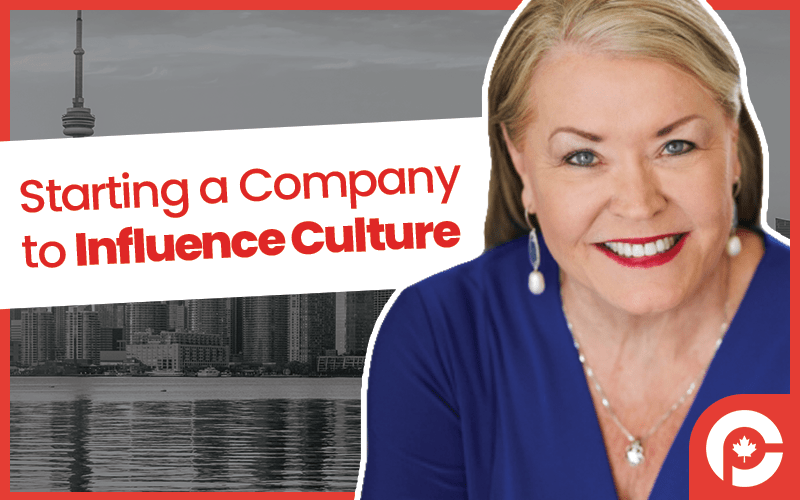
Starting a Company to Influence Culture
Episode
Sherry Shannon-Vanstone is the founder and current president and CEO of Profound Impact™️️️️️️ Corporation. Profound Impact is a tech...
Key takeaways
- Don't be afraid to ask for help from mentors and people who have experience in areas you're navigating, as most successful people are willing to share their insights.
- Entrepreneurs must be flexible and willing to pivot their business model when the market doesn't respond as expected, while staying focused on solving real customer problems.
- Building a company with strong core values and a respectful culture requires being at the founder level where you can truly influence the organizational DNA.
- Persistence is essential for entrepreneurial success, as every day brings new challenges whether you're growing, hiring, finding customers, or managing payroll.
- Trust in your own abilities and work ethic can help you take calculated risks, knowing that even if things don't work out exactly as planned, your dedication will lead to success.
Transcript
Full transcript page · Interactive episode
============================================================
TRANSCRIPTION WITH SPEAKERS
============================================================

[00:00] SPEAKER_01: Welcome to Canada's podcast.
[00:05] SPEAKER_01: Sharon, great to meet you and welcome to Canada's podcast.
[00:11] SPEAKER_01: As I ask everyone, just those, everyone knows who the heck you are.
[00:15] SPEAKER_01: Tell us a bit about your journey so far.
[00:18] SPEAKER_01: You know, why you started it, what you're doing now,
[00:21] SPEAKER_01: and what your future might be basically.
[00:25] SPEAKER_00: Well, thank you.
[00:27] SPEAKER_00: It's a lot to be here, heavy with you.
[00:29] SPEAKER_00: So I'll try to, and just cut me off because sometimes I'm rattle on about my journey because it's been an interesting one.
[00:37] SPEAKER_00: I won't start it too far back, but I had as an early child, I had an interest in mathematics.
[00:45] SPEAKER_00: And I grew up in the US, and there was a standardized test.
[00:52] SPEAKER_00: You took it fifth grade, and I scored tenth grade on it and level.
[00:57] SPEAKER_00: And then pretty much I didn't listen to other people.
[01:02] SPEAKER_00: I just said, I know I'm good at this.
[01:04] SPEAKER_00: I did have some good teachers in high school and junior high, and they encouraged me.
[01:10] SPEAKER_00: And then on to university, but it was just like I felt really comfortable in my skin with this.
[01:16] SPEAKER_00: And I said, well, you know, you're a woman. How did you get mathematics?
[01:19] SPEAKER_00: I said, well, it's because I really did enjoy it.
[01:22] SPEAKER_00: I liked it.
[01:24] SPEAKER_00: And so when I graduated from graduate school with the master's degree in mathematics,
[01:30] SPEAKER_00: I was a little offended because people offered me jobs to go back to school and become an engineer.
[01:38] SPEAKER_00: I'm a mathematician, don't you know?
[01:41] SPEAKER_00: We really know how to create formulas instead of just memorize them.
[01:45] SPEAKER_00: Yeah, I know.
[01:48] SPEAKER_00: So I was thrilled when I found a job that I could use by mathematics.
[01:53] SPEAKER_00: And I worked as a cryptologic mathematician with the US government.
[01:59] SPEAKER_00: And that meant I made codes and broke codes and encryption codes.
[02:03] SPEAKER_00: So it was wonderful time.
[02:07] SPEAKER_00: I spent six years there,
[02:10] SPEAKER_00: able to work on really interesting projects.
[02:13] SPEAKER_00: And then my last couple of years there, I became a liaison with the Department of State.
[02:18] SPEAKER_00: And I dealt with a lot of information security company that I was doing this type of saying work for the commercial and the commercial world.
[02:27] SPEAKER_00: And I was introduced to a company in Silicon Valley.
[02:30] SPEAKER_00: And I decided what I was at with the US government.
[02:35] SPEAKER_00: I knew I had the best job.
[02:38] SPEAKER_00: That last job I had there was the best job.
[02:40] SPEAKER_00: It fit my personality.
[02:42] SPEAKER_00: I love the travel.
[02:44] SPEAKER_00: And then when my boss is boss told me,
[02:47] SPEAKER_00: you're going to have to leave here to move up.
[02:50] SPEAKER_00: Leave this office to move up in this position to move up.
[02:53] SPEAKER_00: I said, well, I'm going to move on.
[02:56] SPEAKER_00: So I decided I was going to put my trust in myself.
[03:02] SPEAKER_00: And I went to the Silicon Valley company and I said,
[03:05] SPEAKER_00: what do you want to do, Sherry?
[03:07] SPEAKER_00: Because there is information security company.
[03:09] SPEAKER_00: So I could do certain technical things with them.
[03:12] SPEAKER_00: I wrote a couple of algorithms for them and things like that.
[03:14] SPEAKER_00: But I really wanted the business side.
[03:17] SPEAKER_00: I wanted to be on the develop this design.
[03:19] SPEAKER_00: And so I said, I want to be ahead of Asia Pacific and South America.
[03:25] SPEAKER_00: And I spoke Spanish.
[03:26] SPEAKER_00: I lived in Costa Rica for a year.
[03:29] SPEAKER_00: And so they said, yes, go ahead, do it.
[03:33] SPEAKER_00: They did.
[03:33] SPEAKER_00: I mean, it's so interesting because I just, it's just that.
[03:37] SPEAKER_00: They, they never said, and this was a maldominated company.
[03:41] SPEAKER_00: But they never said, well, and why do you want to do that?
[03:44] SPEAKER_00: You know, they didn't question me.
[03:45] SPEAKER_00: They just let me do it.
[03:46] SPEAKER_00: It was, it was fantastic.
[03:48] SPEAKER_00: I dealt with 13 different countries in Asia Pacific.
[03:52] SPEAKER_00: I finally had to give up Latin America because it was just too much for me.
[03:56] SPEAKER_00: And we were going so quickly.
[03:58] SPEAKER_00: I was setting up distribution channels, working with partners in Asia Pacific.
[04:02] SPEAKER_00: So I really, truly enjoyed it.
[04:05] SPEAKER_00: The work.
[04:06] SPEAKER_00: I thought hard for my people, especially the women who work for me.
[04:11] SPEAKER_00: Because the company, the Silicon Valley culture at that time is quite toxic.
[04:20] SPEAKER_00: I could handle that.
[04:20] SPEAKER_00: I could stand up for myself.
[04:22] SPEAKER_00: I was strong enough.
[04:23] SPEAKER_00: A strong enough woman.
[04:24] SPEAKER_00: I really believed in that.
[04:25] SPEAKER_00: I had a strong background in the technology.
[04:29] SPEAKER_00: But I saw how other people were treated at the company.
[04:33] SPEAKER_00: And I made my mind out that I wanted to go be at a company where I could influence the culture.
[04:39] SPEAKER_00: I wanted to make sure that everybody was respected.
[04:43] SPEAKER_00: And so when I had an opportunity to come to Canada and become a star, part of a startup,
[04:49] SPEAKER_00: where I was, he had a VP level, then I said, why, you know, this is what I want to do.
[04:53] SPEAKER_00: I want to, I want to be at the management level and to influence the culture.
[05:00] SPEAKER_02: Interesting.
[05:01] SPEAKER_02: So.
[05:04] SPEAKER_02: What made you take the next step into, you know,
[05:09] SPEAKER_01: entrepreneurship and running your own thing?
[05:12] SPEAKER_00: Yes.
[05:14] SPEAKER_00: Again, you know, it was, I didn't get to, I didn't achieve what I wanted to with the company I think Canada for.
[05:24] SPEAKER_00: I was, I was one of the senior managers, but I wasn't the founder.
[05:30] SPEAKER_00: And I realized that to really influence the culture, it needed to be my company.
[05:37] SPEAKER_00: So when my, when my late husband and I, we were both, I was just consulting for Blackberry, Blackberry Acquired Certicum for 2009.
[05:48] SPEAKER_00: I was doing other work. I was, I was admitted to U of the VP of Mastercard, electronic commerce for Mastercard.
[05:55] SPEAKER_00: I worked with several of the banks for information security.
[05:57] SPEAKER_00: So I was working for Blackberry as a contractor in 2012.
[06:05] SPEAKER_00: My, my husband Scott, Blackberry, and then I did too.
[06:09] SPEAKER_00: And we decided that we wanted to start a new company, the two of us.
[06:13] SPEAKER_00: And we wanted to take the technology that we developed at Certicum.
[06:18] SPEAKER_00: And that's it.
[06:18] SPEAKER_00: Every cell phone today and take it to the driver's car and the, and the autonomous vehicle.
[06:24] SPEAKER_00: And so we did. And we, as soon as people heard that we were out there, we, we got, we got called by the US Department of Transportation saying, hey, we want you to be our security advisor for our new mandated crash avoided system that's using, got van stones technology.
[06:44] SPEAKER_00: So, but the reason I did it was, again, it comes back to my why and my why changes, it wasn't that I've had the same why, but I've always had the belief that the core values of respect for other people and that culture.
[07:00] SPEAKER_00: So, so I was able to achieve it with my own company.
[07:03] SPEAKER_00: And, and then Scott passed away in 2014. I continued to run the company. I build up it was absolutely a beautiful culture, granted team.
[07:16] SPEAKER_00: It was, it was really pretty awesome. However, in 2017, I was given an opportunity to sell the company to Robert Bosch operation.
[07:28] SPEAKER_00: And, and I chose Robert Bosch because they were private corporation owned by 97% is kind of thing was owned by a foundation.
[07:42] SPEAKER_00: And that foundation built schools and hospitals around the world with the right with their profit.
[07:46] SPEAKER_00: So, again, it comes back to why did I chose I'm sorry I didn't keep it and make it into a, you know, a unicorn with the under the Canadian banner.
[07:58] SPEAKER_00: But I felt it was a good time, especially what I was in the technology was for the automobile industry and a startup in that industry is very difficult because of the TCC the terms and conditions of every contract is quite owner resource star.
[08:18] SPEAKER_00: And I felt that I needed to be a part of a bigger company like Robert Bosch, which just was a tier number one tier one provider in the automotive space.
[08:29] SPEAKER_00: So, so we were doing the security for the out of mobile and it was being adopted.
[08:34] SPEAKER_00: And I that was one of the reason it would it would have been better if I could have just state kept it and and grow.
[08:41] SPEAKER_00: But I talk to people I talk to people they just said you can't get around it in this in this industry.
[08:51] SPEAKER_01: So, you sold it. I mean, you should make some money out of it.
[08:57] SPEAKER_01: Yes.
[08:59] SPEAKER_01: Why not say that's okay. I've done well.
[09:05] SPEAKER_01: Let's let's wind wind down a bit.
[09:09] SPEAKER_01: Let's do some.
[09:11] SPEAKER_01: I thought I thought I could do that.
[09:14] SPEAKER_00: I thought I could do it. I really did.
[09:16] SPEAKER_00: And when we found it, of course, I was a shareholder of CERTA Connerley days.
[09:22] SPEAKER_00: I did very well with it. My husband, my husband did very well with it too.
[09:27] SPEAKER_00: So when we found a transport innovation, we did we did it to give the money away.
[09:33] SPEAKER_00: So when I sold, we found, I mean, a trust point.
[09:37] SPEAKER_00: I gave most of the money away to hospitals and and universities and things like that.
[09:44] SPEAKER_00: And that was great. It was that's what my husband wanted to do.
[09:47] SPEAKER_00: I wanted to do. I had a lifestyle.
[09:50] SPEAKER_00: I can maintain it on the money I have.
[09:52] SPEAKER_00: I don't need a jet. I don't need this and that.
[09:55] SPEAKER_00: So giving the money away was our priority.
[09:58] SPEAKER_00: So when I sold the company, I stayed on a year for the transition.
[10:03] SPEAKER_00: And I retired March 31st, 2018.
[10:07] SPEAKER_00: And I thought this was it.
[10:10] SPEAKER_00: So now I'm going to do the things that I wanted to do.
[10:14] SPEAKER_00: Which is travel, play out more tennis, go to Florida for six months.
[10:18] SPEAKER_00: Go see my family who's all living in the US still.
[10:23] SPEAKER_00: But my sister who's in education.
[10:27] SPEAKER_00: She wanted to write a book about my, they has been Scott Pamiston.
[10:32] SPEAKER_00: And because he had this ability to go into a high school.
[10:37] SPEAKER_00: And even before the young students knew.
[10:40] SPEAKER_00: They're that they had the talent. He knew they had talent.
[10:45] SPEAKER_00: And so he would bring them to the University of Waterloo.
[10:47] SPEAKER_00: And then he would mentor them.
[10:50] SPEAKER_00: And then they would finish their undergrad and then he would take them on.
[10:53] SPEAKER_00: For graduate work. So they got there.
[10:56] SPEAKER_00: They they would see their master's degrees, PhD center.
[11:00] SPEAKER_00: And and men and women he mentored and supervised.
[11:05] SPEAKER_00: And she wanted to write a book about that, that ability to do that.
[11:08] SPEAKER_00: And she named it profound impact.
[11:11] SPEAKER_00: And so she was doing all this research on the, for the book, talking to his, you know, his former students, his academic children.
[11:19] SPEAKER_00: And then when I retired, she called me up and said, I'm sending everything to you.
[11:25] SPEAKER_00: For you to continue the book.
[11:29] SPEAKER_00: I didn't say anything at the time, but I, I contemplated and thought about it.
[11:34] SPEAKER_00: It wasn't me. It wasn't my idea. I wasn't.
[11:38] SPEAKER_00: I think it was a great idea for her, but not for me.
[11:41] SPEAKER_00: So I struggled with it for a while and then said, you know what?
[11:44] SPEAKER_00: This isn't just about Scott Van Stone.
[11:47] SPEAKER_00: This is about the University of Waterloo, Matt Falco.
[11:51] SPEAKER_00: And the, and their students and their, all the other researchers.
[11:55] SPEAKER_00: So why don't we tell the story that story, which is a dynamic story.
[12:01] SPEAKER_00: And not a static story, which is an ongoing and still building story.
[12:06] SPEAKER_00: And it's a global story.
[12:08] SPEAKER_00: And it touches almost every industry.
[12:11] SPEAKER_00: I met this one person who graduated from University of Waterloo.
[12:15] SPEAKER_00: And he was running Louis Vuitton, you know, the designer.
[12:20] SPEAKER_00: Yeah. And it's like, okay, you have a background in mathematics.
[12:24] SPEAKER_00: You have a degree in mathematics.
[12:25] SPEAKER_00: And you would have thought you would ever be in, you know, in New York City doing this.
[12:30] SPEAKER_00: So in Paris doing this.
[12:32] SPEAKER_00: So I think all these stories.
[12:34] SPEAKER_00: And those are, that's not a, I mean, there's much, much more impactful stories than that.
[12:39] SPEAKER_00: So I thought that's, that's, that's built a platform that we can use to connect people.
[12:48] SPEAKER_00: Connecting people, great people to do great things.
[12:51] SPEAKER_00: That's, that's our why.
[12:53] SPEAKER_00: And that's also visualized the impact not just.
[12:57] SPEAKER_00: We want to, we want to measure impact.
[13:00] SPEAKER_00: But let's visualize it through grass and different ways of telling the story.
[13:05] SPEAKER_00: Not just through a bunch of data.
[13:07] SPEAKER_00: So it was a data play.
[13:09] SPEAKER_00: And it was a visualization of that data.
[13:12] SPEAKER_00: And so that's how we started.
[13:15] SPEAKER_00: We found impact started and we had a product called connection impact.
[13:18] SPEAKER_00: We still have it.
[13:20] SPEAKER_00: And then we.
[13:21] SPEAKER_00: And we worked with our, and we still were selling to universities.
[13:27] SPEAKER_00: And in particular, there and I'm not engagement group.
[13:30] SPEAKER_00: To, to, to get the data.
[13:34] SPEAKER_00: And even the faculty students, if we don't, we don't put the researchers to about their impact.
[13:39] SPEAKER_00: So that product as far as we solid product and we thought it would, it would have a better.
[13:46] Speaker UNKNOWN:
[13:46] Speaker UNKNOWN: And we thought it would have a better.
[13:47] SPEAKER_00: Uptake that it did.
[13:48] SPEAKER_00: And then we found we just couldn't.
[13:51] SPEAKER_00: What we could charge for.
[13:52] SPEAKER_00: Charge for it.
[13:53] SPEAKER_00: And what would.
[13:55] SPEAKER_00: How much it cost us to set up each university.
[13:59] SPEAKER_00: Was more than.
[14:00] SPEAKER_00: Then, then we could.
[14:02] SPEAKER_00: It wasn't scumble.
[14:03] SPEAKER_00: I'll just say it wasn't.
[14:05] SPEAKER_00: Yeah.
[14:06] SPEAKER_00: But, but, but, but, but during that time, we're talking to our customer all the time.
[14:10] SPEAKER_00: And they said, but she know there's another way of telling our stories.
[14:12] SPEAKER_00: Why don't we look at our programming such as the University of Waterloo Co up.
[14:18] SPEAKER_00: Mm hmm.
[14:18] SPEAKER_00: Now, the University of Waterloo Co up again is a great impactful story.
[14:22] SPEAKER_00: One of the first universities to do to, to bring on this model.
[14:26] SPEAKER_00: And it's quite successful.
[14:29] SPEAKER_00: So.
[14:30] SPEAKER_00: So that was great.
[14:31] SPEAKER_00: We, we talked with this to them and they said, but they told us we don't have any feedback group.
[14:37] SPEAKER_00: Our students graduate from co up and then graduate from the university.
[14:42] SPEAKER_00: We're not the alumni office.
[14:44] SPEAKER_00: We're the co up.
[14:45] SPEAKER_00: We don't have a feedback.
[14:47] SPEAKER_00: What are we doing?
[14:50] SPEAKER_00: How are they?
[14:50] SPEAKER_00: Are they.
[14:51] SPEAKER_00: Is it.
[14:52] SPEAKER_00: Are.
[14:52] SPEAKER_00: Are there.
[14:53] SPEAKER_00: Are there.
[14:54] Speaker UNKNOWN:
[14:54] Speaker UNKNOWN:
[14:54] SPEAKER_00: Are there.
[14:54] SPEAKER_00: Are there.
[14:55] SPEAKER_00: Are there.
[14:56] SPEAKER_00: Are there.
[14:57] SPEAKER_00: Are there.
[15:01] SPEAKER_00: Are there.
[15:02] SPEAKER_00: Are there.
[15:05] Speaker UNKNOWN: Those have always been the chilling as we went there and this was stressful for me, especially as we were there near others.
[15:16] Speaker UNKNOWN: And yes, they came in and and.
[15:17] Speaker UNKNOWN:
[15:17] Speaker UNKNOWN: graduates were the greatest threat to the ladder in 한 service.
[15:23] SPEAKER_00: We took over the site.
[15:25] Speaker UNKNOWN: Just so we ended up hiking with HRÊ
[15:29] Speaker UNKNOWN:
[15:29] Speaker UNKNOWN: I saw it.
[15:29] SPEAKER_00: There was a fire.
[15:31] SPEAKER_00: I saw something that嚷,
[15:31] SPEAKER_00: one flight.
[15:32] SPEAKER_00: from it have been tremendously insightful.
[15:37] SPEAKER_00: And that's what the customer gets out of it.
[15:38] SPEAKER_00: They get the actionable insights.
[15:41] SPEAKER_00: So they can say, now we're gonna tweak this program
[15:44] SPEAKER_00: this way and that way.
[15:46] SPEAKER_00: And we work with Shad Canada,
[15:48] SPEAKER_00: probably no Shad Canada.
[15:49] SPEAKER_01: Yeah, absolutely.
[15:51] SPEAKER_00: Yeah, so we worked with them and looked at their alumni
[15:53] SPEAKER_00: and where they're at.
[15:55] SPEAKER_00: And again, for the same thing,
[15:57] SPEAKER_00: with the purpose of being a providing,
[16:02] SPEAKER_00: actionable insight into their programming.
[16:06] SPEAKER_00: And we still have that product.
[16:08] SPEAKER_00: We still have these customers with support.
[16:11] SPEAKER_00: We again, we use public data.
[16:15] SPEAKER_00: And if you don't wanna be found, you're not found.
[16:18] SPEAKER_00: So we can't, we couldn't get to 100%.
[16:21] SPEAKER_00: We can't find 100% of the people.
[16:24] SPEAKER_01: So Sherry, you've had such an interesting career.
[16:29] SPEAKER_01: You've been in the safest job in government security
[16:34] SPEAKER_01: into new ventures with the risk that that takes.
[16:43] SPEAKER_01: You should know this.
[16:44] SPEAKER_01: You're a mathematician.
[16:46] SPEAKER_01: You're great algorithms.
[16:50] SPEAKER_01: Entrepreneurs, why are definitely?
[16:54] SPEAKER_00: I think they are.
[16:55] SPEAKER_00: They definitely are.
[16:56] SPEAKER_00: And I do believe that there's a specific gene
[17:00] SPEAKER_00: that because they are risk takers.
[17:02] SPEAKER_00: And that was one of the things that when I didn't see it
[17:06] SPEAKER_00: as a risk though,
[17:09] SPEAKER_00: even when I went to California,
[17:11] SPEAKER_00: and I left that wonderful job
[17:12] SPEAKER_00: and with the US government,
[17:15] SPEAKER_00: and I went to California, I knew I could do.
[17:18] SPEAKER_00: I knew I'd be successful.
[17:20] SPEAKER_00: I said, I'll work really hard.
[17:21] SPEAKER_00: I'll be successful.
[17:23] SPEAKER_00: And but I wasn't writing the checks for everybody else.
[17:27] Speaker UNKNOWN:
[17:28] SPEAKER_00: That was that.
[17:30] SPEAKER_00: And then when I decided to do other things,
[17:31] SPEAKER_00: I like come to Canada, leave the US, come to Canada.
[17:35] SPEAKER_00: I said, you know what?
[17:36] SPEAKER_00: If I end up not working out in this job,
[17:40] SPEAKER_00: I'll find another job.
[17:42] SPEAKER_00: Even if it's flip in hamburger,
[17:43] SPEAKER_00: it's all being the best person
[17:45] SPEAKER_00: that's ever flipped a hamburger.
[17:47] SPEAKER_00: Because I know my worth that work ethic.
[17:51] SPEAKER_00: But when you are paying the payroll,
[17:57] SPEAKER_00: it's quite, it's scary at times.
[18:05] SPEAKER_00: And not in the sense of a horror movie,
[18:08] SPEAKER_00: but it's just like you get a little anxious
[18:10] SPEAKER_00: and you go, okay, how are we gonna do this?
[18:13] SPEAKER_00: How are we gonna be successful in this?
[18:17] SPEAKER_00: And we give it.
[18:18] SPEAKER_00: Many of us pivot.
[18:19] SPEAKER_00: What I'm telling you about profound impact
[18:22] SPEAKER_00: was we just, we had two products
[18:24] SPEAKER_00: and we just pivoted to a new product of research impact.
[18:28] SPEAKER_00: We can scale.
[18:30] SPEAKER_00: It's we have some major universities,
[18:34] SPEAKER_00: well, from Rene University of Waterloo,
[18:37] SPEAKER_00: using our product, piloting our product now.
[18:40] SPEAKER_00: But you gotta say, okay, I came up with this idea,
[18:43] SPEAKER_00: and I liked the idea, but the market
[18:46] SPEAKER_00: is it what I thought it would be?
[18:48] SPEAKER_00: So you have to be flexible, you have to be agile,
[18:51] SPEAKER_00: we all know that, you have to be resilient,
[18:53] SPEAKER_00: you have to be persistent,
[18:55] SPEAKER_00: and you really do have to say, I can do this,
[18:58] SPEAKER_00: you have to believe in yourself.
[19:00] SPEAKER_00: Because every day is a challenge.
[19:02] SPEAKER_00: It's a challenge in many different ways.
[19:04] SPEAKER_00: It could be new customers and growing and expanding.
[19:08] SPEAKER_00: Now I have to hire more people and how finding good people.
[19:12] SPEAKER_00: So, or finding new customers.
[19:13] SPEAKER_00: So, you know, all of these every day
[19:15] SPEAKER_00: there's a challenge being an entrepreneur.
[19:18] SPEAKER_00: So I do think you have to go in it with your eyes wide wide open
[19:23] SPEAKER_00: and I don't mean to discourage anyone from doing it
[19:26] SPEAKER_00: because it's wonderful and it's rewarding
[19:28] SPEAKER_00: and your impact can be tremendous
[19:30] SPEAKER_00: and you can build a company that has the cultures
[19:33] SPEAKER_00: and core values and that has a social,
[19:36] SPEAKER_00: that you have social responsibilities.
[19:39] SPEAKER_00: And you take those on as a corporation and as a team.
[19:43] SPEAKER_00: So, yes, I think we are wired differently
[19:46] SPEAKER_00: but I think there's, if most people have,
[19:50] SPEAKER_00: have some type, everything,
[19:52] SPEAKER_00: maybe there's degrees about pruneras and everyone.
[19:56] SPEAKER_01: So, we just come out time for a couple more things.
[20:00] SPEAKER_01: You know, I would like to talk about mentorship
[20:03] SPEAKER_01: and you know, we've all had mentors on our way.
[20:08] SPEAKER_01: You know, what's the best piece of advice that you've received?
[20:11] SPEAKER_01: You know that you carry around with you
[20:13] SPEAKER_01: and you go back to it and back to it and back to it
[20:18] SPEAKER_01: because it stuck there.
[20:21] SPEAKER_01: I think that kind of thing can be very helpful for others.
[20:26] SPEAKER_00: My one thing and I have to tell myself this too,
[20:30] SPEAKER_00: I remind myself, ask, don't be afraid to ask for help.
[20:34] SPEAKER_00: But if you want, I get asked a lot to be a mentor
[20:39] SPEAKER_00: in an unstructured way and I say,
[20:42] SPEAKER_00: let's meet once a month or meet every six months
[20:45] SPEAKER_00: and whatever and I've done that too.
[20:48] SPEAKER_00: I've asked people, maybe didn't call it a mentor
[20:50] SPEAKER_00: so if I just call him up and say, you know, Steve,
[20:53] SPEAKER_00: I really would like to belt some things off of you.
[20:59] SPEAKER_03: Right, right.
[21:00] SPEAKER_00: Especially, yeah, when I was selling my company,
[21:01] SPEAKER_00: I wanted to reach out to somebody who'd done it before.
[21:05] SPEAKER_00: And I can talk to lawyers and I can talk to, you know,
[21:08] SPEAKER_00: the best of my bankers and all,
[21:09] SPEAKER_00: but I wanted to talk to somebody that could help me.
[21:11] SPEAKER_00: So I ask and they really help, yeah, people say yes, they do.
[21:16] SPEAKER_00: There may be people who say, you know, honestly,
[21:18] SPEAKER_00: I just don't have the time right now,
[21:20] SPEAKER_00: but I never had that.
[21:21] SPEAKER_00: And I'm not asking a lot.
[21:22] SPEAKER_00: I'm not saying I, so I think it's that, it's that ask,
[21:26] SPEAKER_00: don't be afraid of that.
[21:29] SPEAKER_00: No, if you see somebody that you want to learn from,
[21:34] SPEAKER_00: like Linda Hasselblast, who I highly respect
[21:36] SPEAKER_00: and probably know her, I just, I did ask that I asked a little late.
[21:45] SPEAKER_00: If I had to ask her earlier, because Linda Mar is a tremendous
[21:50] SPEAKER_00: automotive parts company, right?
[21:52] SPEAKER_03: Yeah.
[21:53] SPEAKER_00: And I could possibly account my company, Canadian, if I would have
[22:00] SPEAKER_00: thought of that earlier.
[22:01] SPEAKER_00: And I knew her and I met her in meetings and all of that.
[22:04] SPEAKER_00: But I just didn't do it until later.
[22:07] SPEAKER_00: And I'd already gone down the path I couldn't reverse.
[22:11] SPEAKER_00: And it was just like, why didn't I,
[22:14] SPEAKER_00: why didn't I just ask her her opinion?
[22:17] SPEAKER_00: You know, I couldn't give her a retouch,
[22:18] SPEAKER_00: but I could just, you know, say, I'm thinking about doing this.
[22:22] SPEAKER_00: What do you think?
[22:23] SPEAKER_00: What advice would you give me?
[22:25] SPEAKER_00: Because your president's the other company.
[22:29] SPEAKER_00: And I didn't ask her.
[22:31] SPEAKER_00: And again, I think that's just, just don't be afraid to reach out
[22:38] SPEAKER_00: to the people.
[22:39] SPEAKER_00: And if they can help you ask them, yeah, ask them who could help you.
[22:45] SPEAKER_01: It was really good, really good.
[22:46] Speaker UNKNOWN:
[22:47] SPEAKER_01: It was really good.
[22:50] SPEAKER_02: So one more thing, if you had to just pick one word to describe
[22:57] SPEAKER_02: yourself, what would it be and why?
[23:05] SPEAKER_02: Persistent.
[23:08] SPEAKER_01: Assistant seems to go with entrepreneurship.
[23:11] Speaker UNKNOWN: Actually, yeah.
[23:12] SPEAKER_00: And I, yeah, that's almost, you know,
[23:17] SPEAKER_00: anonymous with that.
[23:18] SPEAKER_00: Yes, it's, and why do I choose that word?
[23:20] SPEAKER_00: I could choose work at because I really am a hard worker.
[23:24] SPEAKER_00: I could, I could say lucky because I've been lucky.
[23:27] SPEAKER_00: As you, we talked about earlier,
[23:30] SPEAKER_00: there is to be successful.
[23:33] SPEAKER_00: You need to, you need a lot of things to line up.
[23:37] SPEAKER_00: But the thing is that you can help line them up by the people
[23:40] SPEAKER_00: that you meet and asking for help.
[23:44] SPEAKER_00: But I, there's other words I could, I stubborn.
[23:51] SPEAKER_00: Other words, but persistent, I'll stay with that one.
[23:54] SPEAKER_00: Sounds better.
[23:58] SPEAKER_01: We've come to the end of our time.
[24:01] SPEAKER_01: But that's been really terrific meeting you.
[24:04] SPEAKER_01: You know, and some good stuff in there.
[24:07] SPEAKER_01: How can listen to get a hold of you if they want to watch the best
[24:11] SPEAKER_01: way to connect with you?
[24:14] SPEAKER_00: They can, they can reach me through LinkedIn.
[24:17] SPEAKER_00: I don't, I, my company has other social media, but my self is LinkedIn.
[24:23] SPEAKER_00: And they go to profound impacts website.
[24:27] SPEAKER_00: And just send, you know, ask them a lot of them.
[24:30] SPEAKER_00: They send an email through the, the, the, the info at,
[24:33] SPEAKER_00: absolutely.
[24:34] SPEAKER_00: at profound impact.com.
[24:35] SPEAKER_00: And they say, I want to connect with Sherry.
[24:37] SPEAKER_00: And it comes to me.
[24:39] SPEAKER_00: It won't get to me.
[24:40] SPEAKER_01: That's great.
[24:42] SPEAKER_01: Sherry, thank you so much for coming to Canada's podcast.
[24:44] SPEAKER_01: It's been been a real delight to meet you.
[24:46] SPEAKER_00: Thank you. Great meeting you, Bill.