
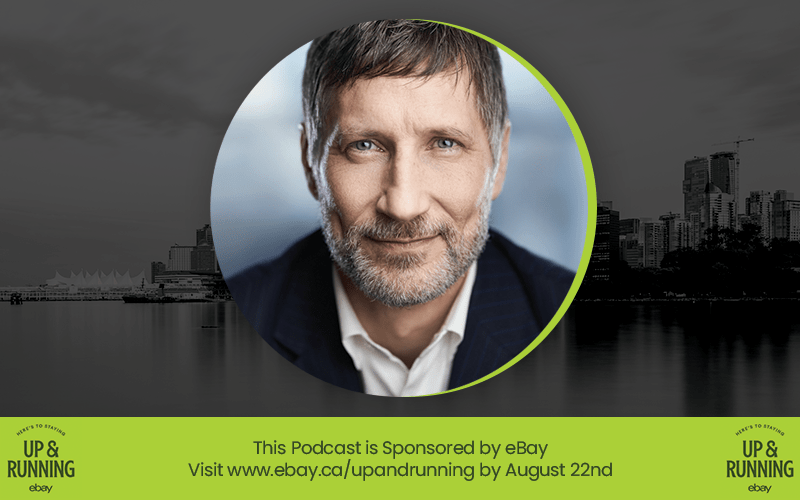
Roger Haskett is Founder of Engagement Unlimited and Has Acted in Over 100 TV Shows, Films and Commercials – Vancouver – Canada’s Podcast
Episode
Roger Haskett graduated from university, he had a BA in History, Professional Certificate for Teaching, BFA in Acting and a...
Key takeaways
- Network strategically and early by connecting with both potential clients and fellow entrepreneurs, rather than treating networking as a low priority.
- Start each day by focusing on your most important creative or strategic task before getting pulled into daily operational fires.
- Being an entrepreneur means accepting that self-doubt and disengagement are normal human responses to challenge, not signs of failure or weakness.
- Build your business around what genuinely excites you, because if you're not having fun on some level, the demanding entrepreneurial journey won't be sustainable.
- Entrepreneurs succeed by being selectively blind to how long things will actually take, allowing optimism to fuel the persistence needed to reach long-term goals.
Transcript
Full transcript page · Interactive episode
============================================================
TRANSCRIPTION WITH SPEAKERS
============================================================

[00:00] SPEAKER_00: This podcast is sponsored by eBay Canada.
[00:03] SPEAKER_00: eBay Canada is here to help.
[00:04] SPEAKER_00: They've been supporting Canadian small business retailers for 25 years
[00:08] SPEAKER_00: and have recently launched their up and running program
[00:11] SPEAKER_00: to meet an urgent need to get businesses online today.
[00:16] SPEAKER_00: New business sellers can get a free e-commerce store for 90 days
[00:19] SPEAKER_00: when they visit ebay.ca slash up and running.
[00:23] SPEAKER_00: Offer open until August 22nd.
[00:27] SPEAKER_00: Welcome to Canada's Podcast.
[00:29] SPEAKER_00: The number one podcast for entrepreneurs by entrepreneurs.
[00:34] SPEAKER_01: Hello, this is Robert Smile coming to today with Vancouver's podcast.
[00:38] SPEAKER_01: A member of the Canada's podcast network where we talk to the entrepreneurs
[00:42] SPEAKER_01: who are making it happen here in Vancouver, British Columbia.
[00:46] SPEAKER_01: When Roger Hasket graduated from university,
[00:50] SPEAKER_01: he had a BA in history,
[00:52] SPEAKER_01: professional certificate for teaching,
[00:54] SPEAKER_01: BFA in acting, and a master of arts in education.
[00:57] SPEAKER_01: Since graduating, Roger created and grew engagement unlimited,
[01:02] SPEAKER_01: acted in over 100 TV shows, films, and commercials like X-Files,
[01:09] SPEAKER_01: supernatural eyes on me, and became an international keynote speaker.
[01:14] SPEAKER_01: His award-winning talk, Pressure Cooker Confidence,
[01:18] SPEAKER_01: has been refashioned into a book and audiobook called The Me and You Want to Be.
[01:25] SPEAKER_01: Recently, Roger has been expanding on his book by consulting with clients
[01:30] SPEAKER_01: to create the company they want to be.
[01:34] SPEAKER_01: Roger lives in Vancouver, Canada with his amazing partner,
[01:38] SPEAKER_01: three incredible kids, and two personality cats.
[01:42] SPEAKER_01: Well, Roger, welcome to the show.
[01:45] SPEAKER_01: Thanks for taking the time today to be here for all our listeners.
[01:48] SPEAKER_02: Oh, thanks Robert for inviting me. I'm so excited.
[01:51] SPEAKER_01: Great. Okay.
[01:52] SPEAKER_01: I want you to tell us a little bit more about yourself,
[01:55] SPEAKER_01: where you're from, and give us the details on your current business.
[01:59] SPEAKER_02: Sure. I'm from Vancouver, so I was born and raised here,
[02:02] SPEAKER_02: born in North Van and raised mostly in Ladner,
[02:04] SPEAKER_02: so I consider myself a Vancouver boy.
[02:07] SPEAKER_02: And my business now, so I do a variety of things
[02:11] SPEAKER_02: that mostly are focused through my company engagement on limited,
[02:14] SPEAKER_02: for the most part now.
[02:16] SPEAKER_02: And basically, what we do is we create,
[02:18] SPEAKER_02: we through the, through entertainment,
[02:21] SPEAKER_02: team building and education, we create engagement in rooms,
[02:26] SPEAKER_02: so like in conferences and meetings, at events, at parties,
[02:30] SPEAKER_02: we create engagement that will increase your bottom line.
[02:33] SPEAKER_02: Whatever that bottom line happens to be,
[02:34] SPEAKER_02: whether it's more money for your business, like more sales,
[02:38] SPEAKER_02: whether it's more learning in the room, whether it's more networking,
[02:42] SPEAKER_02: we believe, like my company's called engagement unlimited
[02:45] SPEAKER_02: because we believe in the power of engagement.
[02:48] SPEAKER_01: So yeah, that's sort of what we do.
[02:50] SPEAKER_01: Okay. Now, did you need financing to start your company,
[02:54] SPEAKER_01: and how do you currently make money in your business now?
[02:57] SPEAKER_02: Sure. So financing wasn't even an option for me.
[03:00] SPEAKER_02: Like I never even considered it.
[03:02] SPEAKER_02: I built this company base.
[03:04] SPEAKER_02: You know, I sort of consider myself to be a reluctant entrepreneur.
[03:07] SPEAKER_02: Like I didn't go into owning a company
[03:11] SPEAKER_02: because I desperately wanted to own a company.
[03:13] SPEAKER_02: I went, I created a company because I desperately wanted
[03:16] SPEAKER_02: to do the things I wanted to do, which involved acting
[03:19] SPEAKER_02: and this idea of creating a new energy in the room
[03:24] SPEAKER_02: and changing the way people think about themselves,
[03:27] SPEAKER_02: changing the way they see themselves.
[03:29] SPEAKER_02: So, you know, really it was stuff that I financed myself.
[03:32] SPEAKER_02: And I guess I did have financing in the sense that I built up real estate,
[03:37] SPEAKER_02: a little mini real estate empire from when I graduated from university
[03:41] SPEAKER_02: that would, no matter what, would give me money enough that I could live
[03:46] SPEAKER_02: and throw off enough money that I could keep investing in my business.
[03:51] SPEAKER_02: So I guess I sort of self financed.
[03:52] SPEAKER_02: Okay. So you bootstrapped.
[03:54] SPEAKER_02: Yeah. Bootstrapped it totally, totally.
[03:58] SPEAKER_02: And then now we make our money through a variety of means,
[04:01] SPEAKER_02: but mostly through my company.
[04:02] SPEAKER_02: And we do that through, you know, working with conferences,
[04:06] SPEAKER_02: working with huge brands on their specific conferences,
[04:09] SPEAKER_02: or we work on association conferences or meetings,
[04:13] SPEAKER_02: we're now expanding, as I sort of indicated in the bio,
[04:18] SPEAKER_02: we're now sort of expanding into more consulting,
[04:20] SPEAKER_02: where we work on an ongoing basis with clients over the year
[04:24] SPEAKER_02: to start to create engagement within their team,
[04:28] SPEAKER_02: within their employees, or within their clients.
[04:32] SPEAKER_02: So we sort of are shifting where most of our work up until 2016
[04:37] SPEAKER_02: was really in rooms, like was in event rooms, in conference rooms.
[04:43] SPEAKER_02: So really we are all about what happened in that room
[04:45] SPEAKER_02: and making that room so powerful that it affected the rest of people's lives.
[04:49] SPEAKER_02: What we found over time is that our clients weren't satisfied with that.
[04:53] SPEAKER_02: They wanted more, like they wanted to have not just a conference once a year
[04:58] SPEAKER_02: that really made a difference to the people,
[05:00] SPEAKER_02: they wanted to see that difference on an ongoing basis.
[05:03] SPEAKER_02: So in the last couple of years, we've really started to,
[05:06] SPEAKER_02: mostly based on our clients asking,
[05:09] SPEAKER_02: we've really started to expand into this realm of now talking about the company
[05:13] SPEAKER_02: or the organization you want to be,
[05:15] SPEAKER_02: and how do you actually start to construct that using the sort of systems
[05:19] SPEAKER_02: that we created that work in the room?
[05:22] SPEAKER_02: So now we're just sort of expanding it to how does it work in your company
[05:25] SPEAKER_02: or in your office or within your team,
[05:28] SPEAKER_02: or even within your family.
[05:29] SPEAKER_02: Like there's lots of different applications for it.
[05:31] SPEAKER_02: So that's sort of where we make our money now.
[05:33] SPEAKER_01: Okay, what is the long-term vision?
[05:36] SPEAKER_01: And what will your company look like in the future?
[05:38] SPEAKER_01: Do you see the company expanding into other areas and where?
[05:41] SPEAKER_01: Beyond Vancouver, BC, or even Canada?
[05:44] SPEAKER_01: Yeah, totally.
[05:45] SPEAKER_02: So we have now, I have a small team,
[05:49] SPEAKER_02: like we have three full-time and one part-time,
[05:52] SPEAKER_02: and then we have a huge roster of incredibly talented performers that we draw upon.
[05:56] SPEAKER_02: But my vision is that we get to seven or eight people in our core office.
[06:02] SPEAKER_02: It's self-working on various divisions.
[06:06] SPEAKER_02: I have a brain that constantly is creating new ideas for things that we can do.
[06:11] SPEAKER_02: So I want more people around to help take those ideas and lock them into the world.
[06:17] SPEAKER_02: But we also have lots of our plans to create satellite offices outside of Vancouver.
[06:22] SPEAKER_02: So our first places that we're already talking about would be Alberta,
[06:27] SPEAKER_02: either Calgary or maybe BAMP,
[06:29] SPEAKER_02: maybe Edmonton, it's depending.
[06:31] SPEAKER_02: And Toronto, which would be the sensible ones.
[06:33] SPEAKER_02: And then I do a lot of work in the US.
[06:36] SPEAKER_02: So we have plans for that too down the road.
[06:40] SPEAKER_01: Okay, well, we've learned a little bit about you and your company.
[06:42] SPEAKER_01: So we want to talk about Vancouver now.
[06:45] SPEAKER_01: What are the biggest benefits for you and being an entrepreneur here in Vancouver, BC?
[06:49] SPEAKER_01: I want you to give us some of the good points about starting a company here.
[06:52] SPEAKER_01: But I also want you to give us some of the tough things or challenges for our listeners
[06:56] SPEAKER_01: so they can keep an eye out for them.
[06:58] SPEAKER_02: Sure, sure.
[06:58] SPEAKER_02: So I mean, the good things about Vancouver are pretty obvious.
[07:01] SPEAKER_02: I mean, it's a beautiful city.
[07:06] SPEAKER_02: I have a talk called the How to Think Like a Vancouverite.
[07:09] SPEAKER_02: And the basic point of how to think like a Vancouverite is that we are constantly slapped by beauty.
[07:14] SPEAKER_02: You look up and you're like, whoa, like look at how amazing the place we live is.
[07:20] SPEAKER_02: But that leads to, I believe, an amazing attitude in Vancouverites,
[07:25] SPEAKER_02: which is they demand work and life balance, not even work and life balance.
[07:30] SPEAKER_02: They demand harmony.
[07:30] SPEAKER_02: They demand harmony in their life so that it's not I'm going to work like a dog and then have a, you know, what life do I have.
[07:39] SPEAKER_02: People in Vancouver and the culture of Vancouver, I believe, really supports this idea that we reach for harmony.
[07:46] SPEAKER_02: And our life and our business life and our personal life must interact in a harmonious way.
[07:51] SPEAKER_02: I think that is an amazing quality that Vancouver has.
[07:54] SPEAKER_02: And it's no surprise that most Vancouver, it's like I was born here.
[07:59] SPEAKER_02: There's hardly any of us.
[08:00] SPEAKER_02: My wife is a perfect example of a, of a, of a true Vancouverite because she came here for a dance week when she was, you know, in her like early 20s.
[08:13] SPEAKER_02: And went back to Thunder Bay where she's from, packed up her car and drove back and said, you know, if I'm going to live in somewhere in Vancouver,
[08:19] SPEAKER_02: in Canada, why wouldn't I be living in Vancouver?
[08:22] SPEAKER_02: And so most people who live here choose to live here.
[08:25] SPEAKER_02: They choose it, which is a very powerful way to go through life choosing.
[08:30] SPEAKER_02: So those are the great things.
[08:33] SPEAKER_02: And the challenging things are this.
[08:36] SPEAKER_02: You know, most people know about this.
[08:38] SPEAKER_02: It's a really, it's really expensive in Vancouver.
[08:41] SPEAKER_02: Real estate amongst other things is crazy.
[08:43] SPEAKER_02: And so as an entrepreneur, I have to figure out how to make enough money to pay the salaries to allow people to live in this crazy expensive city.
[08:53] SPEAKER_02: While still only dealing with the Vancouver market for the most part.
[08:57] SPEAKER_02: Well, my company doesn't, we busted out of that a number of years ago.
[09:00] SPEAKER_02: But until we had, it's a challenge to go, we're going to make our money in Vancouver while still.
[09:06] SPEAKER_02: So giving people the resources to live here.
[09:10] SPEAKER_02: So that I think is a massive challenge to live in Vancouver.
[09:14] SPEAKER_02: But here's another one.
[09:15] SPEAKER_02: So let me tell you this story.
[09:16] SPEAKER_02: So in 2004, a musical that I had co-written with an amazing talented partner of mine.
[09:24] SPEAKER_02: Was chosen by Disney Studios and Seam Schwartz to be one of the top musicals in, of that year.
[09:30] SPEAKER_02: So in 2004.
[09:32] SPEAKER_02: So there were four that they chose across North America.
[09:34] SPEAKER_02: And we went down, we brought a whole group of performers down to LA.
[09:39] SPEAKER_02: And we went to Disney Studios and we performed segments of the musical.
[09:45] SPEAKER_02: So what happened there after we finished was there were, you know, 400 people in the room were like, you know, it's on Disney Studios.
[09:51] SPEAKER_02: We're standing next to Mickey Mouse Topiary.
[09:54] SPEAKER_02: Like it's mind-blowingly cool.
[09:57] SPEAKER_02: And at the end of it, we're swerved by people who are thrusting business cards into our hands going, we want to talk to you about this.
[10:05] SPEAKER_02: What can we do to help?
[10:06] SPEAKER_02: How can we be involved?
[10:08] SPEAKER_02: And there's this crazy synergy in the room of people trying to attach themselves to something that they see as immensely valuable, as something with potential.
[10:19] SPEAKER_02: So Flash Forward five years in 2009, our musical is chosen in Vancouver as one of the top musicals across Canada.
[10:25] SPEAKER_02: And so we're doing exactly the same thing.
[10:27] SPEAKER_02: We're performing snippets of it in Vancouver.
[10:30] SPEAKER_02: The difference is in LA, we had 400 people on Disney Studios.
[10:34] SPEAKER_02: Here in Vancouver, we had 40 people at the arts club theater.
[10:39] SPEAKER_02: And at the end of it, what happens is that we're not mobbed by people throwing or trying to thrust business cards into our hands.
[10:47] SPEAKER_02: Instead, people sort of drift up and go, wow, that's amazing.
[10:50] SPEAKER_02: That is an amazing show.
[10:52] SPEAKER_02: Maybe one of the best I've seen thums up, way to go, good luck, and they drift away.
[10:57] SPEAKER_02: And the next person drifts up and goes, way to go, that's an amazing show and they drift away.
[11:00] SPEAKER_02: And you're left at the end of the night going, where is the synergy?
[11:04] SPEAKER_02: Where is the energy?
[11:05] SPEAKER_02: Where are the people leaning in going?
[11:08] SPEAKER_02: Hey, you've got a great idea.
[11:10] SPEAKER_02: We want to be part of it.
[11:12] SPEAKER_02: So to me, that's a little bit of the challenge of being in Vancouver.
[11:14] SPEAKER_02: Is that we have a harmonious nature, but it's also laid back.
[11:19] SPEAKER_02: And so I believe that to be an entrepreneur and bank, entrepreneur and bank,
[11:23] SPEAKER_02: it means that you have to overcome those type of hurdles that are just sort of culturally present in our city.
[11:29] SPEAKER_02: So that's what I would say.
[11:30] SPEAKER_01: Okay. We do some of our best work outside the office.
[11:34] SPEAKER_01: Is there a place in the lower mainland close to where you live or work,
[11:37] SPEAKER_01: where you like to go recharge or get inspired and think about ideas or just think about your business?
[11:41] SPEAKER_01: And just change with the season considering all the rain we get here.
[11:49] SPEAKER_02: So yeah, like, so the easy answer to that is that, you know,
[11:52] SPEAKER_02: I love to go see some of the major attractions in Vancouver.
[11:56] SPEAKER_02: Like I love to go to Granville Island and take my kids there.
[11:59] SPEAKER_02: I love to go to commercial drive.
[12:00] SPEAKER_02: I like there's lots of places I love.
[12:01] SPEAKER_02: I love to go along the sea wall.
[12:03] SPEAKER_02: That's an amazing place to go and recharge.
[12:05] SPEAKER_02: But the truth is on a daily basis, what I do to recharge is just walk.
[12:09] SPEAKER_02: I walk around Vancouver.
[12:11] SPEAKER_02: If you don't know Vancouver, anywhere you walk is beautiful.
[12:14] SPEAKER_02: Like everywhere's trees, everywhere bushes, everywhere is green.
[12:19] SPEAKER_02: And so I just like so, you know, I tramp around my,
[12:23] SPEAKER_02: if I'm at my home office, I tramp around my house in East Vancouver.
[12:28] SPEAKER_02: And if I'm downtown, I walk around the sea wall.
[12:32] SPEAKER_02: So I do, I mean, I find that just getting out into the open air in Vancouver
[12:36] SPEAKER_02: and getting out of an office and into the fresh, I mean, neuroscience teaches us
[12:40] SPEAKER_02: that there's a tremendous value in being outside in nature.
[12:45] SPEAKER_02: And when you're in Vancouver, nature is right there.
[12:47] SPEAKER_02: So I do that all the time.
[12:49] SPEAKER_02: And so when it's rainy, I have to admit, at times, it's easy for me not to go for a walk.
[12:55] SPEAKER_02: But, you know, I'm a Vancouver, so I just have rain gear.
[12:57] SPEAKER_02: So, you know, I put on my rain jacket and I go for a walk.
[12:59] SPEAKER_02: It's not that big of the deal.
[13:01] SPEAKER_02: So yeah, that's sort of what I do.
[13:03] SPEAKER_01: Okay, we have a lot of international listeners.
[13:05] SPEAKER_01: So this next question I want you to speak to them.
[13:08] SPEAKER_01: If you were to start all over again and you just moved here to Vancouver, BC,
[13:11] SPEAKER_01: but this time you do not know anyone knowing what you know now, what would you do?
[13:17] SPEAKER_01: And how would you go about starting all over again as an entrepreneur?
[13:21] SPEAKER_02: Yeah.
[13:22] SPEAKER_02: So I heard on one of the previous podcasts, someone mentioned, I think it was Izzy mentioned,
[13:26] SPEAKER_02: that friends, like she was like, you know, as a person who arrived in Vancouver,
[13:30] SPEAKER_02: the first thing I would have done is reached out for friends.
[13:33] SPEAKER_02: And I give that a massive thumbs up.
[13:35] SPEAKER_02: Like, that's, I think, so smart.
[13:37] SPEAKER_02: But I'm from Vancouver.
[13:38] SPEAKER_02: So, you know, I had friends here.
[13:41] SPEAKER_02: So when I think about this issue, I thought I'd think about it a little differently.
[13:44] SPEAKER_02: So, so, to me, the difference that I would have made in my life that if I were starting this again,
[13:51] SPEAKER_02: what I would have done is I would have, I would have put networking way up at the top of the list
[13:57] SPEAKER_02: as opposed to being number eight or nine on the things that I should be doing.
[14:00] SPEAKER_02: And I would have worked my networks hard.
[14:03] SPEAKER_02: I would have gone out and, and I would have worked those networks in a variety of ways.
[14:07] SPEAKER_02: I would have networked with clients.
[14:09] SPEAKER_02: So that's what I do now.
[14:10] SPEAKER_02: I'm part of associations.
[14:12] SPEAKER_02: And those associations are mostly my clients.
[14:14] SPEAKER_02: So when I go there every time I'm interacting, I'm interacting with potential clients.
[14:18] SPEAKER_02: But what I also do is I would have totally, like I would have died deeper, faster and harder into the entrepreneurial network.
[14:30] SPEAKER_02: I would have reached out to other entrepreneurs.
[14:33] SPEAKER_02: But as I started by saying this, I didn't really think of myself as an entrepreneur until way later in the process.
[14:39] SPEAKER_02: I just thought of myself as someone who was, you know, who had to have a company to do the things I wanted to do.
[14:45] SPEAKER_02: So I would have switched the way I thought about it.
[14:48] SPEAKER_02: I would have thought of myself as an entrepreneur way up near the top.
[14:52] SPEAKER_02: Like, it's one, you know, instead of going on an actor, I'm a teacher, I'm a speaker, I'm an entrepreneur,
[14:56] SPEAKER_02: I would have put entrepreneurs like one or two.
[14:59] SPEAKER_02: And then the creative aspect, I would have like sort of slid into that as opposed to the other way around.
[15:05] SPEAKER_02: So I think that's what I would have done.
[15:07] SPEAKER_01: Okay. What does the first hour look like for you when you get up in the morning?
[15:10] SPEAKER_01: Do you have a specific, specific routine or a ritual that helps you get motivated to start your day?
[15:15] SPEAKER_01: Yes and no.
[15:16] SPEAKER_02: So the first thing I do is I, I look at, when I wake up, one of the first things I do,
[15:22] SPEAKER_02: if I don't have my little daughter crawling into bed with me, I'm not dealing immediately with kids,
[15:29] SPEAKER_02: I will check my phone and I will check Slack and I will check to make sure that there's nothing, you know, my email,
[15:35] SPEAKER_02: to make sure there's nothing that I need to focus on for the next while.
[15:38] SPEAKER_02: Because the first hour of the day I focus on my family as much as possible, you know, sometimes it's better, sometimes it's less.
[15:45] SPEAKER_02: But I, you know, I really believe that if I want to be at work and working the best I can, it is really good for me to start the day the right way.
[15:56] SPEAKER_02: And the right way is to start it with love and to start it with connection and to start it with joy.
[16:01] SPEAKER_02: So, you know, for my first hour as I get up and I play with my kids for a while, and I cook them cream a wheat if I'm making breakfast.
[16:10] SPEAKER_02: Or we hang out, well, my wife is making smoothies and we sit around the island area and we sort of play, we talk and play and we do that.
[16:19] SPEAKER_02: Once I get to work, which is, you know, an hour, either, you know, walking up my stairs or going downtown, then I have a slightly different process.
[16:27] SPEAKER_02: And I put usually my most important task at the start of the day, usually for me that's writing or some sort of creative process.
[16:37] SPEAKER_02: So I usually put that in my calendar and I try to do it right away because, you know, within 20 minutes of being at the office, who knows what's going to be happening.
[16:46] SPEAKER_02: So I really try to focus on the most important thing right away.
[16:49] SPEAKER_02: But that's after I'm checking with communication and I sort of engage with the team to make sure that everything is running the way it should be that.
[16:59] SPEAKER_02: Yeah, so that's sort of, you know, if that's a routine, that's my routine.
[17:04] SPEAKER_01: Do you think entrepreneurs have to be weird or unique in a positive way or wired differently?
[17:12] SPEAKER_02: I think that you can totally learn entrepreneurship if you want to, if you really want to.
[17:16] SPEAKER_02: You know, being an entrepreneur is crazy.
[17:20] SPEAKER_02: It's a crazy job for the most part. You work really hard to make your vision come true and, you know, whether it costs more takes longer as harder.
[17:29] SPEAKER_02: So yeah, you need sort of a, from that point of view, you need, you know, to have drive and you need to have self-motivated drive.
[17:39] SPEAKER_02: And you need to have a tremendous amount of self-belief or at least, because I, you know, I've talked a lot of entrepreneurs.
[17:48] SPEAKER_02: At least you need to have self-belief be present at part in part of your life because you can have tremendous amount of self-confidence and belief in what you're doing at 10 o'clock till 2 o'clock.
[17:59] SPEAKER_02: But at 3 o'clock, you can fall off the wagon and you can be like, oh my goodness, what am I doing and what's the like, how am I doing?
[18:06] SPEAKER_02: You know, this is so hard. So I do think that you need that sort of commitment, that sort of drive to be committed to what you believe in.
[18:17] SPEAKER_02: But I also believe that it's, it's normal and human to have the opposite feelings at times and go, you know, I'm crazy to do this.
[18:27] SPEAKER_02: Why was I doing this? And then, you know, you talk yourself off that limb and then you get back to doing the hard work.
[18:34] SPEAKER_02: I believe you can train people. So my son, my oldest, who's 14, we used to say to him, you know, he's having lemonade stands.
[18:42] SPEAKER_02: We go, if you want to pick any money, like, make some money, like, you know, we give you a little bit of an allowance, but if you want to make money to do something, you got to make it.
[18:48] SPEAKER_02: And so he would start with lemonade stands and at the end of it, I would go, so how was the six, you know, what success did you have?
[18:55] SPEAKER_02: And we talk about it and I'd say, what can you do to get more success? Like, you had people coming by and they didn't want to spend $3 on your lemonade.
[19:03] SPEAKER_02: So what's an idea around that? And so we started to talk about things that you could do. And so by the, you know, within a year, we had created a lemonade stand that had frogs. He had frogs at the time.
[19:12] SPEAKER_02: So he had, he would put his terrarium with frogs out there. So people would stop by and look at the frogs. And then they would be there for the lemonade.
[19:20] SPEAKER_02: And we changed the pricing. So rather than it being like $2 or whatever, we made it by donation. And so what we found is that people donated usually more than you asked.
[19:30] SPEAKER_02: So what I found is that by the time my kid was eight, he had already started to think about life as an entrepreneur does.
[19:41] SPEAKER_02: As not in, how can I, how can someone give me money so I can do the things I want, like an allowance, but rather, what can I do to get the money myself? And how do I be smarter so that I get more money faster and easier while I'm, you know, providing a service to people that they want?
[20:00] SPEAKER_00: This podcast is sponsored by eBay Canada. eBay Canada is powering Canadian small businesses go to eBay.ca slash up and running to open your online shop.
[20:12] SPEAKER_01: Let's talk about books and tools. What books are you reading now and why or even audio books? And can you recommend any books for listeners who are also aspiring entrepreneurs?
[20:21] SPEAKER_02: Sure. I read a lot of fiction. So that's the first thing is I spend most of my time reading fiction as much as I can. I believe there's tremendous value in fiction.
[20:31] SPEAKER_02: But when I'm reading nonfiction, some of the books that I've read in the last while that have really resonated with me, like changed the way I see the world would be the happiness advantage.
[20:40] SPEAKER_02: That's got to be way up there at the top. It's a great TED talk. You can watch it for 20 minutes and see if you want to get the book.
[20:47] SPEAKER_02: I, to me, that book is the first book I recommend in the last five years. It's the first book is I think it's so amazing. It teaches us that there's an advantage to being happy.
[20:58] SPEAKER_02: And that advantage is something you can use to reach for the success you want.
[21:02] SPEAKER_02: Another book I found really valuable sapiens, which is a history, a brief look at history. You know, it's like 400 pages long, so you know, not brief.
[21:12] SPEAKER_02: And that's a great book for you know, sort of challenging the way you think about things. The way you as a human use your brain to sort of see the world.
[21:24] SPEAKER_02: I found those things those tremendously valuable, but other books that I find like business books switch was a really good book for me. It's all about how to change like how to actually create change in people.
[21:34] SPEAKER_02: I really love the book how we learn. I'm a teacher. So, you know, this is in my, you know, wheelhouse, but how we learn is a, you know, a study of that we actually learn differently than what we think.
[21:50] SPEAKER_02: And we learn in much more interesting manner. And if we can start thinking about the way we learn in this way, we can start actually helping other people learn in a, I think this is my job. I help people learn. This is one of the things I do.
[22:02] SPEAKER_02: So those books I find really valuable rework was also a book I read many, many, many years ago that I found really resonated with me short, snappy chapters that were like, this is a way to think about this.
[22:15] SPEAKER_02: So I think that sort of covers books online or offline tools.
[22:20] SPEAKER_02: Okay, so we use Slack to great. We just started using that earlier this year. We love it. We use, I use Evernote. That's a huge one for me.
[22:31] SPEAKER_02: We have a customized version of file maker, which is our CRM that we customized over many, many, many years to sort of be exactly what we want.
[22:39] SPEAKER_02: And we use pipe drive for our, for our sales. And we just started using that in June and it's revolutionized our sales process and even our sales conversations.
[22:51] SPEAKER_02: I could, can't speak highly enough about pipe drive. But the offline tools that we use.
[22:59] SPEAKER_02: I really, I have my wall, my home office has covered the walls are covered in whiteboard wallpaper.
[23:06] SPEAKER_02: So I used to have whiteboards everywhere and I found them, valley super valuable, but you know, they're small, etc.
[23:13] SPEAKER_02: You only put so much on them. So I found a company that sells whiteboard wall paper. So I just whiteboard my office.
[23:19] SPEAKER_02: So I write on my walls all the most important things. And so, you know, location, location, location is super important when you're dealing with real estate.
[23:27] SPEAKER_02: And so, like, you know, I have stuff that I, if I turn my head when I'm at my desk, I turn my head to my right, which I do the most, I turns out, I have there my most important stuff.
[23:39] SPEAKER_02: So this is the, the, my, my success and challenge patterns that I have written here so I can keep them in mind.
[23:45] SPEAKER_02: I have my vision of where I want to be in one year, three years, five years, ten years.
[23:50] SPEAKER_02: I have just, you know, past that I have the beginnings of talks that I'm working on.
[23:56] SPEAKER_02: So I'm a real visual person. So I find that if I don't surround myself with the things that I want to be working on, like if they're buried in my computer somewhere, I just don't use them as much.
[24:08] SPEAKER_02: I don't, I don't think about them as much. But when I can just turn my head or turn my chair and see the things that are the most important to me right now, and they're splashed all over my wall,
[24:18] SPEAKER_02: as I have found that it increased my efficiency, my focus, my, my ability to push forward on the most important things.
[24:26] SPEAKER_02: It was like ridiculous how powerful it was. So I really encourage anyone. If you don't, if you're visual at all, get whiteboard wallpaper and see what it does.
[24:36] SPEAKER_01: I think it will do wonders. If you weren't doing what you do now, what would you like to do for a profession?
[24:42] SPEAKER_02: Yeah, that's a challenge because I'm a slash guy. I have a lot of slashes after my name, like actor, teacher, writer, director, entrepreneur.
[24:51] SPEAKER_02: So for me, when I find things that I want to do, I do them. Like, you know, honestly, like I, if I, if I'm like, well, I want to, I want to be a speaker now.
[24:59] SPEAKER_02: Well, so I, you know, five, eight years ago, I decided I was going to take speaking seriously. And I sort of, you know, turn my company to do the things I want.
[25:07] SPEAKER_02: That's the power of being an entrepreneur, I think. That's the joy of it.
[25:13] SPEAKER_02: So if I wasn't doing what I do now, I would be a politician. And I don't want to be a politician, but I believe the world needs it.
[25:20] SPEAKER_02: I believe that we have to change the way we interact with ourselves and our world. Otherwise, we won't have a world for us to inhabit or we'll have a world, but it won't be good for us.
[25:31] SPEAKER_02: So I think about this more and more that I wonder if this is the next direction for me, but I am not interested in being a politician.
[25:40] SPEAKER_02: I am not interested in that life whatsoever, but I do believe that politicians right now are essential to do the things that we need to do in this world.
[25:48] SPEAKER_02: So I might be willing to give up some of my, my time to do that.
[25:53] SPEAKER_01: What kind of a job would you not like to do? Could not do it.
[25:56] SPEAKER_02: I couldn't do anything that required repetitive routine as its main focus.
[26:01] SPEAKER_02: I couldn't do anything that doesn't recognize initiative as one of the cornerstones of what you do on a daily basis.
[26:08] SPEAKER_02: So there's a whole bunch of jobs that are out of my, I don't even consider because they're, because they're those things, not that they're not important, not that they're not valuable.
[26:18] SPEAKER_02: As a matter of fact, some of the most valuable people on my team are people who do exactly those things because I'm not so good at it.
[26:25] SPEAKER_02: I don't, it's not that I hold routine in disrespect. It's just that routine for me is akin to death.
[26:34] SPEAKER_02: And I don't know how to have that type of routine and still live the life that I want to live.
[26:40] SPEAKER_01: Okay, in business, what is your favorite word, quote, or sentence that you like to use?
[26:46] SPEAKER_02: Okay, I would say one that's resonated for years and years with me is a Peter Brock, quote, that says,
[26:52] SPEAKER_02: buy it off more than you can chew and chew like crazy or chew like hell, I think is what he says.
[26:57] SPEAKER_02: I believe that captures an entrepreneur's life in a nutshell.
[27:02] SPEAKER_02: I also think, I talked to a friend of mine in the event industry who about 10 years ago's career just started to like take off.
[27:13] SPEAKER_02: And I said to her, one, you know, we're having coffee and I said to hear what, what is it that you've done recently that changed, like that has brought about this change that I can see like it's so apparent.
[27:28] SPEAKER_02: And she said, you know, Roger, I, I just now live by these rules, be art this rule, be me publicly.
[27:36] SPEAKER_02: So she said, I didn't change anything I did. I did all the same things I did on a daily basis, but I just did it publicly.
[27:42] SPEAKER_02: So I did it more on Twitter. I did it more on social media. Like I let the world know what I'm doing.
[27:49] SPEAKER_02: And, and she said that changed everything. So since hearing that, that's one of the, the mantras I have to be me publicly to help like shoot, like try to push my growth along as fast as I can.
[28:06] SPEAKER_01: Okay, what is your least favorite word or sentence you do not like to hear?
[28:11] SPEAKER_02: Well, I don't like to hear no, but I guess I'm an improviser. See, it's crazy. I keep, you know, I'm a teacher. I'm an actor. I'm an improviser. These things are all true. This is by my slash guy.
[28:22] SPEAKER_02: But as an improviser, where we were taught a very important rule, which is yes and most people know this concept. You, whenever you're dealing in a collaborative fashion, the way to interact with people is to say yes and not to say no but or even yes but so some of my favorite words are yes and like so.
[28:43] SPEAKER_02: So hey, here's an idea. Why don't we figure out we should expand into Calgary. Yes. And we should figure out, you know, so you take the idea and you just build on it. It's, it's part of the sort of fight to be positive beliefs that I have.
[28:55] SPEAKER_02: So the word that I don't like then is when people say yes but because yes but sounds like a yes, but the butt is the important part. And the butt is really the no. So it's a great way of saying yes, no.
[29:09] SPEAKER_02: So the yes, but is a phrase that I would be happy hearing much less of what keeps you up at night if anything. Well, a number of things, my kids and worrying about them and worrying about the future that keeps me up at night.
[29:24] SPEAKER_02: In terms of entrepreneurship cash flow is is a challenge. It edgs and flows sometimes, but when it's a challenge, it's a real challenge that keeps me up at times.
[29:33] SPEAKER_02: I really spend a lot of time trying to figure out how to continue to make the company I have reflect my deepest desires and needs.
[29:45] SPEAKER_02: It seems strange to say that because you think if it's your company, it would be easy to reflect your deepest desires and needs, but it's not.
[29:52] SPEAKER_02: Companies take on life of their own. The structure is take on a life of their own. So I spend a lot of time trying to make sure that we are not going down paths that might be profitable, but are not the paths I want to go down.
[30:06] SPEAKER_02: So yeah, that sort of stuff keeps me out.
[30:08] SPEAKER_01: Okay, give us the top three things on your inspired lifeless. This could be like if you want to do a TEDx talk or you want to travel more philanthropy, right?
[30:16] SPEAKER_02: Yeah, I do certainly have some more books in me. That's for sure.
[30:25] SPEAKER_02: I really want to take my kids on a round the world trip on my family, all of us. When I was in grade four, my family went to Mexico for a year.
[30:35] SPEAKER_02: And I think it was so important for me to feel like to viscerally understand what it's like to be a visible minority.
[30:46] SPEAKER_02: I think that it's an amazing gift to give your children the knowledge of what it means to be an outsider and how there isn't really any outsider when we talk about humans.
[30:59] SPEAKER_02: Like whether your skin is darker or lighter, we're humans.
[31:03] SPEAKER_02: So maybe it's not a trip around the world. Maybe it's more like, you know, a month here and a month there.
[31:08] SPEAKER_02: But in places where we don't actually start belong, we don't belong at the start, but by the time we are leaving, we feel that this is somewhere we do belong.
[31:19] SPEAKER_02: I think that would be an amazing thing to give my kids and my wife and me.
[31:26] SPEAKER_02: And I have a lot of projects like I have a musical I mentioned. I got some TV shows and movies that I've written that are waiting for me to get enough clout to have them made.
[31:38] SPEAKER_02: So on my bucket list, I'd like to see some of those things made.
[31:42] SPEAKER_01: Do you have any advice that you may have received that you can pass on to entrepreneurs through British Columbia?
[31:50] SPEAKER_02: I think you have to go forward. I think you have to believe in yourself and go forward.
[31:54] SPEAKER_02: And I think you have to understand that when you don't believe in yourself, it's not a sign that you shouldn't believe in yourself.
[32:01] SPEAKER_02: It's a sign just that you're human and that you have ebbs and flows and that some, you know, you can't be fully engaged and charged with something without there being moments of disengagement.
[32:12] SPEAKER_02: You can't live a life fully engaged. You know, like we know that we need to sleep.
[32:18] SPEAKER_02: Like we need to have breaks. I would say that entrepreneurs need to understand this dynamic.
[32:25] SPEAKER_02: That even when they feel that they're not able to do the things that they used to think or that they just moments before believe that they could do, not to see that as a sign of weakness, not to see that as a character flaw, not to see that as something that shows them that they shouldn't do what they're doing.
[32:43] SPEAKER_02: But rather see it only as a human response to a challenging situation, which is the definition of what an entrepreneur is.
[32:51] SPEAKER_02: I, you know, entrepreneurs are put themselves into challenging situations. So, you know, expect that sometimes that challenge is going to bring you down and that that's totally fine.
[33:04] SPEAKER_01: Okay, Roger. Are you ready to have some fun?
[33:06] SPEAKER_02: I am. I already thought this was fun.
[33:08] SPEAKER_01: We're going to have lots of fun now. Okay, as you know, entrepreneurs are very, very busy people and we're always connected.
[33:15] SPEAKER_01: But we're going to take you away from all that. There's a small tropical island just off of Fiji that only has one phone booth there. There is no internet.
[33:22] SPEAKER_01: This place does exist.
[33:25] SPEAKER_01: We're going to drop you off there. You won't have a computer or a smartphone or tablet. You can use the phone booth located there any time to call the boat.
[33:31] SPEAKER_01: We'll come pick you up. How long would you last before you made that call? What would you do while you're there?
[33:38] SPEAKER_01: Sure. Do I like is my family there is a journey? No, you can take whoever you want. There's just no internet.
[33:44] SPEAKER_02: Awesome. Okay. So if my family say that that certainly stretches it out, I think that I could last.
[33:51] SPEAKER_02: You know, and I say the word last, right? Like, you know, because as an entrepreneur, as as me, it would be very easy to pick up that phone very quickly and say, come on, come on.
[34:00] SPEAKER_02: Let's get back into life. But if I were going to last any length, I would first last by taking a vacation, like, you know, enjoying the fact that I'm somewhere without internet and I've got my family there.
[34:10] SPEAKER_02: I'm not the sort of person that takes slow vacations very well. Like, you know, I'm like sitting on a beach for, you know, 14 days.
[34:20] SPEAKER_02: I was going to say four even four days is a long time. Like for me, four hours has set on the beaches a long time.
[34:26] SPEAKER_02: But if I could first take two weeks to spend time with my family, and then if I were able to go, okay, now I'm going to write my next book.
[34:33] SPEAKER_02: So I'm going to peel off maybe two to three or four weeks as a writers retreat. I think I could stay that long, maybe.
[34:40] SPEAKER_02: Without the internet, I don't know. That makes it very challenging. Like, could I do research? I don't know. That would make it more challenging.
[34:47] SPEAKER_02: But I think I could, you know, a month maybe, but, you know, that's stretching it. Maybe six weeks if I really could focus on writing. That's about it, I think.
[34:57] SPEAKER_02: And then you call the boat. I call the boat. Are you kidding? I'd have the boat waiting for me.
[35:01] SPEAKER_01: Okay. Six weeks. Okay. We're going to wrap things up. How can I listen to get whole of you? And is there anything you'd like to add before you leave us today?
[35:10] SPEAKER_02: Yeah, you can get you can get me a Twitter or you know, LinkedIn Roger Hasket, you know, search it online. There's only one other Roger Hasket that's right stuff.
[35:17] SPEAKER_02: And he's a psychiatrist in Eastern state. So, you know, find me pretty quickly. You can go to my website engagement unlimited dot CA. That's what it is dot CA.
[35:27] SPEAKER_02: You can go to my book website, the me you want to be dot com. But just type in Roger Hasket. Hasket is two T basket, but hasket with a T at extra T on the end.
[35:40] SPEAKER_02: And anything I want to leave it with. I don't know. You, this is a great interview for asking me a range of questions that really pull a bunch of things out of me.
[35:48] SPEAKER_02: But if are we're going to lead with anything? I don't know. Have fun. Like if you're not having fun while you're doing it, what are you doing? Like, you know, if you're not having fun, it's not going to, it's not sustainable.
[36:01] SPEAKER_02: Like if you're not enjoying it on some level, if you don't go, my God, this is fun on some level, then I don't don't do it, man. Like it's not worth it. Find something else that you like doing and do that.
[36:13] SPEAKER_01: Yes, because you're probably going to be doing it for long hours and long periods of time you need to motivate yourself. So you better be happy, right?
[36:21] SPEAKER_02: So like, you know the stat about, if most entrepreneurs had any realistic idea of how long it was really going to take them to do what they had in their head, 90% of us wouldn't do it.
[36:34] SPEAKER_02: But I believe that entrepreneurs are very good at being selectively blind. And I believe that this is a very good skill. I think this is a very powerful skill to be able to go, I'm going to ignore the fact that it's actually going to take me 10 years. And I'm going to believe it's going to take me two because that's going to give me the energy to get to 10 years.
[36:52] SPEAKER_01: Right. Okay. Roger. Thank you for coming on the show. I've learned a lot about you. And I'm sure our listeners have as well.
[36:59] SPEAKER_01: So sweet. Thank you for inviting me. Yeah. Well, thank you again. And we'll see you next time.
[37:05] SPEAKER_00: This podcast is sponsored by eBay Canada. eBay Canada is here to help. They've been supporting Canadian small business retailers for 25 years and recently launched their up and running program to meet an urgent need to get business online today.
[37:20] SPEAKER_00: New business sellers can get a free key call the store for 90 days when they visit eBay dot CA slash up and running.