
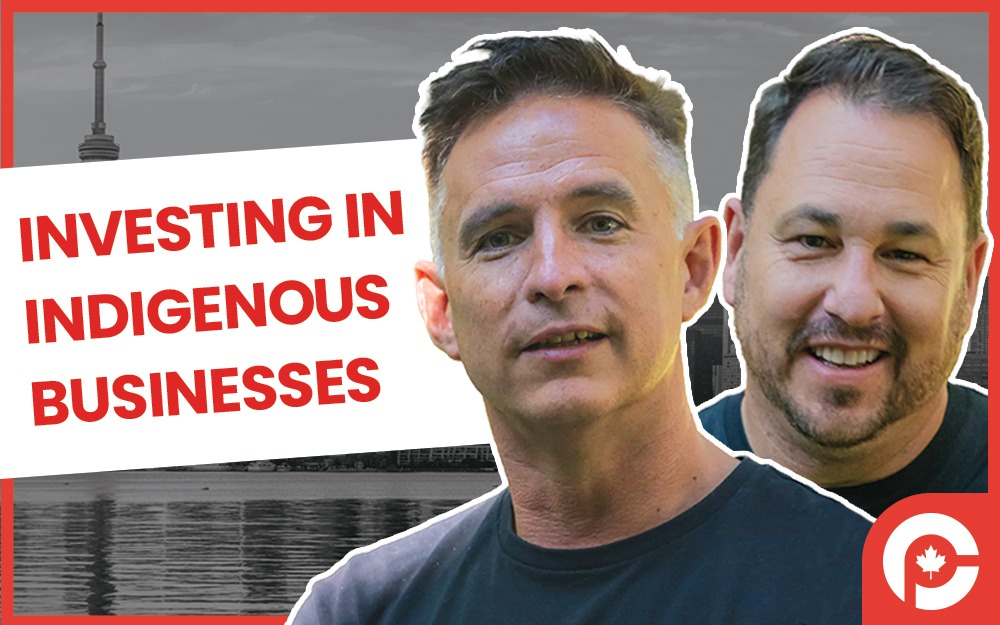
Indigenous entrepreneurs receive $25 million boost from world’s first Indigenous Impact Fund
Episode
The Raven Indigenous Impact Fund provides equity and equity-like capital to innovative, scalable, purpose-driven Indigenous enterprises. The Fund looks...
Key takeaways
- Raven Indigenous Capital Partners demonstrates that economics can be done differently by accepting lower returns (6-9% IRR versus typical 15-19% VC returns) to keep more value in the hands of indigenous entrepreneurs and communities.
- The biggest challenge for impact investors is shifting from a two-dimensional risk-return framework to a three-dimensional risk-return-impact model where impact is defined by indigenous people themselves rather than external stakeholders.
- Indigenous entrepreneurs historically have been invisible in venture capital ecosystems and struggle to access capital on terms that align with their cultural values and community priorities.
- For BIPOC fund managers, success requires standing firm on your values framework even when investors push for different approaches, and clearly defining what impact means in your specific cultural context.
- The solutions lab model brings together unlikely partners—First Nations communities, government, investors, and experts—to co-create community-driven solutions like outcomes-based financing for health challenges such as type 2 diabetes reduction.
Transcript
Full transcript page · Interactive episode
============================================================
TRANSCRIPTION WITH SPEAKERS
============================================================

[00:00] SPEAKER_00: Welcome to Canada's podcast.
[00:05] SPEAKER_00: So Jeff and Paul, welcome to Canada's podcast.
[00:08] SPEAKER_00: I'm really been looking forward to this session.
[00:12] SPEAKER_00: But before we get rolling, you know, we'll start with you, Jeff.
[00:16] SPEAKER_00: Why don't you just give us a little bit about who you are, who Jeff's here is.
[00:20] SPEAKER_00: You know, what you do at Raven, you know, what you're objectives are and things like that.
[00:26] SPEAKER_00: And Paul, maybe you can follow on from that.
[00:30] SPEAKER_02: Sure.
[00:31] SPEAKER_02: So thanks, Philip, for inviting us onto the podcast first and foremost.
[00:35] SPEAKER_02: And it's good to do a podcast with Paul together because they don't get that opportunity too much.
[00:41] SPEAKER_02: So as you mentioned, my name is Jeff Sear.
[00:44] SPEAKER_02: My, my traditional name is canoe canoe in an A, which means evil man leading.
[00:49] SPEAKER_02: I hail from the traditional Mati territory of the White Horse Plains area in southern Matatoba, which is the Buffalo Hunt staging ground.
[00:59] SPEAKER_02: I now live, work and sometimes play an unseated Algonquin territory here at Ottawa.
[01:07] SPEAKER_02: I am a, my, my mother is Vivian Sear and my father is Brian Sear, both back in our traditional territory.
[01:15] SPEAKER_02: And my wife is Nicole McDonald and I have five children, the pretty much all adult children at this stage go into university and I am the managing partner for Raven and digital capital partner.
[01:29] SPEAKER_02: So there, there's that sort of quick bio.
[01:33] SPEAKER_02: And I know Paul will do his and I will say very brief what your focus Jeff was in within Raven and ditches capital on this.
[01:45] SPEAKER_02: Well, you know, I, I, I guess my focus is on, you know, raising and deploying indigenous led capital into indigenous social enterprises for the benefit of our people to build a robust and resilient indigenous economy.
[02:03] SPEAKER_02: And that, you know, in my role, in particular, like Paul and others, but I'm focused on sort of the broad strategic interplay, ethical capital in the space, creating value with these companies, really doing something different with money than what's traditionally been extractive on and with our people and venture capital is traditionally extractive to since its emergence, you know, you know, in the late 70s.
[02:33] SPEAKER_02: And early 80s and Silicon Valley. So that's the role that I play. I also do a lot of work on social finance instruments, which we call community driven outcomes contracts and trying to lead some work around type two diabetes reduction in indigenous communities through a through a social finance mechanism.
[02:54] SPEAKER_00: Paul over to you.
[02:57] SPEAKER_01: Yeah, thanks, thanks for up and and like Jeff, I wanted to say and communicate our appreciation for it for the invite.
[03:08] SPEAKER_01: So, so I'm Paul assert my traditional name is Gilem Gilov, born and raised in my, my home territory, which is the carrier territory in North Central British Columbia and my, my first nation community is called not lay what 10.
[03:27] SPEAKER_01: And I'm a member of the caribou clan there, which, which holds great significance for me as we are a matrilineal society and we're a potlatch culture.
[03:41] SPEAKER_01: And so, yeah, as I said, you know, born and raised in my territory, I now live and work here in the traditional lands of the Laquan and speaking people, which is the Songies and the Squamalt First Nations.
[03:56] SPEAKER_01: Otherwise, no one has Victoria British Columbia.
[04:01] SPEAKER_01: And yeah, I'm a managing partner together with Jeff for Raven Indigenous Capital Partners.
[04:09] SPEAKER_01: We are an indigenous owned and indigenous led firm, I guess, and we're known as a financial intermediary.
[04:20] SPEAKER_01: And why that's important, I think, for Jeff and I and for our other partner, Stephen Naren, is that, you know, we're living in the space in between.
[04:30] SPEAKER_01: We're living and working in the space in between where the capital lives and where indigenous people live.
[04:37] SPEAKER_01: And as Jeff said, Philip, our, you know, the purpose for of our work and the intention of our work is to facilitate the flow of capital towards solutions in the indigenous space as defined by our people.
[04:54] SPEAKER_01: And so, being the first of our kind in Canada as an indigenous own financial intermediary and raising the first ever indigenous owned impact fund in Canada.
[05:08] SPEAKER_01: And we think, you know, at least in North America, if not in the world, it was important for us right away to define success through an indigenous cultural lens.
[05:20] SPEAKER_01: And through, you know, the eyes of real indigenous people in real indigenous communities in Canada.
[05:29] SPEAKER_01: And that has to a certain extent been about flipping the paradigm, both in what we're Jeff was saying around, you know, social finance arrangements and also just in a traditional investing space, shifting the paradigm so that it's really indigenous people that are in the driver's seat as opposed to government or investors.
[05:49] SPEAKER_01: And that's really the trajectory that we're on.
[05:54] SPEAKER_00: Just a little, you know, clarification for those unfamiliar with indigenous culture is why choose the name Raven.
[06:04] SPEAKER_00: You know, one of you can can jump in on that because people don't don't know the symbolism in terms of indigenous side of it.
[06:13] SPEAKER_00: And I'd like you people to be clear on that.
[06:16] SPEAKER_01: Yeah, I think I'll ask my brother to share a little bit about it as well, but I would say for two reasons from my perspective.
[06:27] SPEAKER_01: One is that, you know, in many indigenous cultures in Canada, we have, look, we have over 50 indigenous languages in Canada and many of them are as different from each other as range and German are from each other.
[06:41] SPEAKER_01: And, and of course, inside each of those indigenous cultures, you have resident epistemologies and teachings.
[06:48] SPEAKER_01: And one of the things that we wanted to find was something that is held to be sacred, an identity that is held to be sacred in indigenous cultures all over Canada and North America.
[07:03] SPEAKER_01: We call that Turtle Island and the Raven is really held to be something that is sacred in indigenous cultures all over Turtle Island.
[07:12] SPEAKER_01: And this is a coast to coast to coast, you know, approach.
[07:17] SPEAKER_01: And so we wanted to land on something that had sacredness and was recognized across Canada.
[07:24] SPEAKER_01: And the second is the spirit of innovation that folks often see a bit playful, you know, with the Raven.
[07:36] SPEAKER_01: Some people even say trickster, but at the core of it is really a recognition of the power of being generative and being innovative is really the spirit that, that, and the recognition that indigenous cultures all over Turtle Island.
[07:55] SPEAKER_01: When they think about and talk about the Ravens, so I don't know Jeff, if you have anything to add.
[08:02] SPEAKER_02: Yeah, just a, you know, I'm called a great job there.
[08:05] SPEAKER_02: It's one small thing is, you know, Ravens a central figure in a lot of creation stories too across Turtle Island.
[08:15] SPEAKER_02: And that comes to symbolize sort of transformation and rebirth out of that.
[08:22] SPEAKER_02: And the Raven is the symbol of that and it usually plays a key role in that.
[08:26] SPEAKER_02: And I think it's one of the things that attracted us to Raven as a name, representing what we are trying to do as a firm.
[08:34] SPEAKER_00: So, so I'm going to, I mean, you know, your entrepreneurs within this framework.
[08:41] SPEAKER_00: You know, what's being the biggest single challenge in the journey so far of Raven Capital Pond is, you know, pull you go first, whichever.
[08:58] SPEAKER_01: What has been our biggest single biggest challenge so far?
[09:04] SPEAKER_01: Yeah, I mean, I would say I really appreciate that question, Philip.
[09:09] SPEAKER_01: And I would say it's been a challenge and an opportunity for us, which is to, to enter into and participate in a system and a set of relationships that have been.
[09:26] SPEAKER_01: And I would say that we have, like, generational inertia around risk and return.
[09:33] SPEAKER_01: That, that, notwithstanding that we are working with folks in an ecosystem that want to use their money for good.
[09:43] SPEAKER_01: And there's this desire in the impact investing space to use, use money for good.
[09:49] SPEAKER_01: The systems that have been built around the way that that discipline is seen and perceived in the context of capital has largely been about risk and return.
[10:06] SPEAKER_01: And, and, and the, the responsibility that we have and the opportunity that we have is to shift that lens so that it's risk, return, and impact.
[10:21] SPEAKER_01: And that in the context of impact that we are able to grow a collective set of understandings and a collective set of values and priorities so that the impact that we're having makes sense for indigenous people.
[10:40] SPEAKER_01: We've largely been invisible.
[10:44] SPEAKER_01: You know, Philip, in the investing, particularly in the venture capital ecosystem, indigenous people have certainly not been positioned as investors.
[10:57] SPEAKER_00: Yeah.
[10:58] SPEAKER_01: And, and in large part, indigenous people have really struggled to gain access to all forms of capital.
[11:06] SPEAKER_01: And when we do gain access to capital, it is that terms based on terms defined outside of our interests.
[11:16] SPEAKER_01: And so there is an incredible amount of intergenerational structuring and inertia in reinforcing those systems.
[11:25] SPEAKER_01: And, and I would say our biggest challenge, which could also be seen as an opportunity, is to reimagine those systems and those values in a way that is defined by our indigenous worldview and works for indigenous people.
[11:43] SPEAKER_01: Otherwise, we're going to reinvent the capitalist systems that have landed indigenous people in the in the in the situations that that we find ourselves in.
[11:52] SPEAKER_00: I was thinking a bit about the reinvention.
[11:54] SPEAKER_00: I'm going to throw this one at you, Jeff.
[11:58] SPEAKER_00: Why is your approach? Ravens approach, good for indigenous peoples.
[12:04] SPEAKER_00: I understand it would be, but and good for investors.
[12:08] SPEAKER_00: You know, how do you how do you get that balance?
[12:11] SPEAKER_00: Because I think a lot of people would would sort of have that question.
[12:17] SPEAKER_02: Sure.
[12:18] SPEAKER_02: Yeah. And this just goes back to a lot of what Paul just said too in terms of where the challenges are.
[12:23] SPEAKER_02: So that this is a balancing act that that we do on a daily basis within Raven.
[12:33] SPEAKER_02: And it's the idea that you can do economics differently.
[12:42] SPEAKER_02: And that you can get good results, but you can actually layer inside that a set of values that follows indigenous epistemology.
[12:53] SPEAKER_02: Now, to make that real, I think I would, you know, maybe put it as a somewhat of an example.
[13:02] SPEAKER_02: We in the fund, you know, the promise to investors is a.
[13:09] SPEAKER_02: Sort of a six to eight seven to nine percent IRR on the fund.
[13:15] SPEAKER_02: And that is not typical of venture capital by the stretch of the imagination.
[13:20] SPEAKER_02: In fact, most funds, you know, would shoot for expectations somewhere between 15 and 19% overall.
[13:28] SPEAKER_02: But we have a responsibility to our people, which is why we're doing this.
[13:36] SPEAKER_02: And if we are not as extractive of the value of those companies to hit those sorts of returns, then it allows us to make different decisions with entrepreneurs along the way.
[13:46] SPEAKER_02: But how you structure deals, how you keep value, and I mean value of a company, but also value of people and value of that experience.
[13:55] SPEAKER_02: And it's inside the hands of indigenous people.
[13:58] SPEAKER_02: So we're not trying to extract as much wealth from the companies.
[14:01] SPEAKER_02: That means our approach going into it is different.
[14:04] SPEAKER_02: So we structure different deals, deal terms and turn sheets as a result.
[14:09] SPEAKER_02: This has been good, of course, for the indigenous investees.
[14:13] SPEAKER_02: But it's also good for the folks who invest in us because they get an example of how you can probably do economics differently.
[14:22] SPEAKER_02: Why would that be important to them?
[14:24] SPEAKER_02: Well, you know, we wouldn't have maybe massive issues with climate change or extreme issues of income inequality.
[14:31] SPEAKER_02: If we started to think differently about the role that money plays and how it plays and how it can be used.
[14:39] SPEAKER_02: I think it's an extremely important point is they benefited from well from as well.
[14:45] SPEAKER_02: Because what we have in society today and it's worth during the pandemic that it ever has been is a massively increasing gap between rich or poor.
[14:55] SPEAKER_02: It largely falls into the hands of very, very rich people.
[15:00] SPEAKER_02: Yeah.
[15:00] SPEAKER_02: So it's a fairly critical way of working differently.
[15:04] SPEAKER_00: Yeah, I was going to ask you guys, you know, what about your partners?
[15:09] SPEAKER_00: I mean, it's, you know, it's Raven Capital, aren't this?
[15:13] SPEAKER_00: One of the things I was curious about is, you know, some you can be more public than others.
[15:21] SPEAKER_00: But, you know, is there is there kind of a model partner that you, you know, even at this for a little while now that you're finding or is that kind of dumb, dumbass thing kind of thing?
[15:35] SPEAKER_01: No, I mean, we're, we're, look, we have, we have 36 investors in the funds.
[15:44] SPEAKER_01: And so we, we see those as relationships, and on the investor side, you know, we have organizations and institutions that have invested here in Canada.
[15:56] SPEAKER_01: We have some investors from the United States.
[15:58] SPEAKER_01: We have some high net worth individuals who have invested.
[16:05] SPEAKER_01: And, and what we hear consistently from, from those as, as investors, is that they are looking for and have been looking for investable products in the reconciliation space.
[16:21] SPEAKER_01: That folks have been looking for a balance of, of discipline in the way that we make investments in deploy capital.
[16:31] SPEAKER_01: And, and a level of cultural integrity, like authenticity in the indigenous space is hard to come by a lot of you get lots of rental approaches to relationships in the indigenous space.
[16:47] SPEAKER_01: And, and what we've been, what we've actually screened for it and, and been really grateful for is is that, you know, to the extent that you would see our investors as partners, that there, there is a genuine interest to, to Jeff's exact point on thinking about their return on investment differently on, on thinking about blended returns as opposed to what you might see in a traditional BC environment, which is, you know, just, just straight out.
[17:17] SPEAKER_01: But, aggressive returns because they're taking a bigger risk.
[17:21] SPEAKER_01: And folks are are increasingly on the investor side willing to, to hear about returns for indigenous people in ways that might be really brand new for them.
[17:32] SPEAKER_01: And so, you know, to your question, the kind of partners that that we are attracting as investors as or as it as as ecosystem partners, you know, here in Canada are genuinely curious.
[17:46] SPEAKER_01: I think there is a genuine desire to and willingness to say that they don't really understand the indigenous space and that it and that it can be easy to be scared of the indigenous space because you don't want to make a mistake.
[18:01] SPEAKER_01: You don't want to offend people, you know, you don't want to step on a cultural landmine.
[18:05] SPEAKER_01: And so, they've been really warmly welcoming us as financial intermediaries.
[18:11] SPEAKER_01: We almost play a translator function in helping to guide people that really want to lean into relationships with indigenous people through the exchange of of investment capital.
[18:23] SPEAKER_01: We've been able to help to facilitate that and I wanted to get Jeff to add on to this.
[18:28] SPEAKER_01: I think this is a, I'm an important question.
[18:30] SPEAKER_00: Just before you jump in, Jeff, I'm going to, I'm going to be one of those annoying hosts that kind of stops you.
[18:37] SPEAKER_00: But, you know, this is something we discussed, you know, before, is this part of the sort of decolonization kind of movement that, I mean, you know, I obviously have lots of indigenous friends that I see happening.
[18:53] SPEAKER_00: You kind of push this into the capital space kind of thing.
[18:58] SPEAKER_00: Can you kind of answer it sort of more from that perspective, Jeff?
[19:02] SPEAKER_02: From the perspective of the desire to people to support decolonization.
[19:07] SPEAKER_02: Yeah. Yeah.
[19:08] SPEAKER_02: Yeah.
[19:08] SPEAKER_02: I would probably flip your language around.
[19:11] SPEAKER_02: I would say that's okay. That's fine.
[19:13] SPEAKER_02: It's a desire to support reconciliation.
[19:15] SPEAKER_02: Yeah.
[19:16] SPEAKER_02: That's a policy.
[19:17] SPEAKER_02: Yeah.
[19:18] SPEAKER_02: There are different concepts at play here.
[19:23] SPEAKER_02: And, you know, all credit goes to all the elders and all of our ancestors evolved in the residential school movement and the truth, reconciliation commissions work because they really led, they really opened the door to a reconciliation movement and lots of folks before us.
[19:41] SPEAKER_02: In that space, what Paul hit, you know, the nail on the head is that I think that the common everyday average Canadian and the common everyday average investor.
[19:56] SPEAKER_02: Maybe motivated to make investments in reconciliation and doesn't really know how to do that.
[20:02] SPEAKER_02: There aren't really vehicles in the space.
[20:04] SPEAKER_02: And so the Raven Fund 1, the impact fund 1 is really a vehicle in the space that the first of its kind where folks can participate and then motivated them towards that.
[20:14] SPEAKER_02: When they wanted to add to what Paul said before was, if I may, is that as we.
[20:21] SPEAKER_02: The nature of the type of investor that's come into.
[20:25] SPEAKER_02: Raven has shifted and evolved over time when we are first starting out the this investor was a smaller cap.
[20:34] SPEAKER_02: You know, either small foundation or high net worth individual in Canada, that's increased to very large foundations coming into the US.
[20:42] SPEAKER_02: And the reason is important, it's because there's a broad base movement around for lack of better words, inclusion and diversity in the finance space and a recognition that things are topsy, tervy in that space, that they all those big and there's a lot more capital in the United States.
[21:00] SPEAKER_02: All those funds are starting to look for how do we invest in Latinx and and black led funds and organizations and indigenous.
[21:11] SPEAKER_02: And so you know that there's certainly some energy behind that in the ecosystem now.
[21:20] SPEAKER_00: So there's quite a number of by-pop focused fund managers around, you know, either one of you can ask this, what kind of advice would you would you pass on to those in terms of.
[21:32] SPEAKER_00: You're not not just Raven Capital, but you know emerging funds like yourself in terms of involvement.
[21:41] SPEAKER_01: Yeah, I would say two things. One is, you know, to the every extent possible, you know, stand your, stand your ground.
[21:52] SPEAKER_01: For establish and stand by your values framework, there is an expectation and it's almost a trap fill up in the investor world that if you know a difference to investors be their institutional or high net worth,
[22:10] SPEAKER_01: there's a difference in their values framework, their approaches, their lexicon, equals an increase in their level of investment.
[22:20] SPEAKER_01: And what we have found is that, you know, the extent to which you can take a risk and stand by your values, even if it feels uncomfortable or new, that investors will come around.
[22:33] SPEAKER_01: And so for folks in the by-pop space, you know, I would say establish a values framework and stand your ground.
[22:42] SPEAKER_01: And the second is, is, you know, very firmly, and this is probably the most important for me is to very clearly define and measure what impact means to you in your context.
[22:57] SPEAKER_01: And in the by-pop space in particular, you have so many cultural drivers and, and, and, and variances around, not just around ethnicity, but around immigration and, and new Canadians.
[23:13] SPEAKER_01: And a gender lens and a gender lens that is on top of, you know, a race based lens.
[23:21] SPEAKER_01: So that impact looks really different for a South Asian woman who is a first generation Canadian, then it does for an old older white male who's been an investment manager or, you know, for the last 25 years.
[23:41] SPEAKER_01: And sometimes that the understandings of impact are like miles apart from each other.
[23:48] SPEAKER_01: Yeah, definitely.
[23:49] SPEAKER_01: I would line values around that. So, so I would say understand and measure impact in a way that makes sense for the for the intended beneficiaries of the work that you're undertaking.
[23:59] SPEAKER_00: Yeah, lots of really, I mean, I just wanted some examples if you could give me that there any kind of entrepreneurial journeys.
[24:09] SPEAKER_00: Underway that you can discuss that might, you know, be a good example of, of really where, where are you trying to drive that there may not be.
[24:23] SPEAKER_02: Sure, I'll, I mean, I think all of our founders and entrepreneurs that we invest in are amazing people.
[24:30] SPEAKER_02: First of all, and they they're the ones that kind of get me out of bed in the morning. I'm excited to go to work. Go to the computer to do the work.
[24:38] SPEAKER_02: Yeah, who would I highlight?
[24:40] SPEAKER_02: I would highlight Bobby Rossette from virtual gurus virtual gurus is a, as a two sided marketplace talent as a service solution.
[24:51] SPEAKER_02: But it's Bobby story that's more interesting. And I would put it as she was in the oil patch as a LGBTQ woman who got laid off through, I think it was three and a half years ago, four years ago now, the downturn in the patch and turned it around to build a company that basically provides virtual talent.
[25:17] SPEAKER_02: Well, often think of it as virtual assistance, but they do so much more than what we'd consider an assistant executive assistance and that.
[25:25] SPEAKER_02: And then really is digging deep into rural and remote communities to find the indigenous talent pool, another talent pool and connect it across Canada with companies and then across the US.
[25:37] SPEAKER_02: And it's it's a smart savvy hockey stick growing business that also has a deep moral core about how to support indigenous communities, how to support indigenous people builds an academy internally to help, you know, up skill folks and that sort of way.
[25:58] SPEAKER_02: So much so that even I went out and got a virtual assistant help that.
[26:03] SPEAKER_02: Yeah, it's a great entrepreneurial storyline of really sort of tenacity.
[26:09] SPEAKER_00: Yeah, you know, I was looking at the website and can you explain this solutions lab was was pretty interesting.
[26:18] SPEAKER_00: Can you explain that a little bit more? I think I was I was really interested so I wanted to kind of highlight that in the conversation.
[26:26] SPEAKER_01: Yeah, as Jeff was saying, you know, we're we're raising and deploying capital into the fund and we're also building solutions in the social finance space.
[26:38] SPEAKER_01: And and it's it's really been largely through Jeff leadership. So I really want to acknowledge the thought leadership of our firm and you know very often expressed through.
[26:51] SPEAKER_01: Through design work that that Jeff has done and he's recently become in a show, a fellow.
[26:59] SPEAKER_01: And and you know tapping into a broader brain pool that of folks that that really want to help us, you know, build the I think the level of rigor that we need in in this space.
[27:15] SPEAKER_01: And so it can answer your question. You know, the solutions lab is unique because it is a co creation environment what makes it an innovation lab in large part is the fact that there are a number of unusual suspects around the same table.
[27:33] SPEAKER_01: In this case, you know, we have First Nations Community Representatives representatives from the government of Canada, the government of Metatoba.
[27:41] SPEAKER_01: We have investors around the table and we have subject matter experts and and the case that we're working on right now is is focusing on addressing the scourge of type two diabetes in northern First Nations communities where issues like food security, you know, our are pretty acute.
[28:02] SPEAKER_01: And as you've seen in the media and your listeners will have seen in the media, you know, the effect of boil water advisories and and you know combined, you know, you have, you know, indigenous communities that are that are really struggling from from a health perspective.
[28:20] SPEAKER_01: So so the innovation lab brings all of those disparate players together and we literally put indigenous medicine in the middle.
[28:30] SPEAKER_01: We we actually Jeff and I both open our bundles are our personal medicine bundles and we have those those medicines in the middle and what it represents is that the well being of indigenous people as defined by indigenous people is in the middle of our work.
[28:47] SPEAKER_01: And then we collectively put our minds together in that container in the indigenous mindset container and and co create an environment where private investors can put capital where indigenous communities can put that capital to work on solutions that they have defined that work for them.
[29:11] SPEAKER_01: And that when we prove that those solutions work and that there is a net savings to government that government pays those investors back plus a return and still realizes a long term substantive savings for services that they would have otherwise had to pay for that is really about also the ongoing generational suffering of our people.
[29:41] SPEAKER_01: So so the secret to the success of why it's an innovation lab is that it's driven by our communities.
[29:50] SPEAKER_01: It's for our communities, but there those solutions are co created with a whole bunch of stakeholders that have knowledge and interest in an improved quality of life for an indigenous people and for investors a healthy return on their investment.
[30:06] SPEAKER_01: So I don't know Jeff if I've actually reflected on our on our journey in that space, but it's important.
[30:14] SPEAKER_02: Yeah, I know, but did did a brilliant job to I'll just talk about a couple of more elements of that Philip that through all that co creation work and coming out with an outcomes financing method what we're talking about here is, you know,
[30:33] SPEAKER_02: four communities in northern man, toba and two in Prince Edward Island, but what this is really about is scale.
[30:42] SPEAKER_02: What we type to diabetes is a is a is an epidemic in its own right it's a crisis is growing.
[30:48] SPEAKER_02: Yes, every younger people and ever more of that.
[30:52] SPEAKER_02: And the cost to the health care system, which you and I and everybody as taxpayers puts our money into is enormous it's it's so enormous it dwarfs any of the previous thinking in this space and we're on clean energy other ways to use outcomes financing.
[31:08] SPEAKER_02: It saves government hundreds of millions of dollars like it's it's it's that extreme more importantly it doesn't by putting the communities priorities needs at the front and center of it and empowering the community to make.
[31:24] SPEAKER_02: The changes that come along with these interventions giving it the stickiness that it needs to last over time, which is really the key what may happen when last in all add is what I expect will happen is, you know, maybe be de facto creating a different sort of financial marketplace for outcomes financing as well at the same time.
[31:43] SPEAKER_02: On top of what you have as either venture capital or private equity or mergers and acquisitions all of a sudden you may have a social finance marketplace for outcomes purchasing.
[31:54] SPEAKER_02: Which is an interesting financial innovation in its own right.
[31:58] SPEAKER_00: I think a lot of some of the things you've been saying I'm going to ask you on big question at the end of each of you can can do is you know, and both answer it.
[32:10] SPEAKER_00: You know, Jeff will start with you and what's the biggest challenge for Raven capital in the next five years.
[32:19] SPEAKER_00: I mean love I love the progression I love one of it here I love the progression terrific you know it's really exciting so what what's the biggest and the UC Jeff for Raven in the next five years.
[32:34] SPEAKER_02: I mean, you know it's interesting so we're we're at the early stage of our journey as Raven the way I think about it we've raised capital and now I think we're in the tough part of deploying that capital and building sort of indigenous value indigenous wealth with the companies.
[32:52] SPEAKER_02: I think sticking true to our purpose being focused executing really clearly about that and then of course the all important demonstrating the impact on our people.
[33:06] SPEAKER_02: That's a big challenge I don't want to under sell exactly how big of a challenge that is to do all venture capital work is tough and we've taken a path for the upliftment of our communities that I think is tougher.
[33:19] SPEAKER_02: But absolutely necessary so I think the challenge is just you know completing our journey going down the execution pathway.
[33:28] SPEAKER_02: We've been doing okay during the pandemic all the businesses have been doing actually well.
[33:36] SPEAKER_02: So that's a healthy sign that we've got a resilient set of businesses and an ethos and we're going to go get go out and get a few more.
[33:44] SPEAKER_02: So I think the biggest challenge is just doing what we said we're going to do and keep going on our path and not getting distracted.
[33:50] SPEAKER_00: Well you're diving and sort of give your perspective.
[33:54] SPEAKER_01: Yeah, absolutely. I love this question.
[33:57] SPEAKER_01: I think that our biggest challenge is going to be related to being the only the only game in town as an indigenous BC deploying on an indigenous impact fund and falling into a trap where expectations you know far exceed the size of our actual footprint.
[34:26] SPEAKER_01: And so this is a little bit of a take on Jeff's comment is that you know that there's so much romanticization about sort of indigenous people and the potential in this space.
[34:42] SPEAKER_01: And you know we're still only at a 25 million dollar fund and so we're only going to be able to deploy a relatively small amount of capital.
[34:53] SPEAKER_01: And I think the biggest challenge is that expectations in the ecosystem have been raised.
[35:01] SPEAKER_01: And this is really a trap that people set for indigenous people who are starting to have some level of success is that you have to be a panacea that it has to be a medicine for all the ailments.
[35:16] SPEAKER_01: And I think as Jeff said swimming in our lane and having right sized expectations and meeting those right sized expectations both in terms of indigenous entrepreneurs in Canada that are looking for access to this kind of capital.
[35:33] SPEAKER_01: This is pretty attractive capital. It's patient. You know, it's culturally safe. We're trying to make it gender safe.
[35:41] SPEAKER_01: And there's a ton of support that comes with the money that we're able to make available and it's a small amount of money yet.
[35:47] SPEAKER_01: So so so right sizing expectations and then doing a really good job of meeting those expectations in a good way.
[35:55] SPEAKER_01: I think it's going to be our biggest challenge.
[35:57] SPEAKER_00: So you know you're on a national entrepreneur's network here.
[36:01] SPEAKER_00: Who do you feel should connect with you and access your expertise and funding? Is there a is there a model or is there what would you how would you respond to that because lots of people will view and listen to it.
[36:17] SPEAKER_02: I mean, I'll jump in Paul. So okay. I mean, I think the one group that I would suggest would connect with us are those sort of indigenous entrepreneurs who have, you know, interesting businesses in the space as Paul said were really in the innovation space we're looking for innovative enterprises to grow and build those enterprises need the sort of venture capital that we have other types of what often are called mainstream enterprises.
[36:47] SPEAKER_02: And I can access capital a slight bit easier, not totally, but a slight bit easier.
[36:53] SPEAKER_02: And I would encourage them to reach out if they're looking for an equity investment.
[36:59] SPEAKER_02: And we'd entertain. We're still placing capital for another.
[37:03] SPEAKER_02: Can't remember what it is 14 months, 12 months, 14 months.
[37:07] SPEAKER_01: But by another year and a half, yeah.
[37:09] SPEAKER_02: Yeah. So I mean, now's the time to reach out with your exciting business and let us know about it.
[37:15] SPEAKER_00: Okay. Right. Jeff Paul, that was really, really interesting. I'm sure that I was just certain sure we'll get with a lot of listeners.
[37:24] SPEAKER_00: And, you know, thanks for coming on and for answering everything so clearly really enjoyed it.
[37:30] SPEAKER_00: Yeah, was that a pleasure?
[37:31] SPEAKER_00: Yeah. Thanks. Thank you.
[37:32] SPEAKER_00: Thank you.
[37:32] SPEAKER_00: I'm going to show it.
[37:33] SPEAKER_00: Appreciate it.
[37:33] SPEAKER_00: Thank you.