
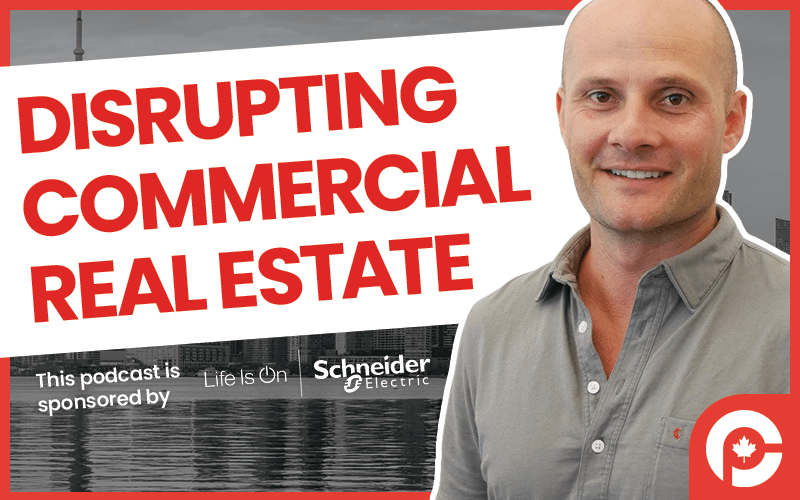
Disrupting Commercial Real Estate with Mike Ward
Episode
An accomplished investor, advisor, and board member, Mike Ward has invested in private companies for nearly a decade. Mike...
Key takeaways
- Commercial real estate is ripe for technological disruption, with most brokers still relying on static emails, printouts, and scattered documents instead of integrated digital platforms.
- Technology platforms that reduce administrative burden can double a broker's deal capacity while simultaneously improving their win rate through superior customer experience.
- Despite early pandemic predictions, commercial real estate is experiencing strong recovery with 90-95% of pre-COVID activity levels as companies recognize the value of in-person collaboration for employee retention.
- Being first to market creates opportunity but requires moving fast, as venture capital and private equity have significant funds available to back competitors in emerging spaces like PropTech.
- Canadian entrepreneurs should recognize the significant market potential at home before expanding internationally, as a single country or state can sustain a substantial successful business.
Transcript
Full transcript page · Interactive episode
============================================================
TRANSCRIPTION WITH SPEAKERS
============================================================

[00:00] SPEAKER_00: Welcome to Canada's podcast.
[00:06] SPEAKER_00: This podcast is brought to you by Schneider Electric,
[00:09] SPEAKER_00: supporting Canadian businesses with innovative energy management and automation solutions.
[00:15] SPEAKER_00: Schneider Electric, your digital partner for sustainability and efficiency.
[00:21] SPEAKER_02: Hi, this is Celine Williams, hosting for Montereo for Canada's podcast.
[00:24] SPEAKER_02: My guest today is Mike Ward, who is a Canadian-born, Austin-based entrepreneur and investor,
[00:30] SPEAKER_02: and who currently holds the title of CEO at Anthem IQ.
[00:34] SPEAKER_02: Well, welcome, Mike. Happy to have you here.
[00:37] SPEAKER_01: This is great. Thank you for having me on today.
[00:39] SPEAKER_02: Absolutely, my pleasure. I'd love to know a little bit about your journey to becoming the CEO,
[00:46] SPEAKER_02: Anthem IQ and this entrepreneurial and investor journey that you've been on over the past
[00:53] SPEAKER_02: that took you from Toronto to Austin. Let's be real. That's a big part of it.
[00:57] SPEAKER_01: There you go. There you go, from the snow to the warmth.
[01:02] SPEAKER_01: It's been a journey. It has been a, I served my career back in Toronto
[01:07] SPEAKER_01: after studying actually stateside for school, but wanted to come home.
[01:12] SPEAKER_01: I think a lot of people, when you're born and raised in Southern Ontario,
[01:15] SPEAKER_01: you live in Southern Ontario, have your career in Southern Ontario,
[01:19] SPEAKER_01: and so it just felt natural. Came back and started my career in a FinTech company.
[01:25] SPEAKER_01: So an alternative to the bank, a foreign exchange, international payments, helping small businesses
[01:31] SPEAKER_01: and consumers move money cross-border. And had a great run up there.
[01:37] SPEAKER_01: We actually became a Schedule One Bank, actually the 22nd Schedule One Bank in Canadian history.
[01:42] SPEAKER_01: And so just got exposure and experience for a young age that was kind of rare.
[01:49] SPEAKER_01: And just something that I was in the deep end pretending to know what I was doing, to be honest.
[01:53] SPEAKER_01: And so got some leadership and some management opportunities that took me to my next gig,
[02:00] SPEAKER_01: which was a company in Australia, Sydney, Australia. And they had some private equity backers.
[02:06] SPEAKER_01: And I joined them move to San Francisco to run Europe and North America for them.
[02:12] SPEAKER_01: And we took that company public in 2013 and did another gig with a company called World First.
[02:20] SPEAKER_01: And so that to Ant Financial in 2000, ended 2018. And so my career through all those companies
[02:28] SPEAKER_01: and positions was more on the front office side. So more on the commercial side of the business felt
[02:32] SPEAKER_01: very comfortable with sales, marketing, with those companies trading, customer service, customer
[02:39] SPEAKER_01: experience, so on. Had a lot of opportunities to work with finance, compliance, and other departments
[02:46] SPEAKER_01: in the back end of a business. But got an early opportunity to be exposed to the leaderships
[02:53] SPEAKER_01: see sweet positions of those entities and then take them through a liquidity event. And so
[02:59] SPEAKER_01: for me, it was just one of those right place, right time you put in the hard work. You know,
[03:05] SPEAKER_01: sometimes luck happens and I had a very fortunate career that went Toronto, San Francisco,
[03:12] SPEAKER_01: and then San Francisco for the last six years down here to Austin, Texas. And it's been
[03:18] SPEAKER_01: an industry like FinTech, which obviously disrupted the financial services
[03:24] SPEAKER_01: industry, which has been by I guess ran by the incumbents, the big banks, the big insurance,
[03:30] SPEAKER_01: the big investment companies and so on. And so these disruptors were able to come in and make a mark
[03:37] SPEAKER_01: and create some noise. And so I've always loved that. I've always loved watching
[03:43] SPEAKER_01: something that has been done a certain way, certain model and just going, no, that's okay.
[03:49] SPEAKER_01: They can't continue that way. We need to move on and change it to be different. And so
[03:55] SPEAKER_01: after leaving world first, at the end of the 18, when the company was sold, it was more of a
[04:04] SPEAKER_01: commitment from a work life perspective. I have two daughters down here, my wife,
[04:09] SPEAKER_01: for me, it was usually two to three weeks a month. It was international travel. It was never really
[04:14] SPEAKER_01: domestic. And the commitment was that I wasn't going to do that again. And so got into the
[04:20] SPEAKER_01: position to be making investments into entities and advising. And in a lot of cases passive,
[04:26] SPEAKER_01: but sometimes active. And so for us, Austin's a great market to be doing that in right now. There's
[04:32] SPEAKER_01: a lot of this going on in this market. And two good friends of mine started a company in the commercial
[04:39] SPEAKER_01: real estate space with backgrounds in commercial real estate and one and had a background in technology.
[04:44] SPEAKER_01: And I was originally an investor in that business and an advisor and then took over a seal of
[04:52] SPEAKER_01: the company that you mentioned, Anthem IQ, which we're operating here today.
[04:57] SPEAKER_02: So I love that you said that companies and that are disrupting industries, that is something
[05:05] SPEAKER_02: that is really appealing to you and you have a natural affinity for. And so I'm curious,
[05:10] SPEAKER_02: how is Anthem IQ disrupting the commercial real estate? Commercial real estate? How is it
[05:16] SPEAKER_02: disrupting that industry? Because I do think that the real estate world in general is right for
[05:25] SPEAKER_02: some disruption beyond you can look at realtorbed.com. Or it's like, oh, I can see a listing online,
[05:33] SPEAKER_02: which seems to be as disrupted as it gets these days.
[05:36] SPEAKER_01: Yeah, no, that's great. It's a prop tech is the industry of the technology around residential
[05:44] SPEAKER_01: commercial and so on. And there's definitely been a lot more momentum in those industries,
[05:49] SPEAKER_01: compared to some. I mean, it's surprising that it hasn't gone that way. Again, a lot of
[05:55] SPEAKER_01: probably focus because there's just a few incumbents that would really, in MLS as an example,
[06:00] SPEAKER_01: we really control a lot of that industry as it pertains to technology or data, which ultimately
[06:06] SPEAKER_01: you need to be serviced by technology. And so think of Zillow, think of platforms like that.
[06:14] SPEAKER_01: So residential side people are a lot more comfortable searching for a home, maybe even trying to
[06:19] SPEAKER_01: conduct a transaction on their home without a agent or participate alongside an agent because
[06:25] SPEAKER_01: they have that capabilities and that functionality at their fingertips now. We've created that for
[06:30] SPEAKER_01: commercial real estate. So commercial real estate and I'll just give you a simple example,
[06:35] SPEAKER_01: your company up there and wanted a new office space in Toronto. You'd reach out to one of the
[06:41] SPEAKER_01: broker shops up there, maybe a large one JLL CBRE, Christmas wake, feel something like that. And
[06:46] SPEAKER_01: you'd hire a broker to say, we need 5,000 square feet of office space. We want it just off
[06:52] SPEAKER_01: front street or Bay Street downtown and they would go out and they would search the market for you.
[06:57] SPEAKER_01: They'd come back with a handful of options. It's called a 20 options and they would put those
[07:03] SPEAKER_01: options into nice PowerPoints and Excel feats for the financial sides and each one of those options
[07:08] SPEAKER_01: have a flyer that the asset owners put together, you know, displaying images of maybe the parking
[07:15] SPEAKER_01: or the gym or the lobby and so on and maybe they have a virtual tour of stuff. And so you would get
[07:20] SPEAKER_01: this inbox bombarded with all this information and saying, okay, here's the 20 spots. Here,
[07:27] SPEAKER_01: I've tried to make it as pretty as possible, but it's all static. It's all multiple attachments,
[07:31] SPEAKER_01: potentially even in a drop box because of how many pieces of material they would want to get in
[07:37] SPEAKER_01: front of you. And so then you're sitting on your computer going, okay, but this flyer match,
[07:42] SPEAKER_01: this lease space with these financials and there's not kind of a single place to actually see and
[07:49] SPEAKER_01: understand which one of these locations because you want to narrow those 20 spots down to
[07:54] SPEAKER_01: three to five. You want to go to tour a handful of those and then once you tour those, you want to
[08:01] SPEAKER_01: put some proposals in and obviously take it to lease and execute to move in. Our platform allows
[08:07] SPEAKER_01: on a digital interface a broker to work with you to go and find an office space in this example here
[08:14] SPEAKER_01: and so basically go from search to sign lease on a single platform. And it's amazing to me. I mean,
[08:21] SPEAKER_01: again, as I explained, my background has been fintech. So I've lived this for 15 years now
[08:27] SPEAKER_01: and probably was still not one of the first ones doing it in fintech is done started before me,
[08:33] SPEAKER_01: but you come into the CRE commercial side of real estate and they are still doing big printed
[08:42] SPEAKER_01: materials for tour. They're still loading up your inbox like I've described in many companies that
[08:47] SPEAKER_01: probably internally try to build some technology, but we believe we truly are first a market to allow
[08:55] SPEAKER_01: a tenor wrap and their customer to find an office space on a platform. They'll still go tour.
[09:02] SPEAKER_01: They'll still go, you know, visit the local streets and neighborhood that it may be in, but
[09:08] SPEAKER_01: be able to conduct everything without having to download print, save in a folder, any material.
[09:15] SPEAKER_01: And we launched in February of this past year. We have had tremendous success actually both
[09:22] SPEAKER_01: in both countries in the US where we originally launched we're already in Canada as well and we're
[09:28] SPEAKER_01: helping the tenor wrap give a totally different customer experience, which is what really allows
[09:36] SPEAKER_01: them to win and be successful as if the customer is happy.
[09:40] SPEAKER_02: I think that's really interesting and I mean even from a and this may be a difference between
[09:46] SPEAKER_02: Canada and the States, but you know there's no single platform that I know of here where you can
[09:50] SPEAKER_02: go from start to signing a contract on a platform and for real estate for even as a consumer,
[09:57] SPEAKER_02: right as a house owner, a prospective house buyer. So the fact that it's all in one for any form
[10:06] SPEAKER_02: of real estate I think is really interesting and convenient. Let's call it. Let's call what is
[10:13] SPEAKER_01: it's really convenient? Yeah, you know what's interesting. I gave you the example of residential
[10:19] SPEAKER_01: when we talked about Zillow. We believe and we see someone's not going to go find office space and
[10:26] SPEAKER_01: try to do it on their own, right? It's too, there's too many moving parts. There's too much financial
[10:32] SPEAKER_01: and leverage and capitalization and a lot that goes into this. This is not like why I'm comfortable
[10:39] SPEAKER_01: saying my house is this and what I want is that and so maybe people are feeling a little more
[10:45] SPEAKER_01: comfortable on the residential side to try it without an agent. Now we're saying your access is a
[10:50] SPEAKER_01: client to see this platform. It's only through an agent, right? But if you can't conduct all of this
[10:56] SPEAKER_01: in a single platform, if you can conduct bits and pieces and you have to come in and out of it,
[11:00] SPEAKER_01: it's not going to be set up for success. And so we spent a lot of time before we took it to
[11:05] SPEAKER_01: market to build that end-to-end solution so that it allows the simplicity of what is
[11:12] SPEAKER_01: along at times can be long and complicated sales process and decision process to move that
[11:20] SPEAKER_01: onto a single platform is just what's allowing us to succeed and when we are today.
[11:27] SPEAKER_02: Well, and I would imagine that for the brokers that are out there, this is like a dream come true
[11:31] SPEAKER_02: that they can do it all in one platform and they don't have to be managing multiple emails,
[11:36] SPEAKER_01: multiple documents, multiple this, multiple that. Yeah, yeah, it's new things we're seeing.
[11:44] SPEAKER_01: I'll give you an example of one of our co-founders down here. Chris is a broker in awesome and
[11:51] SPEAKER_01: fantastic one. That's actually the first person I met moving to Austin because I relocated 50
[11:55] SPEAKER_01: employees here with one of those FinTech companies and so you know we use the example. Chris could
[12:01] SPEAKER_01: always figure out how to do 50 deals in a year and being as successful as he was but out of
[12:06] SPEAKER_01: do 51 was always very challenging. This platform cuts out the administrative activity, it reduces
[12:14] SPEAKER_01: it significantly so that he can, we believe in a given year, do about 100 deals. And so a
[12:22] SPEAKER_01: rap broker now being able to be more successful because of that. Also our current market share,
[12:31] SPEAKER_01: we'd say this is for our first users, first of doctors, we're going to win this way but over time
[12:36] SPEAKER_01: we hope all brokers are going to be using this but the brokers using it are able to win deals that
[12:42] SPEAKER_01: they normally wouldn't because go back to that example. I come to you and pitch you the technology
[12:48] SPEAKER_01: platform or someone walks in with a bunch of printouts and email attachments. They're going to tell
[12:55] SPEAKER_01: you that there's differentiations between what one can do and one can. You know I'm better in
[12:59] SPEAKER_01: negotiating, I have better market rate, I have better insights, I better, they're going to pitch
[13:04] SPEAKER_01: you the same except for the fact that one has this technology and one has this archaic way of
[13:09] SPEAKER_01: doing it. Who are you going to choose? And so we're giving this tool that it just allows that
[13:15] SPEAKER_01: administrative reduction in this solution that just winning business for them and they have an
[13:21] SPEAKER_01: experience before and so it's you were very fortunate to be in the spot we are at the time we are
[13:28] SPEAKER_00: with this platform. At Schneider Electric we empower Canadian businesses to utilize energy and
[13:36] SPEAKER_00: resources efficiently. Schneider Electric the future of energy.
[13:43] SPEAKER_02: So I'm really curious because I think that after the year and a half that we've experienced that
[13:49] SPEAKER_02: there's there changes happening in the way that people work, how they work, where they work,
[13:55] SPEAKER_02: all of that is kind of in flux. And if you've I'm sure you've read the headlines,
[14:03] SPEAKER_02: there's been talk of how it's going to affect commercial real estate specifically and empty offices
[14:08] SPEAKER_02: and etc etc. And I'm curious because you're in this arena, what trends are you seeing or what do
[14:16] SPEAKER_02: you think is going to happen in the next few years? Yeah, it's quite the topic these days,
[14:23] SPEAKER_01: right? And I think it's I think we're starting to see a lot more signs and data to support the
[14:30] SPEAKER_01: future versus what would have been a lot more assumptions and predictions maybe earlier part of
[14:34] SPEAKER_01: COVID. But what we are seeing in a handful of the key markets in the States, this is not just an
[14:41] SPEAKER_01: Austin situation which just seems to be building is people are going back to the office
[14:49] SPEAKER_01: in majority of the cases. People are going back to the office, maybe they were working some type of
[14:53] SPEAKER_01: model that would say we're going to go three days a week or four days a week or have some type of
[14:58] SPEAKER_01: rotation with that. And but some of the stats that are at least our state side that are reporting
[15:05] SPEAKER_01: is a lot of businesses are dealing with almost 40% attrition of employees. And you know, replacing
[15:13] SPEAKER_01: an employee can be quite costly, right? A lot more than actually paying that single employee.
[15:19] SPEAKER_01: And again, their status is for that. But why they're moving, they're moving because they don't
[15:24] SPEAKER_01: feel as loyal to the entity. There's not the collaboration, the engagement in the in the relationship
[15:29] SPEAKER_01: in the business. And so when they're sitting at home siloed independent constant activity is via
[15:36] SPEAKER_01: a zoom or Google me to whatever may be when someone comes knocking on the door or they're potentially
[15:42] SPEAKER_01: just bored in searching of what's out there. They're much quicker and easier to jump and join
[15:48] SPEAKER_01: other entities. I'll offer you $X more in a compensation package. Okay, I'll go there. I don't
[15:54] SPEAKER_01: have to move. I can do it now from here. And so what companies that we're seeing either in a platform
[16:02] SPEAKER_01: or just through the relationships of of the industry is that they're going, no, no, no, I want
[16:07] SPEAKER_01: office space. I want our people to be back there. And so a lot of thought was, well, maybe they're
[16:12] SPEAKER_01: going to cut the amount of office space. Well, that means they're pretty packed in. They actually
[16:17] SPEAKER_01: still like the size of the office space because they want to be more spread out, right?
[16:22] SPEAKER_01: Healthier distance between versus maybe that old boiler room or that condensed
[16:28] SPEAKER_01: program that they would have had in office spaces before. And so for
[16:34] SPEAKER_01: New York, Chicago, LA, Austin, we're just seeing record deals 10 year, 12 year leases, massive
[16:42] SPEAKER_01: amounts of space by firm small and large. And that's not to say it's 100%. But I think
[16:51] SPEAKER_01: some numbers that we've been reading were 90 to 95% back to where we were pre COVID for the amount
[16:56] SPEAKER_01: of commercial real estate office activity. And I think it just, it's healthier. It's healthier for
[17:03] SPEAKER_01: our nature. I mean, not to say you can't work from home if you need to or you don't have a hybrid
[17:07] SPEAKER_01: of working from home, but I think majority of the people we talk to, I can speak for ourselves.
[17:15] SPEAKER_01: We love being in the office. And I love to know that I don't have to be in the office
[17:20] SPEAKER_01: five days week, but I love being around the people. Yeah, I can't replace the collaboration,
[17:26] SPEAKER_01: the pass by conversations, the drop-ins, the ability to execute and to be successful, I think,
[17:36] SPEAKER_01: is in more of this model. And we're seeing that. Major companies, Google, you know, announced 7
[17:42] SPEAKER_01: billion in commercial real estate that they're investing, other firm similar type numbers. So
[17:49] SPEAKER_01: the original talk of early stage COVID is the industry's dead. People won't go back to the office
[17:56] SPEAKER_01: to some are still haven't gone back yet, but are committing to. And I know there will be a
[18:02] SPEAKER_01: percentage of them that won't. They'll go, hey, that's such an expensive op-back slowing. And we
[18:08] SPEAKER_01: want to save that. And our people want to work from home. And whether that stays long term or not,
[18:12] SPEAKER_01: I'd be surprised. But I think majority of people, majority of the businesses have a program,
[18:20] SPEAKER_01: hybrid or whatever it may look like of going back to the office. And depending on locations,
[18:25] SPEAKER_01: we know Toronto has been walked down a lot longer than most, but I think Toronto will start to see
[18:31] SPEAKER_01: that too as they come out, you know, to some of the stages that places like Austin have been
[18:36] SPEAKER_02: for a few months now. And it's I think that there's, it'll definitely be interesting to see
[18:43] SPEAKER_02: where the headlines go and what ends up happening. Because I think to your point, there's
[18:47] SPEAKER_02: what we've heard might be different than the reality and the headlines may not always be reflecting
[18:52] SPEAKER_02: what people in the industry are seeing. And I think that, you know, at the end of the day,
[18:58] SPEAKER_02: it's about flexibility, right? Like companies are likely to have offices if nothing else to
[19:05] SPEAKER_02: offer flexibility for people. Because there will be people who going into the office make sense,
[19:10] SPEAKER_02: and they want to do it, there will be people who they will never want to commute again,
[19:14] SPEAKER_02: and they don't want that option. And having the flexibility inside of companies to have that
[19:21] SPEAKER_02: option, I think is going to be the most important thing for the future. And I think what it will do
[19:28] SPEAKER_01: is spread people out from the downtown cores of major cities, right? And I think I've heard it
[19:35] SPEAKER_01: up there a little bit of one of the top three top five banks, you know, starting to go,
[19:41] SPEAKER_01: do we need the downtown office or could we put it in Mississauga or Burlington or Marcom or wherever
[19:48] SPEAKER_01: may be in put surrounding areas? So now people that live, you know, in the in the surrounding GTA,
[19:56] SPEAKER_01: ability to commute is very different than if they had to go down back down to Bay Street. And so
[20:02] SPEAKER_01: I think we'll see a lot of that activity, which will simplify. And then again, that doesn't mean
[20:06] SPEAKER_01: that you have to go back five days a week, maybe they still have a hybrid model in doing so.
[20:12] SPEAKER_01: But I think like you said, what catches people's interest in headlines is it being different
[20:18] SPEAKER_01: and extreme from what it is today? The headline was it's going back to normal. How exciting is
[20:23] SPEAKER_01: that headline? You know, versus the headline of going the office will never be the same again.
[20:30] SPEAKER_01: Do people read that? Do the minutes actual or have facts behind it?
[20:35] SPEAKER_02: And I think that like all things, it'll be different for different people and different companies
[20:40] SPEAKER_02: in different countries, right? And I it's easy to pull the catchy headline that's true of one thing,
[20:46] SPEAKER_02: but it doesn't apply across the board. And we like to go, oh, well, that's the truth now, as opposed to,
[20:52] SPEAKER_02: sure, that's going to be true for some people. Nothing wrong with that.
[20:55] SPEAKER_01: Yeah. Yeah. And in time, it back to anthem. I mean, ultimately, I think what people want to know is
[21:03] SPEAKER_01: where they work. They have obviously the support, the infrastructure, the location. When they go in,
[21:13] SPEAKER_01: that it's an enjoyable place to work, that they've got the amenities, right? That's very important.
[21:19] SPEAKER_01: That's been important for a few decades now. What's the gym look like? Is there kitchen?
[21:24] SPEAKER_01: All the way down to they have, do they have drinks on tap? Do they be around tap in office, right?
[21:29] SPEAKER_01: It's had to become quite creative these days. And so a platform like ours allows people to
[21:36] SPEAKER_01: visit, see, get insights, get that internal understanding of, just where I'm going to go spend a good
[21:43] SPEAKER_01: chunk of my week, even in a hybrid model. And so they want to know that it's going to be good for
[21:48] SPEAKER_01: them good for their employees. And I think there's platforms out there in Prop Tech like Zillow,
[21:57] SPEAKER_01: like Redfin, like others that have allowed that ability at one's fingertips as much as they
[22:04] SPEAKER_01: know about it or not, just to feel like they're involved in on a journey. And so that's what we've
[22:09] SPEAKER_01: created. And I think we will see a lot of success in this industry for years to come. A lot of people
[22:16] SPEAKER_01: still doing office, industrial, retail, whatever it may be, even with disruptions in all of those.
[22:23] SPEAKER_01: The Amazon's causing a lot of it in all of those. But it's one that will be
[22:30] SPEAKER_01: important for decades to come. And technology will change how those businesses are operating.
[22:37] SPEAKER_02: And technology is always going to change all the things and we can't even predict what's next
[22:42] SPEAKER_02: anymore. So I always want to ask, what do you think is next for you and for the company? And I
[22:48] SPEAKER_02: also recognize that in asking that there's so many unknowns in technology. And I'm still good.
[22:53] SPEAKER_01: What do you think? It's great. I think there's a few things that are near term. A business
[23:04] SPEAKER_01: today still needs a few other platforms to manage the front office, the brokers,
[23:10] SPEAKER_01: STRM, business intelligence, commission tracking, different tools out there. So we are adding to
[23:17] SPEAKER_01: our platform, CRM, business intelligence and commission tracking. So that again, it's a single
[23:22] SPEAKER_01: location for a broker to operate their business to operate what they need to do in a day and ultimately
[23:30] SPEAKER_01: deserves a customer all in that single platform. So for us, it's quite the feature sets to add,
[23:38] SPEAKER_01: to build a CRM could be its own entity, to build a CRM on top of a transaction management system,
[23:45] SPEAKER_01: commission tracking and so on is quite the program. So our team of engineers and our product
[23:51] SPEAKER_01: team are top notch and fantastic to build that out. We think we will
[23:57] SPEAKER_01: through this have a lot of data, a lot of information of what's going on in the market. So back to
[24:01] SPEAKER_01: the point of how things are heading and where they're heading and what are people going to do as
[24:07] SPEAKER_01: it pertains to office space or ideas like that. We're going to have the factual stats to talk about
[24:14] SPEAKER_01: because we're seeing it. It's conducting in our system so we'll be able to report on that.
[24:20] SPEAKER_01: And I think for us, it's to gain majority of the market in the US and Canada.
[24:25] SPEAKER_01: I think we have global opportunities with the partners we already have because they're global firms
[24:30] SPEAKER_01: and so how office space is done or the data or the metrics and the negotiations may be a little
[24:35] SPEAKER_01: different in Europe versus Asia versus Australia, but we think we could be a global firm with this.
[24:42] SPEAKER_01: And we're first to market so we know someone's coming. So we got to run fast. You don't stay first
[24:48] SPEAKER_01: to market long. There's a lot of money out there these days. VCE, private equity, strategic
[24:53] SPEAKER_01: investors, there's a lot of money on the sidelines. And so a lot of people want to pump into
[24:59] SPEAKER_01: a movement like PropTech. And so for us, it's to run fast and to be big very quickly.
[25:06] SPEAKER_02: Yeah, very cool. Well, before we wrap this up, I'd like to, you know,
[25:11] SPEAKER_02: I'm going to ask the question I was asked, which is is there anything that we didn't get to that
[25:14] SPEAKER_02: you want to bring up or something you want to emphasize from the conversation before we say
[25:20] SPEAKER_01: or goodbye? No, I think it's, it's been great. I love, it's actually a little homesick time back
[25:28] SPEAKER_01: into Canada and talking about some of those neighborhoods and areas back up there. It's been
[25:33] SPEAKER_01: almost a decade since I left. But yeah, I think for me, the thing that I always compare quite a bit
[25:41] SPEAKER_01: to is, you know, America yes, is 10 times larger for population and so on. But you know, what one
[25:47] SPEAKER_01: can do in a single state is still quite impressed with Canada. To me, kept giving me that comparison.
[25:56] SPEAKER_01: Like what a business can do in Canada is quite successful. It's big. It's, you know, 36,
[26:01] SPEAKER_01: 38 million people, whatever it may be. And so I just, I love, you know, knowing that we are up
[26:09] SPEAKER_01: there now conducting business. I love how much momentum and potential we have up there. Yes,
[26:16] SPEAKER_01: state side is bigger to that, but I mean, we could be an entity alone up in Canada. And so I guess
[26:23] SPEAKER_01: my challenge to the listeners out there and the people that are thinking about maybe conducting
[26:28] SPEAKER_01: business, maybe starting their own business, maybe scaling their business is make sure you don't
[26:35] SPEAKER_01: leave behind, you know, what's at home because there's a lot there and but also don't be shy to go
[26:40] SPEAKER_01: cross-border if you want to. I mean, it's, it's big. But there's a lot of potential out there and
[26:47] SPEAKER_01: I'm excited, I'm excited to see more and more Canadian companies coming states. I'm excited to see
[26:52] SPEAKER_01: more state, you know, companies like cars coming, coming up to Canada, so bring me home quite a few
[26:58] SPEAKER_01: times that year. So that's just a thought that I'll leave with everyone. Well, I mean, I think I
[27:03] SPEAKER_02: love it. There's possibility everywhere, right? Like let's all walk away with that. There's
[27:07] SPEAKER_02: possibility everywhere and let's let's keep putting that out into the world. Thank you for joining
[27:14] SPEAKER_02: me today. I appreciate your time. Our listeners and viewers can find out more about Anthem IQ at
[27:21] SPEAKER_02: Anthem IQ.com. There will be links in the show notes. And for those of you who are listening and
[27:26] SPEAKER_02: watching, thank you for listening to Cannes Podcasts. Like comment and subscribe to all our channels
[27:32] SPEAKER_02: to get the latest podcasts from entrepreneurs across Canada. This podcast is brought to you by
[27:38] SPEAKER_00: Schneider Electric, supporting Canadian businesses with innovative energy management and automation
[27:44] SPEAKER_00: solutions. Schneider Electric, your digital partner for sustainability and efficiency.