
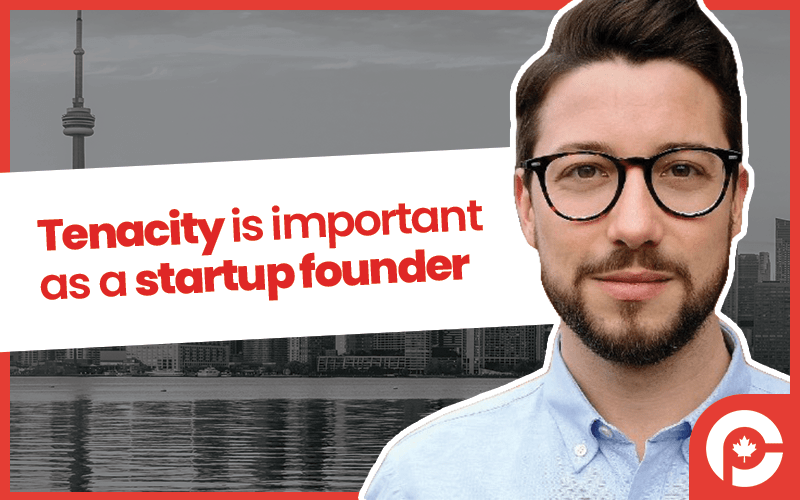
Tenacity is Important as a Startup Founder
Episode
Maximilian Birner, CEO and Co-founder of Boxhub, on the exponential growth in demand for shipping containers across Canada and...
Key takeaways
- Entrepreneurship requires confidence in your idea and the ability to convey how you will change the world, combined with building the right team and showing early metrics that validate your vision.
- Tenacity is essential as a founder because every day brings extreme ups and downs, and you need a strong support system of family, friends, and co-founders to maintain focus through challenging times.
- Structure your day by scheduling tasks in your calendar with specific time blocks rather than using task lists, as this approach ensures priorities are executed efficiently and nothing gets continuously delayed.
- Don't see failure as defeat but as valuable learnings and success in itself, because the journey of building a startup teaches you far more than working in a corporate environment regardless of the outcome.
- Keep going when others doubt you or when your first version doesn't work, because too many founders give up too quickly before finding the right product-market fit.
Transcript
Full transcript page · Interactive episode
============================================================
TRANSCRIPTION WITH SPEAKERS
============================================================

[00:00] SPEAKER_01: Welcome to Canada's podcast.
[00:05] SPEAKER_01: Hi there, I'm Phil Bliss, and welcome to Canada's podcast.
[00:09] SPEAKER_01: I'm a business visionary, and I'm coming today from Toronto.
[00:13] SPEAKER_01: And Canada's podcast talks to entrepreneurs across Canada.
[00:19] SPEAKER_01: Today, we're going to meet Max Millian Burner,
[00:23] SPEAKER_01: who's CEO and co-founder of Box Hub.
[00:27] SPEAKER_01: Box Hub is a digital marketplace that facilitates the fast and easy buying and selling of containers
[00:35] SPEAKER_01: for shipping, upcycling, and repurposing for affordable housing storage, retail, hospitality, or personal use.
[00:44] SPEAKER_01: I think we're going to find it's an interesting day.
[00:47] SPEAKER_01: Don't Max, as you've told me, I can call you, so that's fine, Max and Millian, but we'll say Max,
[00:53] SPEAKER_01: we'll stay with the North American way.
[00:57] SPEAKER_01: Great to have you on Canada's podcast, and nice to have an international on the podcast in terms of entrepreneurship.
[01:09] SPEAKER_01: So what I normally do is get you to kind of give an overview of your entrepreneurial journey today.
[01:19] SPEAKER_01: Why you started, what made you becoming entrepreneur?
[01:24] SPEAKER_01: A couple of earlier things.
[01:29] SPEAKER_01: And what the future might be, you kind of think.
[01:32] SPEAKER_01: You know, spend five minutes just yakking away on that, so kind of stuff.
[01:36] SPEAKER_00: Sure. So firstly, obviously, thanks for inviting me and pleasure to be here.
[01:42] SPEAKER_00: My entrepreneur journey started back in London in the UK in 2012.
[01:50] SPEAKER_00: At the time I was studying at university there, had done a few internships at investment banks that maybe realized that investment banking is not what I want to do in my life.
[02:03] SPEAKER_00: And I was frantically searching for what actually my job is going to be and what I really want to do after university.
[02:13] SPEAKER_00: And by chance, I got the opportunity to co-founder company while I was still at university.
[02:20] SPEAKER_00: One of my friends who was working for a mobile carrier at the time had an idea on how to use Bluetooth and QR codes at Wi-Fi,
[02:30] SPEAKER_00: Chen Han's kind of like the advertising experience for brands and he asked me out of nowhere if I wanted to start a company with him.
[02:41] SPEAKER_00: I had never worked for a startup.
[02:43] SPEAKER_00: I had no idea that I wanted to become an entrepreneur.
[02:48] SPEAKER_00: I wasn't really planning to, but it sounded like a great idea at the time.
[02:54] SPEAKER_00: And so we just basically jumped in and relatively quickly, obviously made a lot of mistakes, but relatively quickly figured out that this can actually work and raised a few few million US dollars before I even left university.
[03:10] SPEAKER_00: And then I was an entrepreneur and I never had had plan to be that and just became that way.
[03:17] SPEAKER_00: And yeah, I think from that moment it was clear for me that that's I think the only thing that I'm ever going to do.
[03:25] SPEAKER_00: And here I am now 10 years later, still an entrepreneur.
[03:30] SPEAKER_00: And but two companies later.
[03:34] SPEAKER_02: You know, I know you said that there.
[03:39] SPEAKER_01: So, you know, I finished school and we raised a couple million bucks and off we went.
[03:48] SPEAKER_01: You know, everyone needs some kind of finance and start becoming a business and you have a couple of millions.
[03:56] SPEAKER_01: And without being too flippant, you know, raising to a million is not the easiest thing in the world.
[04:04] SPEAKER_01: Raising money is not the easiest thing in the world.
[04:08] SPEAKER_01: You know, you did it obviously.
[04:10] SPEAKER_01: You know, what do you think the key elements are for, you know, attracting and for, you know, from getting the confidence of those investment bankers that you decided not to be do not to join, if you like.
[04:24] SPEAKER_00: Yeah, so I think, you know, obviously it always depends on the company and your strengths of the company.
[04:32] SPEAKER_00: And I think most important is that you believe in the idea yourself.
[04:39] SPEAKER_00: I think nowadays 10 years later raising money at an early stage is easier than what it was at the time.
[04:46] SPEAKER_00: You have a lot more funds now, a lot more early stage funds, a lot more opportunities, even to get early stage loans.
[04:53] SPEAKER_00: I also think it's, you know, cheaper with technology now to build companies.
[04:58] SPEAKER_00: But I think you need confidence.
[05:02] SPEAKER_00: And you need to, you know, early on, I think understand what the real value is of the company and how you can transform a market, even if this is years away.
[05:15] SPEAKER_00: And you need to, you know, capital and a lot of time to do that.
[05:19] SPEAKER_00: But, but yeah, I think, you know, early stage funding is all about conveying how you change the world, building the right team around you.
[05:30] SPEAKER_00: And some, you know, very early indications ideally on the metric side on, you know, that this is going to work.
[05:35] SPEAKER_00: And then I think, you know, nowadays you should be fine.
[05:39] SPEAKER_00: It gets more challenging nowadays under the kind of series A series B side, especially in the current environment.
[05:48] SPEAKER_00: But I think that's, that's kind of what this key earlier.
[05:51] SPEAKER_01: So, you know, what is a typical day look like from Max, you know, how do you maintain the kind of focus that's needed, you know, to be, to be successful and to have a bit of fun along the long side of that.
[06:06] SPEAKER_00: Yeah, so I think, um, tenacity is important as a startup founder.
[06:14] SPEAKER_00: I think, um, you, you constantly have ups and downs as a founder, right?
[06:20] SPEAKER_00: Things are not always going to go well, as a matter of fact, every day is either your best day or your worst day ever.
[06:28] SPEAKER_00: And so I think you need a lot of, you know, tenacity and believe to, you know, go every day and, and continue on the journey and continue to build, even though you might have, you know, challenging times.
[06:39] SPEAKER_00: That's, I think, very important and you need to write kind of support system for you to do that.
[06:45] SPEAKER_00: Right? I think your family, your friends that, you know, if you have a tough day can, you know, take your mind out of that.
[06:52] SPEAKER_00: And, um, and so you're ready to come back the next day and, and give 100% again. I think that's very, very important.
[07:00] SPEAKER_00: And that's always, I had together with, you know, brilliant other founders that, you know, I think, where you're in a situation where you make each other better.
[07:12] SPEAKER_00: And, and I can definitely say that not every startup day in my life was a lot of fun.
[07:18] SPEAKER_00: But if you have to write people around you both at work and outside of work, I think it makes it a lot, a lot easier.
[07:24] SPEAKER_00: And so that's number one. And then I think number two, you know, be a structure that's possible when in your days.
[07:31] SPEAKER_00: So, you know, if you're a founder, then every day, I was going to ask you about routines.
[07:37] SPEAKER_01: Yeah.
[07:38] SPEAKER_01: You have a specific routine and to get you motivated on one level, but to keep the focus required in early stage, government is basically.
[07:51] SPEAKER_00: Yeah. I think there's focus on a more strategic level, you know, what do you want to achieve this year? What do you want to achieve this quarter? What do you want to achieve this month?
[08:00] SPEAKER_00: This week. And then there is the how to stay on track every day. I think timing and scheduling is incredibly important.
[08:13] SPEAKER_00: So what I do is I don't have a task list of things to do. I have a calendar in which calendar, you know, every hour is booked for a specific task.
[08:27] SPEAKER_00: And that could be regular, the same task the same day. So let's say the first two hours of the emails.
[08:32] SPEAKER_00: And then, you know, sometime in the afternoon for meetings.
[08:36] SPEAKER_00: And then, you know, sometime in the evening for kind of strategic thoughts and reading that you need to do things like that.
[08:43] SPEAKER_00: I think it's much more efficient than writing a task list that you have to go through because then you everything just gets delayed and delayed in the late.
[08:52] SPEAKER_00: And I think if you structure your priorities by time every day, I think you get a lot more done than I think that's the most important thing.
[09:03] SPEAKER_01: I do the same thing. So I think you're right. Yes. Yes.
[09:08] SPEAKER_01: So, you know, we wired on entrepreneurs. We wired different. Is this something some unique difference to the entrepreneurial persona versus others before?
[09:28] SPEAKER_00: Yeah, no risk aversion. I think happy to, you know, to take risks as number one. I think, you know, you need to have, you know, some idea of course to start a business, but even more important is that you actually do it.
[09:50] SPEAKER_00: And I think, you know, maybe getting out of your current job or, you know, that might be, you know, very comfortable or your current role.
[10:03] SPEAKER_00: Changing careers, actually starting something, you know, I think you need to understand that that will be very risky and as a very highly likely that you will fail.
[10:13] SPEAKER_00: And I think it needs a special type of person to accept that risk and then actually start executing knowing that they might well not be successful with it.
[10:22] SPEAKER_00: And I think, you know, also understanding that even if you're not successful for the next month, the next half year, year, two years, no matter how long it takes and you might likely still fail.
[10:34] SPEAKER_00: But not to see that as failure, but to see that as like learnings for you and a journey for you.
[10:41] SPEAKER_00: And I think, you know, you don't matter if you're successful as not or not, you'll learn much more than in a corporate environment. And so I think, you know, in summary, I think it's number one, you know, the ability to take that risk and the happiness to take that risk.
[10:56] SPEAKER_00: And actually jumping in and not seeing failure as failure, but as as learnings and success, even though something might not work out.
[11:08] SPEAKER_01: What's the best thing in the years that you've been an entrepreneur, what's the best thing about being an entrepreneur that really, you know, that can't be be basically.
[11:23] SPEAKER_00: I think happy customers, of course.
[11:30] SPEAKER_00: You know, if you build a company that actually helps someone to do something faster or cheaper or better experience, I think, you know, if that works and you have people that want to use your product or buy from you, I think that's a great feeling.
[11:46] SPEAKER_00: You know, some sort of progress on changing the world, how you want to change it.
[11:53] SPEAKER_00: And then I think also, you know, the impact that you have in a startup.
[11:58] SPEAKER_00: And that's very different from working in a corporate.
[12:01] SPEAKER_00: And so that might not only be for the founder, but equally so for, you know, any sales reps or any operations, operations managers, any role in the company, you would have much more responsibility, much more impact.
[12:15] SPEAKER_00: Every single day when you work at a startup and I think that's very, very fulfilling.
[12:19] SPEAKER_00: And I think, you know, that's, that's what I love for me as an entrepreneur to work in a startup, but also what I think everybody who works for me loves in a startup.
[12:29] SPEAKER_01: We were chatting earlier about, you know, your international experience, you know, startups in London, Middle East, North America.
[12:41] SPEAKER_01: What have you learned from that in terms of the, okay, so you're in trauma now?
[12:48] SPEAKER_01: Not which is the best place. That's a kind of dumb question. They're all different.
[12:56] SPEAKER_01: What, what, you know, what have you learned by that in terms of, you know, doing business internationally basically?
[13:06] SPEAKER_00: Yeah, so I think obviously very, every place is very different, right? Culture is different.
[13:16] SPEAKER_00: How you conduct yourself is different. Even sometimes what's important for people is different.
[13:22] SPEAKER_00: I think it's important to realize that when building a company, but also equally important is that no matter where you are, the purpose of the business, the ability to work is to be very important.
[13:35] SPEAKER_00: The basics of how you can get a company off the ground are the same everywhere. You know, understanding the idea, testing as much as possible, building an MPP as quickly as possible, instead of just, you know, the right thing forever.
[13:50] SPEAKER_00: I think they're, they're concepts of how to build a company that apply anywhere.
[13:56] SPEAKER_00: But then there are also, you know, cultural differences. And I think the combination of that is really exciting and being aware of when you can follow the, you know, the standardized path.
[14:10] SPEAKER_00: And then when you have to deviate to make it more culturally relevant and appropriate is, I think one of the biggest learnings of that journey.
[14:18] SPEAKER_01: In terms of mentorship, you know, what's the best piece of advice you've received that you can kind of carry around with you, you know, sort of what was there in your back pocket?
[14:32] SPEAKER_00: Yeah, I think the best piece of advice for entrepreneurs or young founders or anyone who thinks about getting into this industry is, you know, and I mentioned this before already.
[14:46] SPEAKER_00: And then the best piece is, you know, like, try it out, you know, take the risk and then keep on going. You know, I think a lot of people give up too quickly when, you know, the first version of the MP is not working out when a lot of investors tell you this is never going to work out.
[15:02] SPEAKER_00: But you're doomed to fail. I think, you know, if you really believe in what you're building and how you want to, you know, change the market or how you want to change the world, keep on going until you find, find that right, that right product and product market fit.
[15:18] SPEAKER_00: And I think too many just give up too quickly. And so it would be keep on going.
[15:23] SPEAKER_01: No, I don't know me bring up the company so much, but box of which you sort of CEO and now and founder.
[15:35] SPEAKER_01: It's, you know, it's, it's basically the container business reselling containers, which I think everyone realizes have, you know, alternative housing possibilities as well as many other, many other areas.
[15:54] SPEAKER_01: What would you, you know, what are you most excited about that, that this for, and I'm only bringing up because I think genuinely, genuinely, the audience is like, oh, containers, oh yeah, that kind of thing, you know, everyone's saying how much more they can be than just the freight thing basically.
[16:16] SPEAKER_01: Not the same thing, the pretty important is freight thing.
[16:20] SPEAKER_00: Yeah, so I think box up and what made me excited about the container industry is a combination of my previous experiences in the startup world.
[16:31] SPEAKER_00: So my first company was a SaaS data platform for the marketing industry where I help brand sell more things to people.
[16:39] SPEAKER_00: Right. My second company was then the complete opposite online donation platform in the Middle East.
[16:47] SPEAKER_00: And I made that move at the time because I realized that whatever I want to do and any company that I work for are found in the future, I want to have more positive impact on the world.
[16:59] SPEAKER_00: Yeah, some sort of positive impact should be at the core of any company that I work for. And so I moved to the Middle East, build an international platform.
[17:09] SPEAKER_00: I had a fantastic time and really saw myself, you know, continuing on that path in my future.
[17:19] SPEAKER_00: Then I moved to a non-profit called Founders Pledge.
[17:23] SPEAKER_00: And at that time, I got introduced to my co-founder, Philip, who had been working in the container industry before the shipping industry for Merisk, which is the second largest shipping line in the world.
[17:35] SPEAKER_00: And he came up with the concept for box up and introduced me to it. And I love that because I think, you know, the shipping industry and the container industry is one of the last industries that basically still center on faxes.
[17:50] SPEAKER_00: So there's never really been much innovation. Besides, maybe most recently Flexport.
[17:57] SPEAKER_00: There is a lot of opportunity to build product, to automate and to make the experience of that industry and customers better.
[18:07] SPEAKER_00: So I like that opportunity from a technical perspective. But I also think that containers are the cheapest way for you to build storage space or build a house or a vertical farm or retail space or things like that.
[18:26] SPEAKER_00: And that's what it is. When you can buy them very easily through us.
[18:30] SPEAKER_00: I do think, you know, they're the concept of repurposing something that already exists has a very positive impact on, you know, I think sustainability.
[18:40] SPEAKER_00: Instead of just, you know, discarding the containers, you reuse them for something else.
[18:45] SPEAKER_00: I think you make housing more affordable. You make retail space more affordable.
[18:49] SPEAKER_00: You have the opportunity to decrease the amount of runs that that container does after it comes out of the shipping shipping industry.
[18:59] SPEAKER_00: Thereby reducing CO2 emissions.
[19:04] SPEAKER_00: So everything about connect the industry and the product was appealing to me.
[19:08] SPEAKER_00: Number one, because I think I saw a lot of opportunity to build the right company and address the challenges in the market.
[19:14] SPEAKER_00: But also because it has so many different kind of positive aspects and positive impact.
[19:19] SPEAKER_01: Okay. Interesting. Interesting.
[19:23] SPEAKER_01: It was fun ones.
[19:26] SPEAKER_01: Are you a morning or a night person?
[19:30] SPEAKER_01: I am a night person.
[19:31] SPEAKER_01: You're a night person. Okay. That's interesting.
[19:35] SPEAKER_01: Most people that you're in this kind of 20, 25% most of them people and entrepreneurs seem to be mourning people.
[19:44] SPEAKER_00: But do you see a difference in, you know, how successful they are if they're mourning or are night people?
[19:52] SPEAKER_01: No, no, I think it's just just the buyer of them saying, you know, everyone's got their own thing.
[20:05] SPEAKER_01: I think the other one I wanted to, I have a sense of, if you had to pick one word to describe yourself to someone, fun one.
[20:14] SPEAKER_01: What would it be?
[20:17] SPEAKER_02: One word to describe myself.
[20:23] SPEAKER_02: Discipline.
[20:25] SPEAKER_01: Discipline. Okay, that's good. Yeah. I understand that one.
[20:31] SPEAKER_00: I grew up, you know, in Germany with, you know, typical German parents that are very disciplined and that expect a lot from you when you're a child or in your childhood.
[20:44] Speaker UNKNOWN: I was 18, 18 years.
[20:45] SPEAKER_00: My father was a professional football player, soccer for North Americans here.
[20:52] SPEAKER_00: Which team?
[20:54] SPEAKER_00: So he played for three, four teams in the Bundesliga in German football.
[21:00] SPEAKER_02: Well, I shoot.
[21:00] SPEAKER_00: Stuttgart, Freiburg, Augsburg and all.
[21:04] SPEAKER_00: And so, you know, I was obviously supposed to also become a football player.
[21:09] SPEAKER_00: And so I played for, for firstly, youth team at the time, which basically required me to train every day after school in certain cases, you know, twice a day.
[21:21] SPEAKER_00: Each week. And so I got into this rhythm of obviously football, soccer, team sports, but on a, you know, almost professional level.
[21:29] SPEAKER_00: And so that helped me a lot with building my discipline.
[21:36] SPEAKER_00: And so I think I still see that nowadays with how I, how I focus, what I focus my time on what, what I do with my time and I think, you know, I try to convey that to my team as well.
[21:54] SPEAKER_00: Not only, you know, we discussed scheduling before, but also prioritization and things like that. I think, you know, if you're disciplined.
[22:00] SPEAKER_00: And then I think you can, you know, get a lot more done and, and especially to write things done with the time.
[22:09] SPEAKER_01: You know, what books are you reading or listening to or podcasts, you know, that you want to recommend that you say that this makes an impact on, among me, maybe not every second, but, you know, that kind of thing.
[22:30] SPEAKER_00: Yeah, I think maybe three, three mentions here, a podcast I can recommend that I listen to almost every day. It's called 20 VC is from a British venture capital investor.
[22:47] SPEAKER_00: He interviews every day, other BCs successful entrepreneurs, everything from product to scaling company to what investors are looking for.
[22:57] SPEAKER_00: It's very very insightful and the guests are, you know, the most successful investors and entrepreneurs you can find.
[23:06] SPEAKER_00: So I would recommend anyone who is thinking about becoming a startup investor or entrepreneur start listening to that podcast.
[23:14] SPEAKER_00: And then otherwise, I think two books that might have been mentioned here before. I think they're very classic classic books. One is zero to one from Peter teal.
[23:26] SPEAKER_00: Details, you know, his view, and which is partly very contrarian on, you know, how companies should be built and why they should be built and how you as a founder should build that company.
[23:38] SPEAKER_00: For example, he prefers small markets in which you can build a company that becomes a monopoly rather than what other investors focus on, which is just go after the largest markets with a lot of competition.
[23:55] SPEAKER_00: So I think if you want to hear the other side of the coin of what other investors tell you, read that book.
[24:04] SPEAKER_00: And then also I would recommend the hard thing about hard things, which is also a classic.
[24:11] SPEAKER_00: And I think that book helps a lot because most other books talk about how to be successful, how to be great.
[24:21] SPEAKER_00: But I don't really detail what to do when, excuse my language, just shit hits the fan.
[24:28] SPEAKER_00: And when, you know, when things don't work out, right?
[24:32] SPEAKER_00: When you have to let people go, when you have disagreements with your co-founder, when your product doesn't work, when you have to pivot.
[24:40] SPEAKER_00: All of those situations, I think, are situations that you as a founder encounter on a day-to-day basis.
[24:47] SPEAKER_00: And, you know, that book will really help you, I think, find direct answers to those situations.
[24:54] SPEAKER_01: Okay.
[24:57] SPEAKER_01: You know what I said about the 25 minutes, we reached it.
[25:01] SPEAKER_01: I mean, we're really good.
[25:04] SPEAKER_01: So how can people get a hold of you?
[25:07] SPEAKER_01: I mean, there were some good stimulating stuff in here.
[25:10] SPEAKER_01: Yeah.
[25:11] SPEAKER_01: People get a hold of you.
[25:12] SPEAKER_00: Easiest would be connect with me on LinkedIn.
[25:17] SPEAKER_00: Maximilian Burner.
[25:19] SPEAKER_00: And, yeah, that's straightforward.
[25:22] SPEAKER_00: I will definitely, I will definitely connect with you.
[25:25] SPEAKER_00: I'll definitely read your message.
[25:26] SPEAKER_00: If I can help in any way, happy to do so, of course.
[25:31] SPEAKER_01: Listen, it's been fantastic to have you on.
[25:33] SPEAKER_01: I've really been an interesting one.
[25:37] SPEAKER_01: You know, hope to see you again.
[25:39] SPEAKER_00: Yeah.
[25:39] SPEAKER_00: Thank you so much for having me.
[25:41] SPEAKER_00: And it was a lot of fun and hopefully again, it's the point.