
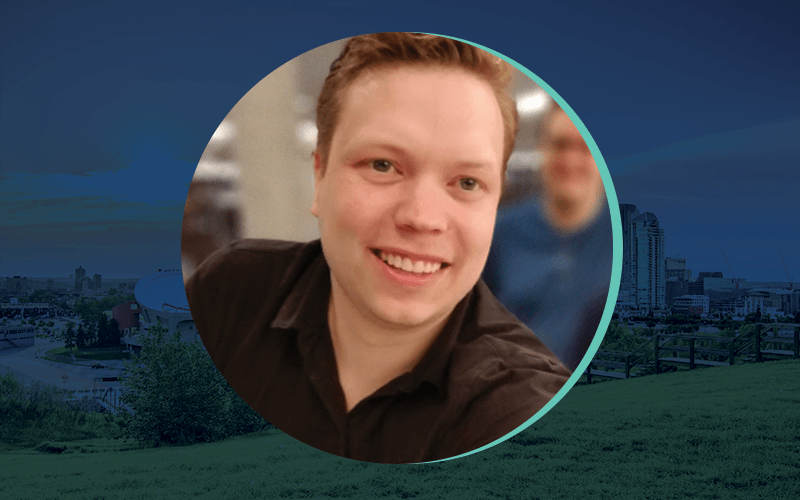
Matt Lowe
Episode
Matt Lowe is co-founder and CEO of ZeroKey which produces transformational IoT sensor technology that provides wire-area, real-time, and millimetre-level 3D tracking...
Key takeaways
- Finding product-market fit is the biggest challenge for startups and when you achieve it, you'll know without question because demand will exceed your ability to keep products in stock.
- Access to capital remains one of the biggest challenges for tech companies in Calgary, as local investors are still becoming comfortable with tech valuations and metrics that differ from traditional oil and gas investments.
- Building a startup requires relentless persistence because you'll hear "no" hundreds of times before getting to "yes," and this mindset is essential for every successful founder regardless of their background.
- Operational excellence matters as much as great technology—understanding manufacturing lead times, holiday schedules in supplier countries, and execution details can make or break a company's ability to scale.
- Calgary offers significant advantages for tech startups including lower costs compared to Silicon Valley and access to talented engineers from the oil and gas sector who are retooling their skills for the tech industry.
Transcript
Full transcript page · Interactive episode
============================================================
TRANSCRIPTION WITH SPEAKERS
============================================================

[00:00] SPEAKER_00: It's Calgary's podcast on the Canada's podcast network.
[00:06] SPEAKER_00: Hello, this is Mario Tonigusi coming to you today with Calgary's podcast, a member of
[00:12] SPEAKER_00: Canada's podcast network, where we talk to the entrepreneurs who are making it happen
[00:17] SPEAKER_00: in Calgary, Alberta, so you can listen, discover and engage.
[00:21] SPEAKER_00: Today's guest is Matt Lowe, who is co-founder and CEO of Zero Key.
[00:28] SPEAKER_00: Thanks for joining us today, Matt.
[00:30] SPEAKER_00: Oh, thanks for having me.
[00:32] SPEAKER_00: Tell me a little bit about Zero Key.
[00:34] SPEAKER_00: What exactly it is and what do you guys do?
[00:38] SPEAKER_00: Sure, you bet.
[00:39] SPEAKER_01: So Zero Key is an industrial IoT company, and our big claim to fame is that we track things,
[00:47] SPEAKER_01: really, really accurately and precisely in 3D space.
[00:51] SPEAKER_01: So you can think of it kind of like GPS, but it works indoors.
[00:54] SPEAKER_00: Okay, how did this start and maybe give me a little bit of the history of how it came about?
[01:02] SPEAKER_01: I don't know how much time you have.
[01:04] SPEAKER_01: But yeah, it started actually.
[01:06] SPEAKER_01: Zero Key was a business recreated for the augmented reality and virtual reality industry,
[01:12] SPEAKER_01: which isn't where we ended up, so we did make a bit of a pivot in between.
[01:17] SPEAKER_01: But it actually started, the whole interest for the company was actually my eldest daughter,
[01:22] SPEAKER_01: when she was younger, was quite the colloquial baby.
[01:26] SPEAKER_01: And at the time, I was going to a lot of software development work on a consulting basis,
[01:31] SPEAKER_01: and I had a couple deadlines that I had to get some code finished work.
[01:35] SPEAKER_01: And unfortunately, though, my daughters are so colloquial and so cranky,
[01:39] SPEAKER_01: I couldn't set her down.
[01:40] SPEAKER_01: So I was just constantly having to rock her.
[01:43] SPEAKER_01: And it was somewhat frustrating for me because I knew exactly the code that I just had to get
[01:47] SPEAKER_01: for my brain into the computer, but I just didn't have free hands to sit down and type it.
[01:53] SPEAKER_01: I thought back, there's all these sci-fi movies, like minority report with Tom Cruise and stuff
[02:00] SPEAKER_01: like that, where you got these awesome sci-fi interfaces where you can interact with your hands.
[02:06] SPEAKER_01: I was like, well, why couldn't I get one of those?
[02:08] SPEAKER_01: And it turns out that most of them are science fiction and the fiction part is true.
[02:14] SPEAKER_01: And so we actually started zero key to develop this next generation human machine interface.
[02:21] SPEAKER_01: And that's actually where the name comes from.
[02:23] SPEAKER_01: So we wanted to build a virtual keyboard, or in other words, keyboard was zero keys.
[02:30] SPEAKER_01: That's where we started.
[02:32] SPEAKER_01: We built this really, really awesome positioning technology to fuel that human machine interface
[02:40] SPEAKER_01: use case. And then we got pulled by our nose into the industrial space where there's just a huge
[02:47] SPEAKER_01: product market fit for the tech we ended up developing.
[02:50] SPEAKER_01: When did you start it?
[02:51] SPEAKER_01: What year?
[02:52] SPEAKER_01: So we're a little over three years old, so 2016.
[02:58] SPEAKER_00: How was the business been like since you started?
[03:02] SPEAKER_01: Well, it's never what you expect.
[03:04] SPEAKER_01: It's been a lot of fun and absolutely just had a wild time meeting some of the people that
[03:12] SPEAKER_01: got to be along the way, building a team, bringing a big team around us.
[03:17] SPEAKER_01: We're up to about 30 guys now in house.
[03:21] SPEAKER_01: It was a bit of a change from the early days when it was a company of one.
[03:27] SPEAKER_01: So it's been an absolute blast.
[03:30] SPEAKER_01: You wouldn't trade it for anything.
[03:31] SPEAKER_00: Now you're based in Calgary.
[03:34] SPEAKER_00: What has been the, I guess, key benefits of doing business in Calgary and being an entrepreneur
[03:41] SPEAKER_00: in Calgary?
[03:42] SPEAKER_01: Well, to start, you don't have to pay triple the rates for tech talent like you would the Bay Area.
[03:49] SPEAKER_01: So it's really cost effective.
[03:52] SPEAKER_01: You hear that a lot from really famous tech founders and whatnot that they didn't necessarily
[03:59] SPEAKER_01: have to be in the Bay Area.
[04:03] SPEAKER_01: Sometimes it may have a lot more sense to be someone where you can actually build a business
[04:08] SPEAKER_01: without necessarily straining your cash flow and stuff like that.
[04:12] SPEAKER_01: That's one of the big benefits in Calgary.
[04:14] SPEAKER_01: I think right now, because so much of the workforce is retooling with the economic downturn
[04:22] SPEAKER_01: in the oil and gas industry has opened the doors for a lot of people to come into the tech space.
[04:28] SPEAKER_01: And so really, we have such a wealth of talent here in Alberta that maybe it doesn't get the
[04:33] SPEAKER_01: recognition it deserves.
[04:34] SPEAKER_01: I mean, we're so good at engineering and the oil and gas industry has historically
[04:39] SPEAKER_01: encompassed so many different fields that is really also included in tech.
[04:44] SPEAKER_01: A lot of people don't realize that you can take the same kind of skills and apply it in maybe
[04:50] SPEAKER_01: a slightly different way, but you don't necessarily have to start over at step one.
[04:56] SPEAKER_01: So that's one of the big advantages and we've actually been able to leverage that as we built our
[05:00] SPEAKER_01: team.
[05:01] SPEAKER_00: Okay, so when you're looking at flip side of that question, what have been sort of the,
[05:08] SPEAKER_00: the guess the challenges of doing business and being a business owner in Calgary?
[05:13] SPEAKER_01: You know, this is a question that comes up all the time.
[05:16] SPEAKER_01: And if you talk to tech founders, we almost have like a unanimous opinion on it,
[05:20] SPEAKER_01: which is rare, especially for founders.
[05:24] SPEAKER_01: But the fact of the matter is, in this area of the country of Canada in particular,
[05:31] SPEAKER_01: you know, we historically have not invested in a whole lot of tech.
[05:35] SPEAKER_01: And so there is kind of this hesitance, this inertia that we're fighting.
[05:39] SPEAKER_01: You know, there's a lot of capital and we're very entrepreneurial.
[05:44] SPEAKER_01: But it's not flowing as quickly into tech as you see in a lot of other areas.
[05:48] SPEAKER_01: And it's just because people are not yet comfortable with it.
[05:51] SPEAKER_01: It is changing. It's getting better.
[05:54] SPEAKER_01: But that's, I'd say, access to capital is probably one of the biggest challenges here.
[05:59] SPEAKER_00: So is it a matter of, you know, the fact that we're so oil and gas centric and have been,
[06:07] SPEAKER_00: you know, in our history that it's tough to overcome, I guess, that image and perception.
[06:13] SPEAKER_00: And perhaps the rest of Canada that, you know, Calgary, hey, Calgary is more than oil and gas.
[06:19] SPEAKER_01: Yeah, you know, it's, I think it's both of those things.
[06:23] SPEAKER_01: And, you know, the calculus is different.
[06:25] SPEAKER_01: When you look at valuing a tech company and investing in a tech company,
[06:30] SPEAKER_01: you're looking at different metrics, different ways to make your money back,
[06:34] SPEAKER_01: different cycle times in terms of when you could see an exit.
[06:38] SPEAKER_01: So it is a different world.
[06:41] SPEAKER_01: And that's, it's definitely one of those things that brings people out of their comfort zone.
[06:46] SPEAKER_01: If they've historically been in the oil and gas industry.
[06:50] SPEAKER_00: Yeah, exactly.
[06:51] SPEAKER_00: What's your vision for the company as you look forward?
[06:55] SPEAKER_01: Yeah, well, that's a fun one.
[06:57] SPEAKER_01: So we're scaling like crazy.
[06:59] SPEAKER_01: So, you know, a year and some ago, we were about six people.
[07:02] SPEAKER_01: Now we're about 30.
[07:03] SPEAKER_01: We're going to be about 60 by the end of 2020.
[07:06] SPEAKER_01: And opening a few offices around the world, one in Germany pretty soon.
[07:11] SPEAKER_01: And already have kind of a space down, down across the border as well.
[07:16] SPEAKER_01: You know, I think the big thing for us, we're right on that inflection point where our technology
[07:21] SPEAKER_01: is really starting to be adopted by the market.
[07:24] SPEAKER_01: We've really found a clear product market fit.
[07:27] SPEAKER_01: And kind of one of my favorite sayings when it comes to this actually comes from
[07:32] SPEAKER_01: Mark and Dreson.
[07:33] SPEAKER_01: He always says, you know, this product market fit is one of the things that you always don't have.
[07:39] SPEAKER_01: You know, when you found it, you know, there's no question.
[07:43] SPEAKER_01: Product is flying off the shelves and you can't keep things stocks long enough.
[07:48] SPEAKER_01: And that's really kind of the point that we've just hit.
[07:51] SPEAKER_01: So it's an exciting next 12 to 24 months for us.
[07:55] SPEAKER_01: We're just moving actually right now into a new space hearing category.
[08:00] SPEAKER_01: But if you're bigger space before times as big as we're in now.
[08:03] SPEAKER_01: I know a lot of the guys in the office here are happy.
[08:06] SPEAKER_01: So I'm about to have a beauty on my hands if we didn't get that nailed down.
[08:09] SPEAKER_00: So what has been your biggest challenge in setting up and operating this company right now
[08:17] SPEAKER_00: or over the last couple of years?
[08:20] SPEAKER_01: Yeah, so I think it's the same for every startup.
[08:25] SPEAKER_01: And it's well, except for the guys that are just having an ill right out of the gate.
[08:32] SPEAKER_01: But finding product market fit in any company, whether it is a growth startup or not,
[08:38] SPEAKER_01: is the challenge right? That's the tough thing, the filter that most startups never make it pass.
[08:45] SPEAKER_01: And that was a challenge for us.
[08:46] SPEAKER_01: You know, as I mentioned, we started out trying to do the human machine interface stuff.
[08:50] SPEAKER_01: And you know, we still have some 10 gently related stuff going in that world.
[08:55] SPEAKER_01: But you know, find the product market fit took us a while and we had to change how we approach
[09:00] SPEAKER_01: the industry. We even changed which customers we were approaching.
[09:03] SPEAKER_01: And yeah, we really had to learn a lot about the industries we were getting into.
[09:08] SPEAKER_01: So that was by far the biggest challenge.
[09:10] SPEAKER_00: Okay, so looking back in time, what you know now, what would have been helpful for you when
[09:19] SPEAKER_01: you first started? Yeah, so many things. I think one of the big things is you're kind of forced to
[09:28] SPEAKER_01: learn how to set things up to operationally succeed. You know, you can have the best tech,
[09:34] SPEAKER_01: you can have the best everything. But if you are not set up to execute, then it doesn't really
[09:39] SPEAKER_01: matter. And you know, we've kind of trial by fire and learned a lot of hard lessons in the
[09:46] SPEAKER_01: earlier days. I think a lot of those things I would bring with me if we were to do it all over again.
[09:51] SPEAKER_01: You know, and it's little things like, you know, understanding what what lead times would be
[09:57] SPEAKER_01: through certain manufacturers when, you know, one of the holidays in a different country that is
[10:01] SPEAKER_01: producing a key component to your products. And just, you know, all of the little things that add up,
[10:07] SPEAKER_01: all the little details that you might not take into account here your first go around.
[10:12] SPEAKER_00: Okay, then, when you look back over the beginnings of this company and uptold now,
[10:20] SPEAKER_00: is there any piece of advice that you kind of resonates with you and sticks with you that
[10:26] SPEAKER_00: that you've heard or been told for being an entrepreneur? Yeah. So there's one key piece.
[10:35] SPEAKER_01: And it's kind of a non-answer. So I apologize in advance. Probably my favorite book on
[10:42] SPEAKER_01: on startups in general is Ben Horowitz's book, The Heart Thing, The Heart Things. And it really
[10:50] SPEAKER_01: does kind of hit home that there's not any given magic formula. You know, anyone who kind of
[10:57] SPEAKER_01: tells you that they have all the answers is probably lying to you. And one of the challenges is,
[11:04] SPEAKER_01: especially in the early stage where everyone is really looking, you know, you have all these questions
[11:09] SPEAKER_01: and, you know, as a startup, you don't necessarily have the answers. I think realizing that
[11:15] SPEAKER_01: advice is really about realizing that, you know, the challenge is unique for every business,
[11:20] SPEAKER_01: for every entrepreneur, and there really aren't any, any easy ways. It's all about putting in the hard work
[11:28] SPEAKER_01: and the effort and really trying to figure out for that specific business how you have to,
[11:36] SPEAKER_00: champion it through to the next level. Okay, outside of the office environment, obviously,
[11:41] SPEAKER_00: the mind is always going on about work, etc. What kind of things do you do or what kind of activities
[11:49] SPEAKER_00: that take place in your life that you seem to find creativity flowing and ideas popping up,
[11:57] SPEAKER_01: anything like that in your world? Well, I don't get a whole lot of time on set of work these days.
[12:05] SPEAKER_01: Yes, scaling up the one thing they never tell you is how much you actually spend more time
[12:10] SPEAKER_01: working than you expected, as opposed to go the other way in an ideal picture, but it never does.
[12:16] SPEAKER_01: Yeah, I think for creativity is more of a mindset than it is a place, and really,
[12:24] SPEAKER_01: and you'll find this with a lot of founders and whatnot, but they have a mindset that when they
[12:29] SPEAKER_01: see something that's wrong with whether it's, you know, the way something is built or even to the
[12:34] SPEAKER_01: way traffic lights are set up, I've heard lots of ideas about that, but you'll find that they're
[12:40] SPEAKER_01: always looking for ways to improve things. They're always looking for, you know, how could this be
[12:44] SPEAKER_00: built better than it is right now? Yeah, exactly. I could switch gears a little bit to ask you a
[12:50] SPEAKER_00: couple of personal questions. Matt, everybody these days has a bucket list, a personal bucket list,
[12:57] SPEAKER_00: as do you have one in it's and what sort of sits atop that bucket list right now? Sure, sure.
[13:05] SPEAKER_01: You know, there's lots of little things. It is right now, especially at this point in time,
[13:11] SPEAKER_01: where we're so ultra focused on business, it's a little hard to focus on the other stuff.
[13:17] SPEAKER_01: At one point, it's one of the things I always want to do is do an Atlantic crossing the sailboat,
[13:23] SPEAKER_01: so that's definitely the top of the list. Hopefully, at some point in the future, I'll get the
[13:27] SPEAKER_01: chance to do that, but yeah, I'd say that would be my topic. Okay, super. If you weren't doing what
[13:34] SPEAKER_00: you're doing now, what kind of career or business do you think and profession would you be involved
[13:41] SPEAKER_01: and do you think? That's a tough one. So I've been software developer by trade, I guess, you know,
[13:47] SPEAKER_01: that was been my background, but I've always been entrepreneurial right ever since I got into the
[13:53] SPEAKER_01: workforce. So I think you'd be something software related, but I would imagine myself just really
[14:00] SPEAKER_00: doing the whole sort of thing all over again. Oh, cool. You mentioned books. Obviously, you do read
[14:07] SPEAKER_00: books. Is there anything that you can tell me that's been an important book for you in your journey
[14:12] SPEAKER_00: as an entrepreneur outside of the one you mentioned earlier? Yeah, not a huge reader. So I guess,
[14:20] SPEAKER_01: other than the one book, I'm a book to quote, so there was Andy Groves or Grover,
[14:26] SPEAKER_01: Cameron was last name quite his book actually and for everybody got Cameron, but the title off
[14:32] SPEAKER_01: top of my head, his book helped me out a lot. You know, it was one of those things where you kind of
[14:38] SPEAKER_01: broke down a typical day. And so he was CEO of Intel, broke down a lot of the different day-to-day
[14:46] SPEAKER_01: ways he operated his business. And it kind of gives you a little head start, I think, when you're
[14:51] SPEAKER_01: first getting out there and scaling a company because you don't have to learn a lot of lessons
[14:57] SPEAKER_01: the hard way. If you take the advice, I guess. But he also does say to, and this is maybe so one
[15:04] SPEAKER_01: true for my case, is that you kind of have wartime CEOs, you have peace time CEOs, and it's,
[15:11] SPEAKER_01: depending on what flavor you fall into really also determines how much how you kind of conduct
[15:17] SPEAKER_01: yourself when it comes to free time and whatnot. And you know, more often than not, you have wartime
[15:22] SPEAKER_01: CEOs that don't really end up reading a whole lot of books on the start of world and peace
[15:26] SPEAKER_01: times CEOs that do, and frankly, you need both, right? It's not to say that you need one or the other.
[15:32] SPEAKER_01: But I'm definitely more on the, or at least I would call myself, I don't know, objectively,
[15:38] SPEAKER_01: what it would be, but I'd be more on the wartime side because I don't spend a whole lot of time
[15:43] SPEAKER_00: reading very startup books. Okay, if you had one word to describe yourself, what would it be and why?
[15:51] SPEAKER_01: You know, I'm relenting a lot, I guess, and the main reason is just that, especially when it comes
[15:57] SPEAKER_01: to startups, you're going to hear no, you know, a hundred times a day, and really your goal is to
[16:03] SPEAKER_01: to make it through, you know, hearing it a hundred times one day, maybe here 99 times the next day,
[16:08] SPEAKER_01: and then eventually you get down to where the nose turn into yeses. And if you don't have that
[16:13] SPEAKER_01: as really hard to start a startup, because it doesn't matter whether you're Bill Gates, Steve Jobs,
[16:19] SPEAKER_01: or pick any other famous founder, they were all in the same situation where you hear no, basically
[16:24] SPEAKER_00: nonstop. Okay, do you have a favorite place outside of Calgary that you'd like to visit?
[16:30] SPEAKER_01: We were just on that trade mission through the governments of Alberta actually to Singapore,
[16:38] SPEAKER_01: Singapore's really, really nice place, really enjoyed it there. Of course, it's a nice
[16:43] SPEAKER_01: soft landing too, and when the government throws that kind of support there to help companies
[16:48] SPEAKER_01: expand their exports and whatnot, so I throw that at the top to list. Okay, and so we're really
[16:55] SPEAKER_00: creatures of habit, right? Where we get into sort of patterns and routines, etc. Do you have a daily
[17:01] SPEAKER_01: routine that you follow every day? I wish. So one of the challenges with our company is that none of
[17:10] SPEAKER_01: our clients are local here, or very few are, I guess we have a handful, but most of our clients are
[17:16] SPEAKER_01: across Europe and Asia, and so yeah, we're constantly on the road, so it doesn't leave a lot of
[17:22] SPEAKER_01: opportunity for some of those rigid habits. You know, aside of my coffee idea, I need my coffee
[17:28] SPEAKER_01: or I can't add two and two together, but I'm excited at that, not really. Yeah, I'm with you on the coffee.
[17:35] SPEAKER_00: I'm going to present to you a scenario and just want to get your reaction to it. So imagine a
[17:40] SPEAKER_00: beautiful tropical island in the middle of the ocean with only one full moon booth and absolutely
[17:46] SPEAKER_00: no other technology whatsoever there. We're going to drop you off there, and at any time you can
[17:53] SPEAKER_00: use the bonebook to call us and we'll come pick you up. Two questions here. First of all, how long
[17:59] SPEAKER_00: do you think you would last before making that phone call? And secondly, just what do you think you'd
[18:06] SPEAKER_01: be doing while you were there? I don't think I'd last very long. You know, I'm definitely one of those
[18:14] SPEAKER_01: guys that I see the grasses greener approach to really having that relaxation, but it never seemed
[18:21] SPEAKER_01: to be satisfied with it. So I think I'm one of those types of people that always needs to be doing
[18:27] SPEAKER_01: things. So I don't think I'd last a huge amount of time. And while I'm there, probably thinking about
[18:32] SPEAKER_01: the next thing I want to be working on or you know, solving the last problem I was working on that
[18:37] SPEAKER_00: haven't solved yet. Okay, super. Is there anything you'd like to add, Matt, before you leave us today?
[18:44] SPEAKER_01: No, I just want to say thanks. I really appreciate the opportunity to chat with you and your viewers and
[18:50] SPEAKER_01: really enjoyed the podcast and be following it quite with myself. Hey there, thanks for taking the
[18:57] SPEAKER_00: time today to listen to Calgary's podcast on Canada's podcast network. We hope you enjoyed the show
[19:05] SPEAKER_00: today. Make sure you sign up for our newsletters and write a review for us on iTunes and then connect
[19:11] SPEAKER_00: with us on Twitter, Facebook, Instagram, LinkedIn at Canada's podcast. You can also check out what other
[19:19] SPEAKER_00: entrepreneurs are doing across the country. See you next time.