
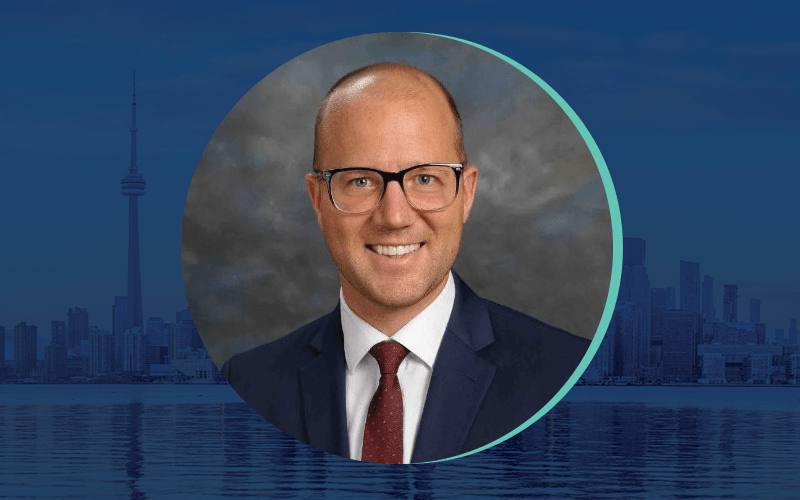
Mark Doble
Episode
Mark Doble is CEO of Alexsei – an advanced artificial intelligence platform delivering affordable and high-quality answers to legal questions in memo...
Key takeaways
- Building truly successful companies takes significant time and often requires founders to work without salary for extended periods while staying focused on the long-term vision.
- The best startup ideas are often contrarian—most people don't believe they're good ideas at first, but if they're true, the key challenge becomes convincing the market of that truth.
- Obsessing about your customer and the value you provide them is essential—if you build something people absolutely love, that value will return to you.
- Understanding your market segments in far more detail than you initially think necessary is critical for optimizing your sales strategy and go-to-market approach.
- Successful legal technology requires bringing together two very different cultures—lawyers and software engineers—who have historically not interacted enough despite the profound potential of their collaboration.
Transcript
Full transcript page · Interactive episode
============================================================
TRANSCRIPTION WITH SPEAKERS
============================================================

[00:00] SPEAKER_00: It's Toronto's podcast on the Canada's podcast network.
[00:04] Speaker UNKNOWN: [♪ OUTRO MUSIC PLAYING [♪
[00:19] SPEAKER_00: Hi everyone, I'm Phil Bliss, a business visionary,
[00:22] SPEAKER_00: and welcome to Toronto's Podcasts.
[00:24] SPEAKER_00: Part of the Canada's podcast network,
[00:26] SPEAKER_00: your source of the great insights
[00:28] SPEAKER_00: from entrepreneurs across Canada.
[00:31] SPEAKER_00: Today I'd like to introduce you to Mark Doble.
[00:34] SPEAKER_00: Mark is a lawyer and a software developer
[00:36] SPEAKER_00: with a passion for leveraging software
[00:39] SPEAKER_00: to make the law more affordable and more understandable.
[00:43] SPEAKER_00: He received his GAD from Queens University
[00:45] SPEAKER_00: and his new venture, Alexei,
[00:48] SPEAKER_00: is using artificial intelligence
[00:50] SPEAKER_00: to transform the practice of law
[00:52] SPEAKER_00: in a pretty dramatic fashion.
[00:55] SPEAKER_00: In a previous life,
[00:56] SPEAKER_00: Mark was a professional cross-country skier and coach.
[01:00] SPEAKER_00: Mark also holds a patent for snow-bliding devices
[01:03] SPEAKER_00: that allows for nonlinear flex in alpine and cross-country skis.
[01:09] SPEAKER_00: So Mark, welcome to Canada's podcast.
[01:12] SPEAKER_00: Thanks Phil.
[01:13] SPEAKER_00: Tell us a bit about yourself, you know, your story,
[01:16] SPEAKER_00: you know, where you are today.
[01:18] SPEAKER_00: The company has an existing day.
[01:21] SPEAKER_01: Yeah, for sure.
[01:21] SPEAKER_01: So we are a small-ish team of about 10 people
[01:26] SPEAKER_01: and we're a legal technology company.
[01:30] SPEAKER_01: So we're combining brilliant machine learning
[01:34] SPEAKER_01: and engineer machine learning technologies,
[01:36] SPEAKER_01: artificial intelligence with brilliant lawyers
[01:38] SPEAKER_01: to provide really high-quality answers
[01:41] SPEAKER_01: to our client's legal questions
[01:44] SPEAKER_01: and all of our clients are lawyers and other law firms.
[01:48] SPEAKER_00: So Mark, why aren't you working as a lawyer?
[01:51] SPEAKER_00: You know, you've got a GAD from Queens.
[01:55] SPEAKER_00: What do you do with technology?
[01:58] SPEAKER_01: Yeah, yeah.
[01:58] SPEAKER_01: Well, during law school,
[02:00] SPEAKER_01: I had quite a bit of interest in software
[02:03] SPEAKER_01: and spent half of my time reading,
[02:05] SPEAKER_01: which probably should have been all of my time,
[02:08] SPEAKER_01: but the other half was spent building little things
[02:11] SPEAKER_01: on the side and really getting into the weeds in software
[02:15] SPEAKER_01: and in particular machine learning.
[02:17] SPEAKER_01: And I just saw that the impact that this technology
[02:20] SPEAKER_01: it was going to have on the law was profound.
[02:24] SPEAKER_01: And as somebody just starting out in the profession,
[02:28] SPEAKER_01: it was something I really wanted to be
[02:30] SPEAKER_01: and it really excited me.
[02:32] SPEAKER_01: I love the law.
[02:33] SPEAKER_01: I love studying the law, reading about the law,
[02:36] SPEAKER_01: but it was something about artificial intelligence
[02:39] SPEAKER_01: and software in particular,
[02:41] SPEAKER_01: the ability to scale software
[02:43] SPEAKER_01: that was really exciting for me.
[02:46] SPEAKER_00: You are differently.
[02:47] SPEAKER_00: I mean, I think entrepreneurs are wired differently.
[02:50] SPEAKER_01: It's probably the kind of question
[02:52] SPEAKER_01: that asks my wife and friends,
[02:54] SPEAKER_01: but I think what they might say,
[02:58] SPEAKER_01: what my wife might say is I'm fairly ordinary,
[03:03] SPEAKER_01: but I do think that I'm less content with status quo
[03:09] SPEAKER_01: than most people.
[03:10] SPEAKER_01: I'm less content with the daily grind working
[03:15] SPEAKER_01: for somebody else, completing tasks and to do lists.
[03:21] SPEAKER_00: I was interested in, yes, you saw an opportunity,
[03:27] SPEAKER_00: but you dive into this with no sense of income.
[03:32] SPEAKER_00: Why did you do that?
[03:33] SPEAKER_00: How did you come up and start swimming?
[03:37] SPEAKER_00: Because that's always the big thing for entrepreneurs.
[03:40] SPEAKER_00: It's really, people have lots of ideas,
[03:43] SPEAKER_00: but it's taking that big dive off the edge
[03:48] SPEAKER_00: and coming up for air or not.
[03:51] SPEAKER_01: Well, it is one of the most difficult things,
[03:54] SPEAKER_01: it's not the most difficult thing I've ever done in my life,
[03:58] SPEAKER_01: no doubt, but at the same time,
[03:59] SPEAKER_01: while it might have appeared very risky, very uncertain,
[04:05] SPEAKER_01: it seems like at the time,
[04:08] SPEAKER_01: it still seems like looking back,
[04:10] SPEAKER_01: the most rational thing I could have done.
[04:13] SPEAKER_01: And I just had to do it.
[04:15] SPEAKER_01: I just had to do it.
[04:16] SPEAKER_01: And there was really no other option.
[04:19] SPEAKER_01: And it was the idea of building capital in a company,
[04:24] SPEAKER_01: building an asset with value that,
[04:28] SPEAKER_01: if I'm successful, if we're successful in this company,
[04:31] SPEAKER_01: outlives my time working on the company,
[04:35] SPEAKER_01: the idea of that, which you only really get that
[04:38] SPEAKER_01: by starting a company.
[04:40] SPEAKER_00: That's profound, yeah.
[04:42] SPEAKER_00: Let's move on to more where we are in Toronto,
[04:46] SPEAKER_00: kind of think.
[04:46] SPEAKER_00: Well, actually, I'm in Hamilton, but you're in Toronto,
[04:49] SPEAKER_00: so we're in the general area, basically.
[04:53] SPEAKER_00: What are the benefits of doing business around here?
[04:57] SPEAKER_01: It's not an easy question to answer,
[05:00] SPEAKER_01: because on the one hand, the internet allows you to be anywhere.
[05:04] SPEAKER_01: And most of my work is just accessing the internet,
[05:08] SPEAKER_01: communicating with people across the internet.
[05:11] SPEAKER_01: And oftentimes I'm at the office,
[05:14] SPEAKER_01: and there's very few physical interactions
[05:17] SPEAKER_01: with other people.
[05:18] SPEAKER_01: And so some days I'm like, yeah, why are we here in Toronto?
[05:21] SPEAKER_01: It's the cause of living as high,
[05:23] SPEAKER_01: but it's the proximity to other people
[05:27] SPEAKER_01: that is really important in my view.
[05:31] SPEAKER_01: We might not have to be in Toronto every day,
[05:34] SPEAKER_01: Monday through Friday, every week of the year,
[05:37] SPEAKER_01: but there's so much innovation happening in Toronto
[05:39] SPEAKER_01: that it really is not just a hub for Canada,
[05:45] SPEAKER_01: but a hub for the world,
[05:46] SPEAKER_01: especially in machine learning and AI.
[05:48] SPEAKER_01: It's exceptional.
[05:50] Speaker UNKNOWN: Yeah, definitely is.
[05:52] SPEAKER_00: And that's a good reason.
[05:54] SPEAKER_00: What are some of the issues that your team has in the area?
[05:59] SPEAKER_01: Some of the issues, well, we're still,
[06:02] SPEAKER_01: even though there's 10 of us, we're largely a remote team.
[06:05] SPEAKER_01: We have a full-time employee in Vancouver,
[06:07] SPEAKER_01: we have full-time employee in Montreal,
[06:10] SPEAKER_01: we're quite distributed,
[06:12] SPEAKER_01: and we've had to build processes and ways of accommodating
[06:17] SPEAKER_01: for a distributed team.
[06:19] SPEAKER_01: But there's a lot of value I think that comes from that.
[06:22] SPEAKER_01: And the main downside is cost of living
[06:25] SPEAKER_01: and cost of operating a business in Toronto
[06:28] SPEAKER_01: that it's really expensive,
[06:30] SPEAKER_01: but it's expensive because there's lots of value
[06:34] SPEAKER_01: that comes from being here.
[06:36] SPEAKER_00: So this is more about the process.
[06:40] SPEAKER_00: I think being an entrepreneur is recognized on being.
[06:43] SPEAKER_00: You have to be fairly creative,
[06:45] SPEAKER_00: fairly innovative to succeed in entrepreneurship.
[06:49] SPEAKER_00: So some of our best ideas come where we least expect them.
[06:55] SPEAKER_00: How do you disconnect?
[06:57] SPEAKER_00: How do you reach out to somewhere,
[07:00] SPEAKER_00: especially you go to?
[07:01] SPEAKER_00: Is there some process that Mark's kind of evolved
[07:05] SPEAKER_00: at works for him?
[07:06] SPEAKER_00: I think it's really good to talk about it
[07:08] SPEAKER_00: because people can learn from that.
[07:10] SPEAKER_01: Yeah, really for me, it's something that with my wife
[07:14] SPEAKER_01: and my son and my extended family,
[07:17] SPEAKER_01: it's spending time with them
[07:20] SPEAKER_01: and learning how to do that properly
[07:22] SPEAKER_01: while completely disconnected.
[07:25] SPEAKER_01: It's in the first year of the company,
[07:27] SPEAKER_01: it was really difficult.
[07:29] SPEAKER_01: And we had to figure out ways to do that
[07:31] SPEAKER_01: and are still really figuring it out.
[07:33] SPEAKER_01: It's so easy to be connected all the time,
[07:35] SPEAKER_01: but having time with them is a way for me to recharge.
[07:40] SPEAKER_01: The best ideas have come from absolutely,
[07:43] SPEAKER_01: like you said, surprising locations
[07:45] SPEAKER_01: and at surprising times.
[07:47] SPEAKER_01: But I think it really is,
[07:49] SPEAKER_01: and it's something I've thought a lot about
[07:51] SPEAKER_01: because we are in the business
[07:53] SPEAKER_01: of trying to constantly invent new things
[07:55] SPEAKER_01: where it's a college-y company.
[07:57] SPEAKER_01: And the thing that I hear a lot of other people talk about
[08:00] SPEAKER_01: and I keep coming back to is that the best ideas,
[08:03] SPEAKER_01: most people do not think that they're a good idea
[08:07] SPEAKER_01: at the beginning.
[08:08] SPEAKER_01: So there is a contrarian idea that's ultimately
[08:11] SPEAKER_01: what leads to success.
[08:13] SPEAKER_01: It starts off as this contrarian idea
[08:17] SPEAKER_01: and it's rare that that's not the case.
[08:20] SPEAKER_01: And so if you imagine Airbnb, for example,
[08:23] SPEAKER_01: very contrarian idea early on,
[08:26] SPEAKER_01: very few people were signing up to be hosts
[08:29] SPEAKER_01: or staying in a host's house.
[08:31] SPEAKER_01: And the early business developers at Airbnb
[08:34] SPEAKER_01: they had to spend all this time
[08:35] SPEAKER_01: trying to convince other people of their contrarian idea
[08:38] SPEAKER_01: that it was true.
[08:39] SPEAKER_01: And so you have to have a contrarian idea.
[08:42] SPEAKER_01: It has to be true.
[08:43] SPEAKER_01: Most contrarian ideas are wrong also
[08:45] SPEAKER_01: and that's one of the big difficulties.
[08:48] SPEAKER_01: And then it's a matter of convincing the world
[08:51] SPEAKER_01: of this contrarian idea, the truth of this contrarian idea.
[08:55] SPEAKER_00: What are you most excited about in your business today?
[08:59] SPEAKER_01: The most exciting thing about our business today
[09:02] SPEAKER_01: is seeing these two worlds of lawyers
[09:06] SPEAKER_01: and machine learning software engineers
[09:10] SPEAKER_01: coming together to build something
[09:12] SPEAKER_01: that has never existed before.
[09:14] SPEAKER_01: And there's been a real slow development
[09:17] SPEAKER_01: in my view of legal technology.
[09:20] SPEAKER_01: There's a few examples and successes out there
[09:23] SPEAKER_01: but nowhere near as many as there should be.
[09:26] SPEAKER_01: And I think in large part,
[09:27] SPEAKER_01: it's because they're two totally different cultures,
[09:30] SPEAKER_01: two totally different types of people,
[09:32] SPEAKER_01: ways of thinking that have not interacted anywhere near enough.
[09:37] SPEAKER_01: And that's really what we're seeing come together now
[09:40] SPEAKER_01: and that that's really exciting.
[09:43] SPEAKER_00: What drives you forward?
[09:45] SPEAKER_00: You hit barriers, we all hit barriers.
[09:49] SPEAKER_00: What takes you around the wall or over the wall?
[09:53] SPEAKER_00: Is there something there that people should know about
[09:56] SPEAKER_00: that if you didn't have it,
[09:59] SPEAKER_00: you couldn't get around the wall?
[10:01] SPEAKER_01: I really think it is, it starts,
[10:04] SPEAKER_01: I mean, it's gonna be different for every person.
[10:07] SPEAKER_01: But for me, I like to think that I'm fairly rational.
[10:11] SPEAKER_01: I look at things objectively.
[10:13] SPEAKER_01: If there is something we need to fix,
[10:15] SPEAKER_01: I try and fix it, I don't avoid it.
[10:18] SPEAKER_01: But it's also the knowledge that really great companies
[10:22] SPEAKER_01: take a long time to build.
[10:25] SPEAKER_01: And I didn't take a salary for a whole year
[10:28] SPEAKER_01: or slightly over a year, right?
[10:30] SPEAKER_01: And that's not uncommon often times,
[10:32] SPEAKER_01: it's even more than that.
[10:33] SPEAKER_01: And I can barely say that we're definitely below market salary
[10:39] SPEAKER_01: is now for the founders of the company.
[10:41] SPEAKER_01: But it's just knowing that it takes time
[10:44] SPEAKER_01: and these things don't happen overnight.
[10:48] SPEAKER_01: And so with that knowledge,
[10:49] SPEAKER_01: knowing believing that that is absolutely true,
[10:52] SPEAKER_01: any downs, I know that it's likely
[10:55] SPEAKER_01: there's gonna be an up next week or tomorrow, maybe, right?
[10:58] SPEAKER_01: And so yeah.
[11:00] SPEAKER_00: What are the top three things on your vision board
[11:04] SPEAKER_00: bucket list, whatever you call it today?
[11:07] SPEAKER_00: You know, there ought to be business,
[11:08] SPEAKER_00: there may never be family.
[11:09] SPEAKER_01: Yeah.
[11:11] SPEAKER_01: We're so focused on the specific problem
[11:14] SPEAKER_01: that we're solving.
[11:15] SPEAKER_01: And it is a very hard technical problem,
[11:17] SPEAKER_01: but it's a very hard marketing problem also.
[11:22] SPEAKER_01: We're building automation for an industry
[11:25] SPEAKER_01: that has been fairly insular, very well protected.
[11:30] SPEAKER_01: It's highly regulated.
[11:32] SPEAKER_01: And a lot of the people in the industry,
[11:34] SPEAKER_01: a lot of lawyers, especially graduating lawyers,
[11:37] SPEAKER_01: they're concerned about jobs, job replacement.
[11:40] SPEAKER_01: And that's understandable.
[11:43] SPEAKER_01: So we're building automation in this industry
[11:47] SPEAKER_01: that we ultimately think will increase the amount of jobs,
[11:51] SPEAKER_01: although it's very counterintuitive to understand that.
[11:55] SPEAKER_01: And so there's a very hard technical problem,
[11:58] SPEAKER_01: there's a hard marketing problem,
[12:00] SPEAKER_01: and it's trying to solve these problems
[12:02] SPEAKER_01: that is really exciting.
[12:06] SPEAKER_00: What do you know now that you wish you knew
[12:08] SPEAKER_00: when you were starting the business?
[12:10] SPEAKER_01: The biggest lesson for us in the first year
[12:15] SPEAKER_01: was which segment of the market is more likely
[12:19] SPEAKER_01: to adopt this sort of product.
[12:22] SPEAKER_01: And early on, we just said,
[12:23] SPEAKER_01: well, it's a product for all lawyers.
[12:25] SPEAKER_01: And if you're a lawyer, we want to talk to you.
[12:28] SPEAKER_01: And now we know that that was a very bad approach
[12:32] SPEAKER_01: and that there's subtle differences
[12:34] SPEAKER_01: between various segments of the market
[12:38] SPEAKER_01: and really understanding those differences
[12:40] SPEAKER_01: between the segments has been really important
[12:43] SPEAKER_01: in terms of how we optimize our sales process,
[12:46] SPEAKER_01: our go-to-market generally.
[12:49] SPEAKER_01: And as a first-time entrepreneur,
[12:53] SPEAKER_01: I was not aware of the importance
[12:55] SPEAKER_01: of really understanding the market in far more detail
[12:58] SPEAKER_01: than I thought was important.
[13:00] SPEAKER_01: I'm a lawyer myself, I didn't practice right out of article
[13:04] SPEAKER_01: and I started this company.
[13:05] SPEAKER_01: And so I thought I had enough information about the lawyer
[13:09] SPEAKER_01: and what they do in a law firm
[13:11] SPEAKER_01: and where all the law firms are.
[13:13] SPEAKER_01: But there was far more information I needed to know
[13:16] SPEAKER_01: and I needed to study the market far more
[13:18] SPEAKER_01: to better plan a sales strategy.
[13:21] SPEAKER_00: And so what you're saying is,
[13:23] SPEAKER_00: don't just go in with a good idea,
[13:25] SPEAKER_00: spend a lot more time doing analysis,
[13:29] SPEAKER_00: not with paralysis, but pretty down close.
[13:32] SPEAKER_01: Absolutely.
[13:33] SPEAKER_01: Because it is the convincing people of a contrarian idea
[13:37] SPEAKER_01: that you believe is right, that is really difficult
[13:40] SPEAKER_01: and you need to become excellent at that regardless
[13:43] SPEAKER_01: of the technology.
[13:45] SPEAKER_00: What advice would you give an entrepreneur
[13:46] SPEAKER_00: looking to start a business in Toronto?
[13:49] SPEAKER_00: I mean, maybe just work to situate yourself
[13:52] SPEAKER_00: what it can be all kinds of things.
[13:55] SPEAKER_01: So the number one thing,
[13:57] SPEAKER_01: it all depends on what you want out of the business.
[14:02] SPEAKER_01: Are you looking to build a lifestyle business
[14:05] SPEAKER_01: where you perhaps have one or two employees
[14:08] SPEAKER_01: and you have a steady income every year
[14:10] SPEAKER_01: or are you looking to build a scalable company?
[14:13] SPEAKER_01: We're in the technology business,
[14:15] SPEAKER_01: the venture scale reach.
[14:18] SPEAKER_01: And that's so that's kind of where my head's at
[14:21] SPEAKER_01: and where the company's at.
[14:23] SPEAKER_01: That being said, there's one thing that's always true,
[14:27] SPEAKER_01: in my view, you have to provide a product or service
[14:30] SPEAKER_01: that people absolutely love and obsess about your customer,
[14:36] SPEAKER_01: obsess about the value you're providing them.
[14:39] SPEAKER_01: And if that's there, you'll have that value returned back to you.
[14:43] SPEAKER_00: What's the best piece of advice that you've ever received?
[14:47] SPEAKER_01: Yeah, there are several mentors that I've worked with formally
[14:52] SPEAKER_01: and formally.
[14:54] SPEAKER_01: I do a lot of reading.
[14:55] SPEAKER_01: I listen to a lot of podcasts.
[14:58] SPEAKER_01: And there's a lot that comes from all of that
[15:01] SPEAKER_01: and I'm trying to pick out.
[15:03] SPEAKER_01: There's a lot of different.
[15:04] SPEAKER_00: We come back to it.
[15:05] SPEAKER_00: So this is some what we turn rapid-fire things.
[15:08] SPEAKER_00: So if you weren't doing what you do for work now,
[15:11] SPEAKER_00: what would you be doing instead?
[15:13] SPEAKER_01: I would have started it.
[15:13] SPEAKER_00: You can't say lawyer.
[15:15] SPEAKER_00: No, you can't say it.
[15:15] SPEAKER_00: Yes, you can.
[15:16] SPEAKER_01: I would have started it just a different company.
[15:21] SPEAKER_00: OK, all right.
[15:21] SPEAKER_00: OK.
[15:22] SPEAKER_00: What book are you currently reading,
[15:25] SPEAKER_00: listening to whatever?
[15:28] SPEAKER_00: And what book or books would you recommend to the audience?
[15:32] SPEAKER_00: Obviously, we're the focus on business and entrepreneurship.
[15:35] SPEAKER_01: Well, I mean, good to great.
[15:38] SPEAKER_01: I've read a couple of times and I just started rereading it again.
[15:42] SPEAKER_01: Andy grows high-opput management, an exceptional book
[15:45] SPEAKER_01: that I would recommend to anybody, especially when
[15:49] SPEAKER_01: just trying to figure out how your organization
[15:51] SPEAKER_01: becomes operational as well as it's an incredible book.
[15:56] SPEAKER_00: Are you a morning or a night person?
[16:00] SPEAKER_01: Oh, is there a nighter?
[16:02] SPEAKER_01: I think I'm a nighter.
[16:03] SPEAKER_00: I can't make that.
[16:04] SPEAKER_00: I can do what I think.
[16:05] SPEAKER_00: I've got to have that response.
[16:07] SPEAKER_01: I normally stop working.
[16:10] SPEAKER_01: The latest I would work is probably 1030.
[16:13] SPEAKER_01: I'm normally up at 7.
[16:15] SPEAKER_00: If you had to pick one word to describe yourself,
[16:17] SPEAKER_00: what would it be?
[16:18] SPEAKER_00: And why?
[16:18] SPEAKER_00: I think one persistent.
[16:24] SPEAKER_00: That's a very common word and theme that we've heard.
[16:28] SPEAKER_00: If you listen to some of our podcasts,
[16:31] SPEAKER_00: you'll find that comes up a lot.
[16:33] SPEAKER_01: And the reason I picked that, honestly,
[16:36] SPEAKER_01: is because I think my wife said that to me the other day.
[16:40] SPEAKER_01: And that's OK.
[16:41] SPEAKER_01: Well, maybe a nighter.
[16:42] SPEAKER_00: Well, that's a good reason.
[16:43] SPEAKER_00: That's a good reason.
[16:45] SPEAKER_00: What's keeping you up at night these days, if anything?
[16:48] SPEAKER_01: I have a two-year-old son who has started temper tantrums
[16:51] SPEAKER_01: and he's the main reason.
[16:54] SPEAKER_01: I'm up at night at 10.
[16:56] SPEAKER_00: What's your favorite place in the world?
[16:59] SPEAKER_01: Wherever my family is.
[17:01] SPEAKER_01: It doesn't really...
[17:02] SPEAKER_01: I'm more focused on the people that I'm around,
[17:04] SPEAKER_01: as opposed to a specific location.
[17:07] SPEAKER_00: This is sort of the routine question.
[17:10] SPEAKER_00: What are the three non-negotiables
[17:11] SPEAKER_00: that have to happen in the morning or evening routine?
[17:15] SPEAKER_01: In the morning coffee,
[17:18] SPEAKER_01: not non-negotiable.
[17:19] SPEAKER_01: I probably haven't...
[17:19] SPEAKER_01: There hasn't been a day where I haven't had coffee in at least a decade.
[17:23] SPEAKER_01: And, yeah, I think that's probably the only thing.
[17:26] SPEAKER_00: OK. OK.
[17:27] SPEAKER_00: So this one, this is what I ask everybody.
[17:30] SPEAKER_00: There's a small tropical island in the middle of the ocean
[17:34] SPEAKER_00: with only one phone booth and no internet.
[17:37] SPEAKER_00: We drop you off there with no technology.
[17:39] SPEAKER_00: At any time, you can use the phone booths on the island
[17:42] SPEAKER_00: to call the boat back.
[17:43] SPEAKER_00: And we'll come and pick you up.
[17:45] SPEAKER_00: How long would you last before making that call?
[17:48] SPEAKER_00: And what would you do until then?
[17:51] SPEAKER_01: I don't see a reason why I would not make the call right away.
[17:55] SPEAKER_01: I would be concerned for my...
[17:59] SPEAKER_00: That's fine. That's a good quote.
[18:01] SPEAKER_00: That's a good one.
[18:03] SPEAKER_00: I can see some people...
[18:04] SPEAKER_01: Some people want to hang out on the island for a little bit.
[18:06] SPEAKER_01: It's a...
[18:08] SPEAKER_00: We've had yours.
[18:09] SPEAKER_00: Is a common response.
[18:10] SPEAKER_00: Other one is, I will stay for a few days and...
[18:13] Speaker UNKNOWN: Or I'll stay with you.
[18:14] SPEAKER_01: As soon as you said no internet, I said,
[18:16] SPEAKER_01: I need out of this situation.
[18:20] SPEAKER_00: OK, Mark, look, we're coming to the end here.
[18:23] SPEAKER_00: But, you know, thank you for the interview.
[18:26] SPEAKER_00: Where can our listeners find you online?
[18:28] SPEAKER_00: And you know, because say,
[18:30] SPEAKER_00: listen to this.
[18:31] SPEAKER_00: People sometimes want to connect.
[18:33] SPEAKER_01: Yeah, you just email me is probably the best bet, Mark,
[18:36] SPEAKER_01: with a K at Alexe.com and that's Alex,
[18:40] SPEAKER_01: A-L-E-X-S-E-I.com.
[18:44] SPEAKER_00: Well, Mark, thank you so much for coming out of Canada's podcast,
[18:49] SPEAKER_00: which is a really nice meeting you.
[18:51] SPEAKER_00: And I'm sure there's some gems in there that are listening to love.
[18:56] SPEAKER_00: Thank you.
[18:56] SPEAKER_01: Thank you, Phil. Really appreciate it.
[18:58] SPEAKER_01: And I'll be certain to subscribe and you can count me as another one of your listeners.
[19:05] SPEAKER_00: Thanks, everyone, for taking the time today to listen to Toronto's podcast
[19:08] SPEAKER_00: on the Canada's podcast network.
[19:11] SPEAKER_00: I hope you enjoyed the podcast today.
[19:14] SPEAKER_00: Make sure you sign up for a newsletters or write a review for us on iTunes.
[19:18] SPEAKER_00: You can connect with us on Twitter, Facebook, Instagram, LinkedIn,
[19:22] SPEAKER_00: or at canterspodcast.com, where you can listen, discover and engage.
[19:27] SPEAKER_00: You can also check out what other entrepreneurs are doing across the country.
[19:31] SPEAKER_00: We'll see you next time.