
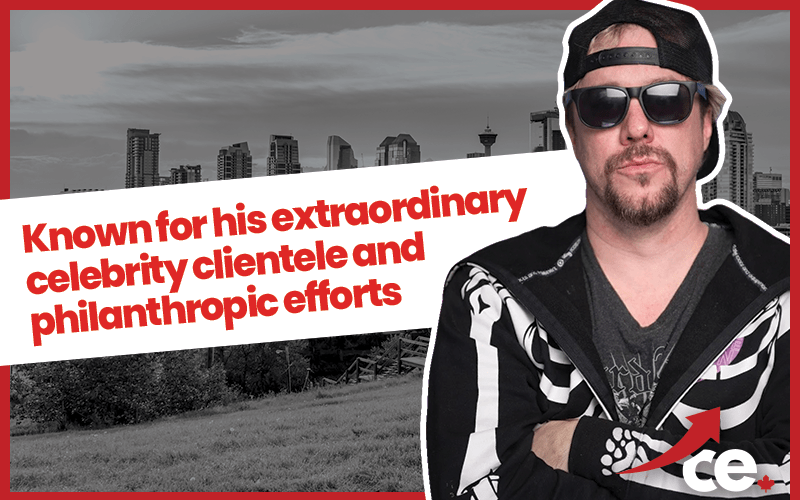
Known for his extraordinary celebrity clientele and philanthropic efforts
Watch episode
Episode
Chris Tutty is a local boy, born and raised in Calgary, Alberta, Canada. His love of the arts could...
Key takeaways
- Transparency and honesty in showing where artwork proceeds go makes it easier to connect with successful people and build lasting supporter relationships.
- Artists need to wear many hats including web designer, graphic designer, content creator, and marketer while learning to cut out middlemen to make art accessible and profitable.
- Creating diverse product lines from original artwork like mugs, keychains, and coasters at various price points helps reach broader markets and maintain steady income between major sales.
- Staying current with pop culture through streaming services and understanding different regional markets is essential for creating artwork that resonates with buyers across various demographics.
- Building a mobile art gallery by attending events and meeting people face-to-face is more effective than waiting for gallery representation or expecting artwork to sell itself.
Transcript
Full transcript page · Interactive episode
============================================================
TRANSCRIPTION WITH SPEAKERS
============================================================

[00:00] SPEAKER_00: Welcome to Canada's Entrepreneur, where we talk to the entrepreneurs who are making it happen
[00:05] SPEAKER_00: across Canada and deliver the news, trends, knowledge and opinions from entrepreneurs and business
[00:13] SPEAKER_02: influences across the country. Hello, I'm Mario Toniguchi, managing editor of Canada's Entrepreneur.
[00:22] SPEAKER_02: My guest today on Calgary's podcast is Chris Tutty, who is an artist and an entrepreneur in Calgary
[00:29] SPEAKER_02: thanks for joining us today, Chris. Hey, thanks for having me. Okay, I noticed the colorful
[00:37] SPEAKER_02: background you have and are those some of your works of art? Uh, yep, the sure are. My house is
[00:45] SPEAKER_01: definitely a very colorful place. A lot of my artwork hangs within it. You can't get overspray
[00:52] SPEAKER_01: on it, so it can't really leave it in the shop, so to say. Yeah, so tell me just a little bit about
[00:58] SPEAKER_01: what you do, Chris. And for the most part, I've always inspired to be an artist. I mean, I've
[01:04] SPEAKER_01: definitely gone down different channels in life and occupations, but it's kind of brought me
[01:10] SPEAKER_01: full circle back to artwork. And as an artist, I think you know, you always need to be pursuing it
[01:19] SPEAKER_01: in one way or another in life. And so in life's and derives, full circle, I'm back to being a full
[01:26] SPEAKER_01: time artist in my middle life, I guess you can call it. And what are your subject material?
[01:33] SPEAKER_01: Well, I think that as a young kid, they definitely tried to pitch in a hole anybody as an artist.
[01:39] SPEAKER_01: You know, you're going to be a wildlife artist or you're going to be a cartoonist or, you know,
[01:45] SPEAKER_01: one of the most popular but most challenging aspects of art is definitely portrait art. I mean,
[01:52] SPEAKER_01: if one little mistake, you know, you don't capture the known as properly the lips or the eyes.
[01:58] SPEAKER_01: So I gravitated more towards celebrity art and music because I'm involved in involved in a lot
[02:06] SPEAKER_01: of music as well as some of the entertainments in the arts as well. So that gravitated towards that.
[02:14] SPEAKER_01: So I do a lot of portraits and I try to get some famous people assigned those portraits and then
[02:19] SPEAKER_01: and turn do good. So I have a different business model than most. I'm not in a lot of galleries anymore.
[02:26] SPEAKER_01: I like to at least give half the proceeds of my artwork to any type of a worthy cause.
[02:33] SPEAKER_02: Well, interesting. Yeah. So give me a, I guess, a range of some of the most interesting
[02:41] SPEAKER_02: portraits you've done or if you've felt you've done over the years.
[02:44] SPEAKER_01: Wow. You're always trying to jump to shark as they say. I don't know if that's a term that a lot
[02:51] SPEAKER_01: people would understand nowadays, but the TV show Happy Days, of course. So when the ratings went
[02:56] SPEAKER_01: down, Fonzie had to jump to shark. So for me, I go, it's always what have you done lately.
[03:02] SPEAKER_01: You know, I mean, three years ago, I had the meeting Kevin Costner getting him to sign some artwork
[03:09] SPEAKER_01: for me and we raised money for the Veterans Association and we raised over $40,000 with that.
[03:16] SPEAKER_01: So that was amazing. And I think that the more transparency and the more honesty that
[03:22] SPEAKER_01: with people, the easier it is to connect with successful people. I think that that's where a lot
[03:27] SPEAKER_01: of us miss the boat is that transparency showing people and giving a fair accounting of where
[03:34] SPEAKER_01: their artwork goes and what cause that it goes to. So things have definitely been easier for me.
[03:39] SPEAKER_01: I have a lot of people that in my corner, not just family and friends, but you know, lifelong family
[03:47] SPEAKER_01: friends. People like Bill Brown from Elevated Auctions supported my artwork. Steve Gellis is a big
[03:53] SPEAKER_01: supporter as well. We do music for mental house. So, you know, when you get a good group of people
[03:59] SPEAKER_01: around you that believe and you believe what you do, you're only going to get better.
[04:06] SPEAKER_02: For some of the people you've met along the way, some of the most famous people.
[04:14] SPEAKER_01: Well, Morgan Freeman was one. I was able to do some artwork for the Tallahassee River Foundation.
[04:19] SPEAKER_01: So he's big into that and it's actually bringing education to the kids. You know, a lot of people
[04:28] SPEAKER_01: don't really understand the way of life, you know, even in New Orleans, Hurricane Katrina, like
[04:33] SPEAKER_01: the amount of people that are actually living in the sticks in actual poverty. So that was a pretty
[04:39] SPEAKER_01: big accomplishment for me. They got me a lot of attention as well. The Kevin Costner thing.
[04:46] SPEAKER_01: Through music for mental health and Steve Gellis, I've gotten the chance to meet everybody from
[04:52] SPEAKER_01: kiss to Metallica, Ozzy Ozborn. So, and I think it's really neat that, you know, I mean, a lot
[05:01] SPEAKER_01: of us are surrounded by yes people, you know, it's good to encourage people, I think, but at the same time,
[05:06] SPEAKER_01: if you're not really on the right career path, I don't know if you always need that encouragement.
[05:12] SPEAKER_01: I don't want to hurt anyone's feelings, but maybe somebody needs to tell somebody sometimes that,
[05:18] SPEAKER_01: you know, you're not really that good at this, but it means a lot to me when you see somebody
[05:23] SPEAKER_01: who's images been immortalized, has been painted, and created a million times over, and they look
[05:30] SPEAKER_01: at what you've created. And you can see that little spark in your eye. I think Ice Cube was a big one
[05:36] SPEAKER_01: for me. He's a pretty hardcore gangster. And that's his persona. And when he signed the painting of
[05:43] SPEAKER_01: me, I could see that little twinkle in his eye like he, he proved up what I created. I really
[05:50] SPEAKER_01: try to tell a story through my artwork. I think that that's really important to try and get
[05:56] SPEAKER_01: into the subject matter and to understand it and to appreciate it, you know, I mean. So, that's
[06:03] SPEAKER_01: the part of my journey, I guess, but the nice thing is, is that I am able to not only move people
[06:10] SPEAKER_01: emotionally with my artwork, but also to contribute back and I think a lot of people don't really
[06:16] SPEAKER_01: understand the sense of community and how important it is to give back and to have a purpose and
[06:24] SPEAKER_01: life or a mission that makes you feel good about looking in the mirror every day. Yeah. Now,
[06:32] SPEAKER_02: we run into each other a little while ago at the Calgary Blues Festival, and you know, it was fun.
[06:40] SPEAKER_02: You have a great time. Nice little tent there with that stuff that you were selling. And
[06:50] SPEAKER_02: one of the things that drew my attention was the picture you had of the Hanson Brothers,
[06:55] SPEAKER_02: a slap shot movie fame. And you joined them with glasses and all. What was it like?
[07:02] SPEAKER_01: An iconic movie for Canadians who love hockey, right? The rest of my office, if you're able to
[07:09] SPEAKER_01: see past the cameras in the other direction or actually pictures of all the Hanson Brothers here
[07:14] SPEAKER_01: for my office right now. So I've got Jeff here. I've got Steve Hanson here. I've got
[07:19] SPEAKER_01: Jack. I've really became really good friends with Dave Hanson as well as Steve Carlson who portrays
[07:29] SPEAKER_01: Steve Hanson on the shows. So they bought my mugs. They've used my images for autographs,
[07:36] SPEAKER_01: these guys are just amazing ambassadors for hockey. You know, my whole life I dreamed
[07:42] SPEAKER_01: of playing a hockey player, but unfortunately I didn't grow until later in life. So I had a broken
[07:47] SPEAKER_01: color bone and I still have some issues with my shoulder. But, you know, I've got to hang out
[07:53] SPEAKER_01: with them several times as well. I know Murray Fiegel did an event with them too as well where they
[07:58] SPEAKER_01: came down. And we've just had a lot of laughs and choking around. But as for international, like
[08:05] SPEAKER_01: the Hanson Brothers are in for hockey. Like you go to the States, in the United States, and
[08:10] SPEAKER_01: Grestkis popular, but hockey isn't really that big of a thing when it comes to artwork. But
[08:17] SPEAKER_01: the Hanson Brothers, that's a sure hit. And those guys are hilarious. They're a lot of fun. So
[08:23] SPEAKER_01: I've really enjoyed my time working with those guys. Okay, let's get back in terms of the actual
[08:31] SPEAKER_02: art of what you do. How long usually does it take you to do a portrait?
[08:39] SPEAKER_01: I definitely think with time people develop at home skills. I mean, one skill I've really had
[08:44] SPEAKER_01: to learn as organization. So, you know, you really need to attack a lot of artwork unfortunately.
[08:52] SPEAKER_01: Like you would any type of a business deal, I guess, or you know, whether it's your making a movie,
[09:02] SPEAKER_01: whether you're building a house, you need to look at the financial aspect of it. I mean,
[09:07] SPEAKER_01: sometimes it takes me up to a month to paint a picture. Now, if that painting doesn't sell,
[09:13] SPEAKER_01: or you know, I've also realized that sometimes high-end artwork, it doesn't always sell. So, you need
[09:18] SPEAKER_01: to look at the bigger picture. Are you painting something that could be marketable in other areas?
[09:24] SPEAKER_01: So, you know, I mean, a lot of artists think they're too good to go out and press
[09:29] SPEAKER_01: flash her or meet people. And so, I've kind of thought, you know, that's stupid. Why not go out to
[09:34] SPEAKER_01: events, meet people, have a little bit of a mobile art gallery, like a bit of event and your thing,
[09:40] SPEAKER_01: and make your artwork accessible to everybody. So, in order to cut out the middleman, I've done
[09:45] SPEAKER_01: everything from learning how to make ceramic mugs with my images on it, key chains,
[09:54] SPEAKER_01: smaller bottle of hers even, chapstick holders, coasters, you name it in order to kind of bring my art
[10:03] SPEAKER_01: to those people and to market it. But like you said, sometimes you spend a month painting something,
[10:08] SPEAKER_01: it might not sell all the time. It's like, it could be like an exotic card, you gotta find the right
[10:13] SPEAKER_01: person. And there's very small markets. So, you know, baseball is bigger in the states that it
[10:18] SPEAKER_01: is in Canada. Hawkees bigger in Canada, you know, oilers, paintings don't sell very well in
[10:24] SPEAKER_01: Calgary because of the battle of Alberta, right? Calgary needs a pretty stubborn in that way.
[10:29] SPEAKER_01: In fact, I think it was only up until about maybe 15 years ago that you were allowed to really
[10:34] SPEAKER_01: wear an oilers jersey and feel safe at the sound of it. True.
[10:40] SPEAKER_02: Yeah. Hey, I'm just curious. So, a good friend of mine is a fellow artist, Paul Van
[10:50] SPEAKER_01: Ginkel. Oh, wow. I got mad respect for that guy. He's been around and added for years.
[10:56] SPEAKER_01: And I can see he's starting to evolve to marketing wise. Yeah. Well, you know what? I've
[11:10] SPEAKER_02: said to me is that he had two jobs, right? He had the job of being the artist, then he had the job
[11:16] SPEAKER_02: of being the business person. How do you, he's got his hat on. How do you feel about that?
[11:24] SPEAKER_01: How do you juggle the two aspects of what you do? I'm not going to lie to you. It is really hard,
[11:30] SPEAKER_01: but if you want to succeed in life, you gotta wear many hats, my friend, you know? I mean,
[11:35] SPEAKER_01: you got me. I am the web designer. I'm the graphic artist, the graphic designer.
[11:42] SPEAKER_01: I do all of my reels for like yourself. I mean, I've got I edit, I create the content, I write
[11:50] SPEAKER_01: the content because you're becoming more professional artists. It's expected for you to come up
[11:55] SPEAKER_01: with a title for the artwork, a description, possibly even your experience. Like I call the
[12:02] SPEAKER_01: the Stevie Ray Vaughn painting Texas Pride because back in the day, he's a
[12:10] SPEAKER_01: a taxon and he's got that song Pride and Joy. But when I first met him as a kid at the Jubilee
[12:16] SPEAKER_01: Auditorium, I said kids wanted to be cool and be adults. We also used to drink Texas Pride,
[12:23] SPEAKER_01: which was a non-alcoholic beer that you could buy in the grocery store. So I know what it's like
[12:29] SPEAKER_01: having to maintain all these aspects. And if you don't like, I mean, I make mugs and sell them to
[12:34] SPEAKER_01: people for $10. Well, that and still make a profit because I make those mugs myself with my
[12:41] SPEAKER_01: proprietary images on it. But I mean, to get the same mug made at a cheap place like Walmart,
[12:46] SPEAKER_01: it costs $16. So if you know if you know the law is a business, you gotta sell something for at
[12:51] SPEAKER_01: least three times that amount. No one's gonna buy an 11 ounce mug for $60, are they? Yeah, that's true.
[12:59] SPEAKER_01: Do you have a routine? Getting into a better routine, I think, with my artwork,
[13:08] SPEAKER_01: trying to focus days where it might be more computer work or uploading new images or new product
[13:14] SPEAKER_01: to my website. But life is not routine, you know, I mean, unfortunately, I do try to motivate
[13:23] SPEAKER_01: myself with events, like trying to target market them. Just because it's a blues event,
[13:28] SPEAKER_01: you can say, you know, BB King and Stevie Ray Monor are gonna do well, but I found out that that
[13:34] SPEAKER_01: was not the case, that, that, you know, spending the time motivating myself to create some artwork
[13:40] SPEAKER_01: for a special event. It went really well, you know, but I mean, sometimes you go to golf tournaments
[13:46] SPEAKER_01: and now I'm selling Taylor Swift stuff to dads for their daughters or grandfathers for their grand
[13:52] SPEAKER_01: daughters. So, you know, it used to be more hockey and sports, they were in Tated, but, you know,
[13:57] SPEAKER_01: somebody who is popular as Taylor Swift, you know, I mean, there's a need and a niche for those
[14:04] SPEAKER_01: type of things. And again, if you get too pigeon-wold into only painting certain type of things,
[14:09] SPEAKER_01: like I see Paul, for instance, he did a beautiful Mick Jagger painting where he used to own
[14:17] SPEAKER_01: horses or chuck wagons or, you know, different type of, of still life. I think you gotta always,
[14:25] SPEAKER_01: you know, be jumping as shark and trying to reach out to different people. And, you know,
[14:31] SPEAKER_01: this artworks on my wall here, it's not gonna sell itself, you know, I mean, so you gotta get out
[14:37] SPEAKER_01: there and, and meet people too as well. And I think I'm becoming a little more repruse like that in my,
[14:44] SPEAKER_01: I don't go out to bars as much anymore or nightclubs and that that young party and bucket anymore,
[14:50] SPEAKER_01: but I do go to charitable bets. We get the chance to sit down at the Simlux Society.
[14:56] SPEAKER_01: And again, there was a Taylor Swift painting up for grabs there. Before her, it was always Marilyn
[15:02] SPEAKER_01: Minerow, so she, she was the one that always made me, it mean, successful as an artist.
[15:08] SPEAKER_02: So, I guess Chris, you've got to sort of be on top of the current pop culture, right? To see
[15:19] SPEAKER_02: who's popular and who's not. Like, how do you do that? How do you stay on top of that?
[15:23] SPEAKER_01: Oh, it's cool that you asked that. Like, he had been talking to my dad. He had paid for a Netflix
[15:30] SPEAKER_01: family account, right? For me and his grandkids and stuff like that. And then he still continually pays
[15:38] SPEAKER_01: and allows me to use it. And his only reason to justify was that you kind of gotta be up to date
[15:45] SPEAKER_01: with current pop culture. And so, definitely, I do watch a lot of TV. In my foyer, I have a big
[15:51] SPEAKER_01: picture of a picky blinders, Thomas Shelby from the show, picky blinders too, as well. And that's
[15:59] SPEAKER_01: done well. So, you definitely, that's something I learned from my grandfather too, just because
[16:04] SPEAKER_01: you weren't born when it didn't happen. You know, doesn't mean that you don't have to be relevant
[16:09] SPEAKER_01: about that. And they were huge supporters of my artwork. It was almost embarrassing. Like,
[16:14] SPEAKER_01: any painting that I ever did, and I spent a long time on it, they would have framed. And
[16:19] SPEAKER_01: back in the day, I like to paint on gallery-wide canvas. I don't even paint on the sides,
[16:25] SPEAKER_01: right? But back in the day, like, they used to, uh, matte it, frame it, put, uh, museum quality
[16:32] SPEAKER_01: glass on it, but frame it. So, you know, you take a painting that you've done, or even a piece of
[16:37] SPEAKER_01: paper and next thing, you know, you spend in 1500 to 200 just to frame a picture. So, my grandparents
[16:43] SPEAKER_01: always frame my artwork and put it up there. But my grandfather, like you said, you know, you got to be
[16:50] SPEAKER_01: aware of it just because you weren't born in a certain time. I think you see some of the newer
[16:55] SPEAKER_01: generation, they're like, oh, well, I wasn't around. So, why should I know that? Well, we learned
[16:59] SPEAKER_01: from life's lessons and history does repeat itself, doesn't it? Yeah, that's true. You spend a lot of
[17:05] SPEAKER_02: time down south in California. Yeah, I do spend a lot of time in Los Angeles, for sure. Yeah,
[17:14] SPEAKER_01: when why is that? Uh, I think that there's a little bit more of an era of creativity there, and
[17:21] SPEAKER_01: there's a little more freedom, especially when it comes to spending. I think that if somebody really
[17:27] SPEAKER_01: likes something and they want it, they got to have it, you know, you get those orange county,
[17:31] SPEAKER_01: uh, the first wise orange county. And I've got a lot of good friends and networks, a really good
[17:39] SPEAKER_01: friend of mine, Josh Moral, who works on Young Interest as too, as well. And he's promoted a lot of
[17:45] SPEAKER_01: my artwork too, as well. It's just a great guy and all around, uh, type of person that most people
[17:51] SPEAKER_01: would aspire to be in a career in Hollywood. I like going to bars to that promote music and
[17:59] SPEAKER_01: the rainbow bar and grill. I got a lot of friends that there, they really have the lemmy lounge
[18:03] SPEAKER_01: there too, as well. So California's a cool culture. It really does embrace the arts too, as well.
[18:10] SPEAKER_01: Yeah, I think the Calgary could definitely be a little bit more like that. I know Emton has the
[18:14] SPEAKER_01: fringe fast and stuff like that too, as well. But unfortunately, the just doesn't as much money in
[18:21] SPEAKER_01: Canada, and there is in the US. I don't know if we can blame Trump for that, but
[18:25] SPEAKER_01: I don't, I try to avoid politics and religion at all costs when it comes to business. And that
[18:33] SPEAKER_01: seems like a good business model for me too. Would you ever do any political portraits?
[18:41] SPEAKER_01: I've been, no, I did paint Ronald Reagan funny that you should say that. And my buddy, Josh,
[18:47] SPEAKER_01: has in his dressing room in Los Angeles on Sunday, I'm gonna wrestle this, but, uh,
[18:54] SPEAKER_01: that's probably the only one I did. I really did look up going up in the 80s as a kid to
[19:00] SPEAKER_01: Toronto, I guess, I thought it was kind of neat that here's an actor to become president.
[19:05] SPEAKER_01: You know, I used to follow, you like jelly beans, I like jelly beans, you know, I like acting.
[19:11] SPEAKER_01: It wasn't a lot of the old-time westerns, and I do remember him as a young kid saying,
[19:15] SPEAKER_01: tear down that wall. You know, and I think sometimes that's what we need as a leader that
[19:23] SPEAKER_01: has as much power in the words that he says is the actions and the things that he does.
[19:29] SPEAKER_01: I guess Nancy Reagan was a little, uh, aside, but again, for that, I don't want to talk too much
[19:35] SPEAKER_01: about politics, but just say no to drugs, which was a big spill too as well. And, you know, I mean,
[19:42] SPEAKER_01: drugs are a big part of the epidemic too as well. So, me, I tried it as clean-leaving,
[19:48] SPEAKER_01: uh, I just came from the gym before I saw you. I tried to paint from six in the morning until two,
[19:54] SPEAKER_01: and I just tried to look after my health as I get older too. Yeah, well, we all. Well, that was
[19:59] SPEAKER_02: not excellent. Well, thanks so much, Chris, for joining us today. It was a lot of fun, man. It's
[20:05] SPEAKER_01: always fun running into you, and I followed your career for a long time. So, you know, uh,
[20:11] SPEAKER_01: what motivates you to get out of bed every day? Yeah, exactly. I don't know. That's a good question.
[20:18] SPEAKER_02: Some days, right? Yes, thanks, man. One last question. One last question. How do people get in touch
[20:24] SPEAKER_02: with you? Where then find you? I'm becoming very Googleful now, but I think that, uh, uh,
[20:31] SPEAKER_01: these phone went into you, D.D. Why? It's an Irish name to you, T.T. Why? Tuddy. But, uh, definitely,
[20:38] SPEAKER_01: Wild West Hollywood.ca is a website that I painstakingly worked on over the Christmas holidays. So,
[20:46] SPEAKER_01: I'm always taking feedback and trying to make that better, but, uh, that's a whole another world,
[20:52] SPEAKER_01: you know, uh, you need to know the shipping weights of your artwork, how it's like ways and boxes
[20:57] SPEAKER_01: and everything, but that would be the best way or, hey, if you're out and about in Calgary or you
[21:02] SPEAKER_01: got an, an adventure charity, uh, you know, contact me on my website and if there's a way that I
[21:08] SPEAKER_01: can help you out with some artwork, I'd be more than happy to do that. Okay, wonderful. Well, thanks so
[21:13] SPEAKER_01: much, Chris again for joining us today. All right. Thank you very much. It's been a pleasure talking
[21:17] SPEAKER_02: with you. Okay, that was Chris Tuddy, who is an artist and entrepreneur based in Calgary. I'm
[21:23] SPEAKER_02: Mario Toneguzi, managing editor of Canada's Entrepreneur. Thanks for joining us today.