
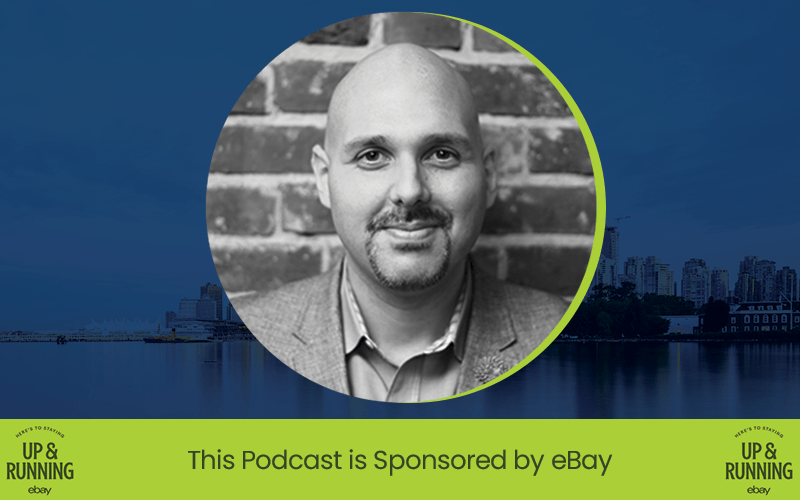
Karim Ben-Jaafar Has 15 Years Experience Scaling Rapid Growth Tech Startups, and Is One of the Most Sought After Speakers, Coaches and Leaders in the Tech Space
Episode
Karim Ben-Jaafar, President of Beanworks, talks about his company’s success onboarding the highest number of clients since inception during COVID...
Key takeaways
- Growth is formulaic and follows patterns based on your business quadrant defined by cash position and recovery timeline expectations.
- During recessions, value propositions centered on cost reduction and risk mitigation convert three times better than growth-focused messaging.
- The best companies will actually grow during downturns because inefficient competitors drop off, leaving more market share for well-run businesses.
- Look for leadership teams that demonstrate intelligence, coachability, and curiosity as these traits positively correlate with success more than any others.
- In low cash situations with fast recovery expectations, offer delayed billing or free trials now that convert to paid contracts when customers' cash flow improves.
Transcript
Full transcript page · Interactive episode
============================================================
TRANSCRIPTION WITH SPEAKERS
============================================================

[00:00] SPEAKER_03: This podcast is sponsored by eBay Canada.
[00:02] SPEAKER_03: eBay Canada is here to help.
[00:04] SPEAKER_03: They've been supporting Canadian small business retailers for 25 years
[00:08] SPEAKER_03: and have recently launched their up and running program
[00:11] SPEAKER_03: to meet an urgent need to get businesses online today.
[00:16] SPEAKER_03: New business sellers can get a free e-commerce store for 90 days
[00:19] SPEAKER_03: when they visit ebay.ca slash up and running.
[00:23] SPEAKER_03: Offer open until August 22nd.
[00:26] SPEAKER_00: It's Vancouver's podcast on the Canada's podcast network.
[00:31] SPEAKER_00: Hi, this is Angela Faye from Canada's podcast welcoming
[00:35] SPEAKER_00: Karim Benjafarer here from Vancouver today. Hi.
[00:39] SPEAKER_01: I enjoy it. So glad you to be here. Thank you for taking the time.
[00:42] SPEAKER_00: Absolutely. We're having we're having a beautiful blue sky day
[00:46] SPEAKER_00: over here on Vancouver Island. How about you and Vancouver?
[00:49] SPEAKER_01: Well, I suspect your background may be doctorate.
[00:53] SPEAKER_01: I'm not an expert.
[00:54] SPEAKER_00: Absolutely. It's not quite this, but it's not far off.
[00:58] SPEAKER_01: I'll take your word for it. That might be getting deep faked here.
[01:01] SPEAKER_01: But no, Vancouver is Vancouver in June, which we think it's sunny
[01:05] SPEAKER_01: and it's raining and we think it's raining.
[01:06] SPEAKER_01: And oh my god, the sun comes out. So we we can't.
[01:11] SPEAKER_00: We can probably have a whole entire podcast on the crazy, crazy and
[01:14] SPEAKER_00: beautiful things about Vancouver. But this is a little bit more about you.
[01:18] SPEAKER_00: So I would love to get more about your entrepreneurial journey.
[01:23] SPEAKER_01: Well, if it's about me, your your ships just dropped to one.
[01:29] SPEAKER_01: So real quick. Yeah, I've been in tech now for about 12 years,
[01:33] SPEAKER_01: specifically in Fentec. I was very, very lucky.
[01:36] SPEAKER_01: It was it was primarily right place for a time and joined a company
[01:39] SPEAKER_01: that went public. And then we spun out after that to another company
[01:43] SPEAKER_01: that was a founding employee. That was a three year journey.
[01:46] SPEAKER_01: Again, in Fentec specifically payments we were acquired.
[01:51] SPEAKER_01: And afterwards, yeah, then we did the insane thing of joining the X-I'm Team
[01:57] SPEAKER_01: one company while founding another and sitting on the advisory board of a third
[02:01] SPEAKER_01: company. And primarily just to realize that I came a little bit late to the game.
[02:05] SPEAKER_01: I didn't get into tech or anything serious really outside of corporate business
[02:10] SPEAKER_01: till it was 29. So I was dealing with people who were 23, 24.
[02:15] SPEAKER_01: And everybody's much smarter than me in this game.
[02:17] SPEAKER_01: So I just I just had to widen my perspective as much as possible,
[02:21] SPEAKER_01: take on as much as I can as I could.
[02:23] SPEAKER_01: And again, because I was lucky enough to surround myself with very smart people,
[02:28] SPEAKER_01: I got the dual benefit of mentorship and learning as well as, you know,
[02:32] SPEAKER_01: piggybacking all their success to the point where now, you know,
[02:35] SPEAKER_01: I'm currently at Beanworks in the president.
[02:38] SPEAKER_01: It was brought on three years ago by Catherine Dollar CEO and founder.
[02:41] SPEAKER_01: And you know, we've been tripling growth every year.
[02:44] SPEAKER_01: And I think there's some excitement stuff happening for us in the future.
[02:48] SPEAKER_01: And, and you know, I teach, I lecture at SFU,
[02:51] SPEAKER_01: or a certain sort of university here in the MBA program,
[02:55] SPEAKER_01: the guest lecture on entrepreneurship at the School of Business,
[02:58] SPEAKER_01: I run accelerators and incubators.
[03:00] SPEAKER_01: Whether it's a three week program to a six month program.
[03:03] SPEAKER_01: And I speak a conference is and I just do the best I can to help businesses
[03:07] SPEAKER_01: understand that growth isn't a difficult thing.
[03:09] SPEAKER_01: It's formulaic.
[03:10] SPEAKER_01: You just have to know what quadrant you're in and you can step in the footsteps of giants
[03:14] SPEAKER_01: before you.
[03:15] SPEAKER_01: There is, of course, a little bit of art.
[03:17] SPEAKER_01: It's not all science.
[03:19] SPEAKER_01: But ultimately, if you have decent product market fit,
[03:22] SPEAKER_01: irrelevant thesis, you know, not only should you do well, you should do incredibly well.
[03:26] SPEAKER_01: It's still green greens blue sky out there.
[03:29] SPEAKER_01: So that's what I do.
[03:30] SPEAKER_01: I'm a growth expert and, you know, I'm now I'm 44.
[03:34] SPEAKER_01: I think this will be my last company.
[03:36] SPEAKER_01: And after that, I'm probably just going to, you know,
[03:39] SPEAKER_01: I'm just advised and and and provide value wherever I'm asked for once my journey here at Gamework is done.
[03:44] SPEAKER_00: Now we're going to go more into the quadrants.
[03:47] SPEAKER_00: That's our part of our plan for today.
[03:49] SPEAKER_00: But I want to go back a little bit to pre 29.
[03:53] SPEAKER_00: How did you like what's your what's your roots and your passion as a kid?
[04:00] SPEAKER_00: And how did you end up in?
[04:01] SPEAKER_00: Are you born and raised in Vancouver?
[04:03] SPEAKER_01: Yeah, I was born and raised in Vancouver.
[04:05] SPEAKER_01: We spent a few in Kelowna.
[04:07] SPEAKER_01: So, I mean, while I wasn't expecting that, I'm not that interesting.
[04:12] SPEAKER_01: I, you know, was a wild kid.
[04:15] SPEAKER_00: I'm not, I'm not going to let you sit on that one.
[04:16] SPEAKER_00: I think you're incredibly interesting.
[04:18] SPEAKER_00: So back story is always intriguing.
[04:21] SPEAKER_01: My, my IG is fake.
[04:23] SPEAKER_01: So it's a lamb life.
[04:25] SPEAKER_01: I, you know, I was, I was wild.
[04:27] SPEAKER_01: I, you know, I had some pretty rowdy friends.
[04:29] SPEAKER_01: I was one of those guys that, you know, my father came from Tunisia.
[04:34] SPEAKER_01: He was a military.
[04:35] SPEAKER_01: He went to Italy to get education that France,
[04:37] SPEAKER_01: straight into green mathematics and in green fine arts.
[04:40] SPEAKER_01: And he came here and he was a truck driver.
[04:43] SPEAKER_01: And growing up, you know, I always felt my dad was the smartest man in the room.
[04:47] SPEAKER_01: And yet, you know, he can never, you know, really get to the level that I thought of his contribution
[04:53] SPEAKER_01: that I felt that he could.
[04:54] SPEAKER_01: And you know, I took my shrapnel because of that.
[04:57] SPEAKER_01: And, you know, I was, so I was a, when I was going to university, I was a bouncer.
[05:00] SPEAKER_01: And I got into that whole lifestyle and had some rowdy friends.
[05:04] SPEAKER_01: And I made every mistake you can imagine.
[05:06] SPEAKER_01: And finally, what, what triggered it for me was humility.
[05:10] SPEAKER_01: That this idea that I deserve more out of life.
[05:13] SPEAKER_01: My father deserve more life than he's getting.
[05:14] SPEAKER_01: And that therefore I deserve more life.
[05:17] SPEAKER_01: Those are my guided.
[05:18] SPEAKER_01: And, you know, it was really my father who at one point when I, you know, made a series of errors,
[05:23] SPEAKER_01: he's like, okay, you're not a kid anymore.
[05:25] SPEAKER_01: People don't think it's funny anymore.
[05:27] SPEAKER_01: You need to grow up.
[05:29] SPEAKER_01: And if you don't, I'm, dear dad, I'm always going to be there for you.
[05:32] SPEAKER_01: But at some point you need to start taking out serious responsibility now.
[05:35] SPEAKER_01: And that was a wake up call.
[05:37] SPEAKER_01: And then I realized that the waking up with day, not looking what I don't have,
[05:41] SPEAKER_01: but being grateful for what I do, you know, paradoxically,
[05:45] SPEAKER_01: actually lets you get the things that you want.
[05:47] SPEAKER_01: Because gratitude and humility, that's an inviting characteristic.
[05:52] SPEAKER_01: I mean, whether you're spiritual or religious, I think there's an element to that
[05:56] SPEAKER_01: where the universe responds.
[05:59] SPEAKER_01: But people respond as well.
[06:00] SPEAKER_01: And nobody like somebody who feels that they got a raw deal.
[06:04] SPEAKER_01: You know, take personal responsibility better yourself, make the people around you better.
[06:09] SPEAKER_01: In service to others, you serve yourself.
[06:11] SPEAKER_01: So I had a massive change in my late 20s.
[06:14] SPEAKER_01: And it was the best thing that ever happened to me.
[06:15] SPEAKER_01: I married, I won the lottery.
[06:17] SPEAKER_01: I married the best possible person on the planet.
[06:20] SPEAKER_01: I wake up every day wondering how the hell am I this lucky?
[06:23] SPEAKER_01: Two wonderful children.
[06:25] SPEAKER_01: My daughter just graduated from law school.
[06:27] SPEAKER_01: My son's in business and as well as he's working at CIBC,
[06:32] SPEAKER_01: while going to university.
[06:33] SPEAKER_01: So my kids have never been rebellious.
[06:35] SPEAKER_01: So all the stuff I did to my parents didn't happen to me.
[06:39] SPEAKER_01: And I surrounding myself with the right people, I think I've adopted the right values.
[06:44] SPEAKER_01: And I just work my ass off.
[06:46] SPEAKER_01: But in a way, not like just in a way of saying, how do I bring value?
[06:50] SPEAKER_01: How do I get into a free exchange and a free market system?
[06:53] SPEAKER_01: It's, I have to do things that people voluntarily want to purchase off me.
[06:56] SPEAKER_01: Which means I have to bring a tremendous amount of value in what I do.
[07:00] SPEAKER_01: So whether it's a products we build, the services we put together,
[07:03] SPEAKER_01: or the ideas we put forth, it has to win in the marketplace of ideas.
[07:07] SPEAKER_01: And it has to be of such quality that people line up to give you their cash.
[07:10] SPEAKER_01: As opposed to, I deserve more cash because you know,
[07:14] SPEAKER_01: I got a raw deal when I was younger.
[07:16] SPEAKER_01: So that little paradigm is super obvious now.
[07:19] SPEAKER_01: And you know, in your 30s and now in my 40s,
[07:21] SPEAKER_01: but when you're late in or early 20s, you could say it,
[07:25] SPEAKER_01: but you don't really live it as a difference between knowing the path and walking the path.
[07:29] SPEAKER_01: You can hear the words, but you have to get, excuse me,
[07:32] SPEAKER_01: if you'd ask it a few times by life to realize that,
[07:35] SPEAKER_01: man, that attitude doesn't help at all.
[07:38] SPEAKER_00: And I concur completely.
[07:39] SPEAKER_00: There's something magical about our 40s.
[07:41] SPEAKER_00: I got to say about, you know, you've kind of done the hard yards,
[07:45] SPEAKER_00: you know, had some great experience, life experiences.
[07:48] SPEAKER_00: And now it just kind of emerges and happens for us.
[07:50] SPEAKER_00: But I want to jump onto that creating value for customers
[07:55] SPEAKER_00: and, you know, having people buy from you.
[07:57] SPEAKER_00: Because let's talk a little bit about bean works.
[08:00] SPEAKER_00: You know, as we, as we met each other,
[08:03] SPEAKER_00: you told me that, you know, the last era here has been some of the highest number of clients
[08:09] SPEAKER_00: being onboarding with bean works.
[08:11] SPEAKER_00: So can you share what are you doing?
[08:13] SPEAKER_00: Like what's the actual product to service of bean works?
[08:16] SPEAKER_00: And why now?
[08:17] SPEAKER_00: What's happening?
[08:18] SPEAKER_01: Yeah.
[08:20] SPEAKER_01: So from, let's say, 2008 to 2000 and in 20, really until January,
[08:25] SPEAKER_01: we were on a 12 year, you know, a bull run.
[08:28] SPEAKER_01: The economy was growing.
[08:29] SPEAKER_01: You know, we had a recession in 2018, but that necessities also recovery.
[08:33] SPEAKER_01: And businesses for the last 12 years, you know,
[08:38] SPEAKER_01: especially if you're really founding a company in 2012, 2013, all you've known is growth.
[08:44] SPEAKER_01: I have the good fortune of having been mentored by people who are around during,
[08:49] SPEAKER_01: in fact, some of my friends was I was, you know, a bouncer during the dot com bubble.
[08:53] SPEAKER_01: And I met some pretty interesting, very smart people and they've been lifelong friends
[08:57] SPEAKER_01: because they made, you know, their fortune and they took a serious hit into 2000s.
[09:02] SPEAKER_01: So they've been through the 2000 dot com bubble, then the 2008 great recession.
[09:06] SPEAKER_01: And this is their third time.
[09:07] SPEAKER_01: So in having these conversations and also studying incredibly smart people,
[09:13] SPEAKER_01: for example, I could drop some names right now,
[09:16] SPEAKER_01: if listeners can go in and I have a reading list that I highly recommend people follow.
[09:20] SPEAKER_01: For example, right now, Patrick Campbell from, you used to be from ProfitWell.
[09:24] SPEAKER_01: Now he calls, or price intelligently, his company's not called ProfitWell,
[09:27] SPEAKER_01: really put on the data that shows that what matters to customers in a recession
[09:33] SPEAKER_01: is incredibly different than what matters in, you know, both economy.
[09:37] SPEAKER_01: So looking at the numbers and listening to the war stories of those before me,
[09:40] SPEAKER_01: as well as, you know, adapting it to the technology and the facts of 2020,
[09:45] SPEAKER_01: the idea was, well, it's now February.
[09:49] SPEAKER_01: Let's commit to the reality that we are now in a recession.
[09:54] SPEAKER_01: And that our buyers care about different things.
[09:56] SPEAKER_01: They're scared, they're going to shut it down their businesses or they're voluntarily shutting it down
[10:00] SPEAKER_01: because of COVID.
[10:02] SPEAKER_01: And there's a negative feedback loop now as the economy contracts.
[10:06] SPEAKER_01: People are worried about cash.
[10:08] SPEAKER_01: Why don't we instead of just hoping that this is a small blimp,
[10:13] SPEAKER_01: let's lean into the recession.
[10:15] SPEAKER_01: Let's completely shift our value prop to matter to our customers.
[10:19] SPEAKER_01: And just give you a very interesting number.
[10:21] SPEAKER_01: If you look at, for example, March 2019, and these numbers, by the way,
[10:24] SPEAKER_01: provide again by ProfitWell.
[10:27] SPEAKER_01: If you look at it, imagine you have zero, so you have a graph,
[10:32] SPEAKER_01: and the zero line is value props that perform like everyone else.
[10:36] SPEAKER_01: So it doesn't mean that it's zero value prop.
[10:38] SPEAKER_01: It just means you know, you put one unit of,
[10:40] SPEAKER_01: you put one dollar in and you get whatever the average dollar is out.
[10:44] SPEAKER_01: 50 cents on your value prop and customers or dollar whatever it is.
[10:47] SPEAKER_01: It doesn't have it.
[10:48] SPEAKER_01: So that's the baseline.
[10:50] SPEAKER_01: Value props for the last few years, prior to 2019, let's say the last few years,
[10:55] SPEAKER_01: that were about, hey, you know, we're going to create,
[10:58] SPEAKER_01: we're going to increase efficiency in your company, or we're going to help you make money.
[11:02] SPEAKER_01: You know, those converted, let's say, at 20% above the average.
[11:06] SPEAKER_01: And value props that were going to help you save money, they converted 11%
[11:10] SPEAKER_01: above the average.
[11:11] SPEAKER_01: So everybody always wants to save money.
[11:13] SPEAKER_01: But during a growth economy, what really matters is, you know, the quality of life,
[11:17] SPEAKER_01: the things that, oh, I can help, I can spend a little money to accelerate my growth.
[11:21] SPEAKER_01: Or another one, if it's not purely bug growth, it's think on the terms of like,
[11:25] SPEAKER_01: what we call the DEA model, delegate, eliminate, you know, automate.
[11:29] SPEAKER_01: So let's say there's something that is of high business value,
[11:32] SPEAKER_01: but very low personal value, something like payroll, you know, your business,
[11:35] SPEAKER_01: got to get done, but no accountant, you know, went to school to learn how to do payroll.
[11:41] SPEAKER_01: It's like one of the worst parts of your job, AP, what we do here, that is the worst part of the job.
[11:45] SPEAKER_01: That's why we're just such a rocket company, because nobody wants to do it.
[11:49] SPEAKER_01: So it, but it has to get done.
[11:51] SPEAKER_01: So when you couldn't go to someone, say, look, you know, that part of your job that you,
[11:53] SPEAKER_01: hey, doing, well, you can delegate it, eliminate it, automated by our product service.
[11:57] SPEAKER_01: That's a very easy set, right?
[12:00] SPEAKER_01: As long as you do it well and then there's certain obviously rules around that.
[12:04] SPEAKER_01: Now, but now this economy, if you look at the numbers from March 2020,
[12:09] SPEAKER_01: the value props that had to do with, hey, we're going to make your life easy.
[12:12] SPEAKER_01: We're going to, we're going to help grow your business.
[12:13] SPEAKER_01: You're going to be more efficient, you know, that dropped to 8% above the average.
[12:18] SPEAKER_01: But value props that we're about, we're going to help you keep the lights on.
[12:21] SPEAKER_01: We're going to help you save money.
[12:22] SPEAKER_01: We're going to have to make sure that you have to lay off as few people as possible.
[12:25] SPEAKER_01: You know, those value props were 31% if I remember correctly above the average.
[12:31] SPEAKER_01: So in other words, when you do the math, value props that had to do with,
[12:35] SPEAKER_01: we're going to save you money.
[12:37] SPEAKER_01: We're three times more effective in March of 2020 than in March of 2019.
[12:42] SPEAKER_01: And value props that were about DEA, you know, delegate a limited automated.
[12:45] SPEAKER_01: We're going to make your life easier.
[12:46] SPEAKER_01: We're going to help you, you know, up, Maslow's hierarchy, you know, move from the big,
[12:50] SPEAKER_01: with me used to self-actualization, those dropped in hats.
[12:54] SPEAKER_01: So that M is math, you never see that.
[12:57] SPEAKER_01: So that means you have to pay attention.
[12:59] SPEAKER_01: That means that you may have an opinion on the economy.
[13:02] SPEAKER_01: You may have a sense of what your buyers want, but you know who knows what your buyers want?
[13:07] SPEAKER_01: Your buyers.
[13:08] SPEAKER_01: And when you have an aggregate set of data, you can say, now we're going to change our value problem.
[13:13] SPEAKER_01: So all that being said, we made the choice in February to make a very dangerous assumption.
[13:20] SPEAKER_01: I wouldn't mean days not the right word, but we risked it all by saying, look,
[13:25] SPEAKER_01: the recession is here.
[13:26] SPEAKER_01: Our buyers are scared.
[13:27] SPEAKER_01: We have to be humble and we have to tweak ourselves a little bit in terms of what we do.
[13:33] SPEAKER_01: But a lot of times in terms of the way we explain our value,
[13:37] SPEAKER_01: so that it resonates with the real, emotional and business necessities of our customers.
[13:42] SPEAKER_01: So the way I wrap this all up is we did something called the three hours.
[13:45] SPEAKER_01: Our entire business was now based on reduced costs, reduced risk, remote work.
[13:52] SPEAKER_01: So before that, we had a different value problem.
[13:55] SPEAKER_01: Now we went to all about the three hours.
[13:57] SPEAKER_01: So every piece of content, our website, the way we train the salespeople, our customer success,
[14:01] SPEAKER_01: our customer experience, you know, our product releases all has to do with,
[14:05] SPEAKER_01: does it meet the stations of the three hours?
[14:07] SPEAKER_01: Does it reduce risk for our customers?
[14:09] SPEAKER_01: Does it reduce cost for our customers?
[14:11] SPEAKER_01: Or does it enable remote work?
[14:12] SPEAKER_01: Like getting off paper checks, keeping the accounts from the office
[14:16] SPEAKER_01: to do tedious processes when now they don't want to come to the office.
[14:20] SPEAKER_01: Those are the three things I'm at.
[14:22] SPEAKER_01: And we leaned into it.
[14:24] SPEAKER_01: And what happened was we've been again a triple, triple double, double tech company.
[14:28] SPEAKER_01: So in tech parlances, you know, you want to triple sales, triple sale, double sale, double sales, right?
[14:33] SPEAKER_01: Like you want to go that VC pathway.
[14:34] SPEAKER_01: So we're incredibly effective at it.
[14:37] SPEAKER_01: We were celebrated forward, one of the awards we were.
[14:40] SPEAKER_01: So we would, we would be, we objectively valued as a high growth company.
[14:45] SPEAKER_01: Despite that growth, we absolutely knocked it out of the party last three months.
[14:50] SPEAKER_01: So previous success was a clips by current success in a much more difficult market.
[14:57] SPEAKER_01: So we, I think we added 30, some 35% more customers in a March, April,
[15:04] SPEAKER_01: May that we did in March, April, May of any time in the past.
[15:08] SPEAKER_00: Thank you for those insights.
[15:10] SPEAKER_00: Fantastic.
[15:11] SPEAKER_00: I, I, one of my questions for you,
[15:14] SPEAKER_00: Kareem is in regards to being an accelerator guru.
[15:18] SPEAKER_00: That's my words.
[15:19] SPEAKER_00: My horse is, you know, a person that, you know, goes through the process of helping other companies accelerate.
[15:26] SPEAKER_00: Obviously, somehow outside of your own company, find time to do that.
[15:30] SPEAKER_00: Is it a business as well?
[15:32] SPEAKER_00: Like are you an investor?
[15:34] SPEAKER_01: Oh, yeah.
[15:34] SPEAKER_01: So my business model is this.
[15:36] SPEAKER_01: You give value and then you want to put yourself in a position where people enthusiastically open up their walls.
[15:42] SPEAKER_01: So right now, I have 23 companies that I coach.
[15:45] SPEAKER_01: And again, very, very straightforward, a manner that we do that in.
[15:50] SPEAKER_01: There's a certain time commitment.
[15:52] SPEAKER_01: They have to show serious sense of purpose.
[15:54] SPEAKER_01: You know, we spend a half hour on the phone once every two weeks or an hour,
[15:56] SPEAKER_01: depending on the business needs.
[15:58] SPEAKER_01: And at the beginning, you know, with the first three months, we just get to know each other.
[16:02] SPEAKER_01: But I give them everything I have to give,
[16:05] SPEAKER_01: which is primarily just, you know, my opinions and my, my, my baddish points.
[16:08] SPEAKER_01: It's very easy to say how shall do this, you know, they're the ones who do it.
[16:12] SPEAKER_01: So there's, I have no illusions as to, as to how far guys work.
[16:17] SPEAKER_01: But in return, after three months or so, I said, okay, what do you think this is worth?
[16:22] SPEAKER_01: And I never want to take, you know, dollars out of the business.
[16:25] SPEAKER_01: So usually it's in terms of advisors shares or join the board, formerly, or the advisor board.
[16:30] SPEAKER_01: And we work together.
[16:31] SPEAKER_01: This way I skin the game.
[16:32] SPEAKER_01: So that's like my, my passion once I'm done, it being works would be primarily to just do that.
[16:37] SPEAKER_01: Just work with really smart people, solve meaty problems as a team, help them grow their business,
[16:42] SPEAKER_01: and only participate in their success if they're successful.
[16:46] SPEAKER_00: Well, and it, it sounds to me like a little mini sharks tanks slash dragons den,
[16:51] SPEAKER_00: the crazy version of it.
[16:53] SPEAKER_01: Or the hippo pit.
[16:56] SPEAKER_00: Could you share a little bit of insights on the type of companies that you're,
[17:00] SPEAKER_00: that you're looking out for in that accelerator, either pre-COVID, like how many of the
[17:06] SPEAKER_00: companies came on pre-COVID versus post-COVID. And what are you looking for now, you know, in a
[17:11] SPEAKER_00: recovery phase?
[17:13] SPEAKER_01: You, you, you ask great questions, Angela, that that's, that's awesome.
[17:16] SPEAKER_01: You're asking for my, my secret playbook, anything.
[17:18] SPEAKER_00: Sorry, sorry.
[17:20] SPEAKER_00: And I do wonder, I, in all fairness, I understand the playbook.
[17:23] SPEAKER_00: If it's a little bit secretive, it's trends, if nothing else.
[17:28] SPEAKER_01: Well, first of all, you got me to talk about my difficult childhood.
[17:30] SPEAKER_01: So we had an over moment. I was talking about my dad.
[17:33] SPEAKER_01: It's about to cry.
[17:34] SPEAKER_01: Now you're asking for the secret sauce.
[17:36] SPEAKER_01: I think I think you're going to do very well if you have it already.
[17:40] SPEAKER_01: No, it's quite simple.
[17:42] SPEAKER_01: Different investors have, have different best pieces.
[17:45] SPEAKER_01: So I admire certain, in fact, there's quite a few VCs and, and, and,
[17:49] SPEAKER_01: wealth managers that I admire.
[17:50] SPEAKER_01: And for example, on our board, one of our investors is Fenthal.
[17:53] SPEAKER_01: So Joe Maxwell, and he has a thesis.
[17:56] SPEAKER_01: And this guy's just a wizard.
[17:57] SPEAKER_01: He's, he's one of the best people I work with.
[18:00] SPEAKER_01: And, you know, he has a thesis around, around financial technology.
[18:03] SPEAKER_01: And they double down on it and they're incredibly successful.
[18:06] SPEAKER_01: Like they, I think they, their benchmarks, they blow, you know,
[18:09] SPEAKER_01: with this firms of their size out of the water.
[18:12] SPEAKER_01: My approach is a little bit different.
[18:14] SPEAKER_01: I don't have a thesis on a marketplace.
[18:16] SPEAKER_01: I'm not smart enough.
[18:17] SPEAKER_01: I don't have a full team with the experience that Joe does.
[18:19] SPEAKER_01: For me, I look for one thing.
[18:21] SPEAKER_01: It's, it's, it's the leadership team.
[18:23] SPEAKER_01: And I use, you know, uh, uh, uh, a reverse approach, you know, uh, from, uh, from HubSpot.
[18:28] SPEAKER_01: The idea that if you do regressive analysis of the traits that cause,
[18:32] SPEAKER_01: particularly in his case sales and marketing people,
[18:34] SPEAKER_01: but I think implies the leadership that have them perform better than their,
[18:38] SPEAKER_01: their competitors are better than others.
[18:41] SPEAKER_01: In that regressive analysis of traits, you can stank order,
[18:44] SPEAKER_01: you can, you can rank order traits.
[18:46] SPEAKER_01: You can say things like, you know, confidence or vision or, you know, uh,
[18:50] SPEAKER_01: radiosity, all this and that, like, but the traits that are positively correlated with success
[18:56] SPEAKER_01: are intelligence, coach, coachability and curiosity.
[18:59] SPEAKER_01: That's what I look for.
[19:01] SPEAKER_01: If, if I'm dealing with a leadership team, a founder,
[19:03] SPEAKER_01: and it could be somebody that their product makes no sense to me.
[19:06] SPEAKER_01: Like, it just looks like the pet rock, digital pet rock.
[19:08] SPEAKER_01: It makes, it makes no sense.
[19:11] SPEAKER_01: But if I'm, and team, I know, I know, I know, like, if I,
[19:14] SPEAKER_01: if I sold you on Pokemon right now, nobody, if I was my idea, we'd never heard of it.
[19:18] SPEAKER_01: If people are going to run around and they're going to hit like a,
[19:21] SPEAKER_01: a squirtle, what the hell's a squirtle?
[19:23] SPEAKER_01: Well, it's a squirrel turtle and you're going to catch it with a yellow ball.
[19:27] SPEAKER_01: So you're going to like enslave animals kind of,
[19:30] SPEAKER_01: I'd like, who would have ever guessed, right?
[19:32] SPEAKER_01: But I, I'm the dumbest guy in the room.
[19:34] SPEAKER_01: So I said, well, maybe you know something.
[19:36] SPEAKER_01: I don't, but what I do know is that you come across as coachable,
[19:41] SPEAKER_01: you're intelligent and you're curious.
[19:43] SPEAKER_01: Every other trait means nothing to me.
[19:45] SPEAKER_01: You know, conscientiousness or the working hard thing is just table stakes.
[19:48] SPEAKER_01: That has to be there. Like this is a hard game.
[19:50] SPEAKER_01: You need to work hard.
[19:51] SPEAKER_01: If you have the hubris of thinking you can build them three years,
[19:54] SPEAKER_01: what takes other people 30 years to build,
[19:56] SPEAKER_01: the work ethic has to be there.
[19:58] SPEAKER_01: Has to be there.
[19:59] SPEAKER_01: So for me, I don't even consider work ethic.
[20:01] SPEAKER_01: It has to be there.
[20:02] SPEAKER_01: You know, work ethic, integrity.
[20:05] SPEAKER_01: Those are just, those are just the givens.
[20:07] SPEAKER_00: Those are givens.
[20:08] SPEAKER_01: But if that is there, it's those three traits.
[20:10] SPEAKER_01: And then, and I think my thesis was pretty well.
[20:13] SPEAKER_01: I've companies that have succeeded wildly.
[20:16] SPEAKER_01: I've come, these that are still tracking along,
[20:17] SPEAKER_01: but so far, none of them have gone under.
[20:19] SPEAKER_01: And that is some pretty well successes too.
[20:22] SPEAKER_01: I don't know. That's my playbook.
[20:23] SPEAKER_01: And you know what?
[20:24] SPEAKER_01: I invite everybody to do it.
[20:25] SPEAKER_01: Work with people who are coachable,
[20:27] SPEAKER_01: intelligence and curious.
[20:28] SPEAKER_03: And you'll do fine.
[20:30] SPEAKER_03: This podcast is sponsored by eBay Canada.
[20:34] SPEAKER_03: eBay Canada is powering Canadian small businesses.
[20:37] SPEAKER_03: Go to ebay.ca, slash up and running,
[20:40] SPEAKER_03: to open your online shop.
[20:42] SPEAKER_00: So one thing we talked about earlier was
[20:46] SPEAKER_00: some general insights, if you like, given that we have quite a
[20:49] SPEAKER_00: diverse audience of listeners.
[20:52] SPEAKER_00: So, you know, most of them are business decision-makers
[20:55] SPEAKER_00: are entrepreneurs for sure.
[20:57] SPEAKER_00: Navigating the bear market.
[20:58] SPEAKER_00: So we talked a little bit about what a bull market is.
[21:01] SPEAKER_00: These are sort of new terms for me, really,
[21:02] SPEAKER_00: as far as, you know, when there's just natural growth.
[21:05] SPEAKER_00: But the bear market is not that.
[21:08] SPEAKER_00: And we hinted earlier that we're going to talk about the quadrants.
[21:12] SPEAKER_00: So let's dive into that a little bit.
[21:14] SPEAKER_00: Could you share your intel there?
[21:16] SPEAKER_01: Sure. No problem.
[21:17] SPEAKER_01: So let's imagine this.
[21:19] SPEAKER_01: You have just simple two by two great.
[21:23] SPEAKER_01: Okay, you have your company right now is in a low cash position
[21:26] SPEAKER_01: or a high cash position.
[21:28] SPEAKER_01: Okay.
[21:29] SPEAKER_01: And then so that's the y-axis.
[21:30] SPEAKER_01: And the x-axis is, you know, you believe their cover will be
[21:33] SPEAKER_01: slow or you believe the cover will be fast.
[21:36] SPEAKER_01: So I have a little bit of cash in the bank,
[21:37] SPEAKER_01: so I can survive for three months.
[21:39] SPEAKER_01: Or I have a lot of cash in the bank.
[21:40] SPEAKER_01: I can survive for two years.
[21:42] SPEAKER_01: And then the other x-axis is this thing, you know,
[21:45] SPEAKER_01: where it's a V-shape recovery.
[21:46] SPEAKER_01: So we just got a kind of weather storm for three to six months.
[21:49] SPEAKER_01: Or this is a U-shape recovery.
[21:51] SPEAKER_01: And it'll take two years.
[21:53] SPEAKER_01: And for example, if we look at, let's say,
[21:56] SPEAKER_01: around 9-11 when, you know, government shut down,
[21:59] SPEAKER_01: only for two, three days, the entire travel industry,
[22:03] SPEAKER_01: the lowest point was 18 months later.
[22:05] SPEAKER_01: Now we've been shut down for three months.
[22:07] SPEAKER_01: So if the past is in indicator, future, but again,
[22:09] SPEAKER_01: there are new logistics around place,
[22:11] SPEAKER_01: the world's flatter, with a globalization.
[22:13] SPEAKER_01: Like, you know, these are,
[22:14] SPEAKER_01: these are macroeconomic conversations that are for people
[22:17] SPEAKER_01: way smarter than me, right?
[22:19] SPEAKER_01: So I'm not going to pretend that I know what it is.
[22:22] SPEAKER_01: But I'm just going to say, look, let's prepare for both.
[22:25] SPEAKER_01: But ultimately, you've got to pick a quadrant too.
[22:27] SPEAKER_01: So for your business, you've got to care quadrant.
[22:30] SPEAKER_01: Let's go over, if you want.
[22:31] SPEAKER_01: I can go over a strategy for all four quadrants.
[22:33] SPEAKER_00: I think we should do that because I think
[22:35] SPEAKER_00: people are generally pretty aware of why they are in the,
[22:39] SPEAKER_00: in the quarter, you know what, I'm going to cash you have in your bank.
[22:41] SPEAKER_00: I understand the recovery is a little bit of a projection,
[22:44] SPEAKER_00: you know, and people are doing their own research
[22:46] SPEAKER_00: and trusting they've got a little bit.
[22:48] SPEAKER_00: But let's talk about a strategy for each, each quadrant.
[22:52] Speaker UNKNOWN:
[22:52] SPEAKER_01: Okay, so let's take the hardest one.
[22:54] SPEAKER_01: Okay.
[22:55] SPEAKER_01: Months of cash left in the bank,
[22:56] SPEAKER_01: and their coverage is going to take forever.
[22:58] SPEAKER_01: It's going to take 18 months, 20 months.
[23:00] SPEAKER_01: So there are two types of companies that,
[23:03] SPEAKER_01: there are two types of strategies that you can employ.
[23:06] Speaker UNKNOWN:
[23:07] SPEAKER_01: You can have the companies, you can be one of two companies,
[23:09] SPEAKER_01: it's a better way to say.
[23:11] SPEAKER_01: You can be the kind of company that decides to cut staff too much.
[23:14] SPEAKER_01: You cut way too deep.
[23:16] SPEAKER_01: And a year later, you realize that, you know,
[23:19] SPEAKER_01: every time you let go of an engineer,
[23:21] SPEAKER_01: it costs you $80,000 to $100,000 to rehire that role.
[23:24] SPEAKER_01: So you cut too deep and you regret it.
[23:26] SPEAKER_01: And there's a second type of company
[23:28] SPEAKER_01: who is filing for bankruptcy.
[23:31] SPEAKER_01: That's it.
[23:31] SPEAKER_01: You have to take this very seriously to protect your business.
[23:34] SPEAKER_01: If you have a little cash and it's going to be a long recovery,
[23:37] SPEAKER_01: again, which one do you want to be?
[23:39] SPEAKER_01: Do you want to be conservative and cut too deep
[23:42] SPEAKER_01: above a live or do you want to, you know,
[23:45] SPEAKER_01: be a Shabdani company six months from now?
[23:48] SPEAKER_01: It's yes, I know that's a very hard approach and it
[23:51] SPEAKER_01: may sit not well with some members.
[23:52] SPEAKER_01: The audience going, well, I can't be that.
[23:54] SPEAKER_01: No, when does it doubt?
[23:55] SPEAKER_01: There's no doubt.
[23:57] SPEAKER_01: You have a financial sponsor.
[23:58] SPEAKER_01: Not just the shareholders, but your employees.
[24:00] SPEAKER_01: You branch your customers.
[24:01] SPEAKER_01: Absolutely.
[24:02] SPEAKER_01: If you're company alive.
[24:03] SPEAKER_01: And if that means that you've got to make some very difficult decisions
[24:06] SPEAKER_01: and let go of some very talented people
[24:09] SPEAKER_01: who will cost your business a tremendous premium
[24:12] SPEAKER_01: to hire that person back or someone like that back.
[24:15] SPEAKER_01: That's all right.
[24:15] SPEAKER_01: You know, life is long and opportunities about.
[24:18] SPEAKER_01: Survive.
[24:19] SPEAKER_01: Now you say, okay, that's great, Kreme.
[24:21] SPEAKER_01: That falls in the category of,
[24:23] SPEAKER_01: I didn't want to hear that, but like, yeah.
[24:27] SPEAKER_01: You know, there's no real insight there, right?
[24:29] SPEAKER_00: No, but then it's the hard reality.
[24:31] SPEAKER_01: Yeah, but then you say, okay, now what else can we do?
[24:33] SPEAKER_01: Well, now there's some strategies.
[24:34] SPEAKER_01: You can say, look, cash is king.
[24:36] SPEAKER_01: So here's what you do.
[24:37] SPEAKER_01: What value do you bring to the market?
[24:39] SPEAKER_01: So what do your customers care about?
[24:40] SPEAKER_01: Because remember, if you have less cash,
[24:42] SPEAKER_01: remember your customers have less cash.
[24:44] SPEAKER_01: So why don't you do this?
[24:46] SPEAKER_01: What if you can offer your product and you say,
[24:48] SPEAKER_01: look, I know cash is very, very tight for you and it's tight for us.
[24:51] SPEAKER_01: But normally, if you pay for our product
[24:54] SPEAKER_01: when you're in advance, right?
[24:55] SPEAKER_01: Rather go monthly, you pay yearly, we give you 8%.
[24:58] SPEAKER_01: And I highly recommend everybody say,
[24:59] SPEAKER_01: you get one month free because it sounds better than 8%.
[25:02] SPEAKER_01: So rather than give me a thousand bucks,
[25:04] SPEAKER_01: a hundred bucks a month, you know, you give me a thousand bucks for the year,
[25:09] SPEAKER_01: right?
[25:10] SPEAKER_01: But you give it to me upfront.
[25:11] SPEAKER_01: That's every business does that.
[25:13] SPEAKER_01: What you can do is say, look, why don't you take our product now
[25:15] SPEAKER_01: and you get it for $600?
[25:17] SPEAKER_01: You get 50%.
[25:18] SPEAKER_01: You know, you can make it so compelling
[25:21] SPEAKER_01: that your customers will say, you know what,
[25:25] SPEAKER_01: I know the value of your product.
[25:27] SPEAKER_01: We don't have a lot of money right now.
[25:29] SPEAKER_01: So we're not going to sell your prospects.
[25:30] SPEAKER_01: We're not going to purchase it because, you know,
[25:33] SPEAKER_01: we would have purchased it if we had more money or, you know,
[25:35] SPEAKER_01: being the sound cycle, you had a 30% chance
[25:37] SPEAKER_01: waiting our business.
[25:38] SPEAKER_01: But the fact that you made your product so attractive,
[25:42] SPEAKER_01: given the price point, it means that it's no longer,
[25:45] SPEAKER_01: this is no longer a decision.
[25:47] SPEAKER_01: This is an IQ test.
[25:49] SPEAKER_01: Yeah, of course, we're going to buy you guys a 50,
[25:50] SPEAKER_01: a 50 cents on the dollar, your product.
[25:54] SPEAKER_01: And what happens is, but remember,
[25:56] SPEAKER_01: it's sunsets after a year.
[25:58] SPEAKER_01: So you survive the year by getting it a cash today,
[26:02] SPEAKER_01: you know, so you're busy, hopefully, it's cashful positive.
[26:05] SPEAKER_01: Yes, your ARPA has gone out every year,
[26:08] SPEAKER_01: when you've heard accounts has gone down.
[26:10] SPEAKER_01: However, you've survived.
[26:12] SPEAKER_01: You've got the years worth of cash up front,
[26:15] SPEAKER_01: even though you're giving it away.
[26:17] SPEAKER_01: And those customers a year or two from now,
[26:20] SPEAKER_01: you start to gradually,
[26:22] SPEAKER_01: school them, raise them up.
[26:24] SPEAKER_01: So you put on the contract,
[26:24] SPEAKER_01: this is a one year deal only, you know,
[26:27] SPEAKER_01: you can even put in the rates automatically go up.
[26:30] SPEAKER_01: There's an auto renewal 30 days off from your contract,
[26:32] SPEAKER_01: the renewal, it'll be renewed at 25% because this is a big 50% discount.
[26:38] SPEAKER_01: So year two, you're 25% and year three,
[26:40] SPEAKER_01: you're back to parity.
[26:41] SPEAKER_01: Like there's a ton of things you can do.
[26:44] SPEAKER_01: But the best thing you can pull us to say,
[26:47] SPEAKER_01: not we're going to give you 50% discount,
[26:49] SPEAKER_01: but you pass monthly.
[26:50] SPEAKER_01: No, no, it's good to cash now.
[26:52] SPEAKER_01: You pay us up front for the year,
[26:53] SPEAKER_01: we're going to give you 50% of what you normally would have paid us.
[26:57] SPEAKER_01: Right, so that is like a survival mechanism.
[26:59] SPEAKER_01: It works.
[27:00] SPEAKER_01: And people say, well, Steve Jobs said,
[27:03] SPEAKER_01: your brand is your price.
[27:05] SPEAKER_01: Well, yeah, fair enough,
[27:06] SPEAKER_01: but your brand's on a live three months from now.
[27:08] SPEAKER_01: What are you going to do?
[27:09] SPEAKER_00: Right, and I like pricing.
[27:11] SPEAKER_00: And I'm sure we could probably come up with one or two other strategy
[27:14] SPEAKER_00: in the hard quadrant.
[27:15] SPEAKER_00: But let's jump to another quadrant.
[27:17] SPEAKER_00: So we've got low cash flow and maybe a V,
[27:20] SPEAKER_00: because so that was like the you do economy recovery, right?
[27:23] SPEAKER_00: We're longer slower recovery and low cash flow.
[27:26] SPEAKER_00: Let's talk low cash flow, maybe V.
[27:28] SPEAKER_01: That's fun.
[27:29] SPEAKER_01: So let's say you say,
[27:30] SPEAKER_01: we only have three months,
[27:32] SPEAKER_01: but we think that in three months from now,
[27:35] SPEAKER_01: the economy's going to get better.
[27:35] SPEAKER_01: So what do you do?
[27:37] SPEAKER_01: So what you can do is say,
[27:38] SPEAKER_01: look, we can survive for three months.
[27:40] SPEAKER_01: But remember, my motto is this,
[27:41] SPEAKER_01: there's always, you can always grow.
[27:43] SPEAKER_01: Like you're never even the model of cutting cash.
[27:46] SPEAKER_01: The reason why we're assigning people up is because we want to grow our business.
[27:49] SPEAKER_01: You know, we want every month this grow by 5, 10%.
[27:52] SPEAKER_01: We never want to stop growing.
[27:53] SPEAKER_01: So under the faster recovery, but low cash, you can say this.
[27:57] SPEAKER_01: First of all, you got to be right that your customers will have cash in three months,
[28:00] SPEAKER_01: but you say, here's what we're going to do.
[28:01] SPEAKER_01: We're worried about cash, you're worried about cash.
[28:03] SPEAKER_01: Why don't we do this?
[28:05] SPEAKER_01: You sign up one year counter with us now,
[28:07] SPEAKER_01: and we will wave your first three months.
[28:09] SPEAKER_01: So by the time that your cash flow gets close to the negative mark,
[28:13] SPEAKER_01: you sign up all these customers,
[28:15] SPEAKER_01: and you start billing them,
[28:16] SPEAKER_01: you know, when they start having money again.
[28:18] SPEAKER_01: So one of my, one of my portfolio companies,
[28:22] SPEAKER_01: they deal with dental offices.
[28:24] SPEAKER_01: So the government shut down to 50,000 dental offices in North America.
[28:28] SPEAKER_01: So they did a reshout there.
[28:29] SPEAKER_01: Every dental office said, look,
[28:31] SPEAKER_01: we get that you're shut down.
[28:32] SPEAKER_01: Why don't we do this?
[28:33] SPEAKER_01: Take our product now because it's a patient communication tool.
[28:36] SPEAKER_01: It's called the Antivio Fantastic Company.
[28:39] SPEAKER_01: And they say, now is not the time not to have our tool.
[28:42] SPEAKER_01: Even if you're business shut down,
[28:44] SPEAKER_01: you want to be in constant communication with your customers.
[28:46] SPEAKER_01: They say, hey, love, you know,
[28:47] SPEAKER_01: you should be flossing, you should be doing this.
[28:49] SPEAKER_01: You know, and what's going to happen when people haven't been to the dentist,
[28:52] SPEAKER_01: and they got staying breath for four months,
[28:54] SPEAKER_01: you know, and now all of a sudden,
[28:55] SPEAKER_01: how are you going to book all those appointments?
[28:57] SPEAKER_01: So you also want to be managing their expectations.
[29:00] SPEAKER_01: So that way, by the time you can reopen,
[29:02] SPEAKER_01: you have an orderly queue.
[29:03] SPEAKER_01: And what about people who have dental surgeries,
[29:05] SPEAKER_01: or people who are high risk, right?
[29:06] SPEAKER_01: Or people who have feelings that are overdue.
[29:08] SPEAKER_01: Like all this sort of stuff.
[29:10] SPEAKER_01: So you say, look, now is not the time to be without our product.
[29:13] SPEAKER_01: So here's you do.
[29:14] SPEAKER_01: You take it, use it for free.
[29:16] SPEAKER_01: Because it's a critical part.
[29:17] SPEAKER_01: So it must have not a nice to have.
[29:19] SPEAKER_01: And three months from now, four months from now,
[29:22] SPEAKER_01: once you have butts in your seats,
[29:24] SPEAKER_01: in fact, we won't even put a time limit to it.
[29:26] SPEAKER_01: When you have butts in your seats again,
[29:29] SPEAKER_01: for a full 30 days,
[29:30] SPEAKER_01: we will auto-activate the billing.
[29:33] SPEAKER_01: So what they're doing, they're just gobbling up market share.
[29:35] SPEAKER_01: They're signing up all the dental offices who before,
[29:37] SPEAKER_01: you know, they had to do the demo
[29:39] SPEAKER_01: and go through the procurement process.
[29:40] SPEAKER_01: Now the dentist's wait a minute.
[29:41] SPEAKER_01: I get this tool.
[29:43] SPEAKER_01: I get it for free.
[29:45] SPEAKER_01: And three, four months from now,
[29:47] SPEAKER_01: when my business is back up and running,
[29:49] SPEAKER_01: you know, only then you're going to charge me.
[29:51] SPEAKER_01: And then they said, look, and if you don't like it,
[29:52] SPEAKER_01: you don't have to pay us.
[29:53] SPEAKER_01: You would just, we just turn it off.
[29:55] SPEAKER_01: Right?
[29:55] SPEAKER_01: So they're actually non-the-position of low cash.
[29:59] SPEAKER_01: They're in the, we were saying fast recovery.
[30:01] SPEAKER_01: But because they're a very savvy set of operators,
[30:05] SPEAKER_01: they're acting as though they have low cash,
[30:07] SPEAKER_01: because they love the strategy.
[30:09] SPEAKER_01: We can survive for two years.
[30:11] SPEAKER_01: However, we're going to, we're going to,
[30:12] SPEAKER_01: we're going to let's pretend we can't.
[30:13] SPEAKER_01: And let's just, let's just use this as an opportunity.
[30:16] SPEAKER_01: Instead of signing up 30, 40 dental offices a month,
[30:19] SPEAKER_01: we're going to sign up 60, 70 now.
[30:20] SPEAKER_01: We're going to double our accounts.
[30:22] SPEAKER_01: And the moment the markets,
[30:25] SPEAKER_01: the moment the dental offices we open,
[30:27] SPEAKER_01: we're embedded in all of these customers
[30:28] SPEAKER_01: and bam, we're going to a massive spike in revenue.
[30:32] SPEAKER_01: And we also give them, because we believe in our product,
[30:34] SPEAKER_01: remember, values everything.
[30:35] SPEAKER_01: We believe in our products.
[30:36] SPEAKER_01: So that way, if they're using us for,
[30:38] SPEAKER_01: you know, a month or two or three,
[30:40] SPEAKER_01: and they said, this is not that great.
[30:41] SPEAKER_01: Hey, you didn't, you didn't sign your first borne away.
[30:43] SPEAKER_01: You just, far ahead to the lead button.
[30:46] SPEAKER_01: But their product is so good that they know
[30:47] SPEAKER_01: once the dental offices are using it,
[30:49] SPEAKER_01: they're never going to not want to use it.
[30:51] SPEAKER_00: Absolutely.
[30:52] SPEAKER_00: Well, let's talk about what's happening in the,
[30:55] SPEAKER_00: the higher cash flow companies.
[30:58] SPEAKER_00: What are they, what are they doing right now?
[31:00] SPEAKER_01: So if you have high cash again,
[31:02] SPEAKER_01: you think it's a slow or long recovery.
[31:03] SPEAKER_01: If it's a slow recovery again,
[31:05] SPEAKER_01: you don't have to lay people up,
[31:06] SPEAKER_01: but you shouldn't be in the freeze hires.
[31:08] SPEAKER_01: Only, only, only go,
[31:09] SPEAKER_01: this is what falls in the dull category.
[31:11] SPEAKER_01: But if you have a lot of cash,
[31:12] SPEAKER_01: but this is slow recovery,
[31:14] SPEAKER_01: you know, maybe freeze hires,
[31:15] SPEAKER_01: you know, we think you're,
[31:16] SPEAKER_01: you're, you're, and you're all pretty in plan.
[31:18] SPEAKER_01: But this is an opportunity now,
[31:20] SPEAKER_01: because you have the cash to say,
[31:21] SPEAKER_01: well, this market conditions are going to be this way
[31:23] SPEAKER_01: for two or three years.
[31:25] SPEAKER_01: Let's, because we have the cash that's
[31:26] SPEAKER_01: we think our product,
[31:27] SPEAKER_01: Romantic service, Romantic,
[31:29] SPEAKER_01: and let's pivot to make sense for,
[31:31] SPEAKER_01: what makes sense for our customers.
[31:32] SPEAKER_01: They use the whole, remember,
[31:33] SPEAKER_01: in the low cash positions,
[31:35] SPEAKER_01: you read a cat mess with your power,
[31:36] SPEAKER_01: Romantic, you have the cash that we've developed.
[31:38] SPEAKER_01: So those more value-proper and strategic,
[31:40] SPEAKER_01: this now you can be a little more operational.
[31:43] SPEAKER_01: You can say, we're going to, for example,
[31:45] SPEAKER_01: let's say you had, you know,
[31:47] SPEAKER_01: you had a financial tool,
[31:48] SPEAKER_01: and you had the difference between,
[31:50] SPEAKER_01: we're going to let people submit expenses for the travel.
[31:55] SPEAKER_01: Well, nobody's traveling anymore.
[31:57] SPEAKER_01: Traitors are shut down or whatnot.
[31:58] SPEAKER_01: So that may not be as important to our customers,
[32:01] SPEAKER_01: but we have the cash.
[32:02] SPEAKER_01: It's going to be a long recovery.
[32:03] SPEAKER_01: So why don't then we develop the way for them
[32:05] SPEAKER_01: to manage their forecast or liabilities.
[32:09] SPEAKER_01: Now that's a tool that really helps out, right?
[32:13] SPEAKER_01: So when you release things,
[32:15] SPEAKER_01: so we're, for example,
[32:15] SPEAKER_01: being able to release an expense module,
[32:18] SPEAKER_01: we didn't orient it around travel.
[32:20] SPEAKER_01: You know, so we have another company
[32:22] SPEAKER_01: that, Lucille, put a big long statement saying,
[32:25] SPEAKER_01: you know, you're going to have to start paying for our services
[32:27] SPEAKER_01: that are now at a higher premium,
[32:29] SPEAKER_01: simply because all their income really came from people
[32:31] SPEAKER_01: using corporate credit cards on travel.
[32:35] SPEAKER_01: What they should do is say,
[32:36] SPEAKER_01: let's pivot our product to make sense
[32:38] SPEAKER_01: for how people are going to be submitting expenses now,
[32:41] SPEAKER_01: give them the least travel.
[32:43] SPEAKER_01: So you can play with your product roadmap,
[32:45] SPEAKER_01: and again, say, look, the vision in your head is a found
[32:47] SPEAKER_01: or your vision in your head is a head of product or CEO,
[32:50] SPEAKER_01: you know, you have to listen to the market.
[32:52] SPEAKER_01: And that means you make change and make changes.
[32:53] SPEAKER_01: So, you know, here being works, you know,
[32:55] SPEAKER_01: we did it, other companies are doing it.
[32:57] SPEAKER_01: So it's just a question of,
[32:59] SPEAKER_01: develop the products that make sense for the,
[33:01] SPEAKER_01: your companies in this economy,
[33:03] SPEAKER_01: not develop for the products that make sense to you,
[33:07] SPEAKER_01: and your vision for what your company does.
[33:10] SPEAKER_00: Right.
[33:10] SPEAKER_00: But curious, even in a pandemic or bear market,
[33:17] SPEAKER_00: you know, energy doesn't just dissipate.
[33:20] SPEAKER_00: So when you have a slowing of the economy,
[33:24] SPEAKER_00: you have a ramping up of other things, right?
[33:26] SPEAKER_00: Energy just kind of gets dispersed.
[33:29] SPEAKER_00: So what do you think is happening now?
[33:33] SPEAKER_00: As, you know, with this shutdown of economy,
[33:35] SPEAKER_00: what, where is the energy flowing?
[33:38] SPEAKER_00: What's happening in our local or regional communities, I guess,
[33:43] SPEAKER_00: that you haven't seen happen before?
[33:45] SPEAKER_01: Yeah, I think the high tide raises all ships and low tide raises all,
[33:50] SPEAKER_01: all ships as well.
[33:50] SPEAKER_01: So the average amount of dollars with the average amount of energy,
[33:54] SPEAKER_01: I think, in the market, you know, it's different.
[33:57] SPEAKER_01: There is a delta.
[33:58] SPEAKER_01: It's undeniable.
[33:59] SPEAKER_01: But that being said, like all things in life,
[34:01] SPEAKER_01: it's not evenly distributed.
[34:03] SPEAKER_01: So who is getting a spike today that wasn't getting a spike yesterday?
[34:07] SPEAKER_01: So there are the counter-sick little businesses, you know,
[34:09] SPEAKER_01: you've been very, very, to the point where it's cliche now.
[34:12] SPEAKER_01: There are the Zoom meetings, the Netflix,
[34:15] SPEAKER_01: and there's a bit of Amazon that's doing well just through market forces.
[34:18] SPEAKER_01: But they don't make up all of the energy.
[34:22] SPEAKER_01: They don't make up all of the growth.
[34:23] SPEAKER_01: It businesses that can say, look, I'm leaning into my customers' needs
[34:28] SPEAKER_01: and I can be efficient.
[34:29] SPEAKER_01: It's efficiency that's the keynote.
[34:31] SPEAKER_01: Where you would have 20, 30 players all trying to do the same thing.
[34:35] SPEAKER_01: The best companies now are going to actually get,
[34:38] SPEAKER_01: and give this counterintuitive,
[34:40] SPEAKER_01: they're going to grow in this economy because their competitors will drop off.
[34:44] SPEAKER_01: So there's less offerings.
[34:46] SPEAKER_01: There's less people out there trying to get to the eye roles
[34:49] SPEAKER_01: and the ears of your customers because they're running their business incorrectly.
[34:54] SPEAKER_01: They're running it efficiently.
[34:55] SPEAKER_01: So if you ran a business with great growth practices,
[34:58] SPEAKER_01: with great marketing principles,
[35:00] SPEAKER_01: a great operational efficiency, a great leadership team,
[35:03] SPEAKER_01: that excellence wasn't as recognized because when the money is flowing as it was,
[35:08] SPEAKER_01: from my last year's, my last six years,
[35:11] SPEAKER_01: B players and B companies look like A's because they can just spend their way out of a problem.
[35:17] SPEAKER_01: Now they can't.
[35:19] SPEAKER_01: What's happening is you're going to load the dissolving of many companies,
[35:24] SPEAKER_01: but you also look at for no real reason.
[35:26] SPEAKER_01: I mean, everybody's going to have a story they're going to tell,
[35:29] SPEAKER_01: market forces is, or our product was so amazing.
[35:31] SPEAKER_01: I don't think so.
[35:32] SPEAKER_01: I think it was just extremely well-run companies that did the fundamentals.
[35:35] SPEAKER_01: You had a leadership team that trusted each other,
[35:38] SPEAKER_01: you know, our leadership team that led with ethics and
[35:40] SPEAKER_01: and treated their people correctly.
[35:41] SPEAKER_01: And they have like a common culture and everybody's roaring the right direction.
[35:45] SPEAKER_01: And all those cliches you can think about.
[35:47] SPEAKER_01: But these things matter now.
[35:48] SPEAKER_01: They matter now.
[35:49] SPEAKER_01: They didn't matter as much of the past because money was abundant.
[35:52] SPEAKER_01: Oh, you fell a little short.
[35:54] SPEAKER_01: Oh, yeah, VCO value out.
[35:56] SPEAKER_01: Well, customers, you know, they got money, they'll overpay for products.
[35:59] SPEAKER_01: Now you've got to genuinely, genuinely stand in on the field of battle.
[36:04] SPEAKER_01: And it's you're there on merit.
[36:06] SPEAKER_01: My company is here, not because, you know, you have,
[36:09] SPEAKER_01: you have a VC with just massive,
[36:12] SPEAKER_01: unripe powder to deploy for angels who don't know what to do their money.
[36:15] SPEAKER_01: So we can fake it until we make it.
[36:18] SPEAKER_01: Now you have companies that have to be run well.
[36:20] SPEAKER_01: Great leadership, great staff and a humble attitude of saying,
[36:24] SPEAKER_01: it doesn't matter what we think matters to the market.
[36:27] SPEAKER_01: It matters what the market tells us what value so listen to your customers
[36:31] SPEAKER_01: and produce and solve their problems.
[36:34] SPEAKER_01: Now you don't have to solve their problems that way.
[36:35] SPEAKER_01: They want you to solve their problems because they're still expecting some leadership from you.
[36:39] SPEAKER_01: So still, it's all their problems and ways up, load their mind.
[36:43] SPEAKER_01: And I know maybe this sounds like a fluffy answer,
[36:45] SPEAKER_01: but if we unpack it, it's actually, it's a very hardcore answer.
[36:49] SPEAKER_01: No longer can you hide amongst the good times,
[36:53] SPEAKER_01: the background radiation of just, you know, plenty.
[36:56] SPEAKER_01: If your company is around in two years,
[37:00] SPEAKER_01: chances are it's because it's a great company.
[37:02] SPEAKER_01: And you should have no expectation
[37:04] SPEAKER_01: of trying to survive. You should be growing.
[37:06] SPEAKER_01: You just say, every day, one of my competitors,
[37:08] SPEAKER_01: their deficiencies, you know, they've piled up all the management
[37:12] SPEAKER_01: asset and the product deficit and, you know, their efficiency deficits.
[37:17] SPEAKER_01: Now the chickens have come home to roost,
[37:20] SPEAKER_01: but for us, because we were disciplined,
[37:22] SPEAKER_01: we hired the right way. We worked with great people.
[37:24] SPEAKER_01: We take care of our customers.
[37:25] SPEAKER_01: We live by set of core values.
[37:27] SPEAKER_01: And we're magnetic.
[37:28] SPEAKER_01: The company should be magnetic.
[37:29] SPEAKER_01: You attract the right kind of customer
[37:31] SPEAKER_01: and we're pulsed the wrong kind of customer.
[37:33] SPEAKER_01: So you make sense this from part of the market,
[37:34] SPEAKER_01: which means you can't be everything to everybody.
[37:37] SPEAKER_01: There's customers that just love you
[37:39] SPEAKER_01: and there's not your customers.
[37:41] SPEAKER_01: And they should be nothing in between.
[37:43] SPEAKER_01: Those companies are going to do incredibly well.
[37:46] SPEAKER_01: So from this, we're going to see, I think,
[37:49] SPEAKER_01: the Darwinian sort of evolution of great companies
[37:52] SPEAKER_01: that are going to leapfrog roles.
[37:54] SPEAKER_01: Even though they're probably scared right now,
[37:56] SPEAKER_01: if you're a great company, you're just going to grow
[37:58] SPEAKER_01: and you're not going to know why, you're going to know
[38:00] SPEAKER_01: because your competitors are going to stop being out there
[38:02] SPEAKER_01: because they're not going to survive.
[38:04] SPEAKER_01: And there's going to be more for you
[38:05] SPEAKER_01: because there's going to be more for you.
[38:07] SPEAKER_00: Well, in cream, I'm going to, I just wrote down magnetic
[38:10] SPEAKER_00: because I know in the beginning, you were suggesting that you maybe,
[38:14] SPEAKER_00: you're not the smartest person on the tool,
[38:16] SPEAKER_00: but you have magnetism oozing from you.
[38:20] SPEAKER_00: There's a reason why being worse
[38:21] SPEAKER_00: is experiencing huge customer growth.
[38:25] SPEAKER_01: We have an amazing team.
[38:26] SPEAKER_01: And again, if you meet my, so I'm president,
[38:28] SPEAKER_01: I was brought in by Katherine or CEO.
[38:30] SPEAKER_01: You want to really meet real dynamite dynamo,
[38:33] SPEAKER_01: you meet Katherine at some point.
[38:35] SPEAKER_00: Okay, that's on my bucket list now.
[38:37] SPEAKER_00: It's me and you're too.
[38:38] SPEAKER_00: But let's go back, Kim, you give me just one.
[38:41] SPEAKER_00: I want to wrap it up and talk a little bit
[38:42] SPEAKER_00: about you on your reading list.
[38:45] SPEAKER_00: You said you have a great one.
[38:47] SPEAKER_00: Could you share one or two, either inspirational votes
[38:50] SPEAKER_00: or inspirational people that are listening should follow?
[38:55] SPEAKER_01: Yeah, I would do this.
[38:57] SPEAKER_01: I would just rephrase this slightly as
[38:59] SPEAKER_01: what should your leadership team read?
[39:02] SPEAKER_01: Because that's what you have common parlance, common sense.
[39:05] SPEAKER_01: Perfect.
[39:05] SPEAKER_01: I would say the first book you read, and again,
[39:07] SPEAKER_01: this is this table stakes of the point where there's going to be some eye rolling.
[39:11] SPEAKER_01: You know, we've patriced them, so you only five dysfunctions of a team.
[39:13] SPEAKER_01: Great book.
[39:15] SPEAKER_01: It's just a leadership fable.
[39:16] SPEAKER_01: You can read it over the weekend or one chipotle's bathroom session.
[39:20] SPEAKER_01: It's a quick read.
[39:22] SPEAKER_01: And it'll give you a strategy and a manner by which you can say,
[39:27] SPEAKER_01: okay, whatever it does it gives you a language to say,
[39:30] SPEAKER_01: this is a dysfunction that we're suffering from.
[39:32] SPEAKER_01: So the reason, you know, we're feeling this way is,
[39:34] SPEAKER_01: oh, I spotted it.
[39:36] SPEAKER_01: We're not artificial harmony,
[39:38] SPEAKER_01: or we're avoidant, we're avoidance of conflict,
[39:40] SPEAKER_01: or we're not being held accountable to the results.
[39:42] SPEAKER_01: Why? Because of avoidant lack of trust.
[39:45] SPEAKER_01: Or, you know, like, so it tells you what the common reasons are,
[39:49] SPEAKER_01: teams don't work all together, and what to do about it.
[39:52] SPEAKER_01: It's not prescriptive.
[39:53] SPEAKER_01: It's descriptive.
[39:54] SPEAKER_01: It's a leadership fable.
[39:55] SPEAKER_01: It's very easy to read.
[39:56] SPEAKER_01: And so that'll be the first book.
[39:58] SPEAKER_01: Once you read that, if you're in the text space,
[40:00] SPEAKER_01: I highly recommend, of course, you read scaling up.
[40:03] SPEAKER_01: Again, it's just, it's, that's very prescriptive.
[40:06] SPEAKER_01: That's do this, do this, do this, do that.
[40:09] SPEAKER_01: And, you know, it's inspirational as well.
[40:11] SPEAKER_01: Because it just makes you a lot of this.
[40:13] SPEAKER_01: So many, it takes about two years to implement the scaling up methodology in your company.
[40:18] SPEAKER_01: I also recommend that now this is, now this is a little bit more of the beaten path,
[40:22] SPEAKER_01: but there's no reason it should be.
[40:24] SPEAKER_01: Shannins has called a role to great book called The Metronome System.
[40:27] SPEAKER_01: And also another book called The Three Hagway.
[40:30] SPEAKER_01: It's taking scaling up and putting it on steroids.
[40:33] SPEAKER_01: Okay.
[40:34] SPEAKER_01: What it's like scaling up is like, it's a furtherance of the Rockefeller habits.
[40:38] SPEAKER_01: I would say that The Three Hagway and Three Hagway is highly achievable goal.
[40:42] SPEAKER_01: So in three years, you can get to highly achievable goal.
[40:44] SPEAKER_01: And here's a very, a roadmap for it.
[40:47] SPEAKER_01: I would definitely recommend your team reading that,
[40:49] SPEAKER_01: but reading that like as a, as a, as a hardcore playbook,
[40:52] SPEAKER_01: like a recipe, you know, put eggs, put flour,
[40:54] SPEAKER_01: oh, look, you get cake.
[40:56] SPEAKER_01: And then, and then after the other gentleman's like, there's great at work,
[40:58] SPEAKER_01: there's, there's, who, there's measures, what matters.
[41:02] SPEAKER_01: Like if you're as a leadership team, and again,
[41:05] SPEAKER_01: I just a recommendation.
[41:07] SPEAKER_01: Try to do a book of the month where you say there's four, five of us,
[41:11] SPEAKER_01: or there's six of us, or there's two of us,
[41:13] SPEAKER_01: or just two co-founders, or there's just you if you're doing you core.
[41:16] SPEAKER_01: And it's just your company.
[41:17] SPEAKER_01: But hold yourself accountable with the people you work with
[41:20] SPEAKER_01: to read one book if you can't amount, but, but you know,
[41:24] SPEAKER_01: one of the reporters is you feel that you can't do it,
[41:27] SPEAKER_01: but don't fall short of that.
[41:28] SPEAKER_01: And then discuss it and say what principles apply to us?
[41:31] SPEAKER_01: What don't?
[41:33] SPEAKER_00: It's excellent advice.
[41:34] SPEAKER_00: Karim, how come we get a hold of you post podcast?
[41:36] SPEAKER_00: What's the best way?
[41:38] SPEAKER_01: Yeah, just email me at, I'll give you my,
[41:41] SPEAKER_01: well, I'll give you my personal email address.
[41:44] SPEAKER_01: It just, okay, you know me at,
[41:46] SPEAKER_01: K Ben Jafar, I know, it's tough name, K,
[41:49] SPEAKER_01: B-E-N-J, double A, F is in Frank AR,
[41:52] SPEAKER_01: K Ben Jafar, 7-6, at gmail.com.
[41:55] SPEAKER_00: Who would you love to hear from in the next seven days?
[41:59] SPEAKER_01: Well, I'll use this question to do a humble brag.
[42:02] SPEAKER_01: So one of the things I believe in,
[42:04] SPEAKER_01: you motivate your team by doing side projects, right?
[42:07] SPEAKER_01: So we did like a nonprofit,
[42:08] SPEAKER_01: not doing the whole COVID thing.
[42:09] SPEAKER_01: So we did something called gratitude.
[42:12] SPEAKER_01: It was, it was an app that, you know,
[42:13] SPEAKER_01: when people were cheering on the balconies.
[42:15] SPEAKER_01: Yeah.
[42:15] SPEAKER_01: But hey, you know, here's a fun little thing people are doing.
[42:18] SPEAKER_01: Why don't we do a free app, no profit, no revenue,
[42:21] SPEAKER_01: no advertising, just something we could do, you know,
[42:23] SPEAKER_01: like a hackathon.
[42:24] SPEAKER_01: And what we do is, you know, we'd have a little hero of the day
[42:26] SPEAKER_01: that goes on like two minutes before a pre show.
[42:28] SPEAKER_01: And then what happens when people are cheering,
[42:30] SPEAKER_01: we play a song.
[42:31] SPEAKER_01: So we notice that people like to sing from the balconies.
[42:33] SPEAKER_01: Now you can carry, okay, and you and your whole neighborhood can like sing.
[42:37] SPEAKER_01: And then at the end, we ended with like a spotlight
[42:39] SPEAKER_01: of here of the day nominated by the user.
[42:41] SPEAKER_01: So like a, could be a doctor or nurse,
[42:43] SPEAKER_01: could be even like your food, your, your,
[42:45] SPEAKER_01: your, just eats guy who climbs up four sets of stairs,
[42:49] SPEAKER_01: delivered to an elderly person because the elevator's broken.
[42:52] SPEAKER_01: Like, so we just wanted to bring attention
[42:56] SPEAKER_01: to people doing wonderful things.
[42:57] SPEAKER_01: And just make it a positive experience.
[43:00] SPEAKER_01: Well, um, Sheryl Sandberg, CEO of Facebook,
[43:03] SPEAKER_01: uh, reached out to us and she endorsed us.
[43:05] SPEAKER_01: So we're sunsitting it on Canada Day.
[43:07] SPEAKER_01: The last song will be, oh, Canada.
[43:10] SPEAKER_01: And, and then July 4th, we're going to do the, you know,
[43:13] SPEAKER_01: Sparththorst spend will banner.
[43:14] SPEAKER_01: But you can check it out just to see what,
[43:16] SPEAKER_01: again, we said we're going to do this for a thousand bucks.
[43:19] SPEAKER_01: And we're doing our time and just see what we can do.
[43:22] SPEAKER_01: And we'll media pickups us in that.
[43:23] SPEAKER_01: And as Sheryl Sandberg's endorsement.
[43:25] SPEAKER_01: So, um, the reason I bring that up is,
[43:27] SPEAKER_01: I don't, it doesn't matter to me who reaches out.
[43:30] SPEAKER_01: It matters to me what their mission is.
[43:31] SPEAKER_01: So, Sheryl, obviously, she has her company called Lean In,
[43:35] SPEAKER_01: her nonprofit, based on, on, on, on honoring her late husband.
[43:39] SPEAKER_01: And her work with women towards help them get into tech and,
[43:42] SPEAKER_01: and overcoming barriers.
[43:43] SPEAKER_01: So because it was mission oriented, I, I love that.
[43:46] SPEAKER_01: Whoever reaches out, quite frankly, I'd be thrilled if you're
[43:50] SPEAKER_01: lying in what you want to do.
[43:51] SPEAKER_01: If you want to grow a company by being value driven,
[43:55] SPEAKER_01: by doing some of the matters in the marketplace,
[43:57] SPEAKER_01: and by creating, you know, strong culture,
[43:59] SPEAKER_01: that your people come to work delighted in the morning,
[44:02] SPEAKER_01: and they leave and they just can't,
[44:03] SPEAKER_01: we know, they get tired because they got exhausted,
[44:05] SPEAKER_01: but they're, it's the things to come back the next day.
[44:07] SPEAKER_01: Reach out.
[44:09] SPEAKER_01: You could be, Jeff, I mean, I like Jeff Bezos.
[44:11] SPEAKER_01: I know it's controversial, but I love that guy.
[44:13] SPEAKER_01: But I think, my cream, you know, well, I, I'd probably say,
[44:15] SPEAKER_01: yes, I'm not going to lie.
[44:16] SPEAKER_01: But I just want to like, triple my revenue.
[44:18] SPEAKER_01: And by hooker bike crook, which she wouldn't do,
[44:20] SPEAKER_01: he's an ethical guy, plus standby the statement.
[44:24] SPEAKER_01: Don't reach out.
[44:25] SPEAKER_01: You know, I'm past that state.
[44:26] SPEAKER_01: Not in that, you know, I'm into mission driven companies,
[44:29] SPEAKER_01: value driven companies, and companies that again,
[44:31] SPEAKER_01: magnetic.
[44:32] SPEAKER_01: Your customers love you, or they're not your customers.
[44:34] SPEAKER_01: So long answer to a very short question, but, you know,
[44:37] SPEAKER_00: it is, but it gave us some context and a little bit of fun.
[44:40] SPEAKER_00: I look forward to hearing Canada Day on the app.
[44:42] SPEAKER_00: If I could find it.
[44:44] SPEAKER_01: I'm going to go to a dot org.
[44:45] SPEAKER_01: Yeah, it's on the app store, Google and an app.
[44:48] SPEAKER_00: Awesome.
[44:49] SPEAKER_00: Well, NAD has been such a pleasure getting to know you a little bit
[44:51] SPEAKER_00: better, and I look forward to meeting you in person.
[44:54] SPEAKER_00: Hopefully shortly in the next few months.
[44:57] SPEAKER_00: So, Cream, thank you for your time today.
[44:59] SPEAKER_01: No, thank you.
[45:00] SPEAKER_01: And this was a fun interview.
[45:01] SPEAKER_01: Hopefully the listener has got some value out of it.
[45:05] SPEAKER_01: Thank you so much.
[45:06] SPEAKER_00: Thanks for taking the time today to listen to British Columbia's
[45:09] SPEAKER_00: podcast on the Canada's podcast network.
[45:12] SPEAKER_00: We hope you enjoyed the show today.
[45:14] SPEAKER_00: Make sure you sign up for our newsletters and write a review
[45:17] SPEAKER_00: for us on iTunes.
[45:18] SPEAKER_00: Connect with us on Twitter, Facebook, Instagram, LinkedIn,
[45:23] SPEAKER_00: or at Canada'spodcast.com.
[45:25] SPEAKER_00: You can check out what other entrepreneurs are doing across the country.
[45:29] SPEAKER_00: I'm Angela Faye.
[45:30] SPEAKER_00: See you next time.
[45:34] SPEAKER_03: This podcast is sponsored by eBay Canada.
[45:38] SPEAKER_03: eBay Canada is here to help.
[45:40] SPEAKER_03: They've been supporting Canadian small business retailers for 25 years
[45:44] SPEAKER_03: and have recently launched their up and running program
[45:46] SPEAKER_03: to meet an urgent need to get business online today.
[45:51] SPEAKER_03: New business sellers can get a free keycommerce store
[45:54] SPEAKER_03: for 90 days when they visit eBay.ca,
[45:58] SPEAKER_03: slash up and running.
[46:00] SPEAKER_03: Access eBay's 170 plus million buyers around the world.
[46:05] SPEAKER_03: With eBay Canada, you can stay local,
[46:08] SPEAKER_03: sell global, and power up.
[46:10] SPEAKER_03: That's eBay.ca, slash up and running.
[46:14] SPEAKER_03: Offer result until August 22nd.