
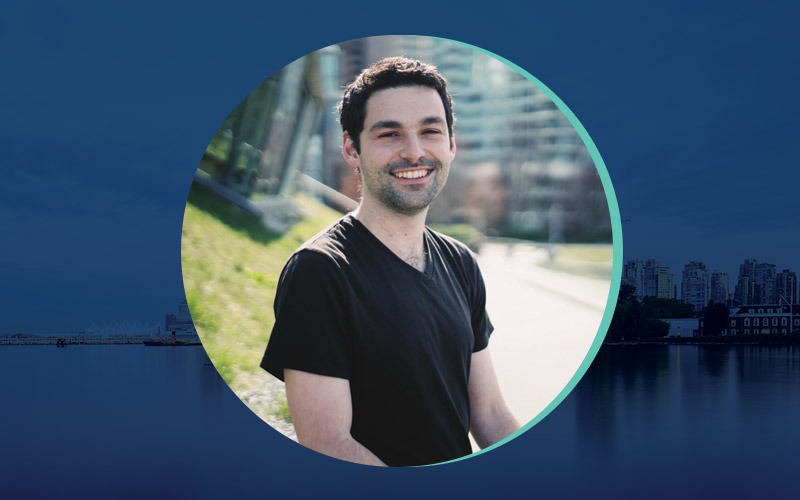
Justin Vaillancourt
Episode
Justin Vaillancourt is a force to be reckoned with—he started teaching himself how to code at the age of 8...
Key takeaways
- Canadian government grants like IRAP and SRED are invaluable for tech startups, providing significant salary support that helps grow the ecosystem and should be prioritized when starting a company.
- Vancouver offers untapped loyal talent and lower costs than the Bay Area, but entrepreneurs must navigate high cost of living and more conservative VC funding compared to American investors.
- Persistence and momentum are critical because the longer you stay committed to your startup, the more serendipitous opportunities arise and the more people learn about your company.
- Don't be intimidated by successful entrepreneurs or well-written thought leaders online because everyone is just figuring things out as they go, and you likely have more genius in you than you think.
- Eliminate repetitive tasks and automate work that gets in the way of meaningful work, especially in engineering, to maintain productivity and focus on what truly matters.
Transcript
Full transcript page · Interactive episode
============================================================
TRANSCRIPTION WITH SPEAKERS
============================================================

[00:00] SPEAKER_01: It's VanCoovers Podcast on the Canada's Podcast Network.
[00:26] SPEAKER_01: As an entrepreneur, you started your business to follow your passion and not to spend your evenings doing bookkeeping.
[00:32] SPEAKER_01: That's why VanCoovers Podcast uses Legacy Advantage.
[00:37] SPEAKER_01: Let me tell you, they are a great CPA level bookkeeping firm.
[00:41] SPEAKER_01: Let Legacy take the bookkeeping task off your hands so you can have more time to pursue your dreams.
[00:48] SPEAKER_01: You will get peace of mind knowing that the bookkeeping is done and the tax authorities are off your back.
[00:55] SPEAKER_01: Visit LegacyAdvantage.ca and if you mention that you came from VanCoovers Podcast,
[01:01] SPEAKER_01: they will give you a $100 credit to apply towards your first month. You simply can't beat that.
[01:13] SPEAKER_01: Hello, this is Robert Smil, coming into today with VanCoovers Podcast, a member of the Canada's Podcast Network.
[01:19] SPEAKER_01: We're here talking to the entrepreneurs who are making it happen here in Vancouver, British Columbia.
[01:24] SPEAKER_01: Today we are talking to Justin Valencourt. Justin is a fourth to be reckoned with.
[01:31] SPEAKER_01: He started teaching himself how to code at the age of eight and is working as a software developer by the age of 14.
[01:38] SPEAKER_01: As the co-founder and CTO of Dooley, Justin previously held lead engineer positions at several emerging tech startups.
[01:48] SPEAKER_01: Well, Justin, welcome to the show. Thanks for taking the time today to be here for all our listeners.
[01:54] SPEAKER_00: Hey Robert, thanks a lot for having me. I'm really excited to be here.
[01:58] SPEAKER_00: I'm also really surprised about the bio there because I'm not sure where you got that one but it's pretty funny.
[02:05] SPEAKER_01: It's pretty close, hopefully. It disguised pretty close to...
[02:08] SPEAKER_00: It's pretty close, yeah, for a chunk of my life there was slice.
[02:12] SPEAKER_01: Starting coding early, God, that's pretty good. I guess you threw away the little dinky cars and just decided, hey, I'm going for the computers.
[02:21] SPEAKER_00: Yeah, well the funny thing about that is, so my family had what we had a computer and then I broke it a bunch of times.
[02:29] SPEAKER_00: And my dad would always get angry. So eventually I just had to figure out how to fix it myself.
[02:35] SPEAKER_00: Which, yeah, I don't recommend for parents out there. Don't try not to get angry at your kids for breaking stuff but it was a good way for me to bootstrap my career.
[02:46] SPEAKER_01: Okay, okay, want you to tell us a little bit more about yourself, where you're from and give us the details on your current business.
[02:53] SPEAKER_00: Yeah, sure, so I'm originally from New Brunswick, Eastern Canada. I basically live there most of my life.
[03:01] SPEAKER_00: And then five years ago, moved to Vancouver. Worked at a company in town called Mobafi for while doing sort of back in work as well as mobile apps and a mobile app SDK.
[03:15] SPEAKER_00: And then basically I was on my way out. I had been there for a few years and I was going to go traveling India. India's always fascinated me.
[03:25] SPEAKER_00: And my plan was just to go there for six months. It's funny how things end up though because so Chris, my co-founder, who was on, I believe it's going to be the previous episode.
[03:37] SPEAKER_00: His wife was director of HR there and obviously she knew I was leaving. So Chris heard that I was leaving. He reached out to the CTO, the CTO said, yeah, you can reach out to Justin.
[03:50] SPEAKER_00: And then we went on a few dates and we started this crazy thing.
[03:55] SPEAKER_01: Okay, so you guys worked together and then kind of talked about where you felt there was a niche, there was a demand and felt we could go after that together with the backgrounds that we have.
[04:05] SPEAKER_00: Yeah, I mean, the really interesting thing there is that Mobafi is a company of over a hundred people.
[04:13] SPEAKER_00: So Chris was on the sale side. I was on the engineering side and I had seen him and we sort of said hello and whatnot in the hallways, but I didn't really know him.
[04:24] SPEAKER_01: Okay, but now time has moved on and now you guys are in business together.
[04:29] SPEAKER_01: Okay, so Dooley, explain to me what Dooley does, Chris did, but I thought maybe you could kind of give your angle.
[04:36] SPEAKER_00: Yeah, sure. So Dooley is a platform to capture conversations for customer facing teams and then action them.
[04:46] SPEAKER_00: So right now we do that primarily through notes. So we have this platform where you can take notes and then using those notes we update CRM, we update people in your organization.
[04:59] SPEAKER_00: And we also surface information sort of in real time to help you progress those conversations.
[05:05] SPEAKER_00: So right now we primarily focus on sales and customer success.
[05:11] SPEAKER_01: Okay, now did you need financing to start your company and how does the company currently make money?
[05:17] SPEAKER_00: Yeah, so just to go back, so Chris and I started this thing. It's actually funny. I think we went on like three dates before we officially kicked it off.
[05:30] SPEAKER_00: And then day one was the second week of January and we just went straight in it. Chris had won the new Ventures BC competition.
[05:39] SPEAKER_00: He had placed top 10, so we had some free office space. So huddled up there didn't pay ourselves for probably close to six months.
[05:50] SPEAKER_00: Just burning through those India savings. And then eventually we were able to get an IRAP. And so then we were able to start paying ourselves a very small wage.
[06:03] SPEAKER_00: And then eventually using that funding, we raised the bid of money from angel investors via safe.
[06:11] SPEAKER_00: And so we were able to couple that with more IRAP, more IRAP money and then hire a couple other people to help out.
[06:19] SPEAKER_01: Okay, what is the long term vision and what will your company look like in the future? Do you see the company expanding into other areas and where beyond Vancouver, BC or even Canada?
[06:28] SPEAKER_00: Yeah, sure. So the way I look at CRM today is it's really a product of its time. So the way it works today, you know, that the whole concept and the mental model started in sort of the late 90s where you open a record and you fill in the fields manually, you hit save.
[06:51] SPEAKER_00: And it just requires a lot of sort of manual labor. So I think with the advances in AI, machine learning, et cetera.
[07:04] SPEAKER_00: I see a future where there is some sort of agent not just listens to your phone call, listens to your notes and automatically figures out all the different pieces that should go and CRM and how to extract those for you.
[07:19] SPEAKER_00: Instead of having the person using CRM do that themselves. So that's kind of in the direction where going long term.
[07:31] SPEAKER_00: Just being that sort of intelligent listening post that directs your conversations to the right people and the right systems in real time.
[07:40] SPEAKER_01: Okay, cool. So we've learned a bit about you and we learned a little bit about duly. So we want to talk about you doing business here in Vancouver.
[07:47] SPEAKER_01: What are the biggest benefits for you and being an entrepreneur here in Vancouver, BC? I want you to give us some of the good points about starting a company here, but I also want you to give us some of the tough things or challenges for listeners so they can keep an eye out for them.
[07:59] SPEAKER_00: Sure. So right off the top of my head, one of the, I'll start with a bad point. One of those is that obviously the cost of living here is really high, relatively, relatively to the rest of Canada.
[08:18] SPEAKER_00: So that means I've Vancouver for a lot of people is a very ephemeral city sort of people sort of come here and it's really hard to buy sort of a home and then they want kids etc. So they move out.
[08:32] SPEAKER_00: But some of the great points about Vancouver is I believe there's tons of untapped talent hiding in every sort of croaking corner here.
[08:44] SPEAKER_00: And if you find those people typically they're very loyal and they really attach themselves to the mission. I think Trump is actually he's a great gift to the Canadian tech sector because a lot of people now are looking at coming back or just not going to the States.
[09:05] SPEAKER_00: And if you are a, you know, if you're a Bay Area tech worker, Vancouver is a good Canadian analog just because we're on the west coast, we're in the same time zone, etc.
[09:19] SPEAKER_00: Another sort of key benefits is government graphs grants again, Irop and shred. Those are amazing. They pay, you know, huge portions of your salary tech workers.
[09:35] SPEAKER_00: And honestly, like I am a huge fan of those. I think they really help to grow the ecosystem.
[09:43] SPEAKER_00: This is advantage. It's a lot harder to raise funding from Canadian VCs versus raising from American VCs. So being in Canada for ourselves, it's really, it was really important for us to try to sort of build up the ecosystem in Canada and make a success here.
[10:04] SPEAKER_00: So that's why we raised funding from scale adventures who have been amazing, amazing investors out of Toronto. One thing I will say about American VCs is that they have a lot more money and they're also willing to take bigger gambles and especially in the sort of pre-seed seed stages.
[10:26] SPEAKER_00: There's a few other advantages. So cost of living is really high, but obviously salaries here are much lower than in the Bay Area and other parts in the US.
[10:40] SPEAKER_00: It hurts me a little to say that because I wish our salaries were up there as well, but you got to find that balance between, you know, how much money you're burning and actually succeeding as a startup.
[10:57] SPEAKER_00: And yeah, just one more point off the top of my head. In the valley, there's so much competition. Everyone's getting poached by everyone else all the time. I think the average tenor, tenor, on blunt, French was my first language.
[11:13] SPEAKER_00: Tenure. Okay, there we go. Thank you. Is a year or a year and a half? So it makes it really hard to retain people.
[11:23] SPEAKER_00: So I'm really proud to be a Canadian company in Vancouver and we want to be one of the best sort of product design and sell shops in Canada. I think we're doing pretty good so far.
[11:38] SPEAKER_01: Okay, we do some of our best work outside the office. Is there a place in the lower mainland close to where you live or work, where you like to go recharge or get inspired with ideas or just think about your business? And does it change with the season considering all the rain we get here?
[11:51] SPEAKER_00: Yeah, sure. So one of my big things is actually I walk a lot. I averaged 12,000 steps a day for last year. So I'll actually, you know, in the evenings, I will, you know, pick a new direction I haven't been in and a lot of sort of start walking.
[12:11] SPEAKER_00: I mean, listen to podcasts sometimes, you know, just look at sort of the scenery, look at the different houses and then just get lost and sort of strategy and also the operations side of things.
[12:29] SPEAKER_00: So how to build good teams, how to keep everyone really productive. And then yeah, I do my best thinking walking. So I'm actually walking right now as well.
[12:38] SPEAKER_01: Okay, perfect. Okay. Now we have a lot of international listeners. So this next question I want you to speak to them. If you were to start all over again and you just moved here to Vancouver, BC, but this time you don't know anyone knowing what you know now, what would you do and how would you go about starting all over again as an entrepreneur?
[12:57] SPEAKER_00: Yeah, sure. Great question. So probably where I would start. So if you know, if you're coming here with the intent of starting a business, I mean, obviously you need to figure out your living situation, et cetera. But after that, very first thing I would do is incorporate a company.
[13:17] SPEAKER_00: I would find a really good lawyer as well, someone who can help you navigate sort of incorporation as well as some of the grants and what you need to do there.
[13:30] SPEAKER_00: And that's actually the next thing I would do is I would really start looking at what's out there in terms of grants, what sort of available in Canada for that.
[13:40] SPEAKER_00: And then obviously after that, if I have this great idea, I would do tons of research on it, sort of make a business plan before starting to build it in terms of sort of your network and whatnot.
[13:54] SPEAKER_00: I would definitely hit up a lot of the meetups here. I would also try to get connected to sort of some of the angel networks here.
[14:05] SPEAKER_00: And finally, I checked out some of the co-working spaces like Wants Academy. I probably checked out some of the code schools as well, code core and lighthouse labs, and just sort of try to get a pulse for what's going on here.
[14:20] SPEAKER_01: Okay, let's talk a bit about your routine. What does the first hour look like for you when you get up in the morning? Do you have a specific routine or a ritual to help you get motivated to start your day?
[14:29] SPEAKER_00: Yeah, sure. So I'm a night out, so I actually wake up pretty late, typically. The first thing for me is a cup of coffee.
[14:39] SPEAKER_00: Absolutely. First thing in the morning, it's a necessity. It gets me going, gets me thinking, and then I jump in the shower. And then on a lot of days, I'll actually walk quite a bit.
[14:53] SPEAKER_00: So maybe walk one SkyTrain station further or whatnot, just to sort of get my mind going, get my body going, and then I'll SkyTrain into work.
[15:04] SPEAKER_01: Okay, do you think entrepreneurs have to be weird or unique in a positive way or wired differently?
[15:11] SPEAKER_00: Yeah, sure. So I think entrepreneurs come in every shape and size, and this is really something I truly believe.
[15:21] SPEAKER_00: Sometimes I feel like a lot of people who do companies are doing that because maybe they don't feel fulfilled in their lives or they're looking for meaning.
[15:35] SPEAKER_00: But I would for sure say that's not everyone.
[15:39] SPEAKER_00: So there have been a lot of very successful companies started by people who are almost like borderline men.
[15:54] SPEAKER_00: So there are especially tech, tech CEOs. You'll see a lot of people that are sort of on the borderline manic bipolar scale.
[16:08] SPEAKER_00: But just going back to the question, I don't think you need to be weird or unique. And actually I think a lot of people look at entrepreneurs as kind of this special breed and then they don't feel like they fit in.
[16:23] SPEAKER_00: I want everyone to know that you can start a company. You can learn to be that person and you can be normal or you can be unique and weird.
[16:34] SPEAKER_01: Okay, now what books are you reading now and why are even audio books? And can you recommend any books for listeners who are also aspiring entrepreneurs?
[16:42] SPEAKER_00: Sure, so probably the most recent book I've read, and I'm sure you've heard of it as a principle by Ray Dalio.
[16:51] SPEAKER_01: Yeah, reading it right now.
[16:53] SPEAKER_00: Yeah, it's a great book. So basically the idea here is that Ray Dalio runs one of the most successful hedge funds in the world.
[17:03] SPEAKER_00: And he operates, well his whole hedge fund, Bridgewater, operates by a set of principles that are codified in writing.
[17:13] SPEAKER_00: And then the idea there is that once you have these principles, when you encounter a new.
[17:22] SPEAKER_00: Be successful at those situations without.
[17:25] SPEAKER_00: Each time, so I really like this idea of having a guiding set of ways you operate to be successful in any situation.
[17:35] SPEAKER_01: Okay, any online or offline tools that you like to use on a daily basis?
[17:40] SPEAKER_00: Yeah, sure. So I am an engineer and a bit of a product geek as well.
[17:46] SPEAKER_00: So I check out, I look at product and quite a bit just see what people are doing putting out there.
[17:54] SPEAKER_00: Obviously Gmail, I use Gmail every single day. I use my code either sublime every day.
[18:00] SPEAKER_00: In terms of online tools, I use good reads quite a bit. So I try my books there. I see what my friends are reading.
[18:09] SPEAKER_00: Yeah, nothing else. I really can't. That's the mine right now. Let's be honest.
[18:13] SPEAKER_01: Okay, well you're from New Brunswick, correct?
[18:16] SPEAKER_00: Yeah, that's correct.
[18:17] SPEAKER_01: Okay, so as you know, and you've experienced Vancouver is a very beautiful place. There's so much to do here.
[18:23] SPEAKER_01: We've got the outdoors. We've got the mountains. We've got the lakes. We've got the rivers. The ocean. You name it.
[18:28] SPEAKER_01: How do you balance work and how do you relax, not think about work and what are your favorite activities to do here in BC?
[18:34] SPEAKER_01: Do you ski? Do you bike, kayak, golf, hike or simply go for a drive?
[18:38] SPEAKER_00: Sure. So I'm a big cyclist, big walker as most Vancouverites, big hiker and also I try to couple that with camping.
[18:49] SPEAKER_00: So my favorite way to recharge is to go on somewhat sure anyways, hikes and then camp a night or two.
[18:57] SPEAKER_00: And outside of that, I would actually say that I live a pretty integrated sort of business and personal life.
[19:06] SPEAKER_00: So when I have free time, I try to do a bit of work. When I'm with people, I don't do any work.
[19:13] SPEAKER_00: So I try to sort of interleave it and interweave it.
[19:17] SPEAKER_01: Okay, if you weren't doing what you do now, what would you like to do for a profession?
[19:22] SPEAKER_00: Yeah, sure. So it's funny you ask this because it's something I thought about.
[19:29] SPEAKER_00: I honestly, I think if I weren't doing the tech stuff, I would probably go to school and like weren't about philosophy or the arts or just something that really interests me.
[19:43] SPEAKER_00: And I know I would probably not survive very long in Vancouver, but I'm really interested in those sort of concepts.
[19:55] SPEAKER_00: So I try to do something in that vein of some sort of thing.
[20:01] SPEAKER_00: Yeah, I think so. Yeah.
[20:02] SPEAKER_01: What kind of a job would you not like to do? Couldn't do it.
[20:09] SPEAKER_00: Just need a second to think about this one.
[20:12] SPEAKER_00: I can tell you what sorts of jobs I think are actually interesting.
[20:16] SPEAKER_00: I think a lot of like I think like garbage man or people who like clean sewer systems or baristas or just jobs that sort of open you up to new experiences.
[20:28] SPEAKER_00: I think are really interesting where you can work with your hands and whatnot.
[20:33] SPEAKER_00: I think a job I would really couldn't do is like where I sit at my desk and I try to sell insurance all day long.
[20:40] SPEAKER_00: That would drive me crazy.
[20:43] SPEAKER_01: Okay, in business, what is your favorite word quote or sentence that you like to use?
[20:51] SPEAKER_00: So I mean, there's sort of the cliche perfection is the enemy of good, which I really believe in that.
[21:01] SPEAKER_00: Another sort of saying is that I sometimes say that's also like part of my engineering philosophy, if you will, is get rid of the work that gets in the way of the work.
[21:16] SPEAKER_00: So what that means is, you know, if you need a constantly context which and click a bunch of buttons and you do the same task over and over again, try to automate it, which is especially true in engineering when we deploy to production systems and we need to try someone else's code and etc.
[21:35] SPEAKER_00: So I'll go with those two for now.
[21:38] SPEAKER_01: Okay. What's your least favorite word sentence you do not like to hear?
[21:42] SPEAKER_00: Sure. So one of my least favorite sayings is we've got bigger fish to fry.
[21:50] SPEAKER_00: I think we in the workplace, we really need to be careful about sort of those sayings that they seem very true and obvious on the surface, but they also undermine people's opinions.
[22:03] SPEAKER_00: So that's something we try to be very conscious of.
[22:07] SPEAKER_01: Okay. If you had to pick one or two words to describe yourself, what would it be and why?
[22:14] SPEAKER_00: Who's that's a tough one?
[22:19] SPEAKER_00: I feel like for myself, I'm always sort of trying to push the envelope, always redlining a bit.
[22:27] SPEAKER_00: Sometimes I feel like, you know, if I were born in like the 60s, I'd be a hippie on the golden gate, but then at the same time introverted and a bit shy and quirky.
[22:39] SPEAKER_00: So I will go with like the like this is going to sound really weird like the introverted rebel or something like that.
[22:53] SPEAKER_01: Okay. That's an interesting approach that I get the concept. What keeps you up at night if anything?
[23:00] SPEAKER_00: Sure. So the main things that keep me up at night are team happiness, team productivity, just building a good culture.
[23:11] SPEAKER_00: I think about that a lot. And then the other thing is obviously growth.
[23:16] SPEAKER_00: What are the things that we can do to grow faster?
[23:22] SPEAKER_00: And then it's funny because when you start thinking about these things, you sort of, first you have that thought and then you start thinking, if we needed to grow 100x in the next week, what could we do?
[23:33] SPEAKER_00: So I have these sort of brainstorming sessions at night sometimes.
[23:43] SPEAKER_01: Okay.
[23:44] SPEAKER_01: So what could be a bucket list of any sort of whether you want to do a TEDx talk, you want to travel more, you want to write books, you want to do philanthropy, anything like that?
[23:52] SPEAKER_00: Yeah, sure. So I want to spend a significant amount of time just traveling in the arts at point.
[24:00] SPEAKER_00: I also think Mount Everest is really interesting. So maybe someday I'll find my way up there.
[24:08] SPEAKER_00: And then if I were to pick a third one, it would probably be something around learning to draw or learning the paint or something creative or learning a language.
[24:26] SPEAKER_00: It'd be in that vein.
[24:28] SPEAKER_01: Okay. Do you have any advice that you may have received that you can pass on to entrepreneurs throughout BC?
[24:37] SPEAKER_00: Sure. So yeah, I guess a few points.
[24:42] SPEAKER_00: Everyone says this persistence, but it's so true. And the reason why it's true is because the longer you do it, the more the sort of momentum of people knowing about you grows.
[24:55] SPEAKER_00: And also the more serendipitous moments you'll run into, especially in the valley, you hear about a lot of people sort of starting companies and they give it three months and then it doesn't really pick up.
[25:10] SPEAKER_00: So then they sort of give up or they just try new idea entirely.
[25:14] SPEAKER_00: Sometimes that works. I believe you just really need to give it a good go and really believe it's going to work and figure out how to get there.
[25:22] SPEAKER_00: The other sort of another piece of advice that I have is I used to read a lot of these books or these articles online.
[25:32] SPEAKER_00: And a lot of a lot of people out there are very, very articulate. They write really well. They're able to form really good arguments.
[25:40] SPEAKER_00: And sometimes it can seem like you're not as smart as them. I think for me, just me being a lot of people, a lot of these people have written these really great articles and are really well known.
[25:53] SPEAKER_00: It's interesting because they're sort of like they're writing and their image online. But once you get to know these people, they're just regular people like you or I.
[26:03] SPEAKER_00: So my point there is don't be intimidated. Everyone's just winging it. If you're able to write clearly and form a good argument, people are going to thank your genius, but you're probably not.
[26:18] SPEAKER_00: Or you might be, you could be a genius as well. But everyone has a little bit of genius in them.
[26:24] SPEAKER_01: Absolutely. OK. Well, Justin, you ready to have some fun? Sure. OK. As you know, entrepreneurs are very, very busy people. Just look at yourself. You're walking right now. Just trying to get some air and get some thinking time.
[26:39] SPEAKER_01: We're always connected to people. We're always online and we're always dealing either with clients or staff. You name it. We're going to take you away from all that.
[26:46] SPEAKER_01: There's a small tropical island just off of Fiji that only has one phone booth there. There is no internet. This place does exist, by the way. We're going to drop you off there. You won't have a computer or a smartphone or tablet.
[26:58] SPEAKER_01: You can use the phone booth located there anytime to call the boat. We'll come pick you up. How long would you last before you made that call? And what would you do while you were there?
[27:07] SPEAKER_00: OK. Sounds good. So, OK. So I'm dropped off on this island. I think the first thing I would do is I would try to assess the situation.
[27:19] SPEAKER_00: So I guess the first question is, am I able to see how big this island is just by looking around me? Yeah. Absolutely.
[27:27] SPEAKER_00: OK. So it's a pretty small island. I take it. I don't know. Once you drop you off there, it's up to you to get the lay of the land. OK. OK. So if it seems pretty small, I would try to walk the beach and sort of, you know, see if there's anything around or their fruits or their vegetables or their animals.
[27:49] SPEAKER_00: So that would be my first go while I'm doing that. I would probably also, you know, take a look at the ocean and see if I can see any land further away.
[28:03] SPEAKER_00: So that would be my first go. Then my next question would probably be after I figured out if I can survive there on whatever's provided by the island.
[28:12] SPEAKER_00: And my next question would be, OK, there's this telephone booth. How is it getting power? How is it? How is it wired? Is this cable going into the ocean and to Fiji?
[28:28] SPEAKER_00: So I would try to figure that out. Is there a battery that powers this thing? If there's a phone booth there, there's good chances that someone else has been there at some point.
[28:40] SPEAKER_00: So I would sort of walk around into the forest or whatnot and see if I can find some broken bottles or some cigarettes or who knows what.
[28:53] SPEAKER_00: Just to sort of get a sense of maybe what other people have been doing on this island.
[28:59] SPEAKER_00: And then honestly, with my personality, it would be, OK, you know, I'm on this island. I can make a phone call. I know I'm not going to die.
[29:07] SPEAKER_00: But it's going to come get me. What can I do to keep entertained? So maybe that's, you know, trying to build a little hut with some branches and some trees.
[29:20] SPEAKER_00: Maybe that's making sand castles and sand sculptures. Obviously forging for food and trying to grow my own food would be pretty high on the priority list.
[29:32] SPEAKER_00: As well as potentially making a spear and trying to hunt if there's animals on there. And then once I've exhausted all of that, I would need to make that phone call.
[29:46] SPEAKER_00: And if I were able to sustain myself for a really long time, honestly, I'd probably stay there like a week and a half and then just want to get back to call my family and make sure they know I'm OK.
[30:00] SPEAKER_01: So that's what I would do. OK, OK, Justin, we're going to wrap things up here. How can our listeners get whole of you? Is there anything you'd like to add before you leave us today?
[30:10] SPEAKER_00: Yeah, sure. So listeners can get a whole of me at Justin at duly.ai, D O O L Y or on our website at duly.ai. There's a contact form there. What not. If you feel that you can get in touch with me.
[30:29] SPEAKER_00: Or on LinkedIn, Justin, Space Valencourt, which I see my name will be in the show notes or somewhere else. Yeah.
[30:39] SPEAKER_00: And in terms of wanting to add anything else, I just say if you're considering moving the Vancouver and want to do startup, it's definitely doable here. It's an amazing place to live. Very beautiful. I'm on the sea well right now. I just enjoying the calm water as well as some nice trees.
[30:58] SPEAKER_00: And some of the best air in the world. So highly recommended. Just jump in, figure it out as you go. Where are you exactly on the sea well just so you know.
[31:07] SPEAKER_00: Yeah, sure. So I'm by the casino. There's a little path actually. There's some nice green bushes and some big rocks and just the water. So it's really nice.
[31:18] SPEAKER_01: Awesome. Okay. Well, Justin, thank you for coming on the show. I've learned a lot about you. And I'm sure our listeners have as well.
[31:25] SPEAKER_00: Yeah. Thanks so much for having me, Robert. This was really fun. Great. Okay. It was a good time. Awesome. Okay. We'll see you next time. Okay. Thanks.
[31:49] Speaker UNKNOWN: Oh