
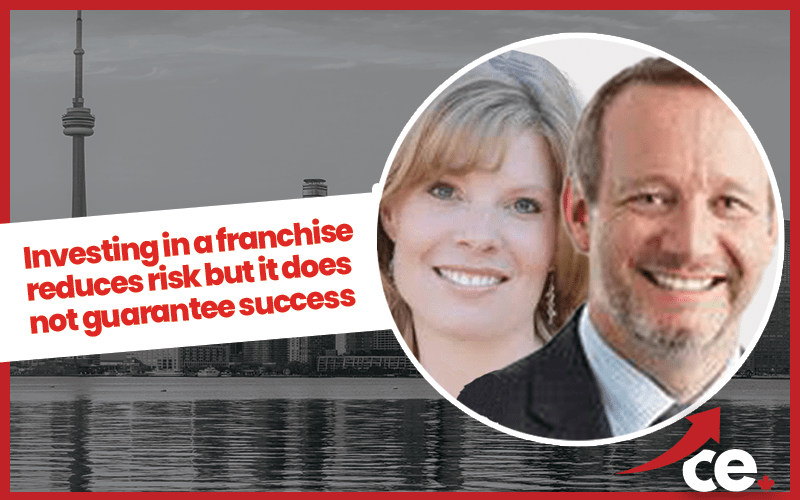
Investing in a franchise does reduce entrepreneurial risk but it does not guarantee success
Watch episode
Episode
Stephan and Kimberley Lafreniere are growth-oriented and insight driven senior executive with a track record of success in developing...
Key takeaways
- Franchising can de-risk entrepreneurship by providing community support, proven processes, and established brand recognition, though it still requires financial runway and doesn't guarantee success.
- Entrepreneurship offers flexibility and control over your destiny that corporate life cannot match, allowing you to prioritize family and personal matters without navigating organizational pressures.
- Building a strong network and mastering the art of networking are critical skills for entrepreneurs that aren't typically practiced in corporate environments but are essential for business development.
- The transition from corporate employee to entrepreneur requires patience, especially in service-based businesses where cash flow takes time to develop through the discovery, recommendation, and implementation process.
- Before starting any business, ensure you're passionate about solving a real problem, understand your target market and network, and have sufficient financial resources to sustain yourself for at least six to twelve months.
Transcript
Full transcript page · Interactive episode
============================================================
TRANSCRIPTION WITH SPEAKERS
============================================================

[00:00] SPEAKER_02: Welcome to Canada's Entrepreneur, where we talk to the entrepreneurs who are making it happen
[00:05] SPEAKER_02: across Canada and deliver the news, trends, knowledge and opinions from entrepreneurs and business
[00:13] SPEAKER_02: influences across the country. Hi everyone, I'm Phil Bliss, founder and CEO of Canada's Entrepreneur,
[00:21] SPEAKER_02: and I'm coming today from Toronto. Stefan and Kimley LaFrenier, a growth-oriented and
[00:29] SPEAKER_02: insight-driven senior executives with a track record of success in developing and implementing
[00:36] SPEAKER_02: strategies and tactics to drive profits in the retail sector. They have both held progressively
[00:42] SPEAKER_02: senior roles within planning, merchandising and branding, disciplines that iconic Canadian
[00:47] SPEAKER_02: retailers include in Canadian Tire, Dungeons Bay, Love Laws and Sears, some of whom are not
[00:54] SPEAKER_02: there anymore unfortunately. Kimley has an impressive retail career after working for iconic
[01:00] SPEAKER_02: brands alongside Stefan and Sears HBC but also Sylvis. In 2021, Stefan and Kimley invested
[01:09] SPEAKER_02: in school and mutual franchise. They went independent and became entrepreneurs.
[01:15] SPEAKER_02: School and mutual is the largest independent cost reduction consulting firm in North America,
[01:22] SPEAKER_02: with offices from coast to coast in the United States and Canada and they were founded in Canada
[01:29] SPEAKER_02: actually in Stratford, Ontario. On average, they can reduce essential business services by 28%
[01:37] SPEAKER_02: and they've delivered over 540 million in documented savings to their clients.
[01:44] SPEAKER_02: Stefan and Kim are passionate about saving money for their clients and helping them draw their
[01:49] SPEAKER_02: business. School-imitial delivers expertise to companies of all sizes from all industries
[01:56] SPEAKER_02: offering a broad range of services aimed at reducing costs. All school-imitial fees are so
[02:03] SPEAKER_02: funded so it's truly a risk-free and mutually beneficial business model. So welcome to Canada's
[02:12] SPEAKER_02: Entrepreneur Stefan and Kimley. That's great to meet you all and before we get deep into it,
[02:21] SPEAKER_02: why don't you tell people a bit more about your sales and your journey to date if you like.
[02:30] SPEAKER_02: Sure, especially your entrepreneurial journey. Give us two to five minutes on that and then we'll
[02:40] SPEAKER_02: give in to some questions about, you know, school-imitial, what you're doing there.
[02:47] SPEAKER_05: Okay, sure. Yeah, so I'm Stefan LaFranjaer. I've bought my school-imitial franchise,
[02:54] SPEAKER_05: we bought my wife, Kim, is here with me. We bought our franchise back in October of 2021 so
[03:03] SPEAKER_05: we're kind of in that, you know, for four-year plus mark now. And you know, it was, it was,
[03:13] SPEAKER_05: it was a big decision because we've got, you know, corporate backgrounds, I'll let Kim explain
[03:16] SPEAKER_05: hers in a second, but we both worked a career in retail for myself. Right out of school started at
[03:25] SPEAKER_05: Sears Canada then went over to LaBla Hudson's Bay Company and then most recently Canadian Tire.
[03:33] SPEAKER_05: Unfortunately, two of those four companies aren't around anymore. Yeah.
[03:37] SPEAKER_05: Has nothing to do with me, but, you know, their, you know, Sears was was really kind of in the DNA
[03:44] SPEAKER_05: of my family, my dad worked there for 32 years. He retired and then went back and worked for them
[03:50] SPEAKER_05: for another 17 years and I was there for about 13 years, that's where I met Kim. And like I said,
[03:56] SPEAKER_05: you know, before buying the franchise, I was at Canadian Tire where I'd been there for just
[04:03] SPEAKER_05: to do eight years, you know, was a great company, really enjoyed it. You know, COVID happens,
[04:11] SPEAKER_05: you know, corporate priorities happened and so it was time for me to think about doing, you know,
[04:17] SPEAKER_05: something different. And for me, I really wanted to, you know, explore something that was kind of
[04:23] SPEAKER_05: adjacent but really quite different, you know, to what I've been doing in the past. You know,
[04:29] SPEAKER_05: commuting, you know, the big corporate environment, matrix organizations, we're all kind of things that
[04:37] SPEAKER_05: that kind of got me to look into a different direction and ultimately, you know, school
[04:44] SPEAKER_05: initials seem to fit the bill for us. So I'll let me. We'll cover a bit more. Kim, why do you do a
[04:49] SPEAKER_00: bit about yourself as well? So as Stephen mentioned that I also was at CSIRS. So it was kind of one of my
[04:56] SPEAKER_00: first part time jobs. I was actually at CSIRS for over 21 years before making the decision to jump
[05:03] SPEAKER_00: to HBC. So step in, I have a very similar background and in thought for years worked in tandem
[05:09] SPEAKER_00: at many of the same kind of organizations. I then moved into a bunch of smaller, more regional
[05:14] SPEAKER_00: retail players. So I'm kind of work my way through management. I think one of the things that I learned
[05:21] SPEAKER_00: is leaving large corporate and going to more of that smaller regional player is just that it does
[05:26] SPEAKER_00: force you to have that entrepreneurial spirit and kind of that ownership of the business, which is
[05:31] SPEAKER_00: where I really thrive. And so, you know, with this opportunity with school, the Mitchell of being
[05:38] SPEAKER_00: able to jump in and just kind of be your own boss, it really kind of met the needs.
[05:43] SPEAKER_02: Well, you know, I think it's interesting. I mean, from my perspective, I'm interested, you know,
[05:50] SPEAKER_02: why get a franchise? Both of you are perfectly, you know, could have opened a retail outlet
[05:57] SPEAKER_02: somewhere just to the two of you running it. And nothing much you didn't know about how to do that.
[06:04] SPEAKER_02: So why, and you could have done that locally. So why step into, you know, a franchise as an entrepreneur?
[06:16] SPEAKER_02: It's a question that a lot of people ask really.
[06:19] SPEAKER_05: Yeah. When it came time to think of a business ownership, we did a bunch of research, right?
[06:28] SPEAKER_05: We tried to, you know, which we like to do. What are we good at? Because those things aren't always
[06:35] SPEAKER_05: the same, right? As well as kind of really, I did a lot of reflecting on kind of what led me to
[06:44] SPEAKER_05: to where I was in 2020, early 21 and kind of what did I want to do in the next chapter? And for some
[06:52] SPEAKER_05: reason, after, after working for those four retailers and for a couple decades, I did, I was really
[06:58] SPEAKER_05: focused on wanting to do something different. And that to me was also not retail, right? I looked
[07:06] SPEAKER_05: at kind of traditional employment, but it wasn't, you know, traditional retailer or e-commerce. It was
[07:14] SPEAKER_05: more, you know, possibly suppliers, you know, brand owners, those kinds of things. But I was looking
[07:21] SPEAKER_05: to do something different. Why franchising? It was one, honestly, someone reached out to me to
[07:27] SPEAKER_05: network and I turned out, you know, it was, it was a franchise coach who spent probably six months
[07:33] SPEAKER_05: trying to get to know me. And, you know, again, where my passions were, what I wanted to do. And
[07:39] SPEAKER_05: there was a lot of exploration. And, you know, we started then looking at franchise options. And
[07:47] SPEAKER_05: so it wasn't necessarily, I'm going to buy a franchise. This is kind of the next step. It evolved
[07:53] SPEAKER_05: into, I don't, I want to try something other than retail. I mean, at that point, I guess I was just
[07:59] SPEAKER_05: before 50. You know, and I was thinking if, if I go back to another retailer, you know, there's
[08:07] SPEAKER_05: always so many chapters of this that are left to be written. And so I wanted to try and do something
[08:12] SPEAKER_05: different in the exploration, ultimately led me to franchising into schooly Mitchell. And I know
[08:19] SPEAKER_05: we're probably not there yet, but schooly Mitchell resonated with me because essentially what
[08:24] SPEAKER_05: schooly Mitchell does is category management. The categories that we do are very different than
[08:30] SPEAKER_05: the retailers I've worked for where, you know, I used to be a, you know, a vice president, an
[08:35] SPEAKER_05: associate vice president in businesses surrounding, you know, home products, you know, kitchen products.
[08:40] SPEAKER_05: And schooly does category management on things like payment processing and telecom and waste.
[08:46] SPEAKER_05: But it's, it's for me what connected was that category management approach to helping businesses
[08:53] SPEAKER_05: be successful. That resonated with me. And so the whole franchise bit really wasn't, and kind of
[09:01] SPEAKER_05: unintended outcome of trying to do something that was for me not traditional. And just kind of
[09:08] SPEAKER_05: a sequence of events led me to, to this opportunity that resonated. And so we ended up deciding to pull
[09:16] SPEAKER_02: the trigger. At schooly Mitchell, we are here to help you grow. We are passionate about finding
[09:22] SPEAKER_02: solutions that save your business time and money. Your success is our success. Go to Canada's
[09:29] SPEAKER_02: entrepreneur.com slash schooly for more information. Both of you can answer this, but Tim, maybe
[09:37] SPEAKER_02: you will first. You know, what do you like best about being an entrepreneur versus being an employee?
[09:45] SPEAKER_00: I think the biggest thing honestly is having ownership of your destiny. It's really your business
[09:52] SPEAKER_00: will be as successful as you're willing to put the work in. So, you know, outside of a corporate
[09:58] SPEAKER_00: environment where you're constantly dealing with a lot of red tape and it's very siloed, especially
[10:04] SPEAKER_00: in the larger organizations where everybody has a very specific mutual within an organization
[10:11] SPEAKER_00: as an entrepreneur, as an entrepreneur, you're always wearing multiple hats. And so really your
[10:16] SPEAKER_00: destiny is your own to develop. And I think again, just to highlight being a part of a franchise,
[10:23] SPEAKER_00: you're also not alone. I think sometimes what ends up happening is that when you're an entrepreneur,
[10:28] SPEAKER_00: you're starting your own business as a solo entrepreneur, you're kind of on your own. You're trying
[10:34] SPEAKER_00: to make your own way in the world. The nice thing with schooly Mitchell is you're part of a larger
[10:40] SPEAKER_00: group of people who have done it ahead of you. And so you have opportunities to network, you have
[10:46] SPEAKER_00: opportunities to gain knowledge and experience that you wouldn't necessarily get if you weren't a part
[10:51] SPEAKER_02: of a franchise organization like schooly. Yeah, if I just, you could extend on that maybe,
[10:59] SPEAKER_05: maybe. Was yours? Yeah. Just I think more from a from a kind of a personal perspective.
[11:07] SPEAKER_05: And this is not something that was planned, but something that kind of happened that I was
[11:11] SPEAKER_05: thankful that we were kind of in a place where we were working for ourselves, which created flexibility.
[11:18] SPEAKER_05: But in, so again, we bought in the end of 21, in 22, my mother started to become quite ill.
[11:29] SPEAKER_05: In in 23, my dad was diagnosed with cancer and ended up kind of passing away very quickly.
[11:36] SPEAKER_05: And then at the beginning of 24, my my mom passed away and in between a very, very dear front of
[11:41] SPEAKER_05: my past away. And so there was a degree that this allowed us flexibility compared to again,
[11:50] SPEAKER_05: I couldn't plan for it. It impacted the business, you know, longer term because obviously when
[11:55] SPEAKER_05: you're taking time away from family, the, you know, your business pipeline suffers. But it enabled
[12:02] SPEAKER_05: me to spend time with, you know, a very close friend and two parents that were kind of
[12:10] SPEAKER_05: narrowing it end of life and then passed away. And so that to me was something that again,
[12:16] SPEAKER_05: a lot of complain. It was very thankful for, you know, if I, if I had been in the traditional
[12:21] SPEAKER_05: employment, whether it was Canadian tire elsewhere, you know, in a big organization, you know,
[12:27] SPEAKER_05: there's lots of, there's lots of pressures and those pressures exist probably more so for
[12:34] SPEAKER_05: the entrepreneur, but we are more in charge of our time. And it was a choice and it was a
[12:39] SPEAKER_05: difficult choice. And again, it slowed down our business development. But I was able to spend time
[12:44] SPEAKER_05: kind of in a place that was very important for me. That was a way from the business
[12:50] SPEAKER_05: to degree, but within the conflict of, you know, a big corporation and all the pressures that
[12:57] SPEAKER_05: come with that and teams and bosses and some ordinance and and processes that, you know, would have,
[13:03] SPEAKER_05: you know, made the decision to spend time with, with close, you know, friends and family a lot more
[13:09] SPEAKER_02: difficult. So, I'm both of you can answer this one, but you start, Kim, I mean, so what's the biggest
[13:16] SPEAKER_02: challenge you've faced in this four or five year entrepreneurship period? But you gave some
[13:27] SPEAKER_02: of those challenges on the personal side, but on the business side. I think the greatest challenge
[13:33] SPEAKER_00: of an entrepreneur is understanding how to find that right client. Where do you go? Where are the
[13:40] SPEAKER_00: resources to try and build that network? Networking, I think, is the one thing that when you're in
[13:47] SPEAKER_00: the corporate environment, we really don't do enough of. And so we're not practiced. And so getting
[13:54] SPEAKER_00: into a room full of people and truly networking in order to build your client takes practice and
[14:00] SPEAKER_00: takes time to kind of become an expert nut. And I would say that's probably for me on a personal
[14:06] SPEAKER_00: was probably one of my greatest challenges of just overcoming that, that feeling of inadequacy around
[14:13] SPEAKER_00: how do you ask for help? How do you ask for someone to refer you, etc? So for me, that was the biggest one.
[14:20] SPEAKER_05: Yeah. I think in the beginning, you know, in the first six months of buying the franchise,
[14:26] SPEAKER_05: one of the things that really suited to me was all the things that I didn't know. Because you
[14:30] SPEAKER_05: take for granted a lot when you're in a big organization and that organizational capability.
[14:36] SPEAKER_05: I used to be, I used to have a big team. I was part of the bigger team. And if I had a question,
[14:43] SPEAKER_05: you know, I used to use this example. They had an accounting question. You know,
[14:46] SPEAKER_05: can you entire had a small army of people I could talk to? And then I become a solar
[14:50] SPEAKER_05: printer. And okay, if I have an accounting question, the resource around me is not existent unless
[14:58] SPEAKER_05: I pay, right? And then like, who are the, how do you build that trusted network? And all of the
[15:04] SPEAKER_05: some things that I kind of took for granted come full force. And like, wow, there's so many things
[15:10] SPEAKER_05: that I don't know. And again, the community of school, the Mitchell franchise, which I found out
[15:16] SPEAKER_05: after I bought was happy to see that are very kind of helpful, willing to partner, willing to share.
[15:23] SPEAKER_05: Technically, we can be competitors because we can be looking for the same clients. But there's a
[15:28] SPEAKER_05: sense of community that was helpful. And then networking groups, whether it's chambers of commerce or
[15:33] SPEAKER_05: B and I kind of helped as well. But initially, that was kind of the challenge was all of these things
[15:39] SPEAKER_05: that I took for granted and didn't even realize I didn't know. I think later on, when we were looking
[15:47] SPEAKER_05: at franchises very quickly, I knew that I wanted to get into a business to business franchise. I
[15:53] SPEAKER_02: didn't see myself kind of having a... That's kind of weird. You guys grew up in retail. Yeah. Yeah.
[16:00] SPEAKER_02: Yeah. Yeah. B to C or C. Yeah. Yeah. Yeah. Yeah. Why why that? That was kind of... Because when you
[16:07] SPEAKER_05: when you did the kinds of things that we did, we were both of our careers led us to a place where,
[16:14] SPEAKER_05: you know, for me, my in-store time that those retailers ended in 1997. That's when I left the direct
[16:21] SPEAKER_05: to consumer side of the business and moved it to head office in the more, you know, tactical to strategic
[16:28] SPEAKER_05: side. You know, I was my last role I was managing well over a billion dollar portfolio of brands.
[16:33] SPEAKER_05: And so we're retailers and we exist to sell products to people. But we were we had left
[16:40] SPEAKER_05: run line selling a long, long time ago. And I saw myself as a business professional, not so much
[16:47] SPEAKER_05: a salesperson. And so later in my career, sorry, in my time at school yet to be clear,
[16:56] SPEAKER_05: the challenge I had was I didn't appreciate just how much selling there is to being a school
[17:00] SPEAKER_05: e-matchel franchisee. And, you know, we all, you know, Dennis Schooly, the founder of Schooly Mitchell,
[17:09] SPEAKER_05: when I was kind of we were interviewing each other before, you know, I bought the franchise. I
[17:13] SPEAKER_05: said to him, I'm not a salesperson. I've worked in retail, which that may seem odd, as you just said.
[17:18] SPEAKER_05: But yeah, I'm not a salesperson. And his response was and it's true. You know, accountants aren't
[17:25] SPEAKER_05: salespeople, but they need to generate clients. And so yeah, so we're not a whole people. He knows
[17:32] SPEAKER_05: that. So yeah. And so, you know, fair point. But I think nonetheless, I didn't appreciate the
[17:39] SPEAKER_05: challenges of, you know, what it was going to be like to build a prospect pipeline, you know,
[17:46] SPEAKER_05: that turned into kind of really warm prospects, ultimately into clients. And, you know, our model is
[17:52] SPEAKER_05: is around, we truly are paid on performance. It's the contingency model where we share savings.
[18:00] SPEAKER_05: And so who would say no to that? If I, you know, it was the dialogue in my head when I was
[18:05] SPEAKER_05: evaluating the business. And what I've learned since then is, sometimes people say no,
[18:13] SPEAKER_05: sometimes they go to you, sometimes they may not trust you. And this would be true with any
[18:18] SPEAKER_05: business, right? And I think it's the dealing with objection, which, I mean, academically,
[18:25] SPEAKER_05: I can understand, but the artistry of that, I'm still learning. And I say, for me, that is kind
[18:31] SPEAKER_05: of the challenge today that I still face. I've gotten past that early challenge of, oh my god,
[18:36] SPEAKER_05: there's so much I don't know about being an entrepreneur to, you know, keeping the pipeline full
[18:41] SPEAKER_05: is one problem, but then getting people through that journey to actually say, yes, let's do business.
[18:49] SPEAKER_05: And then please, with the result and wonder, refer us to other people, you know, that whole pipeline
[18:55] SPEAKER_05: conversion advocacy and whatnot, that that part is still always the challenge, which is probably
[19:00] SPEAKER_02: true for most business owners. I'm interested, you know, as a partnership in the franchise,
[19:07] SPEAKER_02: do you have take on roles? Can you do certain things? Devant, do you do certain things? I'm just curious.
[19:16] SPEAKER_00: Not really. I think both of us really, even though we kind of grew up in the same type of
[19:22] SPEAKER_00: environment at the retail landscape, we have very different networks of business contacts.
[19:28] SPEAKER_00: So it does allow us the opportunity to kind of go and do our own thing and bring forward
[19:33] SPEAKER_00: different prospects into the school and mutual environment. So in many ways, we kind of
[19:40] SPEAKER_00: be it off of each other's energy and skills and expertise. I would say we have different strengths,
[19:46] SPEAKER_05: for sure. Kim is much more extroverted than I am. I can be quite introverted, but I've been in the
[19:53] SPEAKER_05: business hands-on longer. Kim joined kind of after the initial purchase, even though, you know,
[19:58] SPEAKER_05: we both own it. So I'm more familiar with the process of how we do what we do, but there's no
[20:07] SPEAKER_05: question. And we used to joke that Kim was a great wingman when it came to kind of the earlier days
[20:12] SPEAKER_05: and we were networking, you know, even before Kim was directly involved in the business, she would
[20:17] SPEAKER_05: come to me with those networking events like the chamber mix and mingles after our stuff. And,
[20:23] SPEAKER_05: you know, she was graded kind of the conversation starters and keeping the conversation going
[20:31] SPEAKER_05: as an introvert. That's harder for me. I mean, I do it, and I think I'm quite capable of
[20:37] SPEAKER_05: a lot of it, but it comes far far more naturally to Kim than it does to me.
[20:42] SPEAKER_02: So, you know, for both of you, and if you could go back in time, maybe a decade or 10, 15 years,
[20:52] SPEAKER_02: what advice would you give yourself then? I mean, is this leap maybe something you should have
[20:59] SPEAKER_05: made earlier? Yes, I would say the answer is yes. I mean, one of the things that I do enjoy is kind
[21:09] SPEAKER_05: of the word, we're the master of our own destinies, right? You know, I would, I've learned so many
[21:15] SPEAKER_05: great things, you know, at the retailers I work for and all of them in their own ways, whether
[21:22] SPEAKER_05: they're here or not, iconic, Canadian retail. But there's something about, you know, building
[21:29] SPEAKER_05: something for yourself. And, you know, whether it be a franchise or, or, you know, something you
[21:35] SPEAKER_05: start from scratch and you build over time, there's definitely, I think, an element of we're creating
[21:42] SPEAKER_05: something that has some some longevity for us. It's easy to say now, you know, if I were to jump
[21:50] SPEAKER_05: back when I started earlier and say yes, it's probably something I would hope that I could tell my
[21:57] SPEAKER_05: younger self to do and my younger self would listen. But, you know, there's also, you know, when
[22:04] SPEAKER_05: you're in a big organization, the constant paycheck is also nice, right? You know, long-term,
[22:13] SPEAKER_05: incentive plan, short-term incentive plans, car allowances, all of those things that they can,
[22:18] SPEAKER_05: you know, they can be compelling and hard to to turn your back to. That said, you know, what we,
[22:25] SPEAKER_05: we get out of this, what we put into it and it's not something that anyone can take away. I mean,
[22:30] SPEAKER_05: obviously, there's a license agreement and there are there are caveats in there, but, you know,
[22:35] SPEAKER_05: we played the game right, you know, we were we were bought into the process and the tools that
[22:41] SPEAKER_05: schooly Mitchell has and so, you know, we continue to put the effort in and are successful. No one can
[22:47] SPEAKER_05: take this away from us where in in big corporate, let's face it, everyone has has some kind of
[22:54] SPEAKER_05: shelf life, right? You know, CEO is probably the shortest self-shelf life that anyone in a big organization,
[23:00] SPEAKER_05: the lower you are in the organization, the longer your shelf life is, so we were VPs and so we're
[23:06] SPEAKER_02: somewhere in between. So, I'm interested, you know, listen about schooly Mitchell necessarily,
[23:13] SPEAKER_01: but, you know, does investing in a franchise organization
[23:21] SPEAKER_02: help the risk factor of becoming an entrepreneur or I'm just curious, you know, I mean,
[23:28] SPEAKER_02: I haven't done it, so I don't really know. I mean, academically from, you know, from reading,
[23:35] SPEAKER_05: yes, it does de-risk it, with the paper it does. Yeah. There's, and again, this would be more of a
[23:43] SPEAKER_05: question for Dennis, but, you know, people buy franchises of all kinds and don't stay with them.
[23:49] SPEAKER_05: And so, it's not a guarantee of success, but it does it does de-risk it. One of the reasons,
[23:56] SPEAKER_05: that schooly Mitchell appealed to us, beyond that kind of
[24:04] SPEAKER_05: similarity and category management and how it felt like there was a degree of our backgrounds
[24:09] SPEAKER_05: that tied into what schooly does, you know, we really liked, especially, frankly, more so
[24:17] SPEAKER_05: today than back in late 21. We love that it's a Canadian organization, based in Stratford.
[24:25] SPEAKER_05: We do like that, we do business on both sides of the border, because we both have contacts in the US
[24:31] SPEAKER_05: that none have become clients yet, but we do aspire to, but we really liked the Canadian kind of
[24:39] SPEAKER_05: founded-owned, operated aspect of it. We also, when we thought about what the investment was,
[24:49] SPEAKER_05: I mean, when you buy a franchise or you start a business, there's investment that has to be made,
[24:55] SPEAKER_05: but I would say on the schooly Mitchell side, and don't tell Dennis I said this, but it's a relatively
[25:01] SPEAKER_05: nominal investment compared to other options, right? Now, you know, I get a lot of perspective
[25:06] SPEAKER_05: franchises, you know, reaching out to me, asking questions, and one of the things that, you know,
[25:11] SPEAKER_05: I tell them is with schooly Mitchell, it is a naturally a slower burn, because when you buy a
[25:16] SPEAKER_05: franchise, you typically aren't buying and establish one, so you're starting with zero clients.
[25:23] SPEAKER_05: You know, we are consultants, and so there's a process, once you get a client that you have to go
[25:27] SPEAKER_05: through discovery, you know, you then go to recommendations, they have to adopt it, and you implement,
[25:33] SPEAKER_05: and so that slows cash flow, right? And so there is one thing about this kind of business is that
[25:40] SPEAKER_05: you have to have some patience. It's not like you buy, I mean, totally different price of entry,
[25:46] SPEAKER_05: but you buy a important franchise, Tim Warns is going to, you know, help you pick the location,
[25:51] SPEAKER_05: the corner to go on, and they're pretty astute at that, so the day the store opens, you're selling
[25:57] SPEAKER_05: coffee, so you got cash flow coming in instantly. Now, you've got a ton of capital that's gone out,
[26:02] SPEAKER_05: and so for schooly Mitchell, one of the things that appealed to us, it was, it was a big investment,
[26:08] SPEAKER_05: but it was a nominal investment, in compared to other franchises where you had real estate,
[26:14] SPEAKER_05: and other kind of capital investments you needed to make, and so, you know, I think that,
[26:20] SPEAKER_05: to go back to your question, the franchise model helps ensure success, but it doesn't guarantee it,
[26:26] SPEAKER_05: and this particular franchise does require that you've got some financial ability to sustain
[26:33] SPEAKER_05: the early period of time where you're really building the pipeline, filling the pipeline,
[26:39] SPEAKER_05: you know, before you started getting cash flow coming in, and so for us, ultimately,
[26:44] SPEAKER_05: I say the way to say it, we didn't feel that this was going to ruin retirement, if it turned
[26:48] SPEAKER_05: in to be the worst possible idea, we still thought we were, you know, we weren't ruining what
[26:54] SPEAKER_05: retirement was going to look like, it wasn't the worst possible idea at all, I'm not just saying
[26:59] SPEAKER_05: that, that was kind of the mindset we had, the investment was workable with a really
[27:06] SPEAKER_05: disabling what we were trying to do with the balance of our life. Okay, Kim, I know you answered
[27:12] SPEAKER_02: this one, because I know you invested in this together, but you only come into it, you know,
[27:20] SPEAKER_02: recently, yeah, recently, you know, what advice would you give an entrepreneur,
[27:26] SPEAKER_02: you know, looking to start a business in terms of franchise versus this versus that,
[27:35] SPEAKER_02: because you're you're doubling in other stuff as well. What advice could you pass on?
[27:41] SPEAKER_00: I think the biggest one is really understanding your network, so and who you're actually going to
[27:47] SPEAKER_00: be catering your business to. So depending on where your passion is, making sure you love what
[27:53] SPEAKER_00: you do and where you want to drive that entrepreneurial spirit. So if something you're passionate about
[28:00] SPEAKER_00: then looking at the bigger picture, so what does your network look like? And from there, you can then
[28:05] SPEAKER_00: determine, is this something I can do this on my own as a sole entrepreneur or is this something
[28:11] SPEAKER_00: that really does require the community, such as a franchise network in order to really kind of get
[28:17] SPEAKER_00: it off the ground. I think really doing your research is the number one thing, as well as
[28:23] SPEAKER_00: Stepan had mentioned about making sure financially you can kind of float yourself for a while.
[28:28] SPEAKER_00: You know that it's going to be six months to 12 months at minimum, before you're going to be in
[28:33] SPEAKER_00: a position that you're going to be able to start, you know, putting food on the table on
[28:39] SPEAKER_00: specifically from that new business that you're starting up. So making sure you still have that
[28:44] SPEAKER_00: cash flow coming in, whether that's through investments, etc. So setting yourself up for success
[28:50] SPEAKER_00: is going to be critical. But the biggest thing is love what you do. Be passionate about something
[28:57] SPEAKER_00: and go after that. And it has to be about solving a true issue that is bigger than where you feel
[29:04] SPEAKER_00: there may be. So as long as you feel that this is going to be something that's transferable to
[29:08] SPEAKER_00: many different types of businesses so that you're not so niche that it's going to be difficult to
[29:14] SPEAKER_02: make a living doing as well. Okay, it's cool. Okay, let's have some fun just as we've come
[29:20] SPEAKER_02: closer to the end. You know, can we come first to you a morning or a night person?
[29:26] SPEAKER_02: Oh, I'm a morning person. 100%.
[29:30] SPEAKER_02: Whatever, you step in. I'm a night person.
[29:34] SPEAKER_00: Yeah, yeah. Make our marriage very interesting. Yeah. Yeah.
[29:39] SPEAKER_01: You know, what book are you coming to reading on cash? So you're listening to
[29:47] SPEAKER_02: that you'd recommend apart from Canada's entrepreneur course. Yeah, of course.
[29:54] SPEAKER_05: I'm trying to remember the name of the title, but I kind of drives Kim nuts and we have two
[29:59] SPEAKER_05: daughters. It drives them nuts as well, but I saw on Facebook a long time ago, a guy named
[30:06] SPEAKER_05: Adam McRaven, an American who was a Navy SEAL. And it was a commencement speech. And so he was
[30:14] SPEAKER_05: talking about kind of his rules to be successful in life. And it started with when you wake up,
[30:21] SPEAKER_05: make your bed. It's actually quite an entertaining lesson. And so he's written a couple books and
[30:26] SPEAKER_05: it's kind of the lessons on management kind of learned from his time as in the US military.
[30:36] SPEAKER_05: But he's incredibly articulate. And it's kind of cheeky and everyone's gotten tired of hearing
[30:43] SPEAKER_05: it from me. So I stopped saying it. But if you want to be successful in life, make your bed.
[30:48] SPEAKER_05: And so I do, and I do make my bed. You do. Yeah. Yeah. Arvind.
[30:53] SPEAKER_02: Yeah. I do that too.
[30:58] SPEAKER_02: If you, let's go, Kim first. If you had to pick one word to describe yourself, what would it be
[31:05] SPEAKER_00: and why would you choose it? I'm going to say communicative. And he's laughing. I am known for
[31:19] SPEAKER_00: being very good at starting conversations, holding conversations. In fact, maybe a little bit
[31:26] SPEAKER_00: of a chatterbox, but that's okay. I do feel that communication is my greatest strength. I love teaching,
[31:32] SPEAKER_00: I love learning. I love bestowing lots of great information onto people, whether they want it or
[31:38] SPEAKER_00: not. So I would say that that's probably the biggest word for me.
[31:43] SPEAKER_02: Stefan, what about you?
[31:46] SPEAKER_05: The word color for words to describe it, but I'd say particular.
[31:52] SPEAKER_05: OCD, some might say a little anal retentive, but I'm very particular about how I like things done.
[32:02] SPEAKER_05: And it's detail oriented maybe to a fault. But yeah, I think it's one of the early stories that
[32:11] SPEAKER_05: we have way back in the early mid-90s before we were together. Someone had messed up the
[32:20] SPEAKER_05: pen tray on my desk. Intentionally, to see my response, and I responded as expected. And Kim was
[32:27] SPEAKER_05: there to witness the response. And so, yes, particular to a fault, probably.
[32:33] SPEAKER_01: What's keeping you guys up at night?
[32:37] SPEAKER_00: For me, it's the economy. There's so much going on in the world right now. And I think,
[32:42] SPEAKER_00: looking at the political landscape, not just in North America, but around the world right now.
[32:49] SPEAKER_00: And what that's going to do, we have two daughters that are in their 20s. The thought of them ever
[32:56] SPEAKER_00: owning their own house. How are they going to make it in the world with how expensive
[33:04] SPEAKER_00: it is right now? I think that for me is probably the biggest thing that I worry about.
[33:09] SPEAKER_00: If for us as a family, for my girls, in their future.
[33:14] SPEAKER_02: Well, but you Stefan, same or?
[33:16] SPEAKER_05: Well, from, of course, the same, but, you know, the leaves have regained a couple in my last
[33:22] SPEAKER_05: time.
[33:25] SPEAKER_02: Not sure.
[33:26] SPEAKER_05: I was for concern on both sides. Obviously, one is far more serious.
[33:32] SPEAKER_05: Yeah.
[33:33] SPEAKER_05: It's probably for us closer to home, the kids, right? There's a lot of pressures in life and
[33:40] SPEAKER_05: cost of living and opportunity. And I think back, my dad worked for Sears for 32 years,
[33:47] SPEAKER_05: and then another 17 after. And I thought at a time, I would, that would be me, right? And
[33:53] SPEAKER_05: I've worked at four different places and now for Anchise. And I think that that piece of change
[33:59] SPEAKER_05: is accelerating. And so for our kids, you know, they've had a bunch of jobs already and what does
[34:06] SPEAKER_05: kind of career satisfaction and longevity and all of that stuff look like for them to me,
[34:11] SPEAKER_05: it's a bit of an unknown.
[34:13] SPEAKER_02: Entrepreneurship is the future. I mean, I think it's a changing world.
[34:17] SPEAKER_02: Yeah. It ain't the world we grew up in. That's true. Yeah. Yeah.
[34:24] SPEAKER_02: Okay, guys, that's about it. That was really, really interesting. You know, personal and good
[34:29] SPEAKER_02: insights into the school image or operation. So thank you very much both of you for coming on
[34:37] SPEAKER_02: to Canada. Thank you for having us. Yes. Thank you.
[34:40] SPEAKER_02: Well, it was really interesting. You know, great to meet a couple of family partnership,
[34:45] SPEAKER_02: if you like, that has made them move successfully to entrepreneurship after a long,
[34:51] SPEAKER_02: corporate career. It's a really interesting story and good to learn more about the franchise
[34:58] SPEAKER_02: investment pathway to entrepreneurship. Once again, I'm Phil Bliss. Don't forget to subscribe to
[35:07] SPEAKER_02: our newsletter on the website and subscribe on our YouTube channel as well or in any one of the
[35:12] SPEAKER_02: other major podcast channels. And if you're an entrepreneur and see this, go to the website and,
[35:18] SPEAKER_02: you know, we'll have a chat. Thanks for listening to Canada's Entrepreneur,
[35:22] SPEAKER_02: where you meet the entrepreneurs that drive Canada's economy. See you soon.