
Gregg Peacock
Episode
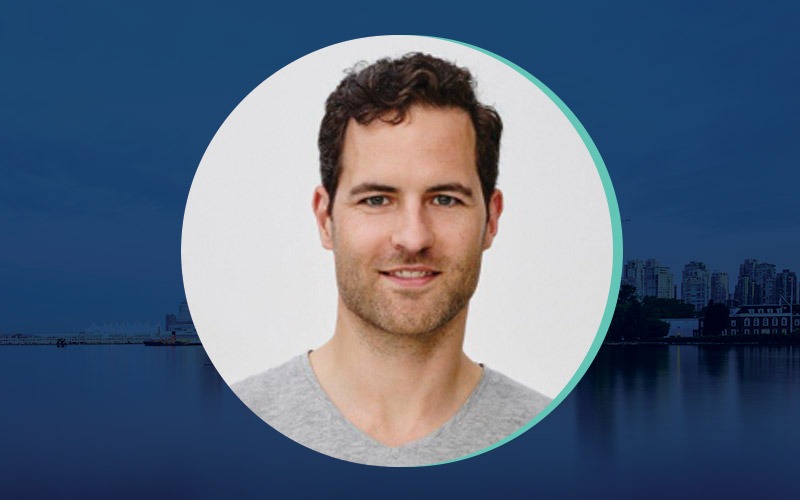
Gregg Peacock is a Blockchain Solution Expert at Vanbex Ventures. A 2x entrepreneur, Gregg has been working with technology...
Key takeaways
- If someone doesn't respond to your email or call, follow up again politely and persistently because people are busy and consistent follow-through demonstrates eagerness and confidence.
- Blockchain technology will be more valuable than the internet and entrepreneurs need to understand and participate in this emerging economy that operates without geographic limitations.
- Building successful products requires human-centered design that makes users feel good when using your product, and everyone on the team should develop empathy for users regardless of their role.
- Vancouver offers a strong entrepreneurial community with accessible resources, but entrepreneurs face the challenge that people here are more risk-averse compared to cities like San Francisco or New York.
- When solving problems in business, focus on deeply understanding the problem itself rather than immediately jumping to solutions, and challenge yourself to think 10x bigger in terms of scale and value creation.
Transcript
Full transcript page · Interactive episode
============================================================
TRANSCRIPTION WITH SPEAKERS
============================================================

[00:00] SPEAKER_01: It's VanCoovers Podcast on the Canada's Podcast Network.
[00:26] SPEAKER_01: Today's podcast is brought to you by Legacy Advantage.
[00:30] SPEAKER_01: It's a new year. Time to start thinking about preparing for tax season.
[00:34] SPEAKER_01: As an entrepreneur, you want to make sure the experts do your bookkeeping so you can spend more time focusing on your company.
[00:41] SPEAKER_01: That's why at vancouverontaprenure.ca, we use the bookkeeping services of Legacy Advantage.
[00:48] SPEAKER_01: They make sure our books are accurate and done right so we can focus on BC entrepreneurs.
[00:52] SPEAKER_01: This tax season, make sure you call 7-7-8-7-8-5-6-8-7-9 or go to LegacyAdvantage.ca and see how better bookkeeping equals peace of mind and more profits.
[01:12] SPEAKER_01: Hello, this is Robert Spiral coming to today with the vancouverontaprenure.ca where we talk to the entrepreneurs who are making it happen here in British Columbia.
[01:19] SPEAKER_01: Greg Peacock is a blockchain solution expert at vanbex adventures.
[01:24] SPEAKER_01: At two time entrepreneur, Greg has been working with technology startups since 2002 and blockchain since 2015 as an investor, trader and educator.
[01:34] SPEAKER_01: He has extensive experience advising early stage blockchain startups on product strategy and crypto economics.
[01:42] SPEAKER_01: Well Greg, welcome to the show. Thanks for taking the time today to be here for all our listeners.
[01:47] SPEAKER_00: Thanks for having me.
[01:49] SPEAKER_01: Fantastic. Okay, why don't you tell us a little bit more about yourself where you're from and give us the details on your current business.
[01:57] SPEAKER_00: Sure. So I was born in Ottawa and I moved out to vancouver in 2006 and I've been mostly participating in the startup scene here in vancouver.
[02:07] SPEAKER_00: And as a hobby, sort of got interested in blockchain a few years ago and at some point just sort of decided to buy a bitcoin just to sort of commit some mind space to or mind share rather to investigating what was going on and that kind of got me hooked and I've been sort of actively trading and investing since then.
[02:31] SPEAKER_00: And more recently as the industries become a chore and accessible and actually legitimized participating in more of an entrepreneurial capacity.
[02:41] SPEAKER_00: So I've been able to offer my experience and knowledge to early stage blockchain startups because I pay attention to what's going on and I spend an enormous amount of time researching it.
[02:53] SPEAKER_00: And more recently joined vancouver to do something similar. I can't talk about that too much yet but it's going to be a very exciting project that's really going to add ton of value to anyone that's really interested in either investing or creating a blockchain business in Canada.
[03:13] SPEAKER_01: Okay, now did you need financing to start your company and how do you currently make money in your business now?
[03:19] SPEAKER_00: I mostly make money through the fee that I charge for consultation and I also have investments that I live on.
[03:33] SPEAKER_01: Okay, now what is the long term vision and what will your company look like in the future? Do you see the company expanding into other areas and where, beyond vancouver BC or even Canada?
[03:44] SPEAKER_00: Well, I think we're dealing with a new product architecture that really isn't constrained by any geographic limitations.
[03:53] SPEAKER_00: If you're connected to the internet you have an equal opportunity to participate in this new economy.
[04:00] SPEAKER_00: So I think everything that we build is really global.
[04:05] SPEAKER_00: I think when it comes to working with people we have geographic limitations but you know there are lots of digital nomads out there and there are lots of people that work remotely.
[04:13] SPEAKER_00: So those barriers are becoming lower as well.
[04:18] SPEAKER_00: So I think we're already a global company and we think about ideas that impact everybody on the planet rather than just people in our backyard or people in our current market because that's really what this technology enables.
[04:32] SPEAKER_01: Okay, now I want to talk a little bit about vancouver and doing business in the city.
[04:37] SPEAKER_01: What are the biggest benefits for you in being an entrepreneur in vancouver BC? I want you to give us some of the good points about starting a company here but I also want you to give us some of the tough things or challenges for our listeners so they can keep an eye on for them.
[04:50] SPEAKER_00: Okay, there's a great community here. There's a lot of opportunity to meet people and get access to resources that are necessary to start a business.
[05:00] SPEAKER_00: I think that's really special, especially coming from a smaller city. There's a lot of opportunities here to either mature your own business or to learn how to do that.
[05:10] SPEAKER_00: And I think that's increasingly important especially with the way that the job market is evolving, how a lot more people want freedom and agency over their lives.
[05:20] SPEAKER_00: And so they're choosing to work on their own like myself or working with a startup because there's more ways to add value rather than working in a big company.
[05:30] SPEAKER_00: And so I think that's why we have such a vibrant ecosystem for starting companies.
[05:36] SPEAKER_00: I think the downside is that there's less risk adverse people in vancouver compared to something like New York or San Francisco.
[05:45] SPEAKER_00: And so your ideas need to be safer or it's simply going to be harder to convince people to work with you or invest in you.
[05:52] SPEAKER_00: And that is definitely the limitation I see that barely that contrast very sharply here compared to other places.
[06:01] SPEAKER_01: Okay, now we do some of our best work outside the office. Is there a place in the lower mainland close to where you live or work?
[06:07] SPEAKER_01: Where you like to go recharge or get inspired or just think about your business? And does it change with the season considering all the rain we get here?
[06:16] SPEAKER_00: That's a good question. I guess my answer is I go outdoors. So we spend so much time indoors especially in vancouver especially because of the rain in the winter.
[06:29] SPEAKER_00: My temple, my happy place is the outdoors. It's being connected with nature. And that's the number one reason why I live here.
[06:36] SPEAKER_00: So if that is at all important to you, we, I mean we live in one of the most beautiful places I've ever been to.
[06:43] SPEAKER_00: I've been to quite a few countries all across Asia and Europe and I've never seen anything so beautiful as the interior of BC and the Pacific coast.
[06:53] SPEAKER_00: It's just incredible. So you have to pay a price for that and that's the rainy weather and the winter but what we get out of it is an incredibly abundant natural environment that we're closely connected to.
[07:07] SPEAKER_00: So I think it's for somebody like me, it's completely worth it.
[07:10] SPEAKER_01: Okay, we have a lot of listeners outside of Canada internationally. So I want this next question. I want you to speak to them.
[07:17] SPEAKER_01: I want you to imagine if you were to start all over again and you just moved here to Vancouver BC but this time you don't know anyone.
[07:24] SPEAKER_01: What would you do and how would you go about starting all over again as an entrepreneur?
[07:30] SPEAKER_00: Well, you got to know people. It's a small community which is nice. But breaking into it can be tricky and that's part of the culture.
[07:39] SPEAKER_00: Once you're in, it's very easy to meet people that can work with you. It's not hard to find which is great.
[07:48] SPEAKER_00: So I would say follow your interests, go to meetups, participate in social events that are meaningful to you, participate in non-social events or other causes that are meaningful to you, hackathons or just going to places where people like you would go.
[08:07] SPEAKER_00: And over time, you will ultimately connect with the right people. And once you get a few, it's really, I think the hardest part and this is more of a life lesson for me is asking for help.
[08:22] SPEAKER_00: Like sometimes you ultimately just have to ask for help if you don't have anything to offer because you're new right away.
[08:30] SPEAKER_00: It's a good way to connect with people and I think that's a real opportunity. Obviously the relationships will mature into something more reciprocal.
[08:39] SPEAKER_00: But sometimes if you're just starting out, it's a great way to build trust with somebody just to be honest with them about it. And that's served me really well.
[08:48] SPEAKER_01: Okay. What does the first hour look like for you when you get up in the morning? Do you have a specific routine or a ritual that helps you get motivated to start your day?
[08:55] SPEAKER_00: Yeah. So I have a five to ten minute mobility routine where I just kind of, it's kind of like yoga. Essentially, it's just to wake up the body. I think mobility is incredibly important.
[09:08] SPEAKER_00: We don't just go and run at the gym and we're healthy. We actually need to use our body to its full extent. And that really is coming from motion, considering how much time we spend in a static position, either sitting or standing.
[09:23] SPEAKER_00: It's really important to make sure that you have that. So that's the beginning of my day. And then I usually spend 45 to an hour looking at my training portfolio, seeing what happened overnight and then trying to consume as much information and news on blockchain as possible because there's a constant inflow of it.
[09:42] SPEAKER_00: And there's way more of it than I have time. So that's a place for me to sort of connect on any timely issues like a new project launching or some economic shock to affect the blockchain industry, whatever it is, that's when I want to sort of allocates in time to explore it.
[10:00] SPEAKER_01: Okay. Now, do you think entrepreneurs have to be weird or unique in a positive way or are wired differently?
[10:11] SPEAKER_00: I think you need to be more optimistic for sure. It's hard to be nonchburner and be pessimistic.
[10:19] SPEAKER_00: It's also difficult because you have to challenge a lot of the common fears that we all have around rejection.
[10:28] SPEAKER_00: And you have to deal with rejection a lot around failure. You have to fail a lot. I don't mean the typical. Oh, I've had two companies in flow. Look at my badge of honor. I mean, like, you're going to make mistakes all the time because you're going to be doing stuff all the time you've never done before. That's just the nature of the learning process.
[10:47] SPEAKER_00: And so having to embrace that is the hardest thing.
[10:50] SPEAKER_01: Okay. What books are you reading now and why are even audiobooks and can you recommend any books for our listeners? We're also aspiring entrepreneurs?
[11:01] SPEAKER_00: Yeah. Sure. So I'm a huge fan of human centered design and product design.
[11:07] SPEAKER_00: I think it's really important to make sure that your users feel good when they're using your product or service. And I measure that is the most fundamental outcome that I'm trying to achieve when I build something.
[11:22] SPEAKER_00: If the user doesn't feel good when they're using your product or whatever it is, it can be a game. It can be a tool.
[11:29] SPEAKER_00: Then you're missing out on something because that's why we interact with all these pieces of software. They're there to achieve some outcome. And that outcome should be very important to the person if they're going to be doing the going through the effort of using your product.
[11:45] SPEAKER_00: And so I would recommend the Lean UX series of books. They're an excellent like concise means of educating yourself on us.
[11:57] SPEAKER_00: A lot of the tools and methodologies required to integrate human centered design into a modern tech company startup experience.
[12:05] SPEAKER_00: And anybody can learn them and anybody can benefit from them. You don't have to be a designer. You don't have to be an engineer. You don't have to be a product manager. Everyone should leverage these tools in order to create more empathy with their users because it ultimately reduces an enormous amount of uncertainty around decision making and prioritization.
[12:23] SPEAKER_00: But it also helps people care more about what they're doing because they actually know what they're building and who it's for and why.
[12:29] SPEAKER_01: So that's what I would recommend. Any online or offline tools that you'd like to use on a daily basis?
[12:37] SPEAKER_00: I'm a fan of the G Suite. So I use Google Apps for practically everything depending on the nature of the work. And other than that.
[12:49] SPEAKER_00: Yeah, nothing nothing really comes to mind. I think I'm pretty standard when it comes to software. I like just yeah paper and pen.
[13:00] SPEAKER_00: I use Moody pen 0.38 millimeter tip black.
[13:04] SPEAKER_01: Okay. Now we touched on this earlier about Vancouver being and BC being a very very beautiful place. You've traveled a lot. You've seen a lot.
[13:12] SPEAKER_01: How do you balance work and how do you relax and not think about work? What are your favorite activities to do here in BC?
[13:19] SPEAKER_01: Do you ski bike kayak golf hike or simply go for a drive?
[13:23] SPEAKER_00: Well, I like the last one. I so I just bought my well my first vehicle in 15 years and living downtown in Vancouver. It's not a really good idea to have a vehicle.
[13:34] SPEAKER_00: But I thoroughly enjoyed using it. And the reason I bought it is because I really want to get into Nordic skiing this year. So that also relates to your question.
[13:44] SPEAKER_00: I've actually purchased all the ski gear and I've taken lessons in the last couple of years as well. So this is going to be my first year really committing to that winter.
[13:52] SPEAKER_00: It's a incredibly surreal experience to go up to Cypress at night in the winter because it's cold and dark but the trails are illuminated. It's just this wonderful relaxing surreal environment.
[14:05] SPEAKER_00: It's very cathartic but it's also excellent exercise.
[14:11] SPEAKER_01: Yeah, you'll have to make a trip to Whistler once you start skiing.
[14:14] SPEAKER_00: Definitely. Definitely. Up to Calahean, right?
[14:17] SPEAKER_01: Yep. Up there. So it's beautiful. If you weren't doing what you do now, what would you like to do for a profession?
[14:25] SPEAKER_00: Wow. Okay. That's a tough one. I really like what I'm doing now and it took me a lot to figure it out.
[14:33] SPEAKER_00: Let's see. I would... I'd like to be an academic unburdened by the need to publish or have a public reputation.
[14:46] SPEAKER_00: So an individual of authority who gets to educate curious young minds who doesn't have to worry about the politics of being an academic. That would be my dream job.
[14:55] SPEAKER_01: What kind of a job would you not like to do?
[15:01] SPEAKER_00: Couldn't do it. Any job that lacks creativity or creative outlet.
[15:07] SPEAKER_00: I would not like to be... And this will be contentious but I would not like to be a software engineer because I feel that it very much involves creativity but the expression of that is very abstract.
[15:18] SPEAKER_00: It's not... It's represented in logic and not in something physical that you can create.
[15:26] SPEAKER_00: I prefer analog outlets for creative expression, music or art and that sort of thing.
[15:33] SPEAKER_01: Listening to music and painting or into that or do you actually do it or you just listen and observe?
[15:43] SPEAKER_00: I live down the street from the area of Vancouver, I have a membership so I consume art on a regular basis. I don't create it.
[15:51] SPEAKER_00: And I definitely consume a lot of music as well. I have a very fancy high-fi headset set up at home where I can listen to radio, head or some classical or some soulful jazz or whatever I'm feeling like in the moment.
[16:07] SPEAKER_01: Okay, in business, what is your favorite word quote or sentence that you like to use?
[16:18] SPEAKER_00: Good question. One of them is Think 10x.
[16:23] SPEAKER_00: And it's pretty cliche, it's been used for quite a while but I really like it because we often when we're in a creative mode or when we're trying to deal with the problem,
[16:32] SPEAKER_00: we never really think about the problem. We always go and think about the solution first because that's what we just humans just do that.
[16:39] SPEAKER_00: I don't know why but that's what we do.
[16:42] SPEAKER_00: And it's an excellent way of challenging somebody who's just done that accidentally and is focusing on the solution rather than what the problem is that they should be trying to solve.
[16:52] SPEAKER_00: And Think 10x really challenges an idea and an open format.
[16:56] SPEAKER_00: So you can really think about it as well just this scale, does it create enough value?
[17:03] SPEAKER_00: Do enough people want it? Can it make enough money? I get really applies to all the different dimensions of value creation in a business context.
[17:13] SPEAKER_00: So I really like that one. I also like simplicity is the ultimate sophistication and I believe it was Leonardo da Vinci that said that but I could be wrong.
[17:23] SPEAKER_00: And I think that's an important reminder as well because it's very easy to complicate solutions because it seemingly adds more value but ultimately they're much harder to create and they're diminishing returns and keeping things simple as an excellent way to produce value.
[17:40] SPEAKER_00: The most enjoyable tools that I get to use in my life are very specifically designed for something and that's the only thing that they do well and they don't really do anything else.
[17:51] SPEAKER_00: And those are the ones that I keep going back to because if I know I need to deal with that problem, that that tool is going to solve it.
[17:58] SPEAKER_00: And I think we we kind of get lost especially in the internet age around that because it's really easy to bolt on new types of value but in a lot of the times it just degrades the overall experience in my opinion.
[18:09] SPEAKER_01: What is your least favorite word or sentence you do not like to hear?
[18:14] SPEAKER_00: Well, what came to mind is I'm not sure what the actual words would be but a lack of curiosity.
[18:21] SPEAKER_00: Like I guess I'm not interested in understanding that or I don't want to know perhaps that's the best answer.
[18:28] SPEAKER_00: I think curiosity is so critical especially in today's world where there's so much information and a lot of it is questionable.
[18:37] SPEAKER_00: So curiosity and yeah that would be the statement.
[18:41] SPEAKER_01: If you had to pick one or two words to describe yourself, what would it be and why?
[18:50] SPEAKER_00: Hmm, I'd call myself a dreamer and I'd call myself a wanderer.
[19:00] SPEAKER_00: And I think I would do that because I've always been deeply connected with the big picture in the future.
[19:08] SPEAKER_00: I think probably because I grew up on a healthy diet of Star Trek and I've envisioned that world for so long and wondered why we don't live there because I see all of the potential of it all around us and yet we don't do it.
[19:24] SPEAKER_00: And this is why I'm pursuing a career in blockchain by the way is because now we have a way of doing it that is grassroots and bottom up.
[19:32] SPEAKER_00: It doesn't require approval from existing institutions or governments. We just build it and use it. It's very simple.
[19:43] SPEAKER_00: Yeah.
[19:43] SPEAKER_01: Okay. What keeps you up at night if anything?
[19:48] SPEAKER_00: Well, if I leave my monitors on I have three of them right across from my bed. That will definitely keep me up.
[19:54] SPEAKER_00: It's usually because there's some chart that I have to be looking at. It's not the most glamorous life to be a trainer, but sometimes it can be fun.
[20:02] SPEAKER_00: Also, I think when I see the state of the world and I see every day walking down the street, people ignoring other people and I see privilege next to poverty.
[20:17] SPEAKER_00: I think I get really upset and sometimes my mind will wander to that and question the reality and kind of feel a little hopeless because it's really hard to do anything about that.
[20:29] SPEAKER_00: I can acknowledge a homeless person on the street and I can give them money, but it doesn't really have a huge impact on anything.
[20:37] SPEAKER_00: I think sometimes I, when I'm especially challenged with a big idea as I'm often challenged because I think about those big ideas.
[20:45] SPEAKER_00: It can get somewhat overwhelming and that's where my mind will go.
[20:48] SPEAKER_01: Okay, I want you to give us the top three things on your inspired lifeless. This could be a bucket list of any sort, whether you want to use TEDx talks, write books, travel more philanthropy, anything like that.
[21:00] SPEAKER_00: I'd like to go to the moon.
[21:03] SPEAKER_01: Okay, that's a good one.
[21:04] SPEAKER_00: Definitely on my top.
[21:06] SPEAKER_00: I want to see the entire planet in the sky as it were.
[21:10] SPEAKER_00: I think that it would be the most rewarding and humbling experience that could possibly be created.
[21:20] SPEAKER_00: On my bucket list, I would like to, I'd like to live in another country at some point.
[21:28] SPEAKER_00: I've often explored it, but never really committed to it.
[21:30] SPEAKER_00: I think it'll happen in the next couple of years based on the trajectory of this technology.
[21:36] SPEAKER_00: I'm looking forward to that as a near term bucket list.
[21:42] SPEAKER_00: What else?
[21:46] SPEAKER_00: I'd like to, I'd kind of like to finish what I've started with this crypto venture that I'm working on.
[21:51] SPEAKER_00: I can't really talk about it yet, but it's a big thing and I think it could really make a huge difference in the world.
[21:59] SPEAKER_00: I really hope that that gets to a point where it's actually creating some value.
[22:04] SPEAKER_01: Okay, do you have any advice that you may have received that you can pass on to entrepreneurs in Vancouver and throughout BC?
[22:12] SPEAKER_00: Yeah, I would say if you email somebody or call them and they don't get back to you, email them again, because we often forget.
[22:20] SPEAKER_00: It happens all the time and the ones that email back two or three times are the ones that are going to hear from me.
[22:26] SPEAKER_00: So, don't be discouraged if you don't hear back from somebody right away.
[22:31] SPEAKER_00: Be polite, be patient, but pressure a little bit is important.
[22:37] SPEAKER_00: It shows eagerness, it shows confidence.
[22:41] SPEAKER_01: Okay, Greg, you ready to have some fun?
[22:44] SPEAKER_00: Yeah, let's do it.
[22:45] SPEAKER_01: Okay, well, as entrepreneurs are very, very busy people, always connected.
[22:50] SPEAKER_01: Like you said, you're always, your screen's on, your monitor's going, you're always checking things out.
[22:55] SPEAKER_01: People call on you, emails, messages, you name it, you're always there.
[22:59] SPEAKER_01: We're going to take you away from all that.
[23:01] SPEAKER_01: There's a small tropical island just off the Fiji that only has one phone booth there.
[23:05] SPEAKER_01: There is no internet.
[23:07] SPEAKER_01: We're going to drop you off there.
[23:08] SPEAKER_01: You won't have a computer, a smartphone or tablet.
[23:10] SPEAKER_01: You can use the phone booth located there any time to call the boat.
[23:13] SPEAKER_01: We'll come pick you up.
[23:15] SPEAKER_01: How long would you last before you made that call?
[23:18] SPEAKER_01: What would you do while you were there?
[23:22] SPEAKER_00: Wow, I have so many questions.
[23:24] SPEAKER_00: Assuming that I had the resources to survive, I would probably stay,
[23:33] SPEAKER_00: I would say a week, I think that would be enough.
[23:38] SPEAKER_00: If I felt like I was unable to support myself there, I would immediately want to leave.
[23:43] SPEAKER_00: But solitude is an important experience, I think.
[23:47] SPEAKER_00: If I'm in a beautiful place and I'm at risk of being abandoned there,
[23:53] SPEAKER_00: then I could at least spend a week.
[23:55] SPEAKER_01: One week, you just chill, kick back, relax.
[23:59] SPEAKER_00: I would explore every niff and cranny of that island.
[24:02] SPEAKER_00: Probably build a fort, you know?
[24:06] SPEAKER_00: I love building stuff.
[24:08] SPEAKER_00: I've always been a tree climber and a fort builder as a kid.
[24:11] SPEAKER_00: That's probably what I would go with it.
[24:14] SPEAKER_01: Great.
[24:16] SPEAKER_01: How can our listeners get whole of you?
[24:17] SPEAKER_01: Is there anything you'd like to add before you leave us today?
[24:22] SPEAKER_00: I would say definitely, if you've probably heard about blockchain,
[24:26] SPEAKER_00: if you're not looking into it, please look into it.
[24:29] SPEAKER_00: It's going to be more valuable to the world and the internet has been.
[24:34] SPEAKER_00: If you need to be a part of this or at least understand what's coming
[24:37] SPEAKER_00: because it's a beautiful, beautiful thing.
[24:39] SPEAKER_00: So please, if you are curious, go do that.
[24:43] SPEAKER_00: If you want to contact me, if you are working in the space
[24:46] SPEAKER_00: or you want to talk about an idea, I can be reached on Twitter at Greg Peacock,
[24:52] SPEAKER_00: GREP-Cock, or on LinkedIn.
[24:58] SPEAKER_01: Fantastic.
[24:58] SPEAKER_01: Okay.
[24:59] SPEAKER_01: Great. Thanks for coming on the show.
[25:00] SPEAKER_01: I've learned a lot about you and I'm sure our listeners have as well.
[25:04] SPEAKER_00: Thank you very much for having me.
[25:05] SPEAKER_01: Great. Thank you.
[25:07] SPEAKER_01: See you next time.
[25:09] SPEAKER_01: Hey there, thanks for taking the time to listen to the Vancouver Entrepreneur.ca podcast.
[25:14] SPEAKER_01: We hope you enjoyed the show today.
[25:16] SPEAKER_01: Make sure you sign up for our newsletters and regular review for us on iTunes.
[25:19] SPEAKER_01: And then connect with us on Twitter at Vance City Podcast and like us on Facebook.
[25:24] SPEAKER_01: And you'll get all the latest news, including the BC Weekly Business Support,
[25:27] SPEAKER_01: where you can find out more, but what's going on with this fabulous promise of ours.
[25:30] SPEAKER_01: See you next time.
[25:40] Speaker UNKNOWN: Bye.