
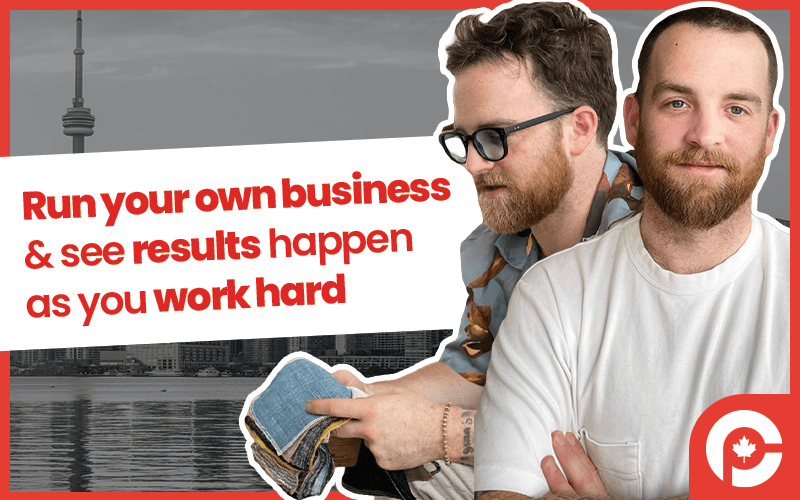
Run your own business, and see results happen as you work hard
Episode
Eric Klein and Evan Klein are twin brothers, experts in the crypto, metaverse and real estate industry and young...
Key takeaways
- Offering to work for free can open doors when starting out, as demonstrating value before asking for payment helps build trust and creates opportunities that traditional applications cannot.
- Building a strong co-founder partnership where each person brings complementary skills—such as sales versus branding, or execution versus strategy—creates a more resilient and capable business team.
- Transparency and active community engagement are critical in Web3 projects, with founders needing to be present in Discord channels, hosting Q&As, and clearly communicating their long-term vision rather than promising quick returns.
- The principles of traditional real estate investing—finding the right location, ensuring numbers make sense, keeping investors happy, and having clear timelines—can be effectively applied to metaverse real estate development.
- Tokenization democratizes investment opportunities by allowing non-accredited investors to participate in projects that were traditionally only accessible to wealthy individuals, though education and due diligence remain essential.
Transcript
Full transcript page · Interactive episode
============================================================
TRANSCRIPTION WITH SPEAKERS
============================================================

[00:00] SPEAKER_03: Welcome to Canada's podcast.
[00:05] SPEAKER_03: So welcome Eric, welcome Evan to Canada's podcast.
[00:09] SPEAKER_03: Great to see you.
[00:11] SPEAKER_03: I'm kind of going to enjoy this part of it because I enjoy the metaverse and some of the things.
[00:18] SPEAKER_03: But before we dive into it, why don't you tell us a little bit more and you're going to have to overlap a little bit between the two of you here.
[00:29] SPEAKER_03: A little bit more about yourselves.
[00:32] SPEAKER_03: You know, I would enter on it obviously, but where you're from, you know, how you got here, if you like, into into the kind of metaverse real estate business, if you like.
[00:46] SPEAKER_02: Yeah, for sure. I appreciate you having us on.
[00:49] SPEAKER_02: So Evan, I grew up very small town about two hours outside of Toronto. It's called Blue Mountain. More specifically, it's called Cormorier, very small town.
[00:59] SPEAKER_02: And then, you know, there's not a lot of opportunities there. So we kind of we knew that getting out was number one. So when we were 18.
[01:06] SPEAKER_02: There's not a good scheme up there, but that's all it is. Right. Like we grew up skiing.
[01:12] SPEAKER_02: My mother at the time actually worked at the ski resorts. We got free passes and we could go. So it was so nice.
[01:18] SPEAKER_02: No, it's good interruption. So we moved to Toronto at 18 with absolutely no plan, no idea what we wanted to do.
[01:27] SPEAKER_02: We were working in bars, washing dishes and all that stuff. I lived in a flat house, you know, $400 a month. And I just we didn't really know what we wanted to do.
[01:36] SPEAKER_02: We just kind of went out and did it. And then went to college. I lasted one semester. So this wasn't for me. And I offered to work for free at a real estate firm instead.
[01:47] SPEAKER_02: So I did a bunch of cold email, cold call. And one guy actually said, I offered to work for free for six months. And if you like to me, he could hire me as assistant.
[01:55] SPEAKER_02: So that's how I got into real estate. And he was a commercial broker in Toronto. He was fairly well known at the time.
[02:01] SPEAKER_02: And just kind of worked my way up and then moved into private equity and the finance side of things.
[02:07] SPEAKER_02: And I'll let have kind of tell his story. But that's how I initially got into real estate. Well, love with it.
[02:14] SPEAKER_02: It was like this great combination of running your own business, being an entrepreneur, but also seeing results happen as you work hard instead of just collecting a paycheck.
[02:22] SPEAKER_02: And that's something that really appealed to me very, very early. And then I did kind of the same thing in the residential side.
[02:30] SPEAKER_02: And then around 2018, I personally started investing into Bitcoin and Ethereum.
[02:37] SPEAKER_02: And then I actually launched a cryptocurrency investment company in 2019, 2020. And then I was doubling in virtual real estate because there's obviously two of my favorite things in the world combined.
[02:49] SPEAKER_02: And then mid last year, I came up with the idea of creating a metaverse breach. And then obviously Emory was born. And then you've just been kind of on a roller coaster ever since.
[03:03] SPEAKER_02: So that's how that's how it all really came about. And I just put a team around like we were chatting prior. I put a team around and said, this is my vision. And that's kind of how it came.
[03:12] SPEAKER_02: And I'll let you dive in, but I've kind of helped with the branding and the marketing and really made us position well. So yeah.
[03:22] SPEAKER_03: So that's about your story then.
[03:25] SPEAKER_01: Yeah, pretty much the same thing Eric and I have been pretty much in the trenches together ever since we've left high school.
[03:33] SPEAKER_01: So he we can we both got into real estate at the same time. He went for the commercial route and I went through the residential road, but I started from like the ground up in the brokerage business doing like answering phones and doing the invent desk and then I became an assistant as well.
[03:49] SPEAKER_01: And then Eric and I finally launched out on our own. But I've always been more interested in the branding strategy and marketing side of things as opposed to sales stuff.
[04:00] SPEAKER_01: So Eric's always kind of been like our sales guy like in our dynamic and I've always been kind of like the branding and you know design and more creative side. So when we launched and read.
[04:11] SPEAKER_01: He brought he had this idea about tokenizing it as well.
[04:15] SPEAKER_01: And then I just came on board and said, you know, I think we should do this and you know, we kind of created this accessibility.
[04:21] Speaker UNKNOWN: And then we had a lot of ability.
[04:22] SPEAKER_01: You know, strategy so everybody could kind of get a piece if they couldn't afford, you know, the expense of land, but.
[04:29] SPEAKER_01: But yeah, we pretty much have the you know, same background, but he's always been more of the sales guy and I've been more of the branding and.
[04:36] SPEAKER_03: So you guys did the real estate thing, but you know.
[04:41] SPEAKER_03: When you're moving into it and then that's kind of not really financing involved in it. It's really effort and selling fund fund.
[04:51] SPEAKER_03: And then you.
[04:52] SPEAKER_03: You've moved into a different space now.
[04:55] SPEAKER_03: You know, in one sense, you could say argue it was it's met a real estate. So it's it's really the same thing.
[05:05] SPEAKER_03: But you know, but it requires more upfront time money investment to to build that those properties, if you like, the, the, those virtual properties that you're talking about.
[05:27] SPEAKER_03: How did you know, how did you manage to step to one to the other because that's a bit.
[05:33] SPEAKER_03: It sounds you're saying real estate, but really, they're not the same worlds. So you know, or maybe.
[05:41] SPEAKER_01: Yeah, ironically, in my opinion, a lot of the principles and philosophies in real world real estate can be applied to metaphors real estate. And I'm just talking about like buildings and and leasing and you know a lot of the same stuff can be applied.
[05:57] SPEAKER_01: So when people ask me, you know, do you need real world real estate experience to get into the metaverse.
[06:04] SPEAKER_01: My answer is always it helps because the same philosophy they're taken to the metaverse as far as like building a properties and developing them and getting brands in there and creating that, you know, presence, if you will.
[06:18] SPEAKER_01: But the everything else like what interested me the most about not just the metaverse, but Web 3 as a whole with the whole decentralized financing and that's something that.
[06:30] SPEAKER_01: You know, when I first was introduced to the stuff I dove into it, you know, head first and took courses on it and it's just.
[06:37] SPEAKER_01: It's just I'm in love with that stuff the whole decentralized aspect of not just the metaverse, but Web 3 and finance and where things are going.
[06:45] SPEAKER_01: So a lot of it was, you know, diving in and learning as much as you can. And I think that's been kind of the exciting part for me as well because you can kind of combine the creativity with.
[06:55] SPEAKER_01: You know, you real estate experience or your finance experience and come up like with the whole, you know, realm of opportunities.
[07:03] SPEAKER_01: So yeah, it's for me it's been it's been a lot of learning and I love that about it. You know, there's something every day is coming up that's new to me and I'm, you know, learning and trying to be an expert as.
[07:14] SPEAKER_03: I think you're not working for a franchise organization. You know, that's what that's sort of what what I meant is that step from me, you know, having this.
[07:25] SPEAKER_03: Just franchise around you kind of feeding you with leads and stuff like that to, you know, being the franchise, the virtual whatever, whether it be, you know, a meta franchise or whatever, being that and creating it.
[07:44] SPEAKER_03: I mean, you know, what's the sort of learning experience of that step because that I see that's very.
[07:53] SPEAKER_03: I know yes, you could argue, you know, meta real estate has I get that piece of it, but, you know, becoming becoming the source, if you like, versus the kind of collector, if you like, is a little different.
[08:17] SPEAKER_00: Yeah, it is and yeah, it's I don't know if I'm lagging. I think from.
[08:29] SPEAKER_00: We're having so much issues here in terms of.
[08:35] SPEAKER_00: Like back started our.
[08:39] SPEAKER_00: Yeah, you're cutting out.
[08:45] SPEAKER_00: Yeah, we usually losing area, I don't think it's.
[08:48] SPEAKER_00: Yeah, I know I except talking my internet.
[08:50] SPEAKER_00: Am I back?
[08:51] Speaker UNKNOWN: Yeah, yeah.
[08:58] SPEAKER_00: Yeah, sorry, I'm actually in Mexico City, so it's a little.
[09:05] SPEAKER_03: Yeah, I think that's probably.
[09:06] SPEAKER_03: That's probably the problem because Evan and myself are fine and you're you're you're you're.
[09:13] SPEAKER_03: You're coming out basically.
[09:15] SPEAKER_02: Am I is it better?
[09:17] SPEAKER_02: Yeah, you're good.
[09:19] SPEAKER_02: Yeah, sorry about that.
[09:21] SPEAKER_02: I think, you know, when I started working in the commercial world, my boss wasn't like a traditional broker.
[09:29] SPEAKER_02: Like he did a lot of financing.
[09:31] SPEAKER_02: We worked with a lot of developers.
[09:33] SPEAKER_02: So I got like we worked on a reach together and I got some exposure on how to fund and form a read at a very early age.
[09:41] SPEAKER_02: And then I went out and moved to a to a private equity firm where we were structuring real estate funds.
[09:47] SPEAKER_02: And we ended up Evan and I creating our own real estate company our first one when we were 26, which was to go out get investors, find properties and fix them up and rent them out.
[09:59] SPEAKER_02: So it kind of for me, the transition has been, you know, obviously there's a learning curve, but the transition has been fairly organic where, you know, I saw what a read was doing.
[10:10] SPEAKER_02: I was working with the credit investors every single day.
[10:13] SPEAKER_02: I saw this opportunity where tokenization could allow access to people that didn't traditionally need to be accredited.
[10:20] SPEAKER_02: And that was very interesting to me because it was like all these opportunities are being presented to these wealthy people.
[10:26] SPEAKER_02: But what about the everyday people who could potentially make money?
[10:30] SPEAKER_02: So the transition was like, you know, instead of working with accredited investors, we just had to create a good product and the investors would come to us via token holders.
[10:40] SPEAKER_02: So it was a bit of a learning curve, but the mentality to me was kind of the same because you, you know, whether you're going to invest into a real property, you have to find the right location.
[10:50] SPEAKER_02: The numbers have to make sense. Your investors need to be happy.
[10:53] SPEAKER_02: And then you have a timeline and all that stuff. So we kind of took that thought process and created emery.
[10:58] SPEAKER_02: And instead of just virtual properties, we were going to go out and purchase, you know, metaverse NFTs.
[11:04] SPEAKER_02: But then it came kind of clear that, you know, we need tokenomics to be extremely solid.
[11:11] SPEAKER_02: And we need a developer to make sure that this can be done.
[11:13] SPEAKER_02: And then, you know, the whole decentralized web three thing is like information sharing.
[11:17] SPEAKER_02: So we had to be extremely transparent with everything that like everything we're doing.
[11:22] SPEAKER_02: So it's, you know, you take things from your last life and you bring it into your new one and you obviously learn things as you go and then you kind of build a stepping ladder in my opinion.
[11:31] SPEAKER_02: So it's been fairly organic, but obviously jumping in has been more difficult.
[11:36] SPEAKER_03: So this is about your, your two of you, your entrepreneurial journey, if you like it, as well as as well as web three and that kind of thing.
[11:45] SPEAKER_03: So let's kind of just switch a switch a little bit. Let me ask you that, you know, you know, you know, did you just stumble into being entrepreneurs?
[11:56] SPEAKER_03: You think or, you know, it's kind of interesting. I don't hear like, you know, oh, I started. I work here for this one time, and then I did this and it sounds like it was just like, good, good, good, good.
[12:10] SPEAKER_03: I'm an entrepreneur. I mean, you know, I asked this regularly. I mean, a week, because I'm one of you.
[12:20] SPEAKER_03: Why differently, something like that. It's just something, you know, you know, I think we've all got friends. I mean, not all of my friends are entrepreneurs by any stretch of the imagination.
[12:32] SPEAKER_03: Yeah. What's the sense?
[12:35] SPEAKER_01: It definitely takes a different breed, I think, and I think it's a much bigger psychological question on why, you know, we all do what we do.
[12:44] SPEAKER_01: But for Eric and I specifically, I think the foundation of what made us go that route was we grew up in a very, you know, poor upbringing, you know, our parents were divorced.
[12:56] SPEAKER_01: So we saw very early on what we didn't want, you know, when we got to the age where we can make our own decisions. And it wasn't all easy. Like we were, you know, volatile, we made decisions, you know, based off of little information, we would go out to stuff and it would fail.
[13:10] SPEAKER_01: But it was the excitement of going out, you know, and just trying it out. And we were never afraid to jump in. And if we fell on our, you know, if we fell down doing it, we didn't, we didn't care.
[13:23] SPEAKER_01: Like that was part of the excitement for us. So I think it takes a person foremost a comfortability of like failing and not being scared of the risk level or, you know, I mean, like, I guess in another sense too.
[13:37] SPEAKER_01: Yeah. And we always had each other too, which I think is a huge benefit. Like that. I could see that. That's that's that.
[13:43] SPEAKER_01: Yeah, because of one of us went in and did something. We were probably doing it together. And if one of us failed, we had the other one to fruit, you know, kind of pick us up. And so I think it kind of made us really cool. A little less sensitive to the bad spirit.
[13:57] SPEAKER_03: That might be them. I was going to ask you, you know, I had a couple of great mentors on the way for for myself.
[14:06] SPEAKER_03: Did you guys or did you in front end up mentoring each other? I mean, maybe Eric, maybe you answered this one.
[14:13] SPEAKER_02: Yeah. Well, you know, it's funny because we took, even though we were always doing things together, we had extremely different paths along the way.
[14:22] SPEAKER_02: Like when I got into commercial and sort of corporate, my first boss became my mentor. He kind of instilled a lot of things that I was just new to me.
[14:32] SPEAKER_02: And he was an extreme, let's just say he, he was very unorthodox in his way of thinking and it kind of kind of opened up my mind and how to sort of approach things and how to structure things going forward.
[14:44] SPEAKER_02: But so he acted as my first mentor. I learned a ton from him. And then when we were doing the REIT financing, I was introduced to another guy who I didn't know at the time. And he was a big political figure. And he became sort of my mentor.
[14:57] SPEAKER_02: And he taught, you know, he taught me that relationships are really everything. And you want to work with people that you're excited to be around.
[15:04] SPEAKER_02: So those two guys really helped me when I was very young. Like we're talking early 20s.
[15:10] SPEAKER_02: But then it just became kind of I was really like I really admire people that are close to me that I don't necessarily need to know them.
[15:19] SPEAKER_02: But like, you know, I saw like Mike Wackerly at Earl's once and I didn't know who he was. I asked who he was. And then I figured out his story. And I find inspiration from people who don't necessarily have it easy, but figured out a way.
[15:32] SPEAKER_02: And I don't need to know you, but I just need to know your story and everything that you've kind of been through.
[15:37] SPEAKER_02: And I think Evan and I kind of find that in each other because, you know, our risk level is extremely high. We don't really fear failure. And if we do, it's a learning experience.
[15:46] SPEAKER_02: So I kind of find mentors all over the place. Now I've got a really great team with me and one guy has been, you know, in the business for 20 years. He's brought companies public. He sold a couple of couple companies for a lot of money.
[16:02] SPEAKER_02: And you know, now he's kind of teaching me how to be a better CEO and stuff. So it's I'm just like a sponge, man. And I don't like I don't put anybody on a pedestal and I don't put myself on one either.
[16:13] SPEAKER_02: And I think that's kind of the attitudes back to Evan, like, you know, our upbringing. We never really, you know, we don't think one thing is the right way ever. We always think there's more than one option to do things.
[16:24] SPEAKER_02: And mentors will come and go, but I think it's important to learn what you can from everybody that you work with really.
[16:30] SPEAKER_03: That's a good point. You know, if it looks at what you have, and if you had a bit of one or two words to describe yourself.
[16:38] SPEAKER_03: What would they be and why?
[16:43] SPEAKER_01: I'm interested in this.
[16:45] SPEAKER_01: I would say the first two things that come to mind is I'm reflective and creative. I think I bring a lot of.
[16:53] SPEAKER_01: You know, creative ideas to the table, but I think the main thing is I'm always thinking.
[16:58] SPEAKER_01: Not just about myself, but about what I'm doing and, you know, what we're doing as a company.
[17:03] SPEAKER_01: So being reflective and kind of seeing yourself, you know, perception wise and how you could do things and what's working and what's not and how you could react to things differently and, you know, just try to better yourself as, you know, in any aspect, whether it's, you know, business or in your day to day.
[17:22] SPEAKER_01: That's something that I'm huge on and at least in this period in my life right now, you know, so it's.
[17:27] SPEAKER_01: I'd like to say the person foremost is I'm a reflective person and I'm always conscious about, you know, how we interact with each other and how we do business and how we can attack.
[17:41] SPEAKER_02: I don't know that's funny. I'm like the opposite of Evan.
[17:46] SPEAKER_02: So it's like Evan and I are very, very much self aware and very reflective. I think you have to be.
[17:53] SPEAKER_02: So, you know, always weighing what you're doing in the consequences. Of course we do that and why we do things and the results of the things we do.
[18:01] SPEAKER_02: But I think I'm, you know, more resilient and more of an opportunist.
[18:05] SPEAKER_02: I think it takes a lot for me to really stay down like if I want something it's not really an option to really fail and I try to see opportunity and a lot of things.
[18:16] SPEAKER_02: And I think, you know, that's why we're doing this and, you know, why I invested into Bitcoin fairly early.
[18:21] SPEAKER_02: But so I think I don't know. I'm, you know, pretty resilient.
[18:27] SPEAKER_02: When it comes to business, I'm, it's basically like Evan's got all these, you know, hobbies that he likes to do and he's a very creative individual.
[18:33] SPEAKER_02: And me is just I want to know what's going to be, you know, the next big thing or how can I make the business better.
[18:39] SPEAKER_02: I'm very obsessed with that. So finding opportunity. I think right now is like honestly one of the best times probably in our generation for what's really happening with the blockchain.
[18:46] SPEAKER_02: So I'm extremely, you know, passionate and excited about what's happening. And I'm trying to like, you know, I brought up DeFi and it's like that whole world is extremely fascinating.
[18:56] SPEAKER_02: And so I'm kind of like a kid back in kindergarten with everything that's happening.
[18:59] SPEAKER_03: Yeah, and I mean, it's great. All of this stuff, you know, creating various systems to leverage, you know, the metaverse. But you mean, you know, how do you do that and protect the investor, the end use of the, you know, I liked your perspective on opening it up by tokenizing and allowing everyone to play on the other end of someone doesn't have that money to throw away.
[19:29] SPEAKER_03: What, you know, how, how, how, how can they feel you can never feel entirely safe. But is there any perspective you can give on that either of you?
[19:42] SPEAKER_01: I have a few points Eric, you can touch more on the investor, investor specific stuff, especially traditionally, but in this world, like metaverse and web three, the community has kind of been the heartbeat of where the trust is at with companies.
[19:59] SPEAKER_01: You know, so if founders are in the discord and the white papers clear and everything's being answered, I found that an enormous amount of trust comes from the community.
[20:11] SPEAKER_01: And, you know, if the people who are running the project are in the discord answering questions, doing Q&As, like Eric said earlier, transparency in this game is, you know, more important than ever.
[20:22] SPEAKER_01: So actually coming from maybe a traditional finance background. So being transparent with the community and building trust within the community, I think is the number one way to make investors feel as secure as they can outside it may be the traditional, you know, investor talk that they can probably touch on.
[20:40] SPEAKER_03: Yeah, why don't we get your perspective, I'm sure some of it might be the same, but.
[20:49] SPEAKER_00: I'm back into it.
[20:51] SPEAKER_00: Yeah, I don't know if I'm cutting out again, but you guys hear me? Yeah, we got you now, yeah, you were a bit.
[20:58] SPEAKER_00: Yeah, yeah, I think, you know, what?
[21:01] Speaker UNKNOWN: Go ahead.
[21:04] SPEAKER_02: I think it's, you know, it's, it's a tricky thing, you know, my background is they have to be accredited. They have to fill certain documents, you have to file, right, D, all of this stuff, right?
[21:14] SPEAKER_02: It's a lot of red tape and I'm still torn.
[21:20] SPEAKER_02: Because the idea for Web 3 is the information is with the holder and you can be able to do certain things that you wish to do.
[21:26] SPEAKER_02: And I think why tokenization will become such an important part is it allows anybody to really get involved and we make it very clear that you should do your own research, understand what the company is trying to do.
[21:41] SPEAKER_02: You know, my background for the last couple of years has been heavily involved in crypto and I see a time and time again where people will just invest into something with the hoax at it'll pump.
[21:47] SPEAKER_02: And I tell all of our members like don't invest with us if that's what you want because yes, we had a great pump, but we're long term.
[21:56] SPEAKER_02: So I think, you know, it's educating it's like telling them how do we get to where we want to go? Do you believe in the project?
[22:02] SPEAKER_02: And if you do join our community, join our discord. I'm in there. Let's chat if you have questions like we just did a Q and a last night.
[22:10] SPEAKER_02: So we try to build trust that way and I think with Web 3 it'll be interesting because of course, you know, there's going to be regulation down the road.
[22:18] SPEAKER_02: It's already starting to happen, especially with like, dows and exchanges right now. So I think, you know, we need to keep a level of, you know, Web 3, you can make your own decisions, you know, never invest more than you can afford to lose.
[22:32] SPEAKER_02: I think everybody knows that at this point, but it needs to be mentioned time and time again. But we need this balance of, we need regulation to keep, you know, all the scams in the bad players out, but we need a level of Web 3 authority where the information is still yours.
[22:46] SPEAKER_02: You're welcome to do what you want with your own money. So I think it's going to be good. What's going to happen in my opinion, but in terms of how do we protect the investors?
[22:54] SPEAKER_02: We always make it very clear. Read the white paper, read our website, stay in our discord for a while. People are always talking to discord too, like they're asking questions. We have like a Q and A section. We have like a project section. We have like a free chat section.
[23:08] SPEAKER_02: So we will never just be like by our coin and forget about us. It's more of, you know, join us and, you know, and it's funny because the power of community is amazing. Like we got introduced to so many opportunities through our token holders and we love that. So I don't know.
[23:26] SPEAKER_02: It's going to be interesting to see how this really all plays out, but I do think there's going to be a new class of regulation that will be introduced that will be specifically for digital currencies and blockchain projects.
[23:38] SPEAKER_02: And I also think on top of that, companies will start to tokenize more and more. Like I think there's a tremendous opportunity for companies like Airbnb or, you know, whether it's real estate rentals or we work to create their own currency, their own tokenization, where it can be used as utility token within their project.
[23:56] SPEAKER_02: Within their company. So that's another whole thing, but it's all information. Like everybody has absolutely dreams.
[24:05] SPEAKER_03: Yeah. So what's keeping you guys up at night? Yes.
[24:14] SPEAKER_02: What do you mean? Like in a good way or a bad way? I don't know. Do you tell me?
[24:19] SPEAKER_02: That's funny because when I growing up, I would like to be an insomniac because I would dream about things that I wanted to make happen for my life. Now it's more.
[24:29] SPEAKER_02: I don't know. Like I think there's so much opportunity. And I think with blockchain specifically opportunities coming and like we told our token holders from day one, like where we're at now could be very different.
[24:39] SPEAKER_02: We're at six weeks. So I'm always up thinking, you know, reading, thinking, where is this going to go? What's going to happen? And then you see a company do something pretty interesting. And you're like, well, Dan, can I can I do that? Or can we do some form of that?
[24:55] SPEAKER_02: So I don't know. I'm always thinking down down the road. I don't really it's funny. Like I don't stress too much. I'm very much like if there's something that's bothering me, I'm very like I don't even want to hear the problem. Like how do we fix it?
[25:07] SPEAKER_02: So I don't know. I don't I don't lose sleep over bad things. I'm more thinking, you know, where is this really going because it's like an endless black hole, but it's in a good way.
[25:18] SPEAKER_03: So what happened? Does that mean you're the warrior?
[25:21] SPEAKER_01: I wouldn't say I'm the warrior. I think I have the rational one. If anything, I think I bring a voice to reason to some of maybe Eric's scattered brain here and there.
[25:32] SPEAKER_01: But he like pulls me back. No, no, no, no, no.
[25:37] SPEAKER_01: No, we just got to you know, dice it up in a way that makes sense. And you know, but yeah.
[25:42] SPEAKER_03: Okay. Well, you know what? It's been really good. We're reaching reaching the end of the end of our time, guys.
[25:50] SPEAKER_03: And I could be I could go on for quite a lot longer. But we're going to have to close it. So how can people get a hold of you guys?
[25:59] SPEAKER_03: I mean, if you know, we have quite a lot of people down, you know, download or view our podcasts and I was like them to be able to get a hold of, you know, who we've been talking to.
[26:12] SPEAKER_02: Yeah, we've got our websites, mreet.io. If you look us up on Instagram, Twitter, it's metastase, read.
[26:20] SPEAKER_02: And then all of our discord and stuff is on our website so you guys can go there and all the information you need.
[26:26] SPEAKER_02: We've got our whole team on there, the white paper, but it's mreet.io.
[26:31] SPEAKER_03: All right. Good. Thanks, guys. Been great having you on really, really enjoyed meeting you.
[26:37] SPEAKER_00: Yeah, you as well. Appreciate it. Thanks so much.