
Activism comes in many forms with Dr. Robyn Bourgeois
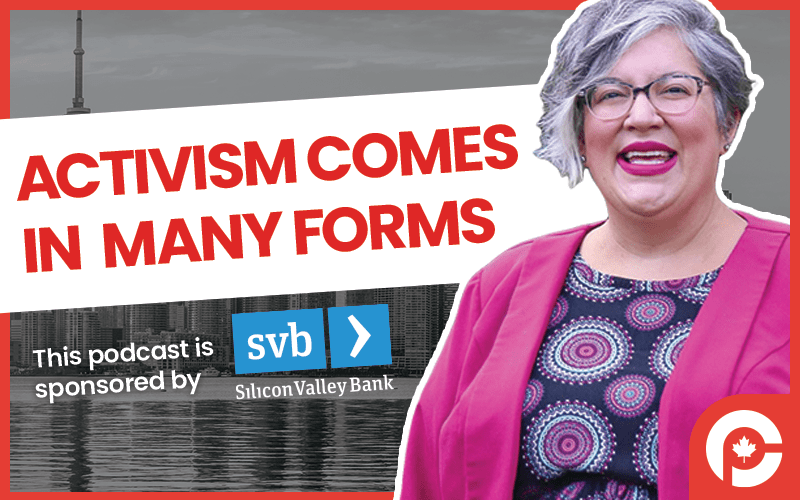
Episode
Dr. Robyn Bourgeois (Laughing Otter Caring Woman) is a mixed-race nêhiyaw iskwew whose Cree family comes from Treaty 8...
Key takeaways
- Don't be afraid to make mistakes when engaging with Indigenous issues and reconciliation, because inaction is worse than imperfect action and Indigenous communities will guide you through the learning process.
- Educate yourself by reading the Truth and Reconciliation Commission report and the National Inquiry into Missing and Murdered Indigenous Women and Girls report, then take action on recommendations you can implement in your own life.
- Progress is never a straight path, and it's important not to measure your journey against others because everyone has different privileges and circumstances that shape their experiences.
- Sharing your story and speaking your truth can break cycles of shame and create powerful pathways to healing for yourself and others who have similar experiences.
- Supporting Indigenous peoples means showing up to events like Sisters in Spirit Day, attending rallies and remembrance ceremonies, and being willing to have uncomfortable conversations that challenge your worldview.
Transcript
Full transcript page · Interactive episode
============================================================
TRANSCRIPTION WITH SPEAKERS
============================================================

[00:00] SPEAKER_03: Welcome to Canada's podcast.
[00:07] SPEAKER_02: At Silicon Valley Bank, we help innovative technology and life science companies grow.
[00:13] SPEAKER_02: If you're ready to take your next step, discover how Silicon Valley banks founder friendly financial solutions, industry insights, and connections can help you move your bold ideas forward.
[00:25] SPEAKER_02: Fast.
[00:26] SPEAKER_02: O2, www.svb.com slash Canada slash connect.
[00:34] SPEAKER_02: Take your next step with Silicon Valley Bank.
[00:37] SPEAKER_01: Hi, this is Celine Williams hosting for Ontario for Canada's podcast.
[00:42] SPEAKER_01: My guest today is Dr Robin Bourgeois, who is an associate professor in the center for women's and gender studies at Brock University and is currently serving as the university's acting vice provost Indigenous engagement.
[00:53] SPEAKER_01: Robin is also the keynote speaker at the Niagara leadership summit for women on October 26th. Welcome, Robin.
[01:01] SPEAKER_01: What, thank you for having me.
[01:03] SPEAKER_01: I am very excited to talk to you.
[01:05] SPEAKER_01: I think everything that you're up to is incredibly cool.
[01:10] SPEAKER_01: And I want to start with kind of a big broad question, which is can you tell us a little bit about your journey and how you got to where you are right now doing the things you're doing because it's all really interesting.
[01:22] SPEAKER_01: For sure.
[01:23] SPEAKER_03: It's a bit of a it's a bit of a long story, but important story because my life has really led me to this point in many ways.
[01:32] SPEAKER_03: And it starts with, you know, a few things.
[01:35] SPEAKER_03: I am Cree. So my family, my mom is white. My dad is Cree. And my family comes from treatyate territory, which is Northern Alberta, but I grew up in the Okanagan.
[01:46] SPEAKER_03: I had a, I talked childhood. I had issues with indigeneity. My pair or my, some of my family thought it was best that we might pretend we're not indigenous.
[01:57] SPEAKER_03: So there was always a struggle we knew we were, but we were disconnected from our community and our teachings and culture.
[02:03] SPEAKER_03: I also had an abusive family and had some violence happen to me as a young person.
[02:10] SPEAKER_03: And by the time I was 18, yes, just after, just after my 18th birthday, I graduated high school and within six months, I was in Vancouver, stand county side.
[02:22] SPEAKER_03: I was being trafficked for sexual exploitation.
[02:27] SPEAKER_03: I was really lucky. I got a second chance that a lot of people don't get. And for me, school was always a way, empowerment.
[02:33] SPEAKER_03: It was a, it was a place where I felt strength. And I realized that it was a way for me to be able to change the world because I wanted to, I wanted to change the world so that no one else would have to go through anything like I had gone through.
[02:47] SPEAKER_03: So I went to university and I earned a degree and somebody said, you know, you should keep going and you should do a PhD and whatever. And so I did, I kept going and going to go to school and ended up getting my PhD.
[03:01] SPEAKER_03: During that time, though, I spent a lot of time as an activist because having survived that experience. And so that was in the 90s, late 90s. And if you know anything about the downtown East side in that era, that was the time when Robert Picton was killing women.
[03:15] SPEAKER_03: And I knew some of those women. And so I got involved in activism. And I have spent the last 20 plus years actually working from coast to coast. Now I work from Vancouver all the way across to make Maggie.
[03:27] SPEAKER_03: And I've been involved in activism. I worked with communities to create anti violence responses. And that that has been the most important part of my work for the last 20 plus years and my research as well.
[03:42] SPEAKER_03: I got called actually as an expert in experiential witness at the National inquiry into missing and murdered Indigenous women and girls in 2018. So I testified there.
[03:52] SPEAKER_03: And that's the most important part of my work. I am also a course of professors. So I do teach, which is another passion. But right now I've got into senior administrative council because I'm helping the university pursue decolonization and indigenization.
[04:07] SPEAKER_03: And so my work is a little different now. I'm doing a lot of helping the university really pursue decolonization. And that's a lot of really important work. So that's pretty much the story of how I got to where I am today.
[04:22] SPEAKER_01: I have a lot of questions. I'm sure that's not surprising. I want to make an observation and you can tell me if this does not resonate. But when you were talking about the work you're doing now at the university around decolonization and indigenization.
[04:41] SPEAKER_01: To me, it's immediately what I hear is this is another form of activism that you're doing. And it's in the world of a university. It's in the world of bureaucracy and whatever the case might be, but it really is a form of active. It's a different form of activism.
[04:58] SPEAKER_03: Yeah, I agree with you. I absolutely agree. You know, I really think that broadly anyway, I think activism is we tend to want to think of it as just people in the streets, but I think it's bigger than that. And people are fighting for change at all different levels.
[05:11] SPEAKER_03: And so I think your observation is absolutely accurate because that's really the work I'm doing is really fighting for change within the system. And I won't say fighting because generally the university is on board. It's part of our strategic plan.
[05:24] SPEAKER_03: But I'm just helping really make those structural changes that will make meaningful change for indigenous peoples at the university. And non-indigenous peoples too. I mean, I think the things that we are doing are going to benefit all of us.
[05:36] SPEAKER_03: In fact, I often argue that I think the thing that's going to save us in the world, you know, whether it be from a pandemic or global climate change is returned to indigenous ways of knowing and doing. So I think it's beneficial to everyone. But it definitely feels like activism.
[05:51] SPEAKER_01: Well, and I appreciate that because I do think I think what you said is really astute. We often think of activism as being outside the systems, right? It is and it's fighting. And it's advocating for change in a meaningful way, whether it's inside or outside a system. And I think that there's a, the opportunity to change the systems that perpetuate the problem.
[06:13] SPEAKER_01: That is, that is very important activism. And we don't always see it that way. And so I just wanted to observe that because I was like, I think it's really cool that you're the work you get to do the, you know, the fully paid, fully paid, like the bulk of your work work is actually still activism, which is something you're clearly passionate about.
[06:36] SPEAKER_03: Yeah, yeah, exactly. It is. I get to live my dream every day in many ways, you know, because I'm getting to see things happen. I think that's what's really incredible about it is when you actually see the things start to move and you're like, wow, you know, we tend to think of social institutions, whether it's a university or even healthcare or governance.
[06:54] SPEAKER_03: You know, when we think of those things as these big, huge permanent structures that can't be moved, and yet we do it all the time and it's magical. And that keeps me going every day.
[07:05] SPEAKER_01: I think that's fun. I am very impressed with everything that you are doing. And I, I mean, I literally was like, I love it all. I want to talk about all of it.
[07:14] SPEAKER_00: And we will not get to all of it, but I would like to ideally four hours later, we would still be talking about it.
[07:21] SPEAKER_01: I do want to go back to something you said, which was that, you know, you had the opportunity to change your life at a certain point in time.
[07:28] SPEAKER_01: And I think that that transition point, transformation point, whatever it was, is a real opportunity for people to understand how stories can change because we, we have perceptions of, I always say that, like,
[07:43] SPEAKER_01: if you know someone in high school, as always, my basic story, you know, someone in high school, you meet them 20 years later, you still respond to most people still respond to them as that person from high school, even though they will have had lived 20 different lives in that last 20 years.
[07:57] SPEAKER_01: Yes.
[07:58] SPEAKER_01: I think we can understand what that change looked like for you.
[08:02] SPEAKER_01: It helps us recognize that people were always, always changing. And so I'm curious. It's a very long lead up to the question, which is, what was the, how did that opportunity come around?
[08:12] SPEAKER_01: Because it's hard. That's a tough sits really tough. I can't even, I don't even know how to emphasize enough really tough situation that you were in.
[08:21] SPEAKER_01: And you've done incredible, you clearly, this opportunity was life changing in an incredible way.
[08:26] SPEAKER_03: Yeah, yeah. And you know, in many ways, like, I wasn't in control of that change point, you know, I, the whole way it went down in the end was that a police officer overheard me screaming and released me and I took off and ran away.
[08:44] SPEAKER_03: And I just, oh my gosh, to escape and go back and try to fix my life after that. And it was that moment. I just knew I could go and I want to say this, I want this to be really clear for people.
[08:59] SPEAKER_03: It's not like my path was straight. And I've talked about this at the Niagara, you'd urge leadership summit for women before is we imagine it's a straight line, but it's not.
[09:08] SPEAKER_03: I came out of that experience. And then I was like, okay, well, first of all, I've been dragged a whole bunch. So I detoxed and I had to recover from trauma and PTSD and the shame of it all too.
[09:21] SPEAKER_03: There's a lot of shame. In fact, one of the things people don't often know is that I didn't talk about my story for 10 years.
[09:26] SPEAKER_03: I literally kept it quiet. And I was like, I just want to go on with my life. I'm going to pretend this didn't happen. And yet I was suffering. In fact, I was really self-destructive. I can look back now and I can realize that I probably should be dead because I started drinking heavily.
[09:40] SPEAKER_03: I took risks with my own life because I didn't have any value in myself. And then that's really where the turning point comes because I went to do my PhD and I was struggling and I had moved my focus to missing a murdered Indigenous women and girls.
[09:54] SPEAKER_03: And finally, someone had the courage to ask me what was going on and why this was such a struggle for me and what was going on in my life. And I had the courage to tell them my story. And it changed my entire life for me.
[10:06] SPEAKER_03: At that moment, even more so changed my entire life because I realized that I have been holding myself. I've been, I've been really punishing myself.
[10:19] SPEAKER_03: And putting it out into the world and speaking my truth, changed everything. There was a huge release. I reconnected with my Indigenous ways of knowing and doing which saved me. I started drumming, changed my life.
[10:31] SPEAKER_03: All of that was really important. And I just, I've always been convinced that whole time I always knew from the moment that I escaped till I mean, I still feel that way.
[10:41] SPEAKER_03: I want to change the world. That was it. And I knew that it wasn't easy. I mean, I still stumble. There are days that are good and there are days that are bad, right? That happens. It's the complex nature of trauma.
[10:55] SPEAKER_03: But I keep going forward. That's the end of the end of the day. I'm always trying to move forward and I'm always trying to be the change for this world. And so it's been an incredible journey.
[11:08] SPEAKER_03: I've talked about this with other people who've gone through trauma. And I have actually a really great friend who is the daughter of a couple that were murdered.
[11:17] SPEAKER_03: And we've talked about it often because we don't, we don't, we wish thing that hadn't happened. Of course we wish that.
[11:24] SPEAKER_03: And yet, when we look at it where we are now and the fierceness of our advocacy and the work we do, it's like this made me know, right in many ways. And that's a really complex thing to actually think about that, you know, yeah, of course we wish it didn't happen. And yet, because it happened, we made certain decisions to fight for change. And I think that's huge.
[11:48] SPEAKER_03: But it really wasn't a straight journey. I really, I really encourage people to understand that I've struggled.
[11:54] SPEAKER_03: Some days I have good days, some days I take a step forward and then 10 back. You know, it just happens, but it's always about going moving forward, moving forward and, you know, really learning to take care of myself and understand that that was as important to the journey.
[12:09] SPEAKER_03: And then just really committing, you know, even when I don't feel good to show up and to keep challenging the system and and supporting people, that's what I do, right. I mean my, my, my spirit name is laughing otter caring woman.
[12:25] SPEAKER_03: And the elder who named me pick the caring woman part because she said you care selflessly about people you every day fight for others.
[12:35] SPEAKER_03: And she said that's such an important part of who you are and it's the gift that you bring to the world. So that's it, it's an interesting trajectory. But, you know, I just, I just needed to do something with that experience.
[12:51] SPEAKER_02: The team at Silicon Valley Bank in Canada can help you move your bold ideas forward fast, bringing global expertise to founders, investors and innovators.
[13:02] SPEAKER_02: Visit www.svb.com slash Canada slash connect to find out more.
[13:11] SPEAKER_01: Thank you for sharing that. And I think what you said is that it's not a straight path and having people understand that is so important because when you're on the outside and you see someone who is very successful and you see someone is doing the work that you're doing, the assumption can be well they just they step by step by step by step, it's just this nice easy straight path to get there and it's so rarely the case.
[13:33] SPEAKER_01: And I think that it's about it and shedding light on the fact that, you know, there were there are they're going to continue to be stumbles. It's not, but it is about taking continuously taking those small steps forward, even if you take a stumble back continuously continuing to do that.
[13:49] SPEAKER_01: It doesn't have to be big leaps forward. It's not about the size of the steps you're taking. It's about the consistency of them.
[13:55] SPEAKER_03: Exactly. Well, and you know what else I want people to know it too is that, you know, I had a kinds of privileges that made my journey out of this possible.
[14:04] SPEAKER_03: And you know what I never want I always worry when I tell people my story that they'll say, okay, look at where Robin was and look at what she's done now. So anybody can do it.
[14:12] SPEAKER_03: That's not entirely true. You know, like when I when I got out, you know, my mom had access to money. So she was able to pay for things to transport me home and things like that other families wouldn't have had that.
[14:25] SPEAKER_03: You know, so there are also privileges that made my journey a little easier than some other folks. And I think that matters to I think that really matters. And I don't want people to hold me up as the measuring stick.
[14:38] SPEAKER_03: Because we're all at different places and we can't do that to each other. We can't measure where we are in our lives against each other. It doesn't matter. It really doesn't matter.
[14:49] SPEAKER_01: Well, and it perpetuates that shame cycle, right? Like part of the reason we don't talk about this and and I'm fully disclosing I'm making an assumption here.
[14:57] SPEAKER_01: But part of the reason that for example, you may not have talked about this for 10 years is shame. And when you are really right and when you are also then comparing yourself to someone else who has done something differently, it perpetuates that shame. So it by sharing the stories by emphasizing my story is not your story.
[15:14] SPEAKER_01: We can start to break that cycle that is so inherent in how we operate in this, you know, I mean colonized world is really part of it. But like this is part of part and parcel inherent in so many ways that we show up and operate. And it's problematic.
[15:30] SPEAKER_03: Exactly. And you know what I've seen. And that's the beauty of sharing my story is that I have literally shared my story and people have come to me and said, I have a similar story.
[15:40] SPEAKER_03: And they started talking. And I've seen so many women who have after particularly women have come to me and said, I have the same story.
[15:51] SPEAKER_03: And they've started to talk and the healing that happens out of that. It's exactly like you said, it breaks that cycle of shame because that's what it was.
[15:59] SPEAKER_03: I believe the hype in my head. I believe what my imp had said to me, nobody will believe you. Nobody will ever love you again. Everybody will think you are dirty and you are useless. And you were just garbage.
[16:12] SPEAKER_03: And so that's what's going on in my head. And I mean, I will say at least with sex trafficking, there is still, I mean, we make fun of prostitution and sex work all the time. We make jokes. I mean, how many times do you hear jokes about dead hookers, which is so problematic.
[16:25] SPEAKER_03: And so in my head, that's what I'm hearing and I'm seeing it out in the world and I'm going, yeah, I'm not telling anybody this story because this is what's going to happen to me.
[16:35] SPEAKER_03: And the funny thing is though, in all of the, it's been, oh my gosh, now almost 10 years since I've been talking, actually more.
[16:45] SPEAKER_03: And I've never had that happen. Not once to my face.
[16:48] SPEAKER_03: I mean, maybe somebody says it behind me back. I don't know. But people have generally been receptive and they've thanked me. And then it's all those people who've come forward and said, I have a similar story.
[17:00] SPEAKER_03: And I think that's powerful. There's something powerful in, in sharing stories. And that becomes a path to healing.
[17:10] SPEAKER_01: Absolutely. It's easy to forget that most humans, there are always exceptions. But they want to care and help at their core.
[17:21] SPEAKER_01: And when they hear stories like this, again, there's always exceptions, but most people, they want to help. They empathize. They, you know, they want to know what they can do, how they can support you.
[17:34] SPEAKER_01: And yet we are so wired in today's society, not naturally wired. I don't like natural brainwiring it. But like into, we are socialized to think that strong people don't ask for help.
[17:47] SPEAKER_01: Strong people don't talk about their trauma. Strong people, all of this crap. That's not real. And when you speak about it, you step into look at all these people who are receptive.
[17:57] SPEAKER_01: And it helps them open up. And maybe they're curious and it opens their eyes to something they weren't aware of. Right? Like there's the fact that we live in a country that has as many issues as we do around the missing and murdered and bitching this woman on it.
[18:10] SPEAKER_01: And I want to talk about that activism. But how many people, especially if you grew up in a city like Toronto, didn't don't know about that. How many people were shocked by the revelation of the, of the residential schools this year.
[18:21] SPEAKER_01: They didn't, they didn't know this was a thing until I went to school downtown Toronto, Florence, but I in an area. So the, the, I think it was called the Native Center at the time I might be wrong, but it was, it's right that.
[18:35] SPEAKER_01: And I remember in 1996 when I was in high school, the end of high school, the kids that came into Toronto from the residential schools that had been shut down and the flood that happened that summer.
[18:48] SPEAKER_01: And the stories because they were right there. Yeah. And I know people my age who were in Toronto had no idea and I just happened to go to school right there. Yeah. So this is how we open these things up, change the world. People want to care. They, I mean, most people again can't talk for everyone.
[19:09] SPEAKER_01: Most people do want to care and they do want to do something.
[19:12] SPEAKER_03: Yeah, exactly, exactly. And that's what I get all the time. I see that. I even see that with my work on decolonization at Brock. I really, you know, I expected kind of to hit longer heads quite often and people and stumbling box.
[19:26] SPEAKER_03: But people are really eager. They're really behind this and what they just want is someone to walk the walk with them and figure out how to implement things. And I think that's really wonderful. And I think I agree with you. I think at the end of the day, most people have empathy.
[19:41] SPEAKER_03: And can understand and want to make change. But I still think we have issues. I mean, the fact that people are shocked by residential schools.
[19:49] SPEAKER_03: You know, we've known this. I wrote this in an article. We've known this for generations. We've not carried those stories. My grandpa talked about very or digging graves at his residential school.
[19:59] SPEAKER_03: So we've known this. And I have to kind of have a little bit of sympathy for folks because I know the system is set up so we don't learn these things. I mean, I'm, I'm going to guess, given that you said 96 were about the same age.
[20:13] SPEAKER_03: And we, I never learned anything in school.
[20:15] SPEAKER_03: Oh, barely remember touching it, right?
[20:18] SPEAKER_03: At all.
[20:18] SPEAKER_01: And that's why I say if I hadn't gone to school where I went to school, I would have had no idea. Right? That's the only reason I knew about it.
[20:25] SPEAKER_03: Yeah, exactly. And the system is designed that way. So I have a little bit of sympathy for people because in the back in the day, I would have been really angry and been like, how do you not know this? But the system is set up that way.
[20:36] SPEAKER_03: The system makes sure that you don't know because that's how you get complicity, right?
[20:41] SPEAKER_01: Yeah.
[20:42] SPEAKER_01: Absolutely.
[20:42] SPEAKER_01: And the fact that, I mean, I love the work that you're doing to highlight these things and to change the awareness around them and to, you know, just trying to spotlight on what has really happened, especially to Indigenous women in this country.
[20:57] SPEAKER_01: Yes.
[20:57] SPEAKER_01: Yes.
[20:58] SPEAKER_01: And so I know it's not necessarily, I'm sure it's part of what you're doing at Brock as well.
[21:05] SPEAKER_01: But I'm curious.
[21:10] SPEAKER_01: Oh, God, I don't know that so many questions on asked what I'm really curious how.
[21:16] SPEAKER_01: You got involved in that level of activism and, and if you've seen it, this is really my question. Has anything really changed?
[21:24] SPEAKER_01: Is there any progress being made around this because I think people are scared.
[21:29] SPEAKER_01: I think there's a lot of people who are scared to say the wrong thing and are scared to, to step into something they don't understand that's different from their experience.
[21:38] SPEAKER_01: And I think that's is still hence the shock over residential schools as an example, right?
[21:43] SPEAKER_01: It's like, oh, we just didn't know, but how do you ask the question? And so are you seeing, that's my real question.
[21:48] SPEAKER_01: Are you seeing with this activism with, that things are changing? Is there progress being made?
[21:54] SPEAKER_01: What can we do to continue to support the, hopefully progress that is being made?
[22:00] SPEAKER_03: Yeah. You know what I do. In some ways, I do see progress. I will, I will tell you I keep in fact to some other very first rallies.
[22:09] SPEAKER_03: I remember being in Toronto and having a rally in downtown Toronto.
[22:12] SPEAKER_03: And there be like 10 of us, right? And yet, you know, now we can get several hundred people out to things.
[22:21] SPEAKER_03: I would spoke at an event for Orange T-shirt day on September 30th here in St. Catharines and it was a last minute came together in a week.
[22:29] SPEAKER_03: And we, the, I couldn't believe how many people were there to be part of those discussions and to listen to people.
[22:36] SPEAKER_03: And I see it at the university too. I see people are eager. I do think though, there's a few things. I think people are scared and I think, don't know what, what the right thing is to do.
[22:50] SPEAKER_03: And they don't want to make a mistake. And I want to tell everybody guess what, make the mistake. We all do it.
[22:55] SPEAKER_03: And we will help you. That's as indigenous people, we will help you. We will tell you, we'll be like, no, that's not cool or no, this is, yeah, you're on the right track.
[23:03] SPEAKER_03: We would, we will do that. But don't be afraid to make a mistake. It happens. I think in action is in some ways even worse. Right? Because in action doesn't teach you anything.
[23:16] SPEAKER_03: If you do, you know, may ask a question, have a difficult conversation. Those things can be really helpful. I mean failure is your best learning tool. Right?
[23:27] SPEAKER_03: So I think that's important. But I think we can do more. And I think, you know, one thing I always encourage folks to do is educate yourself.
[23:33] SPEAKER_03: You know, there's a Truth and Reconciliation Commission report. Go read that. There's a flammable report of the National Entire Intimishing Immurdied Indigenous Feminine Girls. Go read that.
[23:41] SPEAKER_03: And then take action. There's each one of those. For example, has one has 94 one has I forget what the final number was of the National Entire. It's huge though.
[23:51] SPEAKER_03: You can go through the list of recommendations and see which ones you're like, you could do in your own life and start doing those little pieces.
[23:59] SPEAKER_03: I also think folks can just support Indigenous peoples. That's so important. You know, when we're having a rally like today is October 4th.
[24:07] SPEAKER_03: And it is the Sisters in Spirit Day. So it's a National Day of Remembrance for missing and murdered Indigenous Feminine Girls. Go find an event in your community and go check that out.
[24:17] SPEAKER_03: Those are the things that we really need. But don't be afraid. You know what? We're in this together. We're blocking the road together.
[24:23] SPEAKER_03: That's the whole spirit of our treaties always work. We're in a relationship together and that we are going to walk together through that journey.
[24:32] SPEAKER_03: And I think that's what's really important is we have to do it. And it's uncomfortable. It can be really challenging. It can be disaddling for people.
[24:42] SPEAKER_03: You know, when you suddenly see a whole whole world that you didn't know exist, that can be really disturbing. It's hard.
[24:50] SPEAKER_03: But I also want to challenge people and say, imagine what it's like to live that. Imagine what it's like for Indigenous peoples to live it every day.
[24:57] SPEAKER_03: And then that does come for your feeling. Is it so bad?
[25:00] SPEAKER_01: Yeah, I love that. I want to be very mindful of our time together. And so I want to ask the question, which is, is there anything that we didn't get to today that you want to share with our list of people?
[25:12] SPEAKER_01: Or is there any questioners or viewers? Or something you want to emphasize? Because I think we've covered a lot of, I mean, again, I could talk for four hours.
[25:20] SPEAKER_03: For sure. I think, I think the thing I really want to highlight is I really want to invite people to come out to the Niagara leadership summit for women.
[25:30] SPEAKER_03: It's a really important event here in the community. It's an opportunity to discuss the issues around women's leadership and to celebrate and amplify.
[25:40] SPEAKER_03: It's such a great experience. I'm so honored to have been asked to be the keynote speaker, especially because the topic this year is the courage to lead. And I think that's really important.
[25:51] SPEAKER_03: I think we need to have that conversation. You know that it's still really hard to be a woman leader in this country, even given all the progress we've made.
[26:03] SPEAKER_03: And that we have to find the courage to lead because a lot of us do it every single day. And I think it's important to recognize that and celebrate it.
[26:10] SPEAKER_03: So I really encourage people to join us. It's a fantastic event. And it's always the highlight of my year here in the Niagara region.
[26:17] SPEAKER_01: I love that. We will, we will definitely have a link to the summit in the show notes for anyone who would like to attend or learn more.
[26:26] SPEAKER_01: Robin, thank you. You are incredible. And I know I've said it 18 times.
[26:31] SPEAKER_01: I really admire everything that you are up to in the world. I think it's really fantastic. And I appreciate you sharing your time with me today.
[26:39] SPEAKER_03: Thank you so much. Be staying free. We stay keen and ask come attendants. It's a thank you. But it also means I'm grateful for you.
[26:46] SPEAKER_03: And thank you for taking the time to share my story with your listeners.
[26:52] SPEAKER_01: Absolutely. It's been a pleasure. And for those listeners, thank you for listening to Candace podcast.
[26:57] SPEAKER_01: Like comment and subscribe to all our channels to get the latest podcasts from entrepreneurs and incredible activists like Robin across Canada.
[27:07] SPEAKER_02: The Silicon Family Bank team in Canada can help you take your next step.
[27:12] SPEAKER_02: I'd like to know more about the bank that has nearly 40 years of global experience supporting venture backed tech and life science companies and their investors.
[27:20] SPEAKER_02: We're in Canada to help leading innovators reach the next stage faster. Visit www.svb.com slash Canada slash connect.
[27:33] SPEAKER_02: Take your next step with Silicon Valley Bank.