
Inspiring Future Leaders
Episode
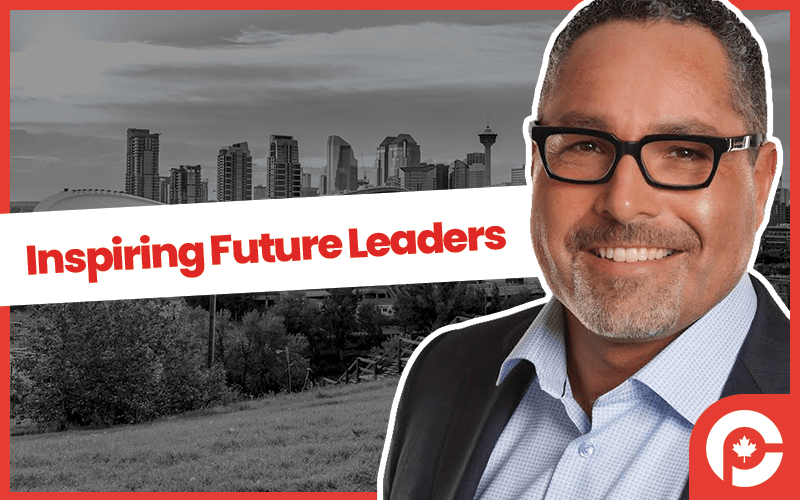
Colby Delorme is one of the founding creators of Influence Mentoring Society, and was appointed Chairperson of the IMS’...
Key takeaways
- Influence Mentoring matches Indigenous post-secondary students with mentors based on their field of study to help them build social capital and navigate their educational and professional journeys.
- The organization creates bridges between Indigenous and non-Indigenous communities by pairing students with mentors from both backgrounds, fostering mutual understanding and cultural appreciation.
- Building trust with students is one of the biggest challenges, as many are unaware of the importance of social capital and how mentorship networks can create professional opportunities.
- Mentorship relationships are mutually beneficial, with mentors often gaining as much from the experience as the students they support, creating stronger bonds through genuine connection.
- Success often comes from having a personal board of directors—a network of people who provide guidance, support, and knowledge transfer throughout different stages of life and career.
Transcript
Full transcript page · Interactive episode
============================================================
TRANSCRIPTION WITH SPEAKERS
============================================================

[00:00] SPEAKER_01: Welcome to Canada's podcast.
[00:05] SPEAKER_01: Hello, I'm Mario Tonigusi with Calgary's podcast on Canada's podcast network. Joining me today is Colby DeLorm,
[00:13] SPEAKER_01: who is board chair of Influence Mentoring. Thanks for joining us today.
[00:19] SPEAKER_00: Thank you very much for having me, Mario.
[00:21] SPEAKER_00: Well, let's talk about Influence Mentoring, what it is, what it does.
[00:25] SPEAKER_00: Absolutely. So Influence Mentoring is an organization that was founded by myself and two other individuals in Calgary back in 2014.
[00:36] SPEAKER_00: And we have the opportunity through some funding streams to be able to bring the organization to fruition in late 2020.
[00:47] SPEAKER_00: So Influence Mentoring is mentoring Indigenous post-secondary students across Canada.
[00:54] SPEAKER_00: So we are ensuring that post-secondaries, the Indigenous post-secondary students have the opportunity to feel supported throughout their educational journey.
[01:06] SPEAKER_00: And at the core of it, what we're really trying to do is ensure that we're able to help them raise their social capital through those efforts of having peer-to-peer networks and the mentor-proteger relationship.
[01:23] SPEAKER_01: So, tell me just a little bit Colby of how it works. So do you get a student and you match them, I guess, with a quote-unquote mentor?
[01:36] SPEAKER_00: Yeah, absolutely. So, we are, students can either join a program on their own or they can be associated to Influence and Join Influence through a partnership that we might have with their post-secondary students.
[01:53] SPEAKER_00: So, it's exactly that. We are taking a student, matching them with a mentor, but we're matching them based on discipline.
[02:04] SPEAKER_00: So, if it's a student who is in a business program, we want to find the mentor who is in the business world.
[02:12] SPEAKER_00: They are either an entrepreneur or they work for a big four to 500 company and we're trying to match them that way.
[02:20] SPEAKER_00: The matching not only is based on discipline, but it's also based on the right kind of match, you know, the similar personalities.
[02:30] SPEAKER_00: And our mentors are both Indigenous and non-Indigenous. So, we're really creating an environment where we can start bridging some of these cultural gaps that we have in our society.
[02:43] SPEAKER_00: Tell me why this is important.
[02:45] SPEAKER_00: Well, if we were to take a look at the where most of the Indigenous community is in Canada, there is some sort of barrier, if not multiple barriers, to success or, and that's both professional and personal success.
[03:05] SPEAKER_00: So, we believe that a program like this helps to equal the playing field, helps to ensure that that Indigenous student feels welcomed in that environment that they're in, and we can help them to navigate with the help primarily of the mentor, to navigate those environments in which they'll find themselves when they are finally done their academic career.
[03:31] SPEAKER_00: And more than that, we believe that it's the understanding that the non-Indigenous community, the greater Canadian society, is going to have an understanding in this mutual appreciation of one another as they go through this relationship and this growth and this mutually beneficial opportunity.
[03:56] SPEAKER_00: So, we think that it's really the environment of creating an inclusive environment and group that really helps both parties, everybody, sort of flourish.
[04:12] SPEAKER_00: Okay, where do you find the mentors?
[04:15] SPEAKER_00: The mentors come from partners that we have, so we are constantly trying to link with organizations, whether they be a for-profit industry organizations or government departments, where they are utilizing mentorship or organizations like Influence as a part of the professional development experience that they're offering or affording their team members.
[04:43] SPEAKER_00: So, that's primarily where we're getting them, but we also have people who are just finding us, whether it's through a podcast like your own, an interview or an article, or they've sought us out through the internet, and they're reading and saying, I want to play a part in this.
[04:59] SPEAKER_01: Wonderful. Well, let me ask about the students themselves, how do you reach them?
[05:05] SPEAKER_01: You know, because I'm wanting it's probably typically not something that I'm a student there and I'm going, looking for mentoring programs, right? So, how do you reach the students?
[05:18] SPEAKER_00: Well, it's a good question. It's probably what we're finding to be the most difficult component of this.
[05:25] SPEAKER_00: I think students are so overwhelmed as it is. You know, some of them are new to post-secondary, and this isn't just Indigenous students, I think just all students.
[05:38] SPEAKER_00: Their first time in post-secondary, they've got all these stresses, and it's probably the largest workload they've ever had academically.
[05:47] SPEAKER_00: So, we are trying to reach out to them through their student associations, of course, because our students are Indigenous through the Indigenous centers at the school, we're doing it through social media, we're doing it through individuals like yourself, and you know, through these sort of peer-to-peer networks.
[06:08] SPEAKER_00: And, you know, I think the sort of one of the biggest barriers that our organization is facing is this understanding and this build of trust that we need to have with the students so that they realize that this is something that is really designed for them, really designed to support them through this educational career that they're on.
[06:35] SPEAKER_00: And, to understand that this is really how the majority of people really create opportunities for them is through this social capital.
[06:46] SPEAKER_00: And, I think that's one of the greatest barriers is really understanding that there's such a thing as social capital and that it has some real gravitas in terms of how it might be able to help you on your professional, within your professional career.
[07:00] SPEAKER_00: So, we're finding unique ways to try to get out to students.
[07:05] SPEAKER_01: So, tell me just a little bit about, you know, the idea of mentoring in general. Like, why is having mentors, no matter what you do, whether you're a journalist like me or a business owner or whatever, why are mentors important?
[07:25] SPEAKER_00: You know, I think many people, when you ask them, do you have a mentor, is mentorship you've sought out, many people would say no.
[07:37] SPEAKER_00: I don't think they gravitate to the idea that they have had a mentor because they probably haven't had a mentor in a formal way where it's been identified as, I'm coming from mentorship from you, you're going to be my mentor and you know, I'm so appreciative of you have to offer.
[07:53] SPEAKER_00: But I think when we really look at mentorship and the essence of that transference of knowledge and we use that term in the Indigenous community a lot, but it's really transferable to all people.
[08:06] SPEAKER_00: And I think those are the relationships that we have with grandson and grandfather or son and mother or daughter and grandmother, any of those kinds of combinations.
[08:20] SPEAKER_00: And realizing that these people are the individuals who have really informed our approach to the world, our understandings, our values and moral sets and all these things that are, and who we go to, especially when we run into difficult times.
[08:39] SPEAKER_00: And I think we lose the, we don't understand that not all people have access, not all people have got what I call that personal board of directors, that group of people that brings you all these different things in your life and helps you along the way.
[09:00] SPEAKER_00: And you know, when I think about it, I always think about that mentorship relationship as one that's mutually beneficial.
[09:10] SPEAKER_00: You've got the protege as we call them or mentee where the belief is that they're the only one who's really getting something out of this and that they are seeking out something.
[09:23] SPEAKER_00: But you've got that mentor and that individual has to feel that there's something rewarding and I don't know that they're asking for that.
[09:33] SPEAKER_00: But definitely we all want to be a part of something where we feel good or we feel like we have something to offer or something to benefit or someone will benefit from what I have to offer.
[09:44] SPEAKER_00: And that's what we find or what I believe when we look at when I look at mentorship that it's something that it's really like the client and the psychiatrist relationship, except you don't have that individual who's a professional, but they have something to offer.
[10:04] SPEAKER_00: And it's one that's maybe more a relationship that's more easily had, but becomes more a stronger bond because there is no formality to it that two individuals truly have to trust one another as they come together.
[10:23] SPEAKER_00: And it's just when it's the right match, it's beautiful and it's one thing where I leave every time and I go, I'm pretty sure I got more out of this than the protege or the mentee did.
[10:37] SPEAKER_00: So for me, it's paramount.
[10:42] SPEAKER_00: I can count all the different people in my life that have played some sort of a mentorship role.
[10:47] SPEAKER_01: Well, that's what I was going to ask you like what about yourself personally like you had mentors along the way.
[10:55] SPEAKER_00: Yeah, I haven't had a lot of formal mentors. I haven't really been a part of a form of mentorship programs where I am the mentee, but throughout my life, I have had individuals.
[11:09] SPEAKER_00: I've been an entrepreneur since the age of 18. So I had all sorts of people that I sought out specific resources and support from.
[11:20] SPEAKER_00: And I would say all of those individuals became mentors to me, but most specifically my first job, I worked with my uncle.
[11:29] SPEAKER_00: He's electrician in Winnipeg. I worked with him for this summer and he's a very supportive person, very intelligent, really can a very good teacher, but he had a bit of a tough love approach to things.
[11:44] SPEAKER_00: I remember this one time I didn't wake up on time and he's an early riser and he just left. He didn't leave a note. He just left.
[11:53] SPEAKER_00: And when I got up and I realized he was gone, I just knew, oh, I've got to get to work. And I knew it was I was 14, but I didn't know the bus routes.
[12:05] SPEAKER_00: I had to figure out a way to get there show up. He was waiting. He wasn't impressed. And you're just okay. Well, you know what you have to do.
[12:13] SPEAKER_00: And he really was that person who taught me how to work and how to have work ethics. And then the other individuals probably played the most substantial role in my life is my mother.
[12:26] SPEAKER_00: Her name is Dr. Marie DeLorm. She's also my business partner for the last 20 years. And although she would describe me as being her mentor, as I was self-employed for eight years prior to her becoming self-employed.
[12:43] SPEAKER_00: So I helped her a lot in the beginning of the development of the company and I joined two years after that. But we, she's the one who's informed really everything about my approach in life and especially in business.
[13:00] SPEAKER_00: And I've been incredibly blessed to have such an amazing person, not only love me, but also be there to support me in countless ways.
[13:09] SPEAKER_01: So what is your business? What do you act beyond what you do with influence mentoring? What do you do to bring in the cash?
[13:18] SPEAKER_00: Yeah, so I spent a lot of my time.
[13:22] SPEAKER_00: We own an organization called the Imagination Group. We have a business management consulting firm.
[13:31] SPEAKER_00: So we work with Indigenous and non-Indigenous organizations all across Canada. We do a lot of strategic planning, governance work, HR work, things of that nature, supporting organizations.
[13:47] SPEAKER_00: We also have a ceremonial tobacco manufacturing business. So one of the sacred medicines for Indigenous people is tobacco. It's the most powerful of them.
[14:00] SPEAKER_00: And we're producing a tobacco that's used to fulfill protocol. So when you meet with an Indigenous person, tobacco is offered. If an elder performs a blessing out tobacco is one of the things that is transferred to them.
[14:16] SPEAKER_00: So we manufacture tobacco and then we have an Indigenous gift company where our products are adorned with Indigenous culture and imagery. So that's my day job.
[14:30] SPEAKER_01: Oh wow, interesting. So how did your day job get you to where you are now as board chair of influence mentoring?
[14:38] SPEAKER_00: Yeah, well, we, you know, we have a belief in my family that if you have the opportunity in whatever way and whatever capacity to give back and to be able to help you do that.
[14:52] SPEAKER_00: So a lot of my time is spent typically in not for profit governance, supporting social organizations, social programs. And you know, typically I'm bringing governance experience and I'm bringing business acumen.
[15:09] SPEAKER_00: So I spent a lot of my time doing that over the last 18 years and just a group of us who work together said, you know, wanted to have more impact and we believe in mentorship and we believe the power of mentorship.
[15:23] SPEAKER_00: And we just decided that we would create this organization and it was one of us, one of these people, his name is Bruce Randall and he was the executive director of Criac, a newcomer professional mentorship program in Calgary, very well respected, amazing work.
[15:43] SPEAKER_00: And it was actually Bruce's initial idea that we should be looking to work it on something. So we, we've been pushing for the last six, seven years to really get this organization off the ground.
[15:55] SPEAKER_00: And it was only so through some very amazing circumstances that Ryan Reynolds and Blake live we came to the table and brought us our seed capital to be able to bring this organization to fruition.
[16:12] SPEAKER_00: So that's how it came to be and I was, I became the chair of the organization.
[16:19] SPEAKER_01: So, so what was their connection to that and their motivation to that?
[16:25] SPEAKER_00: Well, Ryan and Blake were watching what was happening in the States around Black Lives Matters and feeling like something needed to be done.
[16:38] SPEAKER_00: So they really, they're feeling thropic efforts. I think they've always been doing this, but they, they really ramped up their efforts during Black Lives Matters down in the States.
[16:50] SPEAKER_00: And you know, Ryan said, you know, we, you know, I thought about and he said, I really think this is the same plight that indigenous people are facing in Canada.
[17:00] SPEAKER_00: And maybe there's something we can do there at a grassroots level. So he started contacting people across Canada and really delving into this and really out of a place of care.
[17:15] SPEAKER_00: And we ended up being the third organization that they decided to support and, you know, just a really beautiful approach, you know, not, not a feeling of something that someone tried to deal with taxation implications or, or, you know, wanting to get their name out there as being this person who's helping and, you know, although he allows us to use their name.
[17:45] SPEAKER_00: That's not the, that's not the push. And he's forever there forever supporting us in multitudes of different ways. And we just so blessed.
[17:56] SPEAKER_00: And for it to be a non-indigenous person showing that there is a way to support, there's a way to be a champion within the community is completely invaluable.
[18:07] SPEAKER_00: That language that that individual uses rings differently when it's someone like myself using it or someone else in the indigenous community. So we feel we'll be forever blessed for that relationship.
[18:21] SPEAKER_01: Just a couple of personal things, Colby from yourself. So, so where did you grow up?
[18:28] SPEAKER_00: I was born in Winnipeg, so it came from the the Métis homeland, but we moved to Calgary in 1985. So I was nine years old and grew up in Calgary and for my mother and myself Calgary is definitely home.
[18:47] SPEAKER_00: You know, it's been, it's an amazing place for opportunity. You know, if, if you're willing to work hard and you're willing to be a part of the community, it's one that can, you know, it can be incredibly rewarding.
[19:01] SPEAKER_00: So I grew up in Calgary, grew up in Acadia, and Mum still lives at, at the family home there. And yeah, it's, yeah, it's been very lucky to be in Calgary.
[19:14] SPEAKER_01: When you look at yourself personally, Colby, I'm just wanting, did you, as you grew up, did you feel those barriers and experience those barriers that you talk about in life?
[19:33] SPEAKER_00: I was unaware of them. So I would say in hindsight, I was identified as being different or identified as being a marginalized person, but I was unaware that I was marginalized.
[19:51] SPEAKER_00: So it's kind of an odd thing to describe, but I'm, my, I was dealing with some forms of racism, but of course, because of my complexion, my, my father's Trinidadian, so I'm half black as well.
[20:09] SPEAKER_00: So because of my complexion, I don't look overly black, I don't look overly adidious. Definitely when you see me in person, you might guess I'm from South America or some Hispanic, something of that nature.
[20:23] SPEAKER_00: And, but my, my mother didn't take the opportunity to explain to me that there were people in this world who saw us differently. And as a result of that, I was unaware of some of that cultural dynamics that were occurring.
[20:44] SPEAKER_00: There were things that I was dealing with, but I didn't know where to encapsulate them. I didn't know how to address them. And it wasn't until my first company, I was 18 years old that I realized that I had been dealing with racism.
[20:59] SPEAKER_00: And it took me about three weeks to think through all of the different circumstances in my life. And I don't think they, I would never say that they were as extreme as, as some of my people have had to deal with.
[21:12] SPEAKER_00: But I think whatever you've dealt with is extreme, right? It's whatever the worst you've dealt with is the most extreme thing you've ever experienced.
[21:21] SPEAKER_00: And when I asked my mother about it, I said, well, why didn't you ever explain this to me? And she said, I was never going to take the opportunity to set in your mind that people believe that you weren't equal.
[21:37] SPEAKER_00: I was going to tell you how amazing you were, how smart you were, and how handsome you were, so that that is what you believed. And as a result of it, I, I don't feel barriers, I see barriers, but I don't feel them because I feel completely equal.
[21:56] SPEAKER_00: And it's based on the way my mother chose to raise me and to inform the way that I saw myself in the world. And I am so lucky to have had that experience and that teaching at such a young age.
[22:09] SPEAKER_00: So they are there. I think they've probably influenced some of my professional and personal life, but I've chose to step around them.
[22:23] SPEAKER_00: Just because I don't believe them intrinsically or internally.
[22:32] SPEAKER_00: So I'm curious, what did you do at 18? What was your business? I started a window cleaning company and a simple business to get into, but it had all of the different components that you need to learn to become an entrepreneur.
[22:49] SPEAKER_00: But a very low threshold in terms of capital to get it going, but really big return.
[22:57] SPEAKER_00: The only thing that didn't work for me, it was so simplistic in terms of the work itself that I didn't, I didn't find it challenging, but it was a part of one of my learnings of understanding that I could have found a way to maintain the business by hiring people while I started working.
[23:19] SPEAKER_00: So that was my next business. So that was an entrepreneurial learning and business learning that I had to go through, but it was a window cleaning business.
[23:27] SPEAKER_01: Oh, interesting, interesting. Now, Colby, if I'm an indigenous student and I'm looking for information or want to sign up or if I'm a mentor with the same feelings, tell me what I can do and where I can reach out to.
[23:45] SPEAKER_00: Absolutely. So our web address is influence mentoring.com. There is a way for mentors and protoges to both start building their profile.
[23:57] SPEAKER_00: And we've got an executive director and a mentor coordinator that are there to help you along the way and to have a conversation with you.
[24:08] SPEAKER_00: And we would love the engagement of any and all people. So anyone with passion, we're looking for.
[24:14] SPEAKER_01: All right, wonderful. Thanks, Colby for joining us today. Thank you for offering me the opportunity.
[24:21] SPEAKER_01: All right, that was Colby Delorm, who is board chair of influence mentoring. I'm Mario Tonogusi with Calgary's podcast on Canada's podcast network. Thanks for joining us today.