
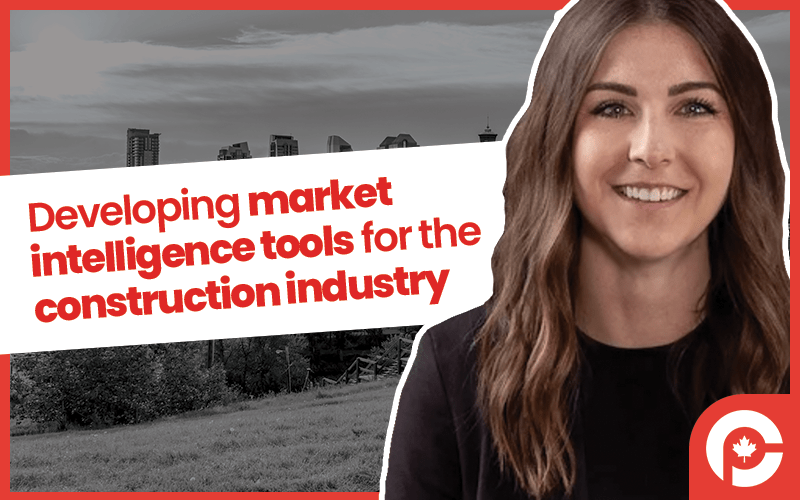
Developing market intelligence tools for the construction industry
Episode
Chloe Smith is the CEO and Co-founder of Mercator AI, a construction intelligence platform that delivers project insights for...
Key takeaways
- Understanding your market size and willingness to pay is crucial before launching a startup, and you can validate this quickly even with simple tools like spreadsheets.
- Being an entrepreneur requires stamina and conviction to weather the daily highs and lows, so you need to believe deeply in your solution on the difficult days.
- Seek out peer-to-peer mentorship from founders who are just 12-18 months ahead of you, as they can provide the most relevant and practical guidance for your current stage.
- Focus on gaining learning and growth opportunities early in your career rather than chasing money, as this will set you up for long-term success.
- Surround yourself with advisors and investors who have been operators themselves, not just financial professionals, because they understand the trenches and can provide actionable advice.
Transcript
Full transcript page · Interactive episode
============================================================
TRANSCRIPTION WITH SPEAKERS
============================================================

[00:00] SPEAKER_00: Welcome to Canada's Podcast.
[00:06] SPEAKER_00: Hello, I'm Mario Tonigus, managing editor of Canada's Podcast.
[00:10] SPEAKER_00: Joining me today on Calgary's Podcast is Chloe Smith, CEO and co-founder of Mercator AI in Calgary.
[00:19] SPEAKER_00: Thanks for joining us today, Chloe.
[00:21] SPEAKER_01: Thanks for having me, Mario. I really appreciate it.
[00:23] SPEAKER_00: Well, let me just ask and start off our conversation here.
[00:27] SPEAKER_00: If I tell them me, if you could tell me what Mercator AI is and what it does.
[00:32] SPEAKER_01: Yeah, absolutely. We are what we call a real-time construction intelligence platform.
[00:37] SPEAKER_01: And the first product that we have on the market right now is an early construction opportunity detection tool.
[00:44] SPEAKER_01: So you can think of us as kind of your ears and eyes around the industry to identify early project opportunities that are coming down the pipe.
[00:53] SPEAKER_00: Okay, and so tell me a little bit about how this all came about.
[00:58] SPEAKER_01: Yeah, absolutely. So my background is actually in data strategy.
[01:03] SPEAKER_01: I come from a construction family, but never actually participated in market or spent time in market.
[01:10] SPEAKER_01: And so coming from the world of marketing and advertising, I spent a lot of time digging into what we call external data and spending a lot of time understanding.
[01:20] SPEAKER_01: What's happening outside of a company's four walls? What's happening outside of their business that would help contextualize or help them understand, you know, how, how is their own performance, the performance within their business, matching up to what's happening outside their business.
[01:34] SPEAKER_01: And so I spent a lot of time in that space developing rapid intelligence tools for the marketing advertising space so that we could take our new business development teams and air drop them into any new market.
[01:47] SPEAKER_01: Yet the understanding of who's the customer, what's the competitive set look like, what's happening in that industry and where do the gaps exist.
[01:56] SPEAKER_01: I got a little jaded in marketing and advertising. It's tough. It's a tough space to be in, I think, especially if you think about, you know, selling products to people.
[02:06] SPEAKER_01: So I started to look at, well, how could we apply this type of information to an existing industry, an industry that has been kind of, you know, peer to peer for so long.
[02:20] SPEAKER_01: And so I kind of went back to my roots and I kept thinking to myself, you know, I've got a father in industry who has been telling me this entire time that, you know, the quality of his relationships and the quality of his work comes down to the people he knows and the people who know him and know the quality of the work.
[02:36] SPEAKER_01: And so I kept thinking, well, there's a huge risk here that exists for the actual company because if you have all these business developers who are, you know, building up these amazing networks and we're starting to see, you know, a large group of people aging out.
[02:54] SPEAKER_01: They're going to take their networks with them. And as a result, they're also going to take their revenue with them. And so you have folks that are coming up in behind them that are in their, you know, mid 30s, later 40s that need to be able to shoulder a lot of the work.
[03:06] SPEAKER_01: And so they're going to have to have this revenue and they are going to have to shoulder it with more people in market with fewer relationships. And so how can we help them? How can we help them better understand what's happening in and around their industry so that they can as a result jump in and build relationships more actively and more proactively.
[03:27] SPEAKER_01: Instead of doing so reactively based off what they're hearing market.
[03:33] SPEAKER_00: Now we know that, you know, construction in the industry is kind of like the oil and gas industry in the sense that these are long traditional industries, right?
[03:43] SPEAKER_00: How has it been in terms of adapting and adopting technology? Has it been slow to over the years? Has it catching up now?
[03:57] SPEAKER_01: Yeah, I mean, what's interesting about construction specifically is we see so much tech in the field. You jump on any worksite today. You'll see an iPad and most of everyone's hand, right?
[04:07] SPEAKER_01: Whereas in the back office, we're still doing things through handshake and belly to belly sales. And so I think that that's probably been the biggest challenge we've seen is, you know, introducing new technology into a space where, well, if I've been doing this for so long and I've been doing this for 37 years, you know, what are you going to tell me that's different.
[04:27] SPEAKER_01: And the biggest thing that I've always come back to is the fact that you may, you may in fact know a lot about your industry, but you can't trend what's up here, right?
[04:36] SPEAKER_01: You can't forecast what's up here. And I'm pointing to my brain for this.
[04:40] SPEAKER_01: Right. And so you get to a stage where you are kind of hamstringing yourself by staying analog in your practices.
[04:52] SPEAKER_01: Right. You're not able to use a lot of the, you know, the digitization of today to be able to take leaps and bounds forward to understand, okay, well, what's going to happen next or who's been working with who that I didn't know about because guess what?
[05:06] SPEAKER_01: That spend hasn't been happening with me or those clients don't work with me yet or I haven't met them yet because, you know, my industry is growing rapidly and they're new players and I'm trying to keep in touch with everybody, but I can't.
[05:19] SPEAKER_01: So I think that's been one of the biggest challenges we've seen is, you know, adoption from say an older generation and yet the newer generation is feeling crunched and so they're eager and rapidly trying to adapt.
[05:31] SPEAKER_00: Now what about, you know, you know, it's also a traditional industry that's sort of male dominated, right? I'm just wondering like how is it now, I know you said you come from a construction family, but how has it been for you as a female, a young female?
[05:49] SPEAKER_00: To break into this industry with what you have?
[05:55] SPEAKER_01: Mario, I would be, I was shocked when we started looking at our customer base and realizing that more than 60% are women.
[06:03] SPEAKER_01: Oh, really?
[06:04] SPEAKER_01: I don't feel alone at all. I don't feel alone at all. I oftentimes we will present to other women that are in this space.
[06:13] SPEAKER_01: I've had multiple, especially young women who are in the construction space reach out because they want to learn more about construction tech.
[06:21] SPEAKER_01: It's actually been, I wouldn't, I would say that I have not been met with any any kind of difference or otherness as a result of being a woman in the space.
[06:32] SPEAKER_01: Cool. Excellent.
[06:32] SPEAKER_00: What about working or, you know, with a company here in Calgary or establishing a company in Calgary, what are the benefits of operating here?
[06:44] SPEAKER_00: First of all, in Calgary, then in the province in Alberta?
[06:48] SPEAKER_01: Yeah, absolutely. I mean, operating here in Calgary has been incredibly helpful to our business because we get so much support from the government.
[07:00] SPEAKER_01: Operating in Alberta is the same way. We are such privileged companies to be able to be operating in Alberta and in Calgary and Edmonton as well.
[07:13] SPEAKER_01: Primarily because we have such amazing funding support here, we have Alberta innovates, right?
[07:21] SPEAKER_01: We have government grants that come from the city, like the OSF fund, for example.
[07:26] SPEAKER_01: There's a number of great funds that have been able to help us. So that's been one of the big ones.
[07:30] SPEAKER_01: I think there's some really neat initiatives coming up like platform Calgary, for example.
[07:35] SPEAKER_01: I think they're putting on something like 100 different programs over the course of the year, which is incredible, right?
[07:41] SPEAKER_01: We might not get it all right at the start, and that's okay. I've been reaching out to the community and understanding what does the community need is a big part of that.
[07:50] SPEAKER_01: But I do think that there's a lot of support starting to bubble up and then also from an investor standpoint.
[07:57] SPEAKER_01: There's a lot of eyes on Alberta right now. That is interesting. And it's because we're seeing a lot of strong companies come out of Alberta.
[08:05] SPEAKER_01: And so we are a bit of a niche, a bit of a unique port co for a lot of investors, which makes us really attractive.
[08:13] SPEAKER_01: So definitely, I would say on that front, money coming into the provinces is one of the big reasons why it's great to work here.
[08:21] SPEAKER_00: How does that help you as a company and a business having a growing and emerging tech innovation ecosystem out there in the city?
[08:34] SPEAKER_00: And then the province?
[08:37] SPEAKER_01: It would say that the biggest benefit from having an emerging kind of environment, starting around us and building around us is that we have the ability to influence it.
[08:50] SPEAKER_01: Imagine being a small company and stepping into an environment where everything's kind of like, well, you've got this track or this track or this track, and you know, you're going to have to apply to get into this track or, you know, it's only certain people get into this other track.
[09:04] SPEAKER_01: In this space, we are defining and developing it on our own alongside the community. And I think that that so long as those bridges stay up and we continue to listen to the community, I think that that's really going to make it empowering for these companies that are coming up like ours, where we're able to say, hey, this is what we need at this stage.
[09:24] SPEAKER_01: Right. And we've got partners here that are fantastic at doing that, which is really exciting because we're able to help coach alongside the development.
[09:31] SPEAKER_00: Yeah, sorry, sorry, Mercatoria started when we started in October of 2022, October 2022.
[09:40] SPEAKER_01: Oh, sorry, October 2020.
[09:43] SPEAKER_00: So,
[09:45] SPEAKER_01: COVID has really messed up the plane.
[09:48] SPEAKER_02: Building the last three years.
[09:49] SPEAKER_00: This is a lot of names, but no, but okay, so it's fairly young company, you know, not to get into the age issue, but you're fairly young compared to me.
[10:07] SPEAKER_00: What advice would you give to a young entrepreneur that wants has an idea and wants to start something?
[10:16] SPEAKER_00: What would you tell them?
[10:21] SPEAKER_01: I would, I would look at a couple things. One is, is your idea is that in a competitive space, you know, really understand your market and is there one, is there a market for this?
[10:35] SPEAKER_01: Two, is there a willingness to pay? And can you very quickly evaluate that willingness to pay in that market size?
[10:42] SPEAKER_01: In terms of bootstrapping something and getting something up at the door, very early on, we sent out spreadsheets. Like it was, it wasn't pretty, right?
[10:51] SPEAKER_01: We, I would say, have conviction. How much conviction do you have? Because this process tests you and it tests you every single day.
[11:00] SPEAKER_01: And if you aren't drinking your Kool-Aid on the days where things are not fun, it's going to be tough and a lot of people will, you know, bow out.
[11:10] SPEAKER_01: And I think that that's probably the hardest thing is that it requires stamina to be an entrepreneur, stamina through the highs and through the lows and figuring out how not to ride the roller coaster as hard as you probably do in the early days.
[11:23] SPEAKER_01: But starting to figure out how to kind of level set or level off your kind of emotions and how you react to your own business.
[11:31] SPEAKER_01: But I would say definitely defining your problem space and defining, you know, if there's a willingness to pay.
[11:38] SPEAKER_01: There's a lot of people who say, oh, you could build a business around that. Sure, but what are people willing to pay? And is it an, like, will it grow exponentially? Is it a bigger question?
[11:48] SPEAKER_00: Who are your mentors along the way?
[11:50] SPEAKER_01: Oh, my goodness. I've had so many. I've had some incredible leaders throughout my career.
[12:00] SPEAKER_01: I often say that my previous position as a former head of innovation, I had a, I had a boss that put me through vision training is what I call it.
[12:11] SPEAKER_01: Which was an incredible experience, very challenging, very grueling. I've had some amazing mentors come out of family that I didn't expect.
[12:25] SPEAKER_01: Folks that are self made that taught me, hey, there's another path. I went to university. I have a degree.
[12:30] SPEAKER_01: But folks that have been self made that have shown me a different path has been really fascinating.
[12:36] SPEAKER_01: And then I think more so now, I have an incredible, like myself and my co founder, Hogan have an incredible group of advisors and investors around us that we can call up in the middle of the night with questions.
[12:52] SPEAKER_01: And we focused very intently on bringing on folks around the table that have been operators before.
[13:02] SPEAKER_01: So they're not, you know, they're not investors from say an investment bank, for example, they're folks that have been in the trenches.
[13:08] SPEAKER_01: And I think that that's really who I lean on these days is the folks around the table that have been down this path that I can learn from.
[13:16] SPEAKER_01: And the folks that have actually been down this path not so long ago.
[13:21] SPEAKER_01: There's one particular group that we've been chatting with.
[13:24] SPEAKER_01: Shout out to docu crutch. Josh and Trent have been incredibly helpful to us.
[13:30] SPEAKER_01: And they're about 14 months ahead of us.
[13:32] SPEAKER_01: And I think that that peer to peer mentorship is probably one of the most critical things an early start up can have.
[13:38] SPEAKER_01: Because you're hearing from somebody who's literally just walked down those steps.
[13:42] SPEAKER_00: What do you think you learned from your parents that set you up for where you are today?
[13:51] SPEAKER_02: I think perseverance, perseverance and like a never give up attitude.
[14:00] SPEAKER_01: You know, I think there's a lot to be said about your parents teaching you that it's okay to fail.
[14:07] SPEAKER_01: I think that that's something that I was really well surrounded with.
[14:11] SPEAKER_00: Interesting. Now what did you take you said you university degree? What did you take?
[14:16] SPEAKER_01: You'll laugh at this. I have a degree in public relations.
[14:19] SPEAKER_00: Oh, wow.
[14:20] SPEAKER_01: I know.
[14:22] SPEAKER_02: From where?
[14:24] SPEAKER_02: From outroil actually.
[14:26] SPEAKER_01: Yeah, fantastic university really enjoyed going to Mount Royal.
[14:30] SPEAKER_01: It was an incredible program.
[14:33] SPEAKER_01: I had a lot of practical experience.
[14:35] SPEAKER_01: I had the opportunity to work on some really cool projects like beaker head.
[14:40] SPEAKER_02: Oh, yeah.
[14:41] SPEAKER_01: Honestly, Mount Royal was the one that really steered me towards in my early days seeking out learnings and seeking out growth in my career instead of money.
[14:53] SPEAKER_01: Yeah.
[14:54] SPEAKER_01: Yeah, it really pushed me as a really, you know, at the start of my career to really discover, you know, what I wanted to do instead of chasing dollars and cents.
[15:04] SPEAKER_00: So what made that transition or what does spark you to make that transition from what you were doing to become a PR type person, a communications person to you to what you eventually, well not eventually came but before that even.
[15:22] SPEAKER_01: One of the things that we do in public relations is we evaluate the impact of the work that we do.
[15:30] SPEAKER_01: It's really, really important.
[15:31] SPEAKER_01: It's one of the core value props of what we do in relations.
[15:34] SPEAKER_01: And so what we can deliver to our clients.
[15:37] SPEAKER_01: And so when I joined a marketing and advertising agency and I asked the question, if somebody spends $100,000 with us, what value do we create for them?
[15:46] SPEAKER_02: Yeah.
[15:46] SPEAKER_01: And the question was, well, we deliver all these things, but we don't know the value we're creating.
[15:51] SPEAKER_01: And so I thought, okay, there's a problem here. Maybe I can take my knowledge and I can pair it up with data, right?
[15:58] SPEAKER_01: The data that reducing digitally from all the things that we're developing.
[16:01] SPEAKER_01: And I can then quantify.
[16:03] SPEAKER_01: And so early days when analytics, or analytics departments were really a thing, I built an analytics department and I helped to develop, you know, what is our process, what's our measurement process?
[16:15] SPEAKER_01: How do we identify goals and keep performance indicators and then how do we track those?
[16:21] SPEAKER_01: And as a result, we were able to start really defining the value that we're creating for customers and not just snowballed.
[16:27] SPEAKER_01: I just got really excited in how we can track user behaviors and how we can modify them and then I went down that path of being total creep.
[16:37] SPEAKER_00: Interesting. Are you from Calgary than originally?
[16:41] SPEAKER_00: I am South West Calgary is where I grew up.
[16:44] SPEAKER_00: And what Thai school did you go to?
[16:46] SPEAKER_01: I went to Bishopalburn, spent a lot of, a big creep park.
[16:50] SPEAKER_00: Yeah, way down South.
[16:52] SPEAKER_00: So, you know, when having all that history of here being in Calgary, everybody talks about Calgary and Ann Elberta, but Calgary specifically having that entrepreneurial spirit, you know, is that method or is that reality?
[17:13] SPEAKER_02: Hmm.
[17:16] SPEAKER_02: I mean, I'm not sure if I'm the right person to be able to speak to that.
[17:22] SPEAKER_01: I think that, I mean, I grew up in a family of entrepreneurs.
[17:27] Speaker UNKNOWN:
[17:27] SPEAKER_01: And so, I may be a little biased, but I think that, I mean, I think you had to be, if you just think about, you know, our early settlers and what they needed to become, you know, you've got.
[17:40] SPEAKER_01: But you've got a lot of, you know, hard earned success in this, in this city.
[17:47] SPEAKER_01: And I think that that transcends generations.
[17:49] SPEAKER_00: Yeah. I think a lot of people always talk about that, you know, the farming and the ranching background.
[17:56] SPEAKER_00: And, you know, that's kind of in the, almost in the DNA of people in Calgary.
[18:04] SPEAKER_00: How do you finding it today? Like, you know, obviously you're dealing with a lot of companies, a lot of people, like, what's the, what's the mood out there?
[18:14] SPEAKER_00: You know, from the people you deal with about the economy in general, where we're going.
[18:22] SPEAKER_02: Yeah, I would say it's interesting because we just completed our, our, our seed around.
[18:28] SPEAKER_01: And we did so very quickly in the month of end of November, early December.
[18:34] SPEAKER_01: And I would say that the general mood was a real peaked interest in Alberta and Alberta companies.
[18:41] SPEAKER_01: Kind of like, you know, we're kind of a, a last frontier kind of thing of companies that are stepping up that are showing really strong health and really strong metrics that deserve to be invested in.
[18:54] SPEAKER_01: And so, I mean, I'm in the early stage bucket, right?
[18:58] SPEAKER_01: Companies that are in their series A or B or C or definitely dealing with different challenges.
[19:04] SPEAKER_01: But I would say that there's a lot of optimism.
[19:06] SPEAKER_01: There's a lot of optimism around early stage companies.
[19:09] SPEAKER_01: In fact, I've been told that, you know, this vintage of startups will likely do incredibly well because of the adversities they've had to face early on.
[19:16] SPEAKER_00: Oh, cool. Now, obviously being an entrepreneur is a time consuming job.
[19:25] SPEAKER_00: You're on it almost every day, all day.
[19:30] SPEAKER_00: Do you think you have any work like balance?
[19:36] SPEAKER_02: Oh, that's a hard question to answer.
[19:38] SPEAKER_01: I have had to find a different type of work life balance.
[19:44] SPEAKER_01: I was really fortunate in my, in my career that I stepped into very senior roles very quickly.
[19:51] SPEAKER_01: As a result, I had to define and a different work life balance, right?
[19:56] SPEAKER_01: It wasn't nine to five. It was take the time back whenever you have it because you're going to work, you know, weekends and things like that or you're going to be traveling.
[20:04] SPEAKER_01: So I've always had this mentality and our team knows this too is the work gets done when the work gets done, right?
[20:11] SPEAKER_01: And that's when if that means you need to take an hour and a half in the middle of the day to go for a walk because you need time for yourself, then you take it.
[20:21] SPEAKER_01: Right. And so it becomes much more fluid in terms of what is work and what is life.
[20:26] SPEAKER_01: I would say that that's the same for myself, but I'm also, Mario, I'm an obsessive personality.
[20:34] SPEAKER_01: And so I tend to take on projects and throw my entire self into them.
[20:39] SPEAKER_01: So I don't know how healthy that is, but I've had to learn is that this business is a project and I have to put time brackets around it.
[20:48] SPEAKER_01: So I have started to reconnect with my with my hobbies, which are numerous, as you can probably imagine.
[20:55] SPEAKER_00: What are you some of your top hobbies?
[20:58] SPEAKER_01: I'm a rock climber first and foremost.
[20:59] SPEAKER_01: Oh, cool.
[21:00] SPEAKER_01: I'm a maker.
[21:03] SPEAKER_01: I've built nearly all the furniture in our home.
[21:06] SPEAKER_01: I am lately, I've been knitting a lot.
[21:11] SPEAKER_01: When we travel, I like to surf and when we're here, I like to I like to mountain bike and cycle.
[21:19] SPEAKER_00: Excellent.
[21:20] SPEAKER_00: Well, that was great. Chloe, I appreciate you taking the time.
[21:23] SPEAKER_00: It's chat here today.
[21:26] SPEAKER_01: Awesome. Well, I appreciate it.
[21:27] SPEAKER_00: All right. That was Chloe Smith CEO and co founder of Mercator, AI based in Calgary.
[21:35] SPEAKER_00: This has been Calgary's podcast on Canada's podcast network. I'm Mario Tanagusey, managing editor.
[21:41] SPEAKER_00: Thanks for joining us today.