
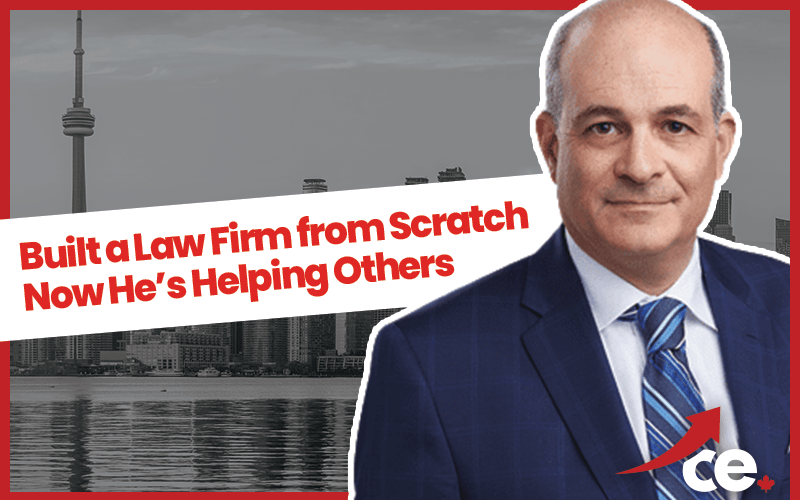
Built a Law Firm from Scratch — Now He’s Helping Others
Episode
After graduating from Osgoode Hall Law School, Andrew Feldstein established Feldstein Family Law Group in 1994. The firm has...
Key takeaways
- Speed of response to client inquiries is critical for business success, whether answering calls immediately or returning electronic inquiries promptly to capture potential clients.
- Hard work and long hours are essential ingredients for building a successful practice, with consistent dedication being more important than sporadic effort over the 30-year journey.
- Tracking and monitoring your advertising effectiveness across different channels is crucial to understanding what works and what doesn't, then adjusting your strategy accordingly.
- Finding and developing good people is the greatest business challenge, which is why training associates from the ground up through articling programs often produces better results than hiring experienced lawyers from other firms.
- Focus on completing one task at a time rather than trying to juggle multiple things simultaneously, as this approach leads to better quality work and reduces overwhelming pressure.
Transcript
Full transcript page · Interactive episode
============================================================
TRANSCRIPTION WITH SPEAKERS
============================================================

[00:00] SPEAKER_02: Welcome to Canada's Entrepreneur, where we talk to the entrepreneurs who are making it happen
[00:05] SPEAKER_02: across Canada and deliver the news, trends, knowledge and opinions from entrepreneurs and business
[00:13] SPEAKER_02: influences across the country. Hi, I'm Fulgless, founder and CEO of Canada's Entrepreneur,
[00:21] SPEAKER_02: coming to you from Toronto. After graduating from Osgoode Hall Law School, Andrew Fielstein
[00:28] SPEAKER_02: established Philstein Family Law Group in 1994. The firm has grown to include 11 family
[00:37] SPEAKER_02: law lawyers and a strong support staff. As the senior lawyer in the firm, Andrew makes
[00:44] SPEAKER_02: his personal goal to achieve optimum results for all of his clients. Andrew's passion
[00:51] SPEAKER_02: for family law has directed his practice to focus exclusively in this area. Andrew created
[00:58] SPEAKER_02: the Ask Andrew Show, a one-hour phone in and Q&A show that is streamed live on YouTube and Facebook.
[01:05] SPEAKER_02: Calls can text email call, message or YouTube comments and questions. All the questions
[01:12] SPEAKER_02: are answered for free. Andrew, welcome to Canada's Entrepreneur, great to meet you. I want to start things
[01:25] SPEAKER_02: as I normally do before we get yacking about things. Just tell everyone a little bit about who you are,
[01:35] SPEAKER_02: what you do and how you got here. Three to four minutes synopsis, if you like.
[01:40] SPEAKER_00: Well, who I am, I'm a family law lawyer and I've been practicing law since 1994 when I got my
[01:48] SPEAKER_00: call to the bar. We're at a firm that's exclusively practicing in the area of family law. We're
[01:54] SPEAKER_00: 10 lawyers and we have offices in Markham, Vaughan, Mississauga and Oakville. We do all areas of
[02:00] SPEAKER_00: family law other than marriage contracts, cohabitation agreements and children's aid cases.
[02:07] SPEAKER_00: In terms of where we practice, we do practice through most of Ontario, but I wouldn't say if I'm
[02:14] SPEAKER_00: in Northern Ontario, I would necessarily want to pay for us to come down to Northern Ontario,
[02:18] SPEAKER_00: but certainly all over the GTA and extended areas like Barry Hamilton, some of them say,
[02:24] SPEAKER_00: go to St. Catharines, London, been over a good part of the profits. So that's who we are now. We
[02:31] SPEAKER_00: deal with a lot of cases that we represent entrepreneurs, we represent high net worth people,
[02:37] SPEAKER_00: we represent them or their spouses in cases where we're dealing with support issues,
[02:43] SPEAKER_00: parenting issues, property issues and a lot of times they have some complex and quite frankly,
[02:49] SPEAKER_00: I find enjoyable in the sense that there's some real intellectual challenges to some of those cases
[02:54] SPEAKER_00: and that makes it a little bit more fun than the everyday thing. In terms of where I came from
[03:00] SPEAKER_00: and how I came to be, well, I became a lawyer in 1994 and back then it was a really bad economy
[03:06] SPEAKER_00: and I started my own practice on my first day after being called to the bar as a lawyer.
[03:12] SPEAKER_00: Then I started out doing everything, except for criminal law. So I did everything and over the next,
[03:19] SPEAKER_00: I'd say, seven, eight years, my practice started to focus more and more between half time doing
[03:24] SPEAKER_00: corporate commercial work and half time doing family law work. I probably couldn't have planned
[03:30] SPEAKER_00: it any better in the sense that once I became doing exclusively family law, having done the
[03:36] SPEAKER_00: corporate commercial work was a terrific avenue to be in because it gives me a different kind of
[03:41] SPEAKER_00: understanding and appreciation of what takes place in corporate commercial world, which then
[03:48] SPEAKER_00: flows into family law when we're dealing with self-employed individuals. So that was really
[03:53] SPEAKER_00: helpful at my development as a lawyer and helping me train the associates at all work here,
[03:58] SPEAKER_00: being the nine other lawyers. The other part of my history that was helpful was that my father
[04:03] SPEAKER_00: was an accountant to my brothers were accountants and I worked with them before I became a lawyer
[04:07] SPEAKER_00: during some summers. So it gave me an understanding of accounting issues, which as a family law lawyer
[04:14] SPEAKER_00: is critical because we're often reading business valuation reports, income reports for people
[04:19] SPEAKER_00: and it gave me the foundation to really understand and be able to review financial statements and
[04:25] SPEAKER_00: teach my associates. I always say to them, there's a story when you read the financial statements
[04:30] SPEAKER_00: of a company and it's really important to be able to understand what the story is and how to
[04:34] SPEAKER_00: spot things at least well enough to know when you need the help of an expert's report.
[04:41] SPEAKER_02: So, you know, you built a past 30 years, you built a pretty decent sized practice.
[04:54] SPEAKER_02: One of the top three things you've learned over those 30 years,
[05:02] SPEAKER_02: which is really an entrepreneurial journey, basically.
[05:06] SPEAKER_00: Well, I'm not going to focus on the side of being a lawyer because I don't think that's really what
[05:10] SPEAKER_00: this is about. So I'll focus more on the entrepreneurial side. When I look at it from that
[05:15] SPEAKER_00: perspective, the world has changed dramatically. When I started out, I was a big yellow page advertiser.
[05:21] SPEAKER_00: I had double page ads, the spine and that was really where business was at.
[05:26] SPEAKER_00: And now it's changed over to a world of paid ads, social media posts, doing podcasts or videos.
[05:34] SPEAKER_00: And it's about staying relevant, staying top of mind is one really important thing so that when
[05:40] SPEAKER_00: people know they need a family lawyer, they're hopefully going to know where to go. So I have a
[05:45] SPEAKER_00: website that's full of information and as people are going down the journey of separation,
[05:50] SPEAKER_00: we probably have one of the most viewed family law websites as an information-based website.
[05:56] SPEAKER_00: And people will come to it and read it and read it and read it. And then hopefully,
[06:00] SPEAKER_00: when it's time that they need to hire somebody, they'll come to us. The other piece that's critical
[06:05] SPEAKER_00: in it, I think it's no different than any business, is the speed in which your intake staff
[06:10] SPEAKER_00: communicates to people when they make the inquiries. So when someone either calls or emails or text
[06:16] SPEAKER_00: the office for an inquiry to book a consultation, the speed in which we respond to it, I think,
[06:22] SPEAKER_00: is critical, meaning either if it's a call. You got to answer it. You don't want to take a message.
[06:27] SPEAKER_00: You don't want to call people back. You want to deal with them on the phone.
[06:31] SPEAKER_00: If they send in an inquiry through an electronic, means you want to call them back either right away
[06:36] SPEAKER_00: or call them back at the time they asked you to call them back. To me, speed is critical in that
[06:42] SPEAKER_00: part of the journey. The other part is appreciating that when you're dealing with people in my industry,
[06:49] SPEAKER_00: we're dealing with them at their absolute worst. And we have to be able to lend an empathetic
[06:55] SPEAKER_00: ear to their needs. I've lived through a divorce. I'm a divorced parent.
[07:00] SPEAKER_00: So I learned what it's like to go down that journey, which is no fun. And it's important that our
[07:06] SPEAKER_00: clients understand that we can appreciate what their journey is at that time.
[07:11] SPEAKER_02: I was thinking about that when I was reading through your background. I think, you know, I feel like
[07:17] SPEAKER_02: today, families have seen a lot of change. You've been doing for 30 years. I think the family
[07:26] SPEAKER_02: structures are not necessarily the same as they were even 20 years ago. Can you tell us a little
[07:34] SPEAKER_02: bit about your experience of this? Those changes in, you know, saying the last two decades, basically?
[07:43] SPEAKER_00: Well, the type of changes we obviously see, there's some that jump off the page and are really
[07:47] SPEAKER_00: obvious. We see a lot more same-sex relationships. So whether they're the parents of the children
[07:53] SPEAKER_00: or it's someone who is separated and now was involved in a same-sex relationship,
[07:58] SPEAKER_00: that's a piece that's changed in terms of the kind of relationships we see. But at the end of
[08:04] SPEAKER_00: the day, it really isn't that different. It's two adults in a house who are caring for the children.
[08:10] SPEAKER_00: We rarely see, I can't remember if I've even seen it where there may be three adults in one
[08:15] SPEAKER_00: of us holding a relationship. I've had friends tell me about some of those cases. We have some
[08:22] SPEAKER_00: where it's not really polygamous marriage, but sort of. And what I mean by that is, in Ontario and in
[08:28] SPEAKER_00: Canada, you can't get married if you still are married. But some people will go have a religious
[08:34] SPEAKER_00: marriage, which is perfectly legal because they understand that they can't file for a legal
[08:40] SPEAKER_00: marriage and then try to continue on because they feel that they're living in accordance with
[08:45] SPEAKER_00: their faith by getting the religious marriage and that's a prerequisite for the relationship.
[08:49] SPEAKER_00: That's a change we've seen. Also, there's a lot more multi-generational households than what we
[08:55] SPEAKER_00: used to see. And a big part of that just has to do with housing costs. I remember when I became a
[09:00] SPEAKER_00: lawyer, the norm would be the couple separated. They were living in there. I'll say three or four
[09:06] SPEAKER_00: thousand square foot home. They would say, okay, we're going to sell our house and they both could
[09:11] SPEAKER_00: afford to downsize to a town home. Now, far too often, they're already living in the small house
[09:18] SPEAKER_00: because it's already seven figures. And there is nowhere for them to downsize and they don't want
[09:25] SPEAKER_00: to look at rentals or they have no choice. But then when they look at the rentals and if
[09:29] SPEAKER_00: they have two children that are opposite sex or three children, they don't find that they can
[09:34] SPEAKER_00: get a rental in their price range. And now, all of a sudden, they're moving back in with their
[09:38] SPEAKER_00: children to their parents' home. And now you're having these multi-generational families in the home
[09:43] SPEAKER_00: that are all helping to care for the children post-separation.
[09:49] SPEAKER_02: You know, what would you say having built such a good practice? What's the ingredient
[09:58] SPEAKER_02: this made this happen? You know, not everyone can do that. What do you think?
[10:06] SPEAKER_02: What skills have you put into it that maybe others have?
[10:11] SPEAKER_00: Well, I think number one, if you're going to be a good lawyer and you're going to build a practice,
[10:16] SPEAKER_00: you can't be afraid of hard work. And that means you're putting in your long hours. It means,
[10:21] SPEAKER_00: you know, I think when I started my practice of it, probably I took one day off a month when I was
[10:26] SPEAKER_00: a young lawyer. I'm regularly here until seven o'clock at night working. And that's after 30
[10:33] SPEAKER_00: some odd years. I say that because hard work is a key ingredient. The other part is having the
[10:40] SPEAKER_00: foresight to say, what kind of advertising will work? You know, when I started how I said, when I
[10:46] SPEAKER_00: started my practice, I did everything. I also learned fairly quickly what type of clients were
[10:52] SPEAKER_00: coming in from advertising because when I started, I did a TV guide channel commercial in the local
[10:57] SPEAKER_00: area. I did yellow pages. I did the local newspaper. And I noticed very quickly that when you
[11:02] SPEAKER_00: advertised various areas of practice, A, you didn't get much traction. And B, you, I got more
[11:09] SPEAKER_00: family law than anything else. So you have to also realize what type of ad should you be doing?
[11:15] SPEAKER_00: And you need to be tracking your ads and figuring out what works versus what doesn't work. And it's
[11:20] SPEAKER_00: different today. You spend money on your paid ads for Google and social media and you have to be
[11:25] SPEAKER_02: monitoring what works and what doesn't. And I was interested in me. You were talking before we started
[11:32] SPEAKER_02: about your Facebook and YouTube channel. You do, you do it a weekly show. What made you do that?
[11:41] SPEAKER_00: That was, that was twofold actually. I used to do a lot of media and I've always enjoyed doing
[11:47] SPEAKER_00: the media. And I felt that it was a good idea to do a question and answer show because there's a lot of
[11:54] SPEAKER_00: wrong information out there about family law. And I like being able to provide the public with
[11:59] SPEAKER_00: some information and people who do, who, a lot of people are self-represented now in family law
[12:05] SPEAKER_00: because they can't afford a family law lawyer. So I like to be able to provide some information
[12:10] SPEAKER_00: for people in a way that's hopefully assisting them at being able to get a reasonable resolution.
[12:17] SPEAKER_00: One of the biggest problems that we have for self-represented people in family law, it's almost
[12:23] SPEAKER_00: the same as I think of when you go into the doctor's office and you've read too much about what
[12:28] SPEAKER_00: type of symptoms you think you've read on Google. I often call it doctor Google and you can find all
[12:33] SPEAKER_00: sorts of problems that aren't real. And a doctor can look at it and give you what the reasonable
[12:37] SPEAKER_00: explanation for your situation is. It's no different in family law. Self-rep person, there's so much
[12:43] SPEAKER_00: information out there, but a lot of it is wrong information. A lot of it is they may be applying it
[12:48] SPEAKER_00: the wrong way. Legislation has words like may and they think they're going to go convince a judge
[12:53] SPEAKER_00: to based on a section of a statute that says may and I can tell them in my 31 years, I've only
[12:59] SPEAKER_00: seen that happen one time and it was an extraordinary circumstance. And so it's trying to bring people to
[13:04] SPEAKER_00: appreciate the reality because the worst thing that can happen to a divorced family is
[13:10] SPEAKER_00: having a long run out trial where all the horrific things are said about the other one and
[13:17] SPEAKER_00: terrible things are said. And then after that trial is over, these two people have to co-parent
[13:22] SPEAKER_01: their kids. How does that work? So, you know, we've been in view, I've been in view the fair amount
[13:31] SPEAKER_02: of lawyers in the past and you know, FinTech, LegalTech, AI, etc., etc. Is that going to impact
[13:42] SPEAKER_02: family law as much as this impact if some of the other areas? The difference is it may impact it
[13:50] SPEAKER_00: with some of the self-represented people, but a large part of what we do is a judgment call
[13:57] SPEAKER_00: based on facts that require human thought. So, one of the questions you're going to have is someone
[14:06] SPEAKER_00: going to run away and not pay. That's an issue in cases. What's the likelihood of it? What's the
[14:12] SPEAKER_00: threat analysis you're going to do of it? What court are you going to? What judge you may be drawn?
[14:18] SPEAKER_00: What certain courts are like? There's a lot of intuitive gut feelings that we're going along with
[14:24] SPEAKER_00: when we try to apply what we think is going to happen. And sometimes I can go to court think I've
[14:30] SPEAKER_00: a great case and then when I get to the court house or I check on the court file online and I see
[14:36] SPEAKER_00: what judge I have, I may know I have a good case or a bad case. My movement of my case goes
[14:41] SPEAKER_00: up or down based on the judge I have. So, there's a lot of intuitive parts that go into it and how
[14:48] SPEAKER_00: you present things to a judge that AI can't do the same way. What AI can do is where we have to do
[14:55] SPEAKER_00: the review of documentary disclosure, AI may be able to do that far better than us and alert us
[15:01] SPEAKER_00: to certain anomalies so we can see it. But let's face it, that's not the fun work for a lawyer
[15:06] SPEAKER_00: anyways. We really don't want to do that stuff. We're happy to have the help.
[15:11] SPEAKER_02: What's been the greatest challenge that you faced in your business?
[15:18] SPEAKER_00: To date. Well, I think it's like a lot of things. It's finding good people.
[15:24] SPEAKER_00: That's the hardest challenge. So, of the nine associates that I have here, a number of them trained
[15:30] SPEAKER_00: as article in students with me are joined be with their fairly young in their careers as lawyers
[15:34] SPEAKER_00: because I find often if you hire people from other firms, they're not where you want them to be.
[15:39] SPEAKER_00: We have our own way, our own process and we think we do really good work for our clients. And it's
[15:45] SPEAKER_00: hard because if you have someone else come in and they're not at your standard, well, you don't
[15:49] SPEAKER_00: feel comfortable with that person providing advice to your clients. So, at the end of the day,
[15:54] SPEAKER_00: the hardest thing is finding good people. And I have confidence that people we have right now are
[15:59] SPEAKER_00: good people, but we are trying to always train through our article in program to get people where
[16:03] SPEAKER_00: we want them to be to be ready as lawyers. Well, what advice would you give a young lawyer
[16:11] SPEAKER_00: beginning now? Well, they have lots of choices to make. It starts with what's their career path?
[16:18] SPEAKER_00: Do they want to go on their own and be an entrepreneur? Most lawyers, I think,
[16:24] SPEAKER_00: don't really have an entrepreneurial side to them. Most of them want to go and work for somebody
[16:29] SPEAKER_00: else, usually a big firm and earn an income. So, a large part of it is, what do you want? You know,
[16:35] SPEAKER_00: it's an interesting thing because I was having this discussion with another senior family lawyer
[16:39] SPEAKER_00: last week and he tells me he has all these people that come through his office because he does a
[16:45] SPEAKER_00: lot of mediations that have incredible sums of money, very, very wealthy people. And he said,
[16:51] SPEAKER_00: you know, they've done so much better than us than I said to him, you know what? You're wrong
[16:55] SPEAKER_00: about that because at the end of the day, we took a more conservative path. Even if you are
[17:00] SPEAKER_00: entrepreneurial for a lawyer, you're still a lawyer. You're never going to be a billionaire practicing
[17:06] SPEAKER_00: law. And I often like to ask when I have an entrepreneurial client a question and it really to me
[17:12] SPEAKER_00: differentiates the difference between the lawyer mindset and the business person.
[17:17] SPEAKER_00: And the question is, I'll say to somebody who is in their 50s or 60s who has decent net worth.
[17:24] SPEAKER_00: Would you roll the dice 50-50? Everything you have and you have to start over, but if you succeed,
[17:29] SPEAKER_00: you're a billionaire. And every person who is a business person type with that entrepreneurial
[17:38] SPEAKER_00: viewpoint of the world has always said to me absolutely and they look at me like I'm crazy for
[17:43] SPEAKER_00: even thinking it's a question. But if you ask lawyers because I've asked lawyers who are self-employed
[17:49] SPEAKER_00: like me and decent practices, the same question who once they hit their 50s, every one of them has
[17:54] SPEAKER_00: had the same answer. No way we're happy with our life. And to me, that's a big part of what the
[18:01] SPEAKER_00: difference is between somebody who is the entrepreneur who's going to get to a completely different level
[18:08] SPEAKER_00: of net worth and a lawyer. A lawyer is much easier to get to a certain place, but by the same token,
[18:14] SPEAKER_00: we're not going to get to that extreme place.
[18:17] SPEAKER_01: Okay.
[18:21] SPEAKER_02: Thinking of advice and mentorship, what's the best piece of advice that you've had
[18:29] SPEAKER_02: that you use, that's there all the time, if you like?
[18:35] SPEAKER_00: Well, when I was an article, I felt the pressure of having a number of files and court
[18:40] SPEAKER_00: appearances that I had to get the lawyers ready for. And my articleing principle said to me,
[18:44] SPEAKER_00: Andrew, you can only do one thing at a time. Focus on the one thing, get it done, move to the next,
[18:51] SPEAKER_00: get that done. Don't try and do three things at once.
[18:57] SPEAKER_02: Interesting. Let's move on. There's some good stuff there. You forget that legal profession
[19:07] SPEAKER_02: is so can be so entrepreneurial. I think everyone assumes it's different than that.
[19:15] SPEAKER_02: Well, books here come to you reading, listening to whichever.
[19:21] SPEAKER_00: I used to love to read and I don't know, maybe because I'm getting older, my eyes get tired,
[19:27] SPEAKER_00: I don't read as I don't read that much other than I read a lot of newspaper articles.
[19:32] SPEAKER_00: So I have my Apple news. I like to read the National Post, the Globe and Mail, Toronto Star,
[19:36] SPEAKER_00: I read all sorts of records. Telecraft is on there and other articles as well. I like being
[19:44] SPEAKER_00: interested in current events and politics of the day. Are you a morning or a night person?
[19:50] SPEAKER_01: Morning. I'm usually up between four and five. Head to the gym in the morning.
[19:56] SPEAKER_02: Cool. If you had to pick one word to describe yourself, what would it be and why would you choose it?
[20:06] SPEAKER_00: I'd like to say energetic because as I said before, I'm up early and I'm the kind of person I have
[20:13] SPEAKER_00: not set an alarm probably in 20 or 30 years. I get up, wake up, I start my day and I go and I
[20:21] SPEAKER_00: typically will go to bed around 11 o'clock so I don't get a ton of sleep and if you asked my wife,
[20:26] SPEAKER_02: she'd say I'm full of energy. If you weren't doing what you're doing now, what would you be doing
[20:35] SPEAKER_00: instead of it? Honestly, I have no idea. I enjoy what I do. I enjoy the intellectual
[20:45] SPEAKER_00: challenge of what I do and the thought of doing something else, I really don't know what it would be.
[20:54] SPEAKER_02: That's very cool. I see that's not a normal answer. That's a good answer.
[21:00] SPEAKER_00: What's keeping up at night? I think I get all the sleep that I need. Sometimes I wake up,
[21:08] SPEAKER_00: I'm thinking about files, but for the most part, I'm ready to go. I've had enough sleep.
[21:13] SPEAKER_00: Interesting. You know, so I get up, I work out for an hour and a half in the morning and I find
[21:18] SPEAKER_00: that to be a good way to start my day. So somebody coming in to the business,
[21:29] SPEAKER_02: what would you say they have to deal with to be successful today? Because you know,
[21:40] SPEAKER_00: 30 years on, it's not the same thing. It's nowhere to be the same as everything changed
[21:48] SPEAKER_00: for us in 2020 in terms of the way we did business. But in terms of somebody who is coming into
[21:55] SPEAKER_00: my office, what do they need? They need to be hardworking. They have to be dedicated to good
[22:00] SPEAKER_00: client service. They have to be detailed oriented. They have to be a good team player because we have
[22:07] SPEAKER_00: a really good team where we all get along. Most of us come to work in the office. Some of us work
[22:13] SPEAKER_00: remote, but for the most part, we're very good with one another. We have an office baseball team.
[22:18] SPEAKER_00: We all get along. So you need each aspect of that is important. It's not enough to just be,
[22:23] SPEAKER_00: I'm a good lawyer and not want to be part of the team because we all need to pitch in and
[22:28] SPEAKER_00: help out for one another where sometimes we can have a conflict in our schedule where somebody
[22:33] SPEAKER_00: brings an urgent motion against us that we can't get out of and we have to be in two places at
[22:38] SPEAKER_00: once and we need one of our colleagues to pinch it for us. So there are things that are
[22:42] SPEAKER_00: happened that it really helps when everybody works hard and also works together. Wait, well.
[22:50] SPEAKER_02: I'm good stuff in there. I didn't know anything about family law as a business per se.
[22:59] SPEAKER_02: This has been really interesting. Someone is listening, looking at this,
[23:05] SPEAKER_02: and they've got questions. How can they get a whole new view?
[23:10] SPEAKER_00: Well, there's multiple ways. So number one, it can visit our website because that's going to be
[23:14] SPEAKER_00: the easiest thing to remember, separation.ca. That's really easy to remember. If you want to
[23:20] SPEAKER_00: email me, it's Andrew at Feldsteinfamilylaw.com. But as I said, the easiest thing is going to our
[23:26] SPEAKER_00: contact us page on separation.ca and you can send something in. You can phone us at 905-415-1636.
[23:37] SPEAKER_02: Okay. It's really interesting. I love the way you built this. It's very interesting.
[23:49] SPEAKER_02: I want to thank you for coming on to Candace Antwerpner. I really enjoyed meeting you.
[23:54] SPEAKER_00: My pleasure. Thank you for having me.
[23:56] SPEAKER_02: Well, that was really interesting. I didn't know much about family law.
[24:00] SPEAKER_02: I'm just built a heck of a practice based on hard work, legal prowess, and thoughtful marketing.
[24:07] SPEAKER_02: I guess business is business, whether it's family law or FinTech. Focus and hard work of the core
[24:14] SPEAKER_02: components. I'm Phil Bliss. Don't forget to subscribe to our newsletter on our website.
[24:20] SPEAKER_02: And subscribe on our YouTube channel or any of our major podcast channels.
[24:25] SPEAKER_02: Thanks for listening to Candace Antwerpner. We meet the entrepreneurs that drive Canada's economy.
[24:31] SPEAKER_02: See you soon.