
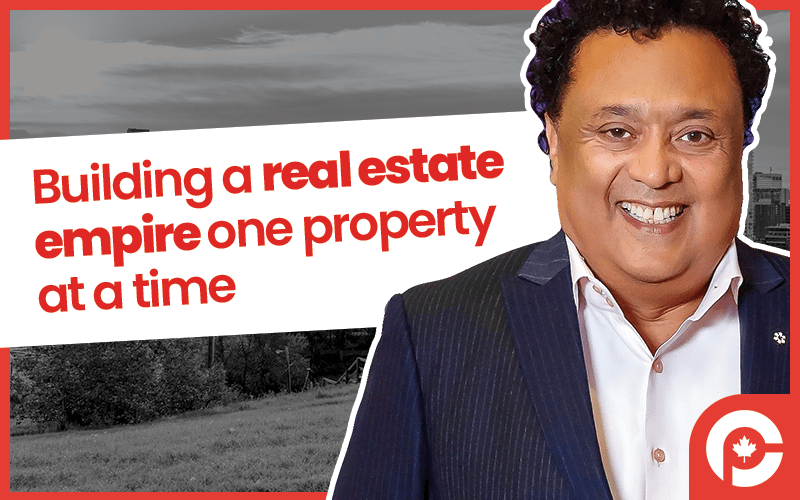
Building a real estate empire one property at a time
Episode
Bob Dhillon is the Founder, President & CEO of Mainstreet Equity Corp, based in Calgary, Alberta, Canada. Mainstreet is...
Key takeaways
- Main Street Equity focuses on acquiring distressed mid-market apartment buildings in Western Canada where there is less competition and greater opportunity to add value and generate returns.
- The company has achieved double-digit compounding returns since inception by reinvesting profits as a corporation rather than distributing income like a REIT, allowing continuous growth from an initial investment to $3 billion in assets.
- Calgary and Edmonton have pivoted from work-driven cities to lifestyle cities where people choose to live and create opportunities, making Western Canada increasingly attractive despite economic cycles.
- The apartment rental market remains a bulletproof asset class trading below replacement cost with strong fundamentals including 40 years of limited supply, population growth, immigration, and millennials who prefer renting over buying.
- Success as an entrepreneur requires overcoming analysis paralysis, taking calculated risks, believing in your vision, and embracing delayed gratification rather than seeking instant success.
Transcript
Full transcript page · Interactive episode
============================================================
TRANSCRIPTION WITH SPEAKERS
============================================================

[00:00] SPEAKER_00: Welcome to Canada's Podcast.
[00:05] SPEAKER_00: Hello, I'm Mario Tonigus,
[00:07] SPEAKER_00: a managing editor of Canada's Podcast.
[00:10] SPEAKER_00: Joining me today on Calgary's Podcast
[00:13] SPEAKER_00: is Bob Dylan, founder, CEO and president
[00:16] SPEAKER_00: of Main Street Equity.
[00:18] SPEAKER_00: Thanks Bob for joining us today.
[00:20] SPEAKER_02: Well, thank you, Mario.
[00:21] SPEAKER_02: It's a great pleasure to see you
[00:24] SPEAKER_02: after so many years.
[00:25] SPEAKER_02: I've been interacting with you
[00:27] SPEAKER_02: in the newspapers and you've written many articles
[00:29] SPEAKER_02: when Main Street was a startup.
[00:32] SPEAKER_02: It's just a great honor to see you again
[00:35] SPEAKER_02: after so many years.
[00:37] SPEAKER_00: Well, thank you.
[00:37] SPEAKER_00: Now I'm blushing.
[00:39] SPEAKER_00: So tell me Bob, let's start the conversation here
[00:43] SPEAKER_00: by maybe describing to people what Main Street
[00:46] SPEAKER_00: Equity is and what it does.
[00:49] SPEAKER_02: Well, Main Street is a lot of things,
[00:52] SPEAKER_02: but I'm going to try to hit the high level
[00:55] SPEAKER_02: important elements of Main Street one.
[00:57] SPEAKER_02: We are in the apartment building business,
[01:01] SPEAKER_02: but we only buy apartment buildings
[01:03] SPEAKER_02: that we can add value to.
[01:05] SPEAKER_02: Mid-market Western Canada add value.
[01:09] SPEAKER_02: So let's define Western Canada,
[01:11] SPEAKER_02: West are the Great Lakes,
[01:13] SPEAKER_02: Minipek West.
[01:15] SPEAKER_02: Add value, we buy only distressed assets
[01:18] SPEAKER_02: that we can go out there and improve
[01:20] SPEAKER_02: the life of middle-class Canadians.
[01:22] SPEAKER_02: We reposition these assets in return.
[01:25] SPEAKER_02: We increase the top line revenue.
[01:26] SPEAKER_02: Right, mid-market 80% of the apartment buildings
[01:30] SPEAKER_02: are smaller in size.
[01:32] SPEAKER_02: Let me define smaller.
[01:34] SPEAKER_02: They're like 70 units,
[01:36] SPEAKER_02: 40 to 100 units in size.
[01:39] SPEAKER_02: And so they fall into the sweet spot
[01:41] SPEAKER_02: of a little bit bigger than the average
[01:43] SPEAKER_02: moment popped kin of fork
[01:44] SPEAKER_02: and a little bit smaller than the institutional capital.
[01:48] SPEAKER_02: But this 80% of the market is mid-market.
[01:52] SPEAKER_02: So institutional capital seems to be swimming around
[01:56] SPEAKER_02: Ontario and Quebec.
[01:58] SPEAKER_02: Institutional capital is focused on the 20% of the market.
[02:02] SPEAKER_02: So the 80% of the market has got less competition.
[02:06] SPEAKER_02: Western Canada has got less competition.
[02:09] SPEAKER_02: And add value product has got less competition.
[02:11] SPEAKER_02: But adding all those three things
[02:14] SPEAKER_02: is the greatest return for the investors.
[02:17] SPEAKER_00: So what is your reach right now
[02:20] SPEAKER_00: in terms of your portfolio of Bob?
[02:23] SPEAKER_00: How many units? How many buildings do we have?
[02:26] SPEAKER_02: First of all, Mary,
[02:27] SPEAKER_02: one thing I want to define,
[02:28] SPEAKER_02: we are not a REIT.
[02:30] SPEAKER_02: We are the only Corp among the multifamily index.
[02:33] SPEAKER_02: What is the difference between a Corp and a REIT?
[02:36] SPEAKER_02: REIT distributes the income that comes in
[02:40] SPEAKER_02: to their shareholders.
[02:42] SPEAKER_02: And Corp reinvests.
[02:44] SPEAKER_02: And we've been compounding double-digit returns
[02:47] SPEAKER_02: since the inception of Main Street,
[02:50] SPEAKER_02: which we put on the front page of our annual report.
[02:52] SPEAKER_02: So if you compare our double-digit returns
[02:56] SPEAKER_02: to the boot-chip companies,
[02:57] SPEAKER_02: you would see that maybe we have outperformed most of them.
[03:02] SPEAKER_02: So how many units do we have? 17,000.
[03:06] SPEAKER_02: Another 17,000 apartment units.
[03:10] SPEAKER_02: Now, one misconception out there
[03:15] SPEAKER_02: is that we are an Alberta company.
[03:17] SPEAKER_02: Actually, 42% of net asset value is British Columbia,
[03:21] SPEAKER_02: which consists of suburbs of Vancouver,
[03:25] SPEAKER_02: New Westminster, Surrey,
[03:27] SPEAKER_02: Alvesford, Chalabak,
[03:29] SPEAKER_02: Damien to the Okanagan Valley,
[03:31] SPEAKER_02: Camloops, Penticton,
[03:33] SPEAKER_02: Vernon,
[03:34] SPEAKER_02: Vienn Vancouver Island,
[03:36] SPEAKER_02: and exotic places like Comox.
[03:38] SPEAKER_02: And we purchased a first building,
[03:41] SPEAKER_02: oh, we also market drivers of Prince George,
[03:44] SPEAKER_02: and we have just purchased a first building in Nelson,
[03:47] SPEAKER_02: British Columbia,
[03:49] SPEAKER_02: the famous Nelson.
[03:51] SPEAKER_02: Yeah, I have a copyground.
[03:52] SPEAKER_00: My very first job in journalism in Nelson.
[03:56] SPEAKER_02: I didn't know that.
[03:57] SPEAKER_02: What do you think of Nelson, Mary?
[03:59] SPEAKER_00: Well, I love Nelson.
[04:00] SPEAKER_00: It's a great community.
[04:03] SPEAKER_00: It's smaller, obviously,
[04:05] SPEAKER_00: but it's got a great landscape nestled in between the mountains there,
[04:12] SPEAKER_00: and it's got a very vibrant downtown now.
[04:17] SPEAKER_00: I always loved it.
[04:20] SPEAKER_00: Yeah.
[04:20] SPEAKER_02: Well, the history of Nelson,
[04:22] SPEAKER_02: it was built by the Americans during the mining operations,
[04:25] SPEAKER_02: or late 1800s,
[04:27] SPEAKER_02: and so they've got the build it as a unique American city,
[04:31] SPEAKER_02: and then draft dodgers came,
[04:34] SPEAKER_02: and after the Waitnam World War,
[04:38] SPEAKER_02: I don't know, whatever the draft dodgers came,
[04:40] SPEAKER_02: and it created a unique,
[04:44] SPEAKER_02: vibrant artistic community.
[04:45] SPEAKER_03: Yeah, exactly.
[04:47] SPEAKER_02: So it's probably only,
[04:48] SPEAKER_02: it's got the most vibrant,
[04:51] SPEAKER_02: nudist beach in the Kutneys,
[04:54] SPEAKER_02: and the Okanagan Valley.
[04:55] SPEAKER_02: So that wasn't the reason why we bought a first building in Nelson.
[04:59] SPEAKER_02: We bought a first building in Nelson
[05:02] SPEAKER_02: because of the supply demand dynamics,
[05:06] SPEAKER_02: and it is probably the prettiest city in North America.
[05:09] SPEAKER_02: I can't find a pretty rich city.
[05:11] SPEAKER_00: Yeah, no, I agree.
[05:12] SPEAKER_00: So tell me how this all began.
[05:14] SPEAKER_00: How did Main Street start?
[05:18] SPEAKER_02: So Mary, as you know,
[05:20] SPEAKER_02: the generation I belonged to,
[05:21] SPEAKER_02: it wasn't the generation of Facebook and Amazon.
[05:26] SPEAKER_02: It was a generation of,
[05:28] SPEAKER_02: you get into the oil business,
[05:30] SPEAKER_02: or you get into the real estate business,
[05:31] SPEAKER_02: and our icons were Donald Trump and Rightman,
[05:39] SPEAKER_02: and all these great real estate tycoons that existed,
[05:42] SPEAKER_02: and as a kid growing up,
[05:44] SPEAKER_02: I wanted to be a real estate entrepreneur.
[05:46] SPEAKER_02: So I started flipping houses
[05:48] SPEAKER_02: at a very young age at 19,
[05:50] SPEAKER_02: because nobody would give me a job.
[05:52] SPEAKER_02: And Calvue was,
[05:53] SPEAKER_02: at that time,
[05:55] SPEAKER_02: a very large,
[05:56] SPEAKER_02: disproportionate amount of properties
[05:58] SPEAKER_02: were in distress and foreclosure.
[06:00] SPEAKER_02: So I borrowed money from,
[06:02] SPEAKER_02: what we call today,
[06:04] SPEAKER_02: mess lenders,
[06:06] SPEAKER_02: they were called equity lenders,
[06:08] SPEAKER_02: or some would call them loan shark.
[06:10] SPEAKER_02: So I'm not going to tell you who they were,
[06:13] SPEAKER_02: but they continue the journey,
[06:16] SPEAKER_02: and they used to borrow money to me at 18%,
[06:20] SPEAKER_02: and three points up front.
[06:23] SPEAKER_02: And I took a chance on buying two distressed homes
[06:27] SPEAKER_02: at a very young age.
[06:29] SPEAKER_02: I think I was in my early 20s,
[06:31] SPEAKER_02: a late 19, I don't even remember,
[06:33] SPEAKER_02: we fixed them up,
[06:34] SPEAKER_02: and I sold it,
[06:35] SPEAKER_02: and I made $14,000,
[06:37] SPEAKER_02: so I think $14,000 or $17,000,
[06:39] SPEAKER_02: and it was all the money in the world.
[06:41] SPEAKER_02: And that was it.
[06:41] SPEAKER_02: And that was in a depression Alberta time.
[06:44] SPEAKER_02: And I kept doubling down on that 17,000,
[06:48] SPEAKER_02: and today we have $3 billion worth of assets.
[06:53] SPEAKER_02: So took very little money off the table,
[06:55] SPEAKER_02: in terms of dividends,
[06:57] SPEAKER_02: or lifestyle,
[06:57] SPEAKER_02: or buy a jet,
[07:00] SPEAKER_02: or an island in Belize.
[07:02] SPEAKER_02: I took most of my resources
[07:03] SPEAKER_02: and kept doubling it down.
[07:05] SPEAKER_02: Right now we have
[07:06] SPEAKER_02: a fabulous company with a great management team,
[07:10] SPEAKER_02: supply chain logistics,
[07:12] SPEAKER_02: diverse portfolios,
[07:15] SPEAKER_02: and nine geographic locations,
[07:17] SPEAKER_02: and a proven business model,
[07:20] SPEAKER_02: which is Western Canada mid-market value.
[07:24] SPEAKER_00: So when you obviously,
[07:28] SPEAKER_00: a lot of probably ups and downs
[07:30] SPEAKER_00: as any business would have during your lifetime,
[07:35] SPEAKER_00: what would you say Bob,
[07:37] SPEAKER_00: got you through the downs in markets,
[07:41] SPEAKER_00: and got you through the,
[07:43] SPEAKER_00: so the down cycles in,
[07:45] SPEAKER_00: in say your business.
[07:47] SPEAKER_02: Actually, Mary, that's a great question.
[07:51] SPEAKER_02: Down turns affected our cash flow,
[07:55] SPEAKER_02: but gave us opportunity to expand.
[07:58] SPEAKER_02: But more importantly,
[08:01] SPEAKER_02: it's the asset class
[08:03] SPEAKER_02: that's resilient.
[08:05] SPEAKER_02: I like to take,
[08:06] SPEAKER_02: me and my management team would like to take credit
[08:10] SPEAKER_02: for having a great team,
[08:13] SPEAKER_02: and we can survive,
[08:14] SPEAKER_02: we can swim upstream,
[08:15] SPEAKER_02: and we can fight all the odds against us,
[08:18] SPEAKER_02: and we can survive the negative oil prices,
[08:21] SPEAKER_02: and COVID,
[08:23] SPEAKER_02: national energy plan,
[08:25] SPEAKER_02: and pipeline fiasco,
[08:28] SPEAKER_02: the politics,
[08:29] SPEAKER_02: and Alberta, no flyzone,
[08:31] SPEAKER_02: all of the issues we've gone through,
[08:33] SPEAKER_02: in the last two decades.
[08:36] SPEAKER_02: But the real answer is,
[08:38] SPEAKER_02: this is a bulletproof asset class.
[08:42] SPEAKER_02: Why?
[08:44] SPEAKER_02: It trades below replacement costs,
[08:47] SPEAKER_02: supply demand imbalance.
[08:49] SPEAKER_02: It's not like an ATRAC tape
[08:51] SPEAKER_02: or an obsolete technology.
[08:53] SPEAKER_02: It is always going to be in demand since,
[08:56] SPEAKER_02: the historical time.
[08:58] SPEAKER_02: We are more than they cave.
[08:59] SPEAKER_02: We provide accommodation
[09:03] SPEAKER_02: to middle-class Canadians.
[09:06] SPEAKER_02: And now we get, you know,
[09:07] SPEAKER_02: certain things really help,
[09:08] SPEAKER_02: because we've had 40 years of no supply,
[09:11] SPEAKER_02: a very little supply.
[09:13] SPEAKER_02: We trade below replacement costs.
[09:15] SPEAKER_02: We've got population,
[09:18] SPEAKER_02: immigration, foreign student millennials,
[09:22] SPEAKER_02: everything that could possibly
[09:24] SPEAKER_02: the winds behind us.
[09:25] SPEAKER_02: So we get lucky once in a while,
[09:27] SPEAKER_02: and low interest rates,
[09:28] SPEAKER_02: that sometimes helps.
[09:31] SPEAKER_02: Oil high, oil prices, that helps.
[09:33] SPEAKER_02: People move in.
[09:34] SPEAKER_02: But one thing is,
[09:35] SPEAKER_02: that's changed, Mary.
[09:37] SPEAKER_02: I like to plug this in.
[09:39] SPEAKER_02: Historically,
[09:40] SPEAKER_02: like I'm telling you,
[09:41] SPEAKER_02: I know you grew up in Calgary,
[09:43] SPEAKER_02: so did I.
[09:45] SPEAKER_02: When we were growing up to Calgary,
[09:46] SPEAKER_02: people came to Calgary to work.
[09:49] SPEAKER_02: And if the work dried up,
[09:51] SPEAKER_02: or the oil prices dropped,
[09:52] SPEAKER_02: boom, bus cycles,
[09:54] SPEAKER_02: people moved out.
[09:55] SPEAKER_02: The last cycle,
[09:56] SPEAKER_02: people never moved out.
[09:58] SPEAKER_02: A population grew in the downturn.
[10:02] SPEAKER_03: Interesting.
[10:02] SPEAKER_02: And the reason is,
[10:03] SPEAKER_01: it's pivoted to a lifestyle city.
[10:07] SPEAKER_01: I want to live here.
[10:10] SPEAKER_01: Historically, I wanted to work here,
[10:13] SPEAKER_02: because of the opportunity.
[10:15] SPEAKER_02: Now, I want to live here,
[10:17] SPEAKER_02: and I'll create the work.
[10:19] SPEAKER_02: So the people who get that pivot,
[10:22] SPEAKER_02: like I do,
[10:23] SPEAKER_02: they'll double, they'll double down
[10:25] SPEAKER_02: on Alberta, Calgary,
[10:27] SPEAKER_02: Edmonton, Saskatoon,
[10:28] SPEAKER_02: Regina,
[10:29] SPEAKER_02: Western Canada,
[10:31] SPEAKER_02: and all the cities we're in.
[10:32] SPEAKER_02: But people who don't get it,
[10:34] SPEAKER_02: are more so Calgary and Edmonton.
[10:36] SPEAKER_02: And people who don't get it,
[10:37] SPEAKER_02: they still think of us as Fort Mac.
[10:40] SPEAKER_02: The Calgary and Edmonton is Fort Montgomery.
[10:42] SPEAKER_02: But if you have,
[10:43] SPEAKER_02: have you ever seen all the technology companies moving here
[10:47] SPEAKER_02: and lifestyle and vibrant young population
[10:51] SPEAKER_02: and entrepreneurial spirit,
[10:53] SPEAKER_02: Calgary is the Austin, Texas,
[10:56] SPEAKER_02: off Canada.
[10:58] SPEAKER_02: Even with all the odds against us
[10:59] SPEAKER_02: with loyal prices and no fly zone in Alberta.
[11:03] SPEAKER_00: Including the music scene.
[11:08] SPEAKER_02: And the misconception of how non-inclusive Calgary is.
[11:15] SPEAKER_02: It is a very inclusive city.
[11:17] SPEAKER_02: A great example is our,
[11:18] SPEAKER_02: look at our elected politicians,
[11:20] SPEAKER_02: look at a mayor of Calgary and Edmonton.
[11:23] SPEAKER_02: And historical mayors and all that.
[11:27] SPEAKER_02: So this is all news of what Calgary is emerged.
[11:32] SPEAKER_02: And that's why I like to call it the Austin, Texas,
[11:35] SPEAKER_02: off Canada.
[11:39] SPEAKER_00: So Bob, when you look at the current situation
[11:42] SPEAKER_00: and the fundamentals,
[11:43] SPEAKER_00: you've mentioned immigration.
[11:45] SPEAKER_00: You know,
[11:46] SPEAKER_00: you know,
[11:47] SPEAKER_00: another factor out there is the housing affordability.
[11:50] SPEAKER_00: In the country,
[11:53] SPEAKER_00: etcetera.
[11:53] SPEAKER_00: All the fundamentals seem to line up nicely.
[11:58] SPEAKER_00: The stars align for people like yourself
[12:01] SPEAKER_00: in the multi family,
[12:03] SPEAKER_00: multi residential rental market.
[12:06] SPEAKER_00: Where do you see the company going into the future?
[12:09] SPEAKER_00: Obviously,
[12:09] SPEAKER_00: more continued growth,
[12:11] SPEAKER_00: more acquisitions for you.
[12:14] SPEAKER_01: Absolutely.
[12:15] SPEAKER_01: As long we trade significantly
[12:19] SPEAKER_02: blow replacement cost.
[12:22] SPEAKER_02: This is a safest asset cost to invest in.
[12:26] SPEAKER_02: The day we hit close to replacement cost,
[12:29] SPEAKER_02: we're going to be competing with new supply.
[12:32] SPEAKER_02: And when the new supply comes in,
[12:33] SPEAKER_02: the party is over.
[12:35] SPEAKER_02: But we've got long ways to go yet.
[12:36] SPEAKER_02: Now,
[12:37] SPEAKER_02: I want to give you a couple of data points, Mario.
[12:39] SPEAKER_02: 70% of Canadians make less than $50,000 a year.
[12:44] SPEAKER_02: 50% of working Canadians make less than 50,000 a year.
[12:48] SPEAKER_02: So the affordability is a supply issue.
[12:53] SPEAKER_02: It's,
[12:54] SPEAKER_02: a wages have been somewhat stagnated for the last two decades.
[12:58] SPEAKER_02: Then then catch up to compounding inflation.
[13:02] SPEAKER_02: Right?
[13:03] SPEAKER_02: And we got restrictions on supply.
[13:07] SPEAKER_01: Zoning, density, supply chain, labor.
[13:13] SPEAKER_03: Mm-hmm.
[13:15] SPEAKER_03: So lots of potential there for you to grow.
[13:18] SPEAKER_01: From, from us,
[13:20] SPEAKER_01: how often do you get double-dissue returns on many metrics
[13:26] SPEAKER_02: on a safe asset class?
[13:28] SPEAKER_01: Mm-hmm.
[13:29] SPEAKER_02: So, you know, I'm not a speculative tech company
[13:33] SPEAKER_02: or a mining,
[13:34] SPEAKER_02: any company, it is a safe asset class.
[13:37] SPEAKER_02: And we've, we've wrote the,
[13:38] SPEAKER_02: wrote a course,
[13:39] SPEAKER_02: which is a major feature on economic cycles,
[13:42] SPEAKER_02: political cycles,
[13:43] SPEAKER_02: oil cycles,
[13:44] SPEAKER_02: but we have learned to diversify.
[13:47] SPEAKER_02: Yeah.
[13:48] SPEAKER_02: So we don't get caught up again.
[13:49] SPEAKER_00: One of the other things I wanted to ask you about,
[13:53] SPEAKER_00: do you find, you know,
[13:54] SPEAKER_00: besides some of these,
[13:55] SPEAKER_00: these fundamentals that we've just discussed,
[13:58] SPEAKER_00: do you find also that there is a,
[14:02] SPEAKER_00: more of an appeal these days for people
[14:04] SPEAKER_00: who actually want to rent rather than buy?
[14:07] SPEAKER_00: Forget the other factors involved in costs,
[14:10] SPEAKER_00: you know, but,
[14:11] SPEAKER_00: but just the lifestyle.
[14:12] SPEAKER_00: Is there an increasing demand for that?
[14:16] SPEAKER_02: Yes, I'm Mario,
[14:18] SPEAKER_02: because 44% of our population are millennials.
[14:22] SPEAKER_02: Millennials are not thinking of buying.
[14:24] SPEAKER_02: They're thinking of lifestyle and hanging downtown
[14:27] SPEAKER_02: and hanging under the coffee shop.
[14:29] SPEAKER_02: And they're true nomads.
[14:32] SPEAKER_04: Mm-hmm.
[14:34] SPEAKER_01: We, we,
[14:36] SPEAKER_02: not only we add mid-market ad value Western Canada,
[14:40] SPEAKER_02: we are just like my science says behind me,
[14:42] SPEAKER_02: we create inner city living
[14:44] SPEAKER_02: and improve the life of middle class Canadians.
[14:47] SPEAKER_02: So what does inner city mean?
[14:49] SPEAKER_02: I am attracting those millennials.
[14:51] SPEAKER_02: I'm attracting those domestic students,
[14:53] SPEAKER_02: foreign students, immigrants,
[14:55] SPEAKER_02: and immigrants are a lot different
[14:58] SPEAKER_02: from the immigrants of your parents
[15:01] SPEAKER_02: when they migrated here from Italy.
[15:03] SPEAKER_04: Yeah.
[15:04] SPEAKER_02: Immigrants today bring,
[15:06] SPEAKER_02: they bring a debit card,
[15:09] SPEAKER_02: a iPhone, and a laptop,
[15:11] SPEAKER_02: and a, and a back,
[15:12] SPEAKER_02: and a, buy, they buy a bicycle.
[15:15] SPEAKER_02: So they, they've got Starbucks in their backyard
[15:18] SPEAKER_02: and they got Starbucks here.
[15:19] SPEAKER_02: And that's, that's the denified,
[15:22] SPEAKER_02: the, the denified within inner city.
[15:25] SPEAKER_02: It's, it's a different type of immigration.
[15:29] SPEAKER_02: We've got the old connotation of immigration.
[15:31] SPEAKER_02: It's not.
[15:32] SPEAKER_02: It's, it's, it's truly a global village.
[15:35] SPEAKER_02: Most of the cities in North America
[15:37] SPEAKER_02: or the world, sorry.
[15:39] SPEAKER_02: Look the same.
[15:40] SPEAKER_00: Yeah.
[15:41] SPEAKER_00: Yeah.
[15:42] SPEAKER_00: Yeah.
[15:42] SPEAKER_00: Interesting.
[15:43] SPEAKER_00: So Bob,
[15:44] SPEAKER_00: tell me a little bit about other stuff that you do.
[15:47] SPEAKER_00: Like, I know you're involved in a lot of stuff.
[15:51] SPEAKER_00: Give me, give me some of the highlights
[15:52] SPEAKER_00: or give our listeners a couple of highlights of other things
[15:56] SPEAKER_00: that you are involved with.
[16:01] SPEAKER_02: Mario, I'm involved with a live and breed mainstream.
[16:05] SPEAKER_02: That, that's why this company has been,
[16:08] SPEAKER_02: humbly speaking of very somewhat successful company.
[16:12] SPEAKER_02: And lately, you have stocks run up as well.
[16:15] SPEAKER_02: And we've survived the ups and downs.
[16:17] SPEAKER_02: But I have different types of hobbies
[16:20] SPEAKER_02: because it's not work for me.
[16:22] SPEAKER_02: It's a passion.
[16:23] SPEAKER_02: And I enjoy coming to work.
[16:24] SPEAKER_02: So, um, my hobby,
[16:28] SPEAKER_02: which has become my second passion is a country of beliefs.
[16:32] SPEAKER_02: And I'm developing a 3000 acre off grid,
[16:37] SPEAKER_02: eco township there in Ambrugas Keys.
[16:41] SPEAKER_02: It's, and it's, it's got multiple names because they're
[16:44] SPEAKER_02: some big site.
[16:46] SPEAKER_02: So it's called Secret Beach residential subdivision.
[16:50] SPEAKER_02: It's called Costa del Sol.
[16:52] SPEAKER_02: And so forth.
[16:53] SPEAKER_02: And we are building a,
[16:54] SPEAKER_02: uh, a, what do you call tropical getaway for normal,
[17:01] SPEAKER_02: nomads there.
[17:02] SPEAKER_02: So they go out there and they build these funky houses
[17:06] SPEAKER_02: in middle of the jungle, but,
[17:09] SPEAKER_02: uh,
[17:11] SPEAKER_02: maybe two minutes walk to the beach.
[17:13] SPEAKER_02: And I got to sit there and they create their world.
[17:16] SPEAKER_02: They create their businesses.
[17:18] SPEAKER_02: They create their,
[17:19] SPEAKER_02: uh, their tech people,
[17:22] SPEAKER_02: the Morton Day economy.
[17:24] SPEAKER_02: And they want to live in beliefs and they want to live in,
[17:27] SPEAKER_02: uh, near place called Secret Beach.
[17:30] SPEAKER_02: And that's, and people are free nowadays.
[17:32] SPEAKER_02: We are, we are restricted in our mind.
[17:35] SPEAKER_02: Our generation is in prison because of our mind.
[17:39] SPEAKER_02: These guys are free.
[17:40] SPEAKER_02: They're going to valley.
[17:41] SPEAKER_02: They're going to believe.
[17:42] SPEAKER_02: And, uh, they're going all over the world.
[17:44] SPEAKER_02: And they can open up their laptop and they can work.
[17:47] SPEAKER_00: Yeah.
[17:48] SPEAKER_00: And Bob, you,
[17:49] SPEAKER_00: uh, a couple of years ago,
[17:52] SPEAKER_00: uh, I had a business school named,
[17:54] SPEAKER_00: Dr. You and Luffbrade,
[17:56] SPEAKER_00: tell me what that meant for you and.
[17:58] SPEAKER_02: Right.
[17:58] SPEAKER_02: Um, I want to start off by saying,
[18:01] SPEAKER_02: I'm a proud Canadian,
[18:04] SPEAKER_02: proud Albertan.
[18:05] SPEAKER_02: And I wanted to give back to a country as a immigrant
[18:08] SPEAKER_02: that gave me so much,
[18:10] SPEAKER_02: gave me education,
[18:12] SPEAKER_02: healthcare, infrastructure,
[18:13] SPEAKER_02: and opportunity to make money.
[18:15] SPEAKER_02: Uh, and so what do I do next?
[18:20] SPEAKER_02: What do I do next is to give back to Canada.
[18:23] SPEAKER_02: That's given me so much.
[18:24] SPEAKER_02: So I had the opportunity to get a business school named after me.
[18:28] SPEAKER_02: And University of Luffbridge,
[18:30] SPEAKER_02: which has got two campuses,
[18:31] SPEAKER_02: one in downtown Calgary,
[18:32] SPEAKER_02: one in Luffbridge.
[18:33] SPEAKER_02: And in AACSB,
[18:35] SPEAKER_02: Credit University.
[18:36] SPEAKER_02: So they changed name to Dylan,
[18:38] SPEAKER_02: School of Business.
[18:39] SPEAKER_02: But my objective was not to give money.
[18:42] SPEAKER_02: And for my ego and have my name,
[18:45] SPEAKER_02: sake on a business school.
[18:47] SPEAKER_02: What my objective is to change the curriculum
[18:51] SPEAKER_02: off this generation.
[18:54] SPEAKER_02: So they can adapt to the new world.
[18:58] SPEAKER_02: So we are changing the course line.
[19:00] SPEAKER_02: I'm not, but the faculty is.
[19:03] SPEAKER_02: And Dean Kerry,
[19:04] SPEAKER_02: who's done an amazing job on changing the curriculum.
[19:08] SPEAKER_02: And you're attracting new students and finance programs.
[19:11] SPEAKER_02: And technology programs,
[19:13] SPEAKER_02: asset management and so forth.
[19:15] SPEAKER_02: So we'll be very successful.
[19:17] SPEAKER_02: But it's an incremental change on the change of the curriculum.
[19:23] SPEAKER_02: To make it.
[19:24] SPEAKER_02: So make it easier to navigate in this new world.
[19:29] SPEAKER_00: So so Bob, when.
[19:32] SPEAKER_00: You know, you've been in this business for a long time.
[19:36] SPEAKER_00: What would you say some of the key elements are to being a successful entrepreneur,
[19:44] SPEAKER_00: being a successful business person?
[19:49] SPEAKER_01: I think the challenge for today's generation for being an entrepreneur.
[19:58] SPEAKER_02: Or a businessman or an investor,
[20:01] SPEAKER_02: is analysis paralysis.
[20:04] SPEAKER_02: We have a generation of overeducated business people overeducated entrepreneurs.
[20:12] SPEAKER_02: And even if they're not educated,
[20:13] SPEAKER_02: they have access to, you know,
[20:16] SPEAKER_02: go on to Google or podcasts and listening to people.
[20:21] SPEAKER_02: They are they're not taking chances.
[20:24] SPEAKER_02: They're not what you call taking risk.
[20:27] SPEAKER_02: Now, let me define risk a little differently.
[20:30] SPEAKER_02: My Bitcoin is, I don't define why taking risk,
[20:35] SPEAKER_02: investing into the stock market.
[20:38] SPEAKER_02: I'm talking about creating something, creating a business, creating a vision,
[20:42] SPEAKER_02: creating strategy, you know, being entrepreneurs,
[20:45] SPEAKER_02: all our businesses around there were created by entrepreneurs.
[20:48] SPEAKER_02: Yeah.
[20:49] SPEAKER_02: Everything was created from,
[20:52] SPEAKER_02: from Amazon to everything was in the garage or Steve job had no money.
[20:57] SPEAKER_02: They created from a thought process,
[21:00] SPEAKER_02: an ambition and determination.
[21:03] SPEAKER_02: So people are confused with that determination and investment
[21:08] SPEAKER_02: to investing in Bitcoin or the stock market or speculating.
[21:14] SPEAKER_02: Investing yourself, invest in a concept, seed it,
[21:18] SPEAKER_02: and then wait for the success.
[21:22] SPEAKER_02: Now, we're also dealing with a generation of instant gratification.
[21:25] SPEAKER_02: Nobody wants to get into delayed gratification.
[21:29] SPEAKER_02: So they want instant success, instant relationship, instant coffee,
[21:33] SPEAKER_02: everything and instant, they got it.
[21:35] SPEAKER_02: You know, it's just like working out.
[21:37] SPEAKER_02: You got to you got to sweat it out for a year or two years or three years or never give up.
[21:44] SPEAKER_00: Yeah.
[21:45] SPEAKER_00: Yeah.
[21:46] SPEAKER_00: How much is, you know, you talk about analysis and data and all that type of stuff.
[21:50] SPEAKER_00: But how much of it is also got going by it's all done.
[21:55] SPEAKER_02: Because you cannot tell the future.
[21:59] SPEAKER_02: Right. If you could tell the future when the oil was negative,
[22:03] SPEAKER_02: did you think a year later was going to be in close to 100 US?
[22:08] SPEAKER_02: If it did, everybody would be investing in oil.
[22:11] SPEAKER_02: Yeah.
[22:12] SPEAKER_02: Right.
[22:12] SPEAKER_02: Nobody can tell the future.
[22:14] SPEAKER_02: And obviously some things are blatantly stupid to invest in.
[22:17] SPEAKER_02: But I get that.
[22:18] SPEAKER_02: But nobody can tell the future.
[22:20] SPEAKER_02: You got to believe in yourself and your passion.
[22:23] SPEAKER_02: And that's what's missing right now.
[22:26] SPEAKER_02: Like I would be out there.
[22:29] SPEAKER_02: Now, and there's too much emphasis also on startup on technologies and.
[22:34] SPEAKER_02: Which is important technologies is important and startups are important.
[22:38] SPEAKER_02: Don't confuse what I'm trying to say, but there are other businesses too.
[22:44] SPEAKER_02: End of the day technology enhances all the businesses.
[22:49] SPEAKER_01: Yeah.
[22:49] SPEAKER_02: Right.
[22:50] SPEAKER_02: It is an enhancer.
[22:52] SPEAKER_02: It is supposed to make it efficient.
[22:54] SPEAKER_02: But you still need the core business to make things work.
[22:58] SPEAKER_03: Yeah.
[23:00] SPEAKER_02: And some old school businesses.
[23:02] SPEAKER_02: I think there's going to be a global food security.
[23:06] SPEAKER_02: We have the.
[23:07] SPEAKER_02: We could be feeding the world.
[23:10] SPEAKER_01: Albert has a scapula.
[23:13] SPEAKER_01: Communities.
[23:14] SPEAKER_01: The population of the world's not dropping.
[23:16] SPEAKER_01: It's going up.
[23:18] Speaker UNKNOWN: And it's going to be a big deal.
[23:19] Speaker UNKNOWN:
[23:19] Speaker UNKNOWN:
[23:19] Speaker UNKNOWN:
[23:19] Speaker UNKNOWN:
[23:19] SPEAKER_01: Clean water fresh air tourism.
[23:24] SPEAKER_03: Yeah, exactly.
[23:26] SPEAKER_00: So Bob, is there anything you want to else you wanted to mention before we sign off today?
[23:32] SPEAKER_02: First of all, Mary, I want to thank you for giving me this opportunity to tell the mainstream story.
[23:38] SPEAKER_02: I think Canada is the greatest country in the world.
[23:42] SPEAKER_02: Alberta is the greatest place within Canada.
[23:44] SPEAKER_02: And Saskatchewan.
[23:46] SPEAKER_02: I think the call.
[23:47] SPEAKER_02: I think there is a lot of smart people moving west.
[23:51] SPEAKER_02: And like the old saying go west young man.
[23:54] SPEAKER_02: If I was a young guy struggling in Ontario, BC, I'd be catching the next flight west yet flight to Alberta Saskatchewan.
[24:04] SPEAKER_02: And becoming an entrepreneur like your parents did and my parents did the other visionaries.
[24:08] SPEAKER_02: I call them many Columbus's and these many Columbus's should get on the band back and because the future is Canada and within Canada, the future is in the west.
[24:20] SPEAKER_02: Now, I'm not discounting secondary centers, not secondary smaller centers in BC as well.
[24:27] SPEAKER_02: Like Nelson, I just bought a building in Nelson.
[24:29] SPEAKER_02: We love these centers.
[24:30] SPEAKER_02: I think Canada, Canada is a future.
[24:35] SPEAKER_02: We will be feeding the world in commodities, resources, agricultural product.
[24:41] SPEAKER_02: I think just like the nomads of Belize come into our development, we're going to have the smartest people on the whole planet migrating to Canada because of fresh year good people like you.
[24:56] SPEAKER_00: All right, well, thanks very much for that Bob and and thank you for for joining us today.
[25:02] SPEAKER_00: Thank you, Mario.
[25:04] SPEAKER_00: All right, that was Bob Dylan, who is founder CEO and president of Main Street Equity.
[25:09] SPEAKER_00: I'm Mario Tonoguzzi, managing editor of Canada's podcast, having today's Calgary's podcast. Thanks for joining us.