
Bill Collins
Episode
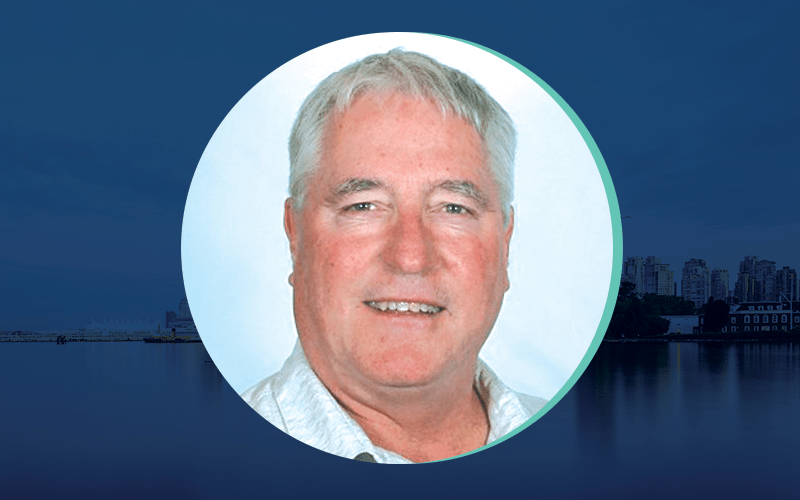
Bill Collins is President of Cascadia Seaweed. He has lived in four countries and been on most continents. He has...
Key takeaways
- Seaweed farming is a climate-positive industry that sequesters carbon, absorbs excess nutrients, and creates habitat while addressing food security for a growing global population.
- Building strategic partnerships with First Nations communities and using a hub-and-spoke model allows coastal people to stay in their communities while creating meaningful employment opportunities.
- Starting with clear market validation is essential—seaweed demand outstrips supply globally with 6% annual growth, and by 2034, 10% of the world's food mass will come from ocean greens.
- Making yourself heard and standing out is critical for regional economic development—Vancouver Island leveraged programs like Foreign Trade Zones and Investment Canada Community Initiatives to attract attention and investment.
- Speed and scale matter when entering an emerging market—Cascadia went from incorporation to planning 90 tons of production in under six months, with ambitions to become North America's largest cultivated seaweed producer.
Transcript
Full transcript page · Interactive episode
============================================================
TRANSCRIPTION WITH SPEAKERS
============================================================

[00:00] SPEAKER_02: It's VanCouver's podcast on the Canada's podcast network.
[00:12] SPEAKER_02: Hello everyone, I'm Angela Faye, Hub Builder and co-host of British Columbia's Podcasts.
[00:19] SPEAKER_02: Part of the Canada's podcast network, your source for great insights from entrepreneurs
[00:23] SPEAKER_02: from across Canada.
[00:25] SPEAKER_02: We talked entrepreneurs who are making it happen here so you can listen, discover and engage.
[00:31] SPEAKER_02: Hi, this is Angela Barnard, kind to you from Canada's podcast here on location at the
[00:36] SPEAKER_02: Vancouver Island Economic Summit.
[00:38] SPEAKER_02: I am super excited to introduce Bill Collins from Cascadia's Zee Wee.
[00:43] SPEAKER_00: That's right.
[00:44] SPEAKER_00: Yeah, so welcome.
[00:45] SPEAKER_02: Thanks very much.
[00:46] SPEAKER_02: Yeah.
[00:46] SPEAKER_00: Happy to be here.
[00:47] SPEAKER_02: Well, tell me a little bit about your entrepreneurial journey.
[00:50] SPEAKER_02: What's your role first of all with Cascadia?
[00:53] SPEAKER_02: Yeah.
[00:54] SPEAKER_00: So I'm a founder of Cascadia and right now I serve as chairman of the board.
[00:57] SPEAKER_00: Okay.
[00:58] SPEAKER_00: And it's an idea that grew from previous summits when we were here four years ago.
[01:03] SPEAKER_00: We thought we would want to do something bold and aggressive for VanCouver Island and we
[01:10] SPEAKER_00: stated categorically at the time we wanted to put VanCouver Island on the map of the globe
[01:16] SPEAKER_00: in terms of the place to do business.
[01:18] SPEAKER_02: Nice.
[01:19] SPEAKER_02: And really?
[01:19] SPEAKER_02: So this is one of those projects?
[01:21] SPEAKER_00: Exactly.
[01:21] SPEAKER_00: Okay.
[01:22] SPEAKER_00: So, over the course of a few years meeting once a quarter up here in beautiful Nanai Mo,
[01:29] SPEAKER_00: we basically approached the federal government and said, you know what?
[01:34] SPEAKER_00: You have a program it's called Foreign Trade Zone.
[01:37] SPEAKER_00: We want to be a part of that.
[01:39] SPEAKER_00: In the course of working through that application process, we also discovered another program
[01:45] SPEAKER_00: which is called Investment Canada Community Initiatives, ICCI.
[01:50] SPEAKER_02: Investment Canada Community Initiatives.
[01:54] SPEAKER_02: Correct.
[01:55] SPEAKER_00: They fund local organizations such as VAIA to develop business platforms with which you
[02:06] SPEAKER_00: can attract foreign direct investment.
[02:08] SPEAKER_00: The idea is to create great ideas and have the folks in Asia or Europe or South America
[02:16] SPEAKER_00: to take advantage of our free trade agreements and work together to build capacity and build
[02:22] SPEAKER_00: business using foreign direct investment money.
[02:27] SPEAKER_00: So as a result of that, I was tasked with developing business cases for VanCouver Island.
[02:33] SPEAKER_00: So what this is a great island has plenty of potential but to articulate why?
[02:40] SPEAKER_00: We have underutilized infrastructure, we have natural resources, social license, and we
[02:48] SPEAKER_00: have a really ready and willing workforce.
[02:51] SPEAKER_00: So to drive that home, I presented for business cases, one in marketable waste wood, one
[02:58] SPEAKER_00: in clean tech, one in aquaculture and one in cultural tourism.
[03:03] SPEAKER_01: Okay.
[03:03] SPEAKER_00: Of the 30 that we started with, we honed it into that, presented a report, and on the
[03:09] SPEAKER_00: aquaculture side, I ran across a fellow named Dr. Stephen Cross and in an hour on the phone
[03:16] SPEAKER_00: with him, I knew there was an opportunity in seaweed.
[03:20] SPEAKER_00: Okay.
[03:21] SPEAKER_00: Interesting.
[03:22] SPEAKER_00: So we presented the report, we looked at it up and down, and I said, you know what, I'm
[03:27] SPEAKER_00: going to take this one.
[03:29] SPEAKER_00: So, with the help of my business partner Mike Williamson and my business partner Tony
[03:34] SPEAKER_00: ETHA, both seasoned vets of the marine world and Dr. Stephen Cross, who we bought in as
[03:40] SPEAKER_00: a founder, we created Cascadia Seaweed and we're growing to be the largest producer of
[03:46] SPEAKER_00: cultivated seaweed in North America.
[03:48] SPEAKER_00: That's the game plan.
[03:49] SPEAKER_02: Say that again.
[03:49] SPEAKER_02: The largest.
[03:50] SPEAKER_00: The largest producer of cultivated seaweed in North America.
[03:54] SPEAKER_02: Now when I was in at the summit yesterday, I was in a session that talked about seaweed
[03:58] SPEAKER_02: becoming, you know, you know, bit of a lifesaver, really, literally of the planet and carbon
[04:04] SPEAKER_02: and the highest and best use being people food.
[04:07] SPEAKER_00: Correct.
[04:08] SPEAKER_02: So what about, what's your market, who do you plan on serving?
[04:11] SPEAKER_00: So one of the first things we discovered was there is an incredible market.
[04:16] SPEAKER_00: The market for seaweed has been growing 6% globally a year, demand way outstrips supply.
[04:23] SPEAKER_00: So two good places to start if you're going to be an entrepreneur.
[04:26] SPEAKER_00: So you have a ready market.
[04:29] SPEAKER_00: What we also discovered was the Asian market delivers most of the seaweed to the world.
[04:35] SPEAKER_00: Okay.
[04:36] SPEAKER_00: Yet in British Columbia, there are more than 630 species of seaweed naturally growing.
[04:43] SPEAKER_00: Wow.
[04:44] SPEAKER_00: So we have Budo pristine waters in Asia, places like South Korea.
[04:48] SPEAKER_00: If you go on Google Maps, the satellite view of South Korea, you'll see the sea.
[04:55] SPEAKER_00: The whole ocean coastline matted with seaweed farms.
[05:00] SPEAKER_00: There are no more room to grow seaweed in Korea.
[05:03] SPEAKER_00: Wow.
[05:04] SPEAKER_00: Now that's not what we're planning for here.
[05:06] SPEAKER_00: We don't need very much space.
[05:08] SPEAKER_00: This is not the Korean model here.
[05:11] SPEAKER_00: This is a North American and a Vancouver Island model, which fits with the lifestyle of
[05:17] SPEAKER_00: what people expect on the coast here.
[05:18] SPEAKER_00: But even a small amount of seaweed does a number of wonderful things.
[05:23] SPEAKER_00: It feeds people.
[05:24] SPEAKER_00: The world predicts by 2034, 10% of the mass food mass to feed the planet will come from
[05:32] SPEAKER_00: ocean greens.
[05:34] SPEAKER_02: How much?
[05:34] SPEAKER_00: 10%.
[05:35] SPEAKER_02: 10%.
[05:36] SPEAKER_00: Wow.
[05:37] SPEAKER_02: Super high protein content.
[05:37] SPEAKER_02: Yeah.
[05:37] SPEAKER_00: So that's a billion people.
[05:39] Speaker UNKNOWN: Wow.
[05:41] SPEAKER_02: There's not a billion people in Canada just saying.
[05:45] SPEAKER_00: As we merge towards a population of 10 billion.
[05:47] SPEAKER_00: Wow.
[05:48] SPEAKER_00: So we're not talking small change.
[05:52] SPEAKER_00: And so we can take advantage of the fact that we have beautiful waters.
[05:56] SPEAKER_00: Now the first thing people, we have a tumultuous history with our coast.
[06:02] SPEAKER_00: We've been catching wild caught fish for many years.
[06:05] SPEAKER_00: That's plateaued.
[06:07] SPEAKER_00: There's a significant debate about the environmental validity of aquaculture.
[06:15] SPEAKER_00: Okay.
[06:16] SPEAKER_02: In a sustainable way.
[06:18] SPEAKER_02: Correct.
[06:19] SPEAKER_02: Yeah.
[06:19] SPEAKER_00: Although there is no question, aquaculture will feed the world because caught fisheries is plateaued.
[06:26] SPEAKER_00: We're not taking any more fish out of the water in the cotton industry.
[06:30] SPEAKER_00: So when we looked at seaweed, a lot of the plant sluffs off during the growth cycle.
[06:37] SPEAKER_00: Okay.
[06:37] SPEAKER_00: So it's sequesters at Hall CO2 out of the water, which in turn, Hall CO2 out of the air.
[06:43] SPEAKER_00: And a lot of the plants sluffs off during the growth cycle.
[06:46] SPEAKER_00: So you're actually feeding your sequestering carbon as those leafy materials fall to the seabed.
[06:52] SPEAKER_00: It forms habitat for the beasts living in and on the sediment.
[06:56] SPEAKER_00: And it eventually ends up in the deep ocean as sequestered carbon.
[07:01] SPEAKER_00: So it will be eventually available for carbon offsets, for example,
[07:05] SPEAKER_00: because it is not just a sustainable industry.
[07:09] SPEAKER_00: It is a climate positive industry.
[07:11] SPEAKER_00: Wow.
[07:11] SPEAKER_00: Fantastic.
[07:12] SPEAKER_00: With really no negative effects, it sequesters nutrients.
[07:17] SPEAKER_00: So as we grow the business out, we will also become the experts in growing.
[07:21] SPEAKER_00: So if there's embamines that are particularly troubled because maybe farm practices have over-nutrified the water,
[07:29] SPEAKER_00: you grow seaweed there and seaweed will absorb all the excess nutrients.
[07:35] SPEAKER_02: So tell me about the urine start-up mode.
[07:39] SPEAKER_02: Very much so, yeah.
[07:40] SPEAKER_02: So how far in are you?
[07:41] SPEAKER_00: So we incorporated in June.
[07:46] SPEAKER_00: Oh, this year.
[07:46] SPEAKER_00: Yes.
[07:47] SPEAKER_00: We've just finished the seed round of investors.
[07:50] SPEAKER_00: Raised half a million dollars.
[07:51] SPEAKER_00: Okay.
[07:52] SPEAKER_00: Family and friends.
[07:53] SPEAKER_00: Yes.
[07:54] SPEAKER_00: And we are next week.
[07:56] SPEAKER_00: We've ordered all the farm bits.
[07:58] SPEAKER_00: So what is a farm bit?
[08:00] SPEAKER_00: It looks like a rope ladder.
[08:02] SPEAKER_00: 250 lm high by 40 meters wide.
[08:05] SPEAKER_00: Okay.
[08:06] SPEAKER_00: And each wrong is a growth line.
[08:07] SPEAKER_00: So you turn that flat on its side and you anchor it on the bottom and tension it with floats.
[08:13] SPEAKER_00: And it's your growth farm.
[08:15] SPEAKER_02: And where are you going to farm?
[08:16] SPEAKER_02: First.
[08:16] SPEAKER_00: So we're going to farm first.
[08:17] SPEAKER_00: We have developed in the course of the last six months a most excellent relationship with Nacal Nathseafoods,
[08:24] SPEAKER_00: limited partnership, who are owned by five first nations.
[08:27] SPEAKER_02: Wow.
[08:28] SPEAKER_02: Fantastic.
[08:29] SPEAKER_00: It was a great relationship.
[08:31] SPEAKER_00: They're helping us communicate to the first nations in the areas that we want to grow.
[08:36] SPEAKER_00: And they've they've tread the ground before us to to become an active, obviously an active business.
[08:43] SPEAKER_00: They want to grow.
[08:45] SPEAKER_00: We are looking for partners on the ground because ultimately,
[08:49] SPEAKER_00: Cascadia Seaweed wants to hold the brand and make it sacrosanct, you know, BC,
[08:54] SPEAKER_00: grown, beautiful seaweed.
[08:58] SPEAKER_00: We want to hold that brand sacrosanct.
[09:00] SPEAKER_00: We want to develop the markets and the verticals.
[09:02] SPEAKER_00: So we'll handle all of that.
[09:04] SPEAKER_00: We would like to get coastal first nations and coastal peoples in general back on the water.
[09:09] SPEAKER_00: We will provide the seed.
[09:11] SPEAKER_00: They will plant it.
[09:13] SPEAKER_00: It's day monitoring it.
[09:14] SPEAKER_00: It's harvesting and we will pay for that product.
[09:17] SPEAKER_00: So we'll be the central repository of that.
[09:19] SPEAKER_02: Wow.
[09:20] SPEAKER_00: And it's like a hub and spoke model or a sharecropping model.
[09:23] SPEAKER_00: Yeah.
[09:24] SPEAKER_00: Without the negative connotations because it gets people back on the water.
[09:27] SPEAKER_00: It puts more money, generates wealth.
[09:30] SPEAKER_00: And we believe it could be a billion dollar industry for this coast.
[09:33] SPEAKER_02: And it allows people to stay in their communities.
[09:35] SPEAKER_02: Exactly.
[09:36] SPEAKER_02: Do working in the community.
[09:37] SPEAKER_00: Doing things they've always loved doing is being on the water.
[09:39] SPEAKER_02: Absolutely.
[09:40] SPEAKER_00: Fantastic.
[09:41] SPEAKER_02: So a little bit about, you know, the biodiversity of Vancouver Island specifically.
[09:46] SPEAKER_02: So you said we're not going to be the, was it Korea?
[09:50] SPEAKER_02: The Korea model?
[09:51] SPEAKER_02: Yeah.
[09:51] SPEAKER_02: So what is the ideal model here?
[09:54] SPEAKER_02: Yeah.
[09:54] SPEAKER_02: What makes this unique?
[09:55] SPEAKER_00: So what makes this unique, first of all, is, as I mentioned, pristine waters.
[09:59] SPEAKER_00: Okay.
[10:00] SPEAKER_00: Well circulated pristine waters.
[10:02] SPEAKER_00: We get that north Pacific Gire.
[10:04] SPEAKER_00: And while, yes, you can talk about plastics in the ocean.
[10:07] SPEAKER_00: A very serious problem that has to be dealt with.
[10:10] SPEAKER_00: Really, there's no impact in seaweed farming from that, at least at the moment.
[10:15] SPEAKER_00: We have, there's going to be challenges.
[10:17] SPEAKER_00: It is going to be climate change, which means there's going to be more freshwater runoff.
[10:21] SPEAKER_00: Okay.
[10:21] SPEAKER_00: We'll see we cannot tolerate.
[10:23] SPEAKER_00: Okay.
[10:23] SPEAKER_00: Temperature of the ocean is going to change.
[10:25] SPEAKER_00: So we have to continuously put the R&D in place to know that we're having cultivator.
[10:30] SPEAKER_00: That's going to be fertilizer that may be a little more temperature tolerant.
[10:32] SPEAKER_00: Right.
[10:32] SPEAKER_00: Because while the coastal zone may or may not be able to adapt to a changing climate,
[10:38] SPEAKER_00: the earth is adapting for many years.
[10:42] SPEAKER_00: The rate of change is huge.
[10:44] SPEAKER_00: It's definitely artificial.
[10:46] SPEAKER_00: So we need to help mother nature by growing more seaweed that's going to be more tolerant of temperature
[10:51] SPEAKER_00: because it is part of, the, the true ecosystem of our ocean communities.
[10:55] SPEAKER_02: And the actual business of Cascadia where you're located.
[10:59] SPEAKER_00: Yep, so headquartered in Sydney, which is on the south of the island.
[11:04] SPEAKER_00: Yeah, our first firms are going in off of Bamfield.
[11:08] SPEAKER_02: Okay, which is great as far west as it gets.
[11:12] SPEAKER_00: Yeah, it's exposed to the open ocean, which is beautiful.
[11:15] SPEAKER_00: All those lovely nutrients passing by the product.
[11:17] SPEAKER_02: I went to Bamfield as a 14 year old kid for marine biology camp.
[11:21] SPEAKER_02: Yeah, from Alberta, right?
[11:22] SPEAKER_00: Yeah, so you would have been to the Marine station.
[11:24] SPEAKER_02: Gotcha.
[11:24] SPEAKER_00: So we're partnering with the Marine station.
[11:26] SPEAKER_00: Okay.
[11:27] SPEAKER_00: We have our seed facility there.
[11:28] SPEAKER_00: And hopefully we'll entice researchers to come in and want to explore cultivars, want
[11:34] SPEAKER_00: to know more.
[11:35] SPEAKER_00: There's still species of seaweed that have yet to have a lot of name, for example.
[11:39] SPEAKER_02: Wow, undiscovered yet.
[11:40] SPEAKER_00: Yeah, so the closest port of entry, the major port is Port Albany.
[11:45] SPEAKER_01: Okay.
[11:46] SPEAKER_00: So we are building our seaweed firm there.
[11:49] SPEAKER_00: So we've released the local high school for a week.
[11:52] SPEAKER_00: And we're getting our anchors and our floats and we're going to do rope splicing 101.
[11:56] SPEAKER_00: And then we'll put it all on a big ocean barge.
[12:01] SPEAKER_00: Okay.
[12:01] SPEAKER_00: And we'll bring it out to the site.
[12:03] SPEAKER_00: And at the first part of midweek in November, we're going to put it in the water.
[12:08] SPEAKER_00: And then we go with our seed at the before the winter equinox.
[12:14] SPEAKER_00: Must be be planned.
[12:15] SPEAKER_02: When is that?
[12:16] SPEAKER_00: So December 21st.
[12:17] SPEAKER_02: Wow.
[12:18] SPEAKER_02: So we're moving pretty quick on this project.
[12:20] SPEAKER_00: So from zero to full speed, two hectares and 90 tons of seaweed, beautiful kelp coming
[12:28] SPEAKER_00: off our production within a year.
[12:30] SPEAKER_02: Smart, fast, awesome.
[12:33] SPEAKER_00: The reason we believe it hasn't really hasn't caught on yet in North America.
[12:38] SPEAKER_00: We say, well, why hasn't it been done before?
[12:39] SPEAKER_00: It's such a great idea.
[12:41] SPEAKER_00: A couple of reasons.
[12:42] SPEAKER_00: First of all, there's such an acute awareness over the last 10 years of things like climate
[12:48] SPEAKER_00: change, population growth, food security.
[12:52] SPEAKER_00: It really puts a finer point on creating the right market conditions to bring this to
[12:58] SPEAKER_00: market.
[12:59] SPEAKER_00: Secondly, we've pushed very hard to understand North American tastes.
[13:04] SPEAKER_01: Okay.
[13:04] SPEAKER_00: And we believe it will be a change in taste.
[13:09] SPEAKER_00: Right now, seaweed comes from Asia.
[13:12] SPEAKER_00: And it's usually flavored with sesame oil or some other typical taste that's been involved
[13:17] SPEAKER_00: over years to the taste of Southeast Asia, for example.
[13:21] SPEAKER_00: It may have to be in North America.
[13:24] SPEAKER_00: We may have to change the taste so that it's well suited to a North American palate.
[13:29] SPEAKER_00: Then we're likely to see a bigger uptake.
[13:32] SPEAKER_02: I'm imagining a seaweed tasting event as a regular.
[13:35] SPEAKER_00: Yeah.
[13:36] SPEAKER_00: Well, you know, there's companies that do it now in a very small scale.
[13:40] SPEAKER_00: Right.
[13:41] SPEAKER_00: And I think this is the big differentiator for us.
[13:43] SPEAKER_00: We set out to be no less than a hundred hectares.
[13:47] SPEAKER_00: So no less than 4,500 tons a year.
[13:51] SPEAKER_00: That was the starting point for our three year rollout.
[13:54] SPEAKER_00: Okay.
[13:54] SPEAKER_00: Now we're thinking we need a thousand hectares.
[13:56] SPEAKER_00: Wow.
[13:57] SPEAKER_01: Yeah.
[13:58] SPEAKER_00: Because we've been approached by verticals from bioplastics to cosmetics.
[14:04] SPEAKER_02: Right.
[14:04] SPEAKER_02: So getting into those secondary uses as opposed to food primary.
[14:08] SPEAKER_00: Yeah.
[14:08] SPEAKER_02: Yeah.
[14:08] SPEAKER_00: The highest value and the greatest thing that we can do to feed people is to grow food.
[14:14] SPEAKER_00: And that's our prime direct.
[14:15] SPEAKER_02: Right.
[14:15] SPEAKER_02: Okay.
[14:16] SPEAKER_02: Well, and we've talked a little bit about the business.
[14:19] SPEAKER_02: We've talked about the island.
[14:21] SPEAKER_02: Is giving you a little bit of bit more insight on to fill yourself.
[14:25] SPEAKER_02: I actually detect a little bit of an accent.
[14:27] SPEAKER_00: Born and raised in Newfoundland.
[14:28] SPEAKER_02: I felt it.
[14:30] SPEAKER_02: Right.
[14:30] SPEAKER_02: Near Babels or St. John's?
[14:32] Speaker UNKNOWN:
[14:32] SPEAKER_02: St. John's.
[14:33] SPEAKER_02: Yeah.
[14:33] SPEAKER_02: Born and raised St. John's.
[14:34] Speaker UNKNOWN:
[14:34] SPEAKER_02: I spent time in Newfoundland when I was a kindergarten grade one.
[14:38] SPEAKER_02: Yeah.
[14:39] SPEAKER_02: Easterners, right?
[14:39] SPEAKER_02: Coast to coast.
[14:40] SPEAKER_02: Yeah.
[14:41] SPEAKER_00: Always promote.
[14:42] SPEAKER_02: Yeah.
[14:42] SPEAKER_02: And what keeps you, how do you get inspired?
[14:45] SPEAKER_02: What do you do for recreation?
[14:47] SPEAKER_00: I play music.
[14:48] SPEAKER_00: I'm in a band.
[14:48] SPEAKER_00: Oh.
[14:49] SPEAKER_00: A whole black room.
[14:50] SPEAKER_00: You can catch us at Mary's Blue Moon Cafe on a Friday and a Saturday night in Sydney.
[14:54] SPEAKER_00: Once a month, towards the end of the month.
[14:56] SPEAKER_02: So a little bit of a creative outlet.
[14:58] SPEAKER_02: What's your jam?
[14:59] SPEAKER_02: Are you the singer, the songwriter, the instruments?
[15:02] SPEAKER_00: Yeah.
[15:02] SPEAKER_00: We got a great band and my wife's the singer.
[15:04] SPEAKER_00: I'm the writer and performer and what a great laugh we have.
[15:08] SPEAKER_01: And you tour?
[15:09] SPEAKER_00: We used to go to, we used to go to Indivictoria.
[15:13] SPEAKER_00: That's a good 30 kilometers away.
[15:15] SPEAKER_00: We played once at the Fire Hall in Bamfield, but that was bringing your own party.
[15:20] SPEAKER_00: Okay.
[15:22] SPEAKER_00: So that's really what I do in my spare time.
[15:24] SPEAKER_00: For your leisure.
[15:25] SPEAKER_00: Yeah.
[15:26] SPEAKER_00: And you know,
[15:27] SPEAKER_00: Into your family here?
[15:28] SPEAKER_03: Yeah.
[15:29] Speaker UNKNOWN:
[15:29] SPEAKER_00: My wife is in Sydney.
[15:31] SPEAKER_00: My son works for another company that I own, which is a completely different business.
[15:36] SPEAKER_00: And I hope he's going to come to work for Cascadia.
[15:39] SPEAKER_00: See we?
[15:39] SPEAKER_00: Okay.
[15:40] SPEAKER_00: Fantastic.
[15:40] SPEAKER_00: He's got things to do.
[15:41] SPEAKER_00: We all have things to do.
[15:42] SPEAKER_00: And I have a daughter who's a punk rock band and Montreal.
[15:46] SPEAKER_00: She's been a musician and now she's just from school.
[15:48] SPEAKER_00: Fantastic.
[15:49] SPEAKER_00: Yeah.
[15:49] SPEAKER_02: When I just want, I notice you have your Vagina.
[15:51] SPEAKER_02: Right?
[15:52] SPEAKER_02: It's all about the company you keep here.
[15:54] SPEAKER_02: Yes.
[15:54] SPEAKER_02: And of course, on Vancouver Island.
[15:55] SPEAKER_02: We're pretty tight.
[15:56] SPEAKER_02: We're kind of the Hagi type relationship builders here.
[16:00] SPEAKER_02: That one of your roles, of course, is with Vagina.
[16:04] Speaker UNKNOWN:
[16:04] SPEAKER_02: You've been spearheading this for-and-trade zone project.
[16:07] SPEAKER_03: Yeah.
[16:08] SPEAKER_02: You have a big Heriodesha school, which is to make Vancouver Island a business center.
[16:13] SPEAKER_02: Can you give us a little bit of idea on the actual, what it means from a layman's perspective
[16:18] SPEAKER_02: on, on Vancouver Island now being designated a for-and-trance zone.
[16:22] SPEAKER_00: Yeah.
[16:23] SPEAKER_00: The simple answer is, if you don't scream loud enough, you're not going to be heard.
[16:29] SPEAKER_00: And we-
[16:30] SPEAKER_00: Ah!
[16:30] SPEAKER_00: Exactly.
[16:31] SPEAKER_00: Pretty good.
[16:32] Speaker UNKNOWN: I mean, I'm not-
[16:32] SPEAKER_00: Thanks.
[16:33] Speaker UNKNOWN: That's a good thing.
[16:33] SPEAKER_00: It's pretty good.
[16:34] SPEAKER_00: Yeah.
[16:35] SPEAKER_00: And so we needed to take a stand.
[16:38] SPEAKER_00: We have such an incredible competitive advantage.
[16:41] SPEAKER_00: We have underutilized.
[16:43] SPEAKER_00: As I mentioned, underutilized infrastructure.
[16:46] SPEAKER_00: Excellent.
[16:47] SPEAKER_00: Excellent jurisdiction with municipal governments of provincial governments and federal governments.
[16:52] SPEAKER_00: I think that really want to help promote export.
[16:55] SPEAKER_00: As I mentioned, we have the pristine waters.
[16:57] SPEAKER_00: But more importantly, we have a will to do more.
[17:02] Speaker UNKNOWN: And so-
[17:02] SPEAKER_00: So when we're working, we all have our silos because we all run individual businesses.
[17:06] SPEAKER_00: We have our lives to run.
[17:08] SPEAKER_00: But what about collectively, we said, if we could find a way to stick our hand up and say, by the way,
[17:15] SPEAKER_00: we're not only a great place to live and work, but we are also really keen on export.
[17:21] SPEAKER_00: And we're really enthusiastic.
[17:22] SPEAKER_00: And we have a workforce that's well-educated and can back it up.
[17:27] SPEAKER_00: So for us, it was a attempt to stand up, stick our hand up, and say, we're here to the world.
[17:34] SPEAKER_00: When you go to places like Shanghai or Beijing or Taipei, those folks understand FTZ.
[17:44] SPEAKER_00: There are free trades on Singapore.
[17:46] SPEAKER_00: Is it itself a free trade?
[17:47] SPEAKER_02: The city of Singapore.
[17:48] SPEAKER_02: Yes.
[17:49] SPEAKER_00: So I remember selling sonar equipment in there.
[17:52] SPEAKER_00: And I would carry my black box on a plane, and I'd go in through customs, and I would just carry it in.
[17:57] SPEAKER_00: Nobody said a word, right?
[17:59] SPEAKER_00: It was this wonderful flow of information.
[18:01] SPEAKER_00: And I thought originally, if we could do that in Vancouver, it would be great.
[18:05] SPEAKER_00: But the jurisdictional issues far away the possibility.
[18:08] SPEAKER_02: So as a foreign investor, what does it mean to me to actually put money into projects?
[18:18] SPEAKER_02: Like Cascadia or some of the other projects that are pumping out?
[18:22] SPEAKER_02: Are there tax incentives?
[18:25] SPEAKER_02: What can they look for?
[18:27] SPEAKER_00: Well, in general, there is a very strong support from the province in a tax regime.
[18:34] SPEAKER_00: So for example, you apply to be an eligible BC Corp.
[18:39] SPEAKER_01: Okay.
[18:39] SPEAKER_01: Right?
[18:40] SPEAKER_00: And so it's a very simple process.
[18:43] SPEAKER_00: We applied as Cascadia seaweed so that our resident BC taxpayers who invested in Cascadia seaweed,
[18:51] SPEAKER_00: they would get a 30% break on their BC taxes.
[18:55] SPEAKER_00: Wow.
[18:55] SPEAKER_00: So they put 10 grand in, they would get a check for three grand back at the end of the year.
[19:00] SPEAKER_01: Oh, I mean, that speaks for itself, really.
[19:02] SPEAKER_01: Yeah.
[19:02] SPEAKER_01: Before we even go any further.
[19:04] SPEAKER_01: So.
[19:04] SPEAKER_00: But what in reality, what that means is on a half a million dollar raise, the BC government is kicking in $150,000.
[19:10] SPEAKER_00: Wow.
[19:11] SPEAKER_00: Yeah, fantastic.
[19:11] SPEAKER_00: And that is, that's the credibility that we need to explain to the four investment community.
[19:18] SPEAKER_00: Look, we're here and we're credible and we're backed by our problems because they're actually investing tax money.
[19:24] SPEAKER_00: Fantastic.
[19:26] SPEAKER_02: Well, Bill, is there anything from wearing the Cascadia hat that you would like to jump in and share with us?
[19:33] SPEAKER_00: Yeah.
[19:34] SPEAKER_00: We want to put people back to work.
[19:36] SPEAKER_00: Okay.
[19:37] SPEAKER_00: Not that, not that an employment is a big issue.
[19:40] SPEAKER_00: We're at the effect of an employment right here.
[19:43] SPEAKER_00: So it's, we're not going to solve a jobs problem.
[19:48] SPEAKER_00: What we are going to solve is a redistribution of jobs.
[19:51] SPEAKER_01: Okay.
[19:52] SPEAKER_00: Right.
[19:52] SPEAKER_00: So that we will put people back to work in the coastal communities and the places that they grow up and their parents grow up and their grandparents grow up.
[19:59] SPEAKER_00: And those that want to stay and have meaningful, meaningful employment.
[20:05] SPEAKER_00: And want to be on the water and want to be farmers and are interested in doing that.
[20:10] SPEAKER_00: We need you.
[20:11] SPEAKER_00: Awesome.
[20:12] SPEAKER_00: We need you to be there and be entrepreneurial.
[20:14] SPEAKER_02: And how can they connect with you after today?
[20:17] SPEAKER_00: Yeah, www.cascadiaCW.com.
[20:21] SPEAKER_00: We're, sorry, website or info at cascadiaCW.com.
[20:24] SPEAKER_00: Drop us a line.
[20:25] SPEAKER_00: We're looking for farmers.
[20:27] SPEAKER_02: Okay.
[20:28] SPEAKER_02: Fantastic.
[20:28] SPEAKER_02: Well, there's an opportunity for all of us to follow up on.
[20:32] SPEAKER_02: Thanks again.
[20:33] SPEAKER_02: That was awesome, Bill.
[20:34] SPEAKER_02: It was so much great insight on not only what's going on with cascadia, but the Vancouver Island economy as a whole.
[20:40] SPEAKER_02: So thanks for joining us.
[20:42] SPEAKER_02: This has been Angela Barnard from Canada's podcast where you can listen, discover and engage.
[20:48] SPEAKER_00: Bye for now.
[20:50] SPEAKER_02: Hey there.
[20:51] SPEAKER_02: Thanks for taking the time today to listen to British Columbia's podcast on the Canada's podcast network.
[20:57] SPEAKER_02: We hope you enjoyed the show today.
[20:58] SPEAKER_02: Make sure you sign up for our newsletters and write a review for us on iTunes.
[21:02] SPEAKER_02: Connect with us on Twitter, Facebook, Instagram, LinkedIn or at Canada's podcast.com.
[21:10] SPEAKER_02: You can check out what other entrepreneurs are doing across the country.
[21:13] SPEAKER_02: I'm Angela Faye. See you next time.