
Alexandra Nestertchouk
Episode
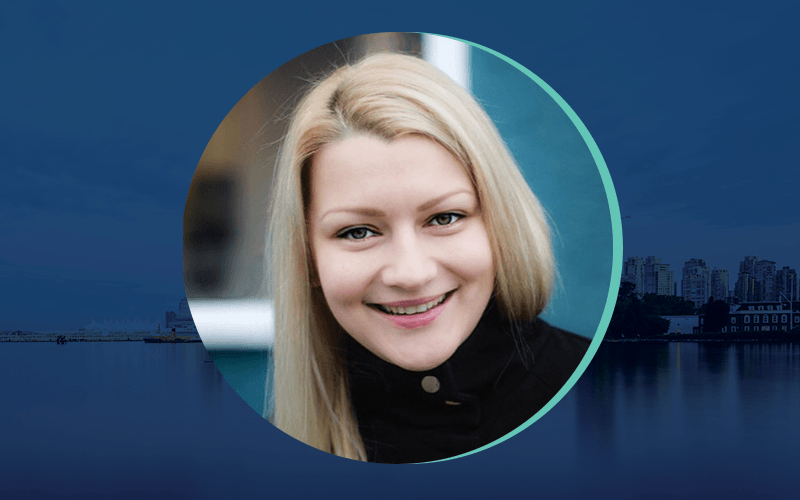
Alexandra Nestertchouk is a serial entrepreneur with over ten years of experience in business management and technology. She has a...
Key takeaways
- You are never ready to start a business, so it's better to begin now and learn from mistakes than to delay and potentially lose the opportunity entirely.
- Aggressive networking is essential when starting in a new city—attend events, join relevant groups, connect on LinkedIn immediately, and follow through with every contact you make.
- Building a successful business requires detaching yourself from worrying about what others think and creating a "happiness shield" that reflects negativity while listening to constructive feedback.
- The best businesses operate independently of whether you're physically present, meaning your role as CEO should be guiding the ship with minimal input rather than managing every detail.
- You cannot build a successful startup alone regardless of your intelligence or skills—surround yourself with the right people and acknowledge that you need a strong team to succeed.
Transcript
Full transcript page · Interactive episode
============================================================
TRANSCRIPTION WITH SPEAKERS
============================================================

[00:00] SPEAKER_00: It's VanCoovers Podcast on the Canada's Podcast Network.
[00:26] SPEAKER_01: Hello, this is Robert Smil, coming to today with a VanCoovers Podcast, a member of the Canada's Podcast Network,
[00:32] SPEAKER_01: where we talk to the entrepreneurs where making it happen here in Vancouver, British Columbia.
[00:38] SPEAKER_01: Alexandra Nester Chook is a serial entrepreneur with over 10 years of experience in business management and technology.
[00:45] SPEAKER_01: She has a business management degree and background in computer science, and she is the founder and CEO of Hopkins.
[00:52] SPEAKER_01: She always knew she will not continue as a 9-5 employee, and she started and ran a few little side hustles while searching for the big idea.
[01:03] SPEAKER_01: Alexandra is a mother to a now 2.5-year-old boy cosmos.
[01:07] SPEAKER_01: Once her maternity leave came to an end, becoming the founder and CEO of a tech startup was a natural step.
[01:15] SPEAKER_01: Well, Alexandra, welcome to the show. Thanks for taking the time today to be here for all our listeners.
[01:21] SPEAKER_02: Thank you, Robert. I'm glad to be here.
[01:23] SPEAKER_01: Okay, I want you to tell us a little bit more about yourself, where you're from, and give us the details on your current business.
[01:31] SPEAKER_02: I originally come from Minsk, Belarus, where I was growing up during the post-Ussusari years, and I was raised by a single mother there, together with my sister.
[01:43] SPEAKER_02: I raised as very strong women, as every single woman in our family was a strong woman, and everyone has the entrepreneurial set of mind.
[01:55] SPEAKER_02: So we always knew that we were not going to live there, that there are bigger things for us, and this is where I made a decision.
[02:03] SPEAKER_02: 11 years ago, to actually move to Canada, because there was much more opportunity.
[02:08] SPEAKER_02: When I moved to Canada 11 years ago, I started by learning the rules of the game, working as an employee, at a number of companies and various fields, anything from conference services, management, to hospitality, to finance, telecom.
[02:27] SPEAKER_02: Then I was landed in the IT field, where I managed an IT, which you consult and firm in Toronto for the past five years, and worked with a very, very strong CEO, with the bunch of ideas of his own.
[02:45] SPEAKER_02: This is how I got my foot into the door, and to being around technology startups, and this is what prepared me to launch a startup of my own, with the experience and knowledge on how to do this.
[03:03] SPEAKER_02: Now, HOP kids, this is my big idea, and this is my life right now. It is the solution for I needed right now, child care.
[03:15] SPEAKER_02: Being a bother myself, I did struggle during the first two years of motherhood, mostly with social isolation, and absolute change of direction.
[03:31] SPEAKER_02: From being 100% in control, to becoming 0% in control, and totally be dependent on my son's schedule, as well as on babysitting arrangements that I had to make weeks in advance.
[03:47] SPEAKER_02: So we developed HOP kids, as a means to address the issue, and give the control back to parents.
[03:57] SPEAKER_02: This is a web platform, which, as I mentioned, is providing a solution for I needed right now, child care. This platform allows parents to search for a place, to drop off their child, someone who is screen trusted, qualified, and available to look after their child on a short notice.
[04:17] SPEAKER_02: We search, we work with licensed daycareers, as well as licensed, not required child care providers, people who are already qualified and are professionally working with kids in their day to day lives, such as daycare staff, pediatric nurses, ECEs, elementary school teachers,
[04:42] SPEAKER_02: and they are willing and able to look after the kids of others out of their own home.
[04:51] SPEAKER_02: Now, parents can easily locate a spot in the neighborhood of their choosing near where they are going.
[05:00] SPEAKER_02: They can look up all of their options available, their profiles, their ratings, their reviews, they decide on the place that is suitable for them.
[05:11] SPEAKER_02: They book and pay online via our payment gateway, and they can drop off their child in as little as 10 or 15 minutes.
[05:21] SPEAKER_02: And hope this platform therefore empowers parents by giving them options with varying times, locations, and transparent rates.
[05:31] SPEAKER_02: And yeah, this is a dream solution, I would say.
[05:34] SPEAKER_01: So it's kind of like the Uber of child care in a certain way.
[05:39] SPEAKER_02: It is not.
[05:40] SPEAKER_02: No.
[05:40] SPEAKER_02: It is, I would not call it Uber, the difference being that there are a number of companies providing a service of sending a babysitter to you to your parents' home.
[05:54] SPEAKER_02: That is the Uber.
[05:56] SPEAKER_02: So parent has, in this case, parent has zero control over who's coming to them, and there's stuck at the location where they are.
[06:05] SPEAKER_02: And then for that, Nani, the agency or the website is effectively selling their time and creating a service, whereas in reality that Nani could be doing something else during that time.
[06:19] SPEAKER_02: The way we are thinking about our platform, we are thinking about as Airbnb, where we work with Dacures and Nani's to sell their access capacity.
[06:33] SPEAKER_02: So that spot, let's say a license Dacure has someone called in sick today or someone a kid went on vacation for two weeks.
[06:44] SPEAKER_02: That open spot, that availability is there anyways, regardless of whether or not it is filled.
[06:51] SPEAKER_02: It is available. It's empty, same as Airbnb home.
[06:55] SPEAKER_02: It is empty and ready to be offered to someone else.
[06:59] SPEAKER_02: Now the challenge with that Dacure owner, that there is no efficient way of actually putting yourself on the map and advertising that option for anyone who needs that.
[07:12] SPEAKER_02: There could be a parent across the road who desperately needs an option, because there are babysitter canceled on them 30 minutes before they needed to leave the home for their boardroom meeting.
[07:24] SPEAKER_02: And there is no efficient way for the parents who find out that literally across the street from them there is a Dacure which can accept their child today right now.
[07:35] SPEAKER_02: Hopkins will bring this to the table and now there are options.
[07:42] SPEAKER_01: Okay, great. Now did you need financing to start your company and how do you currently make money in your business now?
[07:50] SPEAKER_02: When we started the business really started as self-financing.
[07:57] SPEAKER_02: I started on my own, my partner joined in a few months.
[08:01] SPEAKER_02: It was a lot of sweat equity and whatever expenses we needed to cover.
[08:06] SPEAKER_02: At the same time of working on the business I was also consulting.
[08:15] SPEAKER_02: I directed half of my income from the consulting gigs towards funding this opportunity.
[08:22] SPEAKER_02: We did a sub-one track for certain pieces and we developed a prototype and then we started the development and all of this came out of my own pocket.
[08:31] SPEAKER_02: But then when I decided to switch to it full time in April of this year and not doing any more consulting gigs I started looking for funding.
[08:45] SPEAKER_02: I approached Futurepreneur BDC on city other programs which are available here for startups for tech entrepreneurs, female entrepreneurs.
[08:57] SPEAKER_02: First time entrepreneurs there is plenty of them here in NBC which I'm very grateful for.
[09:04] SPEAKER_02: I got very blessed that both Futurepreneur BDC gave us funding that we needed to start off as well as one city came on board with their Be Your Own Boss program.
[09:19] SPEAKER_02: In addition to which I wrap in our C where very helpful they directed us towards wage subsidy programs available through Canadian government.
[09:31] SPEAKER_02: We did get some funding through that so I was able to actually hire employees to help launch it.
[09:42] SPEAKER_02: Now we still have enough money to continue until we start making the revenues which should come in as soon as we launch the interface to parents.
[09:55] SPEAKER_02: The whole interface is already launched.
[09:58] SPEAKER_02: Once it's out there I will be looking for big tech.
[10:05] SPEAKER_02: I will be looking for seed funding as our vision for the platform is to go global and to really grow quickly as there is enormous need for the type of service and really care for the opportunity to happen.
[10:24] Speaker UNKNOWN: I will be looking for a few things to do with the future of the business.
[10:25] SPEAKER_02: Everyone on my team I'll parents themselves.
[10:29] SPEAKER_02: The seed funding round will be opening in September.
[10:32] SPEAKER_01: Which segway is nicely into the next question.
[10:35] SPEAKER_01: What is the long-term vision in what will your company look like in the future?
[10:38] SPEAKER_01: Do you see the company expanding into other areas and where beyond Vancouver B.C. or even Canada?
[10:45] SPEAKER_02: Absolutely. Yes, I would love to talk about this.
[10:49] SPEAKER_02: We start small we start in B.C.
[10:52] SPEAKER_02: The challenge with expanding and growing really quickly is in childcare regulation.
[11:02] SPEAKER_02: Every geographic area and political area every country has their own regulation.
[11:08] SPEAKER_02: We nailed the regulation here in B.C. as well as we looked into regulation in Ontario and Alberta.
[11:16] SPEAKER_02: This application was originally actually built for Ontario.
[11:21] SPEAKER_02: They are less conservative and much bigger market.
[11:23] SPEAKER_02: It's just so happened that we moved to beautiful bridge Colombia and therefore we start here.
[11:29] SPEAKER_02: We start B.C. within a year.
[11:32] SPEAKER_02: So the target is for the next spring.
[11:36] SPEAKER_02: We will open doors in Toronto and we will tackle Alberta's Calgary and Edmonton.
[11:44] SPEAKER_02: We do expect a lot of natural growth.
[11:47] SPEAKER_02: We already got requests from Kielona, from Victoria.
[11:51] SPEAKER_02: We got requests from Alberta.
[11:52] SPEAKER_02: We got requests from Cyprus and New Zealand, believe it or not, as well as Portland and Seattle.
[11:58] SPEAKER_02: But after we establish ourselves in Canada firmly, our next focus will be going after English-speaking common law countries
[12:13] SPEAKER_02: with probably main target being Australia and New Zealand as these countries do have the regulation for childcare on federal level.
[12:22] SPEAKER_02: So only one regulation to tackle as opposed to US, whereas regulation is on state level.
[12:31] SPEAKER_02: So I would need to deal with 50-something regulations, which is going to be a pain of its own.
[12:38] SPEAKER_02: US is on the map, at least the four largest states, Florida, Texas, New York and California.
[12:47] SPEAKER_02: And then the next logical step would be getting into UK and Ireland.
[12:54] SPEAKER_02: Within five years, we hope to start looking at Asia.
[12:58] SPEAKER_02: That is the most rapidly growing market right now.
[13:04] SPEAKER_02: Believe it or not, even though people think of China as being very conservative, their market for childcare right now is 72 billion.
[13:13] SPEAKER_02: And they're growing at 14% year over year.
[13:18] SPEAKER_02: And the new generation, millennial kids in Asia, they are very, very open to technology.
[13:28] SPEAKER_02: We already got our initial exposure to technologies that are being used in China, one of which being wechat when kids and families and parents,
[13:39] SPEAKER_02: they're sending each other money freely through a mobile app, something that only appeared on Canadian playground quite recently.
[13:49] SPEAKER_02: So we do feel there is a lot of opportunity in countries such as China, Hong Kong, Japan, we're looking at Singapore, South Korea.
[14:01] SPEAKER_02: So there's a global vision for this product for sure.
[14:04] SPEAKER_01: Okay, what are the biggest benefits for you and being an entrepreneur here in Vancouver BC?
[14:09] SPEAKER_01: I want you to give us some of the good points about starting a company here, but I also want you to give us some of the tough things or challenges for our listeners so they can keep an eye for them.
[14:18] SPEAKER_02: Yes, so there are a few good things that I experience.
[14:25] SPEAKER_02: As I mentioned, I lived in Toronto for 10 years before moving to BC.
[14:29] SPEAKER_02: And I'm only in BC for a little bit over a year.
[14:33] SPEAKER_02: I love the vibrant startup community in BC.
[14:37] SPEAKER_02: This is so far the top and the best startup community that I've been exposed to in Canada.
[14:45] SPEAKER_02: It's way more welcoming than the one that I've been exposed to in Toronto.
[14:54] SPEAKER_02: And very much more supportive.
[14:59] SPEAKER_02: I would say people are really welcoming your ideas with open arms and they're not afraid to critically think about your ideas.
[15:13] SPEAKER_02: I've not seen criticizing, no, but you know, they provide you with a feedback.
[15:20] SPEAKER_02: I really like also that there is a lot of government programs and private programs which support tech startups.
[15:30] SPEAKER_02: There is a big focus on specifically in BC on impact.
[15:39] SPEAKER_02: So anywhere where your idea is focusing on social impact or environmental impact, there is so many programs that support it.
[15:49] SPEAKER_02: So many nonprofit organizations that support it and just regular people off the street, whether they are community leaders or business leaders, there's a lot of support for this.
[16:00] SPEAKER_02: There is a lot of drive from the old school resource-based economy towards modern technology enabled, do good type of business.
[16:11] SPEAKER_02: So there's a very big shift from financially and resource focused to Toronto to this, you know, tech, modern millennial freedom lifestyle of doing business in BC.
[16:27] SPEAKER_02: So if this makes sense.
[16:29] SPEAKER_01: Yeah, okay. So what are the tough things, what are the challenges you had?
[16:33] SPEAKER_02: The challenges is that it is much smaller. It is much smaller. It is less connected. Yes, it's closer to the valley.
[16:43] SPEAKER_02: But let's say, again, I can only compare with Toronto. Toronto is more central to everything when you think about everything from your resources to investment.
[16:57] SPEAKER_02: To just pure when you, when I'm planning my seed funding right now and I'm looking at raising outside of Vancouver.
[17:08] SPEAKER_02: So I'm going to be looking in Vancouver for investment, but also outside of them when it is easy to get to Seattle and the valley.
[17:17] SPEAKER_02: But it's when those options are exhausted and to start traveling further to even back to Toronto, New York, Boston, Chicago and London, UK, let's say, is becoming much more expensive.
[17:34] SPEAKER_02: And Vancouver does not have as much money as Toronto has, for example. So I do see myself actually traveling for money to support the startup.
[17:49] SPEAKER_02: Yeah, so this is on the more challenging side.
[17:55] SPEAKER_01: It sounds like the money issue. Like, you know, do you want to think big? You want the big funding? You need to look outside of Vancouver.
[18:02] SPEAKER_02: Yes, and this this aligns with the vision. If you're building a lifestyle business, which is also in back to good, but it's a lifestyle business, which does not need a lot of capital.
[18:13] SPEAKER_02: It's maybe you're building something that's a SaaS product, which gives you a monthly record revenue right away that's business to business product.
[18:23] SPEAKER_02: Then it's less challenging. Our product is consumer facing. We are going to be going after aggressive customer acquisition, which means that's going to be a lot of bird on marketing and building trust and building brand.
[18:40] SPEAKER_02: So yes, the money is a big challenge.
[18:44] SPEAKER_02: Another challenge is the tech resources. There is so many startups in Vancouver, which are technology oriented or technology based.
[18:55] SPEAKER_02: But there is so all of the best tech resources are allocated. Let's put it this way. So people who are tech professionals who have experience, they're either working for larger companies such as Hootsuite or Amazon is coming with their 3000 jobs.
[19:13] SPEAKER_02: And those who are done with the larger company jobs and are out there, they're not really because they're starting their own things.
[19:25] SPEAKER_02: And they're not available necessarily for to be coming on board to someone else's idea as a tech co founder.
[19:35] SPEAKER_02: I found a challenging. I spend more than eight months here trying to find a tech CEO, sorry, tech, a tech co founder, a CEO.
[19:46] SPEAKER_02: And I ended up actually with a CEO who is not local to one.
[19:51] SPEAKER_01: Okay, so you found someone that was outside of Vancouver that would handle the technology part of the business.
[19:57] SPEAKER_02: Yes, and I feel like I'm again very blessed with having a really good and strong CTO, but he is not local for Vancouver.
[20:09] SPEAKER_02: So that that is his own set of challenges in terms of communication and time zone and.
[20:14] SPEAKER_02: And but I'm really lucky that or that he he is very much aligned with our vision, our goals, our purpose and how we want to do things.
[20:29] SPEAKER_02: So that this is very important.
[20:31] SPEAKER_01: Okay, good. Now we do some of our best work outside the office. Is there a place in the lower mainline close to where you live or work, where you like to go recharge or get inspired with ideas or just think about your business?
[20:42] SPEAKER_01: And does it change with the season considering all the rain we get here?
[20:47] SPEAKER_02: Yes, yes, I love few few of their places.
[20:53] SPEAKER_02: First off, I'd like to say that the way our company works, we're not.
[20:58] SPEAKER_02: Chained to our desks 925 within the office. Everyone on my company works on their own schedule.
[21:05] SPEAKER_02: Whenever they are available and it's their choice whether they do come to the office or not, we do have a small office in Kirkwood, this is where we are.
[21:16] SPEAKER_02: But I do encourage everyone to set their own hours, whatever works for them, because everyone is a parent on my team dealing with.
[21:26] SPEAKER_02: You know, kids and parental responsibility in addition to working.
[21:34] SPEAKER_02: And I do, I didn't encourage this summer, all of my team to spend as much hours working outside as possible, as long as they have strong internet connection, at the end, it didn't matter where they are located.
[21:47] SPEAKER_02: The place that I personally love is Banzan Lake, here in Kirkwood, it's about 15 minutes drive from where I live and where I work.
[21:59] SPEAKER_02: And what I really like about the place is it's a rainforest.
[22:05] SPEAKER_01: It's a beautiful place. It's a park moody there, yeah.
[22:13] SPEAKER_02: It's a beautiful place and then there are not too many people there during the day, especially in winter, when people in Vancouver think it's cold, and people who moved here from Toronto and grew up in former USSAR, Russian climate in Belarus, it is beautiful.
[22:33] SPEAKER_02: You want to know what I mean? It's not cold at all.
[22:37] SPEAKER_02: So during the winter, I used to go there a few times a week, and there is literally no one there during the day, during normal hours, where everyone is at the office, and just the serenity of the place, it's amazing.
[22:53] SPEAKER_02: And the air, oh wow, yeah.
[22:55] SPEAKER_01: Yeah, it's beautiful up there, the mountains, yeah. It's a good place to ride my bike up there, and I used to ride from Bernabé all the way up to Banzan Lake, and that was a very good ride, a very beautiful.
[23:06] SPEAKER_01: Okay, we have a lot of international listeners, so this next question, I want you to speak to them.
[23:11] SPEAKER_01: If you were to start all over again, and you just moved here to Vancouver, BC, but this time you don't know anyone, knowing what you know now, what would you do, and how would you go about starting all over again as an entrepreneur?
[23:27] SPEAKER_02: If I were just moving to Vancouver to start all over again?
[23:33] SPEAKER_01: You just landed here, you're driving down Oak Street. What's going through your head? What are you thinking? You want to start your own business?
[23:41] SPEAKER_02: Frankly, hmm.
[23:50] SPEAKER_02: Yes, I would say that I was kind of in the situation a year ago, right?
[23:59] SPEAKER_02: I think it was my second immigration when you think about it, because the first one was from Eastern Europe to Toronto. I lived in Toronto for 10 years, and then we moved here with our family.
[24:10] SPEAKER_02: I was in those shoes last year, and I didn't have a plan already, because in Toronto took me 10 years, but here I didn't want to spend 10 years, and building the network and building the connections.
[24:22] SPEAKER_02: The most important thing for starting the business, the most important thing to know is that you cannot do it all on your own.
[24:30] SPEAKER_02: However, you think about yourself, whatever you think, you could be the smartest person in the world with an IQ of 180, and you could be a great multitasker and have all of the knowledge in the world, but you cannot do it on your own.
[24:46] SPEAKER_02: I did engage in aggressive networking right away, and by aggressive I do mean aggressive. I was on, I was here for the Vancouver Stata Week last year.
[24:59] SPEAKER_02: This was my first exposure to Vancouver Stata Community. I did print out just, I did not have a name for the Stata Pia, I just had an idea at that point.
[25:11] SPEAKER_02: I just printed those kind of business cards with just my name and just my email, and I was giving those away when I was talking to people as well as I had my LinkedIn app on my telephone.
[25:22] SPEAKER_02: The second I'm talking to that person, and we exchange few words, and it feels like this could be a good connection, whether by itself or here she can connect me to more people.
[25:36] SPEAKER_02: If they had their phone on them, we would exchange LinkedIn information right away. It's all about rapidly expanding your network, and then following through.
[25:47] SPEAKER_02: If I were to go back to last year, I would have attended even more events if I had an option to. It is tough when you have a child also, right?
[26:01] SPEAKER_02: I need to make sure that I'm not only out there networking and thinking about myself and my business, but I also dedicate enough time to my son.
[26:14] SPEAKER_02: I would say I would have went into more Facebook groups for mom leaders, but if there are not, there's plenty of those. There's plenty of Facebook groups out there for any kind of mom, any kind of parent, any kind of person with any kind of interest.
[26:29] SPEAKER_02: I would have entered out to more of those groups, not just mom groups, but boss mom group, or CEO moms, or moms in business, or girl gang, there is such a group there.
[26:44] SPEAKER_02: I would have made more connections with women leaders and parent leaders in those groups quicker, because I only started attacking those in the winter, not as possible.
[27:06] SPEAKER_02: I think considering that I'm only in the cover for a year, I already have my name known to many people, so I'm already recognized when I'm coming to events.
[27:22] SPEAKER_02: I consider that a good thing, almost.
[27:26] SPEAKER_02: This is the main point.
[27:31] SPEAKER_01: Let's talk about your routine. What does the first hour look like for you when you get up in the morning? Do you have a specific routine or a ritual that helps you get motivated to start your day?
[27:40] SPEAKER_02: Absolutely.
[27:42] SPEAKER_02: Every single morning, Monday to Saturday, I'm on baby duty. This means that I wake up with my son.
[27:54] SPEAKER_02: Rather, I wake up because my son comes to the bedroom and start jumping on me. I do not use alarms. I'm not a morning person, so I let him wake me up.
[28:03] SPEAKER_02: This is the beauty of running your own business. You can set up your own hours.
[28:09] SPEAKER_02: Here comes in, usually it's 7-30 in the morning. My husband starts work at 8, so at this time he's usually already out the door.
[28:17] SPEAKER_02: I actually spend the first two hours of my morning with my son. We wake up, we have breakfast, I'm preparing his lunch box for his daycare.
[28:29] SPEAKER_02: We would have a little dance, we would get dressed, you know, and off we go to the daycare. I usually drop him off at the daycare at about 9-30.
[28:44] SPEAKER_02: These two hours are beautiful because these two hours remind me why I'm doing all of this. I'm actually doing all of this for my son and because of my son.
[28:59] SPEAKER_02: He actually gave me the inspiration for the whole idea of having hop kids.
[29:06] SPEAKER_02: Not really an inspiration, but rather a kick in the known place because it was so hard the first year with him from the self-gears then points.
[29:18] SPEAKER_02: Those two hours every morning spending with my son with no need to rush through the door to work for someone else.
[29:26] SPEAKER_02: Being at the bit and someone else, as opposed to just enjoying those morning hours with my son, this is crucial.
[29:35] SPEAKER_02: I do get all of the smiles and hugs and kisses when I leave him at the daycare. He loves his daycare very much.
[29:43] SPEAKER_02: He loves socializing and being around other people and other kids. He has a very good daycare.
[29:50] SPEAKER_02: I get just really a big boost of energy out of this and this helps me aware of the rest of the day.
[29:57] SPEAKER_02: I usually arrive at the office at around 10-ish and this is when we start.
[30:02] SPEAKER_02: I work all the way through the sometimes I would finish at like 2 o'clock in the morning.
[30:10] SPEAKER_02: Being at the office or working from home or going down to all the events, sometimes I can wrap up at 4 and go pick up my son.
[30:20] SPEAKER_02: It fits the nice weather we just spend few hours and I put him up to bed and continue working.
[30:28] SPEAKER_02: This is the morning routine.
[30:35] SPEAKER_01: Do you think entrepreneurs have to be weird or unique in a positive way or wired differently?
[30:43] SPEAKER_02: Absolutely.
[30:44] SPEAKER_02: I do think that you have to be almost a creator in your mind.
[30:58] SPEAKER_02: It's about detaching yourself from worrying about what other people might think or say to you.
[31:15] SPEAKER_02: Whether or not they are going to stay or not, it's going to fail.
[31:20] SPEAKER_02: Yes, the fear is there that whatever you create is going to fail.
[31:28] SPEAKER_02: It's not going to fail because of the lack of the effort that you put in or it's not going to fail because someone else said something about it.
[31:40] SPEAKER_02: You should listen to what other people say but you shouldn't care.
[31:46] SPEAKER_02: People say about you.
[31:52] SPEAKER_02: It's more like you create this happiness shield around yourself and you just reflect all the people's negativity with your happiness shield.
[32:04] SPEAKER_02: You have to be on good terms with yourself without having, without almost knowing that you are put it.
[32:28] SPEAKER_02: You know your value, what you are worth for yourself and you don't care what other people think.
[32:37] SPEAKER_01: You are on your own trajectory.
[32:42] SPEAKER_01: What books are you reading now and why or even audiobooks and can you recommend any books for listeners who are also aspiring entrepreneurs?
[32:50] SPEAKER_02: I don't read books right now. I am too busy building my business.
[32:56] SPEAKER_02: Before I start my business, I thought that I need to read books, I need to get a vacation, I need to do this and this to succeed.
[33:07] SPEAKER_02: It is partially true and it is true that you have to be in this continuous learning mode to be able to be successful, not necessarily books.
[33:22] SPEAKER_02: Frankly, I don't have time right now to read books but I read more than 800 books in my lifetime already.
[33:30] SPEAKER_02: The few that I can recommend, there are a few.
[33:37] SPEAKER_02: There is one that I was really enjoying but this is just about my own mindset.
[33:43] SPEAKER_02: It was called Bell Curve and it's about IQ and stats.
[33:56] SPEAKER_02: Unless you have a week of time to dedicate just to digging into stats, it may not be of interest.
[34:04] SPEAKER_02: But if we are talking about the light reading, a very good one is Outliers by Malcolm Gladwell.
[34:12] SPEAKER_02: Yes, that one is a very good one because it's really opened my eyes in terms of how almost you should be at the right place at the right time and see the opportunity.
[34:28] SPEAKER_02: Even sometimes you do think that something is bad but in reality it turns out to be good.
[34:34] SPEAKER_02: It also shows you that certain things are not accidental that they can be carefully planned.
[34:44] SPEAKER_02: One of the things that really impressed me there is about the sports players, because sports players are trained to be sports in a very young age.
[34:55] SPEAKER_02: There are a few months of difference depending on when you are born.
[35:03] SPEAKER_02: Whether you are going to get into an older group or younger group and if you are getting into a younger group.
[35:08] SPEAKER_02: As an older kid you have more opportunity to get noticed and you can be pushed through quickly.
[35:14] SPEAKER_02: I was really enjoying that.
[35:17] SPEAKER_02: Another thing that I really like was 4 hour work week by Tim Harris.
[35:25] SPEAKER_02: It was a very interesting perspective in how you can really build the system to work whether or not you are there.
[35:36] SPEAKER_02: You are a good manager, a good admin, a good CEO.
[35:41] SPEAKER_02: If everything works and you are just sitting there and doing nothing.
[35:44] SPEAKER_02: If you actually have to work and run around and stress out, that means the system you build doesn't work.
[35:52] SPEAKER_02: The business is not working.
[35:54] SPEAKER_02: The best businesses are working independently of whether or not you are there.
[35:58] SPEAKER_02: You are just the captain of the ship who is just standing there with one finger and you would just guide the ship.
[36:05] SPEAKER_02: A little bit to the left, a little bit to the right.
[36:08] SPEAKER_02: But all of their hard work is done clock sharp by the rest of the team and everything is working.
[36:16] SPEAKER_02: Really enjoyed that reading.
[36:17] SPEAKER_01: What online or offline tools do you use on a daily basis?
[36:24] SPEAKER_02: The two, well the three biggest ones is we use Google Drive, G Suite for everything.
[36:33] SPEAKER_02: We are not dependent on software installed on our computer from document editing stuff, perspective.
[36:41] SPEAKER_02: We are not dependent on whether or not my laptop is going to burn down today and I am going to lose all of the data.
[36:48] SPEAKER_02: We use G Suite for all of the documents and storage and it is all shared between the team.
[36:55] SPEAKER_02: Then we use Asana for task management and working on tasks on a daily basis.
[37:05] SPEAKER_02: We link Google documents to Asana to each specific task so we don't have to search.
[37:11] SPEAKER_02: For them it saves a lot of time when you can just click on the link and here is your dock.
[37:16] SPEAKER_02: That is open and all the team has access to edit it and suggest that it and you can track who did what and the versions of it.
[37:23] SPEAKER_02: Then we use Slack for communication. This is the third major tool.
[37:27] SPEAKER_01: Okay, well okay. Now as you know Vancouver is a very very beautiful place to live.
[37:34] SPEAKER_01: We are a very lifestyle type of city and province.
[37:39] SPEAKER_01: How do you balance work and how do you relax and not think about work and what are your favorite activities to do here in BC?
[37:44] SPEAKER_01: Do you ski, do you bike, kayak, golf, hike or simply go for a drive?
[37:50] SPEAKER_02: I love outdoors. I am very outdoorsy person. That is one of the main reasons why I went move to here from the city.
[37:57] SPEAKER_02: Toronto is the beautiful, the nature, the mountains, the Vancouver Island, the ocean, beautiful.
[38:07] SPEAKER_02: I don't have much time to do all of this right now and I am very blessed with the very supportive husband who actually restricted me on using my phone and my laptop on Sundays and two evenings of the week.
[38:23] SPEAKER_02: So Mondays and Thursday in the evening I am not allowed to use my laptop or the phone for three hours.
[38:29] SPEAKER_02: So we can actually have a walk together. We hike.
[38:34] SPEAKER_02: You cannot really hike much with a toddler, right? But he is kind of he is good in terms of walking up to 1.5 to 1 just right now.
[38:46] SPEAKER_02: So just being out there in the forest or next to the ocean just sitting there on the stones and just looking at the water and watching your child throwing stones in the water, this is what is very enjoyable.
[39:05] SPEAKER_01: If you are not doing what you do now, what would you like to do for a profession?
[39:12] SPEAKER_02: I would be a travel photographer. I love traveling a lot.
[39:20] SPEAKER_02: The challenge is where I come from, I come from post-use to our country with very little means to it and where we were raised by a single mother, so both me and my sister, she was earning 40 bucks a week.
[39:35] SPEAKER_02: Sorry, 40 bucks a month. We had just one week with my sister, so very limited opportunity to finance.
[39:42] SPEAKER_02: So we didn't have an opportunity to get train and to get equipment to be what we wanted necessarily.
[39:54] SPEAKER_02: So I didn't have money to purchase a camera and to get the training, but I always wanted to and opportunity to travel.
[40:02] SPEAKER_02: We travel a lot right now, but I feel I am very much behind in terms of if I am to start this career right now.
[40:11] SPEAKER_02: I am a trip advisor. I am a level 6 contributor, like 180,000 views or readership per month because I love doing the reviews.
[40:24] SPEAKER_02: I would probably have had something like being a travel photographer slash reviewer, secret chopper.
[40:33] SPEAKER_02: I would definitely do this as a freelancer, not working for someone that is 100%.
[40:42] SPEAKER_01: What kind of a job would you not like to do?
[40:46] SPEAKER_02: I would not like to do a job at all, working for someone. No.
[40:52] SPEAKER_02: This is very much, I would not go back to that.
[40:56] SPEAKER_01: A regular 9-5 job, I would use it.
[40:59] SPEAKER_02: Yeah, a 9-5 job. Any job you are talking about, which is 9-5, definitely not.
[41:03] SPEAKER_02: Whatever it is. And I have done a lot of different jobs from working at a gas station where it just came to Canada and had nothing to do.
[41:11] SPEAKER_02: No experience and was just in your immigrant to leading an IT firm.
[41:18] SPEAKER_02: But once you are working for someone else, someone else is in charge of your time and can dictate you when you can spend time with your family.
[41:27] SPEAKER_02: I find it very limiting and very not who I am.
[41:32] SPEAKER_01: In business, what is your favorite word, quote, or sentence that you like to use?
[41:39] SPEAKER_02: There is nothing, well, everything is possible. Impossible just takes longer.
[41:46] SPEAKER_02: This is my kind of day-to-day phrase.
[41:50] SPEAKER_02: Another one is, drink big, make a plan and then act on it.
[41:58] SPEAKER_01: What is your least favorite word or sentence you do not like to hear?
[42:04] SPEAKER_02: Unfortunately, the word unfortunately, this takes, this sounds like an excuse.
[42:10] SPEAKER_02: This takes the perception that you had the control and tries to transfer it to someone else to fortune or to the chance to walk to whoever.
[42:24] SPEAKER_02: So when someone is telling me something, well, we could do this, but unfortunately, I am allergic to that phrase, to that word.
[42:33] SPEAKER_02: It is like really, you know.
[42:38] SPEAKER_02: So that is the word that I just crossed off my dictionary.
[42:41] SPEAKER_01: If you had to pick one or two words to describe yourself, what would it be in why?
[42:50] SPEAKER_02: Smart-ass.
[42:56] SPEAKER_02: Yes, I do have a lot of experiences, a lot of, like I have done, in addition to computer science background and the degree in business management, I have done probably, I know, two or three dozen of courses on course, zero on topics from art to legal.
[43:14] SPEAKER_02: I am a very much a numbers person and every time when I am claiming something or saying something, it is not based on assumption or someone said this, I actually like to know my numbers and to do the research and reference the actual, like the research paper or whoever is their expert in the topic.
[43:42] SPEAKER_02: So when someone is telling me, well, but they say that this and this, I say, well, are you, like, are you a medical professional to claim this or do you have the research to support your facts and people get annoyed?
[43:56] SPEAKER_02: Yeah.
[43:56] SPEAKER_02: Basically, we are looking at the numbers and someone was saying, well, 200,000 parents in BC are listening to this channel and I was like, well, there is only 300,000 children in BC in the age of zero to 12 years old and this is government statistics.
[44:18] SPEAKER_02: So that means that and some of the families have two or three kids, you know, so that means that your stats are wrong.
[44:26] SPEAKER_02: Yeah.
[44:26] SPEAKER_02: You don't get to know about that.
[44:28] SPEAKER_01: What keeps you up at night if anything.
[44:37] SPEAKER_01: Anything keeping you up at night these days?
[44:42] SPEAKER_02: Let me just take two seconds to think about it.
[44:48] SPEAKER_01: Stay the world financing for your company.
[45:09] SPEAKER_02: Okay.
[45:09] SPEAKER_02: I want to actually launch this platform few months ago, but we want it at the same time to deliver quality and we want to make sure that's all working and there are no bugs.
[45:20] SPEAKER_02: So that's where the tech is kind of lingering a little bit.
[45:25] SPEAKER_02: And I feel helpless because on the operations side and the business side, I'm ready.
[45:31] SPEAKER_02: Our team is ready, marketing is ready, everything is ready.
[45:35] SPEAKER_02: I'm working on the legal for the funding round, but I cannot start conversations with investors until the tech is out and it's open.
[45:44] SPEAKER_02: And then there is a few weeks of traction so I can actually show the result.
[45:48] SPEAKER_02: I'm actually paranoid very much about this showing the traction to the investors before I ask for money and this place into my personality of being the nervous person and being the person.
[46:02] SPEAKER_02: And not giving an empty claims and promises and I want to be able to support any claims and promises I give.
[46:11] SPEAKER_02: And so this is where yes, that gives me up at night that I cannot.
[46:16] SPEAKER_02: I feel helpless because I have no control over when the tech is going to be ready.
[46:21] SPEAKER_02: At the end, even though I think I have control, right?
[46:25] SPEAKER_02: I'm directing the IT team to deliver, but at the end, it's the deaf people who are writing the code control here and I can do nothing about it.
[46:39] SPEAKER_01: Yeah, I understand. I've been through that road many times.
[46:42] SPEAKER_01: Okay, I want you to give us the top three things on your inspired lifeless.
[46:46] SPEAKER_01: This could be a bucket list of any sort whether you want to write a book, you want to travel more, philanthropy, TEDx Talk, anything like that?
[47:00] SPEAKER_02: Yes, absolutely.
[47:00] SPEAKER_02: So there's the right number of things and some of them come from my personality as just a person and another one and some of them are coming from like what I want the hot gets business to grow into.
[47:21] SPEAKER_02: At the end, I don't really care about fame or becoming like extremely rich when you get into the certain point where it's enough.
[47:31] SPEAKER_02: So a rich person is someone who has enough, not someone who has, not tons of money and he's so miserable because it's not enough.
[47:41] SPEAKER_02: So I want to get to the point where the money doesn't matter and then be able to spread the good whether it's through the business or through my own, like through myself.
[47:57] SPEAKER_02: And yes, I do want you to travel more, to spend more time with my son and with my husband.
[48:09] SPEAKER_02: I want to get our pilot driver's license or pilot license, what you call it.
[48:15] SPEAKER_02: So I want to drive a plane, not a commercial plane, maybe start with a small one, but I want to be there out in the sky.
[48:21] SPEAKER_02: I've done a few parachute jumps and fascinated by the sky and this when you are up there and you're just looking from up there to to the world, fascinated by that.
[48:35] SPEAKER_02: One day I hope I'm able to travel to space. It's literally around the corner, right?
[48:41] SPEAKER_01: Yeah, it's getting there closer.
[48:42] SPEAKER_01: Okay, do you have any advice that you may have received that you can pass on to entrepreneurs throughout BC?
[48:51] SPEAKER_02: Yes, you are never ready.
[48:53] SPEAKER_02: So if you have a big dream and you think you're not ready right now and you want to postpone it, don't do it now, literally.
[49:03] SPEAKER_02: It's better to start and make a lot of mistakes than not to start at all or delay that or your big idea, delay your action to where you're either no longer interested or you're put down by the situation or circumstances in your life.
[49:19] SPEAKER_02: I'd say it's better to try and fail and get an experience and learn from your own mistakes than not to try it all.
[49:27] SPEAKER_02: Because the opportunity that's 100% lost is the one where you didn't try, right?
[49:36] SPEAKER_02: So that's the biggest one.
[49:39] SPEAKER_01: Okay, that's a good, some good advice there.
[49:42] SPEAKER_01: Okay, Alexandra, you ready to have some fun?
[49:45] SPEAKER_02: Yeah, that was fun.
[49:47] SPEAKER_01: Okay, good. Well, this next question I think you'll find it would be a lot of fun.
[49:51] SPEAKER_01: Entrepreneurs are very, very busy people. Very tight schedules.
[49:54] SPEAKER_01: We're always online. We're always texting. We're always calling on the phone.
[49:58] SPEAKER_01: New name, emails, staff, clients. We're always busy.
[50:04] SPEAKER_01: We're going to take you away from all that. There's a small tropical island just off of Fiji that only has one phone booth there.
[50:09] SPEAKER_01: There is no internet. This place does exist.
[50:12] SPEAKER_01: We're going to drop you off there. You won't have a computer or a smartphone or tablet.
[50:15] SPEAKER_01: You can use the phone booth located there any time to call the boat.
[50:19] SPEAKER_01: We'll come pick you up.
[50:20] SPEAKER_01: How long would you last before you made that call?
[50:24] SPEAKER_01: And what would you do while you were there?
[50:27] SPEAKER_02: Am I there by myself? What was my family?
[50:30] SPEAKER_01: You can take your family. There's just no internet.
[50:34] SPEAKER_02: Okay.
[50:39] SPEAKER_02: If I'm there with my family, I can last a long time.
[50:44] SPEAKER_02: Really?
[50:47] SPEAKER_02: Yeah.
[50:49] SPEAKER_01: How long? A couple of months?
[50:53] SPEAKER_02: It's a very interesting question to you.
[50:57] SPEAKER_01: What would you do while you were there?
[51:00] SPEAKER_02: The first week I'm just going to be sleeping.
[51:04] SPEAKER_02: I'm just going to be sleeping the whole week because the slut.
[51:08] SPEAKER_02: Once I had a child, I became sleep deprived first by the necessity of caring for the kiddo.
[51:14] SPEAKER_02: And then by running the startup, even when the child is asleep, I'm awake working on this child.
[51:22] SPEAKER_02: Building a business is literally like having a second child.
[51:25] SPEAKER_02: So the first week I'm going to be sleeping.
[51:29] SPEAKER_02: And then afterwards, it's a very interesting question because if we are talking about myself,
[51:34] SPEAKER_02: I could probably lost there for a few months.
[51:37] SPEAKER_02: Maybe a little bit less, I don't know.
[51:45] SPEAKER_02: But for...
[51:46] SPEAKER_02: If I were there with my husband and my son, I won't maybe lost more than a month
[51:53] SPEAKER_02: because my total is a very curious one.
[51:57] SPEAKER_02: So after we built, I know, 10,000 castles and we learned how to start a fire with the sticks
[52:08] SPEAKER_02: or we started...
[52:10] SPEAKER_02: I know, we built a shelter where we played in the sand, we sunbathe and swam and everything.
[52:15] SPEAKER_02: Then he would want to learn more.
[52:18] SPEAKER_02: And then it's hard to teach him without more than technology.
[52:22] SPEAKER_02: And I'm very technology friendly and I want to actually have him be very technology friendly.
[52:30] SPEAKER_02: So, yeah, I'd say we will have to get off there.
[52:35] SPEAKER_01: Pretty quick.
[52:37] SPEAKER_02: Very quickly, so he's not behind.
[52:39] SPEAKER_02: You see how I'm thinking not about myself but also for my kid because of my mother.
[52:43] SPEAKER_01: Yeah, okay.
[52:45] SPEAKER_02: So because I already learned all of this.
[52:47] SPEAKER_02: I know the apps, I know the television, I know how to pay my bill off my mobile phone.
[52:51] SPEAKER_02: But he doesn't and I want to teach him that sooner or later.
[52:56] SPEAKER_01: Okay.
[52:56] SPEAKER_01: Okay, Alexander, we're going to wrap things up.
[52:58] SPEAKER_01: How can our listeners get whole of you?
[53:00] SPEAKER_01: And is there anything you'd like to add before you leave us today?
[53:06] SPEAKER_02: Well, our website is hopkids.com.
[53:11] SPEAKER_02: My email, which our listeners can use to get hold of me, it's Alexandra at hopkids.com.
[53:21] SPEAKER_02: Please visit our website, learn about our business.
[53:24] SPEAKER_02: Eventually, most of you are going to be parents and most of you will need help regardless of whether or not your friends and family are around.
[53:33] SPEAKER_02: And I hope that with our business, you are actually getting a good fallback option in case of an emergency or, you know, in case of the circumstance.
[53:47] SPEAKER_02: We run all of the social media channels.
[53:50] SPEAKER_02: We recently have our YouTube channel launched with the model off together.
[53:57] SPEAKER_02: We're building stronger families.
[54:00] SPEAKER_02: We're in the YouTube.
[54:01] SPEAKER_02: We are inviting community leaders.
[54:03] SPEAKER_02: Just the same as Robert had invited me here for this podcast.
[54:08] SPEAKER_02: For our YouTube, we are inviting local mom printers or the organizers and conferences.
[54:16] SPEAKER_02: Anything related to self-care, child care, or any help for physical and mental health for parents.
[54:26] SPEAKER_02: And we discuss very controversial topics there.
[54:32] SPEAKER_02: Please follow us and subscribe to our YouTube and follow us on social media.
[54:38] SPEAKER_02: And one word that I want to add, or one lost word that I want to say,
[54:44] SPEAKER_02: is that it is good to have people around you who you can rely on, but do not depend on them.
[54:56] SPEAKER_02: So I hope that with our business, we are actually helping the parents and people around us not to be dependent on the life circumstances and on their friends, family neighbors, arrangements, and life.
[55:14] SPEAKER_02: And being control.
[55:18] SPEAKER_02: And...
[55:19] SPEAKER_01: Okay.
[55:19] SPEAKER_02: Yeah, I met you with me and I'll be happy to chat.
[55:23] SPEAKER_01: Okay, Alexander, thanks for coming on the show.
[55:25] SPEAKER_01: I've learned a lot about you and I'm sure listeners have as well.
[55:29] SPEAKER_02: Okay, thank you.
[55:30] SPEAKER_01: Great.
[55:31] SPEAKER_01: Okay, we'll see you next time.
[55:32] SPEAKER_02: For sure, thank you.
[55:34] SPEAKER_01: Bye-bye.
[55:36] SPEAKER_00: Hey there.
[55:37] SPEAKER_00: Thanks for taking the time today to listen to the Vancouver's podcast on the Canada's podcast network.
[55:41] SPEAKER_00: We hope you enjoyed the show today.
[55:43] SPEAKER_00: Make sure you sign up for our newsletters and write a review for us on iTunes.
[55:48] SPEAKER_00: Then connect with us on Twitter, Facebook, Instagram, and LinkedIn at the end of this podcast.
[55:53] SPEAKER_00: You can also check out what other entrepreneurs are doing across the country.
[55:57] SPEAKER_00: See you next time.