
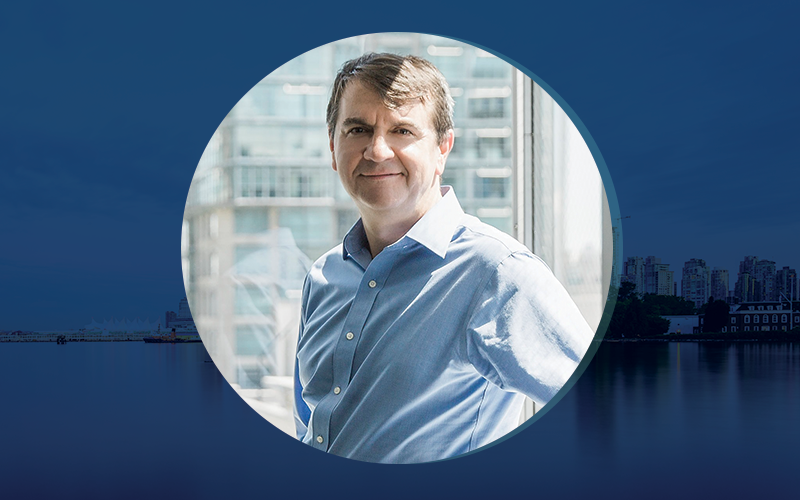
Adrian Moise
Episode
Adrian Moise is CEO & Founder of Aequilibrium – a Vancouver-based digital product development and design studio dedicated to combining an intuitive...
Key takeaways
- Growing a company sustainably means increasing the density of talent with each new hire rather than just filling seats, ensuring cultural alignment and craft excellence remain paramount.
- Creating a best employer environment requires establishing clear values around balance, resourcefulness, and autonomy while helping employees reach their potential and advance their careers faster than anywhere else.
- The hiring process should be rigorous and involve multiple stages including applied tests that mirror actual work conditions, with your best people acting as ambassadors and gatekeepers to protect company culture.
- Learning how to learn, collaborating effectively with others, and creating your own opportunities rather than just seeking employment are the most critical skills for future success in an exponentially changing world.
- Building a strong support network through peer groups like CEO forums, advisory boards, and industry meetups provides invaluable guidance for navigating entrepreneurial challenges and filling knowledge gaps.
Transcript
Full transcript page · Interactive episode
============================================================
TRANSCRIPTION WITH SPEAKERS
============================================================

[00:00] SPEAKER_01: It's VanCouver's podcast on the Canada's podcast network.
[00:12] SPEAKER_00: Hello everyone, I'm Angela Faye, Hub Builder and co-host of British Columbia's Podcasts.
[00:19] SPEAKER_00: Part of the Canada's podcast network, your source for great insights from entrepreneurs
[00:23] SPEAKER_00: from across Canada.
[00:25] SPEAKER_00: We talk entrepreneurs who are making it happen here so you can listen, discover and engage.
[00:31] SPEAKER_01: Adrian Moise has a track record for building and leading high-performance agile teams
[00:36] SPEAKER_01: in delivering great software products and engaging user experiences on multiple platforms.
[00:42] SPEAKER_01: Adrian's focus has always been on the delivery of excellence.
[00:46] SPEAKER_01: So companies like Michelin, Nintendo, Nike, electronic arts are just a few of the brands
[00:52] SPEAKER_01: he's worked with in Canada, the USA and Europe.
[00:57] SPEAKER_01: Adrian founded and is the CEO of Equilibrium, a Vancouver-based digital product development
[01:03] SPEAKER_01: and design studio dedicated to creating web, mobile and internet of things solutions.
[01:08] SPEAKER_01: Equilibrium is committed to helping clients get the product out to market quickly, gently
[01:13] SPEAKER_01: and with zero waste.
[01:15] SPEAKER_01: His name strives to set the bar for engaging customer services for the products by combining
[01:20] SPEAKER_01: an intuitive interface design with carefully crafted code leading to an unforgettable customer
[01:26] SPEAKER_01: experience.
[01:27] SPEAKER_01: Welcome, Adrian.
[01:29] SPEAKER_03: Thank you, Emma.
[01:30] SPEAKER_03: It's pleasure to be on your show.
[01:31] SPEAKER_01: Absolutely.
[01:32] SPEAKER_01: Let's kick off with telling us a little bit about your entrepreneurial journey.
[01:37] SPEAKER_03: Sure.
[01:37] SPEAKER_03: I had the opportunity to be part of building high-performance teams, starting with my first
[01:44] SPEAKER_03: job in Europe when I assisted Ubisoft to build an office in Romania.
[01:51] SPEAKER_03: We started with a team of maybe 10 people and in about four years we probably have 100
[01:57] SPEAKER_03: people so developing entertainment solutions from Europe.
[02:03] SPEAKER_03: Ubisoft is like electronic arts of Europe.
[02:06] SPEAKER_03: Then I moved to Canada about twenty-something years ago and I started by doing my PhD at Simon
[02:15] SPEAKER_03: Fraser University and I started a summer job that turned up into a four-year or four-time
[02:22] SPEAKER_03: employment with a company who became a customer medical imaging.
[02:26] SPEAKER_03: In those boom days of the 2000s, the company was looking to bring additional skilled professionals
[02:33] SPEAKER_03: on board.
[02:34] SPEAKER_03: So helped that company grow too.
[02:37] SPEAKER_03: Another experience I had was in here in Canada with electronic arts who were looking to build
[02:42] SPEAKER_03: the mobile gaming division with platforms such as Sony PSP and Nintendo DS.
[02:50] SPEAKER_03: The company was feeling electronic arts was really interested in developing games in
[02:54] SPEAKER_03: house for mobile devices.
[02:56] SPEAKER_03: So I had the opportunity to be part of the team who established the foundation for mobile
[03:02] SPEAKER_03: game development and electronic arts.
[03:04] SPEAKER_03: We started with a handful of senior managers and in six months we had 120 people.
[03:10] SPEAKER_03: Just before equilibrium, I was part of another company who had the executive move from
[03:15] SPEAKER_03: Regina to Vancouver and my role was to build the delivery team here in Vancouver.
[03:21] SPEAKER_03: I was probably employing number nine and I helped grow that organization to about 90 people
[03:26] SPEAKER_03: in 18 months.
[03:28] SPEAKER_03: In the process, we also became one of the top 10 employers in Canada by the two years later.
[03:36] SPEAKER_03: So I was excited about this idea of starting something new and which we break down the barriers.
[03:43] SPEAKER_03: If you want constraints that exist into a more established organization and start with
[03:50] SPEAKER_03: the principle of agility and start in equilibrium.
[03:54] SPEAKER_03: And I had the opportunity to bring teams together similarly from different backgrounds,
[04:01] SPEAKER_03: multidisciplinary teams.
[04:03] SPEAKER_03: We grew fast and sustainably and we have been rewarded two years in a row and been nominated
[04:10] SPEAKER_03: at Mount Top 5 Best Employees in BC out of the 700-store organization who got into this contest.
[04:18] SPEAKER_03: So we've been managed to grow fast, yes, sustainably.
[04:22] SPEAKER_01: Congratulations, that's excellent news, yes.
[04:25] SPEAKER_01: So how big is your team now?
[04:27] SPEAKER_03: We have about 50 people.
[04:30] SPEAKER_01: Adrian, what makes a best employer scenario?
[04:34] SPEAKER_01: What's the criteria?
[04:36] SPEAKER_03: It's a great question.
[04:37] SPEAKER_03: More of the recent three, as we are growing our organization fast, we pre-pollock a company
[04:45] SPEAKER_03: two years ago last year.
[04:47] SPEAKER_03: We double up.
[04:48] SPEAKER_03: So we want to grow fast, fast, sustainably.
[04:51] SPEAKER_03: And we want to not just put warm bodies in the seat, but we want to increase the density of talent
[04:56] SPEAKER_03: with a new hire that we bring on board.
[04:59] SPEAKER_03: We had an opportunity to go and review our culture and the values.
[05:03] SPEAKER_03: What you see behind me here is one of the posters that we put in place to represent
[05:09] SPEAKER_03: some of the values that we believe in to what's the purpose of the organization.
[05:14] SPEAKER_03: So for us, the concept of balance is very important, which is what you see in the
[05:18] SPEAKER_03: NAMO organization equilibrium.
[05:20] SPEAKER_03: I always got excited about the idea of harmony, balance between user experience and technology
[05:26] SPEAKER_03: between cross-machief and speed, between agility and thoughtfulness.
[05:31] SPEAKER_03: So employees who have this, who are grounded, who filled that well balance between personal priorities,
[05:38] SPEAKER_03: these jobs, clients, internal focus, people who are resourceful, who aren't the
[05:44] SPEAKER_03: pre-noir, who enjoy having this autonomy to do their best work and the passionate about
[05:50] SPEAKER_03: the craft, have the tendency to succeed at equilibrium.
[05:53] SPEAKER_03: We saw some of them being recognized, promoted, even mounted times a year, and growing that career fast.
[06:01] SPEAKER_03: One of our priorities, and if you want differentiators, is that we help our employees reach out
[06:08] SPEAKER_03: to their potentials and develop that career faster than any other organization.
[06:13] SPEAKER_01: Come in a little bit about how your team works, Adrian.
[06:17] SPEAKER_01: Are you all based in one space? Do you have remote workers?
[06:20] SPEAKER_01: Do you have a combination of Canadian and international workers?
[06:23] SPEAKER_01: Tell us a bit about your make out.
[06:25] SPEAKER_03: Sure. It's a bit of a combination.
[06:29] SPEAKER_03: All our team is based in Canada, in particular in BC.
[06:34] SPEAKER_03: Last year we opened a second office in COMS.
[06:37] SPEAKER_03: That being said, our employees have valued flexibility.
[06:42] SPEAKER_03: So the ability for them to work remote is one of our differentiator, one way to basically empower and trust our team
[06:50] SPEAKER_03: to do that best work from whatever location.
[06:54] SPEAKER_03: So using video conferencing, the ability is tools like Slack and other tools for collaboration like Google Drive.
[07:02] SPEAKER_03: The team can do the best work and collaborate from any locations, both internally but also with our clients,
[07:09] SPEAKER_03: who job based both in Canada and the United States.
[07:12] SPEAKER_03: So our team is based in Vancouver.
[07:15] SPEAKER_03: We have one of our colleagues who actually moved from COMS to join his wife in Ontario.
[07:22] SPEAKER_03: But other than that, everybody is based here in the Great of Vancouver area.
[07:27] SPEAKER_01: Tell me a little bit about a day in the life of Adrian.
[07:30] SPEAKER_03: I like to wake early in the morning.
[07:34] SPEAKER_03: Be prepared, breakfast for the family, have a seat together, and then take the kids to school.
[07:42] SPEAKER_03: Start early, kind of be in your office around the 730.
[07:45] SPEAKER_03: And I enjoy that kind of private time to look into some of the things about big thinking, big picture strategy, a voice thing.
[07:53] SPEAKER_03: Try to stay away from emails because that kind of private time, I feel like that's my highest productivity peak.
[08:00] SPEAKER_03: Then we'll get together with the various members of the team anywhere from me being involved in strategy and positioning to helping out on a pitch.
[08:09] SPEAKER_03: So actually being involved hands on into delivery, I enjoy being participating in this activities anywhere from meeting with clients or prospects early in the process, or actually being part of the actually delivery team.
[08:24] SPEAKER_03: So it's a combination between doing project work, strategy and thinking, getting alignment and making some decision with the team around some goals and objectives.
[08:34] SPEAKER_03: Recruiting and in particular, ton and acquisition, developing employees, it's a big part of what I do.
[08:44] SPEAKER_03: So we trying to stay ahead, not only on what we need today, but also have a good network.
[08:50] SPEAKER_03: So as new projects come up or looking to expand or moving to new disciplines, we have a good network of people to connect with.
[09:00] SPEAKER_03: So being that proactive allows us to continue to grow the business and move at a fast pace.
[09:08] SPEAKER_01: How do you respond to the idea or at least the reputation that recruiting and retaining talent is tough right now?
[09:19] SPEAKER_01: How are you finding that?
[09:21] SPEAKER_03: It truly is, I've been in this recruiting in Vancouver for over 20 years for different organizations.
[09:28] SPEAKER_03: I feel it's getting increased, the demand for talent is in the beginning to increase.
[09:34] SPEAKER_03: Especially when we see some of the larger organizations think about Amazon and Facebook, Google,
[09:40] SPEAKER_03: opening offices in Vancouver, Microsoft has an office in Vancouver, Tableau.
[09:44] SPEAKER_03: So some of the companies who I established either in Silicon Valley or in the Washington state,
[09:50] SPEAKER_03: just south of the border have also opened offices in here and making the competition for talent more pressing.
[09:57] SPEAKER_03: The schools are trying to kick up and trying to adapt to the new demands of employment, what you see coming from the industry.
[10:05] SPEAKER_03: However, for us, we're not focusing solely on hiring in Vancouver, so we have a global strategy.
[10:14] SPEAKER_03: We're also looking in for other strong university hubs in Canada, and we already established an office and open an office in higher people in other parts of the city.
[10:26] SPEAKER_03: The other thing is I'm also an immigrant and I have a great pleasure to offer opportunities for other immigrants to build a home and make Canada a place that they're striving.
[10:41] SPEAKER_03: So we bring people from Brazil, from Mexico, from Ireland, from France, Russia, Romania.
[10:49] SPEAKER_03: So we have diversity, not only in backgrounds, but also diversity in thought.
[10:55] SPEAKER_01: Excellent point, as far as they bring an international perspective, right?
[10:58] SPEAKER_01: And diversity of culture and thought and being able to apply it into maybe some of your client projects.
[11:04] SPEAKER_01: Just a little bit curious on that note, and what would be the sort of base criteria that we would look at if you were looking at immigrant workers or students coming out of institutions?
[11:13] SPEAKER_01: What would be the, you could name one sort of basic skill set in programming? What would it be?
[11:19] SPEAKER_03: Depending on the seniority of the position, there is a combination between hard skills and soft skills.
[11:26] SPEAKER_03: It means a lot for us. So alignment with our values and culture means a lot.
[11:32] SPEAKER_03: So there is a combination between bringing people in who have been there, done that.
[11:37] SPEAKER_03: And then you assume that the knowledge that they have in the past and the chief on the head in the past will translate in your organization, which is not always the case.
[11:45] SPEAKER_03: Especially if there is that lack of alignment on the culture and values.
[11:50] SPEAKER_03: Second, the individuals not have a good start, but they are still earning the careers.
[11:55] SPEAKER_03: But what's special about them is you uncover their potential.
[11:59] SPEAKER_03: One thing that, for example, we distinguish between a person being nimble and versatile, having a very solid background, compared to a person who just been in the industry for many years.
[12:11] SPEAKER_03: Because he may be many times one years of experience as opposed to people who have a growth mentality and who take this deliberate approach to honing their skills.
[12:23] SPEAKER_03: So for us, the concept of craftsmanship is really important.
[12:27] SPEAKER_03: And how old you are and how long you're doing a task or a job is not indicative of your ability to deliver value to our clients or to our company.
[12:38] SPEAKER_01: I've got to ask how on earth to identify that craftsmanship and, you know, value alignment with perhaps I can say what you know that flexibility, those are really hard things to identify on a resume or on an application.
[12:54] SPEAKER_01: What's your secret on finding the right people?
[12:58] SPEAKER_03: It's a great question. There is nobody that has a perfect score in hiring.
[13:02] SPEAKER_03: So what we're doing is we make hiring a priority and we bring some of the best people we have into the hiring process.
[13:11] SPEAKER_03: Our company is recognizing that it's a great contribution to trust you to be the ambassador for equilibrium.
[13:18] SPEAKER_03: And you're also acting if you want as our own white cell, you know, ensuring that the foreign particles don't get into the body, right?
[13:27] SPEAKER_03: So they acting as a protection mechanism to ensure that both our DNA but also our commitment to our customers and to quality do not get diminished again for us.
[13:37] SPEAKER_03: Objective is to increase density of talent and not just put one body in the seats.
[13:42] SPEAKER_03: Our process is quite complex. So because of that, it's actually a challenge because some people are saying, well, I know a bunch of company who are hiring me just because I know how to spell Java.
[13:53] SPEAKER_03: Well, that's not us because we believe the people that are the same, they would have the tendency to agree to come together.
[14:01] SPEAKER_03: So if we have really high performing individual, they take good pride to show their skills.
[14:07] SPEAKER_03: And also if they're saying this process of selection is quite elaborate.
[14:12] SPEAKER_03: If you go through the same diligence in bringing the member of the team, I should be in a good place as opposed to somehow I got in.
[14:21] SPEAKER_03: What I'm going to find here nobody knows because this was the easiest interview process in the world.
[14:26] SPEAKER_03: Well, we don't want to be found for the easiest interview process. So our diligence is going anywhere from starting with the phone screen.
[14:33] SPEAKER_03: Obviously after reviewing the application, the resume and the cover letter, then bringing in the team, the person to meet typically with a higher manager.
[14:43] SPEAKER_03: But we're not just taking people who are good and interviewing.
[14:46] SPEAKER_03: We get people to test them in the typical work conditions.
[14:49] SPEAKER_03: So we give them an apply test, which is very similar to what they were doing in the daily activity.
[14:55] SPEAKER_03: So if it's about soft development, they will be writing code.
[14:59] SPEAKER_01: Let's just talk about that for a second. Let's jump on that.
[15:01] SPEAKER_01: Can you describe because you said you do a little bit of applied to the client work.
[15:06] SPEAKER_01: What's been the most fun or engaging or challenging project that you were?
[15:10] SPEAKER_01: Can you give us a tiny snapshot on what the challenge was from the client and what you did for them?
[15:16] SPEAKER_03: I don't even know which one to choose, but here's one that we're working on recently.
[15:21] SPEAKER_03: It involves virtuality and augmented reality, a lady to business intelligence and data sciences.
[15:29] SPEAKER_03: So the interesting part of this project with the client, it's a big company that had the headquarters in question state in Seattle area.
[15:39] SPEAKER_03: Their focus is on business intelligence and analytics.
[15:43] SPEAKER_03: And they recognize that certain technology, such as augmented reality and virtuality, have an increased bigger impact.
[15:51] SPEAKER_03: We've seen organization like Apple, spending a lot of time and dollars to make their tools.
[15:57] SPEAKER_03: Apple phone, the AR, the AR kit, the priority in terms of their relationship with developers.
[16:04] SPEAKER_03: However, this organization wasn't interesting just in providing a cool demo.
[16:10] SPEAKER_03: Something that has the zinc, but not really, it's just superficial.
[16:17] SPEAKER_03: Hey, it's a cool tool, but when you ask yourself, now, what do I do with this?
[16:21] SPEAKER_03: Because reality is VR, AR, it's still in the face to prove itself as a value added technology in a number of industry.
[16:30] SPEAKER_03: We understand in the entertainment industry that has got significant applications.
[16:35] SPEAKER_03: But given the cost of acquiring some of these devices, which is still prohibitively high, it's coming down fast, but it's still high.
[16:44] SPEAKER_03: It hasn't achieved mass adoption.
[16:47] SPEAKER_03: So because of that, other than being something cool to see people this type of hand manipulation or pre-visualization,
[16:58] SPEAKER_03: the question here is, how do we move the needle?
[17:00] SPEAKER_03: How we make an actual impact in the life of their customers or their staff?
[17:04] SPEAKER_03: So the man that we had with this organization was to find a case study that's actually applicable to their space, that it's solving a concrete problem.
[17:16] SPEAKER_03: The other thing that they were looking in the software was typically consumed, allow for individual manipulation.
[17:23] SPEAKER_03: They were looking for, how do we make this more of a collaborative approach?
[17:27] SPEAKER_03: So we started this project with actually knowing what problem we were going to solve.
[17:32] SPEAKER_03: That was part of the discovery phase.
[17:35] SPEAKER_03: The other thing we didn't know since we don't know what problem we actually solving, what technology are we going to be using?
[17:42] SPEAKER_03: So in a short period of time, we had this very tight collaboration with the client coming to their office or them coming to our office to figure out what is the problem to solve?
[17:54] SPEAKER_03: And how kind of combination between what is typically what type of problems their clients are facing, looking into where ARDR has proved to us at value.
[18:06] SPEAKER_03: And then finally something at that intersection that will allow to go past this initial pilot into putting ARDR on the roadmap for their product development in the future.
[18:17] SPEAKER_03: Right now we are in the list of stages of this project. We have connected the three Microsoft HoloLens devices that allow us people to not only interact with this augmented reality system that we implemented for them.
[18:30] SPEAKER_03: But it's also enabled this user to actually collaborate with each other. So we checked the box in terms of finding value that links business intelligence and data analytics to the benefits of many VR, many reality and VR, but also bringing together the aspect of collaboration that's offered between data scientist and people who are actually leveraging the tools of their analysis.
[18:56] SPEAKER_01: Are we talking putting on a set of goggles and using hands to do an operation? What's it look like?
[19:05] SPEAKER_03: The good question I'm going to try to answer you while not, you know, about any of the non disclosure we have.
[19:11] SPEAKER_03: So the technology we're using is a Microsoft HoloLens. So it's one of these devices that I look like a motorcycle helmet.
[19:18] SPEAKER_03: This allows you to visualize a trading environment. Then another person that sitting in the same environment as you are will see the same object.
[19:29] SPEAKER_03: So as opposed to having two different renderings on your computer is you all look in the same location and one person interaction with this three dimensional environment will be visible by the other individual.
[19:42] SPEAKER_03: So we created if you want like a virtual world, the same way you see in gaming in which multiple people can participate and interact.
[19:51] SPEAKER_03: Data scientist is looking at data information that's he's analyzing looking for pattern looking for it was the story to tell here is acting a bit about the detective.
[20:02] SPEAKER_03: I have this information what's the hypothesis that I should be forming how is data helping me solve this.
[20:09] SPEAKER_03: So he's looking in this type of spreadsheets in here and then it's his manipulating and is segmenting the data.
[20:15] SPEAKER_03: You see the results apply to this three dimensional object. So there is the concept of digital twin, which is basically saying it can model a physical object and creates a digital replica or that particular object.
[20:29] SPEAKER_03: So now we're bringing together real physical object with data and analytics and then we bring all these pieces together through virtual reality using the Microsoft HoloLens and an environment that allows for collaboration between multiple team members.
[20:46] SPEAKER_01: Cool.
[20:47] SPEAKER_01: Okay, jumping now a little bit to your based in Vancouver, are you read downtown a dream or or where in Vancouver?
[20:54] SPEAKER_03: Yes, we are. So I can move my camera just to be able to make you from all office here.
[21:01] SPEAKER_03: We are right in downtown Vancouver and we it's a view from the hardware and where the cruises dock in the summer.
[21:10] SPEAKER_03: It's a very convenient access from using the sky train or coming from to them from the airport.
[21:19] SPEAKER_03: Bases also the sea bass. So so it's a very convenient location, but also close to many of our plans.
[21:26] SPEAKER_03: Perfect.
[21:27] SPEAKER_01: Tell me a little bit about what is unique about doing business in Vancouver from your experience.
[21:35] SPEAKER_03: So I think the business ecosystem and the startup ecosystem in Vancouver have evolved quite a bit since I remember when I started a few years back.
[21:46] SPEAKER_03: There wasn't as much as many success stories and as much availability of resources that exist right now.
[21:53] SPEAKER_03: And then one of the things that were happening is was the scarcity of both talent and funding.
[22:00] SPEAKER_03: So companies reaching a certain size, people are complaining in terms of which are these kind of enterprise kind of the motherships who have organization that go above 50 million, 100 millions into a billion dollars in terms of growing to a certain size, which is a level of commitment.
[22:21] SPEAKER_03: That's much more substantial that entrepreneurs taking the company, finding and time and then making a quick exit right.
[22:29] SPEAKER_03: So having a large organization think about organization, so maybe electronic class that I used to work for in the past.
[22:36] SPEAKER_03: Now we see an organization like who's to be also getting ready for some sort of activity or an exit.
[22:41] SPEAKER_03: More easily we saw some other acquisitions that reach a billion dollars in terms of the size of the company that are going in Vancouver.
[22:51] SPEAKER_03: So with that, we see certain industry being established and definitely with the digital supercluster starting in Vancouver and the government of Canada committing hundreds of million dollars over a number of years with commitment from the industry to create a step of interaction and collaboration.
[23:11] SPEAKER_03: Between universities, small businesses and large enterprises. So I think that overall we are well positioned because of the availability of talent being on the west coast when a lot of things are happening in this corridor in Vancouver, Seattle, Portland, California, time zone, transportation, availability of talent and now investment and people that are willing to base great investment.
[23:41] SPEAKER_03: So it's really interesting and Canadian organization. This has significantly improved. We by no means in the same league as Silicon Valley, but I think that it's a positive trend and I like to acknowledge that.
[23:53] SPEAKER_01: Adrian, what's your perspective tell us if you could comment on the super cluster. What is it and how is it going to define British Columbia business over the next decade.
[24:05] SPEAKER_03: So the government of Canada has invested in the number of initiatives and they kind of break down into a number of some on the east coast, some in the trees, this one in Vancouver in British Columbia.
[24:19] SPEAKER_03: The one in British Columbia, the digital super cluster is focusing on technologies anywhere from life sciences. I mentioned to you earlier the concept of the digital super cluster.
[24:31] SPEAKER_03: So organizations such as Telos, Microsoft have been spearheading some of these initiatives, but the objective here is not to add dollars to the already reached and large organization, but the foster collaboration to together project from the digital super cluster.
[24:52] SPEAKER_03: We need to bring together a partnership that involves academia that involves small businesses and you can both an enterprise sponsor.
[25:02] SPEAKER_03: So the objective is to increase collaboration and to enable the creation of IP here in British Columbia, allowing us to solve those problems within Canada, but also to export this IP internationally too.
[25:20] SPEAKER_01: Are you involved in any sleeper cluster projects yourself?
[25:25] SPEAKER_03: We are associated with the digital super cluster, but we are not part of the projects that have started already.
[25:34] SPEAKER_03: The digital super cluster I think is still in the startup kind of phase. They have a new leadership team, they trying to understand the balance between putting some processes in place, but also not being too honest in terms of the level of overhead.
[25:49] SPEAKER_03: That's required in terms of putting this application together and running this project.
[25:55] SPEAKER_03: We decided to give it a bit of time to see how this initials project play out.
[26:01] SPEAKER_03: And then based on that to calibrate, but we'll have to sort of see opportunities to partner with the number of organizations such as LiveLabs or Telos who are already engaged in this type of super cluster initiatives.
[26:16] SPEAKER_01: Let's make it personal for a moment. If you could wave a magic wand, this is Adrian now talking. Adrian is waving a magic wand and you could solve a world problem with his super cluster efforts based on a BC. What would you love to see happen?
[26:31] SPEAKER_03: I think the digital super cluster has a number of initiatives that they are focusing on. So what I'm saying right now may not be at the top of the list.
[26:40] SPEAKER_03: But one of the things that I'm particularly passionate about is about education and enabling children from all over the world to have access to their most valuable asset, which is knowledge.
[26:53] SPEAKER_03: We're going into the knowledge economy and right now access to information and knowledge is what creates the separation between classes. And then by unleashing this, it will enable well being throughout the entire world as opposed to reaching getting more rich.
[27:09] SPEAKER_03: So technology is hitting the world is disrupting all kind of industry. One of them is education. And for example, right now the education system is based on people starting the same materials, expecting you to see my information, the same speed and then you have standardized testing.
[27:27] SPEAKER_03: But right now the trend is towards personalization people absorb information in different ways. Some people through video channels, some people through writing, some people through audios, the same way people are talking about only channel experiences in a say we killed.
[27:43] SPEAKER_03: The same way it should happen into education. And there are already some initiative that are looking to reassess how we've been studying for a long time and to allow for this type of personalized scenario in which people can simulate information at their own speed and and how we adapt to their needs.
[28:05] SPEAKER_03: And also, gathering this education to also recognize and identify what are people's strengths and how do we pay to those particular strengths.
[28:16] SPEAKER_03: I remember an experiment that was run fairly recently. So students took the test at the end of summer and then they break out for the vacation.
[28:27] SPEAKER_03: And then when they brought the students back, they asked them to taste the same test that they took two or three months before going in summer. But they were constantly some of this information is not as relevant.
[28:39] SPEAKER_03: So why not we change a bit of the test to focus on the information that's actually more important or meaningful.
[28:46] SPEAKER_03: And just what most of the students actually failed the test. So this idea about absorbing a lot of information, sorry for the purpose of passing the test.
[28:56] SPEAKER_03: It's just going to an only can you be fed over and dodge yourself and then describing on that right away. So none of that is actually getting settled and assimilated.
[29:07] SPEAKER_03: So we need to move away from rewarding people. Are you able to memorize this information and being compliant to certain scenarios and tests to what kind of work would be successful in the future.
[29:20] SPEAKER_03: And we right now thinking linearly about growth and change. What is things change exponential. All we know about and what we learn right now is going to become obsolete.
[29:31] SPEAKER_03: So then how do you stay still relevant and how would we prepare these kids for what may happen 20 years from now.
[29:39] SPEAKER_01: So Adrian, how old are your kids 18 and 15 15 so I and I have a 10 year old and 12 year old. So I constantly get the question for my from my 12 year olds boy, right.
[29:49] SPEAKER_01: I don't understand why we're learning that this is going to be completely irrelevant for me. I'm sure you get similar comments from your own children.
[29:56] SPEAKER_01: What advice are you giving them? What is the single most important skill or knowledge that our kids should be embracing now to take them into the next into the future.
[30:06] SPEAKER_03: So there are a few skills. So one is learning how to learn. The second is the ability to collaborate with others. The thing is don't just get a job, make your own job.
[30:16] SPEAKER_03: So for example, my daughter is 18 and she was involved in three startups already. She was in Boston recently where her team won an international business competition.
[30:29] SPEAKER_03: So these kids are not following into the footsteps of I'm going to go to school. I'm going to go to work and then I'm going to spend 20 30 years working for the same companies.
[30:40] SPEAKER_03: They are very driven by purpose as opposed to ownership of things and they are challenging the status quo. They have less patience for things being done at the older pace and they looking for instant gratification.
[30:56] SPEAKER_03: So going back, we know that a number of jobs will be changed because computers will be able to do a lot of the repetitive stuff that we do.
[31:05] SPEAKER_03: We need, however, is you will free us to do some work that can be more meaningful and an up higher value.
[31:12] SPEAKER_03: So how do you bring that thinking? Think about right now design thinking and tomorrow equilibrium, for example, is attending a workshop that we organized with Duncan Warden, former head of innovation from Disney focusing on design thinking creativity and innovation.
[31:29] SPEAKER_03: Now we're not going to be placed by computers. The computers will replace manual repetitive boring tasks.
[31:37] SPEAKER_03: However, it doesn't mean that, for example, we will no longer need developers. What we may need is a developer may do the work of a whole team by himself in a short period of time.
[31:49] SPEAKER_03: And that actually they will actually not being even more valuable and even more as opposed to we're not going to do them anymore.
[31:55] SPEAKER_03: Right. It will finish the way we do a number of these things. And there is an obligation for schools and government, but also for technology provided to understand what is that vision for the future looks like.
[32:09] SPEAKER_03: And then how do we set up this children and this education system to be aligned?
[32:15] SPEAKER_03: I'd love it.
[32:16] SPEAKER_01: Right now, Adrian, can you think of a recommended reading for let's jump to the maybe the younger generation. If if something's crossed your mind or you think there's companies that should be thinking about how to gear up for the future.
[32:34] SPEAKER_01: And he suggests something that is on that should be on the reading list.
[32:38] SPEAKER_03: So I remember when I decided to sort of start equilibrium and there was this book about lean startup with the Eric Lee as a founder and we were in an anti-stereota sq and he was presenting to a bunch of eager excited entrepreneurs to be.
[32:57] SPEAKER_03: And then what do you think about the trepid chart? Well, it's good. It's going to do that. I'm going to change the word. And he's like entrepreneurship is brutal.
[33:06] SPEAKER_03: He's hard. You got like, wow, this guy is on a reading on a part of what's going on. So the good news is, however, we have distilled some of the challenges that I happening when you start the new business.
[33:17] SPEAKER_03: And there is this concept called lean startup, which is taking an approach, which is not unlike what I did in my academia years. So do my PhD. You start with hypothesis.
[33:30] SPEAKER_03: And then you build an experiment to validate or invalidate that. Well, why don't you do that? I sat with a business proposition or with a product that you want to build.
[33:39] SPEAKER_03: So the concept of lean startup is to hypothesize, I believe if I build a product that does this and this, people will use it this way and they're willing to sort of will make this impact on them or the end users and they will be willing to sort of pay us certain amounts of money and so on.
[33:57] SPEAKER_01: Can you think of three top resources that people who want to get hired or companies that are looking at being based out of Vancouver could tap into as a network or a valuable resource.
[34:11] SPEAKER_03: There are a number of meetups. So there is this network that allows people that are connected with a certain community to get to learn from each other.
[34:22] SPEAKER_03: That's one of these forums that I encourage and everybody at any level can find the meetup that it's relevant to them.
[34:31] SPEAKER_01: Adrian, if I look up meetups Vancouver, there's going to be like 20 of them. Is there a particular one that jumps out for you?
[34:36] SPEAKER_03: It depends on what the, for example, that meetups for entrepreneurs, they are meetups for product managers.
[34:43] SPEAKER_03: So we see an organization, for example, from Silicon Valley, opening offices here in Vancouver or companies who have other offices in Toronto, they look into open a second office.
[34:52] SPEAKER_03: So depending on what is important for them, what step, as I mentioned a moment ago, the big hypothesis, we believe what we're going to find this type of talent, believe this is relevant for the people here.
[35:03] SPEAKER_03: Depending on what problem they're trying to solve, they can join the appropriate meetup for the leadership team.
[35:10] SPEAKER_03: What I did is I found valuable to have peer networks and one of them is called the ASTEC CEO Forum, which is focusing on CEOs of technology companies.
[35:23] SPEAKER_03: And I chair one of these CEO roundtable for a couple of years until I join the McKaseo Forum, which is probably 1000 executive, mostly CEOs throughout the entire Canada.
[35:36] SPEAKER_03: We get the regularly with a professional facilitator, which is the chair of the roundtable we bring speakers, and then we share problems, we help each other, we hear out of people in terms of what's important to them.
[35:52] SPEAKER_03: The other thing that I also found valuable is to put together an advisory board. What are my strengths and then where the areas where I could use some help.
[36:02] SPEAKER_03: So surrounding myself with people that have been there down that has been very valuable for us.
[36:07] SPEAKER_01: Great tip. Just kind of a classic Canada's podcast question is if you found yourself stranded on a deserted island, Adrian, with only one telephone call to make, how long would you last without technology?
[36:21] SPEAKER_01: What would you do there and when you were ready to leave, who would you call?
[36:25] SPEAKER_03: Well, in banning on how that island looks like, you know, the conditions there, passing wrong with taking a bit of a break, and then how do you make most of the environment.
[36:36] SPEAKER_03: For example, part of that balance, I like practicing martial arts or practice in Tai Chi or meditation.
[36:42] SPEAKER_03: So that may be a great environment, you know, to have some meet time or some personal time.
[36:47] SPEAKER_03: Also in the organization, you often risk to be just busy doing stuff.
[36:52] SPEAKER_03: I was reading about the difference between Warren Buffett and Bill Gates.
[36:57] SPEAKER_03: Bill Gates has his cat-old's book to the minute or Warren Buffett will have very happy any meetings with the entire week because he's things his most valuable contribution to these companies who are thinking, not actually doing all those things by himself.
[37:09] SPEAKER_03: So, so for me, getting some a bit of personal time and getting some reflection, both about the company and me personally can be quite valuable.
[37:20] SPEAKER_03: How long would I last in there?
[37:22] SPEAKER_03: I'm not sure I haven't been a fan of these survival island or so on scenarios.
[37:29] SPEAKER_03: I think I'm pretty resourceful and an entrepreneur and that if you want that survival skills are pretty good.
[37:36] SPEAKER_03: I also, as I mentioned, enjoy the concept of self defense and so on.
[37:41] SPEAKER_03: So I think these things to combine will give me a fair chance to actually drop beyond just surviving, but actually maybe it's thriving and enjoying my time there.
[37:52] SPEAKER_03: If I want to make a call, there are a number of people that come to mind that I could call our reach out or tap into from my wife, my colleagues in here.
[38:02] SPEAKER_03: Definitely another person that come to mind will be maybe calling my brother because I'm, you know, somebody that I love dearly and is very close to me.
[38:11] SPEAKER_03: It's also got the person that will go to the end of the world to sort of get me out of trouble or bring him back.
[38:19] SPEAKER_01: So I was going to say, so he'd come get you and bring you back.
[38:22] SPEAKER_03: That's right.
[38:23] SPEAKER_01: So, what's the best way to get a hold of you after after today?
[38:28] SPEAKER_03: I am quite active on LinkedIn and that's a great way to make my own.
[38:32] SPEAKER_03: Our website equilibrium.com.
[38:35] SPEAKER_03: We have contact numbers, forums in there.
[38:38] SPEAKER_03: There's a phone number where I can be reached out or people can follow me on social media, particular in on LinkedIn and on Twitter.
[38:49] SPEAKER_03: My Twitter handle is CPT MNBL.
[38:52] SPEAKER_03: Captain Mawbot is my Twitter and Low.
[38:55] SPEAKER_01: Perfect. Well, Adrian, it has been a pleasure.
[38:58] SPEAKER_01: Thank you for your insights on both of them.
[38:59] SPEAKER_01: The company and maybe, you know, with the workplace of the future and the work skills of the future has been super insightful.
[39:05] SPEAKER_03: Thank you so much. I really enjoyed talking to you.
[39:08] SPEAKER_00: Hey there. Thanks for taking the time today to listen to British Columbia's podcast on the Canada's podcast network.
[39:15] SPEAKER_00: We hope you enjoyed the show today.
[39:17] SPEAKER_00: Make sure you sign up for our newsletters and write a review for us on iTunes.
[39:21] SPEAKER_00: Connect with us on Twitter, Facebook, Instagram, LinkedIn or at Canada's podcast.com.
[39:28] SPEAKER_00: You can check out what other entrepreneurs are doing across the country.
[39:32] SPEAKER_00: I'm Angela Faye. See you next time.