
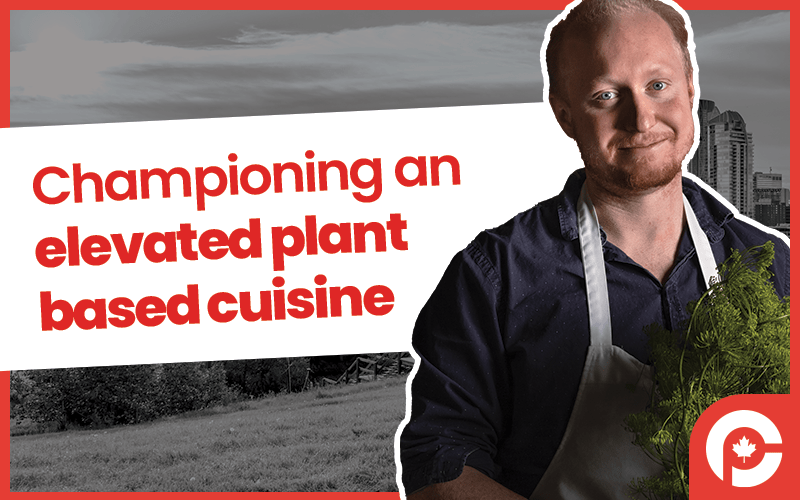
Championing an elevated plant-based cuisine
Episode
Conceptualized by Canadian chef, Adam Ryan, Fire & Flora offers an immersive dining experience, underscored by elevated plant-based cuisine...
Key takeaways
- Supporting local farmers and suppliers helps restaurants manage supply chain issues and reduces dependence on expensive imported ingredients while building stronger community connections.
- Focusing on plant-based cuisine can be a smart business strategy because vegetables, grains, and legumes are generally more affordable than meat, helping restaurants maintain better food cost margins.
- Zero waste cooking is essential for restaurant profitability—using every part of an ingredient, from potato skins to tomato guts, maximizes value and minimizes cost.
- Building a successful restaurant requires balancing creativity with business fundamentals like controlling labor costs, food costs, and overall margins while creating memorable guest experiences.
- Opening a new restaurant demands significant time commitment and constant presence to support your team, maintain quality standards, and ensure guests receive the experience they're paying for.
Transcript
Full transcript page · Interactive episode
============================================================
TRANSCRIPTION WITH SPEAKERS
============================================================

[00:00] SPEAKER_03: Welcome to Canada's podcast.
[00:05] SPEAKER_03: Hello, I'm Mario Tonoguzi with Calgary's podcast on Canada's podcast network.
[00:10] SPEAKER_03: Joining me today is Adam Ryan, who is chef and partner in fire and
[00:15] SPEAKER_03: flora, a new restaurant in Calgary.
[00:18] SPEAKER_03: Thanks for joining us today, Adam.
[00:20] SPEAKER_03: Thank you so much for having me.
[00:21] SPEAKER_03: It's a pleasure.
[00:22] SPEAKER_03: Well, let me just start by asking you what fire and flora is and what you guys
[00:27] SPEAKER_00: specialize in.
[00:29] SPEAKER_00: So fire and flora started as an idea to focus on plant-based cuisine,
[00:35] SPEAKER_00: but on elevated levels.
[00:36] SPEAKER_00: So what we're doing here is we're taking certain ingredients that that we find in
[00:40] SPEAKER_00: Alberta, Western Canada, other parts of the country, whether it be Ontario,
[00:46] SPEAKER_00: like wild wild knocks that are grown in Ontario, maple syrup that's growing and
[00:50] SPEAKER_00: get back.
[00:51] SPEAKER_00: And we take these ingredients and we highlight them in the dishes on our menu.
[00:54] SPEAKER_00: So you see things like sweet potatoes that I found growing in Alberta,
[01:01] SPEAKER_00: unique ingredient for Canada because the growing season is so long and our growing
[01:06] SPEAKER_00: season is so short.
[01:08] SPEAKER_00: I found somebody that's producing sweet potato leaves.
[01:11] SPEAKER_00: So we're making a parogi dough green using these sweet potato leaves,
[01:15] SPEAKER_00: blending them into some flour and highlighting these special unique ingredients
[01:19] SPEAKER_00: that Canadians might not be familiar with in their own backyard.
[01:24] SPEAKER_03: Tell me the why behind the concept, you know, what was the reason for developing
[01:30] SPEAKER_03: this and opening this kind of a restaurant?
[01:34] SPEAKER_01: So there's a few reasons and number one of them is we've seen this pandemic.
[01:41] SPEAKER_01: The ones for a number of years now and supply chain has become an issue.
[01:46] SPEAKER_01: Businesses have been devastated and I think more than ever it's important to look
[01:51] SPEAKER_01: and see what's growing around you and how can we support our fellow Canadians?
[01:56] SPEAKER_01: What businesses can we support?
[01:58] SPEAKER_01: If there are supply chain issues, if I'm looking to get avocados from California,
[02:04] SPEAKER_01: are they getting show up when I need them to show up?
[02:06] SPEAKER_01: Is the price of transport going to change the price of fuel and transportation going
[02:11] SPEAKER_01: to change the price of those products?
[02:13] SPEAKER_01: So that's one of the reasons another one is plant-based foods in general is
[02:18] SPEAKER_01: becoming trendier and trendier and I think in a diet that more people are incorporating
[02:23] SPEAKER_01: into their lives.
[02:25] SPEAKER_01: And then also if you look at the cost of food and the cost of goods in general,
[02:30] SPEAKER_01: meat is expensive.
[02:32] SPEAKER_01: So if looking at a business, if we're looking at a restaurant that's part of your
[02:35] SPEAKER_01: bottom line relies on keeping your food costs at a certain threshold,
[02:39] SPEAKER_01: well, how are we going to hit that threshold maybe by using nuts, by using fruits,
[02:44] SPEAKER_01: by using vegetables, by using grains, by using legumes?
[02:48] SPEAKER_01: Rather than contributing to the ever increasing price of beef,
[02:52] SPEAKER_01: even though there is a lot of beef grown in Alberta.
[02:55] SPEAKER_01: Yeah, exactly.
[02:57] SPEAKER_01: Where'd the name come from?
[02:58] SPEAKER_01: So, so the concept initially was, can we, can we create a restaurant that's focused
[03:04] SPEAKER_01: on solid fuel?
[03:05] SPEAKER_01: Can we, can we use wood?
[03:08] SPEAKER_01: Can we use charcoal?
[03:09] SPEAKER_01: That was kind of the first inspiration to this project.
[03:13] SPEAKER_01: So that's the fire part and then the flora obviously is the plant aspect of the
[03:19] SPEAKER_01: business.
[03:20] SPEAKER_01: Now we didn't actually succeed in getting all of that wood fire to put into this,
[03:25] SPEAKER_01: into this building, into this business because we just ran into some issues with
[03:30] SPEAKER_01: execution when it came to HVAC requirements and solid fuel versus gas.
[03:35] SPEAKER_01: So all of the equipment in here is gas, gas fired equipment, but we did get a
[03:40] SPEAKER_01: clay, we have a clay pizza oven here, shipped in from Italy for making bread,
[03:45] SPEAKER_01: for roasted vegetables.
[03:46] SPEAKER_01: We do this like giant whole roasted mushroom and we actually buy mushrooms from a
[03:53] SPEAKER_01: local farm called Red Fox fungi.
[03:55] SPEAKER_01: They grow these cool products and what we do is we roast them on the blocks that
[04:00] SPEAKER_01: they grow on and serve them at the table whole and you can kind of snip them,
[04:04] SPEAKER_01: put them in on flatbreads and crepes with little fondament.
[04:07] SPEAKER_01: It's quite the showstopper.
[04:09] SPEAKER_03: Oh, cool.
[04:11] SPEAKER_03: So when you look at the trend in society, you know,
[04:16] SPEAKER_03: there's more and more people out there are vegan or vegetarian,
[04:22] SPEAKER_03: more people taking options, plant-based stuff as well,
[04:29] SPEAKER_03: but not necessarily go the full root, right?
[04:33] SPEAKER_03: Why is all this happening now, do you think?
[04:36] SPEAKER_01: I think there's resources out there that support that lifestyle is more healthy.
[04:43] SPEAKER_01: There's more access to delicious plant-based recipes, even with the internet.
[04:48] SPEAKER_01: If somebody wants to go online and say, you know what, I wish I could eat more vegetarian cuisine.
[04:53] SPEAKER_01: I don't really know how to have a developed flavor or cook with with a Robbie.
[04:59] SPEAKER_01: I don't know how to cook, probably, but I don't know how to cook.
[05:02] SPEAKER_01: Kenwai, it needs a lot of help.
[05:04] SPEAKER_01: It doesn't have a ton of flavor.
[05:06] SPEAKER_01: So I think there's access to resources to help make those ingredients more accessible to the average
[05:15] SPEAKER_01: Joe at home, but also there's meal kits now.
[05:17] SPEAKER_01: And you can get a meal kit that has a plant-based option.
[05:20] SPEAKER_01: You can go to any chain restaurant now and they've got really delicious programming
[05:25] SPEAKER_01: for vegetarian food as well.
[05:27] SPEAKER_03: You know, you use the word delicious and I just want to focus on that.
[05:32] SPEAKER_03: Do you think that has changed as well over the years?
[05:36] SPEAKER_03: Is that that people, you know, who may have had a mental block about eating plant-based stuff,
[05:42] SPEAKER_03: especially say a burger, right?
[05:44] SPEAKER_03: Now they've seen the options and perhaps tasted the options and are pretty damn good, right?
[05:51] SPEAKER_01: Oh, of course, and there is now, you mentioned that, the burger example,
[05:55] SPEAKER_01: there's multiple companies now making plant-based burgers on the groceries,
[06:00] SPEAKER_01: like Rosenpattis on the shelves, and some of their claims are famous that it tastes like real meat.
[06:09] SPEAKER_01: Sorry about the noise.
[06:12] SPEAKER_03: That's okay.
[06:13] SPEAKER_03: So how did you get involved in this yourself?
[06:18] SPEAKER_03: Like, are you personally, you know, sort of more plant-based in your diet or have been?
[06:27] SPEAKER_01: So it's interesting.
[06:29] SPEAKER_01: It's an interesting story.
[06:31] SPEAKER_01: Can you hear that noise, by the way?
[06:32] SPEAKER_01: No, that's fine.
[06:35] SPEAKER_01: It's an interesting story because I've come from Ontario.
[06:39] SPEAKER_01: Yeah, I grew up in Ontario in Mississauga and a large part of my culinary career was on in rural Ontario.
[06:47] SPEAKER_01: So in Caledon, in Orangeville, Ontario, and we cooked a lot of, or I met a lot of farmers.
[06:54] SPEAKER_01: So one of my jobs was at an active farm.
[06:58] SPEAKER_01: We had an orchard and a citeri, and we picked apples from the orchard and used them in all our food.
[07:03] SPEAKER_01: And because the owner of this farm was a farmer himself,
[07:08] SPEAKER_01: he would support all his colleagues in the area and the region.
[07:12] SPEAKER_01: So I learned a lot about supporting the local farms and a lot about vegetables that grow in Canada, indigenous, or otherwise.
[07:21] SPEAKER_01: Just if you have stuff, he's kind of just figure out a way to grow something that doesn't necessarily grow here.
[07:27] SPEAKER_01: And so I've always found it interesting that there are farmers out there challenging themselves to do something outside the box.
[07:33] SPEAKER_01: And I've always wanted to run with that as well.
[07:36] SPEAKER_01: Can I challenge myself to focus on Canadian produce?
[07:39] SPEAKER_01: Can I challenge myself to do a plant-based restaurant in a meat-heavy city like Calgary?
[07:45] SPEAKER_01: And so moved here, I moved here three years ago from Toronto, and I moved out here to actually run a plant-based restaurant, the coup, it was called.
[07:55] SPEAKER_01: It's called.
[07:56] SPEAKER_01: And so I was there for two years when I moved to Calgary and I learned a lot about vegan substitutes as well,
[08:04] SPEAKER_01: making vegan cheese, nut-based cheese, and I'm just kind of running with it now here.
[08:11] SPEAKER_03: So when you look at going back a little bit in time, your career as a chef, what made you want to become a chef?
[08:21] SPEAKER_03: What was that?
[08:22] SPEAKER_01: That's a good question.
[08:23] SPEAKER_01: I think when I was in high school, I was a teenager and we had a really cool culinary program at the high school I went to.
[08:29] SPEAKER_01: Cool.
[08:30] SPEAKER_01: And part of that program was a co-op.
[08:33] SPEAKER_01: So I went and worked at the local restaurants for half my day and the other half the day I was in this program in school.
[08:41] SPEAKER_01: So I learned a lot and it was very challenging.
[08:44] SPEAKER_01: And first I remember there were times where I thought it was just too much outside of my comfort zone, whether it's speed, whether it's the amount of things you expect to learn in such a short amount of time.
[08:58] SPEAKER_01: And just looking up to these individuals who worked there that were so much further ahead in their careers than me and could do so much more, I felt really a challenge and really push to learn more and do more.
[09:13] SPEAKER_01: And as I evolved in different roles and in different positions, I realized there's so much opportunity in hospitality to travel.
[09:22] SPEAKER_01: There's so many kinds of businesses you could work at too, whether it's a private golf course, whether it's a casino, whether it's a hotel,
[09:28] SPEAKER_01: cruise ship, private shops, you could do food styling for a magazine or a TV show.
[09:33] SPEAKER_01: It doesn't, it's not necessarily limited to restaurant cooking.
[09:37] SPEAKER_01: So it's an interesting, interesting field to be working in, I think for sure.
[09:43] SPEAKER_03: Yeah.
[09:43] SPEAKER_03: So you mentioned television shows, I'm curious, there's been such an explosion over the last few years, right?
[09:51] SPEAKER_03: Of television shows and food networks, etc.
[09:55] SPEAKER_03: One in fact, do you think that's had on your industry?
[09:59] SPEAKER_01: I think there's been some good, some bad.
[10:02] SPEAKER_01: One, some of the feedback I've heard and I don't know, I haven't seen this firsthand, but there are young individuals that go to culinary school.
[10:10] SPEAKER_01: And because they're watching this programming on the television, they think that when they get at the culinary school,
[10:14] SPEAKER_01: they'll be running restaurants, and they'll be glamorous.
[10:18] SPEAKER_01: And you can kind of just stand over a plate and make it look pretty and that's your job.
[10:23] SPEAKER_01: So that's, I mean, I've heard, I've heard mixed things about that, but as a whole, I think it's bringing a lot more attention to hospitality.
[10:32] SPEAKER_01: And if people are watching these shows on television and saying,
[10:34] SPEAKER_01: oh, that's really cool ingredient, and that's a really cool chef, but that's a cool restaurant.
[10:39] SPEAKER_01: They go out more.
[10:41] SPEAKER_01: Part of the reason people go out is convenience.
[10:44] SPEAKER_01: That's what those click service restaurants are for.
[10:46] SPEAKER_01: But the reason I want people to come here and the reason people do come here is for an experience.
[10:51] SPEAKER_01: I want people to come and be blown away because they're taking care of, they're served, they've got great choices on our
[10:58] SPEAKER_01: wine list, great choices on our cocktail menu.
[11:00] SPEAKER_01: We're supporting local breweries and we've got these amazing beers on tap.
[11:05] SPEAKER_01: Yeah.
[11:05] SPEAKER_01: They're all Calgary based, all the beers that we're that we're requiring right now.
[11:09] SPEAKER_01: So it's cool.
[11:10] SPEAKER_01: And then they come here and they see this amazing mushroom nuts that's been picked off our wall in Roast and Arraven
[11:16] SPEAKER_01: and realize that there's things out there that they can experience in a restaurant that they wouldn't necessarily experience at home.
[11:24] SPEAKER_03: Yeah.
[11:25] SPEAKER_03: So when you look at those, say those television shows, do you have any favorites?
[11:31] SPEAKER_03: Any tips, chefs, such as...
[11:33] SPEAKER_01: I mean, I think that there's a lot of good stuff out there.
[11:37] SPEAKER_01: Unfortunately, I spend all of my time in the restaurant.
[11:39] SPEAKER_01: So I know, it's hard to find the time to sit in front of the tele and watch those, but
[11:44] SPEAKER_01: that the show, I think, chefs table, that Netflix documentary, I think,
[11:49] SPEAKER_01: does a really good job at showcasing what our industry is like and showcasing the diversity
[11:55] SPEAKER_01: in the chefs and the culture that comes alongside.
[12:00] SPEAKER_03: You know, as a chef, there's a lot of creativity involved, right?
[12:06] SPEAKER_03: You're creating stuff by you're making up different recipes, different food, items, etc.
[12:15] SPEAKER_03: Where does that inspiration come for a lot of this stuff?
[12:20] SPEAKER_01: For me, it starts with the ingredients.
[12:23] SPEAKER_01: There's a few ways to write a menu.
[12:25] SPEAKER_01: And I think one of the more common ways that a lot of people approach
[12:28] SPEAKER_01: menu writing and I do sometimes do, depending on circumstances, is
[12:32] SPEAKER_01: there's something you want to accomplish.
[12:34] SPEAKER_01: There's a flavor profile, a dish, a flavor combination.
[12:36] SPEAKER_01: So you seek out those ingredients.
[12:38] SPEAKER_01: Yeah.
[12:39] SPEAKER_01: So you're at home and you're like, you know what?
[12:41] SPEAKER_01: I'd really like to make a stuffed chicken breast with cheese tonight for dinner.
[12:45] SPEAKER_01: So you go buy the chicken and you buy the cheese that you want.
[12:47] SPEAKER_01: Whereas the approach that I take here at Fine and Flora is we seek out ingredients that we think
[12:52] SPEAKER_01: are interesting or super delicious or just somebody doing something that we really support,
[13:00] SPEAKER_01: whether it's their business model, their beliefs, the sustainability aspect to their farming.
[13:06] SPEAKER_01: And we take that ingredient and say, okay, I really want to focus on serving these potatoes.
[13:11] SPEAKER_01: It's an awesome potato.
[13:13] SPEAKER_01: This is the flavor profile.
[13:15] SPEAKER_01: Can we make a dish with this potato?
[13:17] SPEAKER_01: Yeah.
[13:17] SPEAKER_01: Same with cheese.
[13:18] SPEAKER_01: Okay, we've got this guy that I've met recently.
[13:21] SPEAKER_01: He makes mozzarella cheese in Alberta with his own milk, a fjorda latte.
[13:26] SPEAKER_01: So we want to use his cheese in the restaurant.
[13:28] SPEAKER_01: We think it's cool.
[13:29] SPEAKER_01: It's I like his story.
[13:31] SPEAKER_01: I like what he's doing.
[13:32] SPEAKER_01: He has his own buffalo herd.
[13:33] SPEAKER_01: So he's also making buffalo mozzarella.
[13:36] SPEAKER_01: So yeah, it's exciting when I see and find these things in Canada.
[13:41] SPEAKER_01: Those are the things I want to highlight on my team.
[13:44] SPEAKER_01: And that's how we approach our many development here.
[13:47] SPEAKER_01: So do you go searching for different stuff?
[13:51] SPEAKER_01: I try to connect myself to the right people that can connect me with those people.
[13:57] SPEAKER_01: And sometimes it's a little bit of like avalanche and there's snowball effects.
[14:03] SPEAKER_01: And I meet someone who is interested in me to someone who's used me to somebody.
[14:06] SPEAKER_01: And that's like the most organic way it happens, I think.
[14:11] SPEAKER_01: Sometimes if there's something I know that is grown in Canada,
[14:15] SPEAKER_01: like lentils or quinoa up on the internet and see if I can find somebody in my province growing that.
[14:23] SPEAKER_01: But nine times out of ten it's better if I find somebody who can make a connection for me
[14:29] SPEAKER_01: rather than me force some sort of meeting and relationship by asking our friend Google about it.
[14:35] SPEAKER_01: Okay, yeah.
[14:36] SPEAKER_01: What's your favorite part of being a chef?
[14:40] SPEAKER_01: I really enjoy the creativity.
[14:42] SPEAKER_01: I think it challenges my brain in ways that maybe other professions might not.
[14:48] SPEAKER_01: And I also like being in restaurants.
[14:51] SPEAKER_01: Like I said before, there are so many different ways you can approach this job in this industry and
[14:57] SPEAKER_01: in the career.
[14:58] SPEAKER_01: But I like to vibe being in a restaurant brings to the table.
[15:02] SPEAKER_01: I like watching people celebrate.
[15:04] SPEAKER_01: I like watching people have fun in the excitement.
[15:08] SPEAKER_01: It's delicious or see something exciting or come back because they had something so amazing
[15:14] SPEAKER_01: that they needed to show their friends and family or colleagues it.
[15:17] SPEAKER_03: Yeah.
[15:18] SPEAKER_03: Okay, on the flip side, what's the worst thing about being a chef?
[15:23] SPEAKER_01: It's a lot of late nights.
[15:26] SPEAKER_01: I love long hours.
[15:28] SPEAKER_01: But if you really love it, it's worth it, I think.
[15:33] SPEAKER_03: You know, one of the interesting things of being a chef, obviously you talk about the creativity.
[15:40] SPEAKER_03: So you got that one side of the brain going, right?
[15:44] SPEAKER_03: But you're also in a business, right?
[15:48] SPEAKER_03: How do you know, how's that side of the brain working when it comes to that aspect of things?
[15:55] SPEAKER_01: So it's an interesting question because I already started to answer earlier on a conversation.
[16:01] SPEAKER_01: Which is, there are like set expectations in a restaurant when it comes to what your
[16:07] SPEAKER_01: labor numbers should look like, what your food cost should look like, what your
[16:10] SPEAKER_01: wrench should look like, and then what your overall margins are.
[16:14] SPEAKER_01: It's like a blank.
[16:15] SPEAKER_01: It's obviously there's variables in every business.
[16:18] SPEAKER_01: But one of the reasons that I think this plant-based restaurant can be more
[16:23] SPEAKER_01: successful is the cost of goods that we're purchasing can be a lot more affordable than
[16:29] SPEAKER_01: buying meat.
[16:31] SPEAKER_01: The most important thing about running a successful restaurant and keeping your food
[16:38] SPEAKER_01: cost down is also to create zero waste.
[16:41] SPEAKER_01: So if you're dicing tomatoes for a salsa and you're throwing out the seeds and guts,
[16:50] SPEAKER_01: then you're losing 80% of your product.
[16:52] SPEAKER_01: So what's important is to figure out a way to utilize that entire tomato, are you making a soup
[16:56] SPEAKER_01: with the guts? Are you blending it into a tomato sauce?
[17:01] SPEAKER_01: Are you marinating vegetables in tomato puree and then grilling them and having that tomato
[17:06] SPEAKER_01: caramelized on there?
[17:07] SPEAKER_01: And it goes, hey, thing, are you using your potato skin so you can fry them off and make
[17:11] SPEAKER_01: chips for something? Are you putting them in a stalk to make soup?
[17:16] SPEAKER_01: So taking everything that's still inherently edible and delicious, I mean, I wouldn't suggest
[17:22] SPEAKER_01: that people start serving garbage.
[17:26] SPEAKER_01: But I would say being creative in a sense that you're utilizing every part of your product.
[17:34] SPEAKER_01: And it's no different when you're cooking with meat. They say no is to tail cooking, right?
[17:38] SPEAKER_01: Yeah.
[17:39] SPEAKER_01: So I don't know if you call it a vegetable but root to flour, root to seed.
[17:45] SPEAKER_03: I guess what's like being on the farm right is that you utilize everything that you have and
[17:51] SPEAKER_03: make it stretch it out to go a long way, right?
[17:56] SPEAKER_03: Yeah, exactly.
[17:57] SPEAKER_03: Yeah. So when you look at the restaurant industry here in Calgary, I'm curious that you're
[18:05] SPEAKER_03: take on that. How would you describe the consumer here? Are we sophisticated enough now that
[18:16] SPEAKER_03: we've gone beyond the meat and the potatoes, so to speak, that maybe Calgary has been associated with
[18:24] SPEAKER_03: for so many years going back in time?
[18:28] SPEAKER_01: Well, it's interesting because I tell my friends and colleagues in Toronto about this constantly.
[18:33] SPEAKER_01: Calgary has a very vibrant and diverse dining scene and I look at other urban environments in Canada,
[18:41] SPEAKER_01: whether it's Vancouver, Montreal, Toronto, and you see more
[18:49] SPEAKER_01: grab and go, more comfort food restaurants opening up, specifically in Toronto.
[18:54] SPEAKER_01: You're not making anything with the pandemic as well. But in Calgary here, there's so many restaurants
[19:00] SPEAKER_01: opening. And again, pandemic plays a role in that. We had less restrictions in place
[19:07] SPEAKER_01: than other cities in Canada did. And there's more opportunities for growth.
[19:12] SPEAKER_01: Cost of living is more affordable here and just overall cost of goods. So I see I see all these
[19:21] SPEAKER_01: restaurant tours and individuals opening more and more places in Calgary and they're not half
[19:26] SPEAKER_01: asking it. They're challenging their diners. I see I see some lines that are higher price points
[19:32] SPEAKER_01: on more and more lists. I see unique ingredients. I see unique concepts whether it's
[19:40] SPEAKER_01: and there's different styles of cuisine. There's Caribbean restaurants now. There's
[19:44] SPEAKER_01: Korean restaurants. There's lots of Indian restaurants. I saw there's an Ethiopian restaurant.
[19:49] SPEAKER_01: And then we've got places like the Koo, which is a vegetarian restaurant in a meat and potatoes
[19:55] SPEAKER_01: town. It's been opened for 17 years or 18 years. And I see I've seen three or four more
[20:01] SPEAKER_01: plant-based restaurants open up in the three years that I've lived in Calgary.
[20:06] SPEAKER_03: Yeah. And that's obviously a trend that's going to continue as we move forward.
[20:16] SPEAKER_03: Being a chef obviously and you mentioned the hours,
[20:22] SPEAKER_03: do you think you have a proper work life balance?
[20:27] SPEAKER_03: You know, let's let's something everybody talk about.
[20:30] SPEAKER_01: Yes, statement as the chef in general for me specifically.
[20:34] SPEAKER_01: You're specifically.
[20:36] SPEAKER_01: Well, right now I mean opening a new restaurant was a lot of work and
[20:43] SPEAKER_01: and as you know, a new business you've got to be present. So it's a situation where I'm here
[20:49] SPEAKER_01: all the time making sure that the stock or the stock are up to date on what's happening.
[20:55] SPEAKER_01: They feel supported. We also have a second location in a food hall in Calgary as well.
[21:02] SPEAKER_01: So managing that as well as Fire and Flora is also a lot of work just making sure that
[21:07] SPEAKER_01: things is running smoothly and the team gets the support they need.
[21:11] SPEAKER_01: The guests have the experience that they're paying for.
[21:13] SPEAKER_01: And so that means for me right now it's just a lot of hours spent in the grind.
[21:19] SPEAKER_03: Yeah, so I'm curious.
[21:22] SPEAKER_03: You know, I used to be a sports writer right and at the Calgary Harold.
[21:26] SPEAKER_03: So you know, when you work and do sports like like eight, 10 hours a day,
[21:32] SPEAKER_03: the last thing you want to do when you're gone from that is not being involved in any sports or
[21:38] SPEAKER_03: not watching any sports or whatever. I'm curious about you.
[21:42] SPEAKER_03: You work in a restaurant, you're cooking, you're a chef, etc.
[21:47] SPEAKER_03: What are you doing when you get home? Do you cook up your own meals as well?
[21:55] SPEAKER_01: Depends on the night of the week, the day of the week I suppose.
[21:59] SPEAKER_01: I think that going back to the fact that I say I love restaurants, I love this industry.
[22:05] SPEAKER_01: I also spend a lot of time outside of work at other restaurants. I like to go see
[22:10] SPEAKER_01: whether chefs are cooking up. I like to draw inspiration from other people's business models.
[22:15] SPEAKER_01: Whether it's the food specifically or how you can see how the staff are managing the space,
[22:21] SPEAKER_01: see how the space is designed or being executed. So for me, I enjoy going to restaurants and
[22:27] SPEAKER_01: trying and seeing new things. But when I'm at home, it's a mix. If I'm in the mood to cook something
[22:34] SPEAKER_01: nice for myself, I will. Or if I'm cooking for someone like someone else as well, I'll make something
[22:45] SPEAKER_01: freeze it. Or I'll make a big, big product chili and freeze it in in top of work containers
[22:50] SPEAKER_01: and then pull it out when I get home. So I can still eat some nice food, but it's not as much work
[22:55] SPEAKER_01: once I finish work. Especially if it's at midnight or one in the morning. Yeah.
[23:02] SPEAKER_01: But also it's always great to have some old El Paso or Tostito chips and salsa in your fridge for
[23:07] SPEAKER_01: those nights when you get home and need a snack. Yeah, you bet. Yeah. So besides cooking and food
[23:15] SPEAKER_03: what other interests do you have? What do you have time for other interests?
[23:19] SPEAKER_01: It's tough to find time for anything else right now. I think it's funny because I moved to Calgary
[23:26] SPEAKER_01: in 2019. And the first day I arrived, we went to BAMP and I went up the gondola and saw that out.
[23:34] SPEAKER_01: And then I think I was here for over a year before I ever got a chance to go up to the mountains again
[23:39] SPEAKER_01: and see, it's the camor, see BAMP, see like what he's at. And then the pandemic hit and it gave me
[23:46] SPEAKER_01: a chance to spend some time and go visit some of these places in Alberta that I never saw when I
[23:52] SPEAKER_01: was grinding it out the first year here. I like exploring just other places in the province
[24:00] SPEAKER_01: seeing what else is. I mean you learn from everywhere you go when you see different things,
[24:05] SPEAKER_01: new things, get to experience other people, other human beings and how they're perspective on life
[24:11] SPEAKER_01: and what they're doing is also contributes to how I operate. Yeah. So what you know on a personal
[24:18] SPEAKER_03: level of your personal taste is there an ethnic culture food group that you enjoy more than any?
[24:28] SPEAKER_01: I would say Mexican is my favorite cuisine as a general term and I'm actually in the fall,
[24:36] SPEAKER_01: we'll be opening a Mexican restaurant in Calgary as well. Oh wow. That's a good avenue here.
[24:41] SPEAKER_03: Okay, super then. Well thanks Adam for joining us today. Yeah, no problem. Thanks for chatting.
[24:47] SPEAKER_03: It was nice. Okay, super. That was Adam Ryan who is a chef and partner of a new Calgary restaurant
[24:53] SPEAKER_03: called Byron Fora. I'm Mario Tonogusi with Calgary's podcast on Canada's podcast network.
[25:00] SPEAKER_03: Thanks for joining us today.