
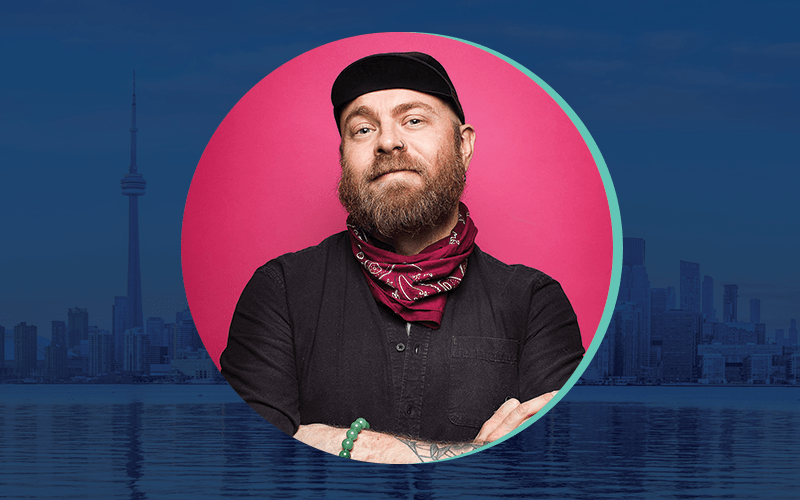
Ryan Petrimoulx Discusses E-Commerce & Working with Retailers During the COVID-19 Pandemic
Episode
Ryan Petrimoulx is the founder & principal at Bang the Drum, a boutique retail agency focusing on Retail, e-commerce and Growth...
Key takeaways
- E-commerce support systems are overwhelmed during crises, so expect longer response times from platforms like Google, Facebook, and delivery apps when navigating digital sales channels.
- Content creation and establishing your expertise online is essential for business growth, but you need to first understand your own value before you can effectively communicate it to potential customers.
- Know both who your ideal customer is and who they aren't—someone who looks like your customer but isn't willing to pay your rates is not actually your customer.
- Always close the sale by discussing pricing and budget constraints early rather than waiting until you've invested significant time in the conversation or proposal.
- Test your customer avatar assumptions continuously in the real market rather than relying solely on theoretical profiles, as your actual customers may differ from your initial assumptions.
Transcript
Full transcript page · Interactive episode
============================================================
TRANSCRIPTION WITH SPEAKERS
============================================================

[00:00] SPEAKER_01: It's Toronto's podcast on the Canada's podcast network.
[00:06] SPEAKER_01: Hi everyone, I'm Sling Williams, an international speaker and business strategist and I'd like
[00:11] SPEAKER_01: to welcome you to Toronto's podcast.
[00:14] SPEAKER_01: We are part of the Canada's podcast network, your source for great insights for entrepreneurs
[00:18] SPEAKER_01: from across Canada.
[00:20] SPEAKER_01: I'm here today with Ryan Petromo.
[00:23] SPEAKER_01: After having worked in almost every area of the retail industry, Ryan has a very unique
[00:27] SPEAKER_01: understanding of the landscape.
[00:30] SPEAKER_01: His focus is on using e-commerce to grow customers, build relationships, increase revenues and
[00:35] SPEAKER_01: profitability.
[00:36] SPEAKER_01: Thanks for joining us today, Ryan.
[00:38] SPEAKER_00: No problem, thanks for having me.
[00:40] SPEAKER_01: So I'd love to know a little bit more about what you do, what you're kind of working
[00:45] SPEAKER_01: on these days.
[00:48] SPEAKER_00: Well, this is a very interesting time to be answering that question.
[00:52] SPEAKER_01: I thought we might start there, right?
[00:54] SPEAKER_01: It's kind of a, it's a unique, and I mean, it's an even more unique landscape.
[00:57] SPEAKER_01: The new usual right now.
[00:59] SPEAKER_00: Yeah.
[00:59] SPEAKER_00: So what do I do?
[01:01] SPEAKER_00: I, for the past X number of years, for the past seven years, I've been working with a
[01:10] SPEAKER_00: variety of companies, but the sweet spot center of the bullseye, our retail companies, ranging
[01:16] SPEAKER_00: from sort of like SMEs, so the small to medium size, all the way up to, you know, large
[01:22] SPEAKER_00: global or national brands on how to effectively integrate an e-commerce sort of sales channel
[01:29] SPEAKER_00: into their business.
[01:31] SPEAKER_00: So the reason that that is interesting, particularly now, is given me and just to speak very specifically
[01:40] SPEAKER_00: from a geographic standpoint in Ontario, we've declared a state of emergency for a while.
[01:45] SPEAKER_00: So all non-essential businesses have closed down, which includes the large bulk of retailers.
[01:52] SPEAKER_00: Some people in the retail sector like grocers and stuff like that, they've been deemed
[01:55] SPEAKER_00: essential, but, you know, if you're selling sweaters or things like that, you aren't allowed
[02:02] SPEAKER_00: to be open, essentially, and serving the public.
[02:07] SPEAKER_00: But you can still, it's a gray area because e-commerce is still technically allowed.
[02:13] SPEAKER_00: So navigating through that is an interesting piece.
[02:18] SPEAKER_00: So what have I been working on now?
[02:20] SPEAKER_00: I have a couple of clients right now that my agency is working with that are basically
[02:25] SPEAKER_00: trying to work with what we've got given the current state of things.
[02:32] SPEAKER_01: So I'm going to ask this question, I don't know if there's an answer to it, but what have
[02:38] SPEAKER_01: you with how things have shifted in the past state of emergency number of weeks, three
[02:45] SPEAKER_01: or four weeks or whatever?
[02:46] SPEAKER_01: I don't, I feel like I'm in quarantine forever, I'm not 100% sure.
[02:49] SPEAKER_01: The past weeks, have you seen anything changing or shifting with the e-commerce space
[02:56] SPEAKER_01: or with the online world in general?
[02:58] SPEAKER_00: Yeah, pretty much.
[02:59] SPEAKER_00: I mean, if we want to talk about e-commerce and if we want to talk about online specifically,
[03:04] SPEAKER_00: just from an online standpoint, everyone is overloaded.
[03:08] SPEAKER_00: So I'll use a couple examples.
[03:11] SPEAKER_00: I have one client right now that we are at the beginning of March.
[03:16] SPEAKER_00: So when everything was, you know, in the before times as it were, we were, we plan to spin
[03:22] SPEAKER_00: up some Google ad campaigns.
[03:24] SPEAKER_00: When I offered out a hitch was great timing because we, that client specifically ended
[03:32] SPEAKER_00: up getting a ton of traffic for their website.
[03:34] SPEAKER_00: So we were able to do a test that would normally take at least a month in three weeks, at
[03:42] SPEAKER_00: least a month probably a month and a half.
[03:44] SPEAKER_00: We did it in half the time just because of the amount of traffic that had ramped up.
[03:48] SPEAKER_00: We re-jigged some campaigns for April and we had also installed sort of an app onto
[03:56] SPEAKER_00: the site that was untested, unfortunately.
[03:59] SPEAKER_00: And that flagged the site as having malware and Google kept disapproving the ads.
[04:06] SPEAKER_00: So all that big lead in is to say, Google's a bit of a bear to deal with, but because of
[04:14] SPEAKER_00: everything with COVID-19, all of their support was completely pushed back.
[04:18] SPEAKER_00: So we've now had to escalate this.
[04:20] SPEAKER_00: It's taken a week and a half, two weeks of escalating the issue and we're still not even
[04:27] SPEAKER_00: close to having an answer.
[04:29] SPEAKER_00: Facebook ads, same thing like Facebook is now hyper sensitized to anything political
[04:34] SPEAKER_00: out there.
[04:35] SPEAKER_00: Different client is a media company, so they're kind of business as usual.
[04:41] SPEAKER_00: They broke a story before the CBC did.
[04:45] SPEAKER_00: Just excellent timing, good reporting, et cetera, et cetera, et cetera.
[04:49] SPEAKER_00: We tried to put some money behind that specific ad and it got shut down.
[04:56] SPEAKER_00: Because we haven't jumped through the Facebook hoops to be talking about political things.
[05:01] SPEAKER_00: So there are now more hoops to jump through and there are more stringent on how complicated
[05:07] SPEAKER_00: those hoops are.
[05:08] SPEAKER_00: So that's the state of the internet that I've seen so far.
[05:11] SPEAKER_01: Right.
[05:12] SPEAKER_00: The state of e-commerce, everyone is in a scramble, basically.
[05:18] SPEAKER_00: If you want to talk high-level e-commerce, delivery apps are getting hammered right now.
[05:24] SPEAKER_00: I had a very bad Instagram experience and it took two weeks of emailing support literally
[05:32] SPEAKER_00: every day.
[05:34] SPEAKER_00: And getting no response, I finally took to Twitter and they got back to me like that.
[05:38] SPEAKER_00: And the answer that they gave me was very standard and I wasn't super satisfied from it.
[05:44] SPEAKER_00: Now, I get it.
[05:45] SPEAKER_00: Instagram sites are two-sided marketplace, which is tricky.
[05:48] SPEAKER_00: But yeah, that went like my personal experience went with that, went from
[05:53] SPEAKER_00: I'll email support.
[05:54] SPEAKER_00: I'll get an automatic message back saying that they're overwhelmed, tried calling the
[05:59] SPEAKER_00: support line.
[06:00] SPEAKER_00: It went from a wait time of 101 minutes in the afternoon to a wait time at midnight of 109 minutes
[06:08] SPEAKER_00: to a couple days later, they shut down phone support completely.
[06:12] SPEAKER_00: So it took two weeks to of that and then taking to Twitter to finally get an answer.
[06:17] SPEAKER_00: So, manufacturing is ramping up.
[06:20] SPEAKER_00: Like, there's a couple small shops in my neighborhood on my street that are just like
[06:28] SPEAKER_00: clothing retailers.
[06:29] SPEAKER_00: They're shut down restaurants or shut down and they're relying on
[06:32] SPEAKER_00: Uber Eats and DoorDash and things like that.
[06:35] SPEAKER_00: And there's videos coming out saying, hey, this is why my personal favorite Mexican restaurant
[06:41] SPEAKER_00: decided to close completely and try and weather the storm because it's not worth it.
[06:47] SPEAKER_00: For them to do that because of the margin that they take using those apps.
[06:52] SPEAKER_00: So everything's shifting basically, long story short.
[06:56] SPEAKER_01: I'm not surprised.
[06:57] SPEAKER_01: I just I was curious what your perspective or what your experience with it had been
[07:03] SPEAKER_01: being in the industry, right?
[07:05] SPEAKER_01: Like, I mean, we're in a circumstance we haven't seen before, right?
[07:07] SPEAKER_01: So lots of industries are are affected and I would imagine e-commerce like a lot of other
[07:12] SPEAKER_01: industries.
[07:12] SPEAKER_01: There's some upsides to it because I'm sure there's people at home who are like,
[07:16] SPEAKER_01: well, I could use that sweater and I got nothing better to do than to buy it right now and
[07:20] SPEAKER_01: haven't sent to me.
[07:22] SPEAKER_01: So there's definitely some upsides for sure I would imagine and some challenges to your points.
[07:27] SPEAKER_01: Yeah.
[07:27] SPEAKER_01: So I appreciate you sharing that.
[07:28] SPEAKER_00: And one thing that I'll go through, I can send you this after.
[07:34] SPEAKER_00: This is a sort of a list of
[07:39] SPEAKER_00: that was put together by a company called Stackline at the US of the 100 fastest growing
[07:44] SPEAKER_00: and declining categories in e-commerce.
[07:47] SPEAKER_00: Unsurprising, the disposable glove category is up by 670%.
[07:52] SPEAKER_01: Sounds about right.
[07:54] SPEAKER_01: Yeah, that sounds about right.
[07:55] SPEAKER_00: And just coming at it number two, I did not expect to see this.
[07:59] SPEAKER_00: Bread machines, 650 to percent.
[08:03] SPEAKER_01: I wish I could say I'm surprised by that, but given the number of people on just my friends
[08:07] SPEAKER_01: list on Facebook who have taken to making bread and the yeast shortage we are experiencing
[08:13] SPEAKER_01: in Ontario, not super surprised.
[08:16] SPEAKER_00: Right.
[08:17] SPEAKER_00: And the first loser, luggage is in suitcase down 77%.
[08:21] SPEAKER_01: Yeah, Tim, again, this is right in line.
[08:24] SPEAKER_01: And yeah, if you send the link, we'll put it in the show notes for sure just for people who are
[08:28] SPEAKER_01: curious.
[08:29] SPEAKER_01: So I'd love to shift gears a little bit and talk about you and your experience
[08:33] SPEAKER_01: becoming an entrepreneur.
[08:35] SPEAKER_01: Can you tell me a little bit about what made you decide to start your agency and you know,
[08:39] SPEAKER_01: even some of your background to getting into it?
[08:41] SPEAKER_00: No problem.
[08:42] SPEAKER_00: We will harken back to the odd 2000s, whatever it was back when I was in university.
[08:50] SPEAKER_00: So this was way back in the day.
[08:53] SPEAKER_00: And originally was on the teacher's, the teacher track with the goal of being a high school history
[09:00] SPEAKER_00: teacher.
[09:01] SPEAKER_00: And the reason behind it was because I liked, history is very, history is very data driven.
[09:06] SPEAKER_00: I can now look back on it and realize these things.
[09:09] SPEAKER_00: And it's great to show cause and effect.
[09:13] SPEAKER_00: And I really had a good experience in high school just seeing all the dots get connected
[09:19] SPEAKER_00: and was like, oh, this is super cool.
[09:21] SPEAKER_00: And history doesn't, I mean, there's the idea that like,
[09:25] SPEAKER_00: history is written by the victor.
[09:26] SPEAKER_00: But for the most part, there's a lot of facts that don't change.
[09:30] SPEAKER_00: So you're dealing with data points that you can sort of use to plot the path effects.
[09:36] SPEAKER_00: Halfway through wasn't super into it, sort of changed my mind a bit.
[09:40] SPEAKER_00: Really got into sort of a lot of like Facebook and Instagram wasn't even a thing yet.
[09:48] SPEAKER_00: Twitter was like, these things were picking up and it was like, okay, how does all this
[09:53] SPEAKER_00: interplay?
[09:54] SPEAKER_00: Having a, you know, a decent understanding of this, all this emerging digital stuff really gave
[10:01] SPEAKER_00: way to sort of like a sniffing around the marketing side of things.
[10:04] SPEAKER_00: But back then, they didn't really have courses like that.
[10:09] SPEAKER_00: And I had gone to Western, University of Western Ontario.
[10:14] SPEAKER_00: Because they were both in the same building, they did this weird combination of the journalism
[10:20] SPEAKER_00: department and the computer science department because they shared a building and made this like
[10:25] SPEAKER_00: faculty that was called media and information and technology, which is just weird now, which
[10:31] SPEAKER_00: eventually became sort of like a more digital focused program.
[10:36] SPEAKER_00: So I was sort of like at the beginning of that and it was super interesting.
[10:39] SPEAKER_00: After sort of switching around and like attempting to refocus my goal,
[10:44] SPEAKER_00: ended up finishing my degree and was just like, well, I guess I'll get a job.
[10:50] SPEAKER_00: I don't know what I want to get as a career job.
[10:52] SPEAKER_00: So I'll just get like four part time jobs, which was exhausting.
[10:57] SPEAKER_00: One of which was with a retail company because I knew someone and it was easy and blah, blah, blah,
[11:02] SPEAKER_00: blah, blah. I'm good to talk to people.
[11:04] SPEAKER_00: So that retail company that I sort of started with like as a part time weekends type of gig
[11:10] SPEAKER_00: in university, I ended up being with that company for eight years, opening a second store in London
[11:16] SPEAKER_00: and then promotion offer, promotion offer, promotion offer until finally there was one that was
[11:21] SPEAKER_00: just like, hey, we need to start selling things off our website.
[11:25] SPEAKER_00: We like you.
[11:26] SPEAKER_00: Did you want to do this?
[11:28] SPEAKER_00: And it was sort of like, well, I don't really know exactly what that consists of and I don't have
[11:33] SPEAKER_00: any like technical jobs, but I can figure it out.
[11:35] SPEAKER_00: So that was sort of my entry point into e-commerce in retail apparel back in 2008.
[11:42] SPEAKER_00: Yeah.
[11:43] SPEAKER_00: And then ran that for a while and that was Shopify was just sort of like it was coming to become a
[11:50] SPEAKER_00: thing like they had been selling snowboards and it was growing out a little bit, but it was very
[11:55] SPEAKER_00: not what it is now.
[11:57] SPEAKER_00: Yeah.
[11:57] SPEAKER_00: So yeah, so grew that out.
[11:59] SPEAKER_00: Eventually found myself in Toronto and commuting from Toronto to St.
[12:04] SPEAKER_00: Kaplan's every day was exhausting.
[12:06] SPEAKER_00: So decided to decide it was time to move on.
[12:08] SPEAKER_00: I think I'd done, I felt like I'd done what I needed to do with that and bounced to a company that
[12:16] SPEAKER_00: was just in Brantan.
[12:18] SPEAKER_00: Unbelievably closer.
[12:19] SPEAKER_00: Well, life changing move, it was great until the business model of the company, which for the record
[12:26] SPEAKER_00: had fairly deep-locketed investors wasn't sustainable and they had wanted to sort of reignite their
[12:35] SPEAKER_00: the re-commerce.
[12:36] SPEAKER_00: That's why they brought me in.
[12:37] SPEAKER_00: And it was just like, yeah, we need to do some downsizing.
[12:41] SPEAKER_00: So that sort of happened that I was like, well, I think I'll I'm going to take the package that
[12:45] SPEAKER_00: they're offering and then figure out what my next move is.
[12:48] SPEAKER_00: So at that point, I was kind of like, well, do I find another job in this field that's not exactly
[12:57] SPEAKER_00: solid now.
[12:58] SPEAKER_00: It's still very floating around and like it's primarily project managers and like development people.
[13:06] SPEAKER_00: So and then they smash those people together and try and get stuff done.
[13:10] SPEAKER_00: So do I do that or or what?
[13:13] SPEAKER_00: And I remember going out for friend of mine's birthday party,
[13:17] SPEAKER_00: way out in the East End at a Brevarian restaurant.
[13:20] SPEAKER_00: And I got picked up by someone that was driving and we ended up picking up another friend of theirs.
[13:27] SPEAKER_00: And Julie and I sat were in the back seat of this car driving from like Blur and Landsdown to like
[13:31] SPEAKER_00: Hayley Lincoln and Kingston Road.
[13:33] SPEAKER_00: So we had some time to chat.
[13:35] SPEAKER_00: Turns out Julie and her husband Rob owned a skate shop that was on college street.
[13:42] SPEAKER_00: And the company that I was working for before the apparel company was a
[13:47] SPEAKER_00: active wear like skate surf type of branded company.
[13:53] SPEAKER_00: So Julie and I knew a bunch of the same people like all of our vendors.
[13:56] SPEAKER_00: It's like, oh, I know Sean.
[13:58] SPEAKER_00: Oh, I know that guy.
[13:59] SPEAKER_00: I love blah, blah, blah.
[13:59] SPEAKER_00: And they were they were like literally the classic.
[14:02] SPEAKER_00: I mean, they weren't along pop yet.
[14:05] SPEAKER_00: But after they had kids, they definitely became a mom and pop shop type of thing.
[14:09] SPEAKER_00: And Julie was also her day job while Rob ran the store was she was a UX designer.
[14:17] SPEAKER_00: So she got a bunch of stuff.
[14:19] SPEAKER_00: She knew how things worked.
[14:21] SPEAKER_00: So yeah, she's like, they were they were using they were just having a really
[14:27] SPEAKER_00: difficult time trying to get their website up.
[14:30] SPEAKER_00: And Julie, the problem was is that Julie knew there's a bunch of stuff that Julie knew
[14:35] SPEAKER_00: because she's in that industry.
[14:37] SPEAKER_00: But then there's this whole bucket of stuff that she's just like, I have I can figure it out,
[14:43] SPEAKER_00: but like, I don't know what this all this stuff is.
[14:46] SPEAKER_00: And it that's when sort of the light bulb went off of, oh, I have a whole bunch of skill sets
[14:54] SPEAKER_00: that are exactly applicable to this situation.
[14:57] SPEAKER_00: And then I met with Julie like then Julie and I exchanged info.
[15:01] SPEAKER_00: I met up with Julie and Rob like a week or two later and then
[15:05] SPEAKER_00: the rest is history.
[15:07] SPEAKER_00: And that's sort of where it started.
[15:10] SPEAKER_00: And while I have some mixed feelings about Shopify in general,
[15:14] SPEAKER_00: they've helped normalize this in the market.
[15:18] SPEAKER_00: And it took me a while to sort of get to where I am now.
[15:21] SPEAKER_00: Like there was there was a lot of time of like getting really good at doing groceries at the
[15:25] SPEAKER_00: dollar store because the cult like the companies weren't there yet.
[15:32] SPEAKER_00: And doing that, doing a lot of networking, meeting a lot of people, building those relationships
[15:37] SPEAKER_00: to then eventually it just started working.
[15:40] SPEAKER_00: Like it just hit.
[15:41] SPEAKER_00: And I'm like, oh, okay, this is kind of what I was hoping for, but I had no
[15:48] SPEAKER_00: lighthouse like I had no light to focus on to and I thought I was moving in the right direction.
[15:53] SPEAKER_00: And yeah, turns out I was.
[15:56] SPEAKER_00: How's that for a giant ramble?
[15:58] SPEAKER_01: But I think but you brave a really important point that there are times where you have an experience
[16:06] SPEAKER_01: and you know, often working for someone else, but you know that things are heading in a particular
[16:11] SPEAKER_01: way in the industry in general, but you're ahead of the curve.
[16:16] SPEAKER_01: And it takes a while for things to catch up.
[16:19] SPEAKER_01: And it's not, I think for entrepreneurs especially that's a that's a more common story
[16:24] SPEAKER_01: than we often talk about because you are seeing something that is going to grow and be a possibility.
[16:31] SPEAKER_01: And you know, you're kind of waiting for everyone else to catch up and making things work as best
[16:36] SPEAKER_01: you can until that point in time.
[16:38] SPEAKER_01: And then the convergence happens.
[16:40] SPEAKER_00: Yeah, it's sticking to your guns.
[16:44] SPEAKER_00: But it's mainly it's sticking to your guns not necessarily in the face of everyone telling you
[16:51] SPEAKER_00: that it's a bad idea because there's that too, right?
[16:54] SPEAKER_00: Like the convergence doesn't always happen or you can't sustain yourself until the convergence happens.
[17:01] SPEAKER_00: And you know, in that period before things took off, yeah, I was applying for jobs like I had
[17:08] SPEAKER_00: I ended up working for a friend of mine that was doing a lifestyle brand for dogs.
[17:19] SPEAKER_00: And yeah, that was just like it's a startup.
[17:23] SPEAKER_00: I would love a paycheck. This would be great.
[17:26] SPEAKER_00: It's also because this is what I enjoy doing.
[17:31] SPEAKER_00: But it's realizing that I also very much enjoy trisket's.
[17:37] SPEAKER_00: However, if that's what I did as a job, I would not look the way that I do type of things.
[17:45] SPEAKER_00: So it's finding that balance of I really like this.
[17:49] SPEAKER_00: And this is a good side hustle.
[17:50] SPEAKER_00: I don't know how long I can last until the convergence happens.
[17:55] SPEAKER_00: I was really fortunate that I had a family that like my mom was super supportive.
[18:01] SPEAKER_00: And friends and colleagues that were also supportive and trying to push me in the right direction
[18:07] SPEAKER_00: even though I wasn't always able to hear what they were talking about.
[18:10] SPEAKER_00: But they could see they're like, oh, this guy's super into this stuff.
[18:14] SPEAKER_00: That goes a long way.
[18:16] SPEAKER_00: And he's into it for like, because it's he just thinks it's neat.
[18:20] SPEAKER_01: So I want to ask a question about that.
[18:23] SPEAKER_01: Did in that time period, this is going to be a two-par question.
[18:27] SPEAKER_01: So the first one I had is in that time period, did anyone give you advice or say anything to you
[18:32] SPEAKER_01: that, you know, however light let's say years later still resonates or you remember specifically?
[18:38] SPEAKER_01: That would be my first question.
[18:40] SPEAKER_01: And then my second question is going to be what was the biggest challenge for you
[18:45] SPEAKER_01: in making this transition into entrepreneurship?
[18:48] SPEAKER_00: Short answers, yes, to both.
[18:50] SPEAKER_00: Yes, the second one doesn't work.
[18:51] SPEAKER_00: Yes, definitely the first one.
[18:53] SPEAKER_00: So I didn't know I didn't set out to start an agency.
[18:57] SPEAKER_00: And also I say the word agency, but it's like an agency.
[19:02] SPEAKER_00: Which is basically just I think there was one at one point I described it as like a cabal
[19:08] SPEAKER_00: of professional weirdos that just are super super it like super into what they're doing.
[19:15] SPEAKER_00: Like my SEO person, she just really digs Google search console.
[19:20] SPEAKER_00: That's it.
[19:20] SPEAKER_00: She thinks it's like she likes how she can like manipulate stuff in it.
[19:24] SPEAKER_00: So yeah, professional weirdos.
[19:26] SPEAKER_00: It's great.
[19:26] SPEAKER_00: But the one piece of advice, and I don't know that I wouldn't necessarily say that this is a universal
[19:34] SPEAKER_00: piece of advice, but it could be was way back when when I was a co-founder of a
[19:42] SPEAKER_00: online run coaching company, one of my my other co-founder was always telling me that I need to
[19:52] SPEAKER_00: produce more content because like I need to start putting myself out there more was basically it.
[20:00] SPEAKER_00: That was one of the things that I couldn't hear because I didn't understand my value.
[20:04] SPEAKER_00: So I'm like, well, not knowing what my value is, I'm like, why do people, what am I going to say?
[20:10] SPEAKER_00: Who am I to be telling people things?
[20:14] SPEAKER_00: Snap cut to now.
[20:15] SPEAKER_00: Yeah, there's I blog ideas about the current situation that are just that people just don't there's
[20:23] SPEAKER_00: stuff that people either they know they don't know or they don't know they don't know, which is the
[20:29] SPEAKER_00: really tricky part. So yeah, so that was that was pretty much it like building content, trying to build
[20:36] SPEAKER_00: evergreen content that keeps growing. But yeah, that that was the one thing that I can look back on
[20:43] SPEAKER_00: now and I look back on things with with minimal to no regrets because I couldn't have jumped the
[20:50] SPEAKER_00: line in the path I had to go through the entire path to get to where I am now. But yeah, that's one
[20:56] SPEAKER_00: thing that I look back on now where I'm just like, oh, right, it's knowing what my value is.
[21:01] SPEAKER_00: That was number one, but number two, an ideal with this now with clients, especially in e-commerce,
[21:10] SPEAKER_00: knowing who your customer is and isn't and knowing that someone could look like your customer,
[21:16] SPEAKER_00: but they aren't. Some people really like mushrooms. Some mushrooms will kill you. Other mushrooms will
[21:23] SPEAKER_00: give you a very interesting experience and other mushrooms you can just toss on a pizza because
[21:29] SPEAKER_00: they have nutritional value, but they're all mushrooms. Are all dogs or animals, but not all animals or
[21:35] SPEAKER_00: dogs. So this comes into play with, you know, you could I could be talking to a client and they could
[21:43] SPEAKER_00: sound really into everything I'm saying. Yeah, that sounds great. Oh my god, we definitely need to do
[21:48] SPEAKER_00: this. Yes, 100% absolutely. The other lesson is especially when it comes to sales is you can
[21:56] SPEAKER_00: get the sale 90% of the way by telling people all the awesome things and then there's that extra
[22:01] SPEAKER_00: 10% where it's like, and this is what it's going to cost. How do you feel about paying that?
[22:06] SPEAKER_00: It's figuring out that how to do that 10% that you always do it and don't end up working for free
[22:13] SPEAKER_00: is I think anyone that's an entrepreneur has done that. But yeah, once you nail that 10% and you
[22:22] SPEAKER_00: know the person that you're talking to comes back with like, oh, can you do like 75% less than that?
[22:30] SPEAKER_00: Type of thing like it'll cost a hundred bucks just to use an easy number. Oh, can you do it like
[22:36] SPEAKER_00: for 25? It's like, oh, so you're the type of company that I could work with, but I can't work,
[22:44] SPEAKER_00: but that's you're not my customer. Right. Right. So I have to respectfully decline and say, that's the
[22:51] SPEAKER_00: block to you. There are some resources that you could use to do this yourself because you're not
[22:57] SPEAKER_00: going to find someone to do what I'm talking about doing for that price until things change and
[23:02] SPEAKER_00: then maybe later once they realize they can't do themselves and maybe some things change from a
[23:07] SPEAKER_01: revenue position, then they can re-approach. Well, I think those are two really good lessons to anyone
[23:12] SPEAKER_01: who's listening who is an entrepreneur or early stage entrepreneur, which is one, know your value,
[23:17] SPEAKER_01: and two, actually know who your customer is and isn't. And I think we spend a lot of time and,
[23:23] SPEAKER_01: well, I mean, I've done this with clients. I've worked with where you get really clear on who your
[23:27] SPEAKER_01: avatar is, whatever you want to call it, that where you're getting whatever the language is, but
[23:31] SPEAKER_01: this is my customer, this is who I work, this is my ideal client, whatever it is. But in order to
[23:38] SPEAKER_01: make that really effective and in order to make it really focused, you also have to know who it
[23:43] SPEAKER_01: isn't and what your boundaries are inside of that, which is a piece of what you're saying that I'm
[23:48] SPEAKER_01: hearing, right, which is like, this is my boundary. If someone comes back and says, can you do this
[23:53] SPEAKER_01: for $25 instead of $100? You can also say, here's what you can, here's what I can do for $25. It's not
[24:00] SPEAKER_01: it's this. If you want to do this, this is what $25 will give you. If you want to do that, then
[24:05] SPEAKER_01: this is not for me. And knowing what your boundary is, when you know your value, you're not afraid to
[24:10] SPEAKER_00: state what that boundary is. And I'm currently in the process of sort of like, um,
[24:16] SPEAKER_00: updating on this, but a lot of like that $100 value is like, cool, that's me coming in and doing it
[24:23] SPEAKER_00: and getting it set up and boom, because it's, I know I know things and I know how long it's going to take me.
[24:29] SPEAKER_00: That specific pivot to $25 is like, you can do it and we can work together and I can sort of like
[24:36] SPEAKER_00: be a touch point for you. How about that? Right. That's a better pivot and at least from my
[24:41] SPEAKER_00: standpoint, from a scaling stance, I'm actually trying to pivot into the $25 packages more
[24:50] SPEAKER_00: because I and my hands only have so much time. The other thing I would just quickly say to your
[24:57] SPEAKER_00: point about the avatars is that because the way that you said what you said was very, um, well put,
[25:05] SPEAKER_00: it's also recognizing that anything that's an avatar is basically an assumption. You've made a bunch
[25:12] SPEAKER_00: of assumptions, which you need to, to assemble that avatar. And now you need to test it. So you're
[25:18] SPEAKER_00: perpetually testing it. Yes, you're not going to know who your customer is until you get a customer
[25:23] SPEAKER_00: and then it's like, oh, I did not think that would be my customer, but apparently it is.
[25:28] SPEAKER_01: Well, it's, it's funny. I've worked a lot of startups and one of the things that because so much of
[25:33] SPEAKER_01: it is based on assumptions, they're like, here's the, here's the thing I've created. Here's
[25:38] SPEAKER_01: what my ideal client is. When I've asked people, they've been really excited about it. And I always
[25:42] SPEAKER_01: asked the question, did you ask them if they would pay for it? And how much they would pay for us?
[25:46] SPEAKER_01: Because it is just because someone is like, that's a great idea. It doesn't mean that they're
[25:52] SPEAKER_01: a customer who would pay for what you're putting out to the world. And it's, it's, it's like such a simple
[25:59] SPEAKER_01: shift of a question, but we don't do it because we run an assumptions. We assume that if someone says
[26:05] SPEAKER_01: that's a great idea, that if we were to say, cool, that'll be $2,000, they'd be like, sweet. Here's
[26:10] SPEAKER_00: my money, but that's not, it's not how it works. Well, and that's that 10% I was talking about before.
[26:15] SPEAKER_00: Same thing goes, there was a point where I was very, very loosely shopping around the idea of
[26:23] SPEAKER_00: getting investment on a project that I was, was more actively spinning up the time. It's now actually
[26:30] SPEAKER_00: residing completely in my giant right book. But yeah, it was like, it's the same thing with asking
[26:36] SPEAKER_00: for money from investors. See exact same process. It's just like, that sounds interesting. Cool.
[26:41] SPEAKER_00: How much would you give me for it? Nothing. Oh, okay. I can say all bunch of things that sound
[26:47] SPEAKER_01: interesting. So I want to be mindful of time. And I like to, because I am a book nerd, as you can see
[26:53] SPEAKER_01: from my bookshelf behind me, I was like to ask this question to kind of wrap things up. And that is,
[26:57] SPEAKER_01: is there anything that you're reading that you would recommend to our listeners or viewers? Slash,
[27:03] SPEAKER_01: is there something that you have read that was really impactful for you that you would recommend?
[27:07] SPEAKER_00: I love that you use slash to basically do a two part question. Yeah, well, I could be one,
[27:12] SPEAKER_01: listen, you don't have to answer both. My default is always the book that for me was most impactful
[27:18] SPEAKER_01: when I'm asked a question like this. It's not necessarily what I'm reading in the moment,
[27:20] SPEAKER_01: but it's what's been most impactful. So it could be either or. So I'm going to flag a really
[27:28] SPEAKER_00: weird point that I don't know a lot of people talk about. But it's the venn diagram breakdown of
[27:38] SPEAKER_00: entrepreneurs and people with ADHD. So I bring that up as someone that's that's currently in the
[27:46] SPEAKER_00: process of being tested for that. It's really difficult for me to slow my brain down enough to read.
[27:52] SPEAKER_00: That's fair. Yeah, like to sit down and fully process something. So yeah, so that's, and that's
[27:59] SPEAKER_00: something that, you know, on my off time, I'm acknowledging and working on because it's all always
[28:06] SPEAKER_00: go, go, go, go, go, go, go, go, go, go, go, go, being able to do that is great. But it's sometimes
[28:13] SPEAKER_00: a challenge to drop out of that gear to just sit down and read something. So if that resonates with
[28:20] SPEAKER_00: anyone, you're not the only one. But in thinking about it too, probably the last book I read that
[28:27] SPEAKER_00: had a giant impact on me is not a business book. It is based on the based on some of the artifacts.
[28:36] SPEAKER_00: I see in that bookshelf, find you. I think it might be something that would resonate with you.
[28:39] SPEAKER_00: It is a book called The Artist's Way. Yep. Do you remember who the author of that is?
[28:45] SPEAKER_00: Oh, Julia Cameron. Julia Cameron. Julia Cameron just happened to be on the underside of a
[28:51] SPEAKER_00: coffee table. Yeah. So this is the sort of shorthand title for this is the spiritual path to
[28:57] SPEAKER_00: higher creativity. This says that everyone has their own inner artist. And it could be a writer.
[29:05] SPEAKER_00: It could be whatever. And it's basically a workbook that helps you clear the static out of your
[29:14] SPEAKER_00: brain. The way I chose to look at it is they also just, she also describes your inner artists as
[29:20] SPEAKER_00: like it's an inner child. Because children are wildly creative. And then we tend to lose that as we
[29:27] SPEAKER_00: as we age and get settled down with things that we need to be responsible for. But it's that inner
[29:34] SPEAKER_00: child that inner artist is still inside of you. And that's what is the root of your creativity.
[29:40] SPEAKER_00: It doesn't matter what you do. Everyone is uses their creativity on a daily basis. Whether it's
[29:48] SPEAKER_00: talking to colleagues or designing things or interacting with customers. I don't think it's very
[29:56] SPEAKER_00: hard for anyone to think about a way that they could be being creative in their day to day.
[30:03] SPEAKER_00: Personal life can work well. And yeah, this helps eliminate a lot of the static. The thoughts that
[30:10] SPEAKER_00: buzz around in you at the back of your brain. So you can actually focus on feeding that child and
[30:15] SPEAKER_01: helping bring that creativity out of you. I think that's an amazing suggestion. And it's having read
[30:20] SPEAKER_01: the book myself. While I do not do the practice that she suggests I have in the past. And it is a
[30:25] SPEAKER_01: very, very powerful book. So I think it's a great recommendation. Thank you. I want to thank you
[30:30] SPEAKER_01: for joining me today. We'll have links to Ryan's medium and LinkedIn in the show notes of this episode.
[30:38] SPEAKER_01: And I really appreciate you taking the time and sharing your story with us.
[30:41] SPEAKER_00: I'm really glad to. Thanks for taking the time with me. Bye everyone.
[30:47] SPEAKER_01: Thanks everyone for taking the time today to listen to Toronto's podcast on the Canada Podcast
[30:51] SPEAKER_01: network. If you enjoyed the podcast today, please make sure to write us a review on iTunes and
[30:56] SPEAKER_01: share this episode with a friend. You can also check us out online at www.candardestpodcast.com
[31:02] SPEAKER_01: where you can listen, discover and engage and learn more about what other entrepreneurs are doing
[31:07] SPEAKER_01: across the country. See you next time.