
Vince Guzzo, Dragon from Dragons’ Den, Discusses Being an Entrepreneur, Advice for Success, and Dealing with the COVID-19 Pandemic
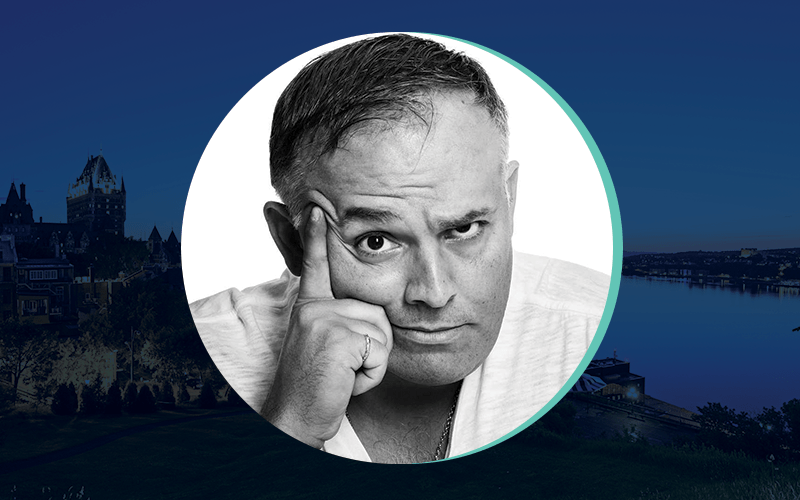
Episode
Vince Guzzo is a well-known entrepreneur based in Quebec who is owner and President of Cinémas Guzzo. He also owns a pizzeria...
Key takeaways
- The best advice for entrepreneurs is not to listen to anyone who doesn't know 100% of your business, because incomplete information leads to flawed guidance and you ultimately know your business best.
- The real secret to success is understanding that entrepreneurship is a lonely journey, and maintaining focus without being distracted by the company and validation that comes with success is crucial.
- During crisis times, entrepreneurs should use the opportunity to refocus, upgrade their operations, and tackle inefficiencies they've been putting off rather than just trying to survive.
- When seeking investment or partnerships, coachability and teachability are more important than confidence or expertise, as investors want to work with people who can be mentored and are willing to learn.
- Entrepreneurship isn't just about making money—the entrepreneurial spirit drives all human advancement, from business to medicine to social change, and money is simply a measuring gauge of impact.
Transcript
Full transcript page · Interactive episode
============================================================
TRANSCRIPTION WITH SPEAKERS
============================================================

[00:00] SPEAKER_01: It's Quabex Podcast on the Canada's Podcast Network.
[00:04] SPEAKER_01: Hello, this is Mario Toniguzu coming to you today with Montreal's Podcast, a member of Canada's
[00:10] SPEAKER_01: Podcast Network, where we talk to the entrepreneurs who are making it happen in Montreal for that.
[00:16] SPEAKER_01: So you can listen, discover, and engage.
[00:19] SPEAKER_01: Today's guest is Vince Gutso, who is owner and president of Cinema's Gutsos in Quebec,
[00:25] SPEAKER_01: and also a dragon on dragons, then on CBC.
[00:29] SPEAKER_01: Thanks a lot for joining us today, Vince.
[00:31] SPEAKER_01: Thank you, Mario.
[00:32] SPEAKER_01: First of all, let's start a little bit about being an entrepreneur and your business.
[00:38] SPEAKER_01: Now, you have a few businesses.
[00:40] SPEAKER_01: Let's start with the cinema's first, how you got started and how Cinema's Gutsos got started.
[00:47] SPEAKER_00: Well, my father in 1974 bought a theater, a one-screen complex,
[00:52] SPEAKER_00: then he was one of the first to have a multiplex where he subdivided that into three screens.
[00:58] SPEAKER_00: And then I joined the business in 91, but I'm not only child, so while I joined the business in 91,
[01:05] SPEAKER_00: I actually spent my weekends in theaters since 1974.
[01:11] SPEAKER_00: So very young age, my dad had taught me a little red usher's blazer so that I can go around with
[01:18] SPEAKER_00: my flashlight and tell people to put their feet down and help them seat them and whatever.
[01:22] SPEAKER_00: It kept me out of trouble, as he said.
[01:24] SPEAKER_00: And so, I got involved in 91 right out of Western, and then part time I went to law school.
[01:31] SPEAKER_00: And then I'm the one who reviewed all of the leases and everything.
[01:35] SPEAKER_00: So if we're in a position today not to pay any rent, legally is because of my drafting
[01:44] SPEAKER_00: that special clause that I like to call 10.1.1, which says, I'm not paying rent in case I'm forced to major.
[01:51] SPEAKER_01: Okay, a couple of factual things, Vince. How many Cinema's do you have now?
[01:56] SPEAKER_00: Ten locations, 144 screens, 9i Maxes, and we have, I would say,
[02:03] SPEAKER_00: right now about one theater, which is anywhere between 14 and 16 screens,
[02:10] SPEAKER_00: per year planned out for the next five years.
[02:14] SPEAKER_01: Okay, super, then.
[02:15] SPEAKER_01: And you're looking to expand outside Quebec?
[02:18] SPEAKER_00: No, for now we're still going to re-concentrate back in Quebec.
[02:22] SPEAKER_00: I think a few things happened and with cineplex possibly being sold to the cinema world and whatever,
[02:29] SPEAKER_00: created some opportunities in the Quack Market, which we're going to take right away.
[02:33] SPEAKER_00: And then we're going to go back to our initial plan, which was to look at the province of Alberta,
[02:38] SPEAKER_00: which I think a lot of people don't realize, but there's a lot of affinities between Alberta and Quebec.
[02:46] SPEAKER_01: Okay, super. Tell me, you have a couple of other businesses. Tell me about them.
[02:52] SPEAKER_00: So I have also a Pizzeria, two Pizzerias, and we have three more underway on the construction,
[03:00] SPEAKER_00: which is called Juliette Pizzeria, which is right now, every one of them is located next to a movie theater.
[03:07] SPEAKER_00: Basically, it's complimentary to our theater visit.
[03:10] SPEAKER_00: Yeah, then I own a construction company.
[03:12] SPEAKER_00: So the theaters are built by my construction company.
[03:16] SPEAKER_00: And then we also have on a, I would say, we in the medical research field,
[03:23] SPEAKER_00: so we have goods on medical.
[03:24] SPEAKER_00: So while I preside to those companies, I really don't handle the day-to-day of them,
[03:32] SPEAKER_00: but I still, you know, I'm very involved in that.
[03:35] SPEAKER_00: And then I did a few deals off dragons, then.
[03:39] SPEAKER_00: One of the ones that I enjoy the most working with is one called Rudy Lad, which is a T-shirt company.
[03:46] SPEAKER_00: Yeah, in fact, we have a series of COVID-19 T-shirts.
[03:50] SPEAKER_00: Some of them are inappropriate and then we have a cleaner version.
[03:54] SPEAKER_00: So what?
[03:55] SPEAKER_00: Caps are coming out also for the COVID-19 thing.
[03:58] SPEAKER_00: So it's, I think it'll be a determining factor for this, for that venture.
[04:02] SPEAKER_01: Okay, I'm going to ask you in a few minutes some COVID-related questions.
[04:08] SPEAKER_01: So, but the question I'm just going to ask you now, pre-COVID,
[04:13] SPEAKER_01: like what was some of the greatest challenges you faced as being an entrepreneur,
[04:18] SPEAKER_01: of being a business owner?
[04:20] SPEAKER_00: I think the hardest thing I had to do was to actually do as many varied projects as I was doing,
[04:29] SPEAKER_00: and actually not be micro-managing them.
[04:33] SPEAKER_00: Yeah.
[04:33] SPEAKER_00: And having to trust other people, you know, with my vision and my instructions,
[04:38] SPEAKER_00: you know, in many senses, what I like to say is,
[04:41] SPEAKER_00: dragons then came into my life at a point where I needed to be told,
[04:46] SPEAKER_00: you got to let go if you want to, if you want to explode the business part,
[04:52] SPEAKER_00: and you got to let go a bit and you got to do what you're best at and go get people that are,
[04:56] SPEAKER_00: you know, so in the case of the T-shirt company, for example, Rudy Ladd,
[04:59] SPEAKER_00: I really let Paul run that.
[05:02] SPEAKER_00: We need once, you know, once a week, once every two weeks, but he's really running it.
[05:07] SPEAKER_00: So, that was the hardest thing for an entrepreneur.
[05:09] SPEAKER_00: I remember most entrepreneurs are very hands-on, right?
[05:12] SPEAKER_00: It's on a paper we created.
[05:14] SPEAKER_00: If I still keep an enormous amount of control over the cinema division,
[05:20] SPEAKER_00: you know, it is, by the way, the one that's got my name in lights in his biggest format.
[05:25] SPEAKER_00: So, you know, I try and, I try and handle that one, but that was my hardest, my hardest thing.
[05:33] SPEAKER_00: In other words, I turned 50 last year and so it was, without saying I was getting ready for retirement,
[05:39] SPEAKER_00: what I was saying is I was getting ready to let in other people in the day-to-day,
[05:45] SPEAKER_00: you know, the kids were going to start coming in and so forth.
[05:47] SPEAKER_00: So, that possibly one day I could call it a retirement if there's such a thing.
[05:53] SPEAKER_01: Okay, over the years, you've talked to obviously a lot of people, a lot of people giving you advice,
[06:00] SPEAKER_01: etc. What's the best piece of advice you've ever received about being an entrepreneur?
[06:05] SPEAKER_00: I would tell you that the best piece of advice I've ever received was,
[06:10] SPEAKER_00: I mean, very, very successful entrepreneur. He's no longer with us.
[06:15] SPEAKER_00: And it was not to listen to anybody else who doesn't know 100% of your business.
[06:22] SPEAKER_00: And that's where I think, you know, we all make this mistake, right?
[06:25] SPEAKER_00: We go see attorneys and we ask them for advice, but we always seem to forget to mention some key elements
[06:33] SPEAKER_00: and so the advice is given to us wrong. It's the same thing. I think we all have a problem,
[06:37] SPEAKER_00: you know, with nudity in the sense of getting, you know, getting naked in front of others with all
[06:41] SPEAKER_00: of our intimate secrets. And so the only people who could really evaluate what's right or wrong
[06:48] SPEAKER_00: and what you should be doing is really you. I think that when we go get advice, I think what it
[06:54] SPEAKER_00: really is is we're just trying to get comfort. We're just trying to be reminded that we're not alone.
[07:02] SPEAKER_00: Because that is, you know, somebody, somebody wants to ask me the question and actually
[07:07] SPEAKER_00: the question that comes up all the time, right? What's the secret to success? Yeah.
[07:11] SPEAKER_00: And so over the years, you know, you would say, well, you know, long hours, working hard,
[07:17] SPEAKER_00: determination, you know, whatever buzzword was of the time that we do use.
[07:22] SPEAKER_00: I tell you one of the things that as I turned 50 last year,
[07:27] SPEAKER_00: started to hit me is the real secret to success, to set belongingness.
[07:34] SPEAKER_00: And the fact that it's the only singular journey from where you started to success. Because at the
[07:40] SPEAKER_00: end of the day, like I said, there's very few people who can tell you what you should do and shouldn't
[07:46] SPEAKER_00: do. Sometimes we go out there and say, what's this new trend? What's going on?
[07:51] SPEAKER_00: True to the matter is a real entrepreneur is connected.
[07:55] SPEAKER_00: His long-term being an entrepreneur. I mean, you know, when COVID-19 hit,
[08:00] SPEAKER_00: I was the first one to argue with the Quebec authorities not to shut down theaters.
[08:06] SPEAKER_00: I mean, you know, the media pulled me what I would call a Donald Trump on me where they
[08:10] SPEAKER_00: they took the beginning of the quote and they cut it at the right time to make me sound that I was
[08:15] SPEAKER_00: in census, right? Basically, what I had said was, you know, we left the liquor stores open so we
[08:20] SPEAKER_00: can all get drunk. We left the plot stores open so we can all get stoned. But we can't go watch
[08:26] SPEAKER_00: movie theaters. So what are teenagers supposed to do? Well, they stopped that, but we can't go watch
[08:31] SPEAKER_00: a movie. Click. And so it made it look like, hey, you know, Gutsal wants to keep theaters open
[08:36] SPEAKER_00: because he wants to make money. The true to the matter was it took three days after closing
[08:41] SPEAKER_00: movie theaters that the, you know, our premier was pleading with parents and teenagers to keep
[08:48] SPEAKER_00: their kids at home. We got on the phone and he said, okay, now I understand what you're saying. Yeah,
[08:53] SPEAKER_00: I'm here. You're not keep 15, 16, 17 year olds confined for very long because we all have this,
[09:00] SPEAKER_00: this, you know, misconception that everybody lives like us. You know, so I'm lucky. I live in a big
[09:06] SPEAKER_00: house. I got, and even then it's the big house, but it's still small considering we're seven
[09:12] SPEAKER_00: people living in it because I got five kids. Right in their five kids that go from 10 years old to
[09:17] SPEAKER_00: 22. So when, when, you know, there's two kinds of entrepreneurs, my father's interpretation
[09:23] SPEAKER_00: was he's in Mexico and he says, okay, you know, we got enough money to cover the burn. So let it be.
[09:32] SPEAKER_00: And I instead said, no, wait up for me, we're going to double down on it. Let's start recapitalizing.
[09:38] SPEAKER_00: Let's start investing. Let's start changing renovating some theaters. Let's start, you know,
[09:43] SPEAKER_00: and all of a sudden, it's always two different philosophies, right? So in my mind,
[09:47] SPEAKER_00: it was time to upgrade. It was time to do things that we would have done over the next five years.
[09:52] SPEAKER_00: Let's do it now. We're closed. How long are we going to be closed for, right? Yeah. And so
[09:57] SPEAKER_00: it's just two philosophies in the time of crisis. Many entrepreneurs, I think, who succeed and then
[10:04] SPEAKER_00: fail along the way, it's because they've lost their way. And many entrepreneurs do lose their ways.
[10:11] SPEAKER_00: And I say, but I think what happens is as you, you know, when you start your entrepreneurial journey,
[10:20] SPEAKER_00: you realize it's a lonely journey, but it's okay. You're willing to do the sacrifice.
[10:24] SPEAKER_00: Then as success comes to you, you get used to the company. Yeah. And then you don't want to
[10:29] SPEAKER_00: miss the company, but the company's actually distracting you. It's actually taking you off the ball
[10:33] SPEAKER_00: of the game, right? So in a time like quarantining, the most dedicated entrepreneurs are probably
[10:42] SPEAKER_00: refocusing more than ever because they're being left alone to do so. Right? So in that's, I think,
[10:48] SPEAKER_01: very important during this time. So what do you think businesses and entrepreneurs should be doing
[10:54] SPEAKER_01: right now to a survive and then be prepared for the future? Well, you know, look, I tell you
[11:01] SPEAKER_00: an advice I gave someone not too long ago in early January, somebody sold part of their business
[11:11] SPEAKER_00: and found themselves with a huge amount of liquidity and said to me, what should I do?
[11:16] SPEAKER_00: That's why you know what you should do is put 20% of your annual revenue and leave it liquid and
[11:22] SPEAKER_00: then the other 80% capitalized do whatever. I gave him a few and he says 20%. That's a lot of money.
[11:29] SPEAKER_00: Just like you never know. Yeah, I know, but 20% just sitting there, I'd like, you know, a quarter of a
[11:34] SPEAKER_00: point, a half a point, trust me, you want to be liquid, put it somewhere where you can get, you know,
[11:40] SPEAKER_00: something, but leave it liquid. You never know what it's like an insurance policy.
[11:43] SPEAKER_00: Call it that 2% that you're not making, that 3% you're not making, that 5%
[11:49] SPEAKER_00: call it a premium on this insurance policy. You know, when COVID-19 hit, the first thing a lot of
[11:56] SPEAKER_00: movie theaters did is they said, oh, we're gonna go, we're gonna go under if we don't get help.
[12:02] SPEAKER_00: My advice to the government was, before you give any money to any corporation, you better make sure
[12:09] SPEAKER_00: that this company wasn't bankrupt 18 months ago and just surviving on, you know, respirator
[12:15] SPEAKER_00: because you're gonna be really throwing good money with bad administrators. And that's what's
[12:22] SPEAKER_00: coming out in a lot of movie theaters, right? So AMC, you know, who's a monster in the movie industry
[12:28] SPEAKER_00: is basically now been recapitalized. It's forced, it's owners to actually pay more attention to AMC
[12:36] SPEAKER_00: and they've managed to get out of trouble. But for the last 12 months, they were at the brink of
[12:42] SPEAKER_00: always going bankruptcy, right? And so I think that at this time, what's very important is
[12:49] SPEAKER_00: to reestablish priorities in your company, in your corporation, in your life, if you know,
[12:54] SPEAKER_00: if you know, intense appropriations for an entrepreneurial life, make sure you're validating
[13:00] SPEAKER_00: where your money should be spent. Make sure that, you know, if you're gonna invest. So I told the
[13:08] SPEAKER_00: government, for example, when it came to the movie industry, I told them, don't give money to movie
[13:13] SPEAKER_00: theaters for recapitalization. Give them money for the relaunch of the industry. In other words,
[13:19] SPEAKER_00: you know, we want to open nationwide on the 19th of June. So help us promote that theaters are
[13:26] SPEAKER_00: back in business because when we do open on the 19th, we will not have brand new movies. We're
[13:31] SPEAKER_00: only gonna have old movies. That's probably gonna last for anywhere between seven and 21 days.
[13:38] SPEAKER_00: And then American movies are gonna start gradually coming out. And so in the meantime,
[13:44] SPEAKER_00: what did we have in our business that was inefficient, that was, you know, just let it be,
[13:50] SPEAKER_00: it's just part of the business. That's the way it is, right? So many times we say, we can't change
[13:55] SPEAKER_00: stuff because that's the way it is. It's always been done that way and leave it that way, right?
[13:59] SPEAKER_00: And so those are the priorities, those are the analysis that we need to be doing now that we have
[14:04] SPEAKER_01: the time. And just curious, what do you enjoy about being an entrepreneur? Why do you do this?
[14:10] SPEAKER_00: I would tell you being an entrepreneur is probably the modern version of medieval warfare.
[14:21] SPEAKER_00: In other words, it's, you know, it's the competitive edge. When I got into the movie business,
[14:27] SPEAKER_00: I was really headed to New York City and become a litigation lawyer.
[14:33] SPEAKER_00: Oh wow. And my father said, look, you know, you're an only child. Your mom and I built this business.
[14:40] SPEAKER_00: You want to come in with us or eventually we're just gonna sell it off and, you know,
[14:45] SPEAKER_00: gonna be a normal family, I guess, you know, with normal weekends and so forth and so forth.
[14:49] SPEAKER_00: So I said to him, I said, you know what? Let me think about it. I went into work a few,
[14:54] SPEAKER_00: a few times in the office and one of the things I handled was a few discussions with the US
[14:59] SPEAKER_00: studios. And when I realized how litigious some of those negotiations could be, I said to myself,
[15:06] SPEAKER_00: you know, I don't have to go to New York and resolve somebody else's fights by being a litigator.
[15:12] SPEAKER_00: I mean, I can litigate my own arguments here with my father and so forth. And that's how it
[15:18] SPEAKER_00: started. I mean, it is, you know, there's a love hate relationship with the US studios in the
[15:24] SPEAKER_00: sense that they're my suppliers. I depend on them, but they can be abusive and on the flip side,
[15:31] SPEAKER_00: they depend on me as well. Every theater I open back in 91, 92, whatever was a confrontation
[15:39] SPEAKER_00: against, you know, the old famous plays or synoplex. I was a fight. You know, so I was always,
[15:46] SPEAKER_00: because I was an only child, I had to impose myself, you know, I come from an Italian background.
[15:53] SPEAKER_00: So most of the people who lived on the street that we lived on had three brothers, four kids,
[15:58] SPEAKER_00: you know, they were like big family. So I got into a fight with one of the brothers. I got
[16:03] SPEAKER_00: three other brothers who showed up, right? So I always had to be overly, I take more space than I
[16:09] SPEAKER_00: had to. I always, I always used to say to people, I don't take a lot of space. I'm just taking a lot
[16:14] SPEAKER_00: of buffer space so that you can't get too close. So I have enough protection area, right?
[16:20] SPEAKER_00: And so for me being an entrepreneur at the end of the day is about fighting a fight every day
[16:28] SPEAKER_00: about something, right? So even if the medical reinvesting the medical research,
[16:33] SPEAKER_00: my fight right now, you know, in good sonano corporation is basically advancing
[16:42] SPEAKER_00: nano research when it comes to finding a cure or a treatment for cancer. So for me, the enemy is
[16:48] SPEAKER_00: cancer and in some sense or sometimes the enemy is the medical infrastructure that stops us
[16:55] SPEAKER_00: from being more efficient, right? So one of the first hurdles I had to get through when I
[17:01] SPEAKER_00: started investing in the medical field was explaining to doctors that money is worth just as much
[17:10] SPEAKER_00: to a rich person as it is to what not rich person. So don't think that because I have the money
[17:16] SPEAKER_00: to put in that it doesn't mean anything to me. So you have to respect the money just as much as if
[17:22] SPEAKER_00: you were getting it from somebody who has less money. And so it's the continuous quest is that in some
[17:31] SPEAKER_00: senses it's that continuous gratification and winning the next fight. As a as a dragon, a question I
[17:39] SPEAKER_01: have for you is what do you look for in these entrepreneurs? What is some of the key things that you
[17:44] SPEAKER_00: you really really look at going forward? So you know, I think one of the most important things for me is
[17:54] SPEAKER_00: the coachability or the teachability of the person. If I have somebody that I feel I'm going to be
[18:02] SPEAKER_00: arguing with on a continuous basis because the person is not willing to understand or not
[18:07] SPEAKER_00: willing to be taught how to do things a little different then I'm going to have a problem because
[18:13] SPEAKER_00: you know partnerships are like a marriage right. So I don't want to go into a marriage. I mean,
[18:19] SPEAKER_00: I've been divorced once already. I'm happily remarried. But you know, I don't you I just don't
[18:23] SPEAKER_00: need it. I mean, you know, I was like to say I got 25 good years left. I want to have fun. I want
[18:29] SPEAKER_00: to enjoy myself while you know, progressing my business and making my families a way more money.
[18:35] SPEAKER_00: But that's very important. The coachability. The other thing is honesty and the other thing is
[18:44] SPEAKER_00: some humility. In other words, you know, a lot of people seem to forget, right? They come to us. So
[18:49] SPEAKER_00: I can understand you come into the then we know absolutely nothing about you when you come. Like,
[18:54] SPEAKER_00: I don't even know you're coming. So I saw that I have a briefing on your company or anything.
[18:58] SPEAKER_00: So you walk in the minute you walk in is the first time I've heard of you. And so the problem is
[19:03] SPEAKER_00: that a lot of times. So I can understand those people are nervous, right? They come in, you know,
[19:07] SPEAKER_00: it's a big studio. It's the largest studio at CDC. So I mean, you know, it's
[19:12] SPEAKER_00: and some of them you can see that they're nervous. So you say it's okay. You know, I mean, a lot of
[19:17] SPEAKER_00: people don't realize that a pitch lasts between 30 minutes to an hour. Yeah. So we get it then, you
[19:24] SPEAKER_00: know, they then edit it down to 10 to 15 minutes, right? So there's things we see like sometimes
[19:29] SPEAKER_00: while the show's going on, I have friends with text and he says, how come nobody's asking him this?
[19:34] SPEAKER_00: He asked, it just that didn't make the cut. Okay, but we asked them that. They'll worry about it.
[19:39] SPEAKER_00: So we understand people can be nervous. But what happens sometimes is some people offset the nervousness
[19:46] SPEAKER_00: by arrogance, right? And that arrogance sometimes comes out across as, okay, wait up. I mean,
[19:53] SPEAKER_00: this person doesn't realize who he's talking to, right? So he doesn't realize that we know that if
[19:58] SPEAKER_00: you're standing there, chances are you've asked money to your mom and dad and they've said, no,
[20:03] SPEAKER_00: your cousins and relatives of all said, no, your friends and families have said, no, some banks
[20:08] SPEAKER_00: said, no. And now you're at the point that giving up equity to make your dream happen, right? So
[20:14] SPEAKER_00: we know that I'm sitting there. I see it. I know why you're here. And the fact that you don't
[20:21] SPEAKER_00: recognize that, the fact that sometimes you as a, as, as, as, you know, somebody coming there would
[20:28] SPEAKER_00: give me this attitude, you know, and we've had it in season 14. We had somebody, Michelle Arlene,
[20:34] SPEAKER_00: everybody was trying to explain to him that what he, what he wanted to do was borderline illegal.
[20:41] SPEAKER_00: And he basically turned around and said, you guys just don't understand, right? And we'll see
[20:46] SPEAKER_00: there. But wait a minute. You're asking me for a million bucks of my money. And you're not going
[20:52] SPEAKER_00: to force yourself to make me understand, or you're not going to try and present it to me in a different
[20:56] SPEAKER_00: way, right? Instead, you're going to tell me that you have 20 million dollars being thrown at you
[21:02] SPEAKER_00: from Silicon Valley. Well, go get the 20 million dollars and get out of my face like I got
[21:06] SPEAKER_00: other people I want to see, right? And so that's what you don't want to end up doing.
[21:12] SPEAKER_00: Right? You don't want to have to deal with those people. The other thing you want is you do want
[21:17] SPEAKER_00: somebody who's, I don't know if you remember in one of the shows there was a guy who, you know,
[21:22] SPEAKER_00: and some purposes he was a, I will call it a carpentry, he developed a butcher block,
[21:31] SPEAKER_00: kind of counter finishing that was super durable, super beautiful, whatever, whatever, whatever.
[21:36] SPEAKER_00: Yeah. The guy in a very humble way was avoiding to answer a question.
[21:43] SPEAKER_00: And everybody got mad at him. And then finally, I got him to answer the question.
[21:47] SPEAKER_00: And then I got upset at all the dragon saying, okay, guys, the guy is trying to hold back the fact
[21:53] SPEAKER_00: that he had an 80,000 square foot plan had to downsize the 20,000 because he screwed it up. He made
[21:59] SPEAKER_00: a mistake, he miscalculated his stuff. And you guys are making it look like he's got this big secret
[22:05] SPEAKER_00: where God knows what, you know, what was behind him. You know, like it's the big conspiracy theory,
[22:09] SPEAKER_00: right? So get over it, right? So, but you have to remember, like I said, we have sometimes only
[22:14] SPEAKER_00: half an hour to determine, you know, I'll tell you, it's happened to me to lose deals and then
[22:21] SPEAKER_00: get calls months later, say, we were unable to do a deal with so and so, you want to reconsider
[22:27] SPEAKER_00: doing a deal with us. And I sit down and I, and sometimes I do do a deal and sometimes I just
[22:32] SPEAKER_00: give them the mentoring that they wanted and push them. And some other times I literally got to say
[22:36] SPEAKER_00: to somebody, you're not getting, you're really out understanding how this is going to work.
[22:41] SPEAKER_00: But the coach ability, I would tell you, and the teach ability is the key element because as
[22:48] SPEAKER_00: long as you know that you, you're helping somebody better understand, better work at their stuff,
[22:56] SPEAKER_00: you at least have the satisfaction, even if you've lost a few hundred thousand bucks to say,
[23:00] SPEAKER_00: you know what, we gave it a shot. And the guy, you know, we all gave it our best.
[23:05] SPEAKER_01: Yeah. Okay, Dan, is there anything you'd like to add Vince before you leave us today?
[23:11] SPEAKER_00: Well, you know, guys, I, you know, I think the most important thing to remember is, you know,
[23:16] SPEAKER_00: many times we associate entrepreneurship with just making money. I want everybody to realize that
[23:24] SPEAKER_00: money is just, it's just a measuring gauge, right? So you make a lot of money, you're an amazing
[23:29] SPEAKER_00: entrepreneur. You make less money, well, you know, that is amazing. Okay. But the truth of the
[23:34] SPEAKER_00: matter is, why don't you understand that the entrepreneurial spirit is what you find in,
[23:41] SPEAKER_00: in everything that has made humanity advance. I mean, you know, just look at the doctor who decided
[23:49] SPEAKER_00: to find the cure for some vaccine, right? Let's call it COVID-19 right now, right? Those guys are
[23:58] SPEAKER_00: just entrepreneurs in their field. They're just pushing and many of them don't only do it for the money,
[24:06] SPEAKER_00: right? The money is just that reward at the end. Sometimes it's just a satisfaction. You know,
[24:11] SPEAKER_00: I always like to say there's a bit of self-centeredness in entrepreneurship. Steve Jobs is somebody
[24:18] SPEAKER_00: that I met. I knew him. He was a tyrant. But the thing he did best out of anybody else is,
[24:27] SPEAKER_00: he gave 120% and people knew that as long as you saw his vision and followed his vision,
[24:36] SPEAKER_00: you could get somewhere, right? A lot of the things Steve Jobs has accomplished with his team at Apple
[24:41] SPEAKER_00: and so forth, have changed our lives. Forget the money that he's made or not made, right? If I'm
[24:46] SPEAKER_00: talking to you today on this on the Zoom, God knows that the first starting, you know, stepping
[24:54] SPEAKER_00: block to this was probably the first iPhone that was ever created. So you can imagine, and so that's
[25:01] SPEAKER_00: important that we don't associate entrepreneurship just to business, but there can be entrepreneurship
[25:07] SPEAKER_00: in social enterprise. There could be in government. There could be in all kinds of sectors,
[25:14] SPEAKER_00: the entrepreneurial spirit. And I think that's important. I think a lot of people forget that about
[25:19] SPEAKER_01: entrepreneurship. Okay, super. Thanks, Vince, for joining us today on Montreal. Thank you very
[25:25] SPEAKER_01: much for having me. Thank you. Thanks everyone for joining us today and listening to Canada's
[25:31] SPEAKER_01: podcast network. We hope you enjoyed the podcast. Make sure you sign up for our newsletters and
[25:37] SPEAKER_01: write a review for us on iTunes. You can also connect with us on Twitter, Facebook, Instagram,
[25:43] SPEAKER_01: LinkedIn, or a Canada's podcast network where you can listen, discover, and engage with entrepreneurs
[25:49] SPEAKER_01: in Canada.