
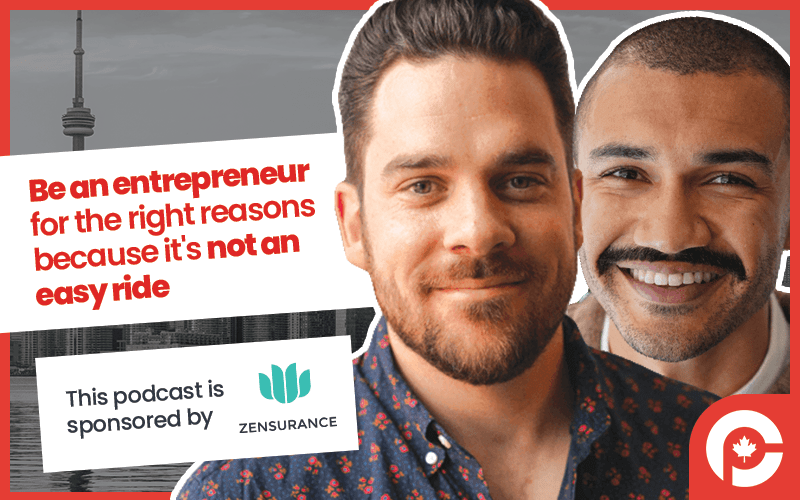
Become an entrepreneur for the right reasons because it’s not an easy ride
Episode
Two Canadian entrepreneurs, Tyler Dyck, Co-Founder & COO, and Brandon Goode Co-Founder & CEO, have partnered with global leaders...
Key takeaways
- Antidepressants create physical dependency in the brain and are significantly harder to discontinue than commonly believed, with withdrawal symptoms often mistaken for relapse by healthcare providers.
- Most antidepressants are prescribed by primary care doctors with limited time and resources, yet FDA approval studies are only six weeks long while patients typically remain on these medications for years or even decades.
- Before starting a business, ensure it aligns with your personality and values, as lack of career fit is a major contributor to mental health issues among high performers and entrepreneurs.
- Successful entrepreneurship requires being comfortable with chaos and uncertainty, accepting that mistakes will happen, and trusting yourself even when you don't have all the answers.
- Technology should be built intentionally as a tool to serve people and scale evidence-based solutions, rather than as a mechanism for companies to exploit users.
Transcript
Full transcript page · Interactive episode
============================================================
TRANSCRIPTION WITH SPEAKERS
============================================================

[00:00] SPEAKER_00: Starting a new business is an exciting journey, but it also comes with its fair share of risks.
[00:05] SPEAKER_00: Business insurance safeguards your hard work by protecting your assets.
[00:09] SPEAKER_00: Without it, a substantial liability claim could put your personal finances at risk.
[00:15] SPEAKER_00: Lability insurance also gives you a competitive edge in the market.
[00:19] SPEAKER_00: Visit Zensurance Forward Slash, save 35, to get a free quote for the low-cost insurance
[00:25] SPEAKER_00: protection you need so you can focus on your growing business.
[00:31] SPEAKER_00: Welcome to Canada's Podcast.
[00:37] SPEAKER_01: So Tyler, Brandon, welcome to Canada's Podcasts. And, you know, before we get too deep into
[00:46] SPEAKER_01: the conversation, why don't each of you tell us a little bit about yourselves,
[00:53] SPEAKER_01: what you do, you know, how you got here, you know, that kind of thing.
[00:59] SPEAKER_01: So, Brandon, why don't we kick off with you? Just sort of give us, give us you two a three minute
[01:06] SPEAKER_01: who you are and what you're doing and the passion that got you here, basically.
[01:12] SPEAKER_04: Yeah, sounds great. I'll try not to go too deep, just a little deep, but,
[01:17] SPEAKER_04: yes, I'm Brandon. I'm from Toronto originally actually grew up in Ajax.
[01:23] SPEAKER_04: My path has always been an interest in healthcare. I went to university and started
[01:31] SPEAKER_04: in pre-med before taking my first philosophy class and then getting a little too interested in that.
[01:37] SPEAKER_04: So, did a degree in biology and philosophy and then the Masters in Public Policy and Global Health
[01:42] SPEAKER_04: to understand more of the macro factors. I was away from Canada four or nine years
[01:49] SPEAKER_04: just trying to really motivate factors, trying to understand the world really and also just
[01:56] SPEAKER_05: with my background, who I grew up with, always been interested in
[02:04] SPEAKER_04: injustice, you could say, and then trying to make the world more fair, sounds a little groaning.
[02:11] SPEAKER_04: Yes, it's always been. And yeah, healthcare was the area I wanted to make that difference.
[02:15] SPEAKER_04: So, I've popped around, like I mentioned, did the Masters in Global Health. I
[02:21] SPEAKER_04: worked at a nano medicine laboratory in New York. I was a market analyst. I went to work for a
[02:27] SPEAKER_04: pharma company that they had quarters in Denmark and Copenhagen to understand that side of the picture.
[02:33] SPEAKER_04: And I realized in three years working at that pharma company, which is pretty famous now because
[02:38] SPEAKER_04: they make the drug a Zampik, which is kind of taken over the airwaves. I
[02:44] SPEAKER_04: realized the future of, I hope, future of healthcare didn't rely in treating symptoms indefinitely,
[02:51] SPEAKER_04: which is what we see happening quite across the board. And I got interested in the field of
[02:58] SPEAKER_04: psychedelic medicine for that reason. And after nine years abroad, I moved back to Canada
[03:02] SPEAKER_04: to work for a company called Field Trip Health, which was one of the early psychedelic medicine
[03:06] SPEAKER_04: companies that joined theirs. Point number one, looking at really root cause, holistic solutions
[03:11] SPEAKER_04: for a variety of illnesses. And after some time there, I kind of always knew that I wanted to build
[03:20] SPEAKER_04: my own vision. And I moved out to create the product in the microdosing space called Houston.
[03:27] SPEAKER_04: And kind of, this is where it's like a classic entrepreneurial story of just meeting with curiosity.
[03:33] SPEAKER_04: I, while building Houston in the microdosing space, which is microdosing small amounts of psychedelics,
[03:40] SPEAKER_04: which is quite popular, just doing user research, talking to people, you know, why the microdose
[03:45] SPEAKER_04: in the past, they were looking for, I kept hearing questions around people asking if they could
[03:50] SPEAKER_04: microdose to come off their antidepressants. And I heard it enough times in the starting to make me
[03:57] SPEAKER_04: scratch my head, you know, one, why are you seeking out a currently solicit substance to come off your
[04:04] SPEAKER_04: medication? To why wouldn't you go to your prescribing doctor about this in three? Can you just stop
[04:14] SPEAKER_04: into depressants when you're feeling better? And I'd never been on an antidepressant myself. I had
[04:20] SPEAKER_04: other other methods of managing my mental health, luckily with soccer and philosophy and just
[04:24] SPEAKER_04: left some downs of life. But I started diving deeper into the research and, you know, came across
[04:31] SPEAKER_04: our other scientific, profound remarks work and realized like, oh, antidepressants are actually
[04:36] SPEAKER_04: hard to get off of. They're not these benign multivitamines that we've been often led to believe. These
[04:42] SPEAKER_04: are either proper drugs that form physical dependency in the brain. And when I looked at, you know,
[04:51] SPEAKER_04: the numbers of patients using antidepressants and the duration of use in America, so 50 million
[04:56] SPEAKER_04: people on antidepressants now that numbers risen with COVID. I think it's really as 10 years ago,
[05:03] SPEAKER_04: two out of three people on an antidepressant were on. If over two years, after on it for over five,
[05:08] SPEAKER_04: a quarter wanted for over 10. And the clinical studies that the FDA uses to approve the drugs are
[05:13] SPEAKER_04: six weeks long. Right. So it's a very large mismatch and probably get into it in a bit. Like what?
[05:22] SPEAKER_04: Looks like, but that's when I reached out to Tyler, who I got to know while working at Field Trip.
[05:28] SPEAKER_04: And we had some complimentary expertise and I kind of ran this idea by him one day overhead,
[05:34] SPEAKER_04: sitting at the park in Rons' Vale. And, you know, that's building it for the last
[05:41] SPEAKER_04: about a year and a half now and kind of ties into Tyler's story.
[05:45] SPEAKER_03: Tyler, what about you?
[05:48] SPEAKER_03: Yeah, quite a different, I guess, origin than Brandon, but not too far off. I grew up on the other
[05:55] SPEAKER_03: side of Toronto in Burlington, Ontario. And I now live in Toronto with my wife and daughter, but
[06:03] SPEAKER_03: yeah, for me, growing up and going to school, you know, healthcare was never really on my radar.
[06:10] SPEAKER_03: I actually wanted to become a chartered accountant since as early as I can remember maybe the first grade.
[06:19] SPEAKER_03: My dad was a chartered accountant and I admired him quite a bit. So I always wanted to follow in his
[06:25] SPEAKER_03: footsteps, you know, ended up going to Wolfard Laurier and getting my, you know, my business degree
[06:32] SPEAKER_03: and doing my accounting option and then ended up getting my CA designation with KPMG,
[06:38] SPEAKER_03: the same firm my dad worked at. So I really nailed it when it came to achieving that dream.
[06:45] SPEAKER_03: But yeah, from there is where my journey into the mental health industry really started,
[06:52] SPEAKER_03: is a couple of years into my career at KPMG is when I first really started experiencing depression.
[07:02] SPEAKER_03: No surprise looking back, you know, is working in this unhilling role that I had always dreamt of,
[07:08] SPEAKER_03: but really never even considered whether it was for me as a person, learned since then that
[07:14] SPEAKER_03: definitely is not. I think it's actually the number one least recommended profession for my personality type.
[07:22] SPEAKER_03: I need much more meaning in my life than just numbers. But
[07:26] SPEAKER_03: so yeah, I mean two years into my career at KPMG, I was part of this, you know, that's where my
[07:31] SPEAKER_03: my anti-depressant story actually started. We call it the there's quite a bit of talk around this
[07:39] SPEAKER_03: this idea of medicating normal in the anti-depressant space. And that's exactly what happened with me,
[07:45] SPEAKER_03: right? I went into my doctor's office. I was working in an unfulfilling job 75 hours a week,
[07:51] SPEAKER_03: had no time to eat well, diet, diet was terrible, wasn't sleeping well. I don't even know if I knew
[07:58] SPEAKER_03: what meditation was back then, you know, when you look at like these holistic, you know, wellness
[08:04] SPEAKER_03: pillars that we tried to teach with that outro, I was, you know, a one across the board if you're
[08:11] SPEAKER_03: rating that on like a seven point scale. So yeah, I went to my doctor's office and you know,
[08:16] SPEAKER_03: an anti-depressant prescription was recommended for me based on the fact that I had depression,
[08:22] SPEAKER_03: you know, it seemed to run in my family. You know, I must be a chemical imbalance and I was dealing
[08:26] SPEAKER_03: with it at the time, clearly not. So, you know, medication, not really first line of treatment and
[08:32] SPEAKER_03: these very normal circumstances, but that's how it goes for so many of us. So yeah, I mean, it provided
[08:39] SPEAKER_03: some short-term relief. It allowed me to kind of step back and, you know, quit that job at KPMG
[08:45] SPEAKER_03: that I had been kind of gunning for for like 20 years and that's when I found my passion for
[08:51] SPEAKER_03: the startup space. I took a job at Hello Fresh Canada, the meal kit company, when we were just
[08:57] SPEAKER_03: starting up here in Canada. So I think I was like a 15th employee there pretty early on and
[09:03] SPEAKER_03: loved it. You kind of fell in love with the startup space immediately, you know, the complete lack
[09:09] SPEAKER_03: of structure, the chaos, the problem solving, the, you know, just just the act of building something,
[09:16] SPEAKER_03: I just really, really fell in love with. So I stayed there for about two and a half years
[09:23] SPEAKER_03: and, you know, so at that point, so when my anti-depressant story comes back in and I was about,
[09:28] SPEAKER_03: I was on my medication for about three years at that time, about two years into my time at Hello
[09:39] SPEAKER_03: and at the time, I'm like, I don't really feel like I'm getting married to the, you know, the
[09:43] SPEAKER_03: woman in my dreams and I really just don't feel anything. Like I didn't feel pleasure, didn't feel
[09:48] SPEAKER_03: pride, I felt depressed, I felt anxious and I've come to learn that actually a very very common
[09:56] SPEAKER_03: thing for anti-depressant users is, you know, as the duration of use increases, you know, especially
[10:01] SPEAKER_03: past this, you know, six to nine month recommended treatment duration, you know, the Canadian guidelines,
[10:09] SPEAKER_03: the US guidelines, they also just treatment of six to nine months, but as Brandon mentioned earlier,
[10:12] SPEAKER_03: you know, most users are on these medications, well, past that. So yeah, I, I realized in two and a
[10:19] SPEAKER_03: half years, I was, you know, getting worse and around that time is when I found the job opportunity
[10:25] SPEAKER_03: for a director of finance role at Field Trip Health, where I met Brandon, so I joined them as the
[10:30] SPEAKER_03: fifth employee really thought, you know, as I can submerge myself in this world of psychedelic
[10:35] SPEAKER_03: medicine or alternatives, you know, mental health treatment, you know, maybe I could figure out
[10:40] SPEAKER_03: my own mental health and why it continued to get worse when I was apparently taken medication,
[10:47] SPEAKER_03: that would make me feel better. And so that's that's kind of the real origin of outro is being
[10:54] SPEAKER_03: at Field Trip. Shortly after I joined, I made a New Year's resolution to quit my auntie's presence.
[11:00] SPEAKER_03: I came off them over a series of weeks after being on them for over three years. And, you know,
[11:07] SPEAKER_03: over the course of the next few months, just had a terrible withdrawal. You know, ended up being
[11:13] SPEAKER_03: put back on medication. That's another thing that that happens quite often. It's just a, you know,
[11:19] SPEAKER_03: a mistake of withdrawal for relapse. Too many people, you know, go to their doctor with symptoms of
[11:25] SPEAKER_03: severe anxiety of depression that are caused by coming off these medications and when really,
[11:31] SPEAKER_03: you know, you've just come off them too quickly. And so I was put back on another medication,
[11:36] SPEAKER_03: long story short, ended up coming off that medication, going through withdrawal again.
[11:41] SPEAKER_03: And it was at that time that I was actually finally made the connection that, you know, maybe this
[11:46] SPEAKER_03: is deeper than this. Maybe this is just the fact that I'm still doing a, you know, finance job that
[11:52] SPEAKER_03: is completely unfulfilling and kind of meaningless to me. So I was coming off from a medication and
[11:58] SPEAKER_03: working with a career coach at the same time when I made the decision to kind of leave my finance
[12:02] SPEAKER_03: career behind, put my job at Field Trip without any plans. My daughter was due to be born in a
[12:09] SPEAKER_03: couple months. And yeah, six weeks after I quit my job at Field Trip, this guy reached out to me
[12:14] SPEAKER_03: with an idea to build a business to help people get off of anti-depressant medications. Without
[12:19] SPEAKER_03: even knowing, I had just struggled with this process for, you know, the two years that we had
[12:24] SPEAKER_03: known each other up until that point. And that's when I was born and I was, you know, the entrepreneurship
[12:32] SPEAKER_01: journey begins. That was a little bit of passion there in terms of... A lot of passion and...
[12:38] SPEAKER_01: So we should be providing... Lots of serendipity as well. So, you know...
[12:43] SPEAKER_01: You know, I mean, I don't like to, you know, we'd like to focus on you a little bit, but, you know,
[12:47] SPEAKER_01: mental health is such a focus these days, you know, I think with the COVID stuff, it really kind of
[12:57] SPEAKER_01: ballooned basically. Maybe should sort of, you know, I was looking at outro and some of the things
[13:07] SPEAKER_01: you do. And one of the things that I sort of came away from the site was the regulatory and
[13:16] SPEAKER_01: the affordability and the things like that. The approach is really, obviously cover that too, but, I mean,
[13:25] SPEAKER_01: where are you guys in terms of being a solution for the world or, you know, for everyone kind of thing?
[13:37] SPEAKER_04: Yeah, I touch on that a little bit, but, you know, with the healthcare business, it's kind of like
[13:43] SPEAKER_04: research in a way, right? Like you have to... It's a new methodology. I grew up in Taper and it's based
[13:52] SPEAKER_04: on very fundamental science that a co-founder Mark Horwitz developed, both through, you know, being a
[13:56] SPEAKER_04: psychiatrist and a neuroscientist, but also his personal journey coming off the medications,
[14:02] SPEAKER_04: which he learned a lot of what he knows now in this evidence base, not from
[14:08] SPEAKER_04: colleagues at the World Leading Institution that he was at, but actually going on to these pure
[14:14] SPEAKER_04: support forums that, you know, over 100,000 people have flocked to and growing to try and find a
[14:19] SPEAKER_04: solution for this, right? You know, one of those people is very much pioneer in that space as
[14:26] SPEAKER_04: the Del Framer. And so we're at with Outro right now is we're taking Mark's work that he's been
[14:33] SPEAKER_04: doing with the NHS in England and nationally and trying to bring that over to Canada first and
[14:41] SPEAKER_04: then who spent less where the problems obviously very large. And really with the point of technology,
[14:48] SPEAKER_04: I suppose, is scaling solutions and making them more accessible. And so with Mark's work,
[14:56] SPEAKER_04: what he's doing now, we're collecting those data sets and we're implementing that care model,
[15:01] SPEAKER_04: the telemedicine passion, so that we can start out by better understanding what does the
[15:06] SPEAKER_04: taper and process look like for different types of patients, whether that's medication history,
[15:12] SPEAKER_04: current medical situation, current life situation, demographics, etc. So we can build the protocols
[15:21] SPEAKER_04: that are personalized to different individuals and then be able to do that at a scale that reaches
[15:27] SPEAKER_04: as many people as possible, give them that option of an evidence-based safe way to get off their
[15:33] SPEAKER_04: medications instead of being trapped as people have been now, and then also enable care providers.
[15:39] SPEAKER_04: Most of the most antidepressants now are prescribed by primary care doctors and family doctors,
[15:45] SPEAKER_04: who are obviously limited by time and resources, so how can we also build out those tools to help them
[15:53] SPEAKER_04: make better collaborative decisions with their patients, and at the end of the day,
[15:57] SPEAKER_04: are better for the individual patient and better for the healthcare system.
[16:01] SPEAKER_04: It's right now we're in that process of tapering our first patients off in Ontario and British
[16:05] SPEAKER_04: Columbia using a nurse practitioner and developing those insights and those datasets so we can
[16:12] SPEAKER_00: scale responsibly with technology. Running a new business can be stressful. The last thing you
[16:19] SPEAKER_00: need is to worry about unexpected accidents or lawsuits. Don't overlook the importance of liability
[16:25] SPEAKER_00: insurance. It's a critical investment in the success of your business. Protect yourself, your
[16:31] SPEAKER_00: assets, and your reputation by securing the liability coverage you need. Take the first step
[16:38] SPEAKER_00: and safeguarding your business. Today go to zinsurance.com forward slash save 35 for a free business
[16:46] SPEAKER_00: insurance quote. Get the low cost insurance protection you need from Canada's small business
[16:52] SPEAKER_01: insurance experts. You know it's good interesting stuff but why don't we get back to the entrepreneurship
[17:00] SPEAKER_01: thing just some sort of things. You know you're both in that mid-life range and you've experienced
[17:11] SPEAKER_01: things. You know what about you Jeremy? Why do you you know I mean Tally you explained a little
[17:20] SPEAKER_01: bit about your side of things so maybe we'll throw this on my brand and why take the risk of
[17:29] SPEAKER_01: entrepreneurship. I mean why couldn't you go into something you know in policy you know
[17:38] SPEAKER_01: you were a you know a big farmer government etc etc what why step into this area.
[17:46] SPEAKER_05: Pretty pretty funny question because I think my biggest fear is being bored
[18:01] SPEAKER_04: yeah I I struggled a lot in university and I used to be a soccer player that was a lot of my life
[18:10] SPEAKER_04: and I got scholarship in US and I went to play in England for a year and that took over a lot of
[18:15] SPEAKER_04: my life but similar to Tyler being an accountant it wasn't really me and so a lot of my life was
[18:23] SPEAKER_04: dictated by that and you know I took up all my time then I wanted to go into the business world get
[18:30] SPEAKER_04: more of my true one my colleague geeky side out and so I started in the business world and I guess
[18:37] SPEAKER_04: I was working for companies for about five years and I I learned a lot and so the positive side of
[18:43] SPEAKER_05: things you know I learned a lot but I I really hated it. I am a learner by trade I guess you
[18:55] SPEAKER_04: could say and something I learned not too long ago was this idea of a explore and exploit
[19:02] SPEAKER_04: phases of life not exploit in a negative way but the explore phase being and taking information
[19:08] SPEAKER_04: and learning about the world learning about yourself and different people have a different
[19:12] SPEAKER_04: period of this explore phase and I had a good explore phase many different industries people countries
[19:19] SPEAKER_04: etc and when I came across psychedelics for the first time that was a light bulb that went my head
[19:28] SPEAKER_04: oh something really really really interesting I'm very happy like lit a little fire in my soul so
[19:34] SPEAKER_04: to speak and then you know I went to work with this psychedelic company I still wasn't feeling
[19:41] SPEAKER_04: wasn't feeling quite right because I couldn't bring to life a vision that I thought was important
[19:47] SPEAKER_04: for the world so when I left and I took that risk that was more important to me than the security
[19:52] SPEAKER_04: was being able to take a chance to bring a vision I have to life that I thought was really important
[19:58] SPEAKER_04: to the world and could help people and so when I came across this problem antidepressants
[20:04] SPEAKER_04: discontinuation and all the factors that go into it in terms of the actual medical component the
[20:10] SPEAKER_04: idea of why is false evidence being implemented in the healthcare system but real evidence isn't
[20:18] SPEAKER_04: right that's the political aspect the economic aspect and then how do you leverage technology
[20:23] SPEAKER_04: in the way it's meant to be used to provide the greatest moment of good to the greatest amount of
[20:27] SPEAKER_04: people and everything I've learned in that explore phase of my life really came together
[20:34] SPEAKER_04: with outro and that in the phase of life where it's the exploit phase so to speak that's just
[20:40] SPEAKER_04: using what you've learned to now create something and start to externally you know bring that into
[20:48] SPEAKER_04: the world and so that's essentially I guess was the personal path and yeah just from a personality
[20:58] SPEAKER_05: perspective my what I'm driven to do is worth that risk I suppose at least right now in my current
[21:09] SPEAKER_01: stage of life let's move into lessons a little bit I thought a Utah you know what advice would
[21:22] SPEAKER_01: you give to somebody you know that really sort of wants to start a business that sort of you know
[21:31] SPEAKER_01: obviously maybe they're in the wrong spot like you were maybe they're just whatever
[21:38] SPEAKER_01: what if you learned that you that surprised you that maybe you can pass on yeah I mean I think
[21:47] SPEAKER_03: the obvious starting point for me given my personal experience it just make like before you do
[21:52] SPEAKER_03: and make sure it's for the right reasons and that it's a fit with who you are I think I mean
[21:58] SPEAKER_03: not you know in talking with you know therapists and people in the mental health industry I do
[22:04] SPEAKER_03: think a big reason for a lot of you know mental health and stress concerns for some you know
[22:12] SPEAKER_03: business people are high performers is that lack of you know career and personality fit so first
[22:20] SPEAKER_03: you know make sure it's for the right reasons because it's obviously not an easy ride and things
[22:25] SPEAKER_03: are going to get tough um after that I mean the biggest thing I've been saying ever since I got
[22:32] SPEAKER_03: into the the startup world is just like you better be sure that you're you're okay with you know
[22:37] SPEAKER_03: being very uncomfortable or being very comfortable sorry with being uncomfortable I think that's
[22:44] SPEAKER_03: like the number one thing you're starting a business entrepreneurship working in startups is you
[22:50] SPEAKER_03: you really need to be comfortable with the chaos um that is the first and foremost it's not easy
[22:57] SPEAKER_03: things change daily um you know there's there's a lot of hours that go into it nobody's really
[23:03] SPEAKER_03: telling you how to do it um so you need to be comfortable with that and then yeah another thing
[23:10] SPEAKER_03: that I've been you know kind of working on or just aware of is yet nobody really knows what they're
[23:16] SPEAKER_03: doing in most places right so there's that um you know there's always that self doubt
[23:24] SPEAKER_03: when you're doing something like this and I think one thing that I've really been
[23:28] SPEAKER_03: focused on or just trying to to draw from is like most people in every profession don't really know
[23:34] SPEAKER_03: what they're doing on a day-to-day basis so um you know we're all just doing what we think is right
[23:39] SPEAKER_03: or doing what we were told to do or following this following that you know don't get too caught up
[23:45] SPEAKER_03: or too hard on yourself if if you don't know the answer just you know you really need to just trust
[23:50] SPEAKER_03: in yourself um to do the right thing and if you do make a mistake it's not the end of the world I think
[23:57] SPEAKER_03: that's been another huge learning for me especially coming from I don't know my upbringing and coming
[24:04] SPEAKER_03: from you know a CPA background is like you have this idea that everything needs to be so accurate
[24:10] SPEAKER_03: and so perfect but it never can be so you really need to be able to let that go as well
[24:18] SPEAKER_01: this is just pretty good I mean that's a good advice for anyone I mean what's the best piece of
[24:23] SPEAKER_01: advice is to sort of aim at both of you you know that sort of gem that the mentor has thrown at you
[24:32] SPEAKER_01: that you kind of carry around and you hit pocket and and use it or sometimes on a daily
[24:39] SPEAKER_01: sometimes less but what this is there's something there may not be something there but there's
[24:44] SPEAKER_01: something there that you carry around with you Brandon what do you go for? Yeah for me there's a
[24:53] SPEAKER_04: a lot of it comes from my soccer days actually yeah um I had a very pivotal coach me growing up as
[25:02] SPEAKER_04: Russian coach uh Russian interon or named Alex and I always got along with
[25:11] SPEAKER_04: Russians quite well Russians and French uh and by speaking with them they have some different
[25:15] SPEAKER_04: ways of perceiving the world philosophically and I remember there was one game not played center
[25:22] SPEAKER_04: back center defense and another player cut my shoelace with their cleat by accident and so my shoes
[25:30] SPEAKER_04: slipped off and I didn't clear the ball far enough or the box and then they got the ball and they
[25:35] SPEAKER_04: put it back in and they scored and he was berating me for not clearing the ball far enough and I'm like
[25:41] SPEAKER_04: Alex my shoe fell off I can plant my foot anyways you know he says to Brandon you just need to do it
[25:51] SPEAKER_04: and that has always stuck with me it's like it can be easy to compare yourself to others or
[25:57] SPEAKER_04: you've had advantages or things happen you know and there's all these these reasons for things
[26:05] SPEAKER_04: happening but at the end of the day you just got to find a way to do it you know and you can
[26:11] SPEAKER_04: as Tyler said around mistake component there's got to create space for yourself to be like
[26:18] SPEAKER_04: sad or upset about a mistake and you know let that flow through you and then aren't
[26:23] SPEAKER_04: let's let's go make the most out of this now and let's just just do it I guess you kind of borrowed
[26:28] SPEAKER_03: that from Nike didn't you? Yeah Tyler what about you? I mean one thing that I've realized or that I've
[26:42] SPEAKER_03: kind of started trying to live by as funny as it sounds as it's kind of like taking our
[26:47] SPEAKER_03: our approach to coming off of medication at a show but applying the same kind of theory to my life
[26:54] SPEAKER_03: I don't know I realize it's very accurate when you're talking about many things I mean just at a very
[26:59] SPEAKER_03: high level what we do is we take small steps at a rate that you can tolerate with you know no real
[27:07] SPEAKER_03: and no real timeline right like a lot of people come in there like how long is it going to take to
[27:13] SPEAKER_03: get off my medication it's like we don't know you know we can give you a general estimate or
[27:18] SPEAKER_03: guideline but we don't know and so I don't know a few months ago and like this is actually really
[27:23] SPEAKER_03: applicable to many journeys right is I mean you take it one step at a time at a rate that you can
[27:30] SPEAKER_03: tolerate if you can't tolerate it you know if you start to have symptoms you know I mean coming
[27:37] SPEAKER_03: off medication it's withdrawal symptoms in life it could be depression anxiety stress you know
[27:42] SPEAKER_03: slow things down create some space for yourself stabilize and then keep going
[27:49] SPEAKER_03: and you know not worrying too much about the end result or how long it takes to get there and just
[27:56] SPEAKER_03: taking it one step at a time based on you know your toleration and just trusting the process so
[28:04] SPEAKER_01: okay yeah so that makes sense some good insights guys let's have a bit of fun before we
[28:10] SPEAKER_01: look calling the day you know each time Tyler you you go first this time you are mourning or a night
[28:18] SPEAKER_03: person oh I always weather morning person until I became a dad it's a little harder to do now
[28:30] SPEAKER_03: with my daughter waking up at seven you know trying to spend time with her before the day
[28:35] SPEAKER_03: it started yeah I was saying mostly a morning person red yeah lately I had become
[28:42] SPEAKER_03: become overnight person after after I get her down off to bed get back online
[28:50] SPEAKER_04: that's my friend what do you say definitely a night owl by trade yeah
[28:56] SPEAKER_04: you know Wikipedia was my happy place for a lot of my life saying it before I have pretty
[29:02] SPEAKER_04: stuff but another lesson in startups is finding balance so I've been setting a stricter bed times
[29:10] SPEAKER_04: for myself just to you know find that balance you get both time at the night like Tyler said
[29:14] SPEAKER_04: you know have meetings and all that but you also get some really good time in the morning as well
[29:19] SPEAKER_05: wake up early enough okay Tyler what book are you reading listening right now
[29:27] SPEAKER_03: oh I have like three on the go that I just haven't been able to pick up in a while it's been
[29:32] SPEAKER_03: been really busy um well I haven't been reading I mean the most recent book I was reading was
[29:39] SPEAKER_03: Gabbard Mott's new book and I'm blanking on the title right now um but uh yeah but other than that
[29:48] SPEAKER_03: it's what's that sorry you ADHD no oh this is how often I'm reading you can tell um
[29:56] SPEAKER_03: I think it's called the miss of it's the miss of normal oh so um yeah really centered around
[30:04] SPEAKER_03: early childhood trauma and the myth of normal and just you know it's a very it's just very I'm
[30:09] SPEAKER_03: I'm trying to read a lot of books that are quite you know in line with what we're doing at outshow
[30:13] SPEAKER_03: you know trying to understand people's experiences uh you know and why medication is such just a common
[30:21] SPEAKER_03: response to those they can really complex you know parts of us that obviously can't be cured
[30:29] SPEAKER_01: or treated with a pill Brandon what about you more about what would you recommend that you read
[30:36] SPEAKER_01: that sort of had an impact made you change the way you kind of operate um
[30:43] SPEAKER_04: um my favorite book of all time is all this Huxley's brennial philosophy that's a little bit
[30:51] SPEAKER_04: more of a philosophical read just look at various lessons and perspectives on life through
[30:58] SPEAKER_04: variety of religions that exist and have existed and how they're all saying kind of the same thing
[31:07] SPEAKER_04: um yeah that's pivotal and Victor Frankl that's a very common podcast book I'm going to be
[31:12] SPEAKER_04: such a typical podcast guest but Victor Frankl's meaning is absolutely fantastic and that's something
[31:18] SPEAKER_04: you'd think a lot about as a team um you know learning to be better leaders is how do we create this
[31:25] SPEAKER_04: sense of why we're doing the things that we're doing and you know that a whole idea of the book being
[31:33] SPEAKER_04: you can kind of go through anything or accomplish anything um if you know why you're doing it
[31:39] SPEAKER_04: by the he coined local therapy so that's an even highly recommend like 50% of other podcasts
[31:47] SPEAKER_01: what is there Brandon if you had to a big one word to describe who the heck you are what would it be
[31:56] SPEAKER_05: oh wow in an active um corny uh
[32:04] SPEAKER_05: uh philosopher Tyler what about you
[32:11] SPEAKER_05: one word just going to be honest I'm curious
[32:18] SPEAKER_01: good I like I like to like to do this so that's not I don't get that one
[32:22] SPEAKER_01: but no no so what's keeping you guys up at night
[32:28] SPEAKER_05: you
[32:29] SPEAKER_05: gardener express what no
[32:33] SPEAKER_04: it's like a nice um it's almost like white noise at this point yeah um what's keeping me up
[32:39] SPEAKER_04: I'm I'm really really passionate about and interested in um the impact of technology
[32:47] SPEAKER_04: on our society um yeah the intentionality behind building it um how we can keep up with it
[32:56] SPEAKER_04: how we can make sure that it's a tool that we use rather than a tool that helps other companies
[33:05] SPEAKER_04: will not name any use us um how that actually is a a huge component of the
[33:14] SPEAKER_04: quote unquote mental health crisis that we're experiencing it relates a lot to our work in general
[33:19] SPEAKER_04: how can you think of mental health um kind of systemically rather than chemically as we've
[33:27] SPEAKER_05: been thinking about it for the last several decades I'm what about you keeping me up at night
[33:33] SPEAKER_03: hmm um not for me kid all right my dad uh it's super pretty good I mean I would honestly I
[33:43] SPEAKER_03: it's her you know her future and my family's future that keeps me up the most these days with
[33:49] SPEAKER_03: you know all of the things going on in the world that we tried to uh but I've always been pretty good
[33:55] SPEAKER_03: at uh you know looking away from or just not letting bother me but ever since I had a daughter
[34:01] SPEAKER_03: it really uh it's a lot differently so um yeah I would say it's it's what you know the world
[34:08] SPEAKER_03: world will she live in is probably the thing that keeps me up the most at night and so you know
[34:15] SPEAKER_01: trying to do our part here to uh and make that a better place that's that's great guys it's been
[34:23] SPEAKER_01: really good meeting it uh I've enjoyed the session we we've hit the time and uh how can people
[34:30] SPEAKER_01: get a hold of you which happens so for a fairly regular basis so it's important that you know
[34:35] SPEAKER_01: people listen to these things and then yeah we want to grab a hold of people so
[34:41] SPEAKER_04: now it's quite simple uh www.outro.com is our our website URL and uh you can reach me at
[34:52] SPEAKER_04: branded at outro.com and Tyler at outro.com want to keep it as simple as possible
[34:58] SPEAKER_04: yeah I'll just find us a link then as well okay guys thank you very much coming on
[35:03] SPEAKER_01: be great meeting you and uh you know it's it's a pretty exciting exciting time okay uh uh
[35:11] SPEAKER_01: your space is uh is there is a good space so that's great thank you yeah thank thanks so much for
[35:18] SPEAKER_03: having us