
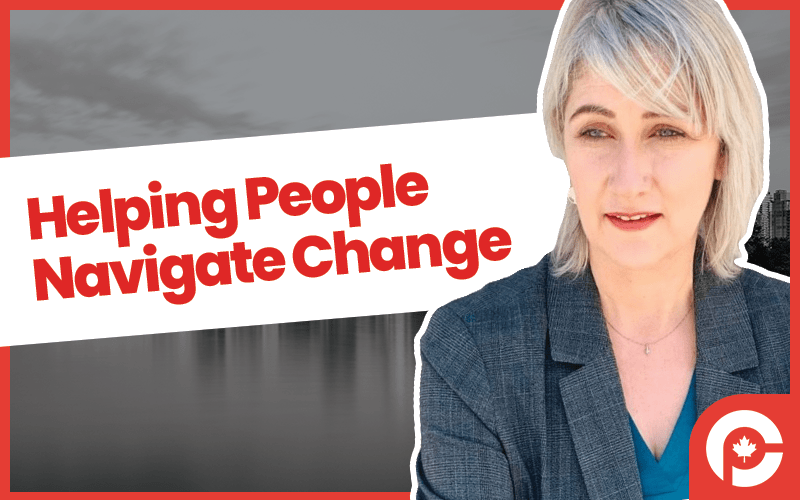
Helping People Navigate Change
Episode
Raelene Bergen is a renowned leadership consultant, Founder, and CEO of Origin Leadership Consulting. Raelene is a passionate advocate...
Key takeaways
- Life experience and skills gained from non-traditional paths like raising children or working in family businesses can be just as valuable as formal education when building a successful enterprise.
- Mindset management is more critical than business functions when starting out, so dedicate intentional time daily—even just 10-15 minutes—to work on your mindset, planning, and moving forward rather than getting stuck in endless preparation.
- You don't need to quit your day job to start building your business; begin small while maintaining stability, and incrementally work toward your goal instead of waiting for the perfect moment to make a drastic change.
- A good coach or mentor helps you identify strengths you've dismissed in yourself, provides accountability, and keeps you moving forward when you feel scattered or discouraged.
- Planning can become a form of procrastination, so break down overwhelming goals into small actionable steps and focus on consistent progress rather than perfect preparation.
Transcript
Full transcript page · Interactive episode
============================================================
TRANSCRIPTION WITH SPEAKERS
============================================================

[00:00] SPEAKER_04: Welcome to Canada's podcast.
[00:05] SPEAKER_04: Hello, I'm Mario Tonigus,
[00:07] SPEAKER_04: the managing editor of Canada's podcast,
[00:09] SPEAKER_04: joining me today on British Columbia podcast,
[00:13] SPEAKER_04: is Raylene Bergen, who is founder and CEO of Origin Leadership.
[00:17] SPEAKER_04: Thanks for joining us today.
[00:19] SPEAKER_00: Yeah, thanks so much for having me.
[00:21] SPEAKER_00: I'm really glad to be here.
[00:22] SPEAKER_04: All right, let's talk about origin leadership.
[00:25] SPEAKER_04: Tell me a little bit about what that is and what you do.
[00:29] SPEAKER_00: Yeah, I'm happy to.
[00:30] SPEAKER_00: Origin has been around for a few years now.
[00:34] SPEAKER_00: When I initially wanted to start a business or thought,
[00:37] SPEAKER_00: you know, I'd be doing something more intentionally with my work.
[00:40] SPEAKER_00: I looked around and saw that there was a lot of really great
[00:44] SPEAKER_00: coaches, consultants, advisors, educators, business people
[00:48] SPEAKER_00: who were doing impactful work, but they were doing it alone.
[00:52] SPEAKER_00: And I thought, what would it be like if we pulled some of these
[00:56] SPEAKER_00: amazing talents under one roof as independent consultants
[01:00] SPEAKER_00: looking for bigger and more meaningful projects
[01:05] SPEAKER_00: that we could work on together?
[01:07] SPEAKER_00: So essentially pulling our skill sets together
[01:08] SPEAKER_00: and making it project by project based on what the client needs,
[01:14] SPEAKER_00: rather than a lot of organizations who have their team,
[01:18] SPEAKER_00: and that's what the client gets.
[01:20] SPEAKER_00: In our view, we put the right teams together
[01:23] SPEAKER_00: for that particular client.
[01:26] SPEAKER_04: Okay, so how did you get involved in this kind of work?
[01:32] SPEAKER_00: I think I took a bit of a twisty pathway to get here.
[01:38] SPEAKER_00: I did spend many years at home raising my children.
[01:43] SPEAKER_00: I didn't, I worked, but more on entrepreneurial endeavors
[01:47] SPEAKER_00: within our family.
[01:48] SPEAKER_00: So my partner and I have a visual effects company
[01:52] SPEAKER_00: that we've had for 26 years now.
[01:54] SPEAKER_00: And that's his primary work.
[01:57] SPEAKER_00: But all through those years, I was working on client relationships,
[02:01] SPEAKER_00: getting things set up.
[02:02] SPEAKER_00: But I didn't really look at it as my business
[02:05] SPEAKER_00: or even a skill set that I had.
[02:07] SPEAKER_00: I didn't realize until much later on that,
[02:10] SPEAKER_00: connecting the right people was really something I was quite good at.
[02:14] SPEAKER_00: And later on, I started looking at entrepreneurial endeavors
[02:19] SPEAKER_00: of my own.
[02:20] SPEAKER_00: So I had a cheesecake business.
[02:22] SPEAKER_00: I really loved restaurants and food businesses.
[02:25] SPEAKER_00: But it wasn't until my family was sort of more independent
[02:29] SPEAKER_00: that I looked at, what do I want to actually do?
[02:33] SPEAKER_00: And it led me to understand that a lot of entrepreneurs
[02:37] SPEAKER_00: were struggling to do things on their own.
[02:40] SPEAKER_00: I ended up going in getting a master's degree
[02:43] SPEAKER_00: in leadership studies later on.
[02:46] SPEAKER_00: I didn't start that degree until I was 47 years old.
[02:49] SPEAKER_00: I had no education before that.
[02:51] SPEAKER_00: I went right from no education into a master's program.
[02:56] SPEAKER_00: So I was able to skip over the bachelor
[02:59] SPEAKER_00: because I had a lot of work experience by that point.
[03:02] SPEAKER_00: But I just really focused on one project at a time.
[03:07] SPEAKER_00: I started by coaching and working with small businesses,
[03:11] SPEAKER_00: small entrepreneurs who were trying to really make a difference.
[03:14] SPEAKER_00: And I had some experience doing that.
[03:16] SPEAKER_00: And so that's how it started.
[03:18] SPEAKER_00: And I started seeing it in a bigger way
[03:20] SPEAKER_00: and how organizations really needed the fire
[03:25] SPEAKER_00: that independent consultants and entrepreneurs have.
[03:29] SPEAKER_00: And when we pull that together,
[03:30] SPEAKER_00: we really had something special.
[03:33] SPEAKER_04: Now, tell me a little bit about this whole area
[03:36] SPEAKER_04: of coaching and consulting for businesses.
[03:41] SPEAKER_04: I am curious even on a personal level, right?
[03:44] SPEAKER_04: Because I have a friend of mine who keeps telling me,
[03:48] SPEAKER_04: he said, you should go see a business coach.
[03:52] SPEAKER_04: Tell me why it's important for an entrepreneur to have someone like that.
[04:00] SPEAKER_00: Yeah, well, certainly it's important to know the difference
[04:03] SPEAKER_00: between coaching and consulting.
[04:05] SPEAKER_00: There is a difference.
[04:06] SPEAKER_00: Coaching is very much about the personal experience, right?
[04:09] SPEAKER_00: You're working towards something in your own mindset,
[04:13] SPEAKER_00: your own understanding of what you want and where you need to go.
[04:16] SPEAKER_00: Where consulting is bringing a specific school kit
[04:20] SPEAKER_00: or skill set into a project, right?
[04:23] SPEAKER_00: So as a coach and when, you know, I needed a coach,
[04:27] SPEAKER_00: I think that that's just life, right?
[04:29] SPEAKER_00: Whether you call them a mentor or a coach,
[04:31] SPEAKER_00: but a coach is someone who's really there
[04:33] SPEAKER_00: to keep you accountable to help you move forward
[04:35] SPEAKER_00: in the initiatives that you've set out.
[04:38] SPEAKER_00: And often to help you set those initiatives,
[04:40] SPEAKER_00: I think we live in a kind of world that's,
[04:44] SPEAKER_00: it's really easy to become scattered
[04:46] SPEAKER_00: and it's really easy to become discouraged.
[04:49] SPEAKER_00: And when you really want to get somewhere,
[04:51] SPEAKER_00: especially at my age, I'm almost 53 years old
[04:54] SPEAKER_00: and I don't feel like I have time to play
[04:58] SPEAKER_00: different ideas or different things.
[05:01] SPEAKER_00: And I think it just, there just comes a point
[05:03] SPEAKER_00: in a person's professional journey where you have to make decisions
[05:07] SPEAKER_00: and you want those decisions to be based
[05:10] SPEAKER_00: on accurate, objective, real, a real solid foundation.
[05:16] SPEAKER_00: You need that anchor point.
[05:18] SPEAKER_00: And a coach is really good at helping people find that
[05:20] SPEAKER_00: because we often don't see our own strengths,
[05:23] SPEAKER_00: the same, the way someone else does.
[05:25] SPEAKER_00: Did, and I'll give you an example.
[05:27] SPEAKER_00: When I was raising five children,
[05:31] SPEAKER_00: I was helping my husband build a business
[05:33] SPEAKER_00: and I just have to say that he has an animation
[05:37] SPEAKER_00: of visual effects business and in Canada,
[05:40] SPEAKER_00: you didn't, that wasn't a real thing
[05:42] SPEAKER_00: when you lived in small towns to sketch one,
[05:44] SPEAKER_00: which is where we were at the time.
[05:46] SPEAKER_00: We had to make that work.
[05:48] SPEAKER_00: We had to make that education
[05:50] SPEAKER_00: because unless he was willing at that time
[05:52] SPEAKER_00: to go to Vancouver or Toronto,
[05:54] SPEAKER_00: he couldn't be educated in it either.
[05:57] SPEAKER_00: And doing those things, having smaller entrepreneurial ventures,
[06:02] SPEAKER_00: all of those things, when I got to the point
[06:05] SPEAKER_00: where I wanted to make a business,
[06:07] SPEAKER_00: I never considered those as strengths.
[06:09] SPEAKER_00: I never realized all the things I had been doing
[06:13] SPEAKER_00: in my personal experiences and professional experiences.
[06:17] SPEAKER_00: I never realized how important they would be
[06:20] SPEAKER_00: to building a business.
[06:21] SPEAKER_00: So we often dismiss our best qualities.
[06:24] SPEAKER_00: We don't understand what our strengths are.
[06:26] SPEAKER_00: And I think a coach is a good coach can do that for you,
[06:30] SPEAKER_00: can really help you identify the anchor points
[06:33] SPEAKER_00: that you can build your business from.
[06:35] SPEAKER_04: What was the toughest thing for you
[06:38] SPEAKER_04: in becoming an entrepreneur yourself?
[06:42] SPEAKER_00: Mindset, truly just, I mean it,
[06:45] SPEAKER_00: and everybody says it,
[06:46] SPEAKER_00: we all have in posture syndrome, it's just a fact,
[06:49] SPEAKER_00: but it really is getting past that.
[06:53] SPEAKER_00: And I sometimes joke that it was almost a blessing
[06:56] SPEAKER_00: in many ways that I didn't have the education at the time
[06:59] SPEAKER_00: because I often say, I didn't become an entrepreneur
[07:02] SPEAKER_00: because I wanted to be one, I became one
[07:05] SPEAKER_00: because nobody would have me, right?
[07:06] SPEAKER_00: I didn't have a business background or education
[07:09] SPEAKER_00: to go just slip into a already existing role.
[07:13] SPEAKER_00: I didn't make one.
[07:15] SPEAKER_03: Stay ahead of the game with our expert tips and strategies
[07:17] SPEAKER_03: that will help your business thrive in a digital era.
[07:21] SPEAKER_03: Canada's podcast.com subscribe now.
[07:24] SPEAKER_04: What do you think?
[07:26] SPEAKER_04: You know, it's kind of feels a little bit of a weird question,
[07:29] SPEAKER_04: but that is the same.
[07:31] SPEAKER_04: I love those.
[07:32] SPEAKER_04: Raising children, what do you think you learned
[07:36] SPEAKER_04: through that experience that is helpful for you
[07:39] SPEAKER_04: as an entrepreneur?
[07:43] SPEAKER_01: I think I can say this now that my kids are grown,
[07:47] SPEAKER_00: but I think one of the things that I really learned
[07:51] SPEAKER_00: is how everything is a progression.
[07:53] SPEAKER_00: When you're right in it, you don't see the forest
[07:57] SPEAKER_00: through the trees, right?
[07:59] SPEAKER_00: And I think I learned a lot of patience.
[08:01] SPEAKER_00: I learned a lot about my own temperaments and my own gifts,
[08:06] SPEAKER_00: I couldn't identify them maybe at certain points.
[08:10] SPEAKER_00: But the biggest thing in my work that I contribute
[08:16] SPEAKER_00: to my kids is I always want to show them courage.
[08:21] SPEAKER_00: I always want to, they're the example, right?
[08:24] SPEAKER_00: If I could start a business, go back to school at 47 years old,
[08:28] SPEAKER_00: make a business which is now quite successful in Canada.
[08:32] SPEAKER_00: And I did that, started it with no education,
[08:35] SPEAKER_00: started it with no real business background,
[08:36] SPEAKER_00: just had the guts and the courage to take one step forward,
[08:41] SPEAKER_00: learn the next thing, talk to the next person.
[08:44] SPEAKER_00: And I think that's the example I want to set for my kids
[08:47] SPEAKER_00: that they can look at their own lives and say,
[08:51] SPEAKER_00: I can do hard things.
[08:53] SPEAKER_00: And I think a lot of entrepreneurs or people
[08:55] SPEAKER_00: trying to establish themselves don't always believe
[09:00] SPEAKER_00: they can do the hard things.
[09:03] SPEAKER_00: And so I think that's a big lesson I've learned,
[09:05] SPEAKER_00: not just from raising kids, but also as I look
[09:08] SPEAKER_00: to what kind of example do I want to be?
[09:11] SPEAKER_04: Yeah, I guess you know, your experience shows
[09:15] SPEAKER_04: that you're never too old or it's never too late to learn.
[09:21] SPEAKER_04: You've learned something new and there's something different
[09:24] SPEAKER_04: in you.
[09:26] SPEAKER_00: I always say this and I said this to myself,
[09:29] SPEAKER_00: do I want to live the next 20 years,
[09:32] SPEAKER_00: the same way I lived the last 20 years?
[09:34] SPEAKER_00: And if I don't, right?
[09:36] SPEAKER_00: Am I just hanging up my hat at 53 years old and saying,
[09:39] SPEAKER_00: man, where I am is where I am?
[09:41] SPEAKER_00: I have a lot of life left to give.
[09:44] SPEAKER_00: And I think even older entrepreneurs or business people
[09:47] SPEAKER_00: don't really always understand the experience they have
[09:52] SPEAKER_00: can really support other people, you know?
[09:55] SPEAKER_04: What do you think that comes from from inside you
[10:01] SPEAKER_04: that you were able to do what you did?
[10:08] SPEAKER_01: I think like anybody, I have the same mindset issues, right?
[10:14] SPEAKER_00: But I knew that if I didn't do it for me,
[10:17] SPEAKER_00: nobody else was going to.
[10:19] SPEAKER_00: So I always, I've said this to clients before,
[10:24] SPEAKER_00: the emotional pity party or the imposter syndrome
[10:28] SPEAKER_00: isn't going to serve me.
[10:29] SPEAKER_00: It's not going to make me move forward.
[10:31] SPEAKER_00: It's going to keep me stuck, but it's still a reality
[10:34] SPEAKER_00: of what we have to face.
[10:35] SPEAKER_00: And so I always say when I open my office door in the morning,
[10:39] SPEAKER_00: my emotions have to stay outside of it.
[10:42] SPEAKER_00: When I come into my office, I do my work.
[10:44] SPEAKER_00: If I need to go have a pity party at lunchtime or coffee break,
[10:48] SPEAKER_00: great, do what you got to do.
[10:50] SPEAKER_00: But I have to treat myself like a business because if I don't,
[10:54] SPEAKER_00: nobody else is going to.
[10:56] SPEAKER_04: Yeah, it's hard to know.
[10:57] SPEAKER_04: It's hard though to separate emotions, right?
[11:01] SPEAKER_04: But things.
[11:03] SPEAKER_00: It's really hard.
[11:04] SPEAKER_00: And I think it's the key.
[11:05] SPEAKER_00: I think if you ask any entrepreneur and I'm sure you have with
[11:08] SPEAKER_00: podcast, but I would imagine that for most entrepreneurs,
[11:13] SPEAKER_00: it's what makes us good at what we do,
[11:15] SPEAKER_00: but it also is what can keep us stuck.
[11:18] SPEAKER_00: Yeah, you know, entrepreneurs are creative thinkers.
[11:21] SPEAKER_00: All entrepreneurs are artists.
[11:22] SPEAKER_00: If they weren't, they couldn't keep going.
[11:25] SPEAKER_00: They couldn't do it.
[11:27] SPEAKER_04: You know, yeah.
[11:28] SPEAKER_04: What do you love about what you do?
[11:32] SPEAKER_00: I love the kinds of clients.
[11:34] SPEAKER_00: We work for a lot of social causes.
[11:37] SPEAKER_00: A lot of work, work a lot with indigenous nations.
[11:40] SPEAKER_00: I love that.
[11:41] SPEAKER_00: But I really love that the types of consultants
[11:45] SPEAKER_00: we partner with for different projects,
[11:48] SPEAKER_00: they're not always the most educated.
[11:51] SPEAKER_00: They're not always the most business savvy,
[11:54] SPEAKER_00: but they are the most experienced for that client because I
[11:58] SPEAKER_00: understand that my life experience contributed in many ways more to the
[12:04] SPEAKER_00: effectiveness I have with clients than my education and my business.
[12:08] SPEAKER_00: So I see that in other people and I can pull them into projects.
[12:13] SPEAKER_00: So they're being nurtured as they're supporting the client.
[12:16] SPEAKER_00: And I think a lot of businesses or business people just dismiss the moms,
[12:23] SPEAKER_00: dismiss the people who don't have the hypoccal credentials.
[12:27] SPEAKER_00: And I don't dismiss that.
[12:28] SPEAKER_00: I look at it and see how can we nurture that and foster that for the betterment
[12:32] SPEAKER_00: of not only that consultant,
[12:34] SPEAKER_00: because it's giving them quite a bit, but also the client.
[12:38] SPEAKER_04: Yeah.
[12:38] SPEAKER_04: What would your advice be to young people
[12:42] SPEAKER_04: who are thinking of becoming entrepreneurs or even, you know,
[12:46] SPEAKER_04: at some points, say your children want to be.
[12:49] SPEAKER_04: Yeah.
[12:49] SPEAKER_04: Where's what would you tell them?
[12:54] SPEAKER_00: The functions of a business, any business, the day-to-day things,
[12:59] SPEAKER_00: you can learn those things.
[13:01] SPEAKER_00: Spend time on your time management, your mindset.
[13:08] SPEAKER_00: Like be super intentional about those things, because that will move you forward.
[13:13] SPEAKER_00: And I love the concept and I don't know who said it.
[13:16] SPEAKER_00: So I can't accredited it to anybody.
[13:18] SPEAKER_00: But if you just did a little bit every day,
[13:21] SPEAKER_00: if you did 10 minutes every day on your mindset,
[13:24] SPEAKER_00: on your business, on the planning, in a year, you would have so much done.
[13:29] SPEAKER_00: And I don't believe that you just have to quit your day job to start your own business
[13:33] SPEAKER_00: or to be a coach or consultant.
[13:35] SPEAKER_00: I think if you have a great day job or you have even an okay day job,
[13:41] SPEAKER_00: but it pays your bills and it gives you some stability,
[13:43] SPEAKER_00: start small and work your way up to the thing you really want.
[13:48] SPEAKER_04: It's tough, though, isn't it just to not get caught up in the day-to-day grind
[13:54] SPEAKER_04: and without, you know, having not having that ability or to take some time off,
[14:01] SPEAKER_04: to do some of the things you were mentioning, work on your mindset,
[14:05] SPEAKER_04: or work on your, say, time management or planning or whatever.
[14:10] SPEAKER_04: What suggestions would you have to people that didn't help them to say that?
[14:16] SPEAKER_00: Yeah, I always think back to, you know, in the 80s when I was growing up,
[14:21] SPEAKER_00: and everybody around me had a full time, they went to school full time
[14:25] SPEAKER_00: and had a job full time.
[14:27] SPEAKER_00: You know, they did the evenings and weekend job.
[14:30] SPEAKER_00: I know the people my kids age and those generations don't look at it that way.
[14:35] SPEAKER_00: It feels too busy, right?
[14:37] SPEAKER_00: It feels like they don't give themselves enough time then for rest and personal growth
[14:42] SPEAKER_00: and all those things, which there's balance.
[14:44] SPEAKER_00: Of course, I'm not saying one is right and one is wrong.
[14:47] SPEAKER_00: But I think if you are intentional about your time and you can carve that 10 minutes out a day
[14:53] SPEAKER_00: to make sure you go the extra way to get a Starbucks,
[14:57] SPEAKER_00: you know, people do carve time out for what they really want.
[15:00] SPEAKER_00: And my point is I think it's,
[15:03] SPEAKER_00: planning is a form of procrastination.
[15:07] SPEAKER_00: And I think that's a huge problem with people who want to have their own thing,
[15:12] SPEAKER_00: but they get stuck in the planning.
[15:14] SPEAKER_00: It feels too big because they won't break it down into the small steps.
[15:20] SPEAKER_00: I raised five kids while I was trying to figure out how to do things.
[15:24] SPEAKER_00: Then as I was building my business, I went to university for two years to get my degree.
[15:30] SPEAKER_00: Right? Like there's, I never want to dismiss that people are busy and they have time.
[15:36] SPEAKER_00: There's always too many things to do.
[15:39] SPEAKER_00: But your life could be significantly different in a year if you just committed 15 minutes.
[15:44] SPEAKER_00: Getting a coach or getting a mentor or somebody who's done it to help you kind of make the steps.
[15:50] SPEAKER_00: It's probably really helpful and keep you accountable to those steps.
[15:54] SPEAKER_00: But I think a big problem is people think it's too overwhelming and they have to plan forever
[16:00] SPEAKER_00: in order to make anything happen and it's just not the case.
[16:04] SPEAKER_03: Canada's podcast is your gateway to success in the world of entrepreneurship.
[16:09] SPEAKER_03: Start listening today.
[16:11] SPEAKER_03: Canada's podcast.com subscribe now.
[16:14] SPEAKER_04: So in terms of time, obviously, you're quite busy with the business and obviously with family.
[16:22] SPEAKER_04: What do you do to relax?
[16:24] SPEAKER_04: What do you do for yourself?
[16:27] SPEAKER_04: You know, everybody talks about that work life balance out there and how important it is.
[16:32] SPEAKER_04: Are you able to find some of that?
[16:37] SPEAKER_00: Yeah, I mean, that's hard.
[16:41] SPEAKER_00: That's one thing I'll say as an entrepreneur, I like what I do.
[16:46] SPEAKER_00: I really like what I do.
[16:47] SPEAKER_00: And so there isn't, I just recently had this conversation with my mother and lot Christmas
[16:51] SPEAKER_00: because she's saying, really, you're working all the time.
[16:54] SPEAKER_00: Like, why don't you take the evening off?
[16:56] SPEAKER_00: And I realized that I had to reframe what I call it.
[16:59] SPEAKER_00: I have my day job, which is origin leadership.
[17:01] SPEAKER_00: I work with my consultants.
[17:02] SPEAKER_00: I work with our team.
[17:04] SPEAKER_00: But then I have my fun job, which is the courses I like to build.
[17:08] SPEAKER_00: It's the things I don't have time to do when I'm working with the clients.
[17:12] SPEAKER_00: It's the extra things I'd love to write a book.
[17:15] SPEAKER_00: I'd like to, you know,
[17:16] SPEAKER_00: so I like to do those things.
[17:19] SPEAKER_00: I also paint.
[17:21] SPEAKER_00: It's blurred out, but I just enjoy, it's the five-year-old in me.
[17:25] SPEAKER_00: I like the messy abstract artwork.
[17:28] SPEAKER_00: But my husband and I are very, we raised five kids.
[17:31] SPEAKER_00: We lived in suburbia.
[17:33] SPEAKER_00: We did all those things.
[17:34] SPEAKER_00: And we decided when they were moved out, we wanted to have a home
[17:40] SPEAKER_00: mall enough so they couldn't move home.
[17:42] SPEAKER_00: And what I mean by that is we sold everything.
[17:45] SPEAKER_00: We bought a Jeep.
[17:46] SPEAKER_00: We put a rooftop hint on it and we traveled all over
[17:50] SPEAKER_00: Mexico back and forth.
[17:52] SPEAKER_00: We lived and worked out of that Jeep for two years.
[17:55] SPEAKER_00: Now we are building out a van to do the same thing.
[17:59] SPEAKER_00: A big part of my work is a cultural based
[18:04] SPEAKER_00: to get sort of into the weeds of what we are really proud of.
[18:08] SPEAKER_00: It's understanding culture and how that merges with better business.
[18:13] SPEAKER_00: So I actually travel a lot.
[18:15] SPEAKER_00: I was in Scotland last year with First Nation elders.
[18:19] SPEAKER_00: I went there as they were doing cultural teachings
[18:22] SPEAKER_00: with the Scottish knowledge keepers and invited me to come along and participate in that.
[18:28] SPEAKER_00: This year I'm going back to Scotland and to Greece.
[18:32] SPEAKER_00: And I'll be hoping to do some of those connections again as I'm there.
[18:37] SPEAKER_00: So I enjoy that part of it, traveling and learning more deeply about cultures
[18:42] SPEAKER_00: that are about the, how do you say it?
[18:47] SPEAKER_00: They're more about the we first than the me first.
[18:50] SPEAKER_00: You way of looking at life and business.
[18:53] SPEAKER_00: So I'm an active learner in those areas.
[18:56] SPEAKER_04: Yeah. One one thing I wanted to ask you about,
[19:01] SPEAKER_04: you know, obviously like you embarked on a journey in your life
[19:08] SPEAKER_04: that you were able to do what you wanted to do.
[19:11] SPEAKER_04: You know what I mean?
[19:13] SPEAKER_04: And made decisions.
[19:16] SPEAKER_04: How do you know what we just say to people out there who are kind of stuck.
[19:23] SPEAKER_04: They're stuck.
[19:24] SPEAKER_04: They want to make a change whether it's professionally, maybe personally, etc.
[19:32] SPEAKER_04: What advice would you give them on what to do and how to do it?
[19:37] SPEAKER_00: Well, maybe the obvious answers call me.
[19:39] SPEAKER_00: But if that's not going to happen, I think it really, I think the word stuck is very important.
[19:47] SPEAKER_00: And I think people really are in that space and you're right.
[19:50] SPEAKER_00: It's not just about work.
[19:51] SPEAKER_00: It's relationships.
[19:52] SPEAKER_00: It's understanding.
[19:54] SPEAKER_00: Do you want to make a big decision?
[19:56] SPEAKER_00: Do you want to move something forward?
[19:58] SPEAKER_00: And I would say, I would say the biggest thing is to not overthink it.
[20:02] SPEAKER_00: Take your step.
[20:04] SPEAKER_00: You're going to be in the exact same spot in a year if you don't do anything different.
[20:09] SPEAKER_00: And ask yourself, do you want to live the next five, 10 years the way you live the last five,
[20:14] SPEAKER_00: 10 years?
[20:15] SPEAKER_00: And if not, what's the small action steps you can take to change it?
[20:21] SPEAKER_00: Sometimes it's very helpful to look at people who've done what you want to do
[20:25] SPEAKER_00: and break down the steps they took.
[20:28] SPEAKER_00: It's nothing is rocket science except for rocket science.
[20:32] SPEAKER_00: But I mean, these are just the people do this every day.
[20:35] SPEAKER_00: People move forward every day.
[20:37] SPEAKER_00: So if someone's really
[20:39] SPEAKER_00: finding that they're stuck and challenged, get a coach or get a mentor, talk to somebody who's
[20:44] SPEAKER_00: done it.
[20:45] SPEAKER_00: Sometimes a therapist is really good.
[20:47] SPEAKER_00: If the reason you're stuck is based in things from your past that you're really struggling to
[20:52] SPEAKER_00: understand.
[20:53] SPEAKER_00: A coach isn't so isn't right for that.
[20:56] SPEAKER_00: A coach is very much about how do you take where you're at and move it forward.
[21:01] SPEAKER_00: So I would say just really look at who's the right type of help that you need.
[21:07] SPEAKER_00: And just take steps.
[21:09] SPEAKER_00: Just move it forward.
[21:10] SPEAKER_04: All right.
[21:11] SPEAKER_04: Wonderful.
[21:11] SPEAKER_04: Well, thanks so much, Raylene, for joining us today.
[21:14] SPEAKER_00: Yeah, I really appreciate it.
[21:16] SPEAKER_00: Thank you so much.
[21:17] SPEAKER_04: All right.
[21:18] SPEAKER_04: That was Raylene Bergen, who was founder and CEO of Origin Leadership.
[21:22] SPEAKER_04: I'm Mario Toneguzi, Managing Editor of Canada's Podcast.
[21:26] SPEAKER_04: Today was Vancouver's NBC's Podcast.
[21:30] SPEAKER_04: Thanks for joining us.