
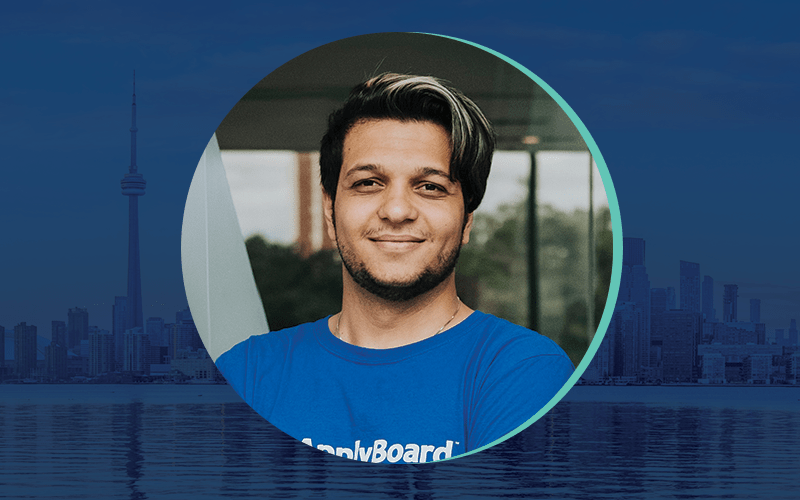
Meti Basiri, CMO of ApplyBoard, Discusses How He’s Grown His Company During the COVID-19 Pandemic
Episode
Coming to Canada from Iran for post secondary studies, Meti Basiri, Co-Founder and CMO of ApplyBoard, Massi, and their...
Key takeaways
- Persistence and never giving up are more important than luck when building a successful business, as success comes from hard work and having amazing people around you.
- During challenging times, focus on what you can control by investing in your infrastructure, improving customer service, and showing your team you have their back rather than dwelling on uncertainties.
- Business cycles naturally include both ups and downs, so when celebrating success always prepare for challenges ahead, and during difficult times remember that better days are coming.
- Start your business regardless of market conditions, as challenging times can reveal gaps in the market and provide opportunities to build a strong foundation while others are hesitant.
- Scaling processes and putting the right people in the right roles to execute those processes is one of the biggest ongoing challenges any growing business will face.
Transcript
Full transcript page · Interactive episode
============================================================
TRANSCRIPTION WITH SPEAKERS
============================================================

[00:00] SPEAKER_01: It's Toronto's podcast on the Canada's podcast network.
[00:07] SPEAKER_00: Hi, I'm Andrea Sassoum, your Toronto's host for Canada's podcast, number one, entrepreneur
[00:13] SPEAKER_00: news network.
[00:14] SPEAKER_00: Today, I have a great pleasure to be here with NETTE, plus here he's the co-founder and
[00:21] SPEAKER_00: CMO of Applied Boy.
[00:23] SPEAKER_00: And as well as we have the rest of the team here, so welcome everybody.
[00:28] SPEAKER_02: Thank you so much.
[00:29] SPEAKER_02: Thanks for having us.
[00:30] SPEAKER_01: It's great to have you and I heard a lot about Applied Boy.
[00:35] SPEAKER_01: It's been very busy for you, even though we are doing this interview in the midst of
[00:40] SPEAKER_01: a global epidemic.
[00:42] SPEAKER_01: I've seen that Applied Boy is actually growing its business versus we see a lot of
[00:49] SPEAKER_01: fortunately, a lot of businesses slowing down.
[00:52] SPEAKER_01: So what did I start off by, you know, you're telling me a little bit about yourself as an
[00:57] SPEAKER_01: entrepreneur and your journey as an entrepreneur?
[01:01] SPEAKER_02: Sounds good.
[01:02] SPEAKER_02: So I think the story can start a bit because one of the questions that everyone asks me,
[01:09] SPEAKER_02: when did you decide to be an entrepreneur?
[01:11] SPEAKER_02: And I always respond back from the time that I was born.
[01:15] SPEAKER_02: And the reason for that, I remember when I was very early on, maybe like six, seven years
[01:20] SPEAKER_02: old, I would have sold my toe, actually my parents would have buy me toys, and I would
[01:26] SPEAKER_02: have sell it to my people in the street or in the class or in the kids' garden.
[01:31] SPEAKER_02: Add discounts.
[01:33] SPEAKER_02: So that's the funny thing.
[01:34] SPEAKER_02: I would have lose my beef.
[01:37] SPEAKER_02: I didn't know much of accounting that time, but it worked out.
[01:42] SPEAKER_01: As long as it's buying and selling, it works out.
[01:45] SPEAKER_02: As long as I would have taken money out and put it in my pocket, I was happy, you know.
[01:50] SPEAKER_02: Putting the joke on the side, yeah.
[01:52] SPEAKER_02: So we started our flabberg 5 years back.
[01:54] SPEAKER_02: So we came as international students, me and my brothers, as flash co-founders, we came
[02:02] SPEAKER_02: ourselves as international students.
[02:04] SPEAKER_02: We went to the process of applying for schooling Canada and coming here through the whole process,
[02:10] SPEAKER_02: which is a very lengthy process.
[02:12] SPEAKER_02: It's not actually an easy process.
[02:14] SPEAKER_02: So that when we went to school, that was always a question, why this is a hard process?
[02:19] SPEAKER_02: Why cannot be easier and why is it not so transparent for a student so that they can
[02:24] SPEAKER_02: make the right choice?
[02:25] SPEAKER_02: Because at the end, we're playing with the people's life.
[02:28] SPEAKER_02: People's making the decision when there are thousands of miles of them is sitting in a
[02:33] SPEAKER_02: small city and making this very hard choice.
[02:37] SPEAKER_02: So as a result, we started five years back.
[02:39] SPEAKER_02: Actually, it's short of a week, to know, four weeks short of five years.
[02:44] SPEAKER_02: So we started May.
[02:45] SPEAKER_02: This is almost more coming to our fifth year at university.
[02:49] SPEAKER_02: And since then, business has been good.
[02:53] SPEAKER_02: We've been growing and being lucky, but I think luck comes out of a lot of persistence and
[03:00] SPEAKER_02: amazing team around you.
[03:01] SPEAKER_02: So that's a little bit about me and my journey of seven years old when I was seven till now.
[03:08] SPEAKER_01: You know, it's funny because I also shared my journey in one of the podcasts.
[03:14] SPEAKER_01: And I also started when I was six or seven years old.
[03:17] SPEAKER_01: So my next question to you would be, do you think that entrepreneurs are born or do you
[03:25] SPEAKER_01: think that's something you sort of become?
[03:28] SPEAKER_01: You choose to become?
[03:29] SPEAKER_02: I think it's both.
[03:31] SPEAKER_02: But having the parents around you is really important.
[03:34] SPEAKER_02: My parents were not on to a partner, but they were very business-minded people.
[03:40] SPEAKER_02: So my mom was, she was a principal of schools for 30 years.
[03:46] SPEAKER_02: And my dad was running his own business for the last five years, but they were very
[03:52] SPEAKER_02: business-minded people.
[03:54] SPEAKER_02: So I think that's how we grow up, that everything needs to make sense.
[03:58] SPEAKER_02: The whole balance needs to make sense.
[04:00] SPEAKER_02: So that's how we grow up.
[04:02] SPEAKER_02: But when we came to Canada, I never could have seen myself working for someone as not
[04:08] SPEAKER_02: a reporting.
[04:09] SPEAKER_02: I don't have a problem.
[04:10] SPEAKER_02: You learn from reporting to someone or working with someone at that sense.
[04:15] SPEAKER_02: But I could have never think of someone's going to come and my paychecks or everything
[04:20] SPEAKER_02: depend on someone, even if it was 10 times as smaller than a job that I would have
[04:26] SPEAKER_02: get.
[04:27] SPEAKER_02: So I think that's kind of both it developed during your childhood and become a preference.
[04:33] SPEAKER_02: I think like as someone that's been through a lot in the past, like at least 10, 12 years
[04:38] SPEAKER_02: of my life, being on the printer is super hard.
[04:41] SPEAKER_02: I don't think so.
[04:42] SPEAKER_02: Any one thing just being on the printer is the best thing.
[04:45] SPEAKER_02: It's actually hardest thing.
[04:47] SPEAKER_02: Sometimes I don't want to lie.
[04:49] SPEAKER_02: You think about, I wish that I was working for someone.
[04:52] SPEAKER_02: I don't want that much responsibility.
[04:53] SPEAKER_02: I don't want that much of a pressure on my shoulder.
[04:57] SPEAKER_02: But at the end, it makes you happy because now you're doing something and you have an amazing
[05:02] SPEAKER_02: team about yourself, about around you that makes you a lot happier and actually makes
[05:07] SPEAKER_02: you grow faster by having those amazing people around you.
[05:10] SPEAKER_01: Yeah, and it looks like you have an amazing team around you.
[05:14] SPEAKER_01: You're right with having, I think, parents as an example or somebody as an example of
[05:21] SPEAKER_01: entrepreneurship.
[05:21] SPEAKER_01: I think you get comfortable around the idea of entrepreneurship as a concept early on.
[05:27] SPEAKER_01: So it's kind of an easy transition.
[05:30] SPEAKER_01: If you do decide to become an entrepreneur, you're comfortable with a concept.
[05:34] SPEAKER_01: That's correct.
[05:35] SPEAKER_01: So with a plywood, there's some.
[05:37] SPEAKER_01: Really amazing things that are happening right now.
[05:39] SPEAKER_01: I follow you on social media and LinkedIn.
[05:42] SPEAKER_01: So you have recently expanded.
[05:46] SPEAKER_01: I know that you were working with Canadian universities and Canadian colleges mostly.
[05:53] SPEAKER_01: And there was a recent announcement.
[05:55] SPEAKER_01: Do you want to tell me a little bit more about that?
[05:57] SPEAKER_02: We're sure.
[05:58] SPEAKER_02: So because one of our applied vision and the vision is really first of all, making education
[06:03] SPEAKER_02: accessible around the work.
[06:05] SPEAKER_02: That's the end goal for us.
[06:08] SPEAKER_02: And then making at the path of that, we want to be a ward leader of studying abroad.
[06:14] SPEAKER_02: So in order to be there, we need to make sure we provide the students the options that
[06:19] SPEAKER_02: they want to go.
[06:20] SPEAKER_02: Not every single student wants to come to Canada.
[06:23] SPEAKER_02: Not every single student could come to Canada because of their visa chances because of
[06:28] SPEAKER_02: their education, background and many other reasons.
[06:30] SPEAKER_02: So we recently launched the UK, which has been amazing and super successful.
[06:35] SPEAKER_02: I've been impressed with the amount of interest we have received in the last three days.
[06:40] SPEAKER_02: So we have launched the UK.
[06:41] SPEAKER_02: We are working with some US schools too.
[06:44] SPEAKER_02: So right now at the moment, we are welcoming international students around the world to
[06:48] SPEAKER_02: these three countries.
[06:49] SPEAKER_02: And our goal is to get to the place that we can even launch China, any other country,
[06:54] SPEAKER_02: because there are so many amazing countries that bring international students in their country
[06:59] SPEAKER_02: and then teach them and make their better version of themselves.
[07:03] SPEAKER_02: And that's our goal.
[07:04] SPEAKER_02: We want to get the place that we would be able to help us do this anywhere that you
[07:08] SPEAKER_02: decide to go outside of their countries.
[07:11] SPEAKER_01: Is that a sort of a three year, five year plan that you have and how many countries do
[07:16] SPEAKER_01: you see applied for it in?
[07:18] SPEAKER_02: Oh, wow.
[07:19] SPEAKER_02: That's a tough question because if you want to do it right, UK was a pre-plan of seven
[07:25] SPEAKER_02: months that was successfully launched.
[07:28] SPEAKER_01: Only one country.
[07:29] SPEAKER_02: The one country was a pre-plan of seven months.
[07:33] SPEAKER_02: So definitely as teams getting together and now we have more people around the company,
[07:37] SPEAKER_02: that could be easy, easier in the long term.
[07:41] SPEAKER_02: So I don't necessarily think within five years we're going to have a war but within five
[07:46] SPEAKER_02: years we're going to have a popular destination such as Australia, New Zealand, Ireland,
[07:50] SPEAKER_02: France, Germany, at least a major one.
[07:53] SPEAKER_02: At the same time, it has to make sense busyness wise because you can just go and then open
[07:58] SPEAKER_02: a country and there is not much of demands for it.
[08:02] SPEAKER_02: So that's the goal but it's not really easy what we do because when you're really thinking
[08:08] SPEAKER_02: about it, one of students wants to go abroad.
[08:11] SPEAKER_02: It can be very different from your nationality or age, your schools that you study and from
[08:18] SPEAKER_02: the supply side, from the school side, it could be very different from the University
[08:23] SPEAKER_02: of X to University of A, different requirements.
[08:27] SPEAKER_02: So if you want to do it right and give the students the best knowledge and information,
[08:32] SPEAKER_02: there is a lot of pre-planet involved.
[08:34] SPEAKER_01: So with the current situation that we're in, how has this affected because I think in
[08:40] SPEAKER_01: your business, just like in any business, it's relationship building, now with the travel
[08:46] SPEAKER_01: bands and everything that's happening, how has that impacted a plywood?
[08:51] SPEAKER_02: So I would like to say, is it a concern?
[08:55] SPEAKER_02: Yes, how long does it continue?
[08:57] SPEAKER_02: We'll get to know, right?
[08:59] SPEAKER_02: But I think what we really need as a human think about it is the people in no situation,
[09:04] SPEAKER_02: and our best effort has been, oh, let's bring more international students.
[09:09] SPEAKER_02: We're like, what about those?
[09:11] SPEAKER_02: A lot of residents close down.
[09:13] SPEAKER_02: What are these international students in the country right now doing?
[09:16] SPEAKER_02: If there is a lot of this international student, they had a part-time job of in retail,
[09:20] SPEAKER_02: which all is going to get pretty much no income for a few months.
[09:24] SPEAKER_02: So I think that's how our focus has been making sure first we can help our students in
[09:29] SPEAKER_02: the country and making sure that they empower them and do whatever it's in our control.
[09:35] SPEAKER_02: I'm optimistic.
[09:36] SPEAKER_02: I think this is actually for the human, this was something that broke the countries together,
[09:42] SPEAKER_02: broke the humanity together.
[09:43] SPEAKER_02: So that's, I look at it as optimistic toward a bit.
[09:47] SPEAKER_02: But at the same time, depending on how long does it last, it will impact.
[09:52] SPEAKER_02: But will the student decide not to go abroad?
[09:55] SPEAKER_02: When this is over, the Finti dancer is not.
[09:58] SPEAKER_02: Students that want to go abroad and they want to study abroad, they do it.
[10:03] SPEAKER_02: Maybe there would be a shift in the market, and that's what we've been in our focus.
[10:06] SPEAKER_02: We're welcoming international students and our partners, still help the students.
[10:10] SPEAKER_02: Let's support them because we know this is a temporary nothingness permanent.
[10:15] SPEAKER_02: And we'd rather to actually take this moment and focus on our infrastructure,
[10:19] SPEAKER_02: making things more scalable.
[10:22] SPEAKER_02: And that's why you don't see any kind of a stop in our growing.
[10:25] SPEAKER_02: We're going to continue growing.
[10:26] SPEAKER_02: We actually, I think the last figure they told me they were like over 80 job positions
[10:30] SPEAKER_02: still open in our website and people still cannot part.
[10:34] SPEAKER_02: And we are going to continue grow because I think actually this is the best time to get
[10:38] SPEAKER_02: an amazing talent and focus on the thing that you never had focused.
[10:43] SPEAKER_02: Because it was always running after the growth, making sure we help the students.
[10:47] SPEAKER_02: Now is the time to focus on our infrastructure, our customer service.
[10:52] SPEAKER_02: And that's what we've been doing there.
[10:54] SPEAKER_01: I like that.
[10:54] SPEAKER_01: And that's a very good point, Meti, because I think a lot of businesses in this situation
[11:00] SPEAKER_01: are focusing on the negative things and looking at the things that they cannot do.
[11:05] SPEAKER_01: Instead of looking internally in terms of things that you can do right now,
[11:10] SPEAKER_01: even though one side of the business slowed down,
[11:14] SPEAKER_01: there's so much that can be done in terms of other things.
[11:18] SPEAKER_01: And you can still be productive and so broad.
[11:21] SPEAKER_02: For sure.
[11:21] SPEAKER_02: And I think it's the one way of showing your team that, obviously, we don't know,
[11:27] SPEAKER_02: there's so much uncertainty.
[11:29] SPEAKER_02: I cannot say what is it going to be three months, six months from now.
[11:32] SPEAKER_02: But I think that's the easiest way of showing your team that you got our back.
[11:36] SPEAKER_02: Now we have your back, you know,
[11:38] SPEAKER_02: unfortunately, this is something that no business is or government can control.
[11:42] SPEAKER_02: It's something that requires every single human being
[11:45] SPEAKER_02: get their hands together and solve this.
[11:48] SPEAKER_02: And I think as a result of that, whoever has the power,
[11:52] SPEAKER_02: and they can do something we should be thinking about any other opportunity
[11:58] SPEAKER_02: or other ways of helping each other.
[12:00] SPEAKER_02: That's what being our approach, we're going to continue to do so.
[12:04] SPEAKER_01: That's a very good approach.
[12:05] SPEAKER_01: So I would like to hear from you because you're a successful entrepreneur.
[12:09] SPEAKER_01: What's the best piece of advice you ever received?
[12:12] SPEAKER_01: Or it can be the worst piece of advice.
[12:14] SPEAKER_01: For me, I always say it was the worst piece of advice that sort of,
[12:17] SPEAKER_01: you know, was a turning point for me.
[12:19] SPEAKER_01: So if that's something that you can recollect and maybe share with our listeners.
[12:23] SPEAKER_02: We're sure.
[12:24] SPEAKER_02: So I think the best things that I got it from a few of my mentors,
[12:28] SPEAKER_02: I know learn, is today and tomorrow they're going to be different.
[12:33] SPEAKER_02: And whenever we are celebrating something,
[12:35] SPEAKER_02: the moment of that celebration,
[12:37] SPEAKER_02: I'm thinking, when is the next downside?
[12:39] SPEAKER_02: Whenever I'm the downside, we're thinking,
[12:41] SPEAKER_02: what is it the next upside?
[12:43] SPEAKER_02: Life is about that.
[12:44] SPEAKER_02: You know, nothing is a CD, nothing.
[12:46] SPEAKER_02: It's going to be on the top.
[12:48] SPEAKER_02: So that's what I think to anyone, it's really at the end,
[12:52] SPEAKER_02: is if there is not a downside,
[12:54] SPEAKER_02: we're not going to enjoy the most of the upside.
[12:56] SPEAKER_02: If there is no upside, we're not going to appreciate the downside and the
[13:01] SPEAKER_02: upside that we had.
[13:02] SPEAKER_02: So I think that's something that I'm really there.
[13:05] SPEAKER_02: And really the greatest advice.
[13:07] SPEAKER_02: And always, I remember when Snapchat went public.
[13:12] SPEAKER_02: And he was the youngest billionaire.
[13:15] SPEAKER_02: I remember that time.
[13:16] SPEAKER_02: And then always, everyone was saying, how lucky he is.
[13:19] SPEAKER_02: And I would have been one of those people.
[13:21] SPEAKER_02: Because that time, I was like, that was, I think, three, four years back.
[13:24] SPEAKER_02: And I was like, yeah, the guy is so lucky.
[13:26] SPEAKER_02: I don't think so.
[13:27] SPEAKER_02: Any business becomes successful.
[13:29] SPEAKER_02: We'd love.
[13:30] SPEAKER_02: Yes, you become lucky to have a great idea.
[13:33] SPEAKER_02: Persistence and the people.
[13:35] SPEAKER_02: These are the two things they're going to make you successful.
[13:38] SPEAKER_02: And it's not love.
[13:39] SPEAKER_02: Like, I can't tell you the number of days that we are not asleep
[13:45] SPEAKER_02: because we know the crisis is happening.
[13:47] SPEAKER_02: And we need to work days and nights to make sure that happens.
[13:50] SPEAKER_02: So I think that's something that I learned.
[13:52] SPEAKER_02: And I received that we cannot chill and business goes on.
[13:56] SPEAKER_02: It's own.
[13:56] SPEAKER_02: It's persistence.
[13:57] SPEAKER_02: I never giving up.
[13:59] SPEAKER_02: Regardless of whatever is the business,
[14:02] SPEAKER_02: you would be successful if you don't give up.
[14:04] SPEAKER_02: Even if it's as much as selling pen that it existed years.
[14:10] SPEAKER_01: And it's a common trait that I hear entrepreneurs say is the persistence.
[14:17] SPEAKER_01: If you don't give up and you persist.
[14:19] SPEAKER_01: And even if there's a challenge, you look at it many different ways
[14:22] SPEAKER_01: until you sort of find a solution.
[14:24] SPEAKER_01: But not giving up.
[14:25] SPEAKER_01: I think your biggest enemy is yourself.
[14:28] SPEAKER_01: If you give up on yourself, then everybody else will.
[14:32] SPEAKER_01: So with the biggest challenges,
[14:34] SPEAKER_01: what is one of the biggest challenges you ever faced in your business?
[14:39] SPEAKER_02: I think it's the process,
[14:42] SPEAKER_02: a scaling the process,
[14:43] SPEAKER_02: a specifically in the business that we are,
[14:45] SPEAKER_02: which is so complex.
[14:47] SPEAKER_02: A lot of people say, are you afraid of competition coming?
[14:52] SPEAKER_02: We see a lot of people see how a hybrid is on rise.
[14:56] SPEAKER_02: They're like, oh, we're going to do the same thing.
[14:57] SPEAKER_02: I'm like, not at all.
[14:58] SPEAKER_02: I actually wish there was more competition.
[15:00] SPEAKER_02: So we could have learned from them.
[15:01] SPEAKER_02: Because we're inventing and improving every process ourselves.
[15:06] SPEAKER_02: So I think that's a challenge.
[15:07] SPEAKER_02: A scaling the process and putting the right people
[15:11] SPEAKER_02: at the right process to make sure that the scale that process.
[15:14] SPEAKER_02: That's going to be a challenge.
[15:15] SPEAKER_02: I think that's never ending a challenge.
[15:18] SPEAKER_02: And that's going to continue.
[15:19] SPEAKER_02: That's, I think, that's the biggest challenge
[15:21] SPEAKER_02: that any game business has faced as we do.
[15:25] SPEAKER_02: I'm very optimistic person.
[15:28] SPEAKER_02: So we have an amazing team.
[15:30] SPEAKER_02: And when I go back to two years ago, a year ago,
[15:32] SPEAKER_02: even at last month,
[15:33] SPEAKER_02: we are improving those process
[15:35] SPEAKER_02: and we inventing a lot of things.
[15:37] SPEAKER_02: And that's as long as that's a bad way.
[15:40] SPEAKER_02: And we are in the right direction.
[15:41] SPEAKER_02: I don't think so.
[15:42] SPEAKER_02: There is any challenge that we cannot overcome.
[15:44] SPEAKER_01: That's great.
[15:45] SPEAKER_01: And what advice would you give an entrepreneur looking
[15:48] SPEAKER_01: to sort of start a business right now?
[15:51] SPEAKER_01: It can be right now.
[15:52] SPEAKER_01: It can be once the epidemic is over.
[15:55] SPEAKER_01: Is there a piece of advice?
[15:57] SPEAKER_02: In terms of right now, actually,
[15:59] SPEAKER_02: I think it's the best time to start a lot of business.
[16:02] SPEAKER_02: Because when everyone is swimming
[16:04] SPEAKER_02: toward a river,
[16:06] SPEAKER_02: the person is going to win
[16:07] SPEAKER_02: that actually put the best effort
[16:09] SPEAKER_02: and swim against a river flow.
[16:11] SPEAKER_02: If you really look at it and whatever right now needs to be,
[16:15] SPEAKER_02: right now, a lot of people focusing on online
[16:17] SPEAKER_02: XYZ, that's good.
[16:19] SPEAKER_02: But we're not going to overnight shift
[16:21] SPEAKER_02: and both behavior.
[16:23] SPEAKER_02: So I think actually right now,
[16:25] SPEAKER_02: it's a good time that you can think
[16:27] SPEAKER_02: and see how fragile the whole economy
[16:30] SPEAKER_02: and the whole world was.
[16:32] SPEAKER_02: And think about what are the services
[16:34] SPEAKER_02: or businesses that is lacking.
[16:36] SPEAKER_02: I think that's something that I would say
[16:37] SPEAKER_02: regardless if you want to start something
[16:40] SPEAKER_02: and start it regardless of what it is.
[16:42] SPEAKER_02: But if it's a service company,
[16:44] SPEAKER_02: there's so many service companies
[16:45] SPEAKER_02: that are super successful.
[16:46] SPEAKER_02: Not everything needs to be taken.
[16:48] SPEAKER_02: Not everything needs to be sass or passed, you know.
[16:51] SPEAKER_02: And then in terms of giving advice,
[16:53] SPEAKER_02: is pick a good idea,
[16:56] SPEAKER_02: go prove that the idea works
[16:58] SPEAKER_02: with talking with the people,
[17:00] SPEAKER_02: never be shy of picking on the phone.
[17:03] SPEAKER_02: Myself, there were schools
[17:05] SPEAKER_02: that after 67 times follow,
[17:07] SPEAKER_02: we got them on.
[17:08] SPEAKER_02: Or took me two and a half years,
[17:10] SPEAKER_02: personally, 67 times I follow.
[17:13] SPEAKER_02: I'll be that as school to get.
[17:14] SPEAKER_02: So never give up.
[17:16] SPEAKER_02: When we started,
[17:17] SPEAKER_02: many people told us this is a bad idea.
[17:20] SPEAKER_02: UGA is not going to be successful.
[17:22] SPEAKER_02: No students going to go online.
[17:24] SPEAKER_02: This is crazy.
[17:25] SPEAKER_02: And five years later,
[17:27] SPEAKER_02: every all those people come,
[17:29] SPEAKER_02: says now we're happy that our
[17:30] SPEAKER_02: private exists because look at this situation.
[17:33] SPEAKER_02: UGA's are the only end to end
[17:35] SPEAKER_02: online process for students.
[17:37] SPEAKER_02: We believe in ourselves and we believe
[17:40] SPEAKER_02: that is a problem with no solution
[17:43] SPEAKER_02: and we start focusing on the solution.
[17:45] SPEAKER_01: That's great.
[17:46] SPEAKER_01: And you operate in a KW area.
[17:49] SPEAKER_01: So why would you recommend
[17:51] SPEAKER_01: your city to other entrepreneurs?
[17:55] SPEAKER_02: Personally, I love a smaller city.
[17:58] SPEAKER_02: I think it's time is so important
[18:01] SPEAKER_02: that I don't appreciate
[18:03] SPEAKER_02: of sitting in a bus or a car
[18:05] SPEAKER_02: or something two or three hours
[18:07] SPEAKER_02: of in my day on traffic.
[18:09] SPEAKER_02: So I think that is so much more
[18:11] SPEAKER_02: we can do during that time.
[18:12] SPEAKER_02: So that's what I love about
[18:13] SPEAKER_02: Warralu.
[18:14] SPEAKER_02: It's a small medium,
[18:16] SPEAKER_02: not a small anymore.
[18:17] SPEAKER_02: It's a medium-sized city.
[18:20] SPEAKER_02: And there are a lot of amazing
[18:22] SPEAKER_02: new grads.
[18:24] SPEAKER_02: When you look at Lourier,
[18:26] SPEAKER_02: Warralu and Kanastuka College,
[18:27] SPEAKER_02: they are producing over 10,000
[18:31] SPEAKER_02: alumni every year.
[18:33] SPEAKER_02: And those are the future of this city.
[18:35] SPEAKER_02: And I think that's something
[18:36] SPEAKER_02: that we should focus of it.
[18:38] SPEAKER_02: A definitely there is a lot of perks.
[18:40] SPEAKER_02: And to be in KW,
[18:42] SPEAKER_02: but there are constant, you know,
[18:44] SPEAKER_02: you wouldn't find every talent.
[18:46] SPEAKER_02: You know, there are some
[18:48] SPEAKER_02: roles that is really hard.
[18:49] SPEAKER_02: But I think this whole situation
[18:51] SPEAKER_02: happens.
[18:52] SPEAKER_02: It's going to open every single
[18:53] SPEAKER_02: business owner's eyes that,
[18:55] SPEAKER_02: you know what, I'm going to go
[18:56] SPEAKER_02: removed.
[18:56] SPEAKER_02: It doesn't matter.
[18:57] SPEAKER_02: If we made it,
[18:58] SPEAKER_02: this is our third week work from home.
[19:00] SPEAKER_02: And I think that's going to last
[19:02] SPEAKER_02: few more weeks.
[19:03] SPEAKER_02: If we made it and nothing happened.
[19:05] SPEAKER_02: So what it stops us to have people
[19:07] SPEAKER_02: in Vancouver, Montreal,
[19:08] SPEAKER_02: Quebec, any city in Canada.
[19:09] SPEAKER_02: And I think that's an approach of us.
[19:11] SPEAKER_02: But KW has been really good.
[19:14] SPEAKER_02: It's amazing.
[19:15] SPEAKER_02: A lot of cost of rental for offices.
[19:18] SPEAKER_02: Those are cheaper.
[19:20] SPEAKER_02: And even the human resource,
[19:21] SPEAKER_02: you get as many as good resources here
[19:25] SPEAKER_02: as good as even Toronto.
[19:27] SPEAKER_02: But again, a few thousand dollar
[19:28] SPEAKER_02: cheaper for a starting company.
[19:30] SPEAKER_02: And then when you go into a
[19:31] SPEAKER_02: skill enough,
[19:32] SPEAKER_02: those all at the end count.
[19:34] SPEAKER_02: So I think like,
[19:35] SPEAKER_02: if anyone to start as long as your
[19:37] SPEAKER_02: net tech company don't
[19:38] SPEAKER_02: compete here,
[19:40] SPEAKER_02: take our engineers, you know.
[19:41] SPEAKER_02: Then they'll come.
[19:44] SPEAKER_01: That's great.
[19:45] SPEAKER_01: So you would definitely
[19:45] SPEAKER_01: then recommend KW area for somebody
[19:48] SPEAKER_01: that's not a competition to you
[19:50] SPEAKER_01: to start their company.
[19:52] SPEAKER_02: Yeah.
[19:53] SPEAKER_02: I did actually hear Justin Trudeau
[19:55] SPEAKER_02: Prime Minister yesterday
[19:56] SPEAKER_02: that said he how much KW companies
[19:59] SPEAKER_02: are helping and then
[20:00] SPEAKER_02: making a lot of things.
[20:02] SPEAKER_02: And I think that's a symbol of this whole
[20:04] SPEAKER_02: Canada that before even anyone
[20:07] SPEAKER_02: decide that we'll go work from home
[20:10] SPEAKER_02: start-ups in our skills or shopp-y
[20:11] SPEAKER_02: fire, Google, they all
[20:13] SPEAKER_02: when work from home before even any
[20:14] SPEAKER_02: news came out.
[20:15] SPEAKER_02: So I think that's amazing
[20:16] SPEAKER_02: now we can see those things here
[20:18] SPEAKER_02: and initiate it by KW companies.
[20:21] SPEAKER_01: Very good.
[20:23] SPEAKER_01: And you know, it must be really
[20:25] SPEAKER_01: exciting to be part of all of that.
[20:27] SPEAKER_01: You know, to help grow the KW
[20:28] SPEAKER_01: economy and businesses and
[20:31] SPEAKER_01: provide jobs like applied
[20:32] SPEAKER_01: where it is.
[20:33] SPEAKER_01: So that's really good.
[20:35] SPEAKER_01: I'm going to get a little bit
[20:36] SPEAKER_01: personal now, Matthew.
[20:37] SPEAKER_02: Well,
[20:39] SPEAKER_01: so I'm sure listeners will love to
[20:41] SPEAKER_01: know what you do to
[20:44] SPEAKER_01: unwind, to sort of disconnect,
[20:47] Speaker UNKNOWN: these stress.
[20:48] SPEAKER_02: Here's the thing though.
[20:50] SPEAKER_02: I think it depends on what is it that you
[20:52] SPEAKER_02: like in the moment of your life.
[20:55] SPEAKER_02: And that change.
[20:56] SPEAKER_02: Truly what we do at Applied
[20:58] SPEAKER_02: makes me so happy that I can
[21:00] SPEAKER_02: impact other people's life.
[21:02] SPEAKER_02: My life would have been very
[21:03] SPEAKER_02: different or could have been
[21:06] SPEAKER_02: night or day difference if I wasn't
[21:10] SPEAKER_02: I didn't decide to come to camp.
[21:12] SPEAKER_02: I think that impact of it
[21:13] SPEAKER_02: drives us so much that I think that makes me
[21:17] SPEAKER_02: happy and that's my unwind moment.
[21:19] SPEAKER_02: If I get the email from a student or someone
[21:21] SPEAKER_02: that I just become a part of the
[21:24] SPEAKER_02: honor, at least X, Y, Z, that's enough.
[21:26] SPEAKER_02: So I think at this moment
[21:28] SPEAKER_02: it still work give me enough pleasure
[21:30] SPEAKER_02: that I don't need.
[21:32] SPEAKER_02: But there are the times that I just
[21:34] SPEAKER_02: unplug everything and just see it go to
[21:38] SPEAKER_02: outside walk around.
[21:40] SPEAKER_02: You know there are those moments but at the
[21:41] SPEAKER_02: same time I think Applied
[21:43] SPEAKER_02: is giving us enough boost
[21:45] SPEAKER_02: that I don't need those moments much of
[21:49] SPEAKER_02: as of now.
[21:50] SPEAKER_02: As I'm going to be older,
[21:51] SPEAKER_02: my things get different.
[21:53] SPEAKER_02: But as of now I think that's enough.
[21:56] SPEAKER_01: That's great.
[21:57] SPEAKER_01: And you know, are you
[21:59] SPEAKER_01: are you a morning or a night person?
[22:01] SPEAKER_01: Do you want to
[22:02] SPEAKER_01: what's your idea of your work at morning
[22:05] SPEAKER_01: or at night?
[22:06] SPEAKER_02: My day to day routine is I wake up seven o'clock
[22:11] SPEAKER_02: before seven o'clock.
[22:13] SPEAKER_02: And then as much as I can get job done,
[22:16] SPEAKER_02: I'll focus but I don't go back
[22:18] SPEAKER_02: go to the bed if there is something left.
[22:20] SPEAKER_02: So sometimes my night goes till one or two.
[22:23] SPEAKER_02: Sometimes it's 10 o'clock or sometimes it's 6 p.m.
[22:27] SPEAKER_02: So for me it really doesn't matter
[22:29] SPEAKER_02: but I used to be very night person.
[22:31] SPEAKER_02: I used to be work till six seven
[22:34] SPEAKER_02: and then sleep few hours in morning.
[22:36] SPEAKER_02: But I actually get a lot more done
[22:39] SPEAKER_02: when I start the day sooner
[22:41] SPEAKER_02: and then you're more productive.
[22:43] SPEAKER_02: So but at the same time I think at this moment
[22:45] SPEAKER_02: it depends the workload as much as as long
[22:48] SPEAKER_02: as I don't have work that day.
[22:51] SPEAKER_02: I'm okay with that.
[22:52] SPEAKER_01: That's great.
[22:53] SPEAKER_01: What's your favorite place in the world?
[22:54] SPEAKER_01: I'm sure you've traveled a lot.
[22:57] SPEAKER_01: I've seen a lot of places.
[22:59] SPEAKER_01: Is there one that sort of stuck with you
[23:02] SPEAKER_01: that has a special place in your heart?
[23:06] SPEAKER_02: I don't know.
[23:06] SPEAKER_02: Maybe I would say that it's not.
[23:08] SPEAKER_02: That's going to maybe change.
[23:09] SPEAKER_02: I've been there five times and I just love the food,
[23:14] SPEAKER_02: the people and how...
[23:16] SPEAKER_02: You know like in Canada,
[23:17] SPEAKER_02: this was a big shock when I came to Canada was
[23:20] SPEAKER_02: when I walk around people smile.
[23:23] SPEAKER_02: That's really a love energy.
[23:24] SPEAKER_02: Getting energy from people and I pass those energy.
[23:29] SPEAKER_02: And that's one of the countries I feel I felt that.
[23:32] SPEAKER_02: You know people are super happy,
[23:33] SPEAKER_02: super motivating people around.
[23:36] SPEAKER_02: So I think as of now I would say
[23:38] SPEAKER_02: the autonomous on the top of the list.
[23:40] SPEAKER_02: But again I only been in 18 countries.
[23:42] SPEAKER_02: That will change as I have a chance to
[23:45] SPEAKER_02: visit all other countries.
[23:47] SPEAKER_01: I like when you say that only 18 countries.
[23:51] SPEAKER_01: That's fun to have countries.
[23:54] SPEAKER_01: So I'm going to ask you a couple of rapid-fire questions.
[23:57] SPEAKER_01: You don't have to think too much about it.
[23:59] SPEAKER_01: You can just ask whatever comes to your mind first.
[24:01] SPEAKER_01: So if you were doing what you're doing today,
[24:04] SPEAKER_01: what would you be doing?
[24:07] SPEAKER_02: Perhaps whether I was in any social worker,
[24:11] SPEAKER_02: anything that I could have paid back to the community
[24:13] SPEAKER_02: and help people or I would have go to different business
[24:17] SPEAKER_02: which was anything related to construction.
[24:19] SPEAKER_02: Yeah, that's something that always was my passion.
[24:23] SPEAKER_02: I was going to study civil engineering,
[24:25] SPEAKER_02: I studied business marketing,
[24:26] SPEAKER_02: but I think that would have been the first two choice.
[24:30] SPEAKER_01: That's great to know.
[24:31] SPEAKER_01: Yeah, I wouldn't have guessed.
[24:32] SPEAKER_01: It's a big contrast.
[24:35] SPEAKER_01: Is there a book that you're currently reading?
[24:37] SPEAKER_01: If there's not a book,
[24:38] SPEAKER_01: it can be a podcast or anything else
[24:40] SPEAKER_01: that you sort of like to do on the odd days?
[24:45] SPEAKER_02: Right now I'm actually, I don't read book.
[24:47] SPEAKER_02: I'll listen through the audio ball.
[24:49] SPEAKER_02: So I'm listening to the Escort.
[24:52] SPEAKER_02: It takes care of itself.
[24:53] SPEAKER_02: It's really interesting because it talks about
[24:56] SPEAKER_02: how you should align the whole company together
[25:00] SPEAKER_02: and then give the task to the people
[25:01] SPEAKER_02: and make them own it.
[25:03] SPEAKER_02: And then as of that,
[25:04] SPEAKER_02: if every single person in the company
[25:07] SPEAKER_02: from the reception till the CEO of the company,
[25:11] SPEAKER_02: they own what they do then,
[25:13] SPEAKER_02: the outcome will be better.
[25:15] SPEAKER_02: And even if it's not, then everyone own what they do.
[25:18] SPEAKER_02: That's something that I'm really enjoying it right now.
[25:21] SPEAKER_01: Very good concept, I think.
[25:22] SPEAKER_01: If you feel a part of something,
[25:24] SPEAKER_01: not just an employee,
[25:25] SPEAKER_01: but actually owning something,
[25:29] SPEAKER_01: it makes it that much
[25:32] SPEAKER_01: dear to your heart, I think.
[25:34] SPEAKER_02: Yeah.
[25:35] SPEAKER_01: So are you, if you had to pick one word
[25:38] SPEAKER_01: to describe yourself,
[25:40] SPEAKER_01: what would it be and why?
[25:42] SPEAKER_02: I think I would say energetic.
[25:44] SPEAKER_02: I can impact many people's mood.
[25:50] SPEAKER_02: If I'm down, I can bring them on,
[25:51] SPEAKER_02: fortunately down.
[25:53] SPEAKER_02: If I have a lot of energy,
[25:55] SPEAKER_02: which is the most off the case,
[25:56] SPEAKER_02: I can boost many people's mood.
[25:59] SPEAKER_02: And that would be the word that I think
[26:01] SPEAKER_02: people might say about me,
[26:03] SPEAKER_02: or that's what I want that's least to be, you know.
[26:08] SPEAKER_01: And what is keeping you up and night these days?
[26:11] SPEAKER_01: I know there's so many things happening around us.
[26:14] SPEAKER_01: It's really hard to kind of cool out everything.
[26:16] SPEAKER_01: But is there one or two things that you think about at night?
[26:21] SPEAKER_02: Not really interesting.
[26:23] SPEAKER_02: When I go to bed,
[26:24] SPEAKER_02: I'll just put the phone on the side
[26:26] SPEAKER_02: and I sleep like a baby,
[26:28] SPEAKER_02: wake up.
[26:31] SPEAKER_02: That's, I think that's my unplugged moment.
[26:33] SPEAKER_02: Then I mean the bed,
[26:34] SPEAKER_02: I'm not thinking of anything,
[26:36] SPEAKER_02: but if there is a project or something in my mind,
[26:38] SPEAKER_02: I'll just come out of the bed,
[26:40] SPEAKER_02: write it down and go back to bed.
[26:42] SPEAKER_01: I wish I could do the same.
[26:46] SPEAKER_01: And do you have routines in the morning or in the evening?
[26:50] SPEAKER_01: Like in the morning, do you have to have a cup of coffee
[26:52] SPEAKER_01: or go for a walk or work out or yoga or whatever?
[26:58] SPEAKER_01: You know, because you may have.
[27:00] SPEAKER_02: Yeah, I think like, yeah, the coffee is obvious.
[27:02] SPEAKER_02: Yeah, I don't think so.
[27:03] SPEAKER_02: Maybe there's 2% on the printer in this word
[27:05] SPEAKER_02: that leaves without coffee.
[27:07] SPEAKER_02: That's not me.
[27:08] SPEAKER_02: I do have to first get the cup of coffee,
[27:12] SPEAKER_02: I have to put my dog back in the back here
[27:14] SPEAKER_02: and just relax for a few minutes
[27:16] SPEAKER_02: and then get a start work.
[27:18] SPEAKER_02: And then in evening, I would always have
[27:20] SPEAKER_02: half an hour to one hour.
[27:22] SPEAKER_02: Usually if I cook,
[27:23] SPEAKER_02: that's the moment of the relaxation.
[27:25] SPEAKER_02: If not, I'll just do anything,
[27:27] SPEAKER_02: read the book, listen to book.
[27:29] SPEAKER_02: Do anything that is not related.
[27:32] SPEAKER_02: Thankfully, I'm not yet in the
[27:35] SPEAKER_02: mode of going for exercises.
[27:37] SPEAKER_02: I don't, I don't want to say I don't have time,
[27:40] SPEAKER_02: that's excuse, but it's not there
[27:42] SPEAKER_02: that I really feel that I need to do.
[27:44] SPEAKER_02: But as long as you eat healthy
[27:46] SPEAKER_02: and you have a good healthy mindset,
[27:48] SPEAKER_02: I think you can balance it out.
[27:50] SPEAKER_02: But that's pretty much more of the routine.
[27:52] SPEAKER_02: I had that morning and that half an hour
[27:54] SPEAKER_02: to one hour in evening.
[27:56] SPEAKER_02: It has to be there every single day.
[27:59] SPEAKER_01: That's great.
[28:00] SPEAKER_01: And the last question is,
[28:02] SPEAKER_01: there is a small tropical island in the middle of the ocean
[28:06] SPEAKER_01: with only one phone booth and no intimate.
[28:10] SPEAKER_01: So we drop you off, there's no technology at all.
[28:13] SPEAKER_01: In any time, you can use the phone booth
[28:14] SPEAKER_01: on the island to call the boat to come and pick you up.
[28:18] SPEAKER_01: How long do you think you would last
[28:19] SPEAKER_01: before making that phone call?
[28:22] SPEAKER_01: And what would you do?
[28:23] SPEAKER_02: What is the temperature in that island first?
[28:26] SPEAKER_01: Well, say it's hot, you know, 30 degrees.
[28:29] SPEAKER_02: Okay, I'll just take a hammer or something,
[28:31] SPEAKER_02: destroy that phone booth and stay in that island.
[28:36] SPEAKER_02: Let's stay there forever.
[28:38] SPEAKER_02: I think, yeah, I don't know, maybe a few weeks.
[28:42] Speaker UNKNOWN: It depends, though.
[28:43] SPEAKER_02: It depends if I imagine it today,
[28:45] SPEAKER_02: five seconds later,
[28:47] SPEAKER_02: it's picking up.
[28:48] SPEAKER_02: But actually, always think, I think after
[28:50] SPEAKER_02: when the time comes that I want to give myself
[28:53] SPEAKER_02: a couple of months break,
[28:55] SPEAKER_02: that would be situation.
[28:56] SPEAKER_02: It goes onward, just focus on the life.
[29:00] SPEAKER_02: But yeah, I never thought about it.
[29:03] SPEAKER_02: But I think if it's today,
[29:05] SPEAKER_02: give me two days I call back, you know.
[29:08] SPEAKER_02: But if it's two or three days, as of now,
[29:12] SPEAKER_02: I think that's how long I can stay out of the business.
[29:15] SPEAKER_02: You know, just if you have fun in whatever you do,
[29:19] SPEAKER_02: as long as you go to a sleep and at the end of the night,
[29:22] SPEAKER_02: you say, this was a good day and I enjoyed my day.
[29:25] SPEAKER_02: I think then you should do whatever you do.
[29:28] SPEAKER_02: Continue doing that.
[29:29] SPEAKER_02: My belief is I leave once and I have to take advantage
[29:32] SPEAKER_02: every single day of my life.
[29:35] SPEAKER_01: I like that.
[29:37] SPEAKER_01: That's a good way to live by.
[29:41] SPEAKER_01: Matthew, thanks so much and thank you to your team as well
[29:44] SPEAKER_01: for joining us today.
[29:46] SPEAKER_02: Thank you so much for the opportunity.
[29:48] SPEAKER_01: I'm Andrea Sassoum, your Toronto's host for Canada's podcast,
[29:53] SPEAKER_01: the Asian's number one entrepreneurial network.
[29:54] SPEAKER_01: It was a great pleasure to be here with Matthew Basieri,
[29:58] SPEAKER_01: who is the co-founder of the Five Boy.