
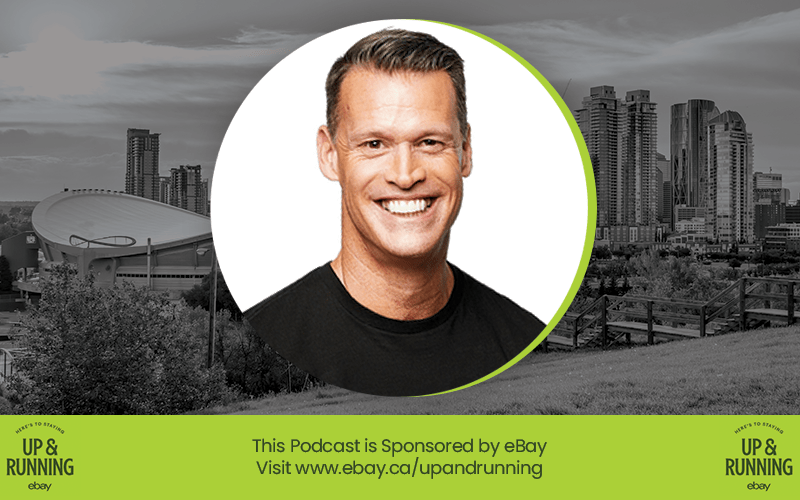
Mark Tewksbury Runs Great Traits, a Professional Development Company in Calgary, is a Motivational Speaker & Former Olympic Gold Medalist in Swimming
Episode
Mark Tewksbury runs Great Traits, a professional development company in Calgary, with Debbie Muir. Tewksbury is a well-known national motivational speaker...
Key takeaways
- During times of uncertainty and crisis, embrace the unknown rather than fighting it, while taking action day by day to stay responsive and adapt your approach based on what works.
- Resiliency comes from understanding that you learn more through challenging times than when things are going well, which is a fundamental principle that high-performance athletes apply to business.
- Investing in leadership development and training during difficult periods helps build confidence, provides grounding, and shows high performers that you believe in them when they need it most.
- Apply the athlete's growth mindset to business by constantly refining your approach—if something works keep doing it, if it doesn't work switch and try something else immediately.
- Taking care of yourself during high-stress periods is essential because not knowing what's coming takes more of a toll on us than we realize, affecting our ability to perform and make decisions.
Transcript
Full transcript page · Interactive episode
============================================================
TRANSCRIPTION WITH SPEAKERS
============================================================

[00:00] SPEAKER_01: This podcast is sponsored by eBay Canada.
[00:03] SPEAKER_01: eBay Canada has been supporting Canadian small business retailers for 25 years.
[00:07] SPEAKER_01: With their up and running program, you can access eBay's 180-plus million buyers
[00:13] SPEAKER_01: in 190 countries around the world.
[00:16] SPEAKER_01: With up and running, there are no listing fees on up to 200 listings per month
[00:19] SPEAKER_01: and you only pay fees when you sell.
[00:22] SPEAKER_01: As part of the eBay community, you get real-time advice and inspiration
[00:26] SPEAKER_01: and access to powerful selling tools and insights.
[00:30] SPEAKER_01: Go to eBay.ca, forward slash, up and running, stay local and sell global.
[00:37] SPEAKER_00: Welcome to Canada's podcast, the number one podcast for entrepreneurs by entrepreneurs.
[00:44] SPEAKER_03: On today's show with Calgary's podcast, I have Mark Tuxbury,
[00:50] SPEAKER_03: who is the owner of Great Trades with Debbie Muir,
[00:54] SPEAKER_03: and he's also former Olympic gold medalist in swimming.
[00:57] SPEAKER_03: Thanks for joining us today, Mark.
[00:59] SPEAKER_03: Hi, Mario.
[01:00] SPEAKER_03: Hi.
[01:01] SPEAKER_03: So Mark, let me just start by asking just a little bit about Great Trades.
[01:06] SPEAKER_03: I can give me a little history behind it, how you started it,
[01:09] SPEAKER_03: and how you and Debbie started it, and what you guys do.
[01:12] SPEAKER_03: Sure.
[01:13] SPEAKER_02: So, actually yesterday, July 30th was the 28th anniversary of me winning gold in Barcelona.
[01:21] SPEAKER_02: Wow.
[01:21] SPEAKER_02: Yeah.
[01:22] SPEAKER_02: Great.
[01:23] SPEAKER_02: And without knowing it, the year before that win was actually when Great Trades started,
[01:28] SPEAKER_02: informally, because it's when I partnered with Debbie Muir,
[01:32] SPEAKER_02: one of the world's greatest synchronized swimming coaches,
[01:34] SPEAKER_02: to be kind of my secret weapon when I had to make an enormous improvement
[01:40] SPEAKER_02: if I had any chance of winning the Olympics.
[01:43] SPEAKER_02: And back in that time, it was really radical to bring a woman into a male-dominated swimming world
[01:49] SPEAKER_02: for me to take this big risk.
[01:51] SPEAKER_02: We had really not much support, but we just believed that this could work.
[01:56] SPEAKER_02: And after I won the Olympics, dropped 1.2 seconds, had that magical moment.
[02:01] SPEAKER_02: Debbie and I actually went away and we thought,
[02:04] SPEAKER_02: what did we do that transcended both synchronized swimming and swimming
[02:07] SPEAKER_02: that were just the fundamental elements that allowed that achievement to happen?
[02:11] SPEAKER_02: We actually have a transcript of that back right after the Olympics.
[02:14] SPEAKER_02: We went into BAMP and the mountains to do it.
[02:16] SPEAKER_02: And it just kind of stayed in a box for years.
[02:19] SPEAKER_02: And it was around 2007 that Debbie and I took that.
[02:24] SPEAKER_02: She also had written a manuscript about sort of leading from a coaching point of view.
[02:29] SPEAKER_02: And all of this came together to create our business Great Trades in 2008.
[02:34] SPEAKER_02: And basically, we're a leadership development company.
[02:37] SPEAKER_02: We're really inspired by how we won the Olympics, what we did,
[02:42] SPEAKER_02: but also the whole idea behind high-performance sport.
[02:46] SPEAKER_02: And how we approach training in general.
[02:49] SPEAKER_02: I think that makes us really unique as a company.
[02:52] SPEAKER_02: Who do you guys deal with typically in the stuff that you do?
[02:57] SPEAKER_02: So for the first sort of 10 years of our business,
[03:00] SPEAKER_02: we went to market with a book in 2008 called The Great Trades of Champions,
[03:05] SPEAKER_02: Fundamentals for Achievers, Leaders and Legacy Leavers.
[03:08] SPEAKER_02: And in there, basically, each of those sections,
[03:11] SPEAKER_02: achievement, leadership and legacy, each had eight fundamental traits.
[03:15] SPEAKER_02: So there's sort of a curriculum or a creative sort of template of 24 great traits.
[03:23] SPEAKER_02: So we would talk to companies like Bell or Shoppers Drug Mart or HBC or the Ontario Medical
[03:29] SPEAKER_02: Association or On the Podium, all kinds of different companies and associations.
[03:34] SPEAKER_02: Listen to their needs and kind of use that 24 traits as a plug and play.
[03:39] SPEAKER_02: And so depending on their outcomes, we chose a trait that aligned with that.
[03:43] SPEAKER_02: And we typically do three or four traits in a program.
[03:46] SPEAKER_02: Programs lasted from 90 minutes to three hours.
[03:49] SPEAKER_02: Interactive, really fun, inspiring, a bit of activity.
[03:53] SPEAKER_02: So it's not just sitting and being talked to,
[03:56] SPEAKER_02: but it was still a one and done.
[03:58] SPEAKER_02: You know, it's still that sort of come in, be inspired.
[04:00] SPEAKER_02: But to really change behavior, three hours isn't going to do it.
[04:04] SPEAKER_02: So a couple of years ago, we decided to go to market with a 12-week
[04:08] SPEAKER_02: leadership development training program.
[04:11] SPEAKER_02: That's really intense where we teach people all 24 of the great traits.
[04:16] SPEAKER_02: So they leave with this incredibly robust repertoire of leadership tools that they can use
[04:21] SPEAKER_02: for the rest of their careers.
[04:23] SPEAKER_02: And what level are you dealing with in people in these companies?
[04:27] SPEAKER_02: It's a great question.
[04:28] SPEAKER_02: Funny enough, when we started because I'm doing most of the sales and business development right now,
[04:33] SPEAKER_02: and I know sort of more senior level people, we had a lot of
[04:36] SPEAKER_02: head of HR, senior managers, even some CEOs.
[04:41] SPEAKER_02: They all loved it, got a lot out of it because I guess our belief is,
[04:44] SPEAKER_02: even if you are the CEO, when you go back to foundational skills and sharpen those,
[04:50] SPEAKER_02: you're going to improve your performance no matter who you are and where you are on your career pathway.
[04:55] SPEAKER_02: That being said, our ideal client is really the emerging new leader.
[05:00] SPEAKER_02: Somebody that's got a long runway ahead of them,
[05:03] SPEAKER_02: that this stuff is just going to be so fundamental and foundational.
[05:07] SPEAKER_02: It's going to change their pathway as a leader forever.
[05:10] SPEAKER_03: So we've had a tough time, obviously, in the last, since March with COVID.
[05:17] SPEAKER_03: How has that impacted your business, just out of curiosity?
[05:21] SPEAKER_02: Well, at first, it killed the business in a way because we were still dependent upon some
[05:26] SPEAKER_02: live days and all of what I do from the Olympics and bringing tens of thousands of people together
[05:33] SPEAKER_02: to giving conferences or hundreds of people together, it always involved people coming together.
[05:38] SPEAKER_02: Thankfully, our program, which we knew we had to pivot a couple of years ago,
[05:43] SPEAKER_02: it was already delivered on Zoom and Slack 85% of it.
[05:47] SPEAKER_02: So we've been on Zoom for a couple of years,
[05:50] SPEAKER_02: way before people do about it, if only I'd bought stock.
[05:53] SPEAKER_02: Anyway.
[05:53] SPEAKER_02: Okay.
[05:54] SPEAKER_02: That's what we call a partner.
[05:56] SPEAKER_02: So it just made us maybe accelerate our plans to go 100% virtual,
[06:01] SPEAKER_02: which we've been able to do.
[06:03] SPEAKER_02: So we spent the past couple of months just re-jigging our program and we go to market again in September.
[06:09] SPEAKER_02: And then it's sort of full steam ahead.
[06:10] SPEAKER_02: I think that what it's actually enabled us to do is bring the cost down a little bit,
[06:15] SPEAKER_02: make it even more accessible.
[06:17] SPEAKER_02: And what's really fun is, I used to have to, before I would do it,
[06:20] SPEAKER_02: we'd do a class in Toronto of 20 people and a class in Calgary of 20 people.
[06:25] SPEAKER_02: And now we can just do a class and it can be as many people as we can facilitate,
[06:29] SPEAKER_02: but people can come from anywhere all over the world.
[06:31] SPEAKER_02: So I'm really excited to grow our business.
[06:34] SPEAKER_02: Although the competition is going to be fierce,
[06:37] SPEAKER_02: I think that we've got some really unique things that will help us navigate that.
[06:41] SPEAKER_03: Well, when you look at the business world now,
[06:44] SPEAKER_03: you know, and obviously a lot of the companies are cutting back and scaling back on stuff,
[06:48] SPEAKER_03: I would imagine some of it might be training, right, that could cut back on.
[06:54] SPEAKER_03: How do you approach those companies?
[06:56] SPEAKER_03: You know, what's your sales pitch to them to tell them that,
[07:00] SPEAKER_03: hey, you shouldn't be cutting back on development and personal development leadership at this time?
[07:06] SPEAKER_02: Oh, well, I think it's a time to double down on that,
[07:09] SPEAKER_02: because I think it's a time where people need, especially what we have is a guided pathway.
[07:14] SPEAKER_02: So people need some certainty right now.
[07:15] SPEAKER_02: They need to know what to do.
[07:17] SPEAKER_02: And I think somebody taking you through a process that gives you a bit of grounding in that,
[07:22] SPEAKER_02: builds confidence for people that really needed at this moment.
[07:25] SPEAKER_02: I also think working from home and all the things that have changed,
[07:29] SPEAKER_02: it's changed our level of engagement.
[07:31] SPEAKER_02: And if you've got some high performers and some people that you really want to make sure
[07:35] SPEAKER_02: you're showing them that we believe in you, and this is the time to invest,
[07:39] SPEAKER_02: make sure that they know that.
[07:41] SPEAKER_03: Now, you're an entrepreneur yourself, obviously.
[07:43] SPEAKER_03: You know, what's your best piece of advice right now for entrepreneurs?
[07:47] SPEAKER_03: Who are struggling through this time?
[07:50] SPEAKER_02: Well, I think one for just your state of mind, I think you have to just,
[07:54] SPEAKER_02: unfortunately, embrace the unknown and the uncertainty.
[07:57] SPEAKER_02: And it's really hard.
[07:58] SPEAKER_02: It's against our, I think, our general well-being is humans.
[08:02] SPEAKER_02: We like to know what's going to happen.
[08:03] SPEAKER_02: We crave certainty.
[08:05] SPEAKER_02: If we don't, we have that flight mode going on.
[08:07] SPEAKER_02: But I think there's a level of awareness that's like,
[08:09] SPEAKER_02: okay, I have to let myself feel what I'm feeling and go through this.
[08:13] SPEAKER_02: And just know, I may not know how it's going to look.
[08:16] SPEAKER_02: I think it's a bit of day by day, Mario.
[08:18] SPEAKER_02: I think it's, you know, I think you can plan a bit for the future,
[08:21] SPEAKER_02: which I'm all about planning.
[08:23] SPEAKER_02: But it's that contradiction of also letting that go
[08:26] SPEAKER_02: and doing what you have to do in the moment to survive, whatever that looks like.
[08:30] SPEAKER_03: Now, obviously, being a former athlete, can you talk a little bit about the importance,
[08:35] SPEAKER_03: you know, as athletes learn how to deal with failure, I guess,
[08:40] SPEAKER_03: for lack of a better word, how to deal with challenges and obstacles.
[08:43] SPEAKER_03: Can you talk a little bit about that and the importance of that,
[08:46] SPEAKER_03: especially for entrepreneurs in these days?
[08:49] SPEAKER_02: Well, that's a great question, Mario,
[08:51] SPEAKER_02: because I should have talked about resiliency before,
[08:53] SPEAKER_02: because that's what this period really needs.
[08:55] SPEAKER_02: And such a cliche, but it is the cliche because it's true.
[09:00] SPEAKER_02: You know, you learn more through these challenging,
[09:02] SPEAKER_02: difficult times than you do when things are going well.
[09:06] SPEAKER_02: And that's just a fundamental sort of core strength of,
[09:09] SPEAKER_02: I think, coming through the high performance pathway as an athlete,
[09:12] SPEAKER_02: is that it wasn't even though the pathway that looks linear,
[09:15] SPEAKER_02: it isn't.
[09:16] SPEAKER_02: It's more like a roller coaster that goes up and down,
[09:19] SPEAKER_02: and there's constantly going out there and refining what you did
[09:23] SPEAKER_02: because something didn't work.
[09:24] SPEAKER_02: So it becomes a real growth mindset.
[09:27] SPEAKER_02: And I think that would be super useful for people right now,
[09:30] SPEAKER_02: that resiliency and knowing that, okay,
[09:33] SPEAKER_02: I'm not sure what tomorrow is going to bring,
[09:35] SPEAKER_02: but if I take action and I'm aware,
[09:38] SPEAKER_02: then I can be responsive.
[09:39] SPEAKER_02: So if something worked, I'll keep doing it.
[09:41] SPEAKER_02: If something doesn't work, I'll switch and try something else.
[09:44] SPEAKER_02: And that's a fundamental principle of high performance support.
[09:47] SPEAKER_03: So Mark, you're born and raised Calgary, right?
[09:51] SPEAKER_03: I am.
[09:52] SPEAKER_03: Okay, then you moved out to Toronto for a while.
[09:54] SPEAKER_03: I've been all over.
[09:55] SPEAKER_02: I moved actually originally from Calgary in 1994
[09:58] SPEAKER_02: to Sydney, Australia.
[10:00] SPEAKER_02: Then I moved back to Canada to be part of the Canadian
[10:03] SPEAKER_02: or International Wither Committee commissions.
[10:05] SPEAKER_02: I had to live in the country I competed in.
[10:07] SPEAKER_02: I settled in Toronto and then moved to Montreal,
[10:10] SPEAKER_02: had been splitting my time between Toronto and Calgary
[10:13] SPEAKER_02: for the past number of years.
[10:14] SPEAKER_02: But just this week, I moved out of Toronto completely.
[10:18] SPEAKER_02: So I'm 100% back in Calgary for the first time since 1994.
[10:23] SPEAKER_02: Oh, yeah, it's a crazy feeling.
[10:26] SPEAKER_03: I know.
[10:26] SPEAKER_03: So I'm going to ask you, obviously you're well connected
[10:31] SPEAKER_03: in the business community, in the sports community.
[10:35] SPEAKER_03: What's the sense and feel you get these days of talking to people
[10:39] SPEAKER_03: in Calgary?
[10:41] SPEAKER_03: And what's their mood like?
[10:43] SPEAKER_02: I think it depends who you're talking to.
[10:44] SPEAKER_02: And that's what's so interesting about this period
[10:46] SPEAKER_02: that we're going through.
[10:47] SPEAKER_02: There's people whose businesses I know have just been
[10:51] SPEAKER_02: really challenged.
[10:52] SPEAKER_02: I won't say decimated yet.
[10:54] SPEAKER_02: But if office buildings don't come back soon,
[10:57] SPEAKER_02: for example, my brother supplies, he's got a small coffee business
[11:00] SPEAKER_02: that services all of those towers.
[11:03] SPEAKER_02: Well, you know, we're in month number five or six
[11:06] SPEAKER_02: of no towers to service.
[11:08] SPEAKER_02: So there's people going through that.
[11:09] SPEAKER_02: I've got another friend that has a small food enterprise
[11:13] SPEAKER_02: at Calgary farmers market and they've never been busier
[11:15] SPEAKER_02: with people ordering and picking up take away.
[11:18] SPEAKER_02: So really depends what sector you're in.
[11:21] SPEAKER_02: It's I see that it's going to be some challenging times ahead though, for sure.
[11:25] SPEAKER_01: This podcast is sponsored by eBay Canada.
[11:28] SPEAKER_01: eBay Canada is powering Canadian small businesses.
[11:32] SPEAKER_01: Go to eBay.ca forward slash up and running
[11:35] SPEAKER_01: Chopen your new global e-commerce business.
[11:38] SPEAKER_03: Let's swing into some sports related questions and just
[11:43] SPEAKER_03: benefit. Mark and I go way back to
[11:46] SPEAKER_03: I gosh the mid-80s I guess when Mark was a swimmer at the University of Calgary
[11:52] SPEAKER_03: with the Dinos program and then obviously onto international and Olympic fame etc.
[11:58] SPEAKER_03: So I'm known Marks in those days.
[12:00] SPEAKER_03: In terms of your success I guess and where you are now,
[12:04] SPEAKER_03: tell me the role that sports plays in that.
[12:08] SPEAKER_02: And first of all, Mario, I think you were my very first Calgary-Herald interview
[12:12] SPEAKER_02: of my entire life.
[12:13] SPEAKER_02: And I remember you wrote something because I said something pretty, I don't know kind of,
[12:19] SPEAKER_02: you said he doesn't hold back any punches or something like that and I remember going,
[12:25] SPEAKER_02: doesn't pull any punches.
[12:27] SPEAKER_02: That was it.
[12:27] SPEAKER_02: He doesn't pull any punches because I commented on a former coach of something that wasn't
[12:31] SPEAKER_02: pleasant that it happened.
[12:32] SPEAKER_02: I mean listen, sport is so shaped who I am.
[12:38] SPEAKER_02: It I just still my experience, the vast experience I've had and together with Debbie,
[12:45] SPEAKER_02: basically created our whole business around those concepts.
[12:49] SPEAKER_02: We've taken not just those concepts of what we did but how I learned to train the daily practice,
[12:55] SPEAKER_02: the application of micro skills, learned in isolation and then integrated back into my training
[13:02] SPEAKER_02: life.
[13:02] SPEAKER_02: The idea of a pathway of evolution of constantly kind of going to the next level.
[13:07] SPEAKER_02: So all of those things have shaped who I am.
[13:10] SPEAKER_02: And then on the other side of my life, I was a closeted gay person and winning the Olympics
[13:14] SPEAKER_02: back in 1992.
[13:17] SPEAKER_02: Ultimately, I wouldn't realize at the time but it gave me an enormous platform for social change.
[13:23] SPEAKER_02: And thankfully, I took the opportunity in 1998 to come out 22 years ago as you know,
[13:28] SPEAKER_02: it was a huge deal.
[13:30] SPEAKER_02: The world looked really different.
[13:31] SPEAKER_02: And I'm seeing the rewards of that today.
[13:34] SPEAKER_02: We're seeing young out athletes that it's just accepted and they have great sport careers.
[13:40] SPEAKER_02: And I'm so proud that that has happened for the next generation.
[13:43] SPEAKER_03: Well, since you brought it up, I was wondering where you worried at that time that that would impact
[13:48] SPEAKER_03: your career going forward.
[13:51] SPEAKER_02: Thousand percent, I actually was prepared to lose all of my corporate work back in 1998.
[13:57] SPEAKER_02: I kind of pivoted and I came out via a one-man show.
[14:01] SPEAKER_02: So I thought that I was going to have to enter the theater world, sell tickets and do all of that.
[14:05] SPEAKER_02: And in the end, it didn't work that way.
[14:08] SPEAKER_02: I certainly, some things fell away.
[14:10] SPEAKER_02: Some people just wouldn't request me.
[14:12] SPEAKER_02: I wouldn't know that I lost the business.
[14:14] SPEAKER_02: They would just no longer book me as a speaker.
[14:17] SPEAKER_02: But lots of our opportunity opened up.
[14:19] SPEAKER_02: And I think that's, I guess even going through this time right now,
[14:23] SPEAKER_02: I know that as brutal and hard as it is, something will happen that we don't expect.
[14:28] SPEAKER_02: And often that thing is positive and better than we could have imagined.
[14:33] SPEAKER_02: And that was the case with me coming out.
[14:35] SPEAKER_02: So do you still sweat?
[14:39] SPEAKER_02: Not really.
[14:40] SPEAKER_02: If I live on it, I'll go pool and just, for sure, I don't do that.
[14:46] SPEAKER_02: And it's only because of the smell of chlorine.
[14:48] SPEAKER_03: Yeah, oh really?
[14:49] SPEAKER_02: It's just, it's like, blah.
[14:51] SPEAKER_02: And you know, it's hard for me to just swim in a pool recreationally, right?
[14:56] SPEAKER_02: Like it's, that was my training ground.
[14:59] SPEAKER_02: So I, but in an ocean, I love it.
[15:02] SPEAKER_02: Like if we're in holiday, we've gone to Spain for a couple of years or Greece.
[15:05] SPEAKER_02: And I will swim every day in the, in the Mediterranean ocean or somewhere like that.
[15:10] SPEAKER_03: Okay, then super that.
[15:11] SPEAKER_03: So, you know, when you look at your, your sports background,
[15:15] SPEAKER_03: and you go back in time, like how difficult?
[15:18] SPEAKER_03: Like I know a swimmer, like you guys must have been up at five in the morning, right?
[15:22] SPEAKER_02: Does swimming, uh, or, oh yeah, at least sometimes earlier.
[15:25] SPEAKER_02: Sometimes the number was four.
[15:27] SPEAKER_02: How can I say that?
[15:28] SPEAKER_03: What was the motivation there?
[15:30] SPEAKER_03: Like when you, you're back in time,
[15:32] SPEAKER_03: how do you get that motivation to get up that early and to go to the pool and to practice like crazy
[15:39] SPEAKER_03: when you're, I don't know, like 13, 14, 15 years old?
[15:44] SPEAKER_02: I mean, there's great reward from that sort of routine and discipline and effort,
[15:48] SPEAKER_02: but that's just part of the deal.
[15:50] SPEAKER_02: It's like, you know, you have to file a story every day when you work for the Harold.
[15:53] SPEAKER_02: I gotta get up and do two workouts today if I want to go to the Olympics and be part of the Calgary
[15:58] SPEAKER_02: swim club.
[15:59] SPEAKER_02: And the reason we have to get up so early is because in swimming, we have heats and finals.
[16:03] SPEAKER_02: So you have to learn to swim in the morning to make the final in the evening where you can win
[16:07] SPEAKER_02: the medals.
[16:08] SPEAKER_02: And unfortunately, when we're in school, the only time to do that in the morning is before school
[16:14] SPEAKER_02: start.
[16:14] SPEAKER_02: So it makes for a very early sport.
[16:17] SPEAKER_03: Okay, you still keep in touch with all the old, uh, former Olympic swimmers at?
[16:21] SPEAKER_02: Some, I mean, it's been all, you know, very long times.
[16:24] SPEAKER_02: So we love to run into each other and every once in a while certainly via social media,
[16:29] SPEAKER_02: it's much easier to catch up and see what people are doing.
[16:32] SPEAKER_02: But remember, you know, I was done in 1992.
[16:35] SPEAKER_02: So like, yeah, none of these mechanisms even to stay in touch for a round back then.
[16:40] SPEAKER_03: Okay, then.
[16:41] SPEAKER_03: So when you look at this current time and obviously the difficulty people are going through,
[16:46] SPEAKER_03: do you have a message for business owners or professionals out there about getting through
[16:52] SPEAKER_03: this time?
[16:54] SPEAKER_02: Well, I think we've touched on some of them and maybe I'll just sort of pick some of them and reiterate.
[16:59] SPEAKER_02: You know, I think your question about resiliency was a great one and just that, um,
[17:04] SPEAKER_02: knowing we will get through this, there's some comfort, I think, in knowing my gosh, no one's alone.
[17:09] SPEAKER_02: You know, I think all of us have gone through a crisis of some nature in our life, but usually
[17:14] SPEAKER_02: it's just ours.
[17:15] SPEAKER_02: And there is something very different about having a communal crisis and catastrophe that we have
[17:20] SPEAKER_02: to navigate together.
[17:22] SPEAKER_02: I think there's a, you know, take care of yourself element to it because the stress is so high
[17:26] SPEAKER_02: and realizing that because we crave certainty, I'm not knowing what's going on can take more of a
[17:32] SPEAKER_02: toll on us than we realize.
[17:33] SPEAKER_02: So trying to get in that growth mindset and just knowing if I take action, I'll figure out what
[17:39] SPEAKER_02: the next step is, trust in that.
[17:41] SPEAKER_02: And then finally, as hard as it is, something good will come of this.
[17:45] SPEAKER_02: We don't know what it is yet.
[17:46] SPEAKER_02: And I guess in my own life, I'm seen that I was forced to slow down.
[17:50] SPEAKER_02: I'm forced to consolidate everything into one place.
[17:54] SPEAKER_02: And as hard as that's been, there's also kind of a comfort and grounding that's coming through it.
[17:58] SPEAKER_02: So some good will come through this.
[18:01] SPEAKER_02: And what's in life for you being back home, being back in Calgary?
[18:04] SPEAKER_02: I really love it.
[18:05] SPEAKER_02: I'm really shocked at how beautiful the city is, especially if you are on a bike.
[18:11] SPEAKER_02: So the bike paths that go, you know, seven bridges across a river every bike path I go, it's just
[18:18] SPEAKER_02: so magical to have the running water and the nature around Calgary.
[18:23] SPEAKER_02: And really full of surprises.
[18:24] SPEAKER_02: So I'm enjoying it very much.
[18:26] SPEAKER_03: And what about from the business perspective, obviously, Calgary is known as a entrepreneurial
[18:33] SPEAKER_03: city. Did you find that?
[18:35] SPEAKER_03: How do you found that over the years?
[18:38] SPEAKER_02: So most of my business actually has been based in Toronto, but that's going to change now,
[18:42] SPEAKER_02: because we don't have to be limited to any market.
[18:45] SPEAKER_02: And I would love to tap more into that entrepreneurial market in Calgary.
[18:50] SPEAKER_02: I think it's, Calgary has so much to offer.
[18:52] SPEAKER_02: I'm definitely going to be much more of a YYC promoter now that I'm 100% back here and get a
[18:59] SPEAKER_02: little bit more of an understanding of the larger ecosystem.
[19:02] SPEAKER_02: I used to spend so much time popping around everywhere.
[19:05] SPEAKER_02: I wasn't able to sort of have the same point of view that I will have in the upcoming months.
[19:10] SPEAKER_03: Okay, super.
[19:11] SPEAKER_02: Great. Well, thanks very much for joining us today, Mark.
[19:14] SPEAKER_02: So good to see you, Mario.
[19:15] SPEAKER_02: And lovely that you're doing this and happy to speak to entrepreneurs of Canada.
[19:19] SPEAKER_03: Go Canada, go.
[19:20] SPEAKER_03: All right.
[19:21] SPEAKER_03: Super.
[19:21] SPEAKER_03: Thanks, Mayor Mods.
[19:22] SPEAKER_03: That was Mark Tukesbury, who is one of the owners and partners in great traits.
[19:27] SPEAKER_03: It's a development company in Calgary with Debbie Near.
[19:30] SPEAKER_03: And he's also a former Olympic gold medalist.
[19:34] SPEAKER_03: Thanks for joining us on Calgary's podcast.
[19:36] SPEAKER_03: You can follow us on Twitter,
[19:38] SPEAKER_03: LinkedIn, Facebook, Instagram and YouTube.
[19:41] SPEAKER_01: This podcast is sponsored by eBay Canada.
[19:45] SPEAKER_01: eBay Canada is here to help.
[19:46] SPEAKER_01: They've been supporting Canadian small business retailers for 25 years,
[19:50] SPEAKER_01: and their up and running program is getting Canadian businesses online today.
[19:55] SPEAKER_01: Visit eBay.ca forward slash up and running.
[19:59] SPEAKER_01: Stay local and sell global with eBay.