
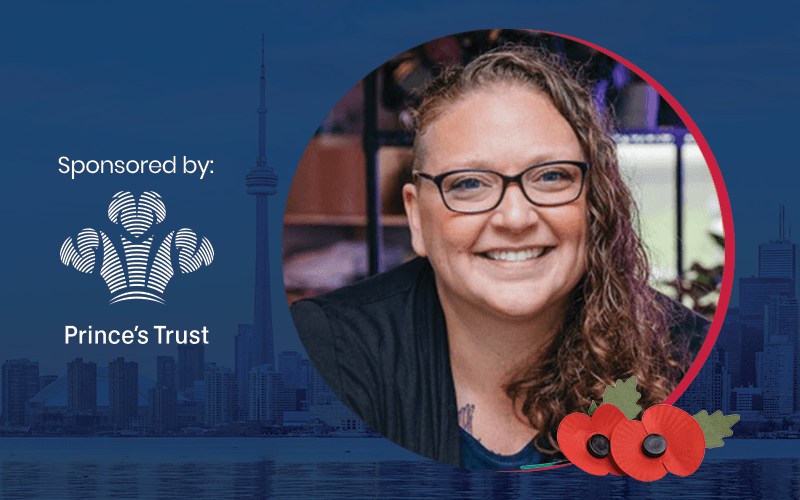
Kristin Topping
Episode
This Remembrance Day, we are proud to present a special episode brought to you by Canada’s Podcast and Prince’s...
Key takeaways
- Princess Trust Canada provides invaluable resources for military veterans transitioning to entrepreneurship, including boot camps, mentorship programs, and networking opportunities that help translate military skills into business success.
- Planning beyond just your startup phase is essential—consider logistics like space requirements, legal incorporation, and where your business will grow, not just how to launch it.
- Building authentic connections within your local business community creates collaboration over competition, where entrepreneurs support each other's success rather than viewing each other as rivals.
- Disconnecting and recharging is critical for productivity, especially when working from home—set boundaries with work tasks, take breaks from social media, and find activities that help you truly unplug.
- Don't be afraid to ask questions and admit your weaknesses as an entrepreneur—the business community is more supportive than you think, and seeking expert help in areas like accounting and legal matters is smarter than trying to do everything yourself.
Transcript
Full transcript page · Interactive episode
============================================================
TRANSCRIPTION WITH SPEAKERS
============================================================

[00:00] SPEAKER_00: It's Toronto's podcast on the Canada's podcast network.
[00:22] SPEAKER_02: Hi everyone, and Leslie, I'm the most on Canada's podcast here in Toronto.
[00:26] SPEAKER_02: Today we're talking to Kristen Popping. She's the owner of Sweet Life for a
[00:30] SPEAKER_02: an e-commerce retail store for tropical plants based out of Ottawa.
[00:35] SPEAKER_02: Kristen is also a veteran. She's served 21 years in the Canadian Armed Forces.
[00:40] SPEAKER_02: We're very happy to have her here on the show and excited that it comes to us
[00:46] SPEAKER_02: and that we're able to have her on the show just in time for Remembering
[00:49] SPEAKER_02: Stay. So Kristen, welcome to Canada's podcast and thank you for coming. Can you tell
[00:53] SPEAKER_02: us a little bit about your journey as an entrepreneur and who you are and what
[00:57] SPEAKER_00: you do? Sure. So I started out a little bit different than a lot of other
[01:01] SPEAKER_00: people. I joined the military when I was 17 right out of high school and I went
[01:07] SPEAKER_00: to military college. So at military college you've got all of your leadership and
[01:13] SPEAKER_00: education that you have to focus on and everything like that. So I got a really
[01:17] SPEAKER_00: great lead up into building skills that would make me a great entrepreneur.
[01:22] SPEAKER_00: Also my military background, I'm an engineer and a scientist. So most of the
[01:27] SPEAKER_00: time I spent at research centers and I taught at military college for about
[01:32] SPEAKER_00: seven years and then I did project management when I went to Ottawa. So I think
[01:38] SPEAKER_00: that as an officer in the Canadian Forces I've really gained the knowledge and
[01:43] SPEAKER_00: the leadership that I need to be able to have a successful business. And can you
[01:49] SPEAKER_02: tell us a little bit about why you actually chose to get started with
[01:53] SPEAKER_02: Sweet Life Flora? Like why you chose to go that direction? So Sweet Life Flora is
[01:58] SPEAKER_00: an e-commerce plant shop for rare, hard-to-find plants. We also sell some
[02:04] SPEAKER_00: regular plants that you would find out in our sure-your-green house but most of
[02:07] SPEAKER_00: it is like stuff that you have to like search for and you get the thrill of
[02:11] SPEAKER_00: the search. I got into this because I've really always been into plants like my
[02:18] SPEAKER_00: Nana growing up had so many African violets you couldn't even walk into her
[02:22] SPEAKER_00: house. My mom had this massive window with all of these plants so I'd really
[02:26] SPEAKER_00: grown up with it. And so my plants followed me from posting to posting. They were
[02:31] SPEAKER_00: like a centering thing for me. Like I was able to take come home for hard-to-work,
[02:36] SPEAKER_00: take care of my plants. So I have a history of concussions. I played rugby at
[02:41] SPEAKER_00: military college and then in 2016 I got a concussion that absolutely changed
[02:46] SPEAKER_00: my life. It changed fundamentally who I was, how I problem solved, how I hear,
[02:51] SPEAKER_00: how I see. It was a heartbreaking experience. But what actually saved me and made
[02:58] SPEAKER_00: me feel like I had purpose, was my plant collection. I started collecting
[03:03] SPEAKER_00: plants. I started keeping track of how I was taking care of them. And then my
[03:07] SPEAKER_00: plant collection got to a point where my husband was like, she'd do something
[03:11] SPEAKER_00: about this. We don't have a lot of space anymore. You're gonna have to like
[03:15] SPEAKER_00: start selling some of these and I was like, that's it. That's what I need to do.
[03:20] SPEAKER_00: Because prior to that my recovery wasn't going the best. I was pretty sure that
[03:25] SPEAKER_00: I was going to be medically released from the military and I felt
[03:29] SPEAKER_00: obligated to go out and find a job. So I was looking for jobs that were exactly
[03:34] SPEAKER_00: like what I couldn't do in the military anymore, which made no sense. A friend of mine
[03:40] SPEAKER_00: and my sister who's also in the military, both of them are in the military, had an
[03:44] SPEAKER_00: intervention with me in a very public place. And they were like, Chris, you have
[03:48] SPEAKER_00: this into us. You cannot go back and work the same type of job that you were just
[03:54] SPEAKER_00: doing that is causing you so much stress and heartache. So that's when
[03:58] SPEAKER_00: Princess Trust stepped in on Not for Profit, set up by Prince Charles, who really
[04:05] SPEAKER_00: trains military people and also medically releasing military people on how they
[04:11] SPEAKER_00: can use the skills they got in the military in order to become a successful
[04:14] SPEAKER_00: entrepreneur. So I've been taking part in that program and it's been phenomenal.
[04:20] SPEAKER_02: Is Princess Trust, it's across the country and is it across the globe as well?
[04:26] SPEAKER_00: So it's really a commonwealth thing. So there's a Princess Trust Canada, there's
[04:31] SPEAKER_00: a Princess Trust UK, and I believe there's a Princess Trust Australia as well.
[04:35] SPEAKER_00: So the focus is, they've got like a multi-tiered focus, but one of their primary
[04:39] SPEAKER_00: focuses is really entrepreneurship and getting military people out, starting
[04:44] SPEAKER_00: businesses becoming independent. It also really helps with your purpose as you're
[04:50] SPEAKER_00: leading a military, which is something that's really important to me because I've
[04:54] SPEAKER_00: been in since I was a teenager. I don't know what it's like to
[04:57] SPEAKER_00: add up to the real world without being in uniform.
[05:00] SPEAKER_02: Yeah, absolutely. So Princess Trust, I know we were talking a little bit
[05:04] SPEAKER_02: before we started the podcast, but it did help you with mentorship as well. Could you tell us a
[05:11] SPEAKER_00: little bit about that? Yeah, so there's three stages to the program. The first stage is like a one day
[05:18] SPEAKER_00: business introduction. Like this is something that you could do a familiarization.
[05:22] SPEAKER_00: You could become an entrepreneur when you leave the military. You don't necessarily have to go
[05:27] SPEAKER_00: out and get another government job. This is something that you have the skills to do.
[05:31] SPEAKER_00: And then folks who have a more developed idea and who are ready to take their business to
[05:37] SPEAKER_00: the next level are selected to go on different boot camps during the year. Now, the boot camp is
[05:42] SPEAKER_00: basically a five-day entrepreneurship workshop. And you go deep into, it's almost like a one semester
[05:51] SPEAKER_00: how to start your own business snapped into five days. It's phenomenal. And then after that,
[05:57] SPEAKER_00: people who are interested can join the mentorship program, which is they pair you with another person
[06:05] SPEAKER_00: who has business experience, finance experience, entrepreneurship experience. So you're really able
[06:11] SPEAKER_00: to get the whole experience from them and get assistance and advice and throw ideas off of them.
[06:18] SPEAKER_00: So my mentor has been absolutely wonderful. One of the best things I've ever done.
[06:23] SPEAKER_02: So your mentor is she in Ottawa because I know you're based out of Ottawa. Do they pair you with
[06:28] SPEAKER_00: somebody who's in your city? I actually specifically asked for someone that I could do
[06:34] SPEAKER_00: like over computer conversations with. So I'm paired with a gentleman from Toronto.
[06:40] SPEAKER_00: He has a lot of finance, corporate bank experience, but he's also a contractor. So he does,
[06:47] SPEAKER_00: his entrepreneur in his own way. And he's got a totally and completely different experience than
[06:53] SPEAKER_00: I do. So I'm able to bounce ideas off him stuff that I didn't think about before. Because as an
[06:58] SPEAKER_00: engineer, I'm pretty focused on thinking about technical specifications, the project management,
[07:04] SPEAKER_00: like bundle. But I don't think about things like legal or not. So he's really helped me with that.
[07:13] SPEAKER_02: In terms of being in Ottawa, like what do you do a lot of business in Ottawa? I know
[07:18] SPEAKER_02: it was on Sweet Life floor as e-commerce. So you're probably doing a lot of
[07:23] SPEAKER_02: business online. But how do you feel about being an entrepreneur in Ottawa?
[07:30] SPEAKER_00: So I actually live in Arn Pryor, which is the local farm in Ottawa.
[07:34] SPEAKER_00: Yep. I do live deliveries within Ottawa. I've actually become really close to the whole plant
[07:41] SPEAKER_00: community in Ottawa. So I have a lot of friends. I'm also friends with a lot of the local businesses as
[07:46] SPEAKER_00: well. Teravella at the stock market, all of these guys have been incredibly supportive in helping
[07:53] SPEAKER_00: me start my business. We've made sure that each of us has a different niche so that we're not
[07:58] SPEAKER_00: overlapping each other. I think that's something that's very unique to the plant type of business,
[08:04] SPEAKER_00: is that we all work together because ultimately we're all looking to make other people happy.
[08:09] SPEAKER_00: Because plants really are, they focus on your health, they focus on having a purpose that's
[08:16] SPEAKER_00: outside of what you do every day. You're absolutely on my plants in the back-ends.
[08:22] SPEAKER_02: Yeah, I see them. I feel the same way about plants. I can't live in an environment without them.
[08:30] SPEAKER_02: I feel like they just bring fresh air, like a breath of fresh air and literally they do.
[08:34] SPEAKER_00: In military college, I had cactus.
[08:38] SPEAKER_02: The cactus? Something that you really couldn't kill?
[08:42] SPEAKER_00: Well, maintenance, like, didn't need a lot of light. Something that could live in a dorm.
[08:48] SPEAKER_02: Yeah, I know that moss well behind you. I just wanted to draw attention to it, but it's
[08:54] SPEAKER_00: cool and I definitely want one for my house. So it was actually made by another one of my plenty
[09:00] SPEAKER_00: friends. They urban botanist. So again, we all like share and collaborate and we're a part of each
[09:08] SPEAKER_02: other's success. That's awesome. And they're auto-abased as well. Absolutely. Very cool.
[09:14] SPEAKER_02: So what are some of the challenges of doing business in auto-end?
[09:17] SPEAKER_00: I think the first challenge was doing business out of my home. It's really hard to separate all
[09:22] SPEAKER_00: the tasks that I need to do during the day with all the tasks I need to do for my business.
[09:27] SPEAKER_00: And then at the same time, having to juggle medical appointments because I'm still in rehabilitation.
[09:33] SPEAKER_00: That's why online is really important to me. Hopefully I'll have a storefront and a greenhouse soon.
[09:39] SPEAKER_00: But I really need to like, sort out the business learning process first. Get my medical
[09:44] SPEAKER_00: equipment sorted out and mind me a bit more cleared up and then I'll be able to really focus
[09:50] SPEAKER_02: on my business. Yeah, I know it's difficult when you're working from home and then you're not
[09:55] SPEAKER_02: used to it right because if you're from the corporate world or if you're from military,
[09:59] SPEAKER_00: you're used to that team environment and such a... Absolutely. So not only do I not have the team
[10:05] SPEAKER_00: environments anymore, but I also have to like prevent myself from sleeping in in the morning.
[10:13] SPEAKER_00: I've never gotten to sleep in before. So it's something that I am starting to balance my day a bit
[10:21] SPEAKER_00: better. So rehab was like a complete chicken the bum for me. I go from sleeping like 18 hours a day
[10:28] SPEAKER_00: after my concussion to like, oh my gosh, I need to make money and start my business.
[10:34] SPEAKER_00: So you're wanting to work all the time. So I'm having to manage and to pace myself a little bit.
[10:41] SPEAKER_02: Yeah, because when you're passionate about it, you just want to like, well, I was working to like
[10:45] SPEAKER_02: midnight last night just because you get passionate about it, right? And I know people
[10:49] SPEAKER_02: were in our past midnight, but when you love doing it, it's hard to stop yourself.
[10:56] SPEAKER_02: What would make you recommend Ottawa to other entrepreneurs who are looking to start a business there?
[11:03] SPEAKER_00: So there's an amazing business community. There's lots of different organizations out there
[11:08] SPEAKER_00: that really support the social aspect of the business, networking, getting yourself out there.
[11:15] SPEAKER_00: So I guess like three weeks ago, a friend invited me to go to an ESACs event. I can't
[11:23] SPEAKER_00: remember exactly what it stands for, but it's like an entrepreneurship social engagement opportunity.
[11:29] SPEAKER_00: And the theme of it was women in business. So they brought entrepreneurs from Ottawa that are
[11:35] SPEAKER_00: female and they had a panel. And it was a really great opportunity just to get out meet people,
[11:41] SPEAKER_00: let people know what's we like for is, but also to learn from their experience. But there's other
[11:47] SPEAKER_00: groups out there that do the same thing. Like there's ones that are specific to military,
[11:52] SPEAKER_00: it's just a really neat environment. And Princess Trust also helps us by giving us those
[11:58] SPEAKER_00: those contacts. So if we do want to reach out, we can absolutely do that.
[12:04] SPEAKER_02: That's awesome. So with Princess Trust, you guys have like all of that meetings and like do they,
[12:10] SPEAKER_02: what kind of resources do they offer you guys when as it go along?
[12:13] SPEAKER_00: They have buy veteran. So if you go to buyvetron.ca, it's a directory that was filled with
[12:21] SPEAKER_00: different businesses that have been started by veterans and by military people. So it's a really
[12:26] SPEAKER_00: cool opportunity where say if you need parents, you can look them up on buyvetron. If you need your
[12:33] SPEAKER_00: car wrapped, you can find someone to do that. Like it's amazing the breadth of different businesses
[12:40] SPEAKER_00: there are on buyvetron. But also with the mentorship program, I do have a periodic follow-ups
[12:46] SPEAKER_00: with someone from Princess Trust just to make sure that the match is still suiting me to do check-ins
[12:53] SPEAKER_00: and to make sure everything's going okay. But plus there's also these great opportunities like
[12:59] SPEAKER_00: this with Canada's podcast where they set up opportunities for us to network our business to talk
[13:04] SPEAKER_00: a little bit about Princess Trust by veteran and also to just get our name out there. This is all
[13:11] SPEAKER_02: of Princess Trust. What a great point for for other veteran entrepreneurs. Absolutely.
[13:18] SPEAKER_02: So we're going to shift gears a little bit. So some of our best ideas come when we least expect them.
[13:24] SPEAKER_02: How do you disconnect and recharge? How do you balance that entrepreneur life with everyday lives?
[13:31] SPEAKER_00: So my husband will really say that since my concussion I've become an extreme introvert.
[13:37] SPEAKER_00: So I really get my energy from just completely unplugging. Disconnecting one of the biggest parts
[13:43] SPEAKER_00: of my job is actually social media. So because I'm an e-commerce site I need to like get myself out.
[13:49] SPEAKER_00: They're put restocks online. Let people know what's going on. So when I need to recharge I
[13:55] SPEAKER_00: disconnect. I will take a few hours off with social media which is actually a pretty hard thing to do
[14:02] SPEAKER_00: because I pride myself on being available to my customers. Sometimes I just need a break. Also
[14:09] SPEAKER_00: I've got, I don't know, I don't know if you're going to hear them. I have animals. So animals were
[14:14] SPEAKER_00: also a big part of my recovery. So we have three dogs and two cats and I spend a lot of time with them.
[14:20] SPEAKER_02: That's good. So and that kind of that recharging you find it helps you be more productive when you get
[14:27] SPEAKER_00: back. Absolutely. So I have a little bit of a, this is probably left over from being in the military
[14:33] SPEAKER_00: for so long. I'm actually still in until July 2020. I have this thing where I keep to do lists everywhere.
[14:41] SPEAKER_00: And I mean they're sticky noted to everything. I've got them on my phone. I have reminders. So
[14:48] SPEAKER_00: when one of those reminders goes off that I need to do something I'm like, all right, let's do it.
[14:52] SPEAKER_00: And now I'm excited to do it which is so cool. For a long time I wasn't excited about a lot. So
[14:58] SPEAKER_00: I really feel like I'm where I need to be now. It's hard when you're going through something hard.
[15:04] SPEAKER_02: It's hard to get excited. You've passed. Yeah, anything. So I'm really glad that you found
[15:09] SPEAKER_02: I started sweet life floor and princess trust and me too. And I think that's what like igniting
[15:15] SPEAKER_02: that spark is what every entrepreneur needs to go through to to start it right and and realize
[15:21] SPEAKER_02: that idea and then go in and actually start their business. Absolutely. So I went to the boot camp
[15:28] SPEAKER_00: with a pretty solid idea of what I wanted to do. But when I was there it gave me the time to focus
[15:34] SPEAKER_00: on being able to put it all together because I never made time for myself before. So I'm just
[15:40] SPEAKER_00: getting the opportunity to bring it all together. And then I launched my website.
[15:44] SPEAKER_02: To be extra. Did you launch your website? Did you build it by yourself? I did. I do have a little
[15:51] SPEAKER_00: bit of experience in the computer programming and things like that that I got from my military
[15:55] SPEAKER_00: college experience and engineering. So I was able to build my own website, personalize it, make it
[16:00] SPEAKER_00: exactly mine, which was wonderful. And I like having that little bit of control too.
[16:06] SPEAKER_02: Because you have a really nice site to go look at it and it's very, very nice. Thank you very much.
[16:12] SPEAKER_02: It worked very hard on it. It shows. What gets you most excited about your business these days?
[16:21] SPEAKER_00: It's the thrill of the hunt. So I did a radio show on the weekend and again to promote princess
[16:29] SPEAKER_00: trust and things like that. And since that radio show I've gotten six or seven emails from people
[16:35] SPEAKER_00: being like, I think you're exactly the person I need. I'm looking for this specific plant.
[16:41] SPEAKER_00: There's a chocolate shop actually just north of Kingston who's looking for cocoa trees because
[16:46] SPEAKER_00: they do their, yeah, they do a little introductory workshop and show how they make the chocolate
[16:50] SPEAKER_00: and then they want to have a cocoa tree. So I've been looking for cocoa trees. Love being able to
[16:57] SPEAKER_00: find something that other people are looking for and it's really the thrill of the hunt. I used to do
[17:03] SPEAKER_00: it just for myself because I won't want a specific plant. But now I get to do it for other people.
[17:08] SPEAKER_02: That's much more cost effective. What do you think is the vision for your business moving forward?
[17:15] SPEAKER_02: Like, where do you see your business growing? That's the reason.
[17:19] SPEAKER_00: Building a greenhouse. So next summer my husband and I have it all planned out. We have 12 acres now.
[17:26] SPEAKER_00: So our plan is to turn those acres in the back of our yard into a greenhouse, a sustainable farming
[17:34] SPEAKER_00: and some small animals as well. Because we would like to unplug a bit more off the grid as well.
[17:40] SPEAKER_00: But the greenhouse is for sweet life, Florida. Right now I implore most of my plants because just
[17:45] SPEAKER_00: because of where they originate in the world, where the greenhouses are that can keep them alive for
[17:50] SPEAKER_00: four seasons, they're all in Asia and South America. But if I get a four season greenhouse,
[17:57] SPEAKER_00: I can start growing them here and reduce the carbon footprint of my business, but will also
[18:02] SPEAKER_00: be coming less dependent on other businesses and people. So having a greenhouse, opening my
[18:09] SPEAKER_00: storefront downstairs in our plant studio, I think people would drive for plants. I live in our
[18:19] SPEAKER_02: environment related to the podcast questions. But I'm really interested in the logistics of your
[18:23] SPEAKER_00: shipping. Okay, so shipping after I acclimatize everything or so I get plants from overseas.
[18:32] SPEAKER_00: And they come, they're pretty understanding that we live in Canada and we get a winter. So they do a
[18:38] SPEAKER_00: lot of work to insulate the shipping. I have import licenses from the Canadian Food and Spection Agency.
[18:46] SPEAKER_00: So they are the ones who dictate what plants I can bring in and where I can get them from.
[18:52] SPEAKER_00: So I can apply for import licenses from almost anywhere. It's just I have to do the
[18:57] SPEAKER_00: active paperwork. And then once they get here, they acclimatize for four to six weeks because
[19:02] SPEAKER_00: they have to get used to the Canadian climate and then they're ready to ship. I do winter shipping,
[19:07] SPEAKER_00: which is pretty rare for an online plant business. I had long discussions with Canada Post about
[19:15] SPEAKER_00: how like do they leave their mail on the truck? Do they put it in a garage, that sort of thing.
[19:19] SPEAKER_00: And I believe the Canada Post is becoming more aware that they are shipping like sensitive goods.
[19:25] SPEAKER_00: So I use a 72 hour heat pack and then I also put it in an insulated box liner. I haven't had any
[19:32] SPEAKER_00: problems so far, but we're not in the dead of winter yet. So I only have to do some trial and error.
[19:37] SPEAKER_00: There may be some loss and I may be giving people some money back. We'll see, it's a trial,
[19:42] SPEAKER_02: it's a process. Exactly, right? Like this whole entrepreneurial journey is a process and it's
[19:48] SPEAKER_02: loose down along the way and just learn from it moving forward. I could see that being a little bit
[19:54] SPEAKER_02: of a hurdle. And you'd have to think really long and hard about, right? To figure out the logistics of
[20:00] SPEAKER_00: that. So it's also figuring out what your customers watch. So winter blues are a real thing.
[20:06] SPEAKER_00: Like seasonal effectiveness disorder. I've found that plants have helped me get over a bit of
[20:12] SPEAKER_00: seasonal effectiveness disorder. Like when it starts to get dark outside and I wake up in the dark,
[20:17] SPEAKER_00: all I want to do is go and play with my plants. It just gets me into the mindset to start the day
[20:23] SPEAKER_02: and it makes me feel better. And we're getting into that time now, right? That seasonal effect
[20:29] SPEAKER_02: disorder. So maybe this will be peak season for you. Yeah, never know. Maybe your sales will start
[20:35] SPEAKER_00: to go up. Actually, you should, do you advertise that? I do. I do. Yep. So I do a lot of Facebook and
[20:43] SPEAKER_00: Instagram advertising. So we're at Sweet Life, Laura, which is straightforward. It sounds exactly
[20:49] SPEAKER_00: as it's spelled. And we do a lot of advertising for our restocks. We do a lot of paid advertising as
[20:56] SPEAKER_00: well. We're also going to be taking part in a plant. It's like a craft fair, but we're going to be
[21:01] SPEAKER_00: a plant vendor at the craft fair on the 16th to 17th of November. It's on Prince of Wales.
[21:08] SPEAKER_00: I believe it's the Hellenicah Center. And it's in support of another veteran not for profit.
[21:17] SPEAKER_00: So it's helping equin learning program help. So it's meant for military people and first responders
[21:27] SPEAKER_00: who struggle with PTSD and operational stress injury. And they get to go and take part in
[21:34] SPEAKER_00: like living out of ride horses and getting close to the animals and things like that. So it's a
[21:39] SPEAKER_02: therapy program. That's really, it's good that your looks still at your very much involved in
[21:44] SPEAKER_02: the community and in the veterans community, especially. So it's really good. Absolutely. A lot of
[21:49] SPEAKER_00: my friends have been deployed. A lot of my friends came back with PTSD OSIs injuries. And I'd
[21:56] SPEAKER_00: want to do whatever I can to use my businesses as a platform to support them.
[22:01] SPEAKER_02: Well, thank you for doing that. So I just want to talk about, I know we kind of went over the
[22:05] SPEAKER_02: logistics of shipping and maybe that would be a challenge. But what's the greatest
[22:10] SPEAKER_00: challenge that you faced in your business, Citi? I would say right now, I'm going through it right
[22:16] SPEAKER_00: now, taking myself from being a, like a sole entrepreneurship into incorporation. So I've had
[22:25] SPEAKER_00: to find a lawyer to help me do that. I'm going through all of my accounting to make sure it's all set
[22:31] SPEAKER_00: up. It's not something I would have thought I'd gotten to the point of, like I always thought I'd
[22:36] SPEAKER_00: just be a sole proprietorship. Like it just seems easy, right? But then you think about how important it
[22:41] SPEAKER_00: is to incorporate and to protect your brand and those sort of things. So is your mentor helping you
[22:48] SPEAKER_02: a lot with that? I know what you said then. Yeah, yeah. Really great. The Princess Trust community
[22:54] SPEAKER_00: as well because other people who have gone through the incorporation process, they have recommended
[23:00] SPEAKER_00: a lawyer. They've recommended an accountant. So I'm really reaching out to that community that I know
[23:06] SPEAKER_02: and taking information from them. Yeah, we went through that not long ago as well and it was just,
[23:12] SPEAKER_02: it's really hard to navigate. I just found a big challenge. So it's nice to have somebody holding
[23:16] SPEAKER_00: your hand when you're going through it, right? Exactly. You have to think about what paperwork you need,
[23:20] SPEAKER_00: because that you're coming for everything that you've put into your business already. So I use
[23:25] SPEAKER_00: the experts. I'm not an expert. So I use the experts. It's important when you're an entrepreneur,
[23:31] SPEAKER_02: because I think a lot of people just try to do everything all at once and then they don't do it all
[23:36] SPEAKER_00: well, right? The funny story is that I used to teach engineering economics at military college.
[23:43] SPEAKER_00: Well, I can tell you that math is a lot different than the stuff you need to do for business.
[23:48] SPEAKER_00: I'm here at the website and he's kids up for success and I'm like, you got a lot to learn.
[23:53] SPEAKER_00: Yeah, I'm just going to go with accountant and make them your best friend.
[23:59] SPEAKER_02: What do you know now that you wish that you had known when you were first starting out your business?
[24:05] SPEAKER_00: That is a really tough question. I think I wish I would have known how much space things are
[24:12] SPEAKER_00: going to take. So I've got my personal collection like in the back of the room and then the front
[24:19] SPEAKER_00: of the room is like entirely covered with plants that are going to be for sale. So there's different
[24:25] SPEAKER_00: stages of the operation. There's when I just get plants in, then I have to quarantine them,
[24:30] SPEAKER_00: then I have to acclimatize them and then they're ready for sale. So I think if I would have
[24:35] SPEAKER_00: like thought about the logistics about space a little bit more, I probably could have done a better
[24:40] SPEAKER_00: job with it right up front. I've sort of organized things now, but the greenhouse will definitely
[24:45] SPEAKER_00: help us. Also, the transitioning process out of the military, it's hard psychologically.
[24:52] SPEAKER_00: So I've been dependent on the military since I was 17. Like I always know when I'm going to get a
[24:57] SPEAKER_00: paycheck. I don't have to think about what I need to wear when I wake up in the morning because
[25:01] SPEAKER_00: I'm just going to wear a uniform. I always know that I have a job. So that security as well,
[25:06] SPEAKER_00: getting used to the idea that I'm going to be reliant completely on myself. I need to put it all
[25:12] SPEAKER_00: behind me and I have a great transition team both medically and on the logistics side. So they're
[25:19] SPEAKER_00: helping me transition out. It's been an actually a really good process so far. I'm technically
[25:25] SPEAKER_00: posted to the transition center right now, which is the unit that actually helps you
[25:31] SPEAKER_00: through the process of leaving the military. They've been phenomenal. Like my section commander
[25:36] SPEAKER_02: P. O. Boodle-Air, he's been amazing. That's so great that you have that support.
[25:41] SPEAKER_02: Bring forward into this next step. Like what you just said is super relevant for
[25:45] SPEAKER_02: I think many entrepreneurs who are leaving their corporate jobs or whatever full-time
[25:51] SPEAKER_02: gig they were doing before, right? That leap into something I'm known and exciting, but it is
[25:57] SPEAKER_00: the unknown. Absolutely. And people aren't used to they get into this habit. The military is like
[26:04] SPEAKER_00: a habit. I need to learn how to become less dependent on it. What advice would you give an
[26:11] SPEAKER_02: entrepreneur looking to start a business in Ottawa right now? Planning. So having an idea is great.
[26:21] SPEAKER_00: Being able to build a website is great, but you need to not just plan for your startup,
[26:25] SPEAKER_00: but plan where your business is going to go as well. It will help you with financing. It'll
[26:30] SPEAKER_00: help you with legal. Also asking questions. So don't be afraid to go and socialize and ask
[26:37] SPEAKER_00: questions from other entrepreneurs and learn from them. That was one thing that I was really,
[26:42] SPEAKER_00: really nervous about because my background is totally different than everyone else. But I found
[26:48] SPEAKER_00: that the community is super supportive and they'll answer your questions. They'll even set you
[26:53] SPEAKER_00: up with the people and the numbers and the phone numbers you need. So plan and don't be afraid to ask
[26:59] SPEAKER_02: questions. That's great advice. Be okay admitting your weaknesses. Yeah, be okay with admitting your
[27:06] SPEAKER_02: weaknesses. Now this is a similar question, but what was the best piece of advice that you never
[27:12] SPEAKER_00: received? So this is going to be a kicker for Nike, but just do it because the intervention that
[27:21] SPEAKER_00: I had with my friend and my sister was probably the most profound moment of my life where they were
[27:28] SPEAKER_00: actually like, Kristen, just start your business. It's what you want to be doing. You don't need
[27:35] SPEAKER_00: the government job and the study for the check because you can make it on your own. So having
[27:40] SPEAKER_00: somebody point out that I had the ability to succeed, it was a nice thing to hear, but also I needed
[27:47] SPEAKER_02: to hear it. Okay, so now we're going to, we're just going to do some rapid fire questions. And I
[27:53] SPEAKER_02: either think too much of your answers just kind of spit out whatever's on your mind. So it's going
[27:58] SPEAKER_02: to be eight questions in a row and just answer them as quickly as you can. If you weren't doing what
[28:04] SPEAKER_02: you're doing right now for work, what would you be doing instead? I probably would have taken the
[28:09] SPEAKER_02: RCMP job that I was offered. So you were offered it and then your sister, I keep remember who else,
[28:15] SPEAKER_02: but they my friend Suelyn. So you were offered an RCMP job and then? Yeah, and they're like you don't,
[28:21] SPEAKER_00: you're just going to get yourself into the same situation again where you're going to be overloaded,
[28:27] SPEAKER_00: you work 110% all the time and it's just not good for your health. I would probably be putting
[28:34] SPEAKER_00: myself in harm's way because it's comfortable if I didn't have so money pointed out. You're lucky
[28:40] SPEAKER_02: to have that, so those people behind you in supporting you. I really am. Question number two,
[28:45] SPEAKER_02: what book are you currently reading? What books would you recommend to our audience?
[28:50] SPEAKER_00: So I have a penchant for science fiction and for fantasy. So I'm reading books. Hold on,
[28:57] SPEAKER_00: it's right underneath my computer by Samantha Shannon. What's it called? The Bone Season by Samantha
[29:05] SPEAKER_00: Shannon. It's fantasy. It just helps me unplug, takes me out of the headspace that I'm currently in
[29:11] SPEAKER_00: and I don't have to think about anything. Are you a morning or a night person? Morning, no question.
[29:18] SPEAKER_02: If you had to pick one word to describe yourself, what would it be and why? So prior to my concussion,
[29:24] SPEAKER_00: it would have been I relied on my intelligence and it's who I was. But now I would say that it's
[29:31] SPEAKER_00: probably my friendliness and my ability to interact with customers. What is keeping you up at
[29:38] SPEAKER_00: these days if anything? Honestly? Uh, chronic pain?
[29:50] SPEAKER_02: My husband's snowing. So you don't get very well, it's a good.
[29:59] SPEAKER_02: Hopefully you can get enough rest to kind of recharge you for the morning. I have
[30:03] SPEAKER_02: two kids that keep me up all night too. So I know how it all is. Well, my dogs do sleep in my bed too.
[30:14] SPEAKER_02: Most are favorite places in the whole world. My client room? I guess it could kind of feel like a
[30:21] SPEAKER_00: room for us in there anyways, right? Yeah, so when we were designing the house, we actually had to
[30:26] SPEAKER_00: think about the humidity issue and so it does. You walk into the room, it's a few degrees warmer,
[30:32] SPEAKER_00: it's a little bit more humid, it's easier to breathe and I just everything stops. It's just
[30:39] SPEAKER_02: such a great space. So you guys built your house after you designed your house after
[30:46] SPEAKER_00: starting my concussion. My husband released from an military in 2017 and he was going to need a
[30:52] SPEAKER_00: space because he is contemplating starting his own business as well. So he gets the man cave
[30:58] SPEAKER_00: in the garage to do all of that and then we put the potential storefront downstairs for me.
[31:05] SPEAKER_02: One or three non-negotiables that have to happen in your morning routine.
[31:10] SPEAKER_00: Can I say it one of them once? Yeah, so coffee is very important to me. I took walks for a walk.
[31:21] SPEAKER_00: Yeah, and then I end up in the plant room even before I have breakfast. So I would say those are
[31:26] SPEAKER_00: three things that I do. Coffee is first. It's not a person you want to talk to.
[31:33] SPEAKER_02: The coffee neither mine. I would have to be there. I needed, I was recently just needed to go to
[31:39] SPEAKER_02: the department's every morning before. So I bring anything. Double doubles. Double doubles,
[31:46] SPEAKER_00: buts are you? We all at the military standard. It's a double double. It's a double double.
[31:52] SPEAKER_00: I think that's a Canadian standard. Probably, but anytime someone's going for coffee in the office,
[31:58] SPEAKER_02: you're like military standard. Yeah, that's awesome. Last but not least, okay, so this is the last
[32:06] SPEAKER_02: question and we asked this to Oliver and our guest son Canada's podcast. But there's a small
[32:12] SPEAKER_02: tropical island in the middle of the ocean with only one phone booth and no internet. We drop you
[32:18] SPEAKER_02: with no technology at all. But anytime you can use the phone booth on the island to call the boat
[32:24] SPEAKER_02: and come pick you up. How long would you last before making that phone call and what would you do
[32:29] SPEAKER_00: until then? I'm on a tropical island surrounded by plants that are tropical. I was actually just
[32:40] SPEAKER_00: talking about this with my husband. A similar question. There's a television show where they drop
[32:44] SPEAKER_00: you off in the middle of a forest and it's like the one who can last the longest would win.
[32:50] SPEAKER_00: I would beat my husband because he has no sense of direction whatsoever. So
[32:57] SPEAKER_00: and like I grew up in the country so I think I'd last a while. But if I didn't,
[33:03] SPEAKER_00: I'd probably have to come and get me. Your husband could come too.
[33:09] SPEAKER_02: Okay, perfect. There you go. And then you can go gather at, you can go take samples of all the
[33:14] SPEAKER_02: tropical, the rare tropical plants that you need to find. Yeah, and he can cut.
[33:19] SPEAKER_02: You can find some coconuts and bananas somewhere. Yeah, so that's all the questions that I have for
[33:26] SPEAKER_02: you today. Is there anything else that you want to share with me before we say goodbye?
[33:31] SPEAKER_00: This has been really fun and I really appreciate the opportunity.
[33:35] SPEAKER_00: Anybody who's military on who's contemplating started business, I totally recommend
[33:40] SPEAKER_00: reaching out to Princess Trust because they will help you out. They'll get you the resources
[33:45] SPEAKER_00: that you need and it's a really great program and check out by veteran because there are so many
[33:51] SPEAKER_00: other great businesses that are. So where can our listeners and viewers find you online?
[33:58] SPEAKER_00: So we have a website, sweetlifeflora.ca. So the shop is actually there as well. I also update
[34:05] SPEAKER_00: the front page with lots of new information. We're on Instagram and Facebook at sweetlifeflora,
[34:12] SPEAKER_00: just exactly how it sounds. And you can always email me at info at sweetlifeflora.ca.
[34:18] SPEAKER_02: Awesome. All right, Kristen. It's been a pleasure talking to you today and learning about your journey.
[34:24] SPEAKER_02: And I know this interview is just going to be right in time for a remembrance day. So thank you
[34:28] SPEAKER_02: for serving our country and serving the nation. That's being a wonderful entrepreneur and sharing
[34:34] SPEAKER_00: this journey with our listeners and me. Thank you so much for having me lastly.