
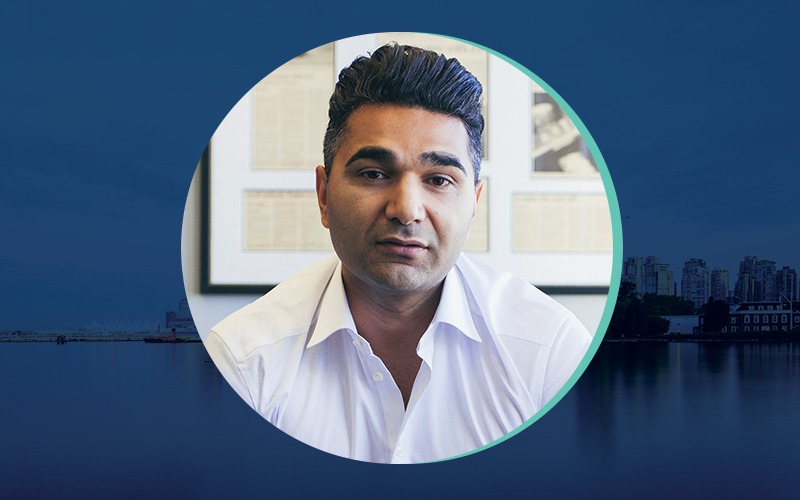
Justus Parmar
Episode
Justus Parmar is the Founder and Managing Director of Fortuna Investments, a Vancouver-based private capital firm specializing in venture capital investments....
Key takeaways
- Passion for your work is more important than chasing money, as financial success will naturally follow when you genuinely care about what you're doing.
- As an entrepreneur, you must develop comfort with rejection and failure, using them as learning opportunities to find solutions rather than accepting "no" as a final answer.
- Building a strong network is essential when entering a new city or market, even if it means working at a larger company initially to meet people and understand the landscape.
- Staying current with industry trends and immersing yourself in relevant information is crucial to becoming an expert and staying ahead of competition in your field.
- Starting philanthropic efforts early in your career, rather than waiting until later in life, can compound your impact and create opportunities you can't yet imagine.
Transcript
Full transcript page · Interactive episode
============================================================
TRANSCRIPTION WITH SPEAKERS
============================================================

[00:00] SPEAKER_00: It's VanCoovers Podcast on the Canada's Podcast Network.
[00:27] SPEAKER_00: Hello, this is Robert Smil, coming to you today with VanCoovers Podcast, a member of the Canada's Podcast Network,
[00:32] SPEAKER_00: where we talk to the entrepreneurs who are making it happen here in Vancouver, British Columbia.
[00:38] SPEAKER_00: Justice Palmer is the founder and managing director of Fortuna Investments, a Vancouver-based private capital firm specializing in venture capital investments.
[00:48] SPEAKER_00: It has raised more than $300 million for 125 early-stage companies and facilitated the IPO of 24 companies, Blockchain, Renewable Energy and Lithium Exploration.
[01:02] SPEAKER_00: A strong believer in giving back, Justice is an active board member and fundraiser for face of today and youth education farms and the Justice Palmer Group Scholarship Foundation.
[01:15] SPEAKER_00: Well, Justice, welcome to the show. Thanks for taking the time today to be here for all our listeners.
[01:22] SPEAKER_01: Robert, my pleasure. Thank you for having me.
[01:24] SPEAKER_00: Okay, I want you to tell us a little bit more about yourself, where you're from and give us the details on your current business.
[01:32] SPEAKER_01: Sure, so that's a great question. So I'm actually born and raised on the west coast of Canada. I'm born in a small town called Duncan, Duncan British Columbia, which would be on Vancouver Island.
[01:46] SPEAKER_01: But for the last 15 years, I've moved and resided in Vancouver. I guess most recently, as I've mentioned before, I've bought a house in Los Angeles for an splitting time between Vancouver and NLA.
[02:00] SPEAKER_01: Some of the details about, I guess, my firm. I think you did a very good job of explaining the broad strokes of it.
[02:07] SPEAKER_01: Yeah, we're a venture capital fund. We're a firm who believe in people and ideas and businesses. And so we're the venture, the capital arm to help grow people's entrepreneurs businesses.
[02:22] SPEAKER_01: I think as you kind of mentioned, we've been a part of many global public strategies. I've helped a ton of companies go public. I've raised a ton of capital.
[02:30] SPEAKER_01: And so currently we're not taking outside capital and we're just investing our own firm capital.
[02:36] SPEAKER_01: Also, I've been recognized as one of business and Vancouver's top 40 under 40 individuals this year. So I'm very grateful for that.
[02:44] SPEAKER_00: Okay. Now, did you need financing to start your company and how do you currently make money in your business now?
[02:50] SPEAKER_01: Yeah, so that's a good question as well. So for sure, I, I, yeah, for China investments certainly did need capital to get going initially.
[03:00] SPEAKER_01: I guess fortunately, it was my own capital that funded it. So I didn't actually have to go to the World Bank of Canada or a credit union or my buddies or my parents to get that capital.
[03:12] SPEAKER_01: You know, I've been a part of some pretty successful kind of major deals in Canada here. 30 million to a billion that's pretty big kind of ROI.
[03:23] SPEAKER_01: That company is now public and it trades about 1.4, 1.5 billion dollars on any given day. So, you know, fortunately as a result of some good investments, some great, very good dealings.
[03:32] SPEAKER_01: I was able to use my own capital to fund things like office space, personnel, computers, I mean all the certain things that are required to have a successful business off the ground.
[03:44] SPEAKER_00: Okay. What is the long term vision and what will your company look like in the future? Do you see the company expanding into other areas and where beyond Vancouver, BC or even Canada?
[03:55] SPEAKER_01: Yeah. So it's another good question. So I guess first and foremost, yeah. So again, we started as kind of one person, you know, when I first got it going.
[04:06] SPEAKER_01: We're up to, I think we're 12 now. I think we're 12 in Vancouver. We just opened a Toronto office last month.
[04:13] SPEAKER_01: Very excited about that in Northville at 99 Scholar Street, a gentleman by name Abby is going to be running point for us in Toronto.
[04:22] SPEAKER_01: I think it's very important for us for for two investments and companies out of the west coast to have a presence in Toronto. Say what you will, but it is the center of the financial universe at least for Canada.
[04:36] SPEAKER_01: So you know, having a presence there is very exciting for us. I'm planning an opening in an office in Los Angeles as well too.
[04:43] SPEAKER_01: You know, the LA, you know, the Southern California area is 20 million people. You know, so on a net net basis. There's, you know, a lot of very exciting things happening there.
[04:50] SPEAKER_01: So I think it's imperative that again, just, you know, having a Vancouver footprint is fine. You can do very well in Vancouver as little lemon started out doing.
[04:58] SPEAKER_01: But beyond that, I think you need to start to grow, you know, nationally first and then obviously internationally to really get a big high profile for whatever your business may be.
[05:09] SPEAKER_00: Okay, well, we've learned a little bit about you and we learned a little bit about for tune about we want to talk about doing business in Vancouver.
[05:16] SPEAKER_00: What are the biggest benefits for you and being an entrepreneur here in Vancouver, BC. I want you to give us some of the good points about starting a company here.
[05:24] SPEAKER_00: But I also want you to give us some of the tough things or challenges for listeners so they can keep it out for them.
[05:32] SPEAKER_01: Sure. And again, so we're not talking about fortuna's perspective. We're talking about more, you know, if you're not a entrepreneur,
[05:37] SPEAKER_00: you know, let lemonade stand or, right, as an entrepreneur. Sure. What are the good things? Where are the tough things?
[05:43] SPEAKER_01: Wow. Okay. So, I mean, yeah, I mean, look, and I can actually speak to that relatively well because, you know, as I say, like I've been in Vancouver 15 years, I've developed a solid network of people.
[05:54] SPEAKER_01: I think there's a tremendous amount of talent in this city. I think everyone's very pro business. You know, and if you do it right, whatever your sector is, again,
[06:03] SPEAKER_01: don't discount the level of talent and energy and growth. That's actually possible in Vancouver.
[06:10] SPEAKER_01: You know, so you can grow quite big and you can grow quite aggressively. But then again, I think as you pointed out to the flip of that is some of the challenges I think are, you know, on a net net scale, you know, Vancouver's big.
[06:20] SPEAKER_01: It's certainly bigger than Duncan. But, you know, on a global scale, you know, it's not necessarily a New Yorker, Tokyo or London or even necessarily a Toronto.
[06:30] SPEAKER_01: So, I do think, you know, I think it's important to understand the landscape of Vancouver, but then also to start to think bigger and more kind of globally and internationally to really grow your business out.
[06:44] SPEAKER_00: Okay. Now, you mentioned that you travel quite a bit, but when you're here in Vancouver, we do some of our best work outside the office.
[06:51] SPEAKER_00: Is there a place in the lower mainline close to where you live or work, where you like to go recharge or get inspired or think about ideas or your business?
[06:57] SPEAKER_00: And does it change with the season, considering all the rain we get here?
[07:04] SPEAKER_01: Yeah, simple answer is probably yes. You know, I maybe myself. I don't, you know, you won't necessarily catch me hiking, skiing, snowboarding every weekend.
[07:17] SPEAKER_01: I do actually go to a place quite religiously. It's bordering addiction, but no, it's a place called Spin Society.
[07:25] SPEAKER_01: It is a indoor cycling studio on Granville Street and downtown Vancouver. I love it. It's like, you know, it's kind of my recharge time.
[07:37] SPEAKER_01: You can't bring your cell phones in there. It's like 50 minutes. You got great instructors. It's not a plug for Spin Society.
[07:44] SPEAKER_01: I just, I think, you know, anybody who's quite busy or got a lot on the go, it's quite relaxing. The instructors are fantastic.
[07:51] SPEAKER_01: It's kind of holistic in the sense that, you know, they inspire you with good ideas. And again, for me, it just clears my mind whether I've had a rough day or, you know, it's the beginning of a work week.
[08:00] SPEAKER_01: It really helps me focus and kind of calibrate.
[08:04] SPEAKER_01: And then I guess in regards to the amount of rain in Vancouver, I actually don't mind it in the sense that, look, I mean, you know, I think anybody who's been in Vancouver in the summer,
[08:16] SPEAKER_01: they think it's gorgeous. I think it's beautiful. But I think the fact is in the summer, everyone's too busy on, you know, on a boat or on a patio or in the park or doing something, you know, that's very lifestyle oriented.
[08:29] SPEAKER_01: And the fact of the matter is that, you know, it's November or whatever it is today. The rain actually helps people work because the weather is actually so miserable outside.
[08:38] SPEAKER_01: You can actually focus on getting a lot more work done because, you know, when you're outside, you might not be able to actually get as much work done.
[08:45] SPEAKER_00: Right. Okay. Well, we have a lot of international listeners. So this next question I want you to speak to them. If you were to start all over again and you just moved here to Vancouver, BC, but this time you don't know anyone knowing what you know now, what would you do and how would you go about starting all over again as an entrepreneur?
[09:07] SPEAKER_01: I guess this is a, you know, I think a relative, you know, this is a question I could probably relate to as again, I'm a foreigner. I'm an outsider. I did not grow up in Vancouver. I've had the benefit of being here in almost 15 years.
[09:21] SPEAKER_01: What worked for me was actually, you know, I had my first job at CIBC Bank, for example. And so, you know, being at a big company is not the pure might not be the greatest.
[09:32] SPEAKER_01: But what it allowed me to do is I met some very, very cool people working there. I met some great people who used to come into the bank and just for somebody from the outside, it actually allowed me to kind of get my feet underneath me. I met, I got to met some very cool people.
[09:45] SPEAKER_01: I kind of figured out what I wanted to do, what I didn't want to do. And it's kind of having that social network. I think that's very important. If you're coming into a new city, because I mean, if you don't know anybody, the place is actually quite quite lonely.
[09:57] SPEAKER_00: Right. So, you're saying you would network, get out, circulate, find out what you use your job as a networking stage.
[10:04] SPEAKER_01: Yeah, exactly. And so, you know, on that note, you have to meet people. You have to put yourself out there. And again, what I found was I just, I had happened to work at a kind of a bigger company. So, I did kind of allowed me to do that.
[10:16] SPEAKER_01: But yeah, I mean, as an entrepreneur, you have to be meeting people, putting yourself out there. That's the one of the major ways that you're able to grow as a person and as an entrepreneur.
[10:25] SPEAKER_00: You always knew that you would get out there, even though you're with CIBC, you knew that some way down the line, you would be an entrepreneur on your own. And you need to take those networks with you.
[10:34] SPEAKER_01: Exactly. Exactly.
[10:36] SPEAKER_00: Okay, let's talk about your routine. What does the first hour look like for you when you get up in the morning? Do you have a specific routine or a ritual that helps you get motivated to start your day?
[10:45] SPEAKER_01: Yeah. Look, my first hour is actually my most important hour or certainly one of them. That's the hour I'm kind of in the zone.
[10:53] SPEAKER_01: I do a lot of stuff in the stock market. The stock market opens in Toronto, in New York at 930. So that's 630 on the west coast. It's very early.
[11:03] SPEAKER_01: But I deal with a lot of guys who are in Toronto on the east coast, internationally as well. So my first hours are quite hectic. Before the market opens, I need to check out all the news for the stocks.
[11:12] SPEAKER_01: I need to get back to emails. I got to message the people, return emails, call people. So my first hour, I get a lot done and it allows me to kind of knock off a lot of tasks and then start my day.
[11:22] SPEAKER_01: And then yeah, beyond that, I'll have breakfast at home real quick and then I'll head into the office. But you know, throughout the course of my day, that first hour certainly sets the tone and it sets the mood for the day.
[11:32] SPEAKER_00: So your day starts at what? Five?
[11:35] SPEAKER_01: Wow. It's my, my alarm's on at 520. 520.
[11:38] SPEAKER_01: By 20.
[11:39] SPEAKER_00: Yeah. Okay. That gets you going. Okay.
[11:43] SPEAKER_00: Do you think entrepreneurs have to be weird or unique in a positive way or are wired differently?
[11:52] SPEAKER_01: I don't think you have to be weird or necessarily unique.
[11:58] SPEAKER_01: I think what I will say is I think you do need certain attributes and they don't necessarily need to be inherited.
[12:04] SPEAKER_01: I think they can be learned.
[12:07] SPEAKER_01: I think you definitely confidence.
[12:11] SPEAKER_01: I know it's not for everyone. You have to, you know, essentially be fearless in a certain way where, you know, there's a lot of rejections, a lot of failure.
[12:22] SPEAKER_01: You have to be kind of used to taking know when figuring out solutions from those.
[12:28] SPEAKER_01: But you have to be a self-starter. You have to be fairly confident. And again, if you can get it all tied together and you work very hard, it can be extremely rewarding.
[12:36] SPEAKER_00: So entrepreneurs read a lot. We all know that. What books are you reading now and why or even audio books? And can you recommend any books for our listeners who are also aspiring entrepreneurs?
[12:48] SPEAKER_01: Yeah. So I mean, I read a fair amount.
[12:52] SPEAKER_01: And instead of giving, you know, a classic, like Napoleon Hill's think and go richer or something like that.
[12:59] SPEAKER_01: I'm looking at a different book on my desk. It's the king of oil by Mark Rich. I haven't finished it yet, but it's been a good read thus far.
[13:07] SPEAKER_01: In my business, it's not necessarily the timeless stuff like these other, you know, books that have been around for a while. They're a great motivation, great success.
[13:15] SPEAKER_01: I currently focus more on reading anything and everything pertaining to current trends.
[13:22] SPEAKER_01: So I'll give you an example. For example, that we're heavy, as you mentioned at the beginning, we're super heavy in the medicinal cannabis space.
[13:27] SPEAKER_01: We think it's going to be a global trend, global phenomena. It's not going anywhere. And so knowing that and knowing that we're not only investing in Vancouver or in Canada, we're investing internationally, I need to know more than everybody else out there.
[13:40] SPEAKER_01: And I need to know more than my competition. So it was that's me, you know, reading the front of the Vancouver sun, me going to an airport, seeing cannabis on the front of time, me getting an article from my buddy.
[13:51] SPEAKER_01: From a blog, I mean, so again, so I immersed myself in current information, current trends, become a specialist and try and know more than everyone else out there.
[14:01] SPEAKER_01: And that's what makes me an expert in the certain field that I'm investing in.
[14:05] SPEAKER_00: Any online or offline tools that you use on a daily basis?
[14:09] SPEAKER_01: I'm fairly old fashioned. I know I'm only 35. I did have a birthday last week, I actually saw 36.
[14:17] SPEAKER_01: But I'm very old school in a sense that, you know, if you've ever taken a meeting with me, I'm a very pen and paper type of guy.
[14:25] SPEAKER_01: So those are all tools that are kind of very basic.
[14:29] SPEAKER_00: So you're technically young at 35 paper and pen. Do people ever say to you, why?
[14:35] SPEAKER_01: Yeah, all the time. I mean, all these guys do. They look at me like I'm crazy when I'm physically taking notes and doing things in their time.
[14:41] SPEAKER_01: We don't know how you can just do this as quick on your phone or you have these gadgets and, you know, you get business cards, I manually upload them or I'm assistant to them.
[14:51] SPEAKER_01: But yeah, so I mean, you're right. But what I've actually learned, I mean, Robert, what I've learned is, hey, you know, I'm doing okay.
[14:58] SPEAKER_01: I've got an iPhone that does virtually every single thing you can imagine. I'm talking to you on my iPhone right now, whether it's me scheduling my calendar, me returning emails, me pulling up information,
[15:10] SPEAKER_01: you know, me being abroad in Costa Rica, Dubai, you name it. This iPhone is actually quite remarkable here in 2018 where you can actually allows you to do anything and everything.
[15:20] SPEAKER_01: You would need able to do as a successful entrepreneur.
[15:24] SPEAKER_00: Okay, let's talk about how you relax. How do you balance work and how do you relax and not think about work?
[15:30] SPEAKER_00: And what are your favorite activities to do in BC? There are a lot you can do here. Do you ski, do you bite, do you kayak, golf hike or simply go for a drive?
[15:39] SPEAKER_01: Yeah, so I mean, all the above, I mean, again, so the listeners, I mean, who have not had a chance to come to, you know, beautiful British Columbia.
[15:46] SPEAKER_01: It sincerely encourages you to do so. It's, it's, I think, the most beautiful place in Canada. You know, you can do all those activities that you mentioned.
[15:55] SPEAKER_01: I have not tried kayaking yet. I would like to, but with the exception that, yeah, I'm an outdoors guy.
[16:02] SPEAKER_01: I think fortunately, I've kind of developed my practice in a way where I don't necessarily divide work and my kind of relaxing life or social life, you know, much in the way I maybe I used to when I was a young guy at C.I.B.C.
[16:30] SPEAKER_01: I mean, I'm a great, you know, grace, whether, you know, good luck of God to, you know, have go for nice dinners with colleagues and friends and, you know, enjoy, you know, because we were actually in a pretty special place here and then thank you for British Columbia.
[16:41] SPEAKER_00: Right. Okay. If you weren't doing what you do now, what would you like to do for a profession?
[16:49] SPEAKER_01: If I was not doing what I'm doing now, what, what I like to do as a profession.
[16:54] SPEAKER_00: Yeah. What else would you be doing?
[16:56] SPEAKER_01: What else would I be doing? I've always had an affinity for the law, I guess.
[17:02] SPEAKER_01: I was thought or I pictured myself going to law school for one reason or another.
[17:07] SPEAKER_01: I didn't actually go that road and it's kind of more businessy, but it's always kind of been a passion of mine.
[17:13] SPEAKER_01: I'm, you know, I'm very kind of analytical.
[17:16] SPEAKER_01: You know, I like winning. I don't like injustice.
[17:21] SPEAKER_01: Funny enough over the weekend there's a documentary called Making a Murder Part Two.
[17:27] SPEAKER_01: I turned it around on about 10 o'clock in the night off Friday.
[17:30] SPEAKER_01: Fast forward is about four in the morning. I was watching six episodes, slept for a few hours.
[17:35] SPEAKER_01: I watched the other four or five and I banged out that whole thing.
[17:39] SPEAKER_01: I kind of embarrassed myself in a short period of time.
[17:41] SPEAKER_01: But again, it's a legal show. It's very interesting if you guys have that a chance to watch it.
[17:46] SPEAKER_01: It's a very interesting documentary on Netflix.
[17:49] SPEAKER_01: Yeah, so I mean, look at the laws always been kind of passionate to me.
[17:52] SPEAKER_01: I was, you know, like understanding it.
[17:54] SPEAKER_01: It's important as a entrepreneur and many businesses understanding that.
[17:57] SPEAKER_01: And again, if I could, you know, maybe do it all over again.
[18:00] SPEAKER_01: Maybe I'd like to, you know, explore, you know, a field that's more legal oriented.
[18:05] SPEAKER_00: What kind of a job would you not like to do? Couldn't do it.
[18:11] SPEAKER_01: Oh, honestly, right now, I could never go back to 95.
[18:13] SPEAKER_01: I would not never, never, never be able to go back to 95.
[18:17] SPEAKER_01: It was good for the time. It was good structure.
[18:20] SPEAKER_01: You know, I might not have known any better at the time.
[18:22] SPEAKER_01: But again, for me, things don't, you know, work or entrepreneurship does not start at a certain time and end at a certain time.
[18:30] SPEAKER_01: And I guess if you kind of grasp that or wrap your head around that, you know,
[18:34] SPEAKER_01: to then work those hours, you kind of feel not fulfilled.
[18:39] SPEAKER_01: So yeah, anything that's got a, you know, hard start and a hard finish.
[18:44] SPEAKER_01: I just, I couldn't, I couldn't do it probably in 95 anymore.
[18:47] SPEAKER_00: Do you have a wind down time? Like you figured out anything past 10 o'clock?
[18:51] SPEAKER_00: You want to wind down or there is no structure?
[18:56] SPEAKER_01: It's, you know, look, I mean, look, I try to do better than a reasonable hour,
[18:59] SPEAKER_01: but it always changes. I mean, especially in the kind of the business I'm in, it's very fast paced.
[19:03] SPEAKER_01: You know, we're trying to win deals. We're trying to, you know, make investments. Most were, you know, a lot of investments are different time zones.
[19:08] SPEAKER_01: So we're having to stay up to talk to people in Germany.
[19:12] SPEAKER_01: But yes, it's, you know, Rob's saying simple answers. No, there's no real concrete time on when I try and shut it down.
[19:18] SPEAKER_01: I do try and take some time for myself, whether it's late at night or on a Sunday afternoon or something,
[19:24] SPEAKER_01: just to kind of relax and then wine because I do think it's important to be fresh mentally.
[19:29] SPEAKER_01: Because again, I've got colleagues and stuff who, you know, who grind themselves like, like crazy.
[19:35] SPEAKER_01: And then you see them after they're just so run down and there's no joy or solace in that even.
[19:40] SPEAKER_00: Right. In business, what is your favorite word quote or sentence that you like to use?
[19:46] SPEAKER_01: In business. Well, if you ever walk around my office, thank you for your, you know, probably, yeah, you'll probably hear the word, wow, wow, or massive.
[19:56] SPEAKER_01: You know, and they're like a somewhat interchangeable. But yeah, you know, because we're always trying to find big ideas.
[20:03] SPEAKER_01: We're trying to do big deals. We're trying to do things bigger and better. So, you know, we say wow and probably massive quite a bit.
[20:12] SPEAKER_00: And that's kind of a staple around here. But yeah, what is your least favorite word or sentence you do not like to hear?
[20:19] SPEAKER_01: Oh, please favorite word is no. Never ever want to hear no. I don't like no. It's not my vocabulary.
[20:25] SPEAKER_01: Again, the people in this office can probably test to it better than I can. But like we don't like hearing no.
[20:31] SPEAKER_01: We're in the results business. We're in the solutions business. And so again, if you know, colleagues of mine or people that work for me come to me and say, no, we can't do this.
[20:38] SPEAKER_01: You better have a very good answer of why we can't do that because I'm more actually interested in the solution or kind of getting around that objection than just being so fixated on, on no.
[20:47] SPEAKER_00: So if they're coming into your office and they kind of think they're going to say no, they pretty well know that's not a good idea.
[20:53] SPEAKER_01: Oh, it's terrible idea. They don't even come in anymore. Sometimes they'll send emails. No, no. They stay away.
[21:00] SPEAKER_00: If you had to pick one or two words to describe yourself, what would it be and why?
[21:10] SPEAKER_01: I'll give you a kind of a series of words, maybe. I'm very motivated, very motivated.
[21:16] SPEAKER_01: I'm very, you know, I think I'm successful. I'm very passionate. And again, as I kind of mentioned before, I love winning.
[21:24] SPEAKER_01: I don't think anybody likes losing, but you know, I've kind of set it up in a way where, you know, if all else equal, why would you not want to win?
[21:31] SPEAKER_01: And it's very easy to win once you have the right tools and infrastructure and people around you and you're passionate about something.
[21:38] SPEAKER_01: You know, we just, we want to excel. We have a commitment to excellence and we just want to, we want to kill it at every kind of opportunity.
[21:45] SPEAKER_00: Okay. What keeps you up at night if anything?
[21:49] SPEAKER_01: What keeps me up. What keeps me up is probably not a, it's not a fear related kind of like, oh, no, what keeps me up? I'm scared of this or I'm scared of that.
[22:00] SPEAKER_01: It's probably actually inverse, what actually keeps me up and kind of screws me up sometime, where, you know, again, I don't sleep as well as I maybe I should.
[22:07] SPEAKER_01: But I'm actually quite eager, like I'm excited for the next day, like I know I've got a lot of stuff to do, but it's not a fearful way.
[22:13] SPEAKER_01: Like I'm eager to, okay, great, I've got this meeting, got that, I'm a prep for this or, oh no, I can't wait for the morning because I've got to call this guy.
[22:19] SPEAKER_01: And so it's actually like a genuine, like, you know, enthusiasm or eagerness to, you know, start that next day.
[22:26] SPEAKER_01: So I think that's what probably if anything keeps me up in mind.
[22:30] SPEAKER_00: Okay, I want you to give us the top three things on your inspired lifeless. This could be travel more, this could be a TEDx talk, this could be writing a book, this could be philanthropy, anything like that.
[22:45] SPEAKER_01: Yeah, I mean, a couple of, I mean, I'd like, I love US presidents. I'd love the opportunity to have lunch or, you know, meet Barack Obama or spend some time picking his brain.
[22:54] SPEAKER_01: I think that would be all pure cool. I think it's a great intelligent guy and he's probably seen more than, you know, all of us combined.
[23:01] SPEAKER_01: And so, you know, mentorship and just, you know, learning from people that have experienced cool things is something, you know, on an inspired list.
[23:10] SPEAKER_01: You know, I think beyond that, you know, career wise, I think we're already growing nicely, you know, with Fortuna into, you know, as I mentioned, Toronto Los Angeles.
[23:17] SPEAKER_01: I think that's, you know, well, on its way.
[23:19] SPEAKER_01: You know, personally, as I mentioned, you know, I, you know, I'd love to start a family one day.
[23:26] SPEAKER_01: I'd love to kind of instill some of the values and learnings and education that my parents have taught me and I've also learned and I'd love to continue that on.
[23:34] SPEAKER_01: I think that's very, or it should be very rewarding.
[23:39] SPEAKER_01: And then I think you mentioned, yeah, so travel, as you mentioned, yeah, travel, I travel a ton. I mean, I'm good with travel.
[23:46] SPEAKER_01: I've been, you know, most places around the world. So I think I'm okay with the travel stuff.
[23:50] SPEAKER_01: And then in terms of charity, the one thing, I know you alluded to it, alluded to it, Robert at the beginning.
[23:58] SPEAKER_01: A lot of, you know, you know, I'm on the boards of charities. I've donated $1.2 charity, you know, very active in the scene and boards and whatnot.
[24:05] SPEAKER_01: And, you know, I give scholarships every year to UBC students who are interested in capital markets or venture capital or entrepreneurship.
[24:14] SPEAKER_01: But one thing I will say is, you know, some of my friends and some of the people that I meet in the charity circles,
[24:19] SPEAKER_01: they'll see them start to kind of give back at 60, 70, 80 years old.
[24:26] SPEAKER_01: And again, everyone's different. So it might be a situation of circumstance where they didn't have enough money to give back earlier and now they now have enough opportunity to give back.
[24:37] SPEAKER_01: Or if it's like holy cow, come on, that's bad. I can't die with this. So I may as well give it away.
[24:42] SPEAKER_01: And so me being 36 years old now and you know, me being very active in that scene, what I'm actually looking to do and achieve and we'll see how it goes.
[24:50] SPEAKER_01: As I've actually got such a big early head start on this that I think if I can really push this, really give back an early age.
[24:56] SPEAKER_01: I don't know what's actually going to unfold and, you know, be able to be possible when I'm actually, you know, at some of those typical ages where you see some of these people really start to get back.
[25:05] SPEAKER_01: So I'm actually very excited about that and see how that unfolds.
[25:09] SPEAKER_00: Okay. Do you have any advice that you may have received that you can pass on to entrepreneurs throughout British Columbia?
[25:18] SPEAKER_01: Yeah. I mean, I'll keep it very simple. You know, just be passionate and so just be passionate about what you're doing.
[25:27] SPEAKER_01: Because all else equal if you're not passionate or what you're doing, you're never going to do that good of a job relative to the manner woman who is passionate about what they're doing.
[25:37] SPEAKER_01: And if you really do it right, it doesn't become work in work. You've got so much passion.
[25:43] SPEAKER_01: And so again, that could be, you know, being a realtor. You want to sell X-Meny homes.
[25:48] SPEAKER_01: If you want to be, again, if you have a lemonade stand or if you have a woman's skin care line that you want to get into,
[25:56] SPEAKER_01: you know, just be passionate about what it is that you're looking to do.
[26:00] SPEAKER_01: The money is secondary. The money will always come as long as you're passionate about what you're doing.
[26:05] SPEAKER_01: The money will always always come. And so what I've seen and advice that's been given to me is like, don't chase the money.
[26:10] SPEAKER_01: Just chase what you're actually passionate about.
[26:13] SPEAKER_00: And the money will follow you.
[26:15] SPEAKER_01: Money always comes. Money always comes. Money always comes. If you're passionate and you actually want to make the money, the money will come.
[26:20] SPEAKER_01: Just be passionate about what you're looking to do.
[26:22] SPEAKER_00: Okay. Okay, Justice, are you ready to have some fun?
[26:26] SPEAKER_01: No. We were having fun.
[26:28] SPEAKER_00: We're going to have more fun now, trust me.
[26:30] SPEAKER_01: Okay. We've got a lot of fun now.
[26:32] SPEAKER_00: Okay. So as we've been talking about entrepreneurs are very connected.
[26:36] SPEAKER_00: People, you're on your iPhone a lot, you travel a lot, you're always connected.
[26:40] SPEAKER_00: But we're going to take you away from all that. There's a small chop of the island, just off of Fiji.
[26:44] SPEAKER_00: That only has one phone booth there. There is no internet. This place does exist.
[26:48] SPEAKER_00: We're going to drop you off there. You won't have a computer or a smartphone or a tablet.
[26:52] SPEAKER_00: You can use the phone booth located there anytime the call the boat will come pick you up.
[26:56] SPEAKER_00: How long would you last before you made that call? And what would you do while you were there?
[27:02] SPEAKER_01: Okay. So I'm actually already nervous just thinking about it because I am so tied into my phone.
[27:09] SPEAKER_00: Fortunately, or I can take your phone there that there's just no internet.
[27:13] SPEAKER_01: Oh, there's no internet. Okay, great.
[27:14] SPEAKER_00: You can take your phone with you. Yeah. You're not going to be able to connect to anything.
[27:19] SPEAKER_01: So I think that the simple answer is I probably wouldn't last months or maybe not even weeks.
[27:26] SPEAKER_01: I would try and do and again, I'm very tied into the internet.
[27:32] SPEAKER_01: I think we all are in this day and age.
[27:35] SPEAKER_01: Again, so what I would try and do is I try and be present in the situation.
[27:40] SPEAKER_01: And so the one travesty and being so connected, obviously information, business, success,
[27:45] SPEAKER_01: it's all, you know, access information. It's all really available now.
[27:48] SPEAKER_01: But what we're losing and what we've lost is actually that kind of come out, you know,
[27:53] SPEAKER_01: the in-person recognition of other people there, whether it's, you know, having a conversation with like the Breastide,
[28:01] SPEAKER_01: at the, you know, Tiki Bar or Starbucks in Fiji or, you know, the person working at the hotel or just sitting back and admiring the landscape
[28:09] SPEAKER_01: or the architecture. And then, you know, if you walk in any big city around the world, which I do frequently,
[28:15] SPEAKER_01: what you see now is people and not even big cities. I mean, you know, beach places like Fiji,
[28:20] SPEAKER_01: everyone's stuck on their phones and everyone's so consumed on what else is going on.
[28:24] SPEAKER_01: And so they actually stop being present.
[28:27] SPEAKER_01: I watched this show actually a little while ago, it was I Anderson Cooper on CNN.
[28:32] SPEAKER_01: And so he, I think, suffers from the same, it's the same element that I do that you're so dialed into the connectivity access.
[28:39] SPEAKER_01: And so the basically the thing was he checked into this wilderness retreat thing.
[28:43] SPEAKER_01: I think it was outside of San Francisco with other Fortune 50 or like executive people that, again,
[28:49] SPEAKER_01: were too dialed into their internet. And so what you'd see when you watch that program was,
[28:53] SPEAKER_01: for the first little bit, everyone had so much anxiety. They really wanted to go check their phones.
[28:57] SPEAKER_01: And then, you know, there was almost distracting and debilitating for a point of time.
[29:02] SPEAKER_01: But as soon as that overcame, you know, the next day, they actually had great conversations.
[29:06] SPEAKER_01: They saw things that didn't see, you know, previously, like I've got this one thing as well,
[29:11] SPEAKER_01: just to elaborate on that where, you know, I go for dinner with a group of friends.
[29:16] SPEAKER_01: And so generally, if you had dinner table with me, I'll be on my phone some of the times, not all the time.
[29:20] SPEAKER_01: But my group of friends, what we'll do is we'll all throw our phones in the middle of the table,
[29:23] SPEAKER_01: like in this bucket or where we'll give us.
[29:26] SPEAKER_01: And the first person that actually reaches for their phone, you know,
[29:28] SPEAKER_01: it's right to go to the course of dinner, they actually have to pay the bills.
[29:31] SPEAKER_01: And so, sorry, I'm kind of going on here, but, you know, I guess it worked.
[29:36] SPEAKER_00: Is someone I think they're fine?
[29:39] SPEAKER_01: Oh, yeah, no, no.
[29:40] SPEAKER_01: I mean, yeah, I mean, somebody's got a bite.
[29:41] SPEAKER_01: So someone's obviously got to go first.
[29:43] SPEAKER_01: It's always a big bill.
[29:44] SPEAKER_01: But, you know, I, you know, when I want an airplane, for example, like if I've, you know,
[29:48] SPEAKER_01: some of the flights to Europe and even Toronto for that matter, don't actually have Wi-Fi, you know,
[29:53] SPEAKER_01: first it is kind of uneasy because you actually want to get work done.
[29:56] SPEAKER_01: And you know, I'm offline for X-Founder period.
[29:58] SPEAKER_01: But after that, it actually passes.
[29:59] SPEAKER_01: You're like, oh, wow, like let me enjoy this movie.
[30:01] SPEAKER_01: Let me enjoy the glass of wine.
[30:02] SPEAKER_01: Let me think about the week that's to come.
[30:04] SPEAKER_01: Let me think about my day.
[30:05] SPEAKER_01: Let me think about the relationships that are important to me.
[30:08] SPEAKER_01: So I think in this scenario, in Fiji or wherever, I would try my absolute best just to enjoy the beauty around me and take that all in before I make that call from the payphone to get me off that island.
[30:21] SPEAKER_00: Okay, great.
[30:22] SPEAKER_00: Justice, how can our listeners get hold of you?
[30:24] SPEAKER_00: And is there anything you'd like to add before you leave us today?
[30:28] SPEAKER_01: No, I don't think so.
[30:29] SPEAKER_01: I think everyone's got the individual capability to believe in themselves, be confident.
[30:35] SPEAKER_01: It's not always easy to be confident in whatever is that you're looking to do.
[30:39] SPEAKER_01: I know this is obviously an entrepreneurial podcast.
[30:41] SPEAKER_01: I'm not necessarily an expert in every single thing, but I've developed a very good practice.
[30:46] SPEAKER_01: I've learned a lot.
[30:47] SPEAKER_01: I'm always looking to help and grow people, whether that's in their business side, capital wise or mentorship,
[30:53] SPEAKER_01: I mean anything across the board.
[30:55] SPEAKER_01: I love building things and I love seeing things being successful.
[30:58] SPEAKER_01: I do appreciate Robert for you having me on the program.
[31:02] SPEAKER_01: I think it's excellent. I've listened to many other podcasts.
[31:05] SPEAKER_01: It's great work what you've been able to put together.
[31:07] SPEAKER_01: Thank you.
[31:07] SPEAKER_01: Thank you for having me on the program.
[31:10] SPEAKER_00: Okay, well thank you for coming on the show.
[31:12] SPEAKER_00: I've learned a lot about you and I'm sure our listeners have as well.
[31:15] SPEAKER_01: Amazing. Thanks Robert.
[31:16] SPEAKER_00: Let's see you next time.
[31:18] Speaker UNKNOWN: Thank you.
[31:20] SPEAKER_00: Hey there. Thanks for taking the time today to listen to the event of this podcast on the Canada Podcast Network.
[31:25] SPEAKER_00: We hope you enjoyed the show today.
[31:27] SPEAKER_00: Make sure you sign up for our newsletters and write a review for us on iTunes.
[31:31] SPEAKER_00: Then connect with us on Twitter, Facebook, Instagram and LinkedIn at the Amazon Podcast.
[31:37] SPEAKER_00: You can also check out what other entrepreneurs are doing across the country.
[31:41] SPEAKER_00: See you next time.
[32:03] Speaker UNKNOWN: You