
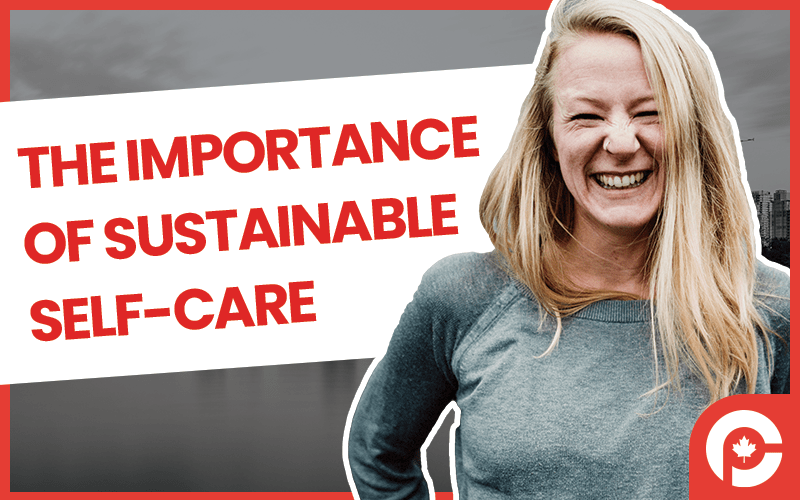
Sustainable self-care for entrepreneurs
Episode
Justine Sones (www.justinesones.com) is a writer and stress management coach who loves drinking coffee, helping burnt-out humans set boundaries,...
Key takeaways
- Self-care is not something you buy or do externally, but rather it's about your inner dialogue and how you meet your needs moment to moment.
- Entrepreneurs typically have a greater capacity and resilience for stress and uncertainty rather than being inherently more positive than others.
- Building your personal brand early is crucial, even if you think your voice has already been said by others, because your unique perspective matters.
- When growing a business, focus on creating robust profit-sharing models and substantial benefits that allow your team to thrive, not just cutting costs by paying people less.
- You must be your own greatest advocate and confidently share your expertise repeatedly, because saying something once on the internet doesn't mean people know about your work.
Transcript
Full transcript page · Interactive episode
============================================================
TRANSCRIPTION WITH SPEAKERS
============================================================

[00:00] SPEAKER_00: Welcome to Countess podcast.
[00:05] SPEAKER_01: Hello, this is Robert Smigel and welcome to the BC edition of Countess Podcasts
[00:10] SPEAKER_01: where we talk to the entrepreneurs who are making it happen here in British Columbia.
[00:14] SPEAKER_01: Today's guest is Justine Sones. She is a writer, stress management and self-care coach
[00:20] SPEAKER_01: who loves drinking coffee, helping burnt out humans, set boundaries, and talking about things that hurt.
[00:26] SPEAKER_01: Justine's career began as a massage therapist where she explored the roles that stress, pain, and relaxation, play in healing.
[00:35] SPEAKER_01: Here she realized self-care is much more than a massage.
[00:40] SPEAKER_01: Now when she's not writing about her feelings, Justine works with over-functioning humans to develop healthy boundaries and practice sustainable self-care.
[00:50] SPEAKER_01: Her clients are overwhelmed onto the entrepreneurs, navigating all the messy intersections of partnering, parenting, pre-neururing, and pen-demoking.
[01:01] SPEAKER_01: Well, Justine, welcome to the show. Thanks for taking the time today to be here for all our listeners.
[01:06] SPEAKER_00: Oh, thanks so much for having me. This is awesome.
[01:09] SPEAKER_01: Great. Okay, let's get started here. Just tell us a little bit more about yourself.
[01:13] SPEAKER_01: Were you born raised in Vancouver, British Columbia, moved here, and also give us the details on your current business?
[01:20] SPEAKER_00: Yeah, so I was actually born and raised in South Western Ontario, and I lived there up until my mid-20s.
[01:26] SPEAKER_00: That's where I did my massage therapy education and actually where I set up my first practice.
[01:32] SPEAKER_00: And then it wasn't until I was, yeah, probably about 24 that I started looking to move out to Vancouver.
[01:39] SPEAKER_00: So I did. And then I set up practice there.
[01:43] SPEAKER_00: I have relocated a couple times since and eventually landed in this stress management and self-care coaching that I do now.
[01:51] SPEAKER_00: So there's definitely a few bridges that I've skipped over to get from massage therapy to stress management.
[01:59] SPEAKER_00: But yeah, now what I do is I work with people online in group coaching sessions and one-on-one sessions.
[02:07] SPEAKER_00: And I help them learn how to unpack what's stressing them out in their life and learn how to manage those stressors more effectively so that they don't feel like the grind is getting them down.
[02:19] SPEAKER_01: Okay, so it's for financing and how you make money.
[02:22] SPEAKER_01: So you're essentially a coach that charges per hour or is it per month or how does that work?
[02:29] SPEAKER_00: So there are two ways that I do the group coaching or the coaching facilitations right now.
[02:36] SPEAKER_00: One is the group coaching session, which people pay for like a four week session at a time.
[02:42] SPEAKER_00: So they pay that up front, they go through the four weeks, and then they can choose to take part in the program again.
[02:49] SPEAKER_00: And the other thing that I do is group facilitations within companies and corporations who want to start to shift their culture around self-care and wellness.
[02:59] SPEAKER_00: And so that is an individual negotiation depending on what the company needs, but it's a blend of presentations and then question and answer portions afterwards and potentially group support in between sessions.
[03:15] SPEAKER_01: Okay, I want you to give me a key piece of knowledge or information about your industry that our listeners can learn from that they may not know about.
[03:28] SPEAKER_00: Oh, a key piece of knowledge from my industry that listeners might not know about.
[03:35] SPEAKER_00: I mean, if we're coming at it from the self care and wellness side of the puzzle.
[03:40] SPEAKER_00: Yeah, yeah, I think that the big the big secret that I try to let people in on is the fact that self care isn't something that you have to do externally outside of you.
[03:48] SPEAKER_00: The industry will try to tell you that it's something that you have to buy something that you have to go to do.
[03:57] SPEAKER_00: And the real secret is that the self care is what happens on the inside.
[04:00] SPEAKER_00: It's that inner dialogue and it's how you meet your needs in the moment to moment.
[04:06] SPEAKER_01: So do does positive versus negative thoughts and attitudes and I mean, I've heard a lot of people say that a lot of entrepreneurs are very positive people, which is why they can endure a lot.
[04:23] SPEAKER_01: Do you work with your clients and trying to come from a positive angle, try to do with their negativity issues, is that what you're talking about.
[04:31] SPEAKER_00: Yeah, so that's a good question. It's one of the things that first of all, we tried to step outside of is framing feelings and these experiences as either positive or negative.
[04:41] SPEAKER_00: Because when I talk about internal self care, it has to do again with how we manage stress and we often think about physical stress, right, like things that happen outside of us causing us to feel anxiety in our body.
[04:53] SPEAKER_00: But the reality is that the things that we think can also create a stress response.
[04:59] SPEAKER_00: So if we are getting frustrated at ourselves, beating ourselves up for doing something wrong or going into a quote unquote negative spiral, the reason that that has, you know, what we consider a bad effect is because it heightens that stress level in our body, it creates internal threat.
[05:18] SPEAKER_00: Right. So it's like, do I think that entrepreneurs are more positive? I don't know. I would say that they tend to have a greater resiliency to stress and a greater capacity for stress.
[05:33] SPEAKER_00: So it's less who completely shut them down. And they're more likely to be willing to kind of take those risks and lean into the stress.
[05:40] SPEAKER_00: You know, so it's like, do I help people try to, I don't help people try to avoid the negative feelings. I try to help them unpack what those feelings are telling them so that they can learn the lessons that are behind it and grow through them.
[05:56] SPEAKER_01: Okay. Now you obviously have clients all over the place and you're beyond Vancouver, but what is the long term vision? What will your company look like in the future? Do you see the company expanding into other areas and where beyond Vancouver BC or even Canada?
[06:13] SPEAKER_00: Hmm. I mean, I think that right now my current path of growth is going from that kind of one to one or one to small group model that got me started and moving more into the like business one to many environment.
[06:28] SPEAKER_00: So as far as geography goes, I can't say that I have a specific, you know, global plan.
[06:35] SPEAKER_00: But I definitely want to be bringing the work to more people and then hopefully actually start to train people in facilitating this work.
[06:42] SPEAKER_00: So that I don't have to be the one spearheading it. But training, you know, leaders and people managers to start to implement these practices in the environments that they are.
[06:53] SPEAKER_01: Kind of franchising it out. So to speak, you know, setting up the rule, put the book rule.
[06:57] SPEAKER_00: Yeah, it's kind of, yeah, kind of like a licensing or and I again, I don't have the particulars figured out to be honest, like I'm coming out of this stage where I've been growing my business while also raising really young kids.
[07:09] SPEAKER_00: And I think that in this pocket of time, it almost feels hard to plan too, too far in the future. Right.
[07:16] SPEAKER_00: So it's like, I think that in the past year, my growth goals had to do with like hiring a team and not having to do everything on my own.
[07:27] SPEAKER_00: And now that I'm starting to land into that zone of impact, my next look is going to be the next gaze is going to be to bring that to wider audience.
[07:36] SPEAKER_01: Okay, let's talk about doing business in Vancouver, British Columbia. What are the biggest benefits for you and being an entrepreneur in Vancouver, BC. I want you to give some of the good points about starting a company here.
[07:47] SPEAKER_01: I'd also want you to give us some of the tough things or challenges for our listeners so they can keep it up for them.
[07:53] SPEAKER_00: Hmm. So I'm going to actually start with the challenge because when I was coming from Ontario, the thing that I feared was I was told that Vancouver is very clikky.
[08:02] SPEAKER_00: And that like it's really hard to make friends. It's really hard to keep friends and it's hard to kind of get your foot in the door somewhere or someplace. So.
[08:10] SPEAKER_00: And I do kind of I did kind of find that to a degree that people were a little more guarded.
[08:15] SPEAKER_00: And I think it does have to do with the fact that Vancouver is a little more of a transient city for people, you know, you come for a while, it's really expensive, you tend to go elsewhere.
[08:23] SPEAKER_00: So there's not as much kind of personal attachment there.
[08:27] SPEAKER_00: That said, what I really loved about Vancouver is that if you can find your way into one of those niche groups, they are so rich and there's such an incredible.
[08:38] SPEAKER_00: I don't know, just like way of viewing the world that exists out here. I don't know if it's just because we have better weather or we have the mountains or the ocean, but there's just a west coastway of being that I really enjoy.
[08:53] SPEAKER_00: So.
[08:55] SPEAKER_00: And specifically for me again, was that like active wellness, like health oriented group that I was really drawn to.
[09:05] SPEAKER_00: So yeah, because I knew that this was something I was afraid of of not being able to find a group, I identified the niche I wanted to be a part of and I really implanted myself there pretty intentionally.
[09:16] SPEAKER_01: Well, would you do would you do anything differently if you were to start all over again and go, okay, I'm landing here in Vancouver, I'm going to start my business, I know what I want to do.
[09:25] SPEAKER_01: Is anything that you would do differently or that you learned along the way that you go, you know what, I think I would do this differently this time.
[09:32] SPEAKER_01: If I could play back, do a rewind and start over again, what would you do differently?
[09:38] SPEAKER_00: I think I probably would have started to establish my like personal brand earlier.
[09:46] SPEAKER_00: Because again, for me specifically starting as a massage therapist, I was self employed, so I was always running my own business, but generally operating as part of a larger practice group.
[09:56] SPEAKER_00: Right, so you would kind of fall under another businesses bigger brand.
[10:01] SPEAKER_00: And it took a few years before I started saying like I'm not okay with just hiding under the parent company, I want to be known as justine the massage therapist to go see.
[10:12] SPEAKER_00: So I think that the only thing that I would have done differently is just started that a little bit earlier if I could and started putting myself out there in a bigger way sooner.
[10:20] SPEAKER_00: I think even I did start with creating content and posting online.
[10:27] SPEAKER_00: I still kind of told myself, oh, this has already been said, this has already been done.
[10:32] SPEAKER_00: Like my voice doesn't need to be added to the mix.
[10:35] SPEAKER_00: And I kind of talked to myself out of taking that leap and I think I would have liked to take it earlier.
[10:41] SPEAKER_01: Okay, do you think entrepreneurs have to be weird or unique in a positive way or are wired differently?
[10:49] SPEAKER_00: I can I do think that like I said, we have that increased capacity for risk and being a little more comfortable with that uncertainty and lack of security.
[11:00] SPEAKER_00: Because, you know, I grew up, my dad was self employed, he always had his own business. So I was raised with that type of work being on the table.
[11:09] SPEAKER_00: But for friends who have only ever known kind of like the nine to five work environment, when I was going through phases in my business that they were like, how do you know when like are you going to have enough pay bills next month and I was like, oh, I'm like, I'm pretty sure everything's on track.
[11:25] SPEAKER_00: But like, I guess I'll just have to wait and see.
[11:28] SPEAKER_00: And so they just didn't have that tolerance for uncertainty or that kind of trust that it would work out.
[11:34] SPEAKER_00: And so yeah, I think that there's a little, a little more of that drive with entrepreneurship.
[11:41] SPEAKER_01: Entrepreneurs are traditionally big readers. Any books that you're reading, how do you educate yourself? Do you listen to podcasts, audio books? Any books that you can recommend to any of our listeners?
[11:52] SPEAKER_00: Yeah, so I haven't been doing a lot of reading recently because I've been in a really big content creation and publishing.
[12:01] SPEAKER_00: Spurt in my own business, but I think that the books that I've had the greatest impact on the way that I show up in my business are probably Brunei Browns.
[12:10] SPEAKER_00: Like almost any of her books, like daring greatly, completely changed my life and going through to like dare to lead. I think was the last one I read by her that really takes some of these more like emotionally intelligent, rooted concepts, I guess, of leadership and growth and really makes them real and applicable.
[12:32] SPEAKER_00: So that's really what I recommend for reading. And then as far as podcasts, I actually really enjoy listening to podcasts by like therapists where they bring people from like record people sessions.
[12:47] SPEAKER_00: So there's one by Vancouver based therapist Hillary McBride called other people's problems and that's by the CBC. That's a great podcast and Esther Perrell.
[12:57] SPEAKER_00: Also the names escaping me right now, but I just find that listening to other people's stories teaches me a lot about myself without my defense mechanisms getting in the way, you know.
[13:11] SPEAKER_01: Okay. So how do you kind of separate yourself from work? I mean Vancouver, British Columbia, like you touched on earlier, beautiful place to live mountains, lakes, rivers, ocean, you name it, we got it.
[13:24] SPEAKER_01: Do you ski do bike kayak golf hike or something over drive me and those.
[13:30] SPEAKER_00: Oh, I mean, I used to do a lot more hiking and stuff like that. Again, it's been slow while the kids are young, but we like to go canoeing. We started doing that again recently.
[13:39] SPEAKER_00: Again, going for like walks in nature. I wouldn't say they're aggressive mountain hikes yet. But that's definitely something that I love and look forward to.
[13:47] SPEAKER_00: And honestly, I just really enjoy gardening a lot lately. Like I haven't been venturing far from my my home lately for the last little while. And so yeah, those have been those have been my real activities that that they really fill me at the outside of my work that aren't tied to any income earning and are just enjoyment.
[14:10] SPEAKER_01: Is that the separation that let the brain rest.
[14:14] SPEAKER_00: Yeah, it's easy to try and turn everything into a side hustle when you're.
[14:18] SPEAKER_01: Yeah, it is exactly. Okay, we got some kind of rapid fire questions for you. We just kind of get to know you a little bit better. If you weren't doing what you do now, what would you like to do for profession?
[14:31] SPEAKER_00: I don't know. I was thinking about this this morning, actually, I theoretically something like being a therapist would be kind of appealing. It's like a hop skip and jump from what I'm doing now. And on the completely other side of things.
[14:44] SPEAKER_00: I think like being a landscaper would be really fun. I like used to do that when I was a college student. So that's something I always really enjoyed digging in the dirt. Hey, yeah, there's a real sense of accomplishment when you get to make things beautiful.
[14:58] SPEAKER_01: So yeah, it feels good. What kind of a job would you not like to do? Couldn't do it.
[15:06] SPEAKER_00: Let me think here.
[15:10] SPEAKER_00: I don't know. I mean, I've had some pretty crappy jobs in my life. In terms of like I used to work in a chicken farm. Like I've done. I've done really.
[15:19] SPEAKER_00: Let me think. I wouldn't want to work retail again. Like I've done it in the past. And I think that that's something like the front facing service isn't something that I would.
[15:35] SPEAKER_00: I don't think enjoy very much these days.
[15:37] SPEAKER_01: Okay. In business, what is your favorite word quote or sentence that you like to use? Anything that you frequently use when you're talking either to clients or people you work with that kind of gives a bit of a cornerstone the way you think.
[15:53] SPEAKER_00: I would say nothing is perfect, personal or permanent.
[16:00] SPEAKER_01: Okay.
[16:02] SPEAKER_01: It's interesting kind of self explanatory isn't it?
[16:05] SPEAKER_00: Yeah, but it's also it is self explanatory, but it's also really easy to make yourself the exemption to that like especially when we're really precious about the work that we're doing and we pour so much of ourselves into it.
[16:18] SPEAKER_00: It's like I can hold on to an article for three weeks too long because I want to make it perfect when the reality is perfect doesn't exist or I can get a piece of feedback on an email.
[16:29] SPEAKER_00: And I can take it like make it really personal and get really upset about it, but it wasn't personal and I can feel really crappy about something. And as long as I can remind myself that it's not permanent, I can move through it.
[16:41] SPEAKER_00: So it's very obvious, but very applicable every day.
[16:45] SPEAKER_01: Okay, at least favorite word or sentence you do not like to hear.
[16:49] SPEAKER_00: It could be worse.
[16:52] SPEAKER_01: It could be worse.
[16:53] SPEAKER_00: It really it forces people to jump out of what's actually going on and try to just make it better and that doesn't work.
[17:00] SPEAKER_00: That's how things do get worse is when you ignore them like that.
[17:04] SPEAKER_01: If you had to pick one or two words to describe yourself, what would it be and why?
[17:14] SPEAKER_00: I would I'm not good at rapid fire. So I was deliberate maybe.
[17:19] SPEAKER_00: No, I think I would say that I am intense.
[17:26] SPEAKER_00: I think it's like hard for me to do things halfway or on a superficial level.
[17:34] SPEAKER_00: And I am really loyal.
[17:37] SPEAKER_00: So it's like when you are one of my people, you are one of my people. And that's that's that.
[17:43] SPEAKER_01: Okay, anything keeping you up at night these days.
[17:45] SPEAKER_01: We're always thinking entrepreneurs are always thinking and lots of pressures. Anything keeping you up at night?
[17:54] SPEAKER_00: I think that it's when I fall into the trap of because the to do's are never ending.
[17:59] SPEAKER_00: So when I fall into that trap of thinking that I didn't do enough today.
[18:04] SPEAKER_00: And I start to get worried about being behind the next day already.
[18:09] SPEAKER_00: It's like I'm borrowing trouble.
[18:10] SPEAKER_00: That's kind of what will keep me up at night.
[18:13] SPEAKER_00: Is that that spiral of not feeling like I did enough?
[18:17] SPEAKER_01: Okay, I want you to give us a top three things on your inspired lifeless.
[18:21] SPEAKER_01: This could be if you want to do stuff beyond what you're doing now with a travel more philanthropy, write a book.
[18:29] SPEAKER_01: Design anything specifically for your industry.
[18:35] SPEAKER_01: Ted Xtalk, anything like that?
[18:38] SPEAKER_00: I let me think here.
[18:41] SPEAKER_00: I want to write a book. That's on my like big life bucket list.
[18:47] SPEAKER_00: I this goes in like my ideal life inspired life, but it's also part of my current life, which is always living within driving access of the water and the mountains.
[18:58] SPEAKER_00: So that I'm like easy access to either of those.
[19:01] SPEAKER_00: And the other thing in the big inspired lifeless is that I want to.
[19:08] SPEAKER_00: I want to grow my business big enough that I can pay people really, really well.
[19:14] SPEAKER_00: So I don't know exactly what that looks like in terms of numbers or size, but I want to grow a healthy robust business that takes really good care of its people.
[19:25] SPEAKER_01: Yeah, that could be, you know, there's a lot of areas where you can do that.
[19:28] SPEAKER_01: It would you think about like a shareholder plan or profit sharing, things like that.
[19:33] SPEAKER_01: Is that something that would be part of that mix?
[19:35] SPEAKER_00: Yeah, it's like I.
[19:37] SPEAKER_00: I think that what I witnessed a lot of in the last few years of coming up as entrepreneurs when people look at increasing their profit margins for their business, they often look at it coming at the cost of the people who are quote unquote below them in it.
[19:49] SPEAKER_00: So you'll hear about like, oh, you can pay someone five bucks to do this thing or you can pay them $1.25 an hour to do this other thing.
[19:56] SPEAKER_00: And so it's like you are profiting based on other people's other people getting less.
[20:02] SPEAKER_00: And so what I want to be able to create is, yeah, something like profit sharing that will allow people the opportunity to be invested in the business and also reap the benefits of its growth.
[20:13] SPEAKER_00: I want to be able to offer the flexibility that entrepreneurship offers in terms of your time independence, your location independence.
[20:21] SPEAKER_00: And really doing what you love, but also create that security so that people can access those good points without having to deal with the, yeah, the uncertainty or stress that comes with it.
[20:33] SPEAKER_00: And including things like general like really, really, really substantial health care plans.
[20:39] SPEAKER_00: For example, so that people can really take care of themselves.
[20:42] SPEAKER_00: I want to give them discretionary funds to invest in their own goals, like all of these things that just really help people to thrive in their life.
[20:49] SPEAKER_01: Okay, do you have any advice that you may have received that you can pass on to entrepreneurs throughout Canada?
[20:59] SPEAKER_00: I think so when I the very first day of my massage therapy practice, I had joined a clinic that had several chiropractors and other therapists and the owner of the clinic.
[21:10] SPEAKER_00: He came up to me and we were talking about kind of how that first day went and he was saying that when you are building a business, you have to be your greatest advocate and you have to understand that you're the expert here.
[21:22] SPEAKER_00: So when it comes to specifically being a massage therapist, it was like you have to tell people that they have to come back. They're trusting you to make the best recommendations for them.
[21:31] SPEAKER_00: And so that was something that was really powerful to me for me to hear early on is to have that confidence knowing that I'm in the position that I'm in for a reason.
[21:43] SPEAKER_00: And yeah, yeah, and to know that.
[21:47] SPEAKER_01: Yeah, I guess it's really just kind of keeping a good monitor of your business and how you are the spokesperson, you're the entrepreneur, you're the entire company in a lot of ways, right?
[22:00] SPEAKER_01: Because you're the one that sets the tone and the direction of the company. And but also it's a day to day, it's a day to day effort, right?
[22:08] SPEAKER_00: So yeah, and just because just because you do something and you know, say it on the internet once doesn't mean that people know it.
[22:15] SPEAKER_00: So it's like unless you are talking about your work and putting it out there, then it's going to be really tough to get that traction.
[22:21] SPEAKER_00: But you have to believe in what you're doing to be able to do that.
[22:24] SPEAKER_01: Yeah, absolutely. Okay, justine, we're going to wrap things up. How can our listeners get whole of you? And is there anything you'd like to add before you leave us today?
[22:33] SPEAKER_00: So the best way to stay in touch with me and follow my work is to sign up for my email newsletter. It's called the Friday feels it goes out every other Friday and it is all about practicing self care, setting healthy boundaries and learning how to feel your feelings.
[22:47] SPEAKER_00: So people can sign up for that at bit.ly slash the Friday feels so that's b-i-t dot l-y slash the Friday feels and they can also find me on Instagram or Twitter at Justine Sones, although my relationship with social media is to most of us at best.
[23:03] SPEAKER_00: So to be determined how long I'm there.
[23:05] SPEAKER_00: So yeah, that's the best way to stay in touch or my website justinesones.com. And I think that if I were to leave people with anything, it would be to remind them to trust themselves because at the end of the day, you're the one who has to go to bed with you.
[23:20] SPEAKER_00: And yeah, listen to your heart. Trust yourself. Take the next best step.
[23:25] SPEAKER_01: Awesome. Great advice. Okay. Justine, thanks for coming on the show. I've learned a lot about you and I'm sure listeners have it as well. And great interview. I really appreciate you taking time to be here.
[23:36] SPEAKER_01: All right. Thanks so much.
[23:37] SPEAKER_01: And to all our listeners, thanks for listening to Camus podcast stay like comment and subscribe to all our channels to get the latest podcasts from entrepreneurs across Canada. And we'll see you next time.