
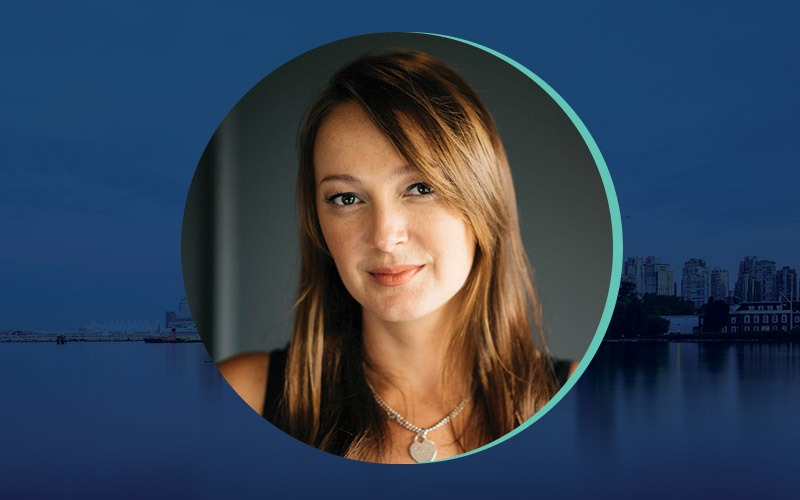
Izzie Egan
Episode
Izzie Egan is the founder of BLANKSLATE Partners. In 2015 Izzie started her company to allow SMBs and scaleups access...
Key takeaways
- Vancouver's small, tight-knit entrepreneurial community creates significant opportunities for business growth through referrals and trust-based relationships that develop naturally when people help each other.
- The high cost of living in Vancouver is a real challenge for startups and their teams, but the city's unique lifestyle benefits and access to outdoor activities often outweigh the financial pressures for those who choose to be here.
- Building a service-based business through sweat equity and organic growth is possible without external financing, starting with a few committed clients who tell their friends and gradually expanding through word-of-mouth.
- Making meaningful friendships and professional connections as a newcomer to Vancouver requires intentional effort through joining community groups, sports teams, or other activities where you can build authentic relationships over time.
- Everything you build in your business should be scalable and repeatable so that as the company grows, you're not constantly reinventing processes but rather expanding systems that already work.
Transcript
Full transcript page · Interactive episode
============================================================
TRANSCRIPTION WITH SPEAKERS
============================================================

[00:00] SPEAKER_00: It's VanCoovers Podcast on the Canada's Podcast Network.
[00:26] SPEAKER_01: As an entrepreneur, you started your business to follow your passion and not to spend your evenings doing bookkeeping.
[00:32] SPEAKER_01: That's why VanCoovers Podcast uses Legacy Advantage.
[00:37] SPEAKER_01: Let me tell you, they are a great CPA level bookkeeping firm.
[00:41] SPEAKER_01: Let Legacy take the bookkeeping task off your hands so you can have more time to pursue your dreams.
[00:48] SPEAKER_01: You will get peace of mind knowing that the bookkeeping is done and the tax authorities are off your back.
[00:55] SPEAKER_01: Visit LegacyAdvantage.ca and if you mention that you came from VanCoovers Podcast,
[01:01] SPEAKER_01: they will give you a $100 credit to apply towards your first month. You simply can't beat that.
[01:12] SPEAKER_01: Hello, this is Robert Smil, coming to today with a VanCoovers entrepreneur.ca where we talk to the entrepreneurs who are making it happen here in British Columbia.
[01:20] SPEAKER_01: Izzy Egan is the founder of Blank Slate Partners. In 2015 Izzy started her company to allow SMBs and scale-ups access to enterprise level management HR services,
[01:33] SPEAKER_01: supporting growing companies with a unique blend of HR training recruitment and immigration expertise.
[01:40] SPEAKER_01: She has extensive experience building fast paced high-yield management teams paying particular attention to the strategic needs of the company.
[01:51] SPEAKER_01: She is committed to bringing purpose, fueled employees into businesses that are aligned from both a values and strategic bottom line perspective.
[02:02] SPEAKER_01: Well Izzy, welcome to the show. Thanks for taking the time today to be here for all our listeners.
[02:07] SPEAKER_02: Thanks for having me.
[02:09] SPEAKER_01: Great. Well, tell us a little bit more about yourself where you're from and give us the details on your current business.
[02:17] SPEAKER_02: Well, as you can probably hear from my accent, I am English by birth. I moved to Canada in 2004 and have been here ever since.
[02:27] SPEAKER_02: I became a Canadian resident somewhere along the way and then came to Canada. It's a bit of a city that's a long way.
[02:32] SPEAKER_02: Canada is firmly home now. In fact, thank you for this family home.
[02:39] SPEAKER_02: I started Lancslate Partners in 2015 because I decided a long time ago that small companies, small to medium-sized businesses,
[02:51] SPEAKER_02: scale-ups should have access to enterprise level support from an HR perspective.
[02:55] SPEAKER_02: Just because they are a small company doesn't mean they don't have any different challenges from the ones that large companies have or any different successes from the ones that large companies have.
[03:05] SPEAKER_02: So the concept behind Lancslate Partners was to provide an outsourced HR service that made HR strategic thought accessible to companies that otherwise couldn't afford it.
[03:17] SPEAKER_02: We primarily focus within the tech space and when I sit tech, I mean, I know that you can add tech to the end of the show.
[03:25] SPEAKER_02: I go tech by tech, pharmac, tech, tech, fast.
[03:31] SPEAKER_02: We've been slowly, slowly growing. We started, as I mentioned, in 2015 and in 2018, we see ourselves with a team of eight, about 85 clients, both in Vancouver,
[03:45] SPEAKER_02: but also across the country in Edmonton and Halifax in Toronto and then down the coast in Seattle and San Francisco. So it's pretty exciting.
[03:55] SPEAKER_01: Good. Okay. Back in 2015, did you need financing to start your company and how do you currently make money in your business now?
[04:03] SPEAKER_02: There's a really good question. I wished we had financing. So we are a very fortunate and sense that we are a service-based company.
[04:13] SPEAKER_02: So we charge a flat hourly rate for the services that we deliver, which means our clients only paid for what they use.
[04:21] SPEAKER_02: So how we started was sweat equity. We just started hustling and doing the work.
[04:27] SPEAKER_02: And luckily, we had people that believed in us and clients that wanted to work with us.
[04:33] SPEAKER_02: We started with about three or four clients in May of 2015 and they told their friends and their friends told their friends and that's how we got to today.
[04:46] SPEAKER_02: I think we sort of got there scrapply.
[04:50] SPEAKER_01: Okay. Now, what is the long-term vision and what will your company look like in the future? Do you see the company expanding into other areas and where, beyond Vancouver, BC or even Canada?
[05:01] SPEAKER_02: Yeah. That's a really good question. So I think yes to both.
[05:06] SPEAKER_02: Lancet Partners has passed you to span geographically, obviously, within the same vertical that we're currently in right now.
[05:12] SPEAKER_02: In fact, we could do it today if we wanted to.
[05:15] SPEAKER_02: We have people in place in Seattle and also in Toronto that would love to step into our world.
[05:22] SPEAKER_02: And it's definitely a very real consideration for this year in the short term.
[05:26] SPEAKER_02: In the long term, I specifically picked the name Lancet Partners because I wanted it to be something that was not necessarily attached strategically purely to HR.
[05:38] SPEAKER_02: Because I believe that the future of Lancet isn't just limited to providing enterprise level support to small communities like businesses for human resources, but also for other support functions that small companies don't necessarily have the access to.
[05:51] SPEAKER_02: So whether that's a CF overhired, CT overhired, bookkeepers payroll administration, whatever that might be, perhaps marketing, perhaps it's sales, who knows.
[06:03] SPEAKER_02: Perhaps it's COOs for highers. There are multiple verticals that I think our business model can scale and replicate in.
[06:12] SPEAKER_01: Okay. Now, we learned a little bit about you and blank slate. So we want to talk a bit about Vancouver now.
[06:17] SPEAKER_01: What are the biggest benefits for you and being an entrepreneur here in Vancouver, BC? I want you to give us some of the good points about starting a company here, but I also want you to give us some of the tough things or challenges for our listeners so they can keep it out for them.
[06:30] SPEAKER_02: Yeah. So, so starting with the good points.
[06:35] SPEAKER_02: For me personally, Vancouver has very much become, it's the home I home. It is, it's a relatively smaller city, although it's a big city.
[06:44] SPEAKER_02: It's a very net life city. It's everybody knows each other. For me going into this business, blank slate started very easily because I had originally started my career way back then in Vancouver in the recruitment agency world.
[06:57] SPEAKER_02: And when a number of my clients realized I was going out on my own into the world and opening a HR company, they were happy to come along with the right.
[07:09] SPEAKER_02: And I think part of that is because Vancouver is a small town or small city that people get to know each other and they get to trust each other and they get to build relations upon it.
[07:19] SPEAKER_02: To build on that, our company grew primarily in the first year through referrals because people seem to trust each other within this data ecosystem and scatter people's systems.
[07:30] SPEAKER_02: So, you know what works for one, they're quite happy to share and tell each other, you know, well this is working for me and this isn't working for me and this isn't great for me.
[07:37] SPEAKER_02: This isn't great for me. These companies really help me so you should have a chat with them.
[07:42] SPEAKER_02: We find that happens in awful lot for us. You know, we'll get a call on a Monday which is, hi, you don't know us but someone so from such and such company actually just said that you can help us.
[07:53] SPEAKER_02: And this is the question they have and I need to do this and I need to do it immediately. Like can you help? Sure, of course we can.
[08:00] SPEAKER_02: So sort of from a business perspective that definitely helped starting business in Vancouver. From a personal perspective, Vancouver speaks to everything that I remember.
[08:11] SPEAKER_02: I wanted to find in my life, it's a city that gives me the space to be who I want to be and the hobbies I want to pursue.
[08:19] SPEAKER_02: And it's also a city that somewhat encourages, you know, others and each other to to live a full and complete life both inside and outside of work.
[08:30] SPEAKER_02: And that's not to say that other cities don't, but you know, my experience coming from the UK and London is, is you get to work at 637 in the morning and you stay at work until 637 a night.
[08:41] Speaker UNKNOWN: And then you get to work a lot more and you get to work a lot more and you get to work a lot more and you get to work a lot more.
[08:43] SPEAKER_02: And which is a lot of fun, don't get me wrong. But for me, I love the idea that I can go to a yoga class at 330 in the afternoon and come back into work afterwards and no one sees to question that.
[08:55] SPEAKER_02: Because it's something of that sort of West Coast lifestyle.
[08:59] SPEAKER_02: So that's the good points. Now the tough things. Now the tough things.
[09:07] SPEAKER_02: So, thank you. And I don't want to go down the rabbit hole of affordability that I think I might.
[09:14] SPEAKER_02: Like I said, partners have a really tough first year from the cash flow perspective.
[09:20] SPEAKER_02: And it was really hard and it was hard paying rent and living whilst trying to start a fledgling business.
[09:29] SPEAKER_02: At the time, I had a co-founder and neither she nor I was sitting on a trust fund or a ridiculous amount of money and we didn't have finance into one of the business.
[09:37] SPEAKER_02: And it got to the point where because of a cash flow situation, we had to decide what we were going to do with blind slaves.
[09:43] SPEAKER_02: And I remember sitting there saying, do you want it? Do you want the business? I think I can go find another job. And her saying, I don't want it.
[09:53] SPEAKER_02: And I remember being like, okay, crap, do I want it? Yes, yes, I want it.
[09:58] SPEAKER_02: But it's that conscious choice of like, okay, I want this and I want to make this work. But oh my God, I have to pay rent and thank you then.
[10:06] SPEAKER_02: So that was tough.
[10:09] SPEAKER_01: Now do you find in the recruitment area is tough to bring people into Vancouver because of that?
[10:16] SPEAKER_01: They're a little wary of the prices of living here?
[10:19] SPEAKER_02: Yeah, it's something. Well, it's a good question. It's kind of a catch 22 because the payoff and why people choose to move to Vancouver is because it's Vancouver.
[10:30] SPEAKER_02: And we have such an incredible city with such an incredible vibrant lifestyle. And you know, you have those mountains in your back door and you have those waters just on the shore and
[10:44] SPEAKER_02: the outdoors perspective and from a healthy living perspective and wellness perspective, Vancouver has an exceptional reputation as a city of choice to live in.
[10:56] SPEAKER_02: So from a recruitment perspective to be perfectly honest, if people are going to come to Vancouver, they're going to come to Vancouver anyway.
[11:03] SPEAKER_01: Right.
[11:03] SPEAKER_02: A lot of the times it is it's explaining that cost of living deficit. It's explaining that you know rents, mortgages, et cetera, et cetera, extensive here and in my humble opinion, I don't think that the salaries locally stack up to the cost of living.
[11:21] SPEAKER_02: That's all another tangent. We won't go down.
[11:24] SPEAKER_02: But if you choose it, that's your choice. And a lot of people understand that Vancouver comes with a whole different payoff that isn't economical.
[11:35] SPEAKER_01: Okay. Now we talked to, you mentioned some things about lifestyle and living here. We do some of our best workouts side the office.
[11:43] SPEAKER_01: Is there a place in the lower mainland close to where you live or work, where you like to go recharge or get inspired with ideas or just think about your business?
[11:49] SPEAKER_01: And does it change with the season considering all the rain we get here?
[11:55] SPEAKER_02: Well, when I first started chatting to one of our clients, a gentleman, we've asked him with with later.
[12:03] SPEAKER_02: He explained to me that anyone that's got a problem with Vancouver and the range should just go and stand in the forest and smell.
[12:09] SPEAKER_02: Smell what it smells like when it's raining and take a deep breath and see if they still have a problem with it.
[12:16] SPEAKER_02: And I think he's got a really good point there. For me, to recharge, there are definitely a couple of places.
[12:22] SPEAKER_02: Summer, a seasonal and summer year long. My partner and I recently bought a boat.
[12:28] SPEAKER_02: We have a Venetoo first 32 from 1983 that he very lovingly restored last summer.
[12:35] SPEAKER_02: So our summer was basically spent on the hard in the Margarina.
[12:40] SPEAKER_02: But for us, he's an entrepreneur as well for us getting out on the boat and being on the water.
[12:47] SPEAKER_02: Where our cell phones don't work is an incredible place to just reboot and take a deep breath.
[12:53] SPEAKER_02: For me personally, because I don't take the boat out on my own, I'm not good enough.
[12:59] SPEAKER_02: I like to get a bowl of Ireland. I love to get on that ferry.
[13:03] SPEAKER_02: As soon as I get on to the ferry, I literally feel my whole self just relax.
[13:08] SPEAKER_02: And 20 minutes later, pulling into snow coven, I can almost taste the pizza from Tuscany West.
[13:13] SPEAKER_02: I'm talking about it. It's one of my favourite places in the world, actually.
[13:19] SPEAKER_02: And that's the around. I love it when it's raining and cold and wet and the wind's blowing in the thunderstorms of the hills.
[13:25] SPEAKER_02: And I love it when it's sunny and warm and delightful and you can sit there and watch the ferry come in and out and see if the ferry's on time.
[13:32] SPEAKER_02: And then in the winter, I love to get a big white. I love to get a big white.
[13:36] SPEAKER_02: It's a wonderful family-friendly skiing resort. That's an awful lot of fun.
[13:42] SPEAKER_01: Okay. I want you to imagine we have a lot of listeners from outside the country of Canada,
[13:49] SPEAKER_01: international listeners that are coming up from all sources.
[13:53] SPEAKER_01: So I want you to, this next question, I want you to speak to them.
[13:56] SPEAKER_01: I want you to imagine you just landed here from London.
[13:58] SPEAKER_01: If you were to start all over again and you just moved here to Vancouver, BC,
[14:02] SPEAKER_01: but this time you don't know anyone, knowing what you know now, what would you do,
[14:07] SPEAKER_01: and how would you go about starting all over again as an entrepreneur?
[14:12] SPEAKER_02: Okay. Well, I think one of the hardest struggles that people have when they land in Vancouver is making friends.
[14:20] SPEAKER_02: For one reason or another, you either make as a new immigrant, you either make.
[14:26] SPEAKER_02: Traveler friends that are short-term friends that come in and out here at that age,
[14:30] SPEAKER_02: or you think likely into friends from the country you're from,
[14:34] SPEAKER_02: and sometimes it can be hard to take that step from work colleagues to friends.
[14:40] SPEAKER_02: So I think making friends is one of the hardest things to do as an adult,
[14:45] SPEAKER_02: let alone as a new immigrant in a new country that has a whole different way of social thinking
[14:52] SPEAKER_02: than what you're used to.
[14:56] SPEAKER_02: So I would have done what I finally did, but I would have done it sooner.
[15:00] SPEAKER_02: I joined a field hockey club, a women's field hockey club,
[15:04] SPEAKER_02: and I realised that there was 11 women that would have to speak to me,
[15:07] SPEAKER_02: or at least a minute of a vacation to play every Saturday.
[15:12] SPEAKER_02: And then from that someone would come with my friend,
[15:14] SPEAKER_02: and actually my best friend is here,
[15:17] SPEAKER_02: have 100% come from that field hockey club.
[15:20] SPEAKER_02: And then in terms of entrepreneurship,
[15:25] SPEAKER_02: it's getting out there and it's building that connections and building that network.
[15:30] SPEAKER_02: It's being honest and it's being vulnerable to who you are and what you want to do and why you want to do it.
[15:36] SPEAKER_02: But I think that it sort of goes back to the first point we talked about,
[15:40] SPEAKER_02: thank you for being a relatively small city.
[15:43] SPEAKER_02: Connections and network are a key.
[15:47] SPEAKER_02: Myself, I'm pretty introverted, and I struggle when you put me in a room
[15:52] SPEAKER_02: for people I don't know, I will head straight to the bar and have at least two glasses of wine
[15:55] SPEAKER_02: and then talk to the other person who's probably an introvert,
[15:57] SPEAKER_02: hide in medical or the coast and ask them if they would like a drink and would their lights talk to me.
[16:04] SPEAKER_02: So that for me has definitely been one of the struggles,
[16:07] SPEAKER_02: and the hardest challenges is building that network.
[16:12] SPEAKER_02: When it's not one that you grew up with or that you brought with you,
[16:16] SPEAKER_02: if you're from Toronto and you've moved to Vancouver,
[16:18] SPEAKER_02: there's a gazillion of you that are from Toronto, move to Vancouver.
[16:24] SPEAKER_01: Okay, let's talk a bit about your routine.
[16:27] SPEAKER_01: What does the first hour look like for you when you get up the morning?
[16:29] SPEAKER_01: Do you have a specific routine or a ritual that helps you make it?
[16:32] SPEAKER_01: Do you motivate to start your day?
[16:34] SPEAKER_02: Yes, my routine, 100% starts with my dog,
[16:38] SPEAKER_02: who does not allow us to lie in at all.
[16:42] SPEAKER_02: So she is an early bird, and then she gets older, she gets earlier.
[16:45] SPEAKER_02: So somewhere around 6.30, she thinks it's go time.
[16:49] SPEAKER_02: And go time for Molly is, you know, she's got to go out,
[16:52] SPEAKER_02: she's got to go full-bunch, got to go for a walk, whatever it is,
[16:54] SPEAKER_02: and she's got to get fed.
[16:56] SPEAKER_02: Doesn't matter if Jack and I actually want to get out of bed or not.
[16:59] SPEAKER_02: So my morning routine is spent with her.
[17:03] SPEAKER_02: We go for a walk in the morning, and she gets her legs stretched,
[17:08] SPEAKER_02: and her quality time.
[17:10] SPEAKER_02: And for me, it's that time to start the day mentally,
[17:13] SPEAKER_02: and put the day together in my head.
[17:16] SPEAKER_02: So it's, I guess, something of a walking meditation, but not really.
[17:20] SPEAKER_02: Not a conscious one, but it certainly happens.
[17:24] SPEAKER_02: And then putting together the day, the first thing I do is look at my calendar,
[17:28] SPEAKER_02: and I say, okay, well, what have I got to do today?
[17:30] SPEAKER_02: And what does that look like?
[17:31] SPEAKER_02: And where do I need to be?
[17:32] SPEAKER_02: Who am I need to be with?
[17:33] SPEAKER_02: And what do I need to prepare for?
[17:35] SPEAKER_02: What time do I have to myself that I can do X, Y, and Z, and all?
[17:40] SPEAKER_02: You know, what's on the calendar?
[17:42] SPEAKER_02: So my morning routine is one that's directed by a dog, a very, very vocal dog.
[17:49] SPEAKER_01: Okay.
[17:50] SPEAKER_01: Now, do you think entrepreneurs have to be weird or unique in a positive way
[17:54] SPEAKER_01: or wired differently?
[17:58] SPEAKER_02: I think that's a really interesting question,
[18:02] SPEAKER_02: because I believe that entrepreneurship is an attitude.
[18:09] SPEAKER_02: And that doesn't mean that not everyone can develop that attitude,
[18:12] SPEAKER_02: but I don't think everyone wants to.
[18:14] SPEAKER_02: I don't think they have to be weird or unique, but it is certainly a mindset.
[18:20] SPEAKER_02: It's behaviors that can be learned and that can be trained,
[18:24] SPEAKER_02: but I think it's intrinsic to who you are as to why you choose that path.
[18:31] SPEAKER_02: You know, there's been a lot of studies down on risk tolerance of entrepreneurs,
[18:36] SPEAKER_02: and personalities of entrepreneurs.
[18:40] SPEAKER_02: I know that for me personally, I'm an awful employee.
[18:46] SPEAKER_02: I really am.
[18:47] SPEAKER_02: I think that I am way smarter than everyone else in the room,
[18:50] SPEAKER_02: and I move far too fast for not most people to keep up with,
[18:55] SPEAKER_02: because that sounds arrogant, but even to slow down to explain,
[18:58] SPEAKER_02: because I'm just so driven.
[19:02] SPEAKER_02: And I think a lot of that comes from, also, how I was brought up.
[19:06] SPEAKER_02: My mum was an entrepreneur, and her mother was an entrepreneur,
[19:08] SPEAKER_02: which is very unique for their generations.
[19:12] SPEAKER_02: And at the age of seven, I told my mum that I wanted to have a gallery and a teeshop
[19:19] SPEAKER_02: that was going to be my dream.
[19:21] SPEAKER_02: And actually, my first business was a gallery at the age of 27.
[19:25] SPEAKER_02: But at the age of seven, I announced I wanted to have a gallery and a teeshop.
[19:29] SPEAKER_02: And my mum, being my mum, took me to a teeshop in Brighton and said,
[19:33] SPEAKER_02: OK, how big is this space?
[19:37] SPEAKER_02: If the square furt is x, you know, and the rent is y,
[19:41] SPEAKER_02: how much do you have to make fiscal effort?
[19:43] SPEAKER_02: OK, how many cups of tea do you have to sell in a day to make this?
[19:46] SPEAKER_02: OK, how many people do you have to count during the kitchens?
[19:49] SPEAKER_02: How much do you have to pay them an hour?
[19:51] SPEAKER_02: And what does that look like?
[19:52] SPEAKER_02: And I'm sure, for her, she was just, you know, doing it as a math exercise for a seven-year-old.
[19:57] SPEAKER_02: But what she was also teaching me was to think about what it meant to run a business.
[20:02] SPEAKER_02: And those weren't, I mean, it wasn't a one-off conversation.
[20:04] SPEAKER_02: That was the type of conversation we always had.
[20:08] SPEAKER_02: So in some ways, I think I was always going to be an entrepreneur.
[20:12] SPEAKER_02: And I think there are those people out there that were always going to be an entrepreneur,
[20:18] SPEAKER_02: because of how that brainstick.
[20:20] SPEAKER_01: OK, what books are you reading now and why are even audio books?
[20:24] SPEAKER_01: And can you recommend any books for our listeners who are also aspiring entrepreneurs?
[20:29] SPEAKER_02: Oh, good question.
[20:31] SPEAKER_02: So I am currently listening to Human and Machine,
[20:36] SPEAKER_02: which is about reimagining what's called Human and Machine,
[20:39] SPEAKER_02: reimagining the, reimagining work in the age of AI, something like those lines.
[20:45] SPEAKER_02: It's fascinating.
[20:46] SPEAKER_02: For me, I'm really, really interested in how AI will change the working place
[20:54] SPEAKER_02: and what that also means for my industry, human resources,
[20:58] SPEAKER_02: and how we can be early adapters to stay ahead of that curve
[21:02] SPEAKER_02: and how we can integrate AI into the workplace alongside humans and what that means for,
[21:08] SPEAKER_02: yeah, building small companies and et cetera, et cetera.
[21:11] SPEAKER_02: There are so many examples of large companies that are already integrated AI
[21:14] SPEAKER_02: into their everyday routine.
[21:15] SPEAKER_02: They don't even know what's there, or many of their employees don't even know what's there,
[21:18] SPEAKER_02: but in the small meetings like this, it's not necessarily being done.
[21:24] SPEAKER_02: So that's what I'm currently reading and listening to.
[21:27] SPEAKER_02: I actually have both on the go at the moment.
[21:29] SPEAKER_02: I listen to the audio book as I drive home and then I go home and reread the chapters.
[21:35] SPEAKER_02: The books for your audience to listen to, there were a few that have been really, really integral
[21:44] SPEAKER_02: in my journey of entrepreneurship.
[21:47] SPEAKER_02: The first obviously being Eric Griez is a lean startup methodology.
[21:52] SPEAKER_02: That one is one I've probably read four or five times.
[21:56] SPEAKER_02: The second is a book by Mark Robegey, who was the, I think there's another three on a before employee for HubSpot.
[22:03] SPEAKER_02: It's called the Sales Acceleration Formula.
[22:06] SPEAKER_02: It's a really fascinating read.
[22:08] SPEAKER_02: I reference it quite a lot.
[22:12] SPEAKER_02: Then I'm a huge Simon Sinek fan, and he has a book called Lead as He Last,
[22:18] SPEAKER_02: which is a very, very good book to read as well.
[22:22] SPEAKER_02: Now I can keep going, but I'm actually really happy.
[22:25] SPEAKER_01: What online or offline tools do you use on a regular basis?
[22:31] SPEAKER_02: For, sorry, just to clarify.
[22:34] SPEAKER_02: For work or for personal?
[22:35] SPEAKER_01: After work.
[22:37] SPEAKER_02: Okay. Well, given the space that we are in, LinkedIn is a huge tool for us.
[22:45] SPEAKER_02: We are obviously constantly in LinkedIn on a very day by day, our by our basis.
[22:53] SPEAKER_02: We use Asana to project manage our tools internally.
[22:58] SPEAKER_02: From an applicant tracking system, we have one that we use, which is called Workable,
[23:03] SPEAKER_02: that I highly recommend.
[23:05] SPEAKER_02: And then there's an HIR system that we also use.
[23:09] SPEAKER_02: And all of these are a web-based HIR system called Bamboo HR,
[23:14] SPEAKER_02: that we very much recommend to our clients.
[23:16] SPEAKER_02: They are sort of the practical ins and outs of our business right now.
[23:20] SPEAKER_01: If you weren't doing what you do now, what would you like to do for a profession?
[23:25] SPEAKER_02: Oh, this one's easy for me.
[23:27] SPEAKER_02: If I wasn't doing what I'd doing now, and I could travel back in time
[23:31] SPEAKER_02: to when I was picking what degree to do and etc., etc., and my future, future,
[23:36] SPEAKER_02: I would be an architect. I would love to be an architect.
[23:41] SPEAKER_01: That would be great because I think in Vancouver, with so much development,
[23:45] SPEAKER_01: I mean, architects must just be busy.
[23:46] SPEAKER_01: I know I'm a friend of mine, you know, an architecture company.
[23:49] SPEAKER_01: And they're busy for the next.
[23:50] SPEAKER_01: They think they've got contracts for the next 20 years or something like that.
[23:54] SPEAKER_02: Wow. Yeah, I just, I love the concept of looking from a historical standpoint
[23:59] SPEAKER_02: through architecture, but also looking at, you know,
[24:01] SPEAKER_02: where architecture is going in the future.
[24:03] SPEAKER_02: I just find it fascinating.
[24:04] SPEAKER_02: I could walk around any city for hours.
[24:06] SPEAKER_01: What kind of a job would you not like to do?
[24:08] SPEAKER_01: Couldn't do it.
[24:11] SPEAKER_02: I don't know if I could be a lawyer.
[24:15] SPEAKER_02: I don't know if I could, well, maybe a lawyer that sits behind their desk
[24:19] SPEAKER_02: and pushes paper around all day because I just do not,
[24:23] SPEAKER_02: I do not think I could do that.
[24:25] SPEAKER_01: Okay. In business, what is your favorite word quote or sentence that you like to use?
[24:32] SPEAKER_02: Oh, I am a parrot for scalable and repeatable.
[24:37] SPEAKER_02: It's got to be scalable and it's got to be repeatable.
[24:39] SPEAKER_02: And every single thing that we try to build for our clients,
[24:42] SPEAKER_02: we want to build it in a scalable and repeatable fashion.
[24:45] SPEAKER_02: So that as they grow, they're not reinventing the wheel.
[24:49] SPEAKER_01: What's your least favorite word or sentence you do not like to hear?
[24:53] SPEAKER_02: Culture fit.
[24:54] SPEAKER_02: I hate hearing the term culture fit.
[24:57] SPEAKER_02: It just makes my heckles, ugh, ugh.
[25:03] SPEAKER_01: Okay. If you had to pick one or two words to describe yourself,
[25:08] SPEAKER_01: what would it be in why?
[25:12] SPEAKER_02: I think the first word I would probably pick to describe myself is kind.
[25:20] SPEAKER_02: I recently been talking through some of this work with a colleague of mine.
[25:24] SPEAKER_02: And you know, we often talk about values of a company,
[25:27] SPEAKER_02: but for me, I want, we want to really want to get into individual values.
[25:31] SPEAKER_02: And I really want to get deep into what my values are and what I valued.
[25:35] SPEAKER_02: And what I realized is for me, kindness is where I want to base every decision.
[25:42] SPEAKER_02: I believe that if we can come from a kind place and if we can be kind in who we are,
[25:47] SPEAKER_02: we can build a really great place to live, work, breathe and be.
[25:51] SPEAKER_01: Okay. What keeps you up at night if anything?
[25:56] SPEAKER_02: On a practical level, my dog, as I mentioned, she gets on, she's getting old.
[26:01] SPEAKER_02: So she definitely has me up and down throughout the night.
[26:07] SPEAKER_02: On an emotional level, I genuinely feel a sense of obligation towards my team.
[26:14] SPEAKER_02: And I want to build a business that can support them and keep them in the world that they want to live in.
[26:20] SPEAKER_02: It stresses me and worries me that, you know, there's a lot of responsibility when you have a team.
[26:27] SPEAKER_02: So that definitely keeps me up and I'm constantly trying to think about how we can do things
[26:31] SPEAKER_02: and how we can do things better and what else we can do and what does that look like.
[26:36] SPEAKER_02: Yeah, that keeps me awake at night.
[26:38] SPEAKER_01: Okay. I want you to give us the top three things on your inspired lifeless.
[26:42] SPEAKER_01: This can be a bucket list of any sort, whether you want to travel more,
[26:45] SPEAKER_01: whether you want to write books, TEDx, talk, philanthropy, anything like that.
[26:50] SPEAKER_02: Yeah. Well, babies, that's probably one you don't get very often,
[26:54] SPEAKER_02: but we're currently working on that at least too, hopefully, in the near future.
[27:01] SPEAKER_02: And then with babies travel. So Jack and I would like to sail around the world.
[27:08] SPEAKER_02: Sailings how we met and it's a big passion of ours.
[27:11] SPEAKER_02: And one day we would like to be able to put both of our businesses either on hold
[27:15] SPEAKER_02: or maybe get lucky and we can sell them or something.
[27:18] SPEAKER_02: And take our kids off and take two years to sell around the world.
[27:23] SPEAKER_01: Do you have any advice that you've been you received that you can pass on to entrepreneurs throughout PC?
[27:33] SPEAKER_02: I think I've had endless, endless advice and so much of it is so useful.
[27:39] SPEAKER_02: But the one that springs to mind actually came from my partner Jack
[27:42] SPEAKER_02: and it came from my partner this week. And he said to me, you know, is he just be a good person,
[27:48] SPEAKER_02: be honest and do the best that you can do.
[27:50] SPEAKER_02: Because if you're a good person, you're being honest and you're doing the best that you can do,
[27:56] SPEAKER_02: that's all that people can ever hope for.
[27:58] SPEAKER_01: Okay. Okay, is he, are you ready to have some fun?
[28:02] SPEAKER_02: Yes.
[28:03] SPEAKER_01: Okay, great. Okay. As you know, entrepreneurs are very, very busy people.
[28:07] SPEAKER_01: We're always connected. We're always online. Like you said, LinkedIn.
[28:10] SPEAKER_01: You're always probably checking that out as well.
[28:12] SPEAKER_01: But we're going to take you away from that all that.
[28:14] SPEAKER_01: There's a small tropical island just off of Fiji that only has one phone booth there.
[28:19] SPEAKER_01: There is no internet. This place does exist by the way.
[28:21] SPEAKER_01: We're going to drop you off there. You won't have a computer or a smartphone or a tablet.
[28:25] SPEAKER_01: You can use the phone booth located there any time to call a boat.
[28:28] SPEAKER_01: We'll come pick you up. How long would you last before you made that call?
[28:33] SPEAKER_01: And what would you do while you were there?
[28:35] SPEAKER_02: Oh.
[28:37] SPEAKER_02: So is there, is there things that I can build on the island?
[28:40] SPEAKER_02: Do I have any tools?
[28:42] SPEAKER_01: Yeah, you can have, there's a phone booth there. So it's got to go somewhere, right?
[28:46] SPEAKER_02: Okay. Okay. Can I rob and rob and some crew so it?
[28:49] SPEAKER_01: You can do that. Yeah.
[28:50] SPEAKER_02: If I could rob and some crew so I could stay there forever.
[28:53] SPEAKER_02: I would, I mean, like I said, I'm an introvert.
[28:56] SPEAKER_02: I genuinely love being in quiet places on my own.
[29:04] SPEAKER_02: As long as I could have tasks that I could do so I could build a place to live and then I don't know.
[29:10] SPEAKER_02: Build some health buildings and create a farm, build some, like I would have a blast.
[29:17] SPEAKER_02: If I couldn't do all of that, I would probably last.
[29:19] SPEAKER_02: I don't know. How long until I starve?
[29:23] SPEAKER_02: I don't catch anything. I guess three days, three days without water.
[29:29] SPEAKER_01: Well, you can take food in there with you if you want.
[29:32] Speaker UNKNOWN:
[29:32] SPEAKER_01: There's just no, there's just no internet.
[29:34] SPEAKER_02: Yeah, that wouldn't bother me at all.
[29:36] SPEAKER_01: Okay.
[29:36] SPEAKER_02: I could honestly last forever.
[29:39] SPEAKER_01: Okay, so the boat's going to be sitting out there for a while.
[29:42] SPEAKER_02: Yeah, I mean, I chain you any dream of the days at the zombie apocalypse.
[29:44] SPEAKER_02: Peony, because I think that AI'd really do well at surviving.
[29:48] SPEAKER_02: Yeah, I think it'd be awesome to just reset it where we don't have anything.
[29:51] SPEAKER_01: Okay, great. Okay, we're going to wrap things up.
[29:53] SPEAKER_01: How can our listeners get whole of you?
[29:55] SPEAKER_01: And is there anything you would like to add before you leave us today?
[30:00] SPEAKER_02: So they can find me obviously violin tin, but also our website, which is www.blankslate.partners.
[30:07] SPEAKER_02: Feel free to ping me via our Facebook page or Instagram account or Twitter.
[30:13] SPEAKER_02: Pretty and pretty connectable.
[30:16] SPEAKER_02: In terms of anything last to add, you know, honestly, we just want to help people build better stronger workplaces.
[30:22] SPEAKER_02: So I feel like I'm doing good work in the world if we're helping people.
[30:27] SPEAKER_02: So if anybody ever has any questions, doesn't matter how big or small they can just reach out.
[30:31] SPEAKER_02: And if they say that they heard of us from this podcast, I've been more than happy to give them, you know, as much time as they need as a free console.
[30:39] SPEAKER_01: Fabulous. Okay. Well, I hope my listeners take you up on that.
[30:42] SPEAKER_01: And I'm sure they will learn a lot.
[30:45] SPEAKER_01: Great.
[30:45] Speaker UNKNOWN: I think it's crossed.
[30:46] SPEAKER_01: Okay. Well, thanks for coming around the show. I've learned all about you.
[30:48] SPEAKER_01: And I'm sure our listeners have as well.
[30:50] SPEAKER_02: Thank you.
[30:51] SPEAKER_01: Great. Okay. We'll see you next time.
[30:53] SPEAKER_00: All right. Take care. Bye-bye.
[30:54] SPEAKER_01: Bye.
[30:56] SPEAKER_00: Hey there. Thanks for taking the time today to listen to Vancouver's podcast on the Canada's podcast network.
[31:02] SPEAKER_00: We hope you enjoyed this show today.
[31:03] SPEAKER_00: Make sure you sign up for our new letters and write a review for us on iTunes.
[31:07] SPEAKER_00: And then connect with us on Twitter, Facebook, Instagram, and LinkedIn at Canada's podcast.
[31:13] SPEAKER_00: You can also check out what other entrepreneurs are doing across the country.
[31:17] SPEAKER_00: See you next time.
[31:37] Speaker UNKNOWN: Bye-bye.