
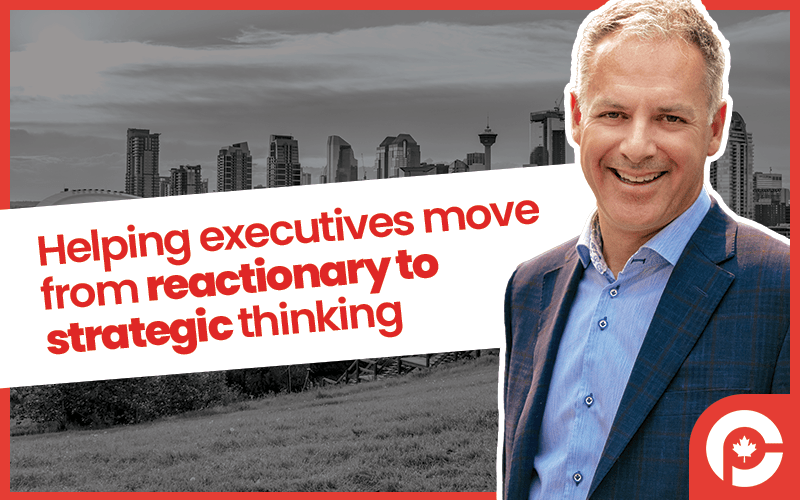
Helping executives move from reactionary to strategic thinking
Episode
Shawn Gibson is Partner at Incito Executive and Leadership Development, and leads the Executive Strategy practice. As a former...
Key takeaways
- Self-awareness is the most critical trait for effective leadership, more important than any specific personality type or being outgoing and bold.
- Leaders must have the courage to let go of being the expert in everything and instead focus on collaboration and bringing teams together to solve complex problems.
- Moving from reactive to strategic thinking requires stepping into the unknown and making choices that serve a bigger vision, even when outcomes aren't guaranteed.
- The best investment in leadership development is with high performers early on, rather than waiting until problems develop in their behaviors or performance.
- Priority management matters more than time management, and leaders must be intentional about work-life balance to bring their whole authentic self to their role.
Transcript
Full transcript page · Interactive episode
============================================================
TRANSCRIPTION WITH SPEAKERS
============================================================

[00:00] SPEAKER_01: Welcome to Canada's Podcast.
[00:05] SPEAKER_01: Hello, I'm Mario Tonigus, managing editor of Canada's Podcast,
[00:09] SPEAKER_01: joining me today on Calgary's Podcast,
[00:12] SPEAKER_01: is Sean Gibson, who is a partner at Insito Executive
[00:16] SPEAKER_01: and Leadership Development.
[00:18] SPEAKER_01: Thanks for joining us today, Sean.
[00:21] SPEAKER_01: Thanks very, very good to be here.
[00:22] SPEAKER_01: Okay, let's just start in general here
[00:25] SPEAKER_01: and tell me a little bit about Insito,
[00:27] SPEAKER_01: what it is and what it does.
[00:30] SPEAKER_02: Insito is a Leadership Development firm.
[00:34] SPEAKER_02: We help leaders in medium to large size organizations,
[00:40] SPEAKER_02: build better teams, build better leaders,
[00:43] SPEAKER_02: and ultimately have better business outcomes.
[00:46] SPEAKER_01: So tell me your history in this whole area of coaching, I guess.
[00:52] SPEAKER_01: How did you get involved in this?
[00:55] SPEAKER_02: Yeah, I had a really great opportunities coming out of university,
[01:01] SPEAKER_02: of an engineer, I've got an engineering background.
[01:03] SPEAKER_02: Oh cool.
[01:05] SPEAKER_02: And I had a great opportunity to build a startup.
[01:08] SPEAKER_02: It was called Revolve Technologies.
[01:11] SPEAKER_02: We built it with 18 people.
[01:13] SPEAKER_02: It was almost a social experiment,
[01:15] SPEAKER_02: because we didn't have any structure.
[01:18] SPEAKER_02: We were building really complicated technologies.
[01:22] SPEAKER_02: And in doing that, what it made me realize is how important teams are in leadership.
[01:27] SPEAKER_02: And then we hired some coaches,
[01:30] SPEAKER_02: and it made me just kind of think,
[01:32] SPEAKER_02: you know, this is really important.
[01:34] SPEAKER_02: But at the time, you know, I was interested in engineering and building stuff.
[01:38] SPEAKER_02: And we ultimately sold this startup to a multinational,
[01:43] SPEAKER_02: called SKF, Headquarters in Sweden.
[01:47] SPEAKER_02: And I went from 40 people to 45,000 people overnight.
[01:52] SPEAKER_02: And so it was very interesting to go from that startup mindset
[01:57] SPEAKER_02: to an international corporate culture.
[02:00] SPEAKER_02: And in that, it brings other challenges with acquisitions
[02:05] SPEAKER_02: and all kinds of other international business challenges.
[02:08] SPEAKER_02: And it made me start to think about, you know, here in Canada,
[02:13] SPEAKER_02: we just, we need better leaders.
[02:14] SPEAKER_02: We're going to lead the way internationally,
[02:16] SPEAKER_02: even within an organization like that.
[02:19] SPEAKER_02: We need stronger leadership.
[02:22] SPEAKER_02: And the more I thought about that, the more I was interested in leadership,
[02:27] SPEAKER_02: I eventually became the president for SKF in Canada.
[02:31] SPEAKER_02: And then left in pursuit of this idea of leadership.
[02:35] SPEAKER_02: And that's how I ended up at Insightham.
[02:37] SPEAKER_01: So what makes a strong leader then?
[02:42] SPEAKER_02: Well, you know, we are all leaders in some way,
[02:46] SPEAKER_02: and it's part of our development.
[02:49] SPEAKER_02: And part of it is we have these reactive tendencies.
[02:54] SPEAKER_02: And part of it is in leadership is letting go of those reactive tendencies
[02:57] SPEAKER_02: to become more strategic.
[02:59] SPEAKER_02: And we know that there are traits of good leaders,
[03:05] SPEAKER_02: that people that pay attention to relationships,
[03:07] SPEAKER_02: people that have integrity and are real authentic people,
[03:11] SPEAKER_02: that are interested in the systems and see the bigger picture,
[03:17] SPEAKER_02: but also details, and also then can create vision
[03:20] SPEAKER_02: and get people to come along.
[03:22] SPEAKER_02: But we are held back with the need to be liked.
[03:26] SPEAKER_02: We are held back with the need to be right, the know it all.
[03:30] SPEAKER_02: We are held back by winning, and I mean winning over others,
[03:34] SPEAKER_02: as opposed to winning collectively.
[03:36] SPEAKER_02: Those things I'll hold us back in leadership.
[03:39] SPEAKER_02: And we need to be like, oh, those.
[03:41] SPEAKER_02: And that's what we do with our clients is help them see that
[03:45] SPEAKER_02: and be able to move to this bigger thinking above the line.
[03:51] SPEAKER_01: So, you know, I guess in a nutshell,
[03:54] SPEAKER_01: like, you know, just inherent in the word leadership
[03:56] SPEAKER_01: and being a leader means that you have to have followers, right?
[04:03] SPEAKER_01: And so, are the people that you lead fall in leadership?
[04:09] SPEAKER_01: And what you're following you, is that kind of like,
[04:11] SPEAKER_01: when you dig down right to the bone of this is what it's all about?
[04:16] SPEAKER_02: Yeah, following you and accomplishing things that you want to go out and create.
[04:21] SPEAKER_02: And whether it's building a better business or a better community
[04:24] SPEAKER_02: or a better organization and a better world,
[04:28] SPEAKER_02: this is the idea of leadership.
[04:31] SPEAKER_01: What would you say from a personality wise,
[04:36] SPEAKER_01: what are some of the common traits of good leaders?
[04:41] SPEAKER_02: I love that question because there's lots and lots of studies
[04:44] SPEAKER_02: that have been done that there are no personality traits.
[04:48] SPEAKER_02: And sometimes we think of like, oh, you need to be this big bold,
[04:52] SPEAKER_02: outgoing, outspoken person.
[04:54] SPEAKER_02: There's lots of quiet leaders.
[04:56] SPEAKER_02: There are all kinds of personality traits.
[04:58] SPEAKER_02: There's no correlation to personality traits.
[05:01] SPEAKER_02: What we know is that there's a very high correlation to self-awareness.
[05:07] SPEAKER_02: How clearly do you understand, you know, your values
[05:12] SPEAKER_02: and the things that have made you who you are,
[05:16] SPEAKER_02: these life moments, and we all have them from growing up
[05:20] SPEAKER_02: to first career moments, influential people in our lives,
[05:26] SPEAKER_02: these things, these moments really influence who we are.
[05:33] SPEAKER_02: And the clearer we are and more self-aware we are of those,
[05:37] SPEAKER_02: the better the leader.
[05:39] SPEAKER_01: Now, you know, you get, especially in sports, right?
[05:44] SPEAKER_01: You get the images of the coach in the locker room
[05:50] SPEAKER_01: giving the big speech, you know, half time when you're down by 15 points
[05:55] SPEAKER_01: and that type of thing.
[05:57] SPEAKER_01: You know, there's a good leader have to be like that dynamic to reach people.
[06:07] SPEAKER_01: Well, there's different ways to be dynamic.
[06:11] SPEAKER_02: You know, there are quiet coaches and there could be more and more boisterous coaches.
[06:17] SPEAKER_02: But we need is authenticity.
[06:19] SPEAKER_02: Sticking to what's really important are core values.
[06:24] SPEAKER_02: Having a meaningful goal and vision and articulating that in a way over and over again
[06:32] SPEAKER_02: to get people to come along.
[06:35] SPEAKER_00: Stay ahead of the game with our expert tips and strategies
[06:38] SPEAKER_00: that will help your business thrive in a digital era.
[06:41] SPEAKER_00: Canada's podcast.com subscribe now.
[06:44] SPEAKER_01: Now, you know, I think, you know, having,
[06:49] SPEAKER_01: having worked for a couple of different companies and stuff over the years of my career.
[06:57] SPEAKER_01: I often think that, you know, a good leader.
[07:01] SPEAKER_01: I guess the number one thing is you got to be competent in what you're doing, right?
[07:07] SPEAKER_01: Because if you don't, if you're not good at what you do,
[07:12] SPEAKER_01: you don't have the respect of the people who are supposed to be following you, right?
[07:18] SPEAKER_02: Yeah, that's true.
[07:19] SPEAKER_02: I mean, we are, you know, earlier in our careers, we become really good at things
[07:24] SPEAKER_02: and become experts at, you know, different skills.
[07:29] SPEAKER_02: And we need that as a foundation for, we're growing into more complex roles.
[07:37] SPEAKER_02: But we also as leaders need courage to step out of that.
[07:41] SPEAKER_03: Yeah.
[07:41] SPEAKER_02: There's a certain point when our own knowledge isn't enough.
[07:46] SPEAKER_02: Now, the world is too complex for us to be the expert in everything.
[07:52] SPEAKER_02: That we need collaboration skills.
[07:55] SPEAKER_02: We need to bring people together.
[07:57] SPEAKER_02: We need people focusing on what's most important and why it's important.
[08:02] SPEAKER_02: And so sometimes those, the more of an expert we are, the more we also have to let go of that
[08:08] SPEAKER_02: to be a really great leader.
[08:11] SPEAKER_02: Because we can't just, we can't do it on our own.
[08:14] SPEAKER_02: We need a team around us.
[08:15] SPEAKER_01: So, you know, when we, you know, when you look at the whole concept of coaching and in the business realm,
[08:26] SPEAKER_01: when did this start becoming popular?
[08:30] SPEAKER_01: You know, I imagine like 20 plus years ago or whatever, you wouldn't have, you know,
[08:37] SPEAKER_01: business coaches would have been rare right now.
[08:39] SPEAKER_01: There's so many out there.
[08:41] SPEAKER_01: You know, as a journalist, I get a lot of, a lot of emails from business coaches on things.
[08:49] SPEAKER_01: Like, you know, when did that trend start happening and more importantly, why?
[08:54] SPEAKER_02: Well, you know, my first experience was, you know, 25 years ago.
[08:59] SPEAKER_02: And I think your right, it was rare.
[09:01] SPEAKER_02: It wasn't, it wasn't standardized.
[09:04] SPEAKER_02: There wasn't the ICF, that's the international coaching, Federation.
[09:09] SPEAKER_02: So, you know, the more standards that have been put in place over the last 10, 15 years,
[09:16] SPEAKER_02: the more it's become understood what it is and the value of coaching.
[09:21] SPEAKER_02: I think what's driving the, the, the rate of change of coaching is, is,
[09:30] SPEAKER_02: that our world is becoming more and more complex, that we, we, it's very difficult to do things on our own.
[09:38] SPEAKER_02: And as we understand the, the processor of coaching, the more people see the impact and the immediate impact.
[09:44] SPEAKER_02: It's no longer a theoretical thing or just around chasing feelings and things like that,
[09:51] SPEAKER_02: but actual real business results and accelerating business.
[09:55] SPEAKER_02: That's, that's what we're here to do.
[09:57] Speaker UNKNOWN: All right.
[09:58] SPEAKER_01: So, you know, being an entrepreneur myself, I'm my own business.
[10:03] SPEAKER_01: And I have a friend who has been encouraging me to get a business coach, right?
[10:11] SPEAKER_01: And, and I've been reluctant and hesitant to do that.
[10:16] SPEAKER_01: So, give me your, your, your quick pitch and to convince me that why is it important for me to,
[10:26] SPEAKER_01: to seek the help of a business coach?
[10:29] SPEAKER_02: Well, you know, a coach and I, and when I say coach, I really mean by the definition of the international coaching Federation,
[10:37] SPEAKER_02: somebody who's not giving advice, but really as a partner, a thought partner to you,
[10:42] SPEAKER_02: thinking through your problems and your context, things that matter to you.
[10:47] SPEAKER_02: They will be looking out for you and the things that you're not thinking of.
[10:52] SPEAKER_02: And opening possibilities, not to give you advice, but to help you think through the most challenging issues
[11:00] SPEAKER_02: and things that are holding you back from what you really want to create.
[11:03] SPEAKER_02: And that will happen faster by having somebody along your side than under your own.
[11:09] SPEAKER_01: Now, imagine, you know, at sometimes to be effective, a coach has to be brutally honest with their clients, right?
[11:19] SPEAKER_01: Yes.
[11:21] SPEAKER_01: How do you stick handle through that?
[11:26] SPEAKER_02: Yeah, like sometimes that, that takes some courage, you know, because coaches all have their own personality traits.
[11:32] SPEAKER_02: And, and fears of being liked and worried about, you know, that they're not going to say the right things.
[11:39] SPEAKER_02: And we have to put that aside and that can be hard.
[11:43] SPEAKER_02: And, you know, in the interest of serving you, I really need to tell you this.
[11:49] SPEAKER_02: And, you know, it's from my heart and, and it's important that you hear this.
[11:56] SPEAKER_02: It might be hard to hear.
[11:58] SPEAKER_02: And you may not like me right now.
[11:59] SPEAKER_02: When I tell you this, but it's important.
[12:03] SPEAKER_02: You know, and we have conversations like like that.
[12:05] SPEAKER_02: And sometimes it's like, huh, you know, I appreciate that.
[12:09] SPEAKER_02: That was critical for me to hear. I didn't like it.
[12:13] SPEAKER_02: But I need to hear it and I'm better for it.
[12:15] SPEAKER_02: And, and I will be more successful now that I have that information.
[12:20] SPEAKER_01: Now, you did this touch on this a little bit earlier, but I wanted you to elaborate more.
[12:27] SPEAKER_01: Sean, how do leaders move from reactionary to strategic thinking?
[12:35] SPEAKER_01: How difficult is that?
[12:40] SPEAKER_02: We can do it in small ways and big ways.
[12:43] SPEAKER_02: There's fundamentally what it takes us some courage because we're stepping into the unknown.
[12:48] SPEAKER_02: You know, the, the place that we are, the environment that we create around us is very known.
[12:56] SPEAKER_02: And we create safety to that.
[12:58] SPEAKER_02: To be really authentic and effective leaders, we need to step into where it's unknown.
[13:05] SPEAKER_02: It means about doing something that we've never done before.
[13:08] SPEAKER_02: But, you know, setting some goals and targets, some vision, creating new relationships.
[13:13] SPEAKER_02: Might be through a partnership or, or acquisitions, all kinds of different ways we have relationships.
[13:21] SPEAKER_02: All of those things take courage and we need to leave safety and pursue that.
[13:27] SPEAKER_02: Knowing that it might not always work out.
[13:30] SPEAKER_02: It's not always perfectly clear that these things will work out, but that will do it anyways in service of getting to somewhere better.
[13:39] SPEAKER_02: It's fundamentally, and we all know this in sports, when you're trying to achieve something that have never been done before, you might fall.
[13:49] SPEAKER_02: But you'll do it anyways.
[13:51] SPEAKER_02: You have the courage to try anyways.
[13:52] SPEAKER_02: And there's a decision moment that we have a choice.
[13:56] SPEAKER_02: When we make those choices, that's when we're stepping into creative leadership.
[14:01] SPEAKER_01: Okay, this, I don't know if this, we kind of a strange question or not, but, you know, when you look at leaders by demographics, you know, what you do is it, first of all, is it easier to reach females or male leaders.
[14:22] SPEAKER_02: I think for me personally, I've got a lot of female clients. I don't know why that happens to be.
[14:30] SPEAKER_02: But I, yeah, I don't, I don't, I think that just happens to be, you know, what's what's coming into our business at the moment and.
[14:39] SPEAKER_02: Yeah, but, but I think there's something very important about the match.
[14:43] SPEAKER_02: There's really critical that a leader's looking, who's looking for a coach has a good match.
[14:49] SPEAKER_02: We spend a lot of time on, on making a good match that few people feel comfortable with the right level of challenge.
[14:57] SPEAKER_02: Like we talked about before that it willing to be direct and give you the honest truth versus, you know, more nurturing and having a, you know, asking questions and kind of thought partner.
[15:08] SPEAKER_02: And there's a balance between those. And so we find there's a fit for everybody. And that's why we have such a big roster on our team of different styles of coaches to fit lots of different styles of leaders.
[15:21] SPEAKER_00: Join our thriving community of like-minded individuals who share a passion for success and innovation.
[15:27] SPEAKER_00: Canada's podcast.com subscribe now.
[15:30] SPEAKER_01: What about age of people that you're dealing with again, is it easier to get people when they're younger as opposed to, you know, when they've had a 20, 30 year career and they're setting their ways.
[15:46] SPEAKER_02: Well, you know, everybody's doing something that they haven't done before, even people that are retiring in, you know, last couple of years before retirement.
[15:56] SPEAKER_02: They think, oh, I don't really need coaching or leadership development because I've been a leader.
[16:02] SPEAKER_02: But they haven't been a leader in the context of of exiting an organization and doing it with legacy and those can be hard transitions.
[16:09] SPEAKER_02: So anybody that's going through a transition, whether it's an organizational transformation career career moves to new roles.
[16:22] SPEAKER_02: All of these transitions are really great opportunity for our coaching to help accelerate the transition.
[16:30] SPEAKER_02: We all the sales will say that the best investment is in the high performers before there are things happening that you don't want in behaviors and things that can develop over time if we leave it too long.
[16:45] SPEAKER_02: But the best investment is upfront with the high performers.
[16:49] SPEAKER_02: Keep accelerating them, keep keeping them on the track of high performance.
[16:53] SPEAKER_01: What about yourself? Do coaches need coaches?
[16:59] SPEAKER_02: Yeah, absolutely. We're constantly learning.
[17:02] SPEAKER_02: We spend a lot of time. In fact, we take every Friday afternoon off for our own development.
[17:08] SPEAKER_02: We're whiteboarding, we're creating new ideas, we're examining, you know, what we're good at and what we need to get better at.
[17:17] SPEAKER_02: And that's actually part of the fun.
[17:20] SPEAKER_02: It's, you know, I love the learning and the introspection and getting better and better and better over time is really what it's all about.
[17:30] SPEAKER_01: Now, you know, one of the issues obviously with people and leadership positions is it's their time, right?
[17:38] SPEAKER_01: And, you know, what do you talk to them about when it comes to time management in terms of having a quote unquote, you know, the old cliche of work, life balance.
[17:52] SPEAKER_01: And how important is that to be a good leader to have that work like balance?
[18:00] SPEAKER_02: It's critical. And almost everybody says they don't have enough time.
[18:06] SPEAKER_02: Yeah, that's not enough time where everybody is maxed out and busy.
[18:11] SPEAKER_02: So rather than talking about time management, we talk about priority management and what is the most important priorities?
[18:19] SPEAKER_02: To do well in your career, your personal life, your whole life, we're really interested in the whole person, not just the leader at work because you bring yourself your whole self to work.
[18:33] SPEAKER_02: And so balance is one of the key dimensions of effective leadership that if we don't have some balance.
[18:40] SPEAKER_02: Yeah.
[18:40] SPEAKER_02: And it's different. That balance is different for everybody, but being intentional about that and getting what you want is really important.
[18:50] SPEAKER_01: Okay. So I'm curious.
[18:52] SPEAKER_01: Sean, when you look out there at leadership and and leaders out out there, whether it be in business or sports or politics or whatever, who are some leaders out there that shine for you?
[19:09] SPEAKER_01: That that that that that indicate that, you know, these this guy or this woman is a is a good leader.
[19:17] SPEAKER_03: Oh, man.
[19:18] SPEAKER_01: People that we know.
[19:21] SPEAKER_03: Yeah, that's a great question.
[19:25] SPEAKER_02: You know, I think of people like Bill Gates are they have they have leadership qualities that I think are really important.
[19:34] SPEAKER_02: He'll talk about setting a vision for the future.
[19:39] SPEAKER_02: You think about he has an integrity to his values, whether you agree with his values and what he's doing or not.
[19:48] SPEAKER_02: He sticks to it and he's pursuing something. He's not he's not reacting to to the world around him. He's he's paving the way towards something that he wants.
[20:00] SPEAKER_02: Yeah, I think people like that are are great leaders because they they they they create a vision and they they rally people around towards that and we need more of that.
[20:15] SPEAKER_02: You see it all the time in in our political world where we're reacting to things rather than setting a vision for what we want.
[20:23] SPEAKER_02: Yeah, exactly.
[20:25] SPEAKER_01: Last question I had for you Sean was when when you look at bad leadership out there and for companies tell me, you know, you know, what are the consequences for a company that if it has bad leadership?
[20:44] SPEAKER_03: Yeah, you know, I think when there's bad leaders.
[20:50] SPEAKER_02: What one thing that starts to happen is they start to not know they start to not know what's actually happening in their organizations.
[20:58] SPEAKER_02: People are afraid to tell them and and so they need to start operating on invalid information or people start to leave.
[21:08] SPEAKER_02: You lose you lose good talent. Yeah, or even worse, you just disengage and people are there, but not really putting their full effort in and this is probably the area where we have the most impact is it's figuring out how to build that engagement.
[21:26] SPEAKER_02: But there's so much untapped potential in organizations of just getting a little bit more and I don't mean people just working harder or more hours, but just thinking more creatively and solving problems together.
[21:40] SPEAKER_02: There is a huge untapped potential that people miss out on when they're not good leaders and.
[21:47] SPEAKER_01: Yeah, working wonderful. Well, thanks so much Sean for joining us today. This has been great. Thanks for having me.
[21:54] SPEAKER_01: All right, super and who knows maybe one day I'll get a coach.
[22:00] SPEAKER_01: Get a try. All right, that was Sean Gibson who is partnered with in CITO, Executive and Leadership Development.
[22:08] SPEAKER_01: I'm Mario Tonogusi, Managing Editor of Canada's podcast. Thanks for joining us today.