
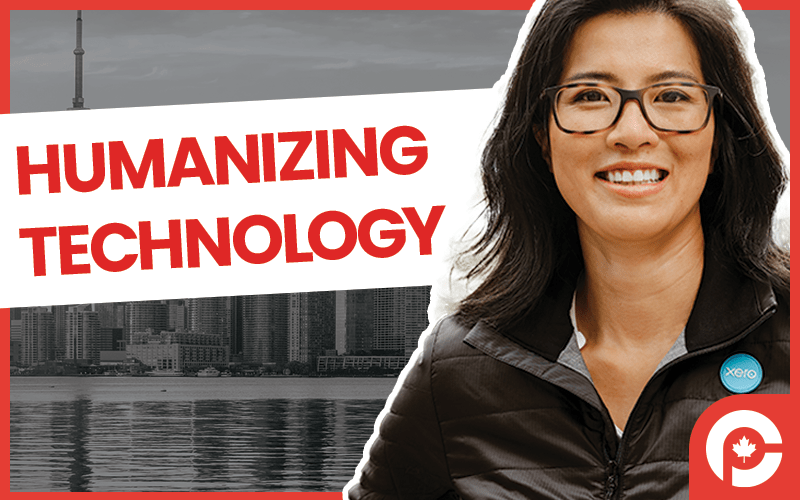
Putting a Human Face on Tech with Faye Pang
Episode
Faye Pang is the Canada Country Manager for Xero, the global small business platform with more than 2.7 million...
Key takeaways
- Digitally mature businesses with five or more connected cloud-based apps showed lower revenue decline and greater ability to pay staff during COVID, demonstrating that technology adoption directly impacts business resilience.
- Small businesses should work with accountants and bookkeepers as ongoing strategic advisors rather than only for year-end taxes, as these professionals can help navigate business challenges and accelerate digital transformation.
- Time is an entrepreneur's most valuable resource, so implementing technology and automation to handle tasks like bookkeeping can free up hours each week to focus on what you love about your business.
- The shift to remote and flexible work arrangements isn't just a pandemic trend but a permanent opportunity to attract diverse talent and create truly inclusive workplaces where people can do their best work.
- Building back better means using this moment to fundamentally rethink how your business operates, prioritizing digital tools and processes that give you real-time visibility into cash flow and business performance.
Transcript
Full transcript page · Interactive episode
============================================================
TRANSCRIPTION WITH SPEAKERS
============================================================

[00:00] SPEAKER_01: Welcome to Canada's podcast.
[00:05] SPEAKER_01: Hi, this is Celine Williams hosting for Montereo for Canada's podcast.
[00:09] SPEAKER_01: My guest today is Fay Pang, who is the Canada Country Manager for zero, the global small
[00:15] SPEAKER_01: business platform with more than 2.7 million subscribers worldwide that's dedicated to
[00:20] SPEAKER_01: making business beautiful.
[00:22] SPEAKER_01: Fay brings nearly 15 years of experience building businesses from the ground up to her
[00:26] SPEAKER_01: role.
[00:27] SPEAKER_01: Welcome, Fay.
[00:27] SPEAKER_01: Hi.
[00:29] SPEAKER_02: Thank you so much for having me.
[00:30] SPEAKER_02: I'm excited to be here.
[00:31] SPEAKER_01: I'm excited to talk to you.
[00:33] SPEAKER_01: You have a very interesting background in story and I'd love for you to start by sort
[00:38] SPEAKER_01: of sharing with our listeners how you got to do what you're doing today.
[00:43] SPEAKER_01: What has your journey but been thus far?
[00:47] SPEAKER_02: Yeah, absolutely.
[00:48] SPEAKER_02: I think I might take us all the way back to explain a little bit about my why.
[00:53] SPEAKER_02: And so the story to know about me is I'm the daughter of immigrant entrepreneurs.
[01:00] SPEAKER_02: They came to Canada and settled in Mississauga and started their own business which they ran
[01:05] SPEAKER_02: for 23 years.
[01:06] SPEAKER_02: And so I watched them come with not very much classic Canadian Dream story and build that
[01:12] SPEAKER_02: business up over two decades.
[01:16] SPEAKER_02: And to this day, the thought of them toiling away, trying to make it without a lot of support,
[01:22] SPEAKER_02: you know, really try to figure out do we have the cash flow?
[01:25] SPEAKER_02: Can we pay our team?
[01:26] SPEAKER_02: You know, what do we need to grow?
[01:28] SPEAKER_02: Those are the fundamental questions that small businesses today still wrestle with.
[01:32] SPEAKER_02: And it's what I'm particularly excited about in terms of zero's ability to have that impact
[01:37] SPEAKER_02: in the Canadian market.
[01:38] SPEAKER_02: So it all starts from us coming from China way back in the 80s and settling here and
[01:44] SPEAKER_02: living that Canadian dream.
[01:46] SPEAKER_02: In terms of my career path, I started in marketing.
[01:49] SPEAKER_02: So I went to Queens University for commerce and graduated and took up a job in CPG where
[01:56] SPEAKER_02: I absolutely loved the consumer psychology element of it.
[02:00] SPEAKER_02: I loved the brand building and strategic thinking.
[02:03] SPEAKER_02: But I knew that I was missing some of that entrepreneurial spark, the speed and the pace.
[02:09] SPEAKER_02: And so I actually ended up taking a step back.
[02:12] SPEAKER_02: I have what I call my quarter life crisis in my early 20s and said, I don't know if I
[02:19] Speaker UNKNOWN: have any companies.
[02:19] SPEAKER_02: I'm going to do what everyone does when they don't know what they want to do.
[02:22] SPEAKER_02: And I'm going to move to Vancouver.
[02:24] SPEAKER_02: And so I did that for a summer and you know, absolutely loved it.
[02:29] SPEAKER_02: Took a step back and just tried to think about what do I want to do with my career?
[02:33] SPEAKER_02: And is there a place that maybe is a bit more of a fit with my values and entrepreneurial
[02:37] SPEAKER_02: spirit that I have grounded in me?
[02:41] SPEAKER_02: Ended up working for a great little Canadian company.
[02:44] SPEAKER_02: I say a little now tongue in cheek called Marc Anthony brand.
[02:47] SPEAKER_02: So you know brands like Palm Bay, Mike Sardinay, White Claw, you know, phenomenal brand building
[02:55] SPEAKER_02: capability, you know, really strong, obviously Canadian focus.
[02:58] SPEAKER_02: Absolutely loved my time there.
[03:00] SPEAKER_02: But I was still hunting for, you know, even more innovation and pace.
[03:05] SPEAKER_02: And in 2015, an opportunity came up to join Uber Canada.
[03:09] SPEAKER_02: They were launching and scaling a little product called Uber Eats, which in its current
[03:14] SPEAKER_02: form then was basically a lunch product.
[03:17] SPEAKER_02: And you may remember this, they used to have cars driving around downtown Toronto and you
[03:21] SPEAKER_02: could, you know, open up the Uber app and order, you know, one of three dishes that day.
[03:26] SPEAKER_02: And I just thought this product was going to set the world on fire.
[03:29] SPEAKER_02: I said, this is incredible.
[03:31] SPEAKER_02: You know, I can get my lunch in 30 seconds.
[03:33] SPEAKER_02: It turned out that was truly MVP of what we were eventually going to build, which became
[03:38] SPEAKER_02: the Uber Eats app.
[03:39] SPEAKER_02: And so it was very, very lucky to be on the original launch team that actually brought
[03:44] SPEAKER_02: Uber Eats to Toronto as a global first.
[03:47] SPEAKER_02: And we launched, you know, December 2015 kind of shutter eyes and hit go and said, you
[03:53] SPEAKER_02: know, is this going to be something that people want to use?
[03:55] SPEAKER_02: And it turned out obviously to be an incredibly influential product, something that really
[04:02] SPEAKER_02: upended delivery in the Canadian market.
[04:04] SPEAKER_02: And I think ultimately really sort of charted a new course for restaurants and how they
[04:09] SPEAKER_02: can make money and generate an incremental revenue and awareness.
[04:12] SPEAKER_02: And for consumers, you know, just a new way of exploring and enjoying the communities
[04:17] SPEAKER_02: around you.
[04:18] SPEAKER_02: So that was my journey kind of from CPG into tech.
[04:22] SPEAKER_02: And then about a year ago, I got a call from zero.
[04:25] SPEAKER_02: And to be very honest, I didn't know that much about the organization.
[04:28] SPEAKER_02: But as I dug in and learned about the passion for small businesses and the opportunity within
[04:34] SPEAKER_02: the Canadian market, I just got really, really excited.
[04:37] SPEAKER_02: So all the same ingredients of that recipe that we had with Uber Eats back in 2015 and
[04:43] SPEAKER_02: really feeling like we're in an inflection point for the industry.
[04:47] SPEAKER_02: And so that's why I made the move and just really excited to be on team zero these days,
[04:52] SPEAKER_02: helping to think about how we help small businesses, you know, really build up and build
[04:57] SPEAKER_02: that better.
[04:59] SPEAKER_01: That's fascinating.
[05:01] SPEAKER_01: And I did not know that Uber Eats sort of globally.
[05:07] SPEAKER_01: I didn't know that Toronto was an inflection point.
[05:09] SPEAKER_01: So even just that, I was like, that is so interesting.
[05:11] SPEAKER_01: I had no idea about that.
[05:15] SPEAKER_01: So I have a lot of questions inside of this, but I want to, I'm guessing and I could be
[05:22] SPEAKER_01: very wrong.
[05:23] SPEAKER_01: And I'm fully going to own that this could be a very wrong assumption.
[05:25] SPEAKER_01: But I'm guessing that Uber, even Uber Eats Uber, what was quite a large organization by
[05:33] SPEAKER_01: the time you left and that zero is maybe not quite as large and it may and I appreciate
[05:39] SPEAKER_01: it's growing, but maybe not as large is that it is that a safe assumption to be making.
[05:47] SPEAKER_02: It's an accurate assumption.
[05:49] SPEAKER_02: So you know, they're actually the two companies are pretty close in age.
[05:53] SPEAKER_02: You both started about 15 years ago.
[05:55] SPEAKER_02: When I joined Uber, I was in and around employee 4,000 globally and that's just about where
[06:01] SPEAKER_02: we are at with zero globally today.
[06:05] SPEAKER_02: So yes, it's obviously different scale, totally different business, right marketplace
[06:09] SPEAKER_02: business versus obviously a lot more the B2B focus here at zero.
[06:15] SPEAKER_02: But there are a number of similarities in terms of moving from that startup phase to
[06:21] SPEAKER_02: a scale up and how do you harness the the energy and excitement and rapid iteration in
[06:27] SPEAKER_02: the early days, but actually build a process and a platform that allows, you know, the 5,000,
[06:32] SPEAKER_02: 10,000, 15,000 employee growth.
[06:35] SPEAKER_02: That's that's the aspiration at a lot of similarities in the two organizations sort of
[06:40] SPEAKER_02: navigating that at the structure of their maturity.
[06:43] SPEAKER_01: Yeah.
[06:44] SPEAKER_01: So I think it's really I appreciate that because I was going to say I think it's really
[06:47] SPEAKER_01: interesting that Uber was has such a consumer, a direct to consumer focus, right?
[06:55] SPEAKER_01: And zero clearly has a B2B focus.
[06:58] SPEAKER_01: It's focused on small businesses.
[07:00] SPEAKER_01: And so what in your role or in your experience, what has, what are some of the differences
[07:10] SPEAKER_01: that come with that?
[07:11] SPEAKER_01: What are some of the opportunities that come with that?
[07:13] SPEAKER_01: What are some of the, because that's a big divide and tech in general.
[07:16] SPEAKER_01: And I think that it's have an experience on both sides and how it affects internally,
[07:21] SPEAKER_01: how it affects the impact it has on the client, whether it's individuals or businesses.
[07:27] SPEAKER_01: So I'm curious what your observations of the differences are and what's great or challenging
[07:32] SPEAKER_01: about each of them.
[07:34] SPEAKER_02: Yeah, for sure.
[07:36] SPEAKER_02: It's obviously two very different business models, right?
[07:39] SPEAKER_02: Whenever you look at Uber, whether it's on the ride sharing side or the Uber Eats
[07:43] SPEAKER_02: side, you know, we talk about marketplaces, whether two or three-sided.
[07:46] SPEAKER_02: And in those cases, balance is really important, right?
[07:49] SPEAKER_02: If you drive a ton of consumer demand, but you don't have enough restaurants or delivery
[07:55] SPEAKER_02: folks to help deliver that, you actually create the perfect storm of a bad customer experience.
[08:02] SPEAKER_02: And similarly, when we talk about zero, we always talk about this idea of a dual flywheel,
[08:07] SPEAKER_02: right?
[08:07] SPEAKER_02: So not only do we need to be increasing awareness and consideration and customer experience
[08:13] SPEAKER_02: on the small business side, but we're almost just as focused if not more so in a lot of ways
[08:17] SPEAKER_02: on the accounts and bookkeepers that serve them.
[08:20] SPEAKER_02: Because we know two-thirds of Canadians, business is actually work with an account and a bookkeeper
[08:26] SPEAKER_02: at some point in the year.
[08:27] SPEAKER_02: And so that's their most trusted advisor when it comes to, hey, what accounting software
[08:32] SPEAKER_02: should I use?
[08:32] SPEAKER_02: Or I've got this particular business challenge or lack of visibility to cash flow.
[08:37] SPEAKER_02: What would be your recommendation?
[08:39] SPEAKER_02: That recommendation is really powerful.
[08:42] SPEAKER_02: And so if we were to just focus on small businesses, we'd be missing out a huge swath of potential
[08:47] SPEAKER_02: promoters and advocates for us.
[08:49] SPEAKER_02: And if we were just to focus on accounts and bookkeepers, we'd be, you know, pushing water
[08:54] SPEAKER_02: up hill because the small businesses would say, well, you know, I don't know a lot about
[08:58] SPEAKER_02: zero.
[08:58] SPEAKER_02: I'm more comfortable doing something else, right?
[09:00] SPEAKER_02: Or sticking to pen and paper or using Excel, et cetera.
[09:03] SPEAKER_02: So it's not either or it's actually, we need to do both.
[09:07] SPEAKER_02: And that's really similar to marketplace businesses where you need to ensure, you know,
[09:11] SPEAKER_02: you're rising supply or demand equally at all times were possible.
[09:18] SPEAKER_01: Yeah.
[09:19] SPEAKER_01: And I love that.
[09:20] SPEAKER_01: So I think it's a very interesting approach to be dealing with both individual or, you
[09:30] SPEAKER_01: know, bookkeepers, I'm calling them individual.
[09:32] SPEAKER_01: Like, recognizer may not always be and small businesses.
[09:35] SPEAKER_01: And I'm curious what you see.
[09:39] SPEAKER_01: What you, I mean, are you seeing trends in terms of where small businesses are going or
[09:46] SPEAKER_01: what they're thinking about or when they're, you know, where the accountant bookkeeper becomes
[09:51] SPEAKER_01: really key because I think that it's a really unique lens to have visibility in both
[09:57] SPEAKER_01: of those places.
[09:58] SPEAKER_01: And, you know, a lot of our listeners and viewers are small business owners.
[10:04] SPEAKER_01: And they're curious.
[10:05] SPEAKER_01: They're, you know, listen, I think a lot of us who are small business owners have cobbled
[10:10] SPEAKER_01: together what we do.
[10:12] SPEAKER_01: There's a whole bunch of duct tape and string and hope for the best.
[10:16] SPEAKER_01: And, you know, you have a lens on some of the trends or opportunities or potential that's
[10:21] SPEAKER_01: out there that we may be going, I thought about doing it that way.
[10:25] SPEAKER_02: Yeah.
[10:26] SPEAKER_02: Yeah.
[10:27] SPEAKER_02: Absolutely.
[10:28] SPEAKER_02: I think, you know, obviously goes without saying last year and a half has been incredibly
[10:33] SPEAKER_02: difficult.
[10:34] SPEAKER_02: Our research shows us that, you know, it's never been more top of mind for small businesses
[10:39] SPEAKER_02: around resiliency.
[10:41] SPEAKER_02: And this idea of digitally mature businesses are more resilient.
[10:46] SPEAKER_02: They can react faster.
[10:48] SPEAKER_02: You know, if you think about things like government grants, you know, access to capital, the
[10:53] SPEAKER_02: more that you have your business digitized, the quicker you can respond to the black
[10:58] SPEAKER_02: swan events, the quicker you can take advantage of that new opportunities, you know, the easier
[11:03] SPEAKER_02: it is for you to determine where you should pivot when you get when you get thrown a curveball.
[11:09] SPEAKER_02: And so our research has shown that, hey, small businesses really top of mind really want
[11:13] SPEAKER_02: to focus in on that.
[11:14] SPEAKER_02: And where their turning is to these accountants, bookkeepers and advisors.
[11:18] SPEAKER_02: And more and more, we're seeing this switch from, hey, I'm just going to come to you
[11:23] SPEAKER_02: once a year so you can help me do my taxes at the end of the year and that I'm not going
[11:26] SPEAKER_02: to talk to you for 364 days and then I'll see you next year.
[11:30] SPEAKER_02: We're seeing that shift too.
[11:31] SPEAKER_02: And maybe we should chat monthly, right?
[11:33] SPEAKER_02: Or maybe I can, I've got a big business decision instead of feeling like every entrepreneur,
[11:38] SPEAKER_02: which is I'm going to have to figure this out myself and Google is my best friend.
[11:42] SPEAKER_02: There actually are experts and there are people that are in your court and have your back.
[11:47] SPEAKER_02: And so, you know, obviously that's a bit of a different mindset shift and behavior shift.
[11:52] SPEAKER_02: But we are seeing that more and more where small businesses are increasingly, you know,
[11:57] SPEAKER_02: embracing this idea of do it together, right, with an accountant or bookkeeper advisor versus
[12:02] SPEAKER_02: I've got a DIY, everything myself.
[12:06] SPEAKER_01: Um, so I want to, you mentioned digitally mature.
[12:09] SPEAKER_01: It's one of the, you know, words, pieces of language that you use.
[12:14] SPEAKER_01: Can you, for those who are listening who may not fully understand what that means?
[12:18] SPEAKER_01: Can you give a sense of what you mean when you say digitally mature?
[12:21] SPEAKER_02: Yeah, so we actually partnered with the Brookfield Institute to do a study around this.
[12:28] SPEAKER_02: And they looked at a whole bunch of data around, you know, how connected small businesses were,
[12:34] SPEAKER_02: right, what percentage of their operations were in cloud-based technologies,
[12:38] SPEAKER_02: how many apps do they use to power their business?
[12:40] SPEAKER_02: And here at zero, we're super focused on the ecosystem, right?
[12:44] SPEAKER_02: We want to be a small business platform.
[12:46] SPEAKER_02: And so we actually plug in with over a thousand connected apps,
[12:49] SPEAKER_02: everything from expenses to accounts payable accounts receivable reporting.
[12:55] SPEAKER_02: You know, you've got a business problem.
[12:57] SPEAKER_02: There's probably someone in our ecosystem that has an app to solve that for you.
[13:02] SPEAKER_02: And one of the really cool things that we saw coming out of COVID was, you know,
[13:06] SPEAKER_02: small businesses that had five or more connected apps into zero actually saw a lower revenue decline
[13:14] SPEAKER_02: and a greater ability to pay their staff, right?
[13:17] SPEAKER_02: Because we have visibility on the back end to all that information.
[13:20] SPEAKER_02: And so for us, you know, the more connected you are, the more digitized your operations,
[13:25] SPEAKER_02: the clear takeaway was, you know, we expect you to be more resilient to those types of
[13:30] SPEAKER_02: unforeseen circumstances.
[13:32] SPEAKER_02: You've got that data at the tip of your fingertips and you're able to action that more quickly.
[13:38] SPEAKER_01: I think that's a really important lesson for anyone who's listening.
[13:42] SPEAKER_01: And I don't want to skip over it because there's so much.
[13:46] SPEAKER_01: Listen, I have been in the position where I was very hesitant to, you know, attempt to learn
[13:51] SPEAKER_01: a new piece of software or, you know, add something to the mix.
[13:56] SPEAKER_01: And there's the access to data and information and, you know, speed and ease and all those things.
[14:03] SPEAKER_01: Once the initial, you know, setup happens, which is true for any change, right?
[14:08] SPEAKER_01: Is extraordinarily different.
[14:10] SPEAKER_01: And that's really what I hear you saying is,
[14:13] SPEAKER_01: regardless of, I'm talking about the resistance, but regardless of any of that, once the data is
[14:17] SPEAKER_01: there, once it's connected, once people have access, it is easier and it does make a difference.
[14:23] SPEAKER_01: And it's getting over that initial fear of change or the unknown or the new as a small business
[14:29] SPEAKER_01: owner to be able to be in, to be in a better position and be more resilient when things are hard.
[14:38] SPEAKER_01: And things are going to be hard off and on.
[14:40] SPEAKER_01: There should be challenges all the time, whatever they might be.
[14:44] SPEAKER_02: Absolutely. And just to build off that, you know, we think of ourselves sort of two main things
[14:50] SPEAKER_02: that we're really passionate about. One is change management, right? So yes, zero is a tech company,
[14:55] SPEAKER_02: but we're built by humans and we're used by humans. And so you have to have that lens on what it
[15:00] SPEAKER_02: takes to implement change management well and to know those mental blockers and to know about
[15:06] SPEAKER_02: that trough of despair on the tech adoption curve. Like, you know, our team studies that pretty
[15:11] SPEAKER_02: fanatically because the better we can do that, the better we can help our partners actually
[15:16] SPEAKER_02: implement the change and do it successfully. And then the second thing that we're, you know,
[15:22] SPEAKER_02: extremely passionate about my husband will tell you my love language is efficiency. And that's
[15:26] SPEAKER_02: true for a lot of accounts and bookkeepers. But it all comes down to time, right? If time is your
[15:34] SPEAKER_02: most valuable resource as an entrepreneur, how can you use technology to get time back so that you
[15:39] SPEAKER_02: can actually focus on doing the things that you love, right? You can feel free to jump in and
[15:43] SPEAKER_02: correct me, but I don't think you got into doing your own things so that you can balance your books
[15:48] SPEAKER_02: at the end of every month. That's probably not the thing that you get pumped about. No,
[15:54] SPEAKER_02: there are tools that do that for you. And they do it using ML and AI, they do it in an automated
[15:59] SPEAKER_02: way, they do it while connected to all of your bank accounts and other systems. And just,
[16:06] SPEAKER_02: you know, we talk about business being beautiful and we really believe that. We think technology can
[16:11] SPEAKER_02: enable, you know, that seamless workflow that happens in the background and allows you to just
[16:16] SPEAKER_02: focus on building your business, you know, servicing your customers and doing what it is that you love.
[16:21] SPEAKER_02: So the efficiency component is really important to us to the extent that when we bring on a new partner,
[16:28] SPEAKER_02: you know, we do things like efficiency reviews, just say, how much did you say per file versus how
[16:33] SPEAKER_02: you were doing it before? Now that we've implemented this tech, right? So those are the types of things
[16:38] SPEAKER_02: that are hero metrics around, you know, it isn't going well. Is it working for you? Yeah.
[16:44] SPEAKER_01: So I'm and this may not be linked, but you mentioned earlier as well, this idea of build back better.
[16:50] SPEAKER_01: And I'm curious because you spoke about building a few times in there. It may not be linked and it
[16:54] SPEAKER_01: might just be my brain putting the two together. I recognize that. But I'm curious if build that,
[17:00] SPEAKER_01: like what build back better means for you and for zero. And if it is linked to what we're talking
[17:04] SPEAKER_01: about here somehow, or maybe it's something entirely different, which I'm very open to
[17:10] SPEAKER_02: having created a link that's only for me. No, I think there's I think we can talk about that in the
[17:19] SPEAKER_02: context of listen, just to draw the parallel with Hubert again, right? Yeah. Before Uber Eats and,
[17:26] SPEAKER_02: you know, a lot of these other delivery platforms really exploded. If you were going and talk to
[17:31] SPEAKER_02: a mom and pop restaurant, you know, and say, hey, we can do delivery, they'd probably say, you
[17:37] SPEAKER_02: know what? Actually, we're good. We have our neighborhood around us. We've been here for 25 years.
[17:42] SPEAKER_02: We've got our regular customers. We don't necessarily want to grow. And that just seems like
[17:48] SPEAKER_02: too big of a change and a shift. And then, you know, COVID happened and it sort of forced the hands
[17:54] SPEAKER_02: of a lot of those restaurant owners to say, okay, actually, I do need another revenue stream.
[17:59] SPEAKER_02: Now I need to reconsider, you know, how I go to market, give it all of the obviously challenge
[18:04] SPEAKER_02: and reality around me. Right. And so they were able to pivot quickly. And now this is just such an
[18:12] SPEAKER_02: interval part of a lot of businesses. And as it exposed them to a lot of new customers and revenue
[18:18] SPEAKER_02: streams, right? I think the same can be set of small businesses where COVID really forced a lot of
[18:24] SPEAKER_02: them to say, wow, that like that improvement that I was thinking about, the new system that I've
[18:29] SPEAKER_02: been humming and hawing over, you know, I've been saying I wanted to get payroll onto this thing
[18:34] SPEAKER_02: for years now and just never happened. All of those things suddenly came right to the fore.
[18:39] SPEAKER_02: And it's like, you have to right now, you've got no choice. But at the end of the day, once you go
[18:45] SPEAKER_02: through that adoption and that change, it's going to be better, right? It's going to be more efficient.
[18:49] SPEAKER_02: It's going to be more seamless. It's going to give you more time back to focus on doing what you
[18:54] SPEAKER_02: love. And so when we talk and think about building back better, it's really the silver lining of
[18:59] SPEAKER_02: the last year and a half and all the challenge has been it's really for small businesses to rethink
[19:05] SPEAKER_02: how they operate and to really kind of focus and hone in on the core core thing, right? Anytime
[19:11] SPEAKER_02: there's a lot of noise, it's really about prioritization and focus. And that has spurred a lot of really
[19:18] SPEAKER_02: interesting conversations around, okay, yeah, maybe it is time to take that leap. Maybe it's time to
[19:23] SPEAKER_02: move my accounting and my books into the cloud. I've been thinking and considering it for ages
[19:28] SPEAKER_02: and now feels like the right time to take that leap. Listen, I love the idea of rethinking in general.
[19:34] SPEAKER_01: I'm a big fan of unlearning, rethinking, challenging the assumptions that we have and have made to
[19:41] SPEAKER_01: date. And so I think that it is unfortunate that it has taken a pandemic for a lot of people to get
[19:48] SPEAKER_01: to the point and a lot of business that are just getting to the point where they're willing to do that.
[19:51] SPEAKER_01: And I think it's really important that it is happening and that
[19:56] SPEAKER_01: there that, you know, in order like quite frankly, an organization like zero is so mindful and
[20:01] SPEAKER_01: thoughtful about that awareness and encouraging that and supporting that, you know, with the small
[20:09] SPEAKER_01: businesses on the platform, off the platform, I think that's a really incredible thing because it's
[20:14] SPEAKER_02: important. Yeah, yeah, absolutely. And if I could build on just what you said, I think that
[20:20] SPEAKER_02: other really interesting sort of element of building back better is we've been working from home
[20:26] SPEAKER_02: now for, you know, a year and a half, right? This was at such a novel concept before, there's this
[20:32] SPEAKER_02: notion that only a small percentage of the workforce is ever going to be able to work from home
[20:37] SPEAKER_02: permanently successfully and not have it drop in productivity. Well, I think the last year and a
[20:42] SPEAKER_02: half is really popped that bubble in terms of, hey, actually, there's probably a way to build back
[20:48] SPEAKER_02: better as well as we think about the employee experience. And I'm super passionate about diversity
[20:54] SPEAKER_02: inclusion and zero is all about creating an environment where people can do the best work of
[20:59] SPEAKER_02: their lives. And so what I get really excited about is rethinking to your point what that
[21:06] SPEAKER_02: proposition looks like for, you know, progressive companies, right? And how can we embrace
[21:12] SPEAKER_02: all the learning that we've gotten from the last year and a half and create worlds where, you know,
[21:17] SPEAKER_02: a single mom of two, you know, can still hold a great job and not feel like she's making sacrifices
[21:24] SPEAKER_02: because she can't come into an office five days a week, right? We've just seen such an opening here,
[21:31] SPEAKER_02: I think, for people of all backgrounds to be able to work at companies that they really have
[21:37] SPEAKER_02: and feel a values alignment with because of this embracing of work from home and hybrid,
[21:42] SPEAKER_02: you know, flexible work schedules. So I'm really excited about that as well.
[21:47] SPEAKER_01: Yeah, and so I love this because I'm going to, I want to shift into sort of the,
[21:53] SPEAKER_01: let's call it the experience of zero as an employee or zero as an organization, not necessarily what's
[21:58] SPEAKER_01: doing in the world with its platform, which is great. But, you know, there is a, the tech world
[22:05] SPEAKER_01: is bigger conversation. I'm curious, where do you see zero specifically, but let's also say tech
[22:14] SPEAKER_01: companies in general, we're starting to rethink some of these things. And what is the opportunity
[22:19] SPEAKER_01: or what are the trends that you're seeing there? Because listen, if there's one thing that has also
[22:23] SPEAKER_01: become even more important in the past year and a half, unfortunately, because of some of the things
[22:28] SPEAKER_01: that have happened in the States is like DEI belonging, having equitable workplaces as much as
[22:35] SPEAKER_01: possible and being conscious of what that looks like. And so I'm curious where, what you're seeing
[22:41] SPEAKER_01: inside zero in general and tech, because I think you have a really unique lens on this.
[22:47] SPEAKER_02: Yeah, absolutely. I think there's, there's a few things I'd want to share there. One, and
[22:53] SPEAKER_02: so Rachel Powell is a chief customer officer for zero. And you know, one thing that she always
[22:59] SPEAKER_02: talks about is this idea that in that traditional sort of who are your shareholders models and who
[23:05] SPEAKER_02: do prioritize zero has always been about prioritizing our internal team or zeros and employees
[23:11] SPEAKER_02: first, because if you do that and you prioritize, you know, their well-being and how they're
[23:16] SPEAKER_02: feeling about the organization, they'll take care of our partners and our customers and at the end of
[23:21] SPEAKER_02: the day, that'll take care of the business. And so that really resonated with me even before I joined
[23:26] SPEAKER_02: zero. And I certainly feel that while I've been here, there's two main things that I would call out.
[23:32] SPEAKER_02: One is, is this notion of well-being. So zero actually has a global head of well-being and we were
[23:38] SPEAKER_02: really focused on this before it became like a pretty big buzzword over the last year and a half,
[23:44] SPEAKER_02: but it's, it's been something that's been super core to how zero has been built. Every zero has
[23:49] SPEAKER_02: 10 well-being days a year that they can use at their discretion above and beyond sort of vacation
[23:55] SPEAKER_02: days off. You know, whether it's about taking care of your family or you just feeling like, hey,
[24:00] SPEAKER_02: I'm, I'm not doing okay this week and I need a day to myself. No questions asked those days are
[24:06] SPEAKER_02: yours and we try and do our best to encourage our teams to take those. And then no shortage of
[24:13] SPEAKER_02: programming internally just really focusing on how do we help our zero's craft their perfect day,
[24:19] SPEAKER_02: find those focus breaks during the day, take lots of breaks, get outside, you know, applying all
[24:24] SPEAKER_02: of the science that we have around, you know, what makes someone's well-being and how do you sort of foster
[24:30] SPEAKER_02: that and how do we create an environment again where people can really do the best work of their
[24:35] SPEAKER_02: lives. So well-being is super top of mind for all of our people leaders up to our executive team
[24:40] SPEAKER_02: and then the other component is flexibility, right? So they kind of go hand in hand,
[24:45] SPEAKER_02: but the more you can formalize and encourage flexibility around flexible working arrangements
[24:50] SPEAKER_02: around, you know, this notion of work from home and having all the tools and processes that you
[24:55] SPEAKER_02: need to do that well, the more we can enable our teams to really make work work for them and work
[25:01] SPEAKER_02: for their schedules and work for their families if they have, you know, commitments there. And so
[25:06] SPEAKER_02: we've really been focused on that. Recently, zero actually launched a permanent remote roles program
[25:12] SPEAKER_02: for our product and tech teams, which is really exciting and applicable here in Canada as well.
[25:16] SPEAKER_02: So folks can actually apply specifically for our most friendly role. And then, you know, with that,
[25:23] SPEAKER_02: I have the clarity and the flexibility that they need again to do the best work that they can do.
[25:28] SPEAKER_02: So we've really been focused on those two things, well-being and then the flexibility to enable
[25:33] SPEAKER_01: our teams. And I want to, you know, fully put on my biased hat right here and say, I really hope we
[25:40] SPEAKER_01: see more of that not only in the tech world, but in the world of employment in general, because I think
[25:48] SPEAKER_01: that flexibility and the ability to work hybrid is going to, I think it's more and more important
[25:54] SPEAKER_01: for people. And when organizations are intentionally creating opportunities where that is built into
[26:02] SPEAKER_01: whatever the opportunity is and it's not someone having to go and advocate because
[26:07] SPEAKER_01: it can be really hard for people to do that. And it's not, you know, there are fears of what
[26:13] SPEAKER_01: the repercussions could be false or not. It doesn't make a difference. They exist. So when organizations
[26:17] SPEAKER_01: are really intentionally saying, we are creating these opportunities with flexibility that are remote
[26:24] SPEAKER_01: that are for, you know, are for the people that this matters in a specific way to, it encourages
[26:30] SPEAKER_01: other organizations to do the same because now it is, it's now, let's, the part of the norm,
[26:37] SPEAKER_01: it's part of the norm that's out there. So I really, my biased hat is I love hearing that. I really
[26:44] SPEAKER_01: hope we see more and more of that because I think that is, you know, a huge component of attracting
[26:52] SPEAKER_01: the best people, retaining the best people, enabling people to move around an organization effectively
[26:57] SPEAKER_01: that in a way that works for them in their stage of life and their time of life. So I love that
[27:02] SPEAKER_01: that program exists and I want to, you know, really emphasize how much I love it. Yeah, yeah,
[27:08] SPEAKER_02: meet me too. And you're right. It's going to become table stakes, right? You see the odd
[27:13] SPEAKER_02: company or two these days that are saying, now, you know, it's everyone back in the office, 100%
[27:17] SPEAKER_02: no, no flexibility is just, to me, it's shortsighted. There are always going to be those roles that
[27:23] SPEAKER_02: lend themselves to remote work. And, you know, we should do everything that we can to keep great talent,
[27:29] SPEAKER_02: especially given how competitive the market is these days. So I am very proud of how Hasero has
[27:35] SPEAKER_01: been showing up there. Well, and I think it's a, it's a real, it's, it's a, an obvious way to show
[27:44] SPEAKER_01: a, a real not just the words that we're using commitment to diversity, equity and inclusion,
[27:51] SPEAKER_01: right? By saying, there are, you don't have to live in a specific city. You don't have to be doing
[27:57] SPEAKER_01: this in a specific way. This enables people who, for whatever reason, whether it's preference or
[28:03] SPEAKER_01: a need or whatever it is to really feel a sense of belonging in an organization. I think that's
[28:10] SPEAKER_01: really important because there's a lot of verbiage and language around, you know, DEI and
[28:16] SPEAKER_01: belonging out there in the world in the tech world as well. And there's not always the action and
[28:21] SPEAKER_01: behaviors that back it up. Yeah, in very obvious ways. And this is a great way of, of putting your
[28:28] SPEAKER_01: money where your mouth is. Yeah, yeah, couldn't agree more. I'm, I'm, I know that, you know, we
[28:37] SPEAKER_01: talked about DEI and that's something that you're very passionate about. And I want to, before we wrap
[28:41] SPEAKER_01: this up, I want to ask the question of how, where do you see changes happening? What do you see the
[28:51] SPEAKER_01: opportunity as now at the, I was going to say end of the pandemic, but not end of at this stage.
[28:59] SPEAKER_01: In the pandemic, because I think a lot has come to light in the past year and a half and a lot has
[29:05] SPEAKER_01: changed. And I, I'm curious because of your passion around the topic, what you're seeing, or either
[29:13] SPEAKER_01: that's not working or is changing or is an opportunity, but kind of where do you see things at right
[29:21] SPEAKER_02: now? Yeah, I think, you know, what was, what was probably a bit demoralizing at the start of the
[29:29] SPEAKER_02: pandemic, because when you looked at the data of what jobs were most impacted throughout the Canadian
[29:35] SPEAKER_02: economy and sort of how that disproportionately impacted women, it really sort of took us back,
[29:42] SPEAKER_02: right? There had been some good momentum, some good progress. There's obviously a lot of commitments
[29:46] SPEAKER_02: from many organizations at every level. And then, you know, when the stuff hits the fan, it's like,
[29:53] SPEAKER_02: it's sort of the first thing to drop, right? It's okay, focus on business critical initiatives.
[29:58] SPEAKER_02: And DEI things tend to get put on the backburner. So at the start of the pandemic, it was pretty,
[30:04] SPEAKER_02: I would say, from my perspective, you know, it's demoralizing to say, okay, well, we're seeing this
[30:09] SPEAKER_02: outsized impact on women and people of color. How do we, again, back to this notion of building
[30:14] SPEAKER_02: back better and actually using this as a way to reimagine a new, a new normal? I would say I've
[30:27] SPEAKER_02: got to talk about bigger focus more, you know, female lead startups, female funding, right? There's
[30:32] SPEAKER_02: just a lot of really incredible momentum within the Canadian market. Obviously, we could use as much
[30:39] SPEAKER_02: of that as, as we'll get, but I do think that there's a lot of really good momentum and a focus
[30:44] SPEAKER_02: on it and it is going to take a focus, right? Diversity and inclusion is a journey. There's no
[30:49] SPEAKER_02: silver bullet. Do this thing and all your problems are solved and all of a sudden you're, you know,
[30:55] SPEAKER_02: your set. It's a constant battle against systemic bias, you know, systemic challenges and
[31:03] SPEAKER_02: organizations just have to be really committed to that. So from the zero perspective, we've got a
[31:08] SPEAKER_02: full DEI program that is led by Matthew Coons out of our Denver office and he's just doing an
[31:14] SPEAKER_02: incredible job really putting pillars into place to make sure on things like recruiting on interviews,
[31:21] SPEAKER_02: on, you know, promo cycles. We are systematically looking at places where there might be bias
[31:27] SPEAKER_02: in rooting that out. Where possible, we're taking data and informing our decision making with that data.
[31:33] SPEAKER_02: We are partnering with external third parties to make us better challenge and poke and, you know,
[31:39] SPEAKER_02: really educate us internally about where we should be focusing our efforts. And so there's a lot
[31:45] SPEAKER_02: of really amazing energy happening at zero, particularly across the US and Canada these days,
[31:51] SPEAKER_02: that I find really inspiring, but it definitely is a journey and not a one and done initiative that
[31:59] SPEAKER_01: will solve all those problems. And I think that I appreciate that and I think it's really important to
[32:06] SPEAKER_01: to recognize and call that out because it is there's going to be new things that we need to learn
[32:11] SPEAKER_01: and unlearn that we are not aware of right now that will come up in the next six months,
[32:15] SPEAKER_01: year, five years, 10 years because it is dismantling the systems and biases and assumptions that we have
[32:23] SPEAKER_01: that are so inherent and we're all, you know, not, I say we all, but let's say North America,
[32:29] SPEAKER_01: we're socialized in a particular way. We don't, most people don't even question them.
[32:33] SPEAKER_01: We're not aware of how deep they are and we're not aware of the bias that it creates. And I think that
[32:39] SPEAKER_01: I love that zero has such a very clear commitment to challenging and changing that and we're all
[32:47] SPEAKER_01: going to make mistakes and it's not going to be perfect and isn't this one specific outcome that
[32:52] SPEAKER_01: is going to, we all know we're there at this moment in time. If only it was that easy. Yes, there is no,
[32:57] SPEAKER_02: there is no finish line on this. But that's actually what gets me excited too because I think there's
[33:03] SPEAKER_02: just so much opportunity and yeah, we have an opportunity to meet at so that once in a lifetime
[33:11] SPEAKER_02: at the moment of just crafting with that new normal looks like and really sort of building back from
[33:16] SPEAKER_01: the ground up. Yeah, I agree. I think it's really, I think it's very cool. Before we wrap this up,
[33:22] SPEAKER_01: I want to ask the question I always end with, which is there's something that we didn't get to that
[33:26] SPEAKER_01: you want to make sure we talk about or something that you mentioned that you want to emphasize before
[33:32] SPEAKER_01: we wrap this up or you're good and that's also an okay answer as well. Maybe that I'll just like
[33:39] SPEAKER_02: put an exclamation mark beside a point that you and I talked about earlier, which is, you know,
[33:45] SPEAKER_02: for all the entrepreneurs and small business owners that are listening to this podcast today,
[33:50] SPEAKER_02: really encourage you to reach out if you're not already connected to an account to enter bookkeeper
[33:57] SPEAKER_02: and advisor. Yeah, I've been there, started my own businesses, seen my parents do it. There's
[34:02] SPEAKER_02: always this roll up your sleeves, mentality and just put your head down and get it done and I love
[34:08] SPEAKER_02: that and appreciate it and you know, that's what makes entrepreneurs so special. But one thing that
[34:15] SPEAKER_02: we're really passionate about is you don't have to do it on your own. And so, you know, make that call,
[34:21] SPEAKER_02: find out how someone can help you really rethink what tech tools you're using to power your business
[34:27] SPEAKER_02: in other areas where you can get one, two, three hours back a week. I mean, time is your most
[34:34] SPEAKER_02: valuable resource as an entrepreneur, right? And so, how do you just get the time to focus on doing
[34:38] SPEAKER_02: what you love? We firmly believe that in concert with that advisor and concert with tools like zero,
[34:45] SPEAKER_02: you can actually get a lot of time back in your day and your week again to focus on building your
[34:50] SPEAKER_02: business. So, it always feels like you don't have time to find more time, you don't have time to
[34:56] SPEAKER_02: build a new system or take on a new tool. But I strongly recommend people take this opportunity to
[35:04] SPEAKER_01: rethink that and challenge you to do so. Yeah, I think that's a great place to put an
[35:10] SPEAKER_01: exclamation point. I think it's a really important point to emphasize. So thank you for that. And
[35:13] SPEAKER_01: Faye, thank you for your time today. It's been really great chatting with you and I appreciate
[35:18] SPEAKER_01: you sharing your perspective and experience and speaking into the realities of many small business
[35:24] SPEAKER_01: owners experiences in Canada. Thank you so much. It's great to be on. And for our listeners,
[35:31] SPEAKER_01: thanks for listening to Canada's podcast. Like comment and subscribe to all our channels to get
[35:35] SPEAKER_01: the latest podcasts from entrepreneurs across Canada.