
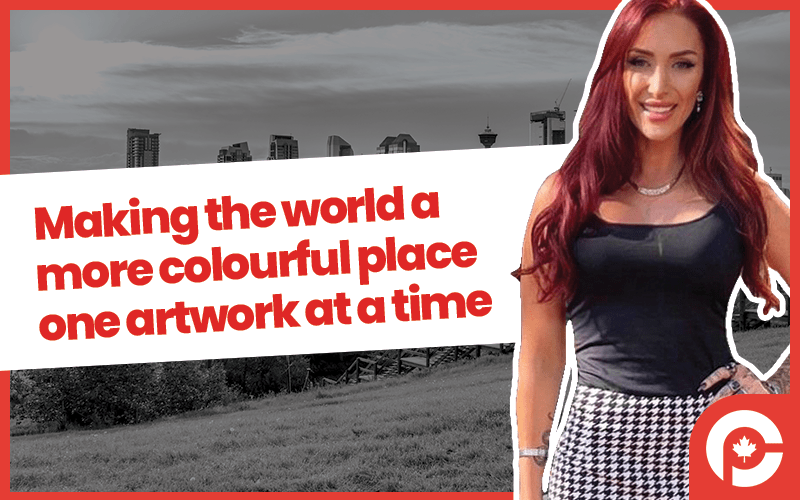
Making the world a more colourful place, one artwork at a time
Episode
Elle Wray is a professional artist based in Calgary. She has been obsessed with art and drawing from a...
Key takeaways
- You must believe in yourself and keep creating no matter what, never taking no for an answer and continuously putting yourself out there.
- Success as an artist requires juggling two jobs—the creative work itself and the business side including accounting, marketing, and self-promotion.
- Don't compare yourself to other artists or try to chase their achievements; instead, set your own bar and draw inspiration from your personal experiences.
- You need to be in the right mental and emotional state to create quality art, as forcing creativity when you're not feeling right results in work that doesn't turn out well.
- Taking breaks from your art through other activities and interests helps you return with fresh perspective and renewed creative energy.
Transcript
Full transcript page · Interactive episode
============================================================
TRANSCRIPTION WITH SPEAKERS
============================================================

[00:00] SPEAKER_02: Welcome to Canada's Podcast.
[00:05] SPEAKER_02: Oh, I'm Mario Tonogusi, Managing Editor of Canada's Podcast.
[00:10] SPEAKER_02: My guest today on Calgary's Podcast is L-Ray,
[00:14] SPEAKER_02: who is a fine artist and art gallery owner, Hidden Calgary.
[00:17] SPEAKER_02: Thanks for joining us today, L.
[00:20] SPEAKER_00: Hi, thank you.
[00:21] SPEAKER_02: Well, let me just start by asking you just a little bit about what you do
[00:26] SPEAKER_02: in terms of art and we'll go from there.
[00:30] SPEAKER_02: Okay, sounds great.
[00:32] SPEAKER_02: All right, so what kind of things do you do when it comes to artwork?
[00:38] SPEAKER_00: I do everything from large-scale abstracts to small abstract paintings, portraits, and even murals.
[00:49] SPEAKER_02: And when do you start doing this?
[00:52] SPEAKER_00: I started painting as a career 11 years ago.
[00:56] SPEAKER_00: I've always been an artist.
[00:58] SPEAKER_00: My great-three teacher told me when I was eight years old,
[01:01] SPEAKER_00: that I would be a successful artist one day.
[01:04] SPEAKER_00: And she told me to invite her to my art show when that happened.
[01:09] SPEAKER_00: So I did. This is about three years ago.
[01:12] SPEAKER_00: And she showed up and she brought a sketchbook that I did when I was eight years old.
[01:17] SPEAKER_00: And I had a photographer in 25 years.
[01:20] SPEAKER_02: Okay, so tell me a little bit about that.
[01:23] SPEAKER_02: Where did that, I guess, passion for art come from?
[01:27] SPEAKER_00: It's just always been there.
[01:29] SPEAKER_00: It's been something that comes easy to me and something that helps me get through life.
[01:37] SPEAKER_00: I'm able to express myself.
[01:39] SPEAKER_00: I get validation.
[01:40] SPEAKER_00: I get to tell my story in my own way.
[01:45] SPEAKER_02: And did you, you know, when it comes to art,
[01:49] SPEAKER_02: are there anything in particular that you like to focus on,
[01:53] SPEAKER_02: subject material, or is it just a lot of different things?
[01:57] SPEAKER_00: It's a lot of different things.
[01:59] SPEAKER_00: And sometimes it's really deep, and sometimes it's not at all.
[02:03] SPEAKER_00: It's more aesthetic.
[02:06] SPEAKER_00: But this Oveda series, which you can see at the beginning of this painting behind me,
[02:12] SPEAKER_00: is a story of rebirth.
[02:15] SPEAKER_00: And oval is a symbol of rebirth.
[02:17] SPEAKER_00: So Oveda is the lot and word for oval.
[02:21] SPEAKER_00: And I feel like there's times in your life where things get really hard.
[02:26] SPEAKER_00: And it can either break you down, or you can rise above.
[02:29] SPEAKER_00: And that's where the rebirth comes.
[02:32] SPEAKER_00: Okay.
[02:32] SPEAKER_00: So, yeah, sometimes it's really deep and meaningful to me and other people can relate to it.
[02:37] SPEAKER_00: And it just, it's an oval, you know, but it has a lot more to it.
[02:43] SPEAKER_00: And it looks great in a space that it has that feeling that comes from me in it.
[02:52] SPEAKER_00: And people say that they feel that too.
[02:55] SPEAKER_02: And I see Sean Connery and Jane Bond behind you.
[03:00] SPEAKER_00: Sometimes I like doing things that are more nostalgic memories, that kind of thing.
[03:06] SPEAKER_00: My grandma used to watch doubles and I loved it.
[03:09] SPEAKER_00: So one of those things, yeah.
[03:11] SPEAKER_02: So, um, you know, where's your art shown and, uh, where is it?
[03:18] SPEAKER_02: I guess, uh, for people downtown Calgary.
[03:22] SPEAKER_00: It's by appointment only.
[03:24] SPEAKER_00: It's on 10th of Southwest 18th Street.
[03:28] SPEAKER_00: And I have my art slated across two floors in Macbilly.
[03:32] SPEAKER_00: And, um, I do a lot of art shows and funders.
[03:38] SPEAKER_00: So I tried to at least one career of each, but sometimes more.
[03:43] SPEAKER_02: And, uh, who's typically, uh, the people that buy your art?
[03:49] SPEAKER_00: It's a variety of different people from all around the world.
[03:53] SPEAKER_00: So, yeah, it's everything.
[03:57] SPEAKER_00: Everybody can.
[03:57] Speaker UNKNOWN: And I think it's just a lot of things.
[03:59] Speaker UNKNOWN: I think it's just a lot of things.
[03:59] SPEAKER_00: Just people relate to my art and want it and then they buy it.
[04:03] SPEAKER_02: So, um, you know, when, uh, you're looking at your artwork over the years, I'll, like, uh, is there one piece that you.
[04:12] SPEAKER_02: You always remember as like the piece that you've sold.
[04:17] SPEAKER_00: I don't feel like it's the piece, but it's a series that I started with and I still continue with.
[04:24] SPEAKER_00: I have a little painting here because you want me to show you.
[04:27] Speaker UNKNOWN:
[04:28] SPEAKER_00: Yeah.
[04:29] SPEAKER_00: It's this water series.
[04:30] SPEAKER_00: Sorry.
[04:31] SPEAKER_00: Goes like that.
[04:33] SPEAKER_00: Uh, last year's I went to the homies with my daughter and there's a lot of these turquoise waters that's a memory for me.
[04:41] SPEAKER_00: My previous works were more darker blues, like the lakes.
[04:45] SPEAKER_00: Kiss my A-gram, uh, and mention her again.
[04:47] SPEAKER_00: She had a cabin there that we would go to in the summer.
[04:51] SPEAKER_00: And I have a lot of lake memories.
[04:54] SPEAKER_00: And I used to skip it out too.
[04:56] SPEAKER_00: So I just love, I love that feeling of being around water, being a burst of water, and want to bring that into somebody's space, including my own.
[05:03] SPEAKER_02: So, so is this all come naturally to you or, uh, did you also take some lessons?
[05:11] SPEAKER_00: No, I'm completely self taught.
[05:13] SPEAKER_00: But I just decided this is what I was going to do and I made sure that it was going to happen.
[05:21] SPEAKER_00: And I'm just fortunate that I can be here 11 years later still in the game as a successful career artist in Canada.
[05:31] SPEAKER_01: Yeah.
[05:33] SPEAKER_00: Yeah, it's just one of those things that I just had it going.
[05:39] SPEAKER_01: Sorry.
[05:40] SPEAKER_01: That's okay.
[05:41] SPEAKER_01: Yeah.
[05:42] SPEAKER_01: Uh-huh.
[05:43] SPEAKER_02: And, you know, when, uh, when you look at, uh, the art from, from way back when, uh, say when you were a kid, what kind of things did you like to draw?
[05:54] SPEAKER_00: Animals.
[05:55] SPEAKER_00: Who's always animals and faces that was my thing.
[06:00] SPEAKER_00: I love going to the zoo and drawing animals.
[06:04] SPEAKER_02: Oh, interesting.
[06:05] SPEAKER_00: Yeah.
[06:06] SPEAKER_02: And, and, and sorry, and your gallery, how long has it been open?
[06:11] SPEAKER_00: It's been around since September.
[06:14] SPEAKER_00: It's a fairly new thing that I've done.
[06:17] SPEAKER_00: So, um, yeah, it's a new adventure for me.
[06:24] SPEAKER_00: I've been represented by galleries in the past, but I decided to do my own thing.
[06:29] SPEAKER_02: Okay.
[06:30] Speaker UNKNOWN: Okay, then.
[06:30] SPEAKER_02: And when it comes to artists or anything that you, uh, are interested in doing that you haven't done yet.
[06:38] SPEAKER_00: Uh, that's a great question.
[06:39] SPEAKER_00: Uh, no.
[06:42] SPEAKER_00: I can't think of anything specifically that I haven't done.
[06:46] SPEAKER_00: I, I guess, be represented in galleries around the world.
[06:50] SPEAKER_00: Maybe it's my next thing that I'm going for.
[06:53] Speaker UNKNOWN: I'm going to be a little bit more.
[06:54] SPEAKER_01: So, I think we'll go there.
[06:59] SPEAKER_01: Go, baby.
[07:01] SPEAKER_02: Well, tell me a little bit about being an entrepreneur like, uh, you know, you know, uh, I don't know if you know Paul Van Ginkel at all.
[07:13] SPEAKER_02: Paul's an artist in Calgary.
[07:15] SPEAKER_02: And a friend of mine.
[07:17] SPEAKER_02: And remember him years ago telling me that he really had two jobs, right?
[07:22] SPEAKER_02: He had the job of being an artist.
[07:24] SPEAKER_02: And then he had the job of, uh, of, uh, of, uh, I guess being a business owner like, uh, how do you juggle those two?
[07:37] SPEAKER_00: Well, it takes a lot of confidence.
[07:43] SPEAKER_00: And you have to understand sales.
[07:45] SPEAKER_00: You have to, you know, market yourself.
[07:47] SPEAKER_00: You have to have the confidence to go into a room and just talk about your art and your dream and your passion to everybody.
[07:54] SPEAKER_00: So it's a, it is a lot.
[07:56] SPEAKER_00: There's the art side where I can just be in the studio and get lost.
[07:59] SPEAKER_00: But then as you said, there's the business side of it too.
[08:04] SPEAKER_00: So I have to do my own counting, my own advertising marketing, my own production for the art shows and putting together the ideas.
[08:12] SPEAKER_00: And there's a lot of backend stuff that people don't see.
[08:16] SPEAKER_02: What about on a personal scale, uh, in terms of art, uh, do you have any, uh, any people, like any artist that you look up to or, uh, any types of art that, uh, over the years that you've
[08:31] SPEAKER_02: been fondly, I can't become, uh, attached to, I guess.
[08:35] SPEAKER_00: I feel like I haven't done that just because I want to set my own bar and not be trying to chase somebody else's bar.
[08:42] SPEAKER_00: So I do like a lot of artists and I, I think it's amazing what they're doing, but I don't like to compare myself to other people or to try to inspire to be like them.
[08:54] SPEAKER_00: I try to just stay in my little box, but I draw inspiration from myself.
[08:59] SPEAKER_02: Mm hmm.
[09:00] SPEAKER_02: Where does the inspiration come from like usually for you?
[09:05] SPEAKER_00: It's everything. So it can be personal experiences that are really deep and meaningful for me and they're therapeutic like the oval series.
[09:13] SPEAKER_00: I feel very therapeutic for me.
[09:15] SPEAKER_00: The water is memories from when I was young to last year when I was with my daughter and, um, just map movies that I like watching, everything.
[09:28] SPEAKER_00: It's just this broad spectrum of inspiration.
[09:32] SPEAKER_00: Okay.
[09:33] SPEAKER_02: And sorry, what was that?
[09:35] SPEAKER_00: It never stopped.
[09:37] SPEAKER_00: Like I never lacking for inspiration.
[09:40] SPEAKER_02: Oh, interesting.
[09:42] SPEAKER_02: So when you're in the doing the actual, you know, arch, like do you have specific times?
[09:52] SPEAKER_02: Like how do you, how do you do that?
[09:54] SPEAKER_02: Like you, do you set yourself like a schedule that this is one I'm going to do it is just as flexible?
[10:01] SPEAKER_00: It is a finicky thing to work with because you can't just put yourself in the studio and get to work.
[10:09] SPEAKER_00: You have to be feeling a certain way in order to produce beautiful art.
[10:16] SPEAKER_00: I feel like when I'm not feeling right, my art never turns out the way I wanted to.
[10:21] SPEAKER_00: It just, it's the biggest struggle and it never looks good.
[10:24] SPEAKER_00: So I have to really work on making sure that my head's right and I'm feeling good and then I can start to create.
[10:33] SPEAKER_02: Interesting.
[10:35] SPEAKER_02: And then when you're doing your creations, what kind of mood or setting are you in?
[10:42] SPEAKER_02: Like as you listen to music, like is it maybe explain that for me?
[10:48] SPEAKER_00: Well, I actually have a shaman that told me that I needed to have a dark space with crystals.
[10:57] SPEAKER_00: So I have a crystal chandelier in my studio with black walls, black ceiling and a shade couch.
[11:06] SPEAKER_00: And it's just this place where it's like if you have your plugs in, like it's that there's no distractions.
[11:16] SPEAKER_00: It's just black and it's also beautiful.
[11:19] SPEAKER_00: So that is the perfect setting for me.
[11:22] SPEAKER_00: And I always play random music where it's anything from rock to death metal to rap to dance, like all school stuff, everything 90s.
[11:37] SPEAKER_00: You name it. I listen to it all.
[11:38] SPEAKER_02: Does it, does it depend on what you're creating the type of music that you're going to be listening to?
[11:46] SPEAKER_00: No, I just like the randomness of it.
[11:50] SPEAKER_00: Yeah.
[11:53] SPEAKER_02: And you know, when you're, when you're creating.
[12:00] SPEAKER_02: You know, what would you say?
[12:03] SPEAKER_02: I guess what would you say your advice would be to say young artists that maybe have a dream and want to be an artist.
[12:14] SPEAKER_02: What would you tell them? What advice would you give them?
[12:17] SPEAKER_00: First, you have to believe in yourself.
[12:21] SPEAKER_00: And you can't stop. You have to just keep creating no matter what.
[12:27] SPEAKER_00: Just keep going. Keep getting your ideas out there.
[12:31] SPEAKER_00: Don't take no for an answer and pound the pavement.
[12:34] SPEAKER_00: Like I made sure that I was putting in commissions all the time.
[12:39] SPEAKER_00: Submissions or a submissions to be a part of every art show that I could find.
[12:43] SPEAKER_00: Just though that I could get the exposure that I needed.
[12:46] SPEAKER_00: And I would create my own art shows if there wasn't an art show that I could be a part of.
[12:52] SPEAKER_00: So it's just doing whatever it takes to get where you want to go.
[12:58] SPEAKER_02: On a personal, on a personal level, L, what, what else do you do that you have interest in outside of your art?
[13:09] SPEAKER_00: When it's not snowy and cold, I love riding my motorcycle.
[13:15] SPEAKER_00: And I'll take it out into the mountains.
[13:17] SPEAKER_00: And I'll wear bikini underneath and go for a swim in the lake.
[13:20] SPEAKER_00: And I'll get my inspiration in Mother Nature.
[13:23] SPEAKER_00: And I also feel like riding a motorcycle is therapy.
[13:27] SPEAKER_00: So it just kind of gets rid of whatever I'm feeling.
[13:31] SPEAKER_00: And then I can go into the studio and paint.
[13:34] SPEAKER_02: How long you've been riding a bike?
[13:36] SPEAKER_00: Seven years.
[13:37] SPEAKER_02: Okay. And what, how did you just start riding a bike like what was the story there?
[13:44] SPEAKER_00: I used to do a bike when I was 10 years old.
[13:47] SPEAKER_00: I started on a 50 CC Honda.
[13:49] SPEAKER_00: And that's where I got my confidence.
[13:52] SPEAKER_00: And my father always had motorcycles growing up.
[13:54] SPEAKER_00: So I was always around them riding on the back.
[13:57] SPEAKER_00: And it's just something that I absolutely love from a very young age and decided I wanted to do as an adult.
[14:04] SPEAKER_02: Interesting.
[14:05] Speaker UNKNOWN:
[14:05] SPEAKER_02: Anything else that you do from interstake outside of your work?
[14:15] SPEAKER_00: I'm a homebody.
[14:16] SPEAKER_00: So I do love puzzling.
[14:18] SPEAKER_00: I hang out with my children.
[14:19] SPEAKER_00: I have two girls.
[14:21] SPEAKER_00: And we like to travel.
[14:23] SPEAKER_00: So we'll do everything from Cannescus and Bound to Atlanta.
[14:27] SPEAKER_00: So it does me a lot.
[14:27] SPEAKER_00: I just love spending time with them and painting.
[14:31] SPEAKER_00: So I'm just pretty much a homebody.
[14:34] SPEAKER_02: Yeah.
[14:36] SPEAKER_02: Do you find that it's important to have those other things out there, whether it's motorcycle riding,
[14:43] SPEAKER_02: that you're not just like 100% focused on the art?
[14:49] SPEAKER_00: Definitely.
[14:50] SPEAKER_00: Absolutely.
[14:52] SPEAKER_00: Because you need a fresh pair of eyes on the artwork that you're working on.
[14:57] SPEAKER_00: So you need to clear your head in whatever capacity that is.
[15:00] SPEAKER_00: And it's for me.
[15:01] SPEAKER_00: It's big stream.
[15:03] SPEAKER_02: Yeah.
[15:04] SPEAKER_02: So I'm curious.
[15:05] SPEAKER_02: How long does it usually take for a piece of art?
[15:09] SPEAKER_00: I have one painting that I've been working on since 2013.
[15:12] SPEAKER_00: So it sounds just don't come together the way I want them to right out the gate and sound take a month.
[15:19] SPEAKER_00: Usually on average, I'd say anywhere between two to seven months.
[15:25] SPEAKER_00: And it sounds really like crazy, but it's one of those things I just can't push or reach a deadline.
[15:33] SPEAKER_00: Because then it messes up the creativity.
[15:36] SPEAKER_00: And then there's so much that goes on in my life that dictates whether it comes through or not.
[15:41] SPEAKER_00: And then I'm working on 20 pieces at once.
[15:44] SPEAKER_00: So they get shuffled and orders towards more important than that first.
[15:50] SPEAKER_02: Yeah.
[15:51] SPEAKER_02: Exactly.
[15:52] SPEAKER_02: Alrighty.
[15:53] SPEAKER_02: And you've born raised here in Calgary?
[15:56] SPEAKER_00: Yes.
[15:56] SPEAKER_00: Yeah.
[15:57] SPEAKER_00: One of these.
[15:57] SPEAKER_02: Oh, okay.
[15:58] SPEAKER_02: Then.
[15:59] SPEAKER_02: And did you go to high school?
[16:02] SPEAKER_02: You go to just.
[16:03] SPEAKER_02: Bishop Carol.
[16:05] SPEAKER_02: Oh, you want to Carol.
[16:06] SPEAKER_02: So independent learning school, right?
[16:08] SPEAKER_00: I failed grade 10 art.
[16:10] SPEAKER_00: And I never looked back and had it until I turned 25.
[16:13] SPEAKER_00: So.
[16:13] SPEAKER_02: Oh, really?
[16:14] SPEAKER_02: Wow.
[16:14] SPEAKER_00: Yeah.
[16:16] SPEAKER_00: I hated being told what to create with wet materials.
[16:19] SPEAKER_00: Because they tell you to make a box, make a shadow, make a cube, do this.
[16:23] SPEAKER_00: And it just didn't interest me at all.
[16:26] SPEAKER_00: So I failed.
[16:28] SPEAKER_02: Oh, interesting.
[16:30] SPEAKER_02: Yeah.
[16:30] SPEAKER_02: It's interesting.
[16:32] SPEAKER_02: I guess sometimes schools put you in a certain way of learning and.
[16:36] SPEAKER_02: And.
[16:38] SPEAKER_02: That's not.
[16:40] SPEAKER_02: It's not a solution for everybody, right?
[16:42] SPEAKER_02: Everybody's different.
[16:44] Speaker UNKNOWN:
[16:44] SPEAKER_02: Well, that's.
[16:45] SPEAKER_02: That's cool.
[16:45] SPEAKER_02: Yeah.
[16:46] SPEAKER_02: Yeah.
[16:46] SPEAKER_02: Do your kids do it as well?
[16:51] SPEAKER_02: Yeah.
[16:51] SPEAKER_00: My oldest actually was in one of my art shows with three paintings.
[16:56] SPEAKER_00: When she was four years old, she.
[16:59] SPEAKER_00: She begged me to be in the show and I told her you have to start the bottom at $200 a piece.
[17:05] SPEAKER_00: And she said, now my number is four, like 400.
[17:09] SPEAKER_00: And she's like, yes.
[17:10] SPEAKER_00: So she sold out to me.
[17:13] SPEAKER_00: $200 at age of four on three paintings.
[17:17] SPEAKER_00: Yeah.
[17:18] SPEAKER_00: Pretty.
[17:20] SPEAKER_00: Yeah.
[17:22] SPEAKER_00: She.
[17:22] SPEAKER_00: If you could see my house, it's covered in crafts and pictures and drawings, pencils, paint.
[17:29] SPEAKER_00: Like there's a lot of creativity in the song.
[17:32] SPEAKER_02: Excellent.
[17:33] SPEAKER_02: All right.
[17:34] SPEAKER_02: All right, Ellen.
[17:35] SPEAKER_02: I appreciate you taking the time to talk to me today.
[17:39] SPEAKER_00: Well, thank you.
[17:40] SPEAKER_02: All right.
[17:41] SPEAKER_02: That was L. Ray, who was fine artist and art gallery owner in Calgary.
[17:46] SPEAKER_02: I'm Mario Tonoghuzi, managing editor of Canada's podcast.
[17:50] SPEAKER_02: This is Calgary's podcast.
[17:51] SPEAKER_02: Thanks for joining us today.