
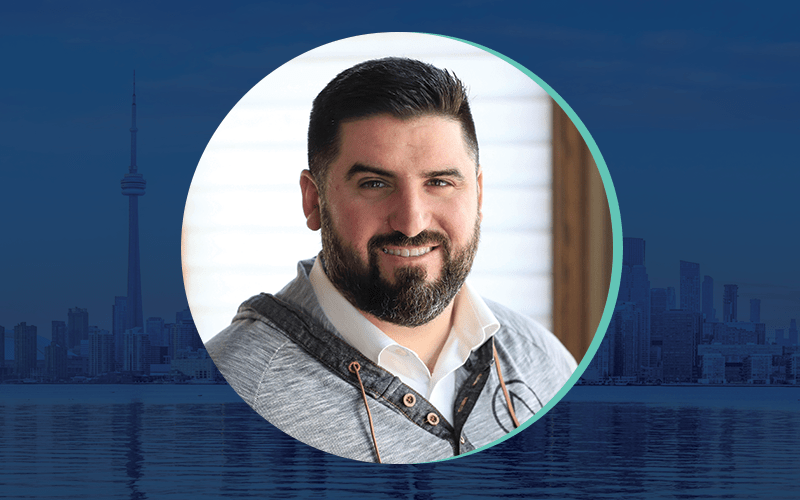
Doug Mochrie
Episode
Doug Mochrie is the Founder and CEO of AIRO.LIFE, an innovative technology company disrupting the norm, and on a mission to...
Key takeaways
- Take nine months to validate your business idea through research and customer interviews before diving in, even though it may feel like wasted time.
- Capital raising is one of the greatest challenges for Canadian startups, especially pre-revenue companies, so finding the right people comfortable with equity or learning skills yourself is essential.
- Work hard but avoid running over people in your drive to succeed, as threatening others' positions creates enemies rather than building strong teams.
- Your physical health and proper nutrition directly impact your ability to think clearly, perform under pressure, and execute in high-stakes situations.
- Build products designed to last a lifetime rather than for planned obsolescence, focusing on environmental sustainability and creating value that helps both people and the planet.
Transcript
Full transcript page · Interactive episode
============================================================
TRANSCRIPTION WITH SPEAKERS
============================================================

[00:00] SPEAKER_02: It's Toronto's podcast on the Canada's podcast network.
[00:19] SPEAKER_01: Hi everyone, I'm Phil Bliss, a business vision reader, and welcome to Toronto's podcast.
[00:24] SPEAKER_01: Part of the Canada's podcast network, your source of the great insights from entrepreneurs
[00:29] SPEAKER_01: across Canada.
[00:31] SPEAKER_02: Today we're speaking with Doug Mockery, he's the founder and CEO of Arrow Life, an innovative
[00:36] SPEAKER_02: technology company that aims to bring the world free access to information with the means
[00:40] SPEAKER_02: to education.
[00:42] SPEAKER_02: From action sports athlete to attending school for finance and marketing to later being accepted
[00:47] SPEAKER_02: as a Mars officer and armored officer to injury and onto starting a digital media company,
[00:52] SPEAKER_02: whole shot one media.
[00:54] SPEAKER_02: The evolution and journey to Arrow Life has been an exciting roller coaster that has set
[00:58] SPEAKER_02: up Doug's life for a purpose to help people and the planet.
[01:02] SPEAKER_02: Arrow Life aims to bring the world free access to information with the means to education.
[01:06] SPEAKER_02: We do this with Arrow Life's B-Free phone where end users no longer have to pay for smartphones
[01:11] SPEAKER_02: and data plans.
[01:13] SPEAKER_02: Doug, welcome to Canada's podcast.
[01:14] SPEAKER_02: We're so excited to find our show.
[01:17] SPEAKER_02: Why don't we start a little bit with tell me about yourself and what you do.
[01:21] SPEAKER_00: Well, first lovely thank you for having me and it's great to be on Canada's podcast.
[01:27] SPEAKER_00: Yeah, this initiative took legs in March 2018 and that's when we had cooperated and
[01:35] SPEAKER_00: that started charging hard towards changing the telecom side of things in Canada as games
[01:43] SPEAKER_00: pay some of the highest rates in the world.
[01:45] SPEAKER_00: So it's actually detrimental effecting claims disposal income.
[01:50] SPEAKER_00: 50% of Canadians only have $200 or less of disposable income at the end of every month
[01:56] SPEAKER_00: and 40% of Canadians are teetering upon bankruptcy.
[02:01] SPEAKER_00: So that's just Canada.
[02:03] SPEAKER_00: In the US, 7 million plus Americans are 90 days or more behind on auto payments.
[02:08] SPEAKER_00: That's the highest it's ever been and the US market right now consumer debt is $14 trillion.
[02:15] SPEAKER_00: That's the highest it's ever been in 2008 before the market collapsed.
[02:19] SPEAKER_00: It was $12.5 trillion.
[02:22] SPEAKER_00: So this is a means to save people money without being too intrusive.
[02:26] SPEAKER_00: So we created a good formula between content which people like and add that can actually
[02:33] SPEAKER_00: help you save more money, they travel or groceries and that's really what we're bringing
[02:39] SPEAKER_00: to this smartphone.
[02:40] SPEAKER_00: The air that I'd like to be free phone and no one launching next year in the specific
[02:45] SPEAKER_00: market in the USA alongside a strong banking partner.
[02:50] SPEAKER_00: So yeah, basically we provide you with the end user with a free phone, free data plan,
[02:54] SPEAKER_00: bank sees the benefit because they can get a customer out of it and the audiences have
[03:00] SPEAKER_00: the highest content of your ability in the world with our device.
[03:04] SPEAKER_00: So it's really lucrative for both partners and that's basically the high level aspect of
[03:12] SPEAKER_00: it.
[03:12] SPEAKER_00: Yeah.
[03:12] SPEAKER_02: That's awesome.
[03:13] SPEAKER_02: I was looking into the phone yesterday and I actually signed up for the beta test.
[03:18] SPEAKER_02: So it's very exciting.
[03:20] Speaker UNKNOWN: Oh, right.
[03:20] SPEAKER_02: Yeah, it's just totally mine shift from the traditional phone plans and everything.
[03:28] SPEAKER_02: So it's very exciting.
[03:29] SPEAKER_02: Is that the one product that you're bringing to market or other aspects of your life?
[03:35] SPEAKER_02: Such a work.
[03:35] SPEAKER_00: Yeah, this is the main focus.
[03:37] SPEAKER_00: But from past few years, we've been working with McMaster University to create a solar
[03:44] SPEAKER_00: single, flexible solar shingles.
[03:46] SPEAKER_00: So when people, besides investors, there's a question that comes up sometimes like,
[03:51] SPEAKER_00: you have a free phone and then you have solar shingles like out of these two do not relate
[03:57] SPEAKER_00: and how do they relate if they do?
[04:00] SPEAKER_00: It's a matter of when we go and emerging markets with our word, the phone, we have a two
[04:04] SPEAKER_00: year program where we swap out the phones, we replace the battery, we refer to them.
[04:09] SPEAKER_00: And we go in the communities where there a can be no power.
[04:14] SPEAKER_00: So we set up the plan is to set up the solar shingles on existing structures or build
[04:20] SPEAKER_00: our own structures and build the Wi-Fi tower or have our own telecom in place or the phone
[04:26] SPEAKER_00: within that local vicinity in our emerging market.
[04:29] SPEAKER_00: So that's more of a long-term plan.
[04:32] SPEAKER_00: And there's a lot of R&D that has to go into those pliable solar shingles in conjunction
[04:38] SPEAKER_00: with McMaster and Hamilton on Tariah.
[04:42] SPEAKER_02: That's exciting.
[04:43] SPEAKER_02: And you're working at a...
[04:44] SPEAKER_02: Near Toronto.
[04:45] SPEAKER_00: Right now we have our HQ in Guelph.
[04:49] SPEAKER_00: But as of next week, we'll be working heavily at IBM's innovation space actually in Hamilton.
[04:55] SPEAKER_00: So Hamilton's a lot more affordable for students in terms.
[05:00] SPEAKER_00: And it's actually not too far away from Toronto and transit's right next to the IBM
[05:05] SPEAKER_00: innovation space right on one King Street west downtown Hamilton.
[05:11] SPEAKER_02: Yeah, that's really exciting.
[05:12] SPEAKER_02: I'm actually...
[05:13] SPEAKER_02: We're in Burlington, but we're thinking of moving to Hamilton as well for some of the same reasons.
[05:17] SPEAKER_02: So it's a really good emerging city for startups and just for business in general.
[05:24] SPEAKER_00: Yeah, it's changing a lot.
[05:25] SPEAKER_00: And there's good food.
[05:27] SPEAKER_00: Bread bar.
[05:28] SPEAKER_00: I don't know if you've ever said a bread bar.
[05:29] SPEAKER_00: It's cuts a little bit pizza.
[05:30] SPEAKER_00: It's right next to the IBM innovation space.
[05:34] SPEAKER_00: So yeah, I think they're slowly changing and doing a lot of work for the city.
[05:37] SPEAKER_00: And it's attracted a lot of new people and talents.
[05:40] SPEAKER_02: Yeah.
[05:40] SPEAKER_00: So it's a good space now.
[05:42] SPEAKER_02: My second question is, do you think entrepreneurs are wired differently?
[05:46] SPEAKER_00: Yeah.
[05:47] SPEAKER_00: Yeah, yes.
[05:48] SPEAKER_00: Risk tolerances and sometimes just seeing something and or noticing something and wanting to make it better.
[05:56] SPEAKER_00: Some people are happy and they're just happy to say, oh, you know, that could be that could be better.
[06:02] SPEAKER_00: But I find with an entrepreneur they say, yeah, that can be better and I'm going to make it better.
[06:08] SPEAKER_00: And they do some investigation and they usually charge hard at making it happen.
[06:14] SPEAKER_00: So yeah, to spirit, it's a mentality.
[06:18] SPEAKER_00: Everyone can be an entrepreneur, but it's definitely probably one of the hardest things you can never do.
[06:26] SPEAKER_00: I've spoken a few other entrepreneurs and business owners and some of them laugh like I should have been
[06:31] SPEAKER_00: professional athlete instead of an entrepreneur because the amount of hours you put in, but over time
[06:38] SPEAKER_00: it's quite substantial as you apply that to any specific professional sport.
[06:44] SPEAKER_00: I'm pretty sure she'd be top of your game or one of the people top of your game.
[06:49] SPEAKER_02: Yeah, that's absolutely right.
[06:51] SPEAKER_02: The amount of times that we're practicing and working on it and failing.
[06:55] SPEAKER_02: We'd be pro.
[06:58] SPEAKER_00: Yeah, and that's another thing too.
[07:00] SPEAKER_00: I'm glad you brought up failing.
[07:02] SPEAKER_00: A lot of people think you have to be perfect and you don't make mistakes.
[07:08] SPEAKER_00: Everyone makes mistakes.
[07:10] SPEAKER_00: Even the best CEOs or entrepreneurs in the world.
[07:13] SPEAKER_00: And sometimes you're going to look like a group ball.
[07:15] SPEAKER_00: You may look like an idiot.
[07:16] SPEAKER_00: And that's just the part of it.
[07:18] SPEAKER_00: Yeah, if you're going to have thick skin to be able to say you know what?
[07:22] SPEAKER_00: I learned something from this.
[07:23] SPEAKER_00: I have to move on and push on and make things better.
[07:27] SPEAKER_00: Yeah, if you don't have that mentality and strength there,
[07:30] SPEAKER_00: then maybe entrepreneurship isn't the best thing for people thinking about it.
[07:35] SPEAKER_00: So yeah, failure is part of it.
[07:37] SPEAKER_02: So what made you decide to become a entrepreneur?
[07:40] SPEAKER_02: Like how did you make that leap?
[07:41] SPEAKER_02: Because you used to be an athlete and going in a different direction.
[07:46] SPEAKER_00: Yeah, so I raised snowcrawls as much like motocross throughout North America.
[07:52] SPEAKER_00: So it involves jumps.
[07:54] SPEAKER_00: It involves heavy machinery.
[07:56] SPEAKER_00: It's basically snow wheels and I don't know if you've ever seen the X games
[07:59] SPEAKER_00: or any kind of snowcross racing.
[08:02] SPEAKER_00: But the machines are about four pounds.
[08:04] SPEAKER_00: There's about four main brands.
[08:06] SPEAKER_00: And so we were sponsored by Skrue Yamaha.
[08:10] SPEAKER_00: I had a special suspension from Japan.
[08:13] SPEAKER_00: Yeah, there's a lot of pressure to win.
[08:16] SPEAKER_00: You have to make a good team.
[08:17] SPEAKER_00: It's a lot like business.
[08:18] SPEAKER_00: You're only strong as your team.
[08:19] SPEAKER_00: So we had a really good mechanic.
[08:21] SPEAKER_00: A support team.
[08:23] SPEAKER_00: The right sponsors.
[08:25] SPEAKER_00: And then come race day.
[08:26] SPEAKER_00: It was on you to make sure you've practiced enough.
[08:30] SPEAKER_00: And worked hard enough to so you can execute.
[08:33] SPEAKER_00: And win.
[08:35] SPEAKER_00: So I did that for about six years.
[08:37] SPEAKER_00: And you can put it to business.
[08:39] SPEAKER_00: You're going to make some mistakes.
[08:42] SPEAKER_00: But it's important to get back up and to finish the race.
[08:47] SPEAKER_00: One of my favorite races I was actually.
[08:50] SPEAKER_00: In second place, I cased a double jump.
[08:52] SPEAKER_00: It was about 20 feet.
[08:54] SPEAKER_00: Separation.
[08:54] SPEAKER_00: It wasn't a large double jump.
[08:56] SPEAKER_00: But I fell off and as I'm in the air,
[08:59] SPEAKER_00: I could see the third place.
[09:01] SPEAKER_00: Person behind me.
[09:02] SPEAKER_00: And they landed right on top of me.
[09:04] SPEAKER_00: So it's about a 400 pound small build plus the weight of the person.
[09:09] SPEAKER_00: And yeah, it hurt.
[09:11] SPEAKER_00: But it's just a mentality.
[09:12] SPEAKER_00: Okay, I got to get up and finish the race.
[09:14] SPEAKER_00: And I think I caught the packaging eight.
[09:18] SPEAKER_00: So it wasn't podium.
[09:20] SPEAKER_00: But it was my favorite race because I had a standing ovation
[09:23] SPEAKER_00: from the whole crowd that day.
[09:27] SPEAKER_00: And that says a lot about people.
[09:29] SPEAKER_00: And what they want to see from people.
[09:31] SPEAKER_00: It's not so much about winning.
[09:33] SPEAKER_00: It's about getting back up and finishing what you set out to do.
[09:38] SPEAKER_00: And it's about spirit.
[09:40] SPEAKER_00: And yeah, that's just a story from racing.
[09:42] SPEAKER_00: But yeah, I got hurt a number of times.
[09:46] SPEAKER_00: Obviously, through that whole process,
[09:47] SPEAKER_00: we did very well.
[09:48] SPEAKER_00: One of the championships in our respective division.
[09:51] SPEAKER_00: But you just have to step back sometimes and say,
[09:53] SPEAKER_00: okay, how much is my spine worth?
[09:57] SPEAKER_00: I want to be healthy.
[09:59] SPEAKER_00: Typically going forward, so I should go to school.
[10:02] SPEAKER_00: And I was really fortunate enough to be surrounded by a lot of business owners
[10:07] SPEAKER_00: and grew up in a family of entrepreneurs.
[10:10] SPEAKER_00: So I saw their sacrifice to
[10:12] SPEAKER_00: and what it took for them to get to where they were.
[10:16] SPEAKER_00: So I had strong examples around me.
[10:19] SPEAKER_00: So that was a really good help.
[10:21] SPEAKER_02: That's really important.
[10:22] SPEAKER_02: So that kind of pushed you in the direction.
[10:26] SPEAKER_02: Just I see that you're an armored officer
[10:28] SPEAKER_02: to injury as well.
[10:30] SPEAKER_00: But is that so I can't agree with you say that
[10:34] SPEAKER_00: I ever served that wouldn't be right.
[10:37] SPEAKER_00: Any person that has served except that's Mars officer.
[10:40] SPEAKER_00: Mars officer is basically you worked the way up on that for a naval command or some marine.
[10:46] SPEAKER_00: It was great.
[10:47] SPEAKER_00: I was in Eskawal.
[10:48] SPEAKER_00: Did the test run on the boat?
[10:50] SPEAKER_00: Did some testing.
[10:52] SPEAKER_00: They offered me a position.
[10:54] SPEAKER_00: I declined.
[10:55] SPEAKER_00: I wanted something a little more ground oriented.
[10:59] SPEAKER_00: So I applied a lot of basically got accepted immediately into armored.
[11:03] SPEAKER_00: But I had to wait for training and before walking out of a room with a few of the high brass
[11:11] SPEAKER_00: that accepted me, they said,
[11:14] SPEAKER_00: don't be careful.
[11:15] SPEAKER_00: We know what kind of sports you're hit to.
[11:17] SPEAKER_00: We wanted you to be healthy for the training.
[11:19] SPEAKER_00: So it was completely leisurely.
[11:22] SPEAKER_00: I was up north with a few friends and woke up early to go for a ride.
[11:29] SPEAKER_00: They had broke my knee and half and then I punched my toes into my foot.
[11:34] SPEAKER_00: It's what's called the fomks or Liz Frank's foot.
[11:37] SPEAKER_00: They had to bring my toes back out and they had to rebuild
[11:40] SPEAKER_00: reshape while I'm on the foot.
[11:43] SPEAKER_00: But we're lucky and I'm not here.
[11:46] SPEAKER_00: I think we have some of the best foot surgeons in the world.
[11:49] SPEAKER_00: So yeah, I can work for the flops and in a spare time and the beach no problem.
[11:53] SPEAKER_00: And it feels great.
[11:54] SPEAKER_00: So yeah, not going to look lucky.
[11:57] SPEAKER_00: Yeah, yeah, painful.
[11:58] SPEAKER_00: That's for sure.
[11:59] SPEAKER_00: But healthy today.
[12:01] SPEAKER_00: So can't go wrong.
[12:02] SPEAKER_00: Go to the fanciful.
[12:03] SPEAKER_00: Yeah.
[12:03] SPEAKER_02: Sounds like a huge roller coaster to go to.
[12:06] SPEAKER_02: It's been a journey for you to get to arrow life.
[12:09] SPEAKER_00: Yeah.
[12:10] SPEAKER_00: That's definitely between racing to I have a media company for 10 years.
[12:16] SPEAKER_00: Digital marketing.
[12:17] SPEAKER_00: And amongst that, you always try different projects.
[12:20] SPEAKER_00: I've been a part of a geoil, which is the organic oil company
[12:25] SPEAKER_00: from leftover cadavers of cows and pigs.
[12:31] SPEAKER_00: So where they do with these bodies after slaughter,
[12:34] SPEAKER_00: they usually discard them.
[12:37] SPEAKER_00: So basically, oil is just compressed carbon from past creatures of the earth.
[12:43] SPEAKER_00: So try that.
[12:45] SPEAKER_00: I tried headphones.
[12:47] SPEAKER_00: I've tried every industry.
[12:50] SPEAKER_00: I've probably dabbled in just to see the effect of this.
[12:53] SPEAKER_00: And now we could make a good product and make some money from it.
[12:58] SPEAKER_00: So it really led to today,
[13:01] SPEAKER_00: is offering a good product to the world audience
[13:04] SPEAKER_00: and having people save money.
[13:07] SPEAKER_02: That's very exciting.
[13:09] SPEAKER_02: So what do you think?
[13:10] SPEAKER_02: I'm going to ask a couple of questions about where you're working.
[13:13] SPEAKER_02: So what do you think are the benefits of doing business and growth?
[13:17] SPEAKER_00: I'm close to the hubs.
[13:21] SPEAKER_00: So you have Waterloo, you have Kitchener, you have Toronto, you have Hamilton.
[13:26] SPEAKER_00: You have Bayer even.
[13:28] SPEAKER_00: There's so many good hubs in these cities now.
[13:32] SPEAKER_00: There's Communitech, Accelerator Center,
[13:35] SPEAKER_00: and Toronto, there's Mars, there's the CDL.
[13:39] SPEAKER_00: Let's go on.
[13:41] SPEAKER_00: There's the IBM Innovation Space.
[13:44] SPEAKER_00: They're all helpful.
[13:45] SPEAKER_00: And you'll find if you get a part of these ecosystems,
[13:48] SPEAKER_00: people want to help.
[13:50] SPEAKER_00: But you got to be clear and concise about what kind of help you need.
[13:54] SPEAKER_00: And they'll offer it.
[13:55] SPEAKER_00: If you have a drive, you have a good product and service.
[13:58] SPEAKER_00: They're there for you.
[14:00] SPEAKER_00: So the ecosystem has been built here.
[14:02] SPEAKER_00: It's great and it's cost effective versus other places in the world.
[14:07] SPEAKER_00: San Francisco is just unrealistic for a startup in my point of view.
[14:14] SPEAKER_00: If you don't have serious funding,
[14:16] SPEAKER_00: you know, just one room apartment,
[14:19] SPEAKER_00: four to five thousand dollars sometimes,
[14:20] SPEAKER_00: and the core of San Fran.
[14:23] SPEAKER_00: A month.
[14:24] SPEAKER_00: A lot of people can't find housing.
[14:25] SPEAKER_00: So San Francisco Silicon Valley,
[14:28] SPEAKER_00: great place.
[14:29] SPEAKER_00: Some of the best people in the world are there.
[14:30] SPEAKER_00: But there's a lot of great talent here in Canada
[14:34] SPEAKER_00: that should never be overlooked as a basis point for a startup.
[14:38] SPEAKER_02: Yeah, absolutely.
[14:39] SPEAKER_02: That's a good hub for tri cities.
[14:41] SPEAKER_02: I went to school in Waterloo, so I know I know what well.
[14:44] SPEAKER_02: Some of our best ideas come when we least expect them.
[14:48] SPEAKER_02: How do you disconnect and recharge your getting inspired?
[14:52] SPEAKER_00: I love a long time.
[14:54] SPEAKER_00: You know, I don't mind being amongst groups.
[14:57] SPEAKER_00: I'm an entrepreneur to people.
[14:59] SPEAKER_00: And they don't believe me.
[15:01] SPEAKER_00: Laura Lerett and Jeffrey Potvin, the OPN and Toronto.
[15:07] SPEAKER_00: I told them I'm an introvert.
[15:08] SPEAKER_00: And Laura's like, you are certainly not an introvert.
[15:11] SPEAKER_00: But I really like my alone time.
[15:13] SPEAKER_00: It allows me to think.
[15:15] SPEAKER_00: It allows me to work out, you know,
[15:19] SPEAKER_00: issues going on, say,
[15:20] SPEAKER_00: with some challenge facing the company.
[15:23] SPEAKER_00: So I find when it's too busy,
[15:26] SPEAKER_00: I get lost.
[15:27] SPEAKER_00: And then I tried living in Toronto.
[15:29] SPEAKER_00: There's just so much going on.
[15:31] SPEAKER_00: I would go out way too much.
[15:33] SPEAKER_00: And I wasn't focusing on my task at a hand.
[15:36] SPEAKER_00: So I had to leave.
[15:38] SPEAKER_00: So I only tried Toronto for a brief period.
[15:41] SPEAKER_00: And I try to exercise.
[15:44] SPEAKER_00: I have absolutely disciplined by not having been approaching
[15:47] SPEAKER_00: the business of cities like that.
[15:50] SPEAKER_00: Yeah.
[15:50] SPEAKER_02: I think it's interesting when if you're an introvert,
[15:54] SPEAKER_02: you get to recharge.
[15:55] SPEAKER_02: Like if you're around busyness like that,
[15:56] SPEAKER_02: you get really drained.
[15:58] SPEAKER_02: So maybe you're a balance of both.
[16:01] SPEAKER_00: Yeah. Yeah.
[16:02] SPEAKER_02: You don't really think we can extravert to me right now.
[16:09] SPEAKER_00: My idea with good night is maybe I had some cards with maybe two or three people.
[16:16] SPEAKER_00: And you just have good conversation and a good, good food.
[16:20] SPEAKER_00: Yeah.
[16:20] SPEAKER_00: And then, you know, a night by myself,
[16:23] SPEAKER_00: I'm doing some work if I can throw in a good movie.
[16:25] SPEAKER_00: So the Irishman just got released and that was clicked.
[16:29] SPEAKER_00: And I was great to have some time to be able to watch a little bit of that.
[16:33] SPEAKER_00: So I enjoyed that a lot.
[16:35] SPEAKER_00: Yeah.
[16:35] SPEAKER_00: Did it the other day.
[16:37] SPEAKER_02: Yeah. That's a good one.
[16:37] SPEAKER_02: I just watched that yesterday.
[16:40] SPEAKER_02: Wife like.
[16:43] SPEAKER_02: What do you think is the best thing or things about being an entrepreneur?
[16:47] SPEAKER_02: Like what do you love most about it?
[16:49] SPEAKER_00: Yeah. There's pros.
[16:51] SPEAKER_00: You know, flexibility.
[16:53] SPEAKER_00: Building your teams.
[16:54] SPEAKER_00: So it's a chance to build a team with the same values.
[17:00] SPEAKER_00: Work ethic.
[17:02] SPEAKER_00: And that's great.
[17:04] SPEAKER_00: That's a great thing to have.
[17:06] SPEAKER_00: There's flexibility, but you can have some time off.
[17:10] SPEAKER_00: But if you can't take a lot of time off, so a lot of people think you're going to start
[17:14] SPEAKER_00: with successful company and you're going to have weeks off.
[17:17] SPEAKER_00: You can travel the world.
[17:18] SPEAKER_00: But the reality is that usually you work two seven days a week at some former part.
[17:24] SPEAKER_00: But you have the flexibility of, okay, I can schedule that meeting for 10 a.m.
[17:29] SPEAKER_00: And then that can allow me some free time in the morning to get the things that I need to get done for this week.
[17:35] SPEAKER_00: So it's not as regimented and it can be performance based based on your time and your calls, not someone else's.
[17:45] SPEAKER_00: So I love companies that are results oriented.
[17:48] SPEAKER_00: If you either company can a lot or their profession or a role can a lot for that type of role.
[17:53] SPEAKER_00: And that type of flexibility.
[17:55] SPEAKER_00: But yeah, it's having the control and creating something new to help people or plan it.
[18:02] SPEAKER_00: And that's really amazing and never here.
[18:05] SPEAKER_02: Yeah, you're in a unique spot as an entrepreneur because you're doing something that's really meaningful.
[18:11] SPEAKER_02: So it's that's exciting.
[18:13] SPEAKER_02: On that, what do you see as the future of your business and what are you most excited about?
[18:18] SPEAKER_00: Well, ultimately I want to carve out a company that other companies just simply can't compete with and just change the whole dynamic of a few industries.
[18:30] SPEAKER_00: So public companies are really aggressive.
[18:33] SPEAKER_00: They're quarterly that they have to mean a lot of times they'll flush jobs or do some silly maneuvers just to get the next
[18:40] SPEAKER_00: incremental dollar or 50 cents or a quarter on their quarter increase.
[18:47] SPEAKER_00: So we've got to start thinking a more about not growth domestic product but growth domestic development as far as society.
[18:56] SPEAKER_00: So we're going to promote products that last long.
[19:00] SPEAKER_00: So just last night it was I think 10 p.m.
[19:05] SPEAKER_00: I'm going to the next sell spreadsheet.
[19:07] SPEAKER_00: So this is the exciting life as an entrepreneur.
[19:10] SPEAKER_00: So I can place our accessories really low but they're good quality.
[19:16] SPEAKER_00: They're woods.
[19:18] SPEAKER_00: A lot of people don't know they have a wood around the backup battery bank.
[19:22] SPEAKER_00: It actually does decrease radiation slightly.
[19:24] SPEAKER_00: Same with your phone if you have a wooden case.
[19:28] SPEAKER_00: And there really a lot of enough none of studies have been done on 5G which is coming with telecoms and the radiation.
[19:34] SPEAKER_00: And the effects will give them body over a period of 40 years.
[19:38] SPEAKER_00: So we have to do things to minimize that.
[19:40] SPEAKER_00: But going back to what I was speaking about.
[19:42] SPEAKER_00: I want to create products that are lifetime oriented.
[19:46] SPEAKER_00: So we have to honor those products by making quality products that last.
[19:51] SPEAKER_00: And it goes to a heroeathose which is changing the dynamic of making things that again that they're built to last.
[20:00] SPEAKER_00: So we don't strain our environment by creating products that last only a short time.
[20:05] SPEAKER_00: So we'll have them buy them again.
[20:07] SPEAKER_00: You'll see some large companies.
[20:10] SPEAKER_00: They'll make a washing machine or a computer or make you buy all these extra gadgets around that computer.
[20:17] SPEAKER_00: Just to have extra incremental sales to get that quarterly higher.
[20:21] SPEAKER_00: So we want to make that shift away from that type of companies.
[20:26] SPEAKER_00: They'll be profitable to our investors.
[20:29] SPEAKER_00: But build a company that protects our people more so than your average public company.
[20:35] SPEAKER_00: And then also has products that don't strain their health.
[20:38] SPEAKER_00: The EOD Day this year was July 29th.
[20:42] SPEAKER_00: That's your overshoot day.
[20:45] SPEAKER_00: That's when we've used what the world can give us.
[20:48] SPEAKER_00: And we actually need to use for a current consumption.
[20:51] SPEAKER_00: Last year was August 8th.
[20:52] SPEAKER_00: So it just goes to show how fast things are ramping up.
[20:56] SPEAKER_00: Are people getting more involved in the environment?
[20:58] SPEAKER_00: Yes.
[20:59] SPEAKER_00: But if you look at the amount of people who have been elevated at a poverty
[21:02] SPEAKER_00: and are now living a higher lifestyle that are causing more drain on the armpit,
[21:06] SPEAKER_00: it's the highest it's ever been.
[21:09] SPEAKER_00: So we really got to start pulling the lifestyle that's about experiences,
[21:13] SPEAKER_00: friends, family memories, and not material consumption.
[21:17] SPEAKER_00: And that's on media play.
[21:19] SPEAKER_00: And having a number of our free phones or beef free phones in the market,
[21:23] SPEAKER_00: we have the power of showing content like that,
[21:26] SPEAKER_00: curative content and pushing them above the health or society.
[21:30] SPEAKER_00: A society that's 50% monetary driven and a 50%
[21:35] SPEAKER_00: environmental economically driven.
[21:37] SPEAKER_00: So we have to have public support and surplus is an environment
[21:41] SPEAKER_00: every year, not deficits.
[21:42] SPEAKER_00: So that EOD should be being reduced every year.
[21:46] SPEAKER_00: It shouldn't be increasing as far as how fast we're using with the
[21:50] SPEAKER_00: word can give us.
[21:52] SPEAKER_00: Yeah, that's just a summarization.
[21:54] SPEAKER_00: I'm sorry.
[21:56] SPEAKER_00: Like the one, but that's that.
[21:58] SPEAKER_02: A very good one.
[22:00] SPEAKER_02: Very exciting that you'll be a disruptor in the industry.
[22:03] SPEAKER_02: That's, you must be very excited about it.
[22:07] SPEAKER_02: I'm excited to get one of your phones.
[22:09] SPEAKER_00: Oh, thank you.
[22:10] SPEAKER_02: The shift gears a little bit here, but what are the top three things on your bucket list
[22:14] SPEAKER_02: right now if you have a bucket list?
[22:16] SPEAKER_00: You know, I want to travel more.
[22:20] SPEAKER_00: Do I have a specific place?
[22:22] SPEAKER_00: No, no, I kind of like just going somewhere and
[22:26] SPEAKER_00: seeing what will happen, but I'd want to run a motorcycle somewhere and just go off.
[22:32] SPEAKER_00: So maybe you're up.
[22:35] SPEAKER_00: That'd be awesome.
[22:36] SPEAKER_00: I'm Africa.
[22:37] SPEAKER_00: I mean, Safari and just running in Jeep and
[22:42] SPEAKER_00: going off and enjoying it.
[22:44] SPEAKER_00: Any portions of Africa really.
[22:46] SPEAKER_00: I like excitement.
[22:49] SPEAKER_00: Yeah, so travel.
[22:50] SPEAKER_00: Work travel number one.
[22:51] SPEAKER_00: Number two.
[22:52] SPEAKER_00: I really like business.
[22:56] SPEAKER_00: I like working.
[22:58] SPEAKER_00: So I don't know if that's quite right, but yeah, I really just don't mind working.
[23:05] SPEAKER_00: I haven't put a bucket list together.
[23:07] SPEAKER_00: So I don't want to draw this out and think of it for five minutes.
[23:12] SPEAKER_00: But yeah, we'll just leave it at travel.
[23:17] SPEAKER_00: Yeah, I want to travel more, but that goes against all the work we have to do right now.
[23:23] SPEAKER_00: I'm going to try to incorporate travel into
[23:27] SPEAKER_00: into what we're working on.
[23:28] SPEAKER_00: So I have to go to Dubai and that's in January.
[23:32] SPEAKER_00: And I was just in a little bit in two weeks ago.
[23:35] SPEAKER_00: And I had a conversation with my right hand, which is Jeff Thompson,
[23:38] SPEAKER_00: he's our CDL.
[23:40] SPEAKER_00: And I was flying in the day before the conference.
[23:43] SPEAKER_00: So it was going to be there for four days.
[23:44] SPEAKER_00: I was flying out the very next morning and just like taking it today.
[23:48] SPEAKER_00: And he's like, I don't care.
[23:50] SPEAKER_00: He's like, just take it extra day.
[23:52] SPEAKER_00: I'm like, you know, it's not fair.
[23:53] SPEAKER_00: In my mentality, it's not fair to our investors.
[23:56] SPEAKER_00: They can actually be when I can be working.
[23:59] SPEAKER_00: But he's like, you know what?
[24:00] SPEAKER_00: You have your own funds.
[24:01] SPEAKER_00: You have your own personal income.
[24:03] SPEAKER_00: Just do it outside of the company and take it next day.
[24:06] SPEAKER_00: So I thought about it, but I had already booked the ticket.
[24:09] SPEAKER_00: And I was one of those situations is not affordable.
[24:11] SPEAKER_00: So I walked around for two hours.
[24:14] SPEAKER_00: Liz bin the day I landed, which was great.
[24:18] SPEAKER_00: Cobblestone's capels food was really good.
[24:20] SPEAKER_00: A lot of people say it's better than Barcelona.
[24:23] SPEAKER_00: That's less touristy and the food still gets on the water.
[24:26] SPEAKER_00: But yeah, I'm going to try to incorporate more travel.
[24:29] SPEAKER_02: I'm going to Liz bin in March.
[24:30] SPEAKER_02: So you're going to be excited again.
[24:34] SPEAKER_02: Yeah, I know what I've never been to mainland Portugal.
[24:38] SPEAKER_02: So pretty excited.
[24:39] SPEAKER_00: Oh, even in the Azores though, or the Azores.
[24:41] SPEAKER_02: Yes, I have, yeah, a couple times.
[24:44] SPEAKER_00: Nice. That's where my dog's from.
[24:46] SPEAKER_00: Yeah, I want to go check it out.
[24:49] SPEAKER_00: I have an Azores, the Azores catalog.
[24:52] SPEAKER_02: It's the most beautiful country and terrain.
[24:56] SPEAKER_02: Wow.
[24:56] SPEAKER_02: That's volcanic.
[24:57] SPEAKER_02: It's just it's stunning, really.
[24:59] SPEAKER_00: Wow, okay.
[25:00] SPEAKER_02: And the culture is Portuguese.
[25:02] SPEAKER_02: So it's very cultural on top of that.
[25:04] SPEAKER_02: It should be on your bucket list.
[25:07] SPEAKER_01: All right.
[25:08] SPEAKER_01: All right.
[25:08] SPEAKER_01: Yeah.
[25:10] SPEAKER_02: So what has been the greatest challenge you've ever faced in your business so far?
[25:16] SPEAKER_00: Yeah, the Canadian Eagle System is great.
[25:18] SPEAKER_00: Just for disruptive ideas and disruptive companies starting them.
[25:24] SPEAKER_00: There's only a few places in the world that feel really comfortable
[25:28] SPEAKER_00: in the tech space that are this transformative.
[25:32] SPEAKER_00: It's San Francisco and Dubai.
[25:36] SPEAKER_00: So they have a lot more capital to put towards disruptive companies.
[25:41] SPEAKER_00: So the capital raising in Canada, it's not going to be easy no matter what.
[25:45] SPEAKER_00: Especially if you're pre-revenue.
[25:48] SPEAKER_00: So that was probably one of the foremost challenges.
[25:52] SPEAKER_00: And then if you don't have enough capital to start,
[25:58] SPEAKER_00: you're going to have to find interns, you're going to have to find people that are comfortable
[26:01] SPEAKER_00: with shares.
[26:03] SPEAKER_00: And if you can't find those people, you have to be that person.
[26:06] SPEAKER_00: So you have to throw yourself into it and learn it.
[26:10] SPEAKER_00: So that's the challenge.
[26:12] SPEAKER_00: Finding the right type of people.
[26:14] SPEAKER_00: And then also the capital.
[26:17] SPEAKER_00: And then that makes sure those milestones are being met.
[26:20] SPEAKER_00: Those sprints, deadlines are being met.
[26:24] SPEAKER_00: So I'm very fortunate.
[26:26] SPEAKER_00: I have a lifelong friend, Vic Batia, who helps to foro with
[26:29] SPEAKER_00: two periods of payments.
[26:30] SPEAKER_00: He's helped children's wish foundation.
[26:33] SPEAKER_00: He's spared a bit of time for our project.
[26:37] SPEAKER_00: The CTO, which is great.
[26:40] SPEAKER_00: And he's helped in the aspects of development and guiding that aspect of things along.
[26:45] SPEAKER_00: My main concentration is marketing and funding.
[26:50] SPEAKER_00: So that's how the roles have someone been defined so far.
[26:55] SPEAKER_02: Has the entrepreneur be often tried to do everything?
[26:58] SPEAKER_02: Right? Because really, how do you scale if you don't at the beginning?
[27:01] SPEAKER_00: Yeah, and that's so challenging.
[27:04] SPEAKER_00: Because you want to, you know, you're really good at something.
[27:07] SPEAKER_00: But you know, you should be focusing on some other things.
[27:09] SPEAKER_00: So you bring someone else into the role.
[27:11] SPEAKER_00: And it's just really hard to see other people make mistakes sometimes.
[27:16] SPEAKER_00: And all not as do has a high performing job.
[27:20] SPEAKER_00: But you can't get angry.
[27:22] SPEAKER_00: You have to guide them.
[27:24] SPEAKER_00: And if they're not being guided enough or they're not
[27:28] SPEAKER_00: executing how it should be done based on past performances and successes,
[27:33] SPEAKER_00: that could be hard.
[27:35] SPEAKER_00: But you have to let go.
[27:36] SPEAKER_00: And that's, you hear it with Jim Estel of Dambi and Shipper B.
[27:41] SPEAKER_00: You hear it with a few other guys as well.
[27:43] SPEAKER_00: Marcelo Cortez with Fair,
[27:46] SPEAKER_00: that'll warloo just helped them out on Saturday.
[27:51] SPEAKER_00: You want to go snowmobile.
[27:52] SPEAKER_00: So I'm going to make time to go snowmobile.
[27:54] SPEAKER_00: It's this March.
[27:55] SPEAKER_00: So that's maybe some time off with Marcel there at Fair.
[27:59] SPEAKER_00: Yeah, so I'm looking forward to that.
[28:00] SPEAKER_00: Yeah, that would be good.
[28:02] SPEAKER_02: So what do you know now that you wish you knew when you were just starting up your business?
[28:06] SPEAKER_02: What would you tell your 20 year old, like yourself when you were just starting?
[28:11] SPEAKER_00: So when you're young, you have all this energy and you want to go fast.
[28:16] SPEAKER_00: You just want to dive right into it and get things going.
[28:21] SPEAKER_00: But a lot of the most successful people, David Ossop with Seridian,
[28:27] SPEAKER_00: the great platform for payment payroll.
[28:32] SPEAKER_00: Heal you can tell you it's a nine month process for validation and research
[28:38] SPEAKER_00: of your potential company that you're thinking of.
[28:40] SPEAKER_00: So as you're doing your normal job, you have a company or you're working for someone else.
[28:47] SPEAKER_00: You have this great idea and some people will even told you it's a great idea.
[28:50] SPEAKER_00: Outside of your family and friends, but you just have to go up and do that nine month validation.
[28:55] SPEAKER_00: Find out who your customers are.
[28:57] SPEAKER_00: My customers are banks and ad agencies, also the end user.
[29:01] SPEAKER_00: So you have to ask a lot of questions, surveys, video interviews.
[29:06] SPEAKER_00: You know, think it's a waste of time, that whole nine months.
[29:09] SPEAKER_00: But what you're doing is you're building reports and relationship with those ad agencies,
[29:14] SPEAKER_00: with those banks.
[29:16] SPEAKER_00: And they have interest in you.
[29:18] SPEAKER_00: They're like, okay, cool.
[29:19] SPEAKER_00: What's this person really working on?
[29:20] SPEAKER_00: And they don't feel threatened by you either because you're someone that you're possibly
[29:25] SPEAKER_00: doing it for the side school project or and you can say, hey, I'll share the results with you on what
[29:32] SPEAKER_00: the end user, the smartphone user, is doing in the surveys.
[29:37] SPEAKER_00: So there's a benefit to them too.
[29:38] SPEAKER_00: So that nine month process of research and validation is actually really important.
[29:45] SPEAKER_00: And it will help you in a long term.
[29:48] SPEAKER_00: And for me to say that now is unimaginable for my former self.
[29:54] SPEAKER_00: Because my former self would just dive right in and he'd look at someone doing that.
[29:59] SPEAKER_00: Be like, that person is wasting their time.
[30:01] SPEAKER_00: And they're going to go out of business because they have too much cash for him every month.
[30:04] SPEAKER_00: But that's not the case if you keep your job and you have an income coming in so you can do it
[30:09] SPEAKER_00: safely. And then when you're ready, when it's all lined up and you may have some traction,
[30:15] SPEAKER_00: you execute and go.
[30:17] SPEAKER_02: Yeah, that's really great advice.
[30:19] SPEAKER_02: Thank you.
[30:19] SPEAKER_02: On that, what do you think the best advice that you've ever received was like from somebody else?
[30:25] SPEAKER_00: I was really aggressive in my youth, in my teens and in the early 20s.
[30:32] SPEAKER_00: I was told not to run over people.
[30:35] SPEAKER_00: So basically, I've seen dynamics sometimes, or I would treat work so competitively that I would
[30:45] SPEAKER_00: do double the room work to someone else and then put their job in the threatening position.
[30:53] SPEAKER_00: And then you have them jumping on your laptops and email.
[30:57] SPEAKER_00: There aren't nice other people to put your job at threaten.
[31:02] SPEAKER_00: That's their tactics.
[31:03] SPEAKER_00: Try to get rid of you.
[31:04] SPEAKER_00: So, I worked some other, I worked for midsize corporations that I just did with some tactics like that.
[31:12] SPEAKER_00: So, work hard, very hard, but take to team with you somehow.
[31:18] SPEAKER_00: It's going to be a strong leader and show how to work efficiently and hard,
[31:22] SPEAKER_00: but just don't threaten a large group of people with your presence.
[31:26] SPEAKER_00: And that's another reason why I think I have to be a dodge-for-door.
[31:33] SPEAKER_02: Okay, so we're going to move into some rapid fire questions.
[31:39] SPEAKER_02: When I ask these questions, just don't even hesitate.
[31:42] SPEAKER_02: Just say the first thing that comes to mind.
[31:44] SPEAKER_02: And we want to know what's in your brain.
[31:48] SPEAKER_00: Oh my god.
[31:49] SPEAKER_00: I know.
[31:49] SPEAKER_00: There we go.
[31:50] SPEAKER_02: Put you on the spot now.
[31:53] SPEAKER_02: So, number one, if you weren't doing what you're doing now for work, what would you be doing instead?
[31:59] SPEAKER_00: I would love to raise cars.
[32:01] SPEAKER_02: Professionally, raise cars, that's.
[32:02] SPEAKER_00: Yes.
[32:03] SPEAKER_02: Quote.
[32:04] SPEAKER_02: And what book are you currently reading?
[32:08] SPEAKER_00: Oh, High Read snippets of articles daily.
[32:11] SPEAKER_00: LinkedIn's actually been an intremendous source of world economic form too.
[32:15] SPEAKER_00: There are articles with great, with bona fide stats,
[32:19] SPEAKER_00: backing up arguments.
[32:22] SPEAKER_00: So, I can't say there's a particular book.
[32:24] SPEAKER_00: I'm reading now the last book.
[32:27] SPEAKER_00: I read Arnold E. All of Arlene's book.
[32:29] SPEAKER_00: She has her new book, Revelation.
[32:31] SPEAKER_00: Because I did Dragon's Den.
[32:33] SPEAKER_00: So, I wanted to know as much as I could on all of the dragons.
[32:37] SPEAKER_00: That's the partially why I read those books.
[32:39] SPEAKER_02: You went on Dragon's Den.
[32:40] SPEAKER_00: I did.
[32:41] SPEAKER_00: We never got aired.
[32:42] SPEAKER_00: But I can't really talk about it.
[32:44] SPEAKER_00: But we get all right.
[32:47] SPEAKER_00: I can say that.
[32:49] SPEAKER_02: We've had Manjeet Mean has has been our Canada's podcast.
[32:55] SPEAKER_00: She's great.
[32:57] SPEAKER_00: Yeah, I can say that.
[32:59] SPEAKER_00: Yeah, we had a phone call or two.
[33:02] SPEAKER_00: So, yeah, Manjeet, her family, her brother,
[33:05] SPEAKER_00: her vendor and her amazing what they've done.
[33:09] SPEAKER_00: Calgary is another good ecosystem that gets overlooked in Canada.
[33:13] SPEAKER_00: Right now, it's the time to get to Calgary.
[33:16] SPEAKER_00: Because real estate is so attractive.
[33:19] SPEAKER_00: And there's good talent there.
[33:21] SPEAKER_00: So, for any kind of tech company,
[33:24] SPEAKER_00: I think it's great.
[33:26] SPEAKER_00: And I just came out of Arlene's hub.
[33:28] SPEAKER_00: So, her district ventures.
[33:30] SPEAKER_00: And I had the innovation space that they were great help by opening doors with IBM.
[33:36] SPEAKER_00: So, I love Calgary.
[33:38] SPEAKER_00: I was just there the other week.
[33:39] SPEAKER_02: Okay, rapid fire.
[33:41] SPEAKER_02: Are you a morning or a night person?
[33:43] SPEAKER_00: Oh, depends.
[33:45] SPEAKER_00: I can be both.
[33:47] SPEAKER_00: So, that's the name when it comes to that.
[33:51] SPEAKER_02: Yeah, you're a morning person this morning at 4.30 AM.
[33:54] SPEAKER_00: Well, you get so much done.
[33:57] SPEAKER_02: That's the life of a successful person, right?
[33:59] SPEAKER_02: When they get up early and they have way more hours than anyone else in the day.
[34:03] Speaker UNKNOWN: True.
[34:04] SPEAKER_02: If you had to pick one word to describe yourself, what would it be and why?
[34:08] SPEAKER_00: I don't think anyone can describe themselves what it works.
[34:13] SPEAKER_00: That is probably the toughest question someone's ever asked me.
[34:20] SPEAKER_00: Maybe when I was in my team, that wouldn't say fun.
[34:23] SPEAKER_00: I'm not too much fun anymore though, but
[34:27] SPEAKER_02: We're going to stick with that one, fun.
[34:30] SPEAKER_02: Sure.
[34:31] SPEAKER_02: Sure.
[34:31] SPEAKER_02: Okay.
[34:32] SPEAKER_02: What's keeping you up at night these days?
[34:35] SPEAKER_02: If anything.
[34:36] SPEAKER_00: I'm usually so exhausted that I just fall right asleep.
[34:39] SPEAKER_00: But I'll tell you this.
[34:42] SPEAKER_00: I feel uncomfortable speaking in front of the audience.
[34:46] SPEAKER_00: So, I had to speak at district ventures in front of a bunch of VCs
[34:52] SPEAKER_00: and some angels and some IBM representatives.
[34:55] SPEAKER_00: So, this is going back.
[34:57] SPEAKER_00: Was it last one thing?
[34:58] SPEAKER_00: Not a one thing before that.
[35:00] SPEAKER_00: I could sleep the night before.
[35:02] SPEAKER_00: I was staying at a friend's house.
[35:05] SPEAKER_00: Oh yeah, to save money.
[35:06] SPEAKER_00: I'm staying in the basement.
[35:08] SPEAKER_00: My friends house.
[35:10] SPEAKER_00: They got a new dog.
[35:11] SPEAKER_00: Usually all dogs love me, but this is a rescue dog from California.
[35:15] SPEAKER_00: And for some reason I walk inside my buddy's house,
[35:17] SPEAKER_00: this dog loses it.
[35:20] SPEAKER_00: And I've never experienced this.
[35:22] SPEAKER_00: It's still an after the dog's sobbing.
[35:24] SPEAKER_00: It wouldn't growl.
[35:25] SPEAKER_00: And I'm like, whoever, I have a beard.
[35:28] SPEAKER_00: I have had a beard for the past five years.
[35:30] SPEAKER_00: I'm like, it's someone in California that had a beard mystery of this dog.
[35:33] SPEAKER_00: Because I asked him, does he have any family friends
[35:36] SPEAKER_00: that are in my size or that beard?
[35:39] SPEAKER_00: And he's like, you know what?
[35:40] SPEAKER_00: Yeah, my people are bearded because he seems to growl people with beards.
[35:43] SPEAKER_00: So, yeah, back on track.
[35:47] SPEAKER_00: Speaking of front of audiences, I just can't get it down.
[35:51] SPEAKER_00: And I look very poorly.
[35:54] SPEAKER_00: I don't speak in front of people.
[35:57] SPEAKER_00: But anyways, yeah.
[35:58] SPEAKER_02: I feel your pain.
[35:59] SPEAKER_02: I'm like, I'm the same way.
[36:01] SPEAKER_02: What's your favorite place in the world?
[36:04] SPEAKER_00: Oh, I really like New Zealand.
[36:06] SPEAKER_00: Millford Sound, South Island.
[36:08] SPEAKER_00: I was fortunate enough to do some schooling in Australia.
[36:13] SPEAKER_00: I was actually worked as a roofer right after I completed my CSE
[36:17] SPEAKER_00: Canadian Structures Quests for Stocks and Bond.
[36:19] SPEAKER_00: But I said, okay, I need cash immediately.
[36:22] SPEAKER_00: So I just moved seven days a week.
[36:24] SPEAKER_00: It's up rain days.
[36:25] SPEAKER_00: And that's hard on the body.
[36:26] SPEAKER_00: I have a lot of respect for that trade.
[36:28] SPEAKER_00: That's for sure.
[36:29] SPEAKER_00: So I worked for seven months doing that.
[36:32] SPEAKER_00: So my truck went to Australia.
[36:36] SPEAKER_00: And it's just going there.
[36:37] SPEAKER_00: But then I got to get over New Zealand
[36:39] SPEAKER_00: because I've heard so much about it.
[36:41] SPEAKER_00: More of the rings was there that time.
[36:43] SPEAKER_00: Flour there.
[36:43] SPEAKER_00: I met a girl in Canada.
[36:45] SPEAKER_00: She said, come visit me if you ever down here.
[36:48] SPEAKER_00: So I went to visit her.
[36:51] SPEAKER_00: And it's fortunate enough that she had a family that had a helicopter.
[36:56] SPEAKER_00: And we went along the coast.
[36:57] SPEAKER_00: It was like black Hawk down.
[36:59] SPEAKER_00: I was going to go on the coast of New Zealand.
[37:02] SPEAKER_00: One of their family members had a 9,000 acre farm with 30,000 sheep.
[37:07] SPEAKER_00: And we went for an ATV ride.
[37:08] SPEAKER_00: It's like, look over there.
[37:10] SPEAKER_00: And it was the huts from the movie Last Samurai.
[37:13] SPEAKER_00: So there's a lot of films that went on there.
[37:19] SPEAKER_00: And they left some of the infrastructure.
[37:21] SPEAKER_00: I was filmed there.
[37:23] SPEAKER_00: And you'll find a lot of people in towns either
[37:24] SPEAKER_00: helps set up the camps for the film crews.
[37:27] SPEAKER_00: They'd tear them down.
[37:27] SPEAKER_00: Set up a next camp before the crew got the next spot.
[37:31] SPEAKER_00: So it's really neat.
[37:34] SPEAKER_00: It's lush.
[37:35] SPEAKER_00: It's vibrant.
[37:36] SPEAKER_00: It's, you know, no from sound.
[37:38] SPEAKER_00: It has tropics.
[37:39] SPEAKER_00: The base.
[37:39] SPEAKER_00: It has a vegetated mountainside and barren mountainside.
[37:42] SPEAKER_00: It's snow at the top.
[37:44] SPEAKER_00: And these thin waterfalls is streamed from the top.
[37:47] SPEAKER_00: Into the base.
[37:49] SPEAKER_00: So visually, it's amazing.
[37:51] SPEAKER_00: And you can hike to the top.
[37:52] SPEAKER_00: So you know, dab, take a few friends there.
[37:56] SPEAKER_00: Hike your pictures.
[37:57] SPEAKER_00: If you can other take your wife.
[37:59] SPEAKER_00: Yeah, it's something special.
[38:01] SPEAKER_02: It's a very visual description you just gave.
[38:02] SPEAKER_02: That's I'm like thinking of it and imagining it.
[38:05] SPEAKER_02: And I feel like I'm there with the waterfalls coming down.
[38:09] SPEAKER_02: What are three non-negotiables that have to happen
[38:12] SPEAKER_02: in your morning routine?
[38:14] SPEAKER_00: My morning.
[38:15] SPEAKER_00: It's a bit of crazy about coffee.
[38:17] SPEAKER_00: And I have never gotten on the coffee train.
[38:20] SPEAKER_00: I just don't do it.
[38:23] SPEAKER_00: I have to change my morning routine.
[38:25] SPEAKER_00: I'll tell you that right now because I wake up.
[38:28] SPEAKER_00: I check my phone.
[38:29] SPEAKER_00: And then I check my emails.
[38:32] SPEAKER_00: So I am right in the work immediately every morning.
[38:36] SPEAKER_00: And I bypass breakfast a lot now.
[38:40] SPEAKER_00: Which I don't know if it's a good thing or not.
[38:42] SPEAKER_00: So I actually want to get back to more of a regimented routine.
[38:47] SPEAKER_00: And that's wake up physical activity.
[38:50] SPEAKER_00: Porge with some fruit.
[38:52] SPEAKER_00: And then get right into work after a shower.
[38:56] SPEAKER_00: That should be the routine.
[39:00] SPEAKER_00: But I've actually deviated away.
[39:02] SPEAKER_00: I think the way has caused maybe that nervousness that was in front of the audience.
[39:09] SPEAKER_00: I think if you're at a physical peak, your body is more relaxed and
[39:14] SPEAKER_00: and better to perform.
[39:16] SPEAKER_00: And I had a girlfriend tell me she's like, you know,
[39:18] SPEAKER_00: you're not eating right.
[39:20] SPEAKER_00: And that's going to affect your ability to think on your feet and execute tasks in front of audiences.
[39:25] SPEAKER_00: And she's like, you can't eat like that.
[39:27] SPEAKER_00: You have to feed your body more of the appropriate things that needs.
[39:31] SPEAKER_00: And I think, you know what?
[39:32] SPEAKER_00: You're probably right.
[39:33] SPEAKER_00: And I got to start getting back to more of this plenorgine.
[39:38] SPEAKER_02: Okay, so last but not least.
[39:40] SPEAKER_02: And this is a question that we ask all of our guests on Canada's podcast.
[39:45] SPEAKER_02: There's a small tropical island off the coast of Fiji in the middle of the ocean.
[39:50] SPEAKER_02: Only one phone booth and no internet.
[39:53] SPEAKER_02: We drop you off there with no technology at all.
[39:55] SPEAKER_02: And at any time you can use the phone booth on the island to call a boat to come pick you up.
[40:00] SPEAKER_02: How long would you last on the island before making that phone call?
[40:04] SPEAKER_02: And what would you do until then?
[40:06] SPEAKER_00: So am I alone?
[40:07] SPEAKER_02: Yeah.
[40:08] SPEAKER_00: Okay.
[40:09] SPEAKER_00: This food plentiful is there's coconut around or do I got to grab a branch and
[40:14] SPEAKER_00: and then break it and then sharpen them one end and get the fish and cook the fish?
[40:19] SPEAKER_02: Sounds like you're pretty handy.
[40:21] SPEAKER_02: There's the next food plentiful.
[40:24] SPEAKER_00: Wow.
[40:25] SPEAKER_00: Okay.
[40:26] SPEAKER_00: I'll probably do two or three days just because if you're by yourself, it's good.
[40:33] SPEAKER_00: It's relaxing, but you'll find that it's always nice to share the experiences of other people.
[40:40] SPEAKER_00: So I would take my time to relax and take it all in, but yeah, outside of two or three days,
[40:46] SPEAKER_00: I don't think I would be there for that long.
[40:49] SPEAKER_00: But and then a lot of people want to go back to this nomadic live-off of the Earth Society,
[40:54] SPEAKER_00: but I don't think they know how hard that is.
[40:57] SPEAKER_00: It's really hard, especially to get everything you need.
[41:02] SPEAKER_00: And it's a tremendous amount of work.
[41:06] SPEAKER_00: So we're really fortunate at how accessible everything is North America and other places of the
[41:12] SPEAKER_00: world. So yeah, I'm thinking it'd be nice to have family and friends with there to enjoy that.
[41:21] SPEAKER_00: So yeah, I'd probably only two or three days and then I'm like, yeah, it's good enough.
[41:25] SPEAKER_02: That's all the questions that I have for you, Doug.
[41:27] SPEAKER_02: Anything that you wanted to say that you haven't said yet?
[41:31] SPEAKER_00: No, I just thanks very much for your time with Canon's podcast.
[41:35] SPEAKER_00: And yeah, we really look forward to making this happen in North America and
[41:40] SPEAKER_00: worldwide and really making some change not only in telecom and smartphone industries,
[41:46] SPEAKER_00: but also bringing more prevalence to how society should be evolving to.
[41:53] SPEAKER_00: And that's the main ethos of why we're in existence and to make some good positive change.
[42:00] SPEAKER_00: For the long term and longevity of our species and other species and make sure it's healthy for
[42:06] SPEAKER_02: everyone. Thank you so much. I'm definitely going to be following along your journey as you
[42:11] SPEAKER_02: as you launch the beef free phone. I've already signed up for the beta, so I can't wait for that to
[42:17] SPEAKER_02: to come to fruition and you're doing some amazing things for people and the planet.
[42:23] SPEAKER_02: So how can our listeners get a hold of you and find you online?
[42:27] SPEAKER_00: LinkedIn is a great source. You know, it's the grab.
[42:31] SPEAKER_00: If you have talent and yeah, I want to hear from you for sure. Maybe there's a fit
[42:37] SPEAKER_00: for about to go through some explosive growth. So yeah, we need good, strong people that work hard
[42:46] SPEAKER_00: and you have the right kind of core values.
[42:49] SPEAKER_02: Okay, so thank you very much, Doug, for coming on Canon's podcast and it was such a pleasure to
[42:55] SPEAKER_00: like what lovely great show and thanks for having me.
[42:59] SPEAKER_01: Thanks everyone for taking the time today to listen to Toronto's podcast on the Canada's podcast
[43:04] SPEAKER_01: network. I hope you enjoyed the podcast today. Make sure you sign up for a news service or write
[43:11] SPEAKER_01: a review for us on iTunes. You can connect with us on Twitter, Facebook, Instagram, LinkedIn,
[43:16] SPEAKER_01: or at canvasspodcast.com where you can listen, discover and engage. You can also check out what
[43:23] SPEAKER_01: other entrepreneurs are doing across the country. I'll see you next time.