
Darren MacLean
Episode
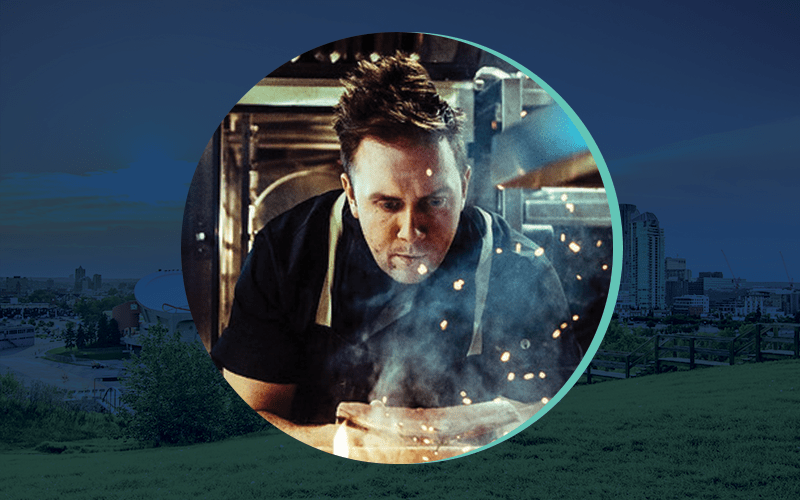
Darren MacLean is one of Canada’s top-rated Chefs. He’s Executive Chef and Owner of Shokunin in Calgary.
Key takeaways
- Success as an entrepreneur requires being indomitable and refusing to quit despite fear, financial pressure, and personal sacrifices along the way.
- What you achieve in life is directly proportional to what you're willing to give up, and trying to be mediocre at everything prevents true excellence in any area.
- Work-life balance is an illusion, and entrepreneurs should focus instead on work-life integration where passion for what you do makes long hours feel meaningful rather than burdensome.
- Collaboration with other talented people is essential for growth because you learn the most about yourself and your craft through interactions with others.
- Don't take everyone's advice when pursuing your vision as an entrepreneur—listen to others but ultimately trust your own instincts and just do it.
Transcript
Full transcript page · Interactive episode
============================================================
TRANSCRIPTION WITH SPEAKERS
============================================================

[00:00] SPEAKER_00: It's Calgary's podcast on the Canada's podcast network.
[00:06] SPEAKER_01: Hello, this is Mario Tonigüzi coming to you today with Calgary's podcast, a member of Canada's podcast network,
[00:14] SPEAKER_01: where we talk to the entrepreneurs who are making it happen in Calgary, Alberta, so you can listen, discover and engage.
[00:21] SPEAKER_01: Today, I asked if Darren McLean, one of Canada's top chefs and owner of four restaurants in Calgary. Thanks for joining us today, Darren.
[00:31] SPEAKER_01: Hey, thanks for having me, Mario.
[00:33] SPEAKER_01: Okay, well, let's start that you have an interesting project on the go right now called the Cultural Sheffix Change.
[00:41] SPEAKER_01: Could you explain a little bit about that, what it is?
[00:44] SPEAKER_02: Yeah, absolutely. The Cultural Sheffix Change is a really interesting program where we seek to inspire Canadians and the international community at the same time simultaneously by showcasing Canada's immense vast array of ingredients and culinary techniques.
[01:02] SPEAKER_02: We partnered with the local culinary school with the Altotels and square business solutions in order to actually make this program happen.
[01:11] SPEAKER_02: So it's really cool. Canadians spend the least on dining of any developed country in the world.
[01:18] SPEAKER_02: And so getting people inspired about dining and inspired about the chefs that they see on TV and giving them access to that is ambitious, but it's really, really fun.
[01:27] SPEAKER_02: Can you explain a little bit how it's going to work?
[01:30] SPEAKER_02: Yeah, it's really simple. So the Cultural Sheffix Change, every third week of every month we bring in a new chef from...
[01:37] SPEAKER_02: They have to have Michelin stars or be in the world's 50 best or be highly rated in their countries.
[01:42] SPEAKER_02: We bring them here and we do an activity. So whether it's ice fishing or snow geese hunt or deer hunt or foraging in the buffalo and the valley in the bull valley, and then we take those ingredients and we do three events.
[01:56] SPEAKER_02: So the first event is we have a talk at St. at Taste Market at St. where we actually engage with the local communities.
[02:03] SPEAKER_02: We have a panel discussion and the panel discussion always includes a local chef or a restaurant or a business person so that we're actually speaking about where we are and showcasing.
[02:14] SPEAKER_02: And then the next part is we have an event at Shokunin, my first restaurant, where it's a meat and Greek that chef makes a few can of pays and you can order whatever you like and actually experience that chef's cuisine, alacart, no reservations, just come on in.
[02:27] SPEAKER_02: And then the final kind of pinnacle of it is we do a dinner at our restaurant eight where we actually cook for eight Calgarians or eight Canadians with the star chef and then we film everything.
[02:43] SPEAKER_02: So everybody has access to it online. We create a chronicle. We save the recipes and we actually create this weekly month, or sorry, this monthly program where people have an act building to see us on social media.
[02:56] SPEAKER_02: So it's a very social media driven interacting with the local Canadian products. It's never been done before in Canada. It's the most immersive exchange program of its kind and the idea is to hit every facet, be it fast food, be it at Shokunin, be it a panel discussion and then of course a pinnacle evening.
[03:15] SPEAKER_02: But the filming of all of it means that everybody has access to what we've done and can answer any questions online.
[03:21] SPEAKER_02: Before I forget, what are the names of the four restaurants, Darren?
[03:26] SPEAKER_02: Sure, I have four restaurants in Calgary. The first is Japanese Azakaya called Shokunin. Then I have a vegetarian sushi restaurant. So plants and fish, no meat. The restaurant is called Nupo.
[03:37] SPEAKER_02: We have an eight-seat fine dining restaurant where I cook personally. The restaurant is simply called eight for the eight Canadians that fill that seats.
[03:47] SPEAKER_02: And then we have green fish, which is Canada's first sustainable sushi takeaway. So those are the four operations.
[03:53] SPEAKER_01: Okay, well, this idea that you have, I'm just wondering how it fits into Calgary. Calgary is still in many ways, right? The stereotypical Alberta beef steak area.
[04:09] SPEAKER_01: Obviously you're seeing a transition or transformation in the culinary appetite of Calgarians these days.
[04:19] SPEAKER_02: I think it's twofold. I think there's two parts of it. And I think that the first part is that while we do have that beef and steak mentality, Calgary also has one of the youngest populations of working young working people between the ages of 25 and 40.
[04:35] SPEAKER_02: They're looking for things that are different. They're not looking for the classic Alberta steak and potatoes. So we are definitely seeing a diversification. We're also seeing an environmental shift where people are actually looking at different things.
[04:47] SPEAKER_02: And if you want to acknowledge Canadian cuisine, if you don't look at the ethnic mosaic or the cultural mosaic that's here in Alberta and across Canada, be it Italian immigrants, Chinese immigrants, Vietnamese immigrants that have all come to call this nation home.
[05:02] SPEAKER_02: You're not really living the true Canadian experience in my opinion. And so I'm finding that people do want to dine in very different ways. And the reason that we choose Calgary for this program is everybody always says, why Calgary? And I say, why not?
[05:16] SPEAKER_02: Calgary is an amazing city. It's beautiful. It's situated near the best produce. The world knows our products are amazing. That's why they buy them all.
[05:24] SPEAKER_02: So Calgary needs that inspiration. Our food community, Calgary, I think has the best chefs in the country pushing the hardest because our dining clientele isn't there. It's not Toronto. It's not Montreal. It's not Vancouver.
[05:38] SPEAKER_02: So Calgary and the chefs here are pushing so, so hard. So I think it's great to give the chefs here some validity by having their work validated by some of the best chefs in the world because when Canadians are interesting, when we see the rest of the world get excited about what we do, then we get excited about it.
[05:54] SPEAKER_02: Yeah, we don't get excited on our own. We kind of say, I'll shut up, quit showing off. Yeah. So that's why as I want to put a spotlight on where I'm from and showcase not just myself, but the amazing restaurants in the city.
[06:05] SPEAKER_01: Speaking of the restaurants in this city, obviously, we've gone through some tough times in Calgary over the last five years.
[06:13] SPEAKER_01: How has that impacted the restaurant industry overall?
[06:18] SPEAKER_02: You know, it's funny. People always talk kind of doom and gloom. We're in this recession and Alberta has always been boom and bust.
[06:26] SPEAKER_02: It's in our very nature. It's like, I don't know. It's like the gold rush. You know, it's like when it's good, it's insane.
[06:33] SPEAKER_02: And all the prices of everything go up and there was a housing bubble and there's two, everything's too expensive.
[06:38] SPEAKER_02: And then the market crashes. There's still a lot of people here making and doing very well.
[06:45] SPEAKER_02: The entrepreneurial spirit is alive and well in Calgary. Yes, there's some challenges, but the challenges seem to be at the very highest level with giant corporations and small business.
[06:54] SPEAKER_02: You know, with the recession, generally people statistically spend more on alcohol during a recession.
[07:00] SPEAKER_02: So that's good news if you're a restaurant owner. But yeah, I mean, the restaurant community is taking a hit with the rising of minimum wage.
[07:09] SPEAKER_02: Also with how they're trying to attack the tip structure, which I think is ridiculous.
[07:13] SPEAKER_02: But to be a small business in Calgary, the one thing that's cool about Calgary is for the most part, Calgaryans do support Calgary businesses and Calgary entrepreneurs.
[07:22] SPEAKER_02: We do have that tight knit community. But for sure, the last five years have been impactful, but you just have to adapt to what your, you know, your customer wants.
[07:30] SPEAKER_02: You know, you might not have those big. If you're if you're a business that depends on giant expense accounts, your toast and a recession.
[07:36] SPEAKER_02: And my business has always been set up to be as accessible as possible because they are so niche.
[07:42] SPEAKER_02: You know, we have a niche Japanese restaurant. So if we're not accessible for two out of price, and we're not going to get chosen. So we really watch that carefully.
[07:48] SPEAKER_01: Okay, then what's your vision for your particular restaurant business? Do you see more coming?
[07:59] SPEAKER_02: Right now, I think I'm happy with what I have in Calgary right now. I think that the expansion has to go in other cities.
[08:05] SPEAKER_02: There's only Calgary's population is kind of small. You know, it's a million people. And I don't know if you know this, but Canadians, like I said earlier, we spend the least amount on dining out.
[08:14] SPEAKER_02: We're very value driven. And Calgary is very value driven as opposed to Vancouver, Toronto or Montreal.
[08:21] SPEAKER_02: So my vision for Calgary is just to continue to operate the best restaurants in the city.
[08:27] SPEAKER_02: We want to make sure that we're always at the highest level for what we do.
[08:31] SPEAKER_02: So eight is fine dining. We want eight to be one of the top 10 best restaurants in the country. Newport. We want it to be in the top 50 like Shokunin, Shokkasing, sushi and fish.
[08:40] SPEAKER_02: So my vision is just to really give Calgary and it's a world class dining experience here at home.
[08:47] SPEAKER_02: You know, we are our mandated Shokunin as you can fly to Tokyo or you can eat a Shokunin.
[08:52] SPEAKER_01: Yeah.
[08:54] SPEAKER_01: So true. Yeah. How did you get involved in this in restaurants?
[09:00] SPEAKER_01: Yeah, in restaurants and being a chef. Like what was you know, it's a.
[09:07] SPEAKER_02: I'm, I'll start out, I'll preface it this. I'm basically the North American cliche single mom, no dad, that kind of thing. You know, it's a tale is old is time.
[09:17] SPEAKER_02: So I don't dwell on that too much. The truth of the matter was is, you know, we were struggling. I was, we moved to Calgary from Reddere, Alberta when I was 13 years old.
[09:27] SPEAKER_02: And we needed to put a little extra food on the table and you know, I had stand in one food bank line and my mom then X did so getting a job at working was a necessity in the one place that I found where you not really judged and you can just go in as long as you could pick up a pan and and handle the heat.
[09:44] SPEAKER_02: It was kitchens. So I started working in kitchens just sort of by default. It was just the only place I could get a job in the beginning.
[09:51] SPEAKER_02: What was your, what was your first job?
[09:54] SPEAKER_02: I was a dishwasher at a, a rickies all day breakfast grill. Okay. Now you have to take the bus there for 590 an hour.
[10:05] SPEAKER_02: And I washed dishes and then I was able to do some eggs and then and I kind of liked it. I kind of liked the instant validation of cooking. You know, plates come back empty or they come back clean.
[10:16] SPEAKER_02: But it definitely wasn't super inspiring. And then quickly thereafter I started working in Chinese food, a Chinese food restaurant after that and really fell in love with the Asian flavors. Yeah.
[10:29] SPEAKER_01: So what is it about cooking that you love that obviously struck a chord with you?
[10:37] SPEAKER_02: I actually hated cooking. Okay. I totally hated it. I wanted to be a stockbroker. I wanted to wear a suit, you know, drive a Ferrari and you know when you're young and silly.
[10:49] SPEAKER_02: But when I love about cooking, what kind of change for me is that cooking makes me very, very happy.
[10:56] SPEAKER_02: It's true. I mean, it's, oh, I'm so sorry for that. It's like instant validation for me. It's like I said, the plates come back empty or they come back clean.
[11:06] SPEAKER_02: You know the value of your work immediately, which is what makes it so stressful because when you do it wrong, you know immediately as well, you build a building, you might be an architect, you might design a building, you don't get to see the fruits of your labor for 10 years, five years, whatever.
[11:19] SPEAKER_02: Yeah, with cooking, you get to see it. It's also a great intellectual pursuit and artistic pursuit. I love the natural world and everything in it. I want to protect it.
[11:29] SPEAKER_02: I really care about wild animals and so I get to have this connection to them and visit the farms and the number one thing I love about cooking is always people. I just love people.
[11:40] SPEAKER_02: I love making them happy. I like being around them. You know, I like, I like that. I really love that aspect of cooking where you're actually sharing something with somebody around the table. I feel like I want you to feel like you're at my home and like I care about.
[11:54] SPEAKER_02: What about creativity?
[11:56] SPEAKER_02: Oh, absolutely. Cooking is freedom. Marco Pierre-Wait says it best. He says, cooking is freedom. You know, I cook what I want. I hire who I want. I fire who I want. I kitchen is freedom.
[12:08] SPEAKER_02: And so the freedom to be creative and is the number one driving force for me. And that's why I opened eight so that when you have a business, you have to cater to your clientele.
[12:19] SPEAKER_02: But at eight, I can really let loose with my palate, my paintbrush and really and really be who I am. So yeah.
[12:29] SPEAKER_01: When you look at different styles of cooking, is there any one in particular that you enjoy most?
[12:37] SPEAKER_02: That's tough for me. I'm a student of cuisine. I love technique, period, any technique, Japanese technique. I would say outside of Japanese school is definitely Italian food.
[12:47] SPEAKER_02: And that's my mom. That's all she ever wants me to make for her is fresh pasta and ravioli. She always wants me to make this pasta with tomato sauce and basil and white anchovies.
[12:56] SPEAKER_02: And it's funny stuff like that. She's always on me about. So yeah, I mean, I just I love if I had to pick one, I love anything that involves cooking over fire.
[13:05] SPEAKER_02: Oh, really? Wow. I love that earthy that smoke that that that connection to how I mean, if you think about how cuisine started, it most likely started around a fire when we first learned to cook.
[13:17] SPEAKER_02: Yeah, I mean, we're probably eating it raw and then we realized the validity of that. Yeah, it was probably just pretty good. Probably a piece fell in the fire by mistake and it started to smell really good.
[13:27] SPEAKER_02: And then we so I love I love that connection. I think it's I think it's one of the purest ways to cook. So I love that. And every culture has some sort of cooking over fire, whether it's a 10 door in India or the wood burning ovens for pizza in Italy or the barbecue is of the Southern United States.
[13:43] SPEAKER_02: It's something that really connects us all at a very primal level. Where do you get your ideas for recipes and stuff that you do? Oh, man, that's easy. Google.
[13:54] SPEAKER_02: Oh, no, I'm constantly inspired by by eating out and by the other chefs that I admire and their food, you know, most of my inspiration comes through collaboration. That's why the chef exchange is so important to me is.
[14:09] SPEAKER_02: It's not just a learning experience for Canadians and our culinary community and our students at SAIT. But it's also a learning experience for me. I learned so much every time. And so my food gets better by being around other people. I think collaboration is where I get a lot of my ideas because you actually learn the most about yourself when you're interacting with others.
[14:32] SPEAKER_02: So for me, that's how. But I'm inspired and the ingredient inspires me to or something I had in the past. It's funny. I get more creative, the more knowledge I have, the more clean I want the food to be, the less I want to do with it. So I kind of, that's interesting.
[14:48] SPEAKER_01: Now you've probably you're most likely obviously traveled a lot in your life, you know, through being a chef. Is there any favorite place that you have in your travels?
[15:00] SPEAKER_01: I guess especially comes of food.
[15:04] SPEAKER_02: When it comes to food, Japan, Japan is is it's hard. I got four tiers. I got four. So my because my top tier countries are the five pinnacles of cuisine for me. It's Italian. So I loved Italy, France. I loved France.
[15:23] SPEAKER_02: Japan, I loved Japan. China and Mexico. Okay. I think Mexican cuisine is some of the most complex, deep, incredible, the breadth of ingredients, the depth of culture, even prior to conquering and after.
[15:36] SPEAKER_02: So those are my favorites. So I'd have to say my favorite place for food. I have two. If I had to pick an absolute favorite one is Tokyo. And the other one is Puebla in Mexico.
[15:46] SPEAKER_02: Where's that? It's in central Mexico. It's south of Mexico City. It was a big hub of trade. So everybody came through. There's Arabic, German, French, Spanish influence there. It's a pretty incredible city in the interior. So I'd have to say that. And then and then Tokyo. I just love it. I love that you can have any kind of Japanese food on the planet in Tokyo.
[16:08] SPEAKER_02: And a really good form. And I love the purity of form. And I love how much Japanese people love to eat. It's such a part of the culture there. You know, in North America, we live, we eat to live over there. They just live to eat.
[16:22] SPEAKER_02: Like that's why it's like, what can I go to my next snack? It's the next thing that we're eating. Where is this? I love that ramen shop because they do this. And I love that place because they do this and everyone has a different opinion. And food really collectively brings people together in a way.
[16:34] SPEAKER_02: You know, we talk North American traditions and we kind of have Thanksgiving or Christmas over there every day has some sort of tradition and some sort of food that you should only breakfast and have late at night and have different names for it. So I still love Tokyo.
[16:50] SPEAKER_01: Okay, super. When you look back over your career, what's the best piece of advice you have ever received about being an entrepreneur or a chef?
[17:00] SPEAKER_02: The best piece of advice I've ever received don't take anyone's can advice.
[17:07] SPEAKER_02: Is a true piece of advice that I heard. I mean, and the reason behind that logic is don't take advice is you'll get bogged down with everybody's opinions. And if it's your vision and your idea and what you're trying to achieve, it's really good to hear others, but you really have to take that advice and do your thing.
[17:27] SPEAKER_02: But I think the best piece of advice I was ever given is just do it. And I used to make me so mad. I asked my partner back in the day, he had no one you're young and he had a Ferrari that he turboed up in a big house and everything.
[17:41] SPEAKER_02: I said, how did you do this? You have a great education. Like, how did you do it? Did you get it best or did you? I don't know. I just did it.
[17:47] SPEAKER_02: And the explanation made me so angry for years and then somebody just asked me the other day, you know, or last year, how did you get your restaurant going? How did you do it? And you know, it's funny. I did it. I had no credit cards. I had no money in the bank.
[18:01] SPEAKER_02: The restaurant, it was, you know, I looked at, you know, my first restaurant was somebody else's closure. And I took over the lease and a bit of the debt. And then I moved it forward.
[18:10] SPEAKER_02: And so, you know, you just, you do what you want to do. And that's what separates entrepreneurs from employees. If you know if everybody could do what we were doing, they'd all do it. So to have that tenacity is super important.
[18:25] SPEAKER_01: When you look at yourself, if there was one word to describe who you are, what would it be and why?
[18:35] SPEAKER_02: The only word I can think of is a word that was used to describe me by a local food writer. And I think it's indomitable.
[18:44] SPEAKER_02: I'm indomitable. I refuse to quit. I've had so many personal challenges in my life that I know what true grit is all about.
[18:58] SPEAKER_02: The difference between success and failure is, you know, A, what are you really going to sacrifice? But also, what can you take? You know what I mean?
[19:08] SPEAKER_02: Yeah.
[19:08] SPEAKER_02: Might be hard to do. But as an entrepreneur, you've made it. And there's no pity for an entrepreneur. There's no safety net for an entrepreneur. Your employees get benefits. You don't.
[19:17] SPEAKER_02: You can't claim EI if your business closes. So there's no net for you. So you have to look that in the face without any fear.
[19:27] SPEAKER_02: And, you know, it was interesting. That was the first time I've ever heard that word when it was written about me.
[19:33] SPEAKER_02: What's funny is, in being indomitable doesn't mean you're not scared shitless half the time.
[19:37] SPEAKER_00: That was true.
[19:38] SPEAKER_02: If you're an entrepreneur and you're not scared out of your fucking wits, you're not maybe pushing as hard as you shouldn't be. And you might not achieve what you think.
[19:46] SPEAKER_02: But being in dominole means that in spite of that fear, in spite of that unsureness, in spite of that investor not calling it back, in spite of the bank on your ass, in spite of no customers in the door, in spite of, you know, employees walking out because maybe you were too hard on them in spite of your mom not wanting to talk to you anymore.
[20:04] SPEAKER_02: Or in spite of your girlfriend leaving you are getting indomitable and you make it happen.
[20:09] SPEAKER_02: And I think that's why that's a real testament to for me, what I think is really important is, is don't let anyone get in the way of your vision if it's if you really believe in it.
[20:19] SPEAKER_01: Yeah.
[20:21] SPEAKER_01: When you, you know, these days everybody talks about work like balance.
[20:27] SPEAKER_01: How's yours?
[20:30] SPEAKER_02: I hate that term.
[20:32] SPEAKER_02: I hate that that illusion that we're trying to sell this work life balance. You have to have balance.
[20:39] SPEAKER_02: First of all, I think the idea of balance is in many ways very flawed.
[20:46] SPEAKER_02: Because I truly believe this and I said it earlier, I believe that what you achieve is a direct proportion of what you're willing to give up.
[20:53] SPEAKER_02: Yeah, I believe that if you want to be the best family, you know, you want to spend as much time as you can with your kids, then you do that and then your work may suffer.
[21:01] SPEAKER_02: Or if you want to go whole heart in like I do, maybe your family life or your personal life suffers.
[21:08] SPEAKER_02: Something always does, you have three things you can over focus on, you know, for me, I'm trying to focus on fitness, the businesses and friendships, let's say, or if you go work, family and you, something always suffers.
[21:20] SPEAKER_02: Those are the three things, right? So either you're really healthy and you got a great family life, but maybe your work suffers.
[21:27] SPEAKER_02: Or maybe you're really fit and you do really good job at work, but your family suffers.
[21:32] SPEAKER_02: So there is that I don't want to be mediocre at everything.
[21:38] SPEAKER_02: But I don't believe you have to. I think I really love a new concept that I've really been working and thinking about a lot as I love this idea of work life integration.
[21:47] SPEAKER_02: I don't believe in work life balance. I believe that if I love what I do. So when I'm at my restaurant 16, 17 hours a day, I go, I head every restaurant every day.
[21:56] SPEAKER_02: I'm excited to be there. Like for me, it's it's integrated and I think that my I'm a harken back and I'm sorry I take a little bit, but my chef Aaron Linley said to me one time I was working for a guy named Aaron Linley.
[22:09] SPEAKER_02: He had two kids and he had this amazing restaurant. He was working all the time. I said, how the hell do you do it? Like aren't you worried your kids going to be all screwed up?
[22:17] SPEAKER_02: And he goes, he goes, no, he goes, you create your own normalcy. You create your own routine. You create your own familial culture.
[22:26] SPEAKER_02: So my kids, I drive in the school every morning. I they know that daddy's not around it nighttime and they come for staff meal. His kids, his kids that came every day at four o'clock for staff meal.
[22:36] SPEAKER_02: And they had with the staff and they would hang out with us in the kitchen some days and then they would go to school and you know, it's funny that was 10 years ago.
[22:46] SPEAKER_02: And you know, he would see them on Sundays and that was their family culture. You know, he wasn't there for every game, but he also they knew they were loved. He was present in their lives.
[22:54] SPEAKER_02: And so now one of them is off studying in Germany. One is going to Harvard. Like you create it. So work life balance is an illusion that you're being sold.
[23:04] SPEAKER_02: And it's okay to work hard and it's okay to, especially when you're young, you know, it's sacrifice now. It pays off later. And I think that we need to stop.
[23:12] SPEAKER_02: We need to start looking at work life integration. How can you make your work and your life.
[23:18] SPEAKER_02: So integral that it's exciting. It's good. And for everybody that's not an ideal thing. I know it's easy for me to say because I own my restaurants and I had a chef, but I chose that. That's what I want.
[23:28] SPEAKER_02: So work life balance, I think is a great concept. But I don't think that the two are opposing. I don't think that work and life need to be these opposing things.
[23:37] SPEAKER_02: Yeah.
[23:37] SPEAKER_02: I think actually they can be things that go and coincide. And so I think more company should look at how can we integrate more family life into the work time and you know having on site daycares and et cetera and just access.
[23:50] SPEAKER_02: I think that's more important because I want to achieve.
[23:54] SPEAKER_02: Get ready to spend some time alone. You know, that's what it takes. And anyone who tells you differently is lying to you to try and get your money and get you to buy one of their books.
[24:03] SPEAKER_00: Yeah.
[24:05] SPEAKER_01: At least I think. So what do you do when you're not cooking and running a restaurant business?
[24:12] SPEAKER_02: I spend time with the dogs. I fly fish. I like to hike. You know, I'm really focusing on getting in shape again. That's something in my balance.
[24:21] SPEAKER_02: My integration that's failed. So yeah, I love that. I really, really, really enjoy. I read all the time. I draw sketch. I'm always sketching dishes. But I'm always thinking about what I can do next.
[24:35] SPEAKER_02: And I think the number one thing I enjoy is travel. I just love to travel. So if I'm not my restaurants on traveling to learn something to bring back to the restaurants problem.
[24:43] SPEAKER_01: Okay. So speaking of travel, I'm going to present a scenario to you.
[24:47] SPEAKER_01: Okay. Just imagine a small tropical island in the middle of the ocean. Beautiful spot.
[24:53] SPEAKER_01: I'm taking it in. Okay. We're going to send you there. We're going to drop you off at that island.
[24:59] SPEAKER_01: Okay. The island though does not have any technology outside of one phone booth.
[25:04] SPEAKER_01: And any time you can pick up the phone and call us and say, Hey, can you take me back home? So two things.
[25:11] SPEAKER_01: Number one is how long do you think you would stay on that island? And I think you would be doing while you were there.
[25:19] SPEAKER_02: Okay. Well, first thing for very first thing I'm going to do is I'm going to burn the fucking phone booth.
[25:24] SPEAKER_02: That's it. And the second thing is, I'm going to be cooking on that beach.
[25:30] SPEAKER_02: I'm going to be spending time with the locals and trying to learn and maybe just disappear.
[25:35] SPEAKER_02: Yeah. I don't know that I would ever come.
[25:39] SPEAKER_02: That's it. That's my retirement plan. I'll burn the phone booth.
[25:43] SPEAKER_02: Yeah. I know realistically. I probably have to come back after 10 days.
[25:49] SPEAKER_02: I'm so in love with the people I work with and the people I cook for.
[25:53] SPEAKER_02: And the other great chefs that I collaborate with. And I think that I have a responsibility to the community given the opportunities that I've had.
[26:04] SPEAKER_02: I've been very lucky as much as hard work as everybody you can work hard, but you get lucky.
[26:09] SPEAKER_02: So this will self made man philosophy. Nobody's a self made man.
[26:13] SPEAKER_02: Yeah. I owe it to others to give opportunities the same way that I was given.
[26:18] SPEAKER_02: And so I think I could spend 10 days stretch out, get a tan, maybe, you know, spend a little time with some of the locals and then get my butt back home because I am very ambitious and I have things that want to achieve and people that depend on me and and and people I want to, you know, I want to make sure my chefs I can able to invest in them one day when they're ready for their room.
[26:40] SPEAKER_02: So I that's kind of how I look at it. So 10 days.
[26:44] SPEAKER_02: Okay, super forever.
[26:47] SPEAKER_02: One or the other, I'm an extreme person.
[26:50] SPEAKER_01: All right, super thanks Darren for joining us today on Calgary's podcast.
[26:54] SPEAKER_01: Thank you for having me.
[26:56] SPEAKER_01: Hey there, thanks for taking the time today to listen to Calgary's podcast on Canada's podcast network.
[27:03] SPEAKER_01: We hope you enjoyed the show today.
[27:06] SPEAKER_01: Make sure you sign up for our newsletters and write a review for us on iTunes and then connect with us on Twitter, Facebook, Instagram, LinkedIn at Canada's podcast.
[27:18] SPEAKER_01: You can also check out what other entrepreneurs are doing across the country.
[27:23] SPEAKER_01: See you next time.