
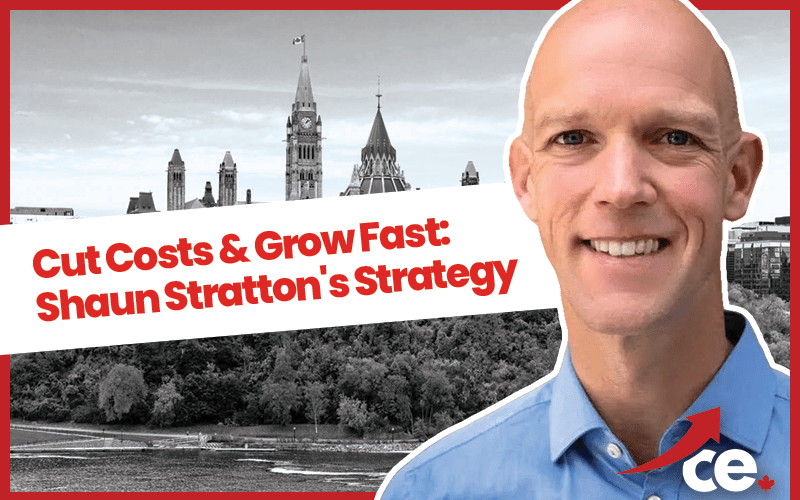
Cut Costs & Grow Fast: Shaun Stratton’s Strategy
Episode
Shaun Stratton has spent his career as an expedition leader, international leadership consultant, professional speaker, and bestselling author. He...
Key takeaways
- Following your skills rather than your passion can be more effective for generating income, as long as the work creates time and resources to pursue what you're passionate about outside of business.
- Ensure you have at least two years of savings to cover living costs before starting a business, as undercapitalization is the number one reason most businesses fail.
- In franchise ownership, having a proven business model with 30+ years of history and a support infrastructure of experienced corporate teams provides significant advantages over starting from scratch.
- Most businesses significantly overpay for operating costs like telecom, waste removal, and shipping simply because they lack the time to review these expenses regularly, creating opportunities for cost optimization services.
- Looking back at how far you've come in your journey rather than constantly focusing on the gap between where you are and where you want to be helps maintain perspective and prevents entrepreneurial burnout.
Transcript
Full transcript page · Interactive episode
============================================================
TRANSCRIPTION WITH SPEAKERS
============================================================

[00:00] SPEAKER_02: Welcome to Canada's Entrepreneur, where we talk to the entrepreneurs who are making it happen
[00:05] SPEAKER_02: across Canada and deliver the news, trends, knowledge and opinions from entrepreneurs and business
[00:13] SPEAKER_02: influences across the country. Hi everyone, I'm Phil Bliss, a Founder and CEO of Canada's Entrepreneur,
[00:22] SPEAKER_02: and coming to you today from Toronto. Today we're going to meet Sean Stratton.
[00:28] SPEAKER_02: Sean has spent his career becoming an expedition leader,
[00:32] SPEAKER_02: international leadership consultant, professional speaker and best-selling author.
[00:38] SPEAKER_02: He is the founder of the International Vagan Film Festival in World Tour, where they inspire,
[00:45] SPEAKER_02: educate and entertain audience, just with a vegan themed films worldwide.
[00:54] SPEAKER_02: Today, we're going to meet Sean in his current role as a business optimization specialist
[01:03] SPEAKER_02: and franchise owner at School E Mitchell. He's combining his prior entrepreneurship,
[01:12] SPEAKER_02: leadership development, strategic sales knowledge and consulting experience into a role
[01:18] SPEAKER_02: where he's able to directly impact a business's bottom line. Sean believes every business
[01:26] SPEAKER_02: should pay the right rates, receive the right services, and have the peace of mind
[01:31] SPEAKER_02: knowing their business is running as efficiently as possible.
[01:37] SPEAKER_02: Sean, welcome to Canada's Entrepreneur. Thank you. Before we get deeper into the conversation,
[01:46] SPEAKER_02: let's find out a bit more about you and your entrepreneurial journey to date.
[01:52] SPEAKER_02: Four or five minutes summary, just so that everybody knows who Sean is, basically.
[01:58] SPEAKER_01: Yeah, thank you very much. I really appreciate being here. It's a pleasure and it's an honor.
[02:04] SPEAKER_01: My entrepreneur journey, it has many curves and bumps along the way as any entrepreneur at 50 years
[02:10] SPEAKER_01: old would have had. I feel like I've always had entrepreneurial spirit in me since childhood.
[02:19] SPEAKER_01: I was a big fundraiser for all my sports teams in high school. I was the top fundraiser and
[02:23] SPEAKER_01: kind of saw it as a challenge and enjoyed it. Every neighbor in their neighborhood knew Sean
[02:28] SPEAKER_01: because I'm knocking on their door every spring or fall selling something or else trying to
[02:32] SPEAKER_01: sign a fundraiser's money. That stuff came easily and I enjoyed it. When most of my friends
[02:37] SPEAKER_01: just to ride it going out to sell anything for their sports teams and hoping their parents were
[02:41] SPEAKER_01: going to pony up for the cost of the next travel, I kind of took it on. I didn't really know what
[02:47] SPEAKER_01: it was at the time, but looking back, it definitely was that entrepreneurial spirit. I kind of
[02:52] SPEAKER_01: moved away a little bit from from the entrepreneurial spirit after university. During the university,
[02:57] SPEAKER_01: I learned about kind of a career in outdoor education and I didn't know what outdoor education
[03:02] SPEAKER_01: was, did not exist. It's basically leading expeditions around the world helping people with
[03:08] SPEAKER_01: personal growth and development, leadership training, outdoor skills training. Once I learned
[03:12] SPEAKER_01: that there was a career in this, I jumped on that and that was another passion of mine. It's just
[03:17] SPEAKER_01: kind of outdoor travel. Adventure travel has always been a passion. I don't spend the next 15
[03:24] SPEAKER_01: years leading wilderness expeditions around the world focused on personal growth and development
[03:28] SPEAKER_01: leadership without were bound and the national outdoor leadership school mostly.
[03:34] SPEAKER_01: I even see it as entrepreneurial because when you're on an expedition, and most of my expeditions
[03:39] SPEAKER_01: were 20 days to up to 16 to 80 days. These are long expeditions with mostly US college students.
[03:47] SPEAKER_01: When you're out there on an expedition, it's your expedition to run as you want.
[03:51] SPEAKER_01: We have a pickup point and a drop off point or a pickup point and basically we've run it as we are.
[03:57] SPEAKER_01: It's a bit entrepreneurial in there in terms of planning and running a show.
[04:02] SPEAKER_01: After I knew eventually I would get burnt out of that industry and want to settle down a bit for
[04:08] SPEAKER_01: nine years. I didn't live in one place for more than three months and traveled to every continent
[04:12] SPEAKER_01: in the world leading expeditions for many, many years. Over two thousand nights of expeditions I've
[04:19] SPEAKER_01: led. Eventually in my early 30s I got burnt out and I knew I was always going to start something.
[04:23] SPEAKER_01: I started a few small starts. I wanted to do an adventure travel company for high school students.
[04:30] SPEAKER_01: But really quickly I realized why am I starting this? I'm already burnt out of this industry.
[04:34] SPEAKER_01: Why am I starting another one? I got into more leadership consulting and professional speaking.
[04:39] SPEAKER_01: I went to a CAHPS conference. It's a Canadian association of professional speakers.
[04:44] SPEAKER_01: Shortly after I was moving out of the industry, out of the outdoor education industry,
[04:47] SPEAKER_01: I thought, wow, I enjoy presenting. It doesn't bother me. I've been teaching and presenting for a
[04:53] SPEAKER_01: long time. I've got a lot of decent stories from my expeditions that I can put a leadership
[04:57] SPEAKER_01: stand on it. I started doing professional speaking. At the time I did a master's in leadership
[05:02] SPEAKER_01: from Royal Roads University in Victoria. I wrote a book called Teams on the Edge. I'm sharing
[05:08] SPEAKER_01: leadership lessons from my expeditions. Then I did a TED talk. I was doing this for several years
[05:15] SPEAKER_01: doing leadership consulting. I really enjoyed it. It is consulting as nature, as natural as it
[05:21] SPEAKER_01: goes. It is sporadic. At the time I was based in Vancouver. I moved back to Newfoundland where I grew
[05:27] SPEAKER_01: up in St. John's and met my wife. Shortly after that, my wife's career started moving us around.
[05:35] SPEAKER_01: She's in medicine and was still in training. My leadership consulting had to take a bit of a backseat
[05:41] SPEAKER_01: managing the travel moving around, started having children. Eventually we ended up in Ottawa with
[05:48] SPEAKER_01: three kids. My wife started her career here as a staff physician at the City of Hospital in Ottawa.
[05:56] SPEAKER_01: At that time we were pretty overwhelmed with three kids and no family around. We decided that I
[06:02] SPEAKER_01: would stay at home. I would put my consulting business on hold for the next couple of years.
[06:08] SPEAKER_01: Stayed home and helped manage the kids. I had the privilege of being at home dad. That carried on
[06:12] SPEAKER_01: for about six or seven years. I always had other things going on. I could never just be at
[06:18] SPEAKER_01: home dad. I had to have my brain going elsewhere. Actually three weeks into being at home dad,
[06:23] SPEAKER_01: I started an international film festival, which I had no experience with. I always needed an extra
[06:28] SPEAKER_01: project, something to strive for. I was running that film festival now for eight or nine years.
[06:37] SPEAKER_01: I also have been doing some different side hustles, things like that. In the last couple of
[06:41] SPEAKER_01: years I was doing some B2B sales for an event management company that I was passionate about.
[06:46] SPEAKER_01: That brought me to about a year and a half ago when we decided that we got some time,
[06:52] SPEAKER_01: the kids are a bit older that we get back in the workforce and maybe look at buying a business.
[06:57] SPEAKER_01: That brings us up to discovering schooly Mitchell.
[07:02] SPEAKER_02: Yeah, that's a nice background. Really interesting. I don't know what I could have kept up the
[07:11] SPEAKER_02: three months in one spot. It's the anyway, whatever.
[07:17] SPEAKER_02: In my 20s.
[07:18] SPEAKER_02: Yeah, let's ask some sort of serious questions. You know, you're now with schooly Mitchell.
[07:28] SPEAKER_02: Why buy a franchise? I mean, you are out into a brand new. Why buy a franchise instead of
[07:34] SPEAKER_01: building another business? It was great. Yeah, it's a great question and every question,
[07:40] SPEAKER_01: franchise owner has that question going through their mind. As I looked into several businesses to buy,
[07:47] SPEAKER_01: I looked at that. Well, I was looking at buying a business. That's kind of three questions,
[07:51] SPEAKER_01: like start and scratch, buy a business or buy a franchise. Those are three things I was going with.
[07:56] SPEAKER_01: Starting a business at 50, I started several businesses and I wasn't really interested in
[08:02] SPEAKER_01: the 10 years it can often take to really see the success you want from a new business from scratch.
[08:07] SPEAKER_01: Over the years, realizing that that is actually what it takes because when I was younger,
[08:12] SPEAKER_01: I didn't believe that it took that long. I didn't have the burning desire or something.
[08:20] SPEAKER_01: If you're going to start from scratch, you've got to have a burning desire to make this thing
[08:23] SPEAKER_01: and bring it into the world. I didn't have that at the moment. That's something that I wanted
[08:27] SPEAKER_01: to labor on for the next 10 years. That moved me away from starting something from scratch
[08:32] SPEAKER_01: like I had done before. Then whether it was a franchise or not, I was looking at both different
[08:38] SPEAKER_01: options. I worked with some business brokers on several different businesses at Rufursale.
[08:42] SPEAKER_01: I ended up working with a franchise consultant. The things I like about a franchise versus buying
[08:48] SPEAKER_01: an existing business is that it's generally a proven success story. There's people that have been
[08:55] SPEAKER_01: very successful with the business model. That's how it exists. I like School Image because it's been
[09:01] SPEAKER_01: around for over 30 years. It has that history. There's a lot of new franchises I find in the
[09:06] SPEAKER_01: last three or four years that don't really have a long history. That makes you a little skeptical
[09:12] SPEAKER_01: and a little cautious. I like the infrastructure it comes with. People ask me if I have a team,
[09:19] SPEAKER_01: I have a staff. I was like, no, I don't have a team. I do have a team. I have a team of 170 employees
[09:24] SPEAKER_01: at our head office that are there to support me in my business. Of course, they're supporting
[09:29] SPEAKER_01: other franchises as well, but having that back in support instead of as a buying a business,
[09:34] SPEAKER_01: you've got to manage all that yourself. The business model is fairly simple. I'm a very busy guy
[09:41] SPEAKER_01: in everything else in my life, whether it's family or activities or all the volunteer stuff or
[09:47] SPEAKER_01: personal hobbies. Those are some of the reasons why I decided to go out the franchise route.
[09:54] SPEAKER_02: What's your role there? What would you do as a franchise owner? What would you do exactly?
[10:02] SPEAKER_01: Yeah, that's a big question, obviously. It can't really answer it as a franchise owner. I can
[10:08] SPEAKER_01: answer it as a school-emitial franchise owner because every franchise owner role is a bit different.
[10:13] SPEAKER_01: And school-emitial franchise owners are even more different than I would say, the typical franchise.
[10:17] SPEAKER_01: Because we're run more like a consulting company, almost more of an accounting firm than we are
[10:22] SPEAKER_01: of a typical franchise that would have a brick and mortar, whether it's a food franchise or
[10:27] SPEAKER_01: elsewhere. We're generally owner-operator, home office. Usually, the employees just ourselves
[10:35] SPEAKER_01: sometimes we bring on subcontractors to work with us. And so the roles and responsibilities
[10:42] SPEAKER_01: are different than if you had a brick and mortar with a bunch of employees, a bunch of operating
[10:48] SPEAKER_01: staff, a manager, a bunch of equipment, facilities, all those things that a lot of other
[10:55] SPEAKER_01: franchises have. We don't have any of that stuff, which makes us a lot more nimble and light and
[11:01] SPEAKER_02: quick to start and cheaper to start, frankly. So, as a bit of a newbie, I mean, I mean,
[11:11] SPEAKER_02: that long, how are you finding the business? I mean, how are you finding business optimization
[11:21] SPEAKER_01: and the story, if you like? Yeah, I really enjoy it. I think some of it is personality-related,
[11:30] SPEAKER_01: some of its experience-related. I like how you brought up the story because it is really all
[11:35] SPEAKER_01: about the story in terms of attracting clients. No one wants to be sold to, but everybody loves a
[11:41] SPEAKER_01: good story. If you can, you know, partly the benefits of your business into good stories,
[11:50] SPEAKER_01: it's really helpful for sure. You know, in the first year of any franchise, I think in the first
[11:55] SPEAKER_01: two years of any franchise, and perhaps even the first five years, but definitely the first two,
[12:00] SPEAKER_01: you know, the first year's survival and the first two, or I think, are coming out of that,
[12:05] SPEAKER_01: and then you get rolling. From what I've been experiencing and from what, you know, I hear from
[12:11] SPEAKER_01: senior franchisies, and overall, I really enjoy it. Just personally, I really enjoy the work.
[12:18] SPEAKER_01: It's a good news topic to talk about. It's a cost reduction. It's about saving money.
[12:23] SPEAKER_01: I'm not selling a widget that I'm not interested in. I'm not selling junk food that is not
[12:29] SPEAKER_01: contributing to the society as a whole. I'm not selling things that are that I don't find
[12:35] SPEAKER_01: beneficial and that I don't believe in. And so it's nice that it is a good news topic and that I
[12:41] SPEAKER_01: believe in what we are selling. And the service we're providing is critical, I think, for businesses
[12:47] SPEAKER_01: and nonprofits and government organizations. That's the thing we cover the whole gamut.
[12:52] SPEAKER_02: Well, you know, so what's best about being an entrepreneur? Forget the franchise. You
[13:00] SPEAKER_02: don't entrepreneur, but this is being an employee. What did you go back and get a job, kind of thing?
[13:07] SPEAKER_01: Yeah, yeah, it's, you know, for me, I've had a varied background. I have had some corporate jobs,
[13:12] SPEAKER_01: which I didn't touch on in my whole summary, but for as a business owner, you have a lot of control.
[13:21] SPEAKER_01: You control your destiny, your destiny is in your hands. There's no limit on what, you know,
[13:26] SPEAKER_01: compensation you can make over the years. There doesn't have the security, obviously, of being an
[13:32] SPEAKER_01: employee, but a lot of times I think entrepreneurs are people that are really creative, are really
[13:40] SPEAKER_01: ambitious. And those two things sometimes can be challenging in a corporate environment.
[13:47] SPEAKER_01: When you're maybe pigeonholed in a position and people just, you know, just do your job.
[13:53] SPEAKER_01: And a lot of corporate environments don't have that infrastructure to be entrepreneurial. Some do
[13:58] SPEAKER_01: within an scope to be entrepreneurial, but I really like, yeah, I really like those things about
[14:03] SPEAKER_01: controlling your own destiny and managing your own schedule. And, you know, I don't have to miss
[14:08] SPEAKER_01: any of my kids' activities. I can take an hour off and go to the track meet and watch my kid,
[14:13] SPEAKER_01: and I don't have to answer to anybody. I can get up at four o'clock in the morning and do a ton of
[14:19] SPEAKER_01: work because that's when I'm sharpest and brightest. And I don't have to be on the clock from nine
[14:24] SPEAKER_01: to five at a desk where when someone needs to be able to see that I'm there. And so those things
[14:29] SPEAKER_01: really, really appeal to me as an entrepreneur. You know, I'm interested in that, you know,
[14:39] SPEAKER_02: what do you see the sort of the customer today? I mean, with tariffs, with discussions about
[14:53] SPEAKER_02: recession, this, that, you know, and, you know, what's the compelling need that you're finding
[15:03] SPEAKER_02: with the most, you know, mainly medium sized businesses, I would think, talking to.
[15:10] SPEAKER_01: Yeah, you know, there's definitely a very volatile economic situation that we are in now. And it
[15:16] SPEAKER_01: seems like we're always in an economic, volatile economic situation for a married of reasons, but
[15:21] SPEAKER_01: this, the current, you know, reasons of the day are obviously the tariffs and some of the US
[15:26] SPEAKER_01: administration and the challenges that has on Canadian businesses and on US businesses. And we work
[15:30] SPEAKER_01: with Canadian and US businesses all over both countries. I have clients in Los Angeles. I have
[15:35] SPEAKER_01: clients in Ottawa. I have clients in Calgary. So all over the place. You know, it's, I think a lot of
[15:43] SPEAKER_01: the cost reduction areas that we work with are mainly operating areas. And I don't think a lot
[15:49] SPEAKER_01: changes in terms of what we can offer and why we can offer it now better than two years ago or
[15:55] SPEAKER_01: four years ago. At the end of the day, people still have these operating costs, whether it's telecom,
[16:01] SPEAKER_01: whether it's waste, waste removal, whether it's shipping costs, things like those, those costs
[16:05] SPEAKER_01: aren't going to change if that's the type of business you have. What's changing is people are
[16:11] SPEAKER_01: even busier and busier and they don't have time to review these costs because they're not
[16:16] SPEAKER_01: usually the most expensive costs in their organization. You know, a lot of time staffing or equipment,
[16:22] SPEAKER_01: leasing, insurance, those are some of the higher, higher in costs and that may come on their
[16:27] SPEAKER_01: radar, but our costs are significant, but not the most significant. So because they're not the
[16:32] SPEAKER_01: most, a lot of times they fly onto the radar and the majority of businesses are frankly way over
[16:36] SPEAKER_01: paying for these operating costs that we cover. And they're overpaying for many reasons, not because
[16:42] SPEAKER_01: they're, you know, or business people, but they're swamped, they're overwhelmed. They might have
[16:48] SPEAKER_01: 20 different operating costs and they don't have a chance or time every year to go through those
[16:52] SPEAKER_01: 20 operating costs and to find out if they have the best market price for their costs and they just,
[17:01] SPEAKER_01: you know, put a blind eye to it frankly, a lot of times they're just like, okay, I know I'm overpaying
[17:05] SPEAKER_01: for that telecom, I know I'm overpaying for that waste, but I don't have time. I've got the next
[17:09] SPEAKER_01: sale. I got to move forward and they don't have the time or they don't have anybody in the organization
[17:14] SPEAKER_01: as the time. And I spoke to one lawyer recently and he's like, yeah, we've been trying to review
[17:18] SPEAKER_01: our telecom for the last two years. It's an archaic system we have and it's been on the list for my
[17:23] SPEAKER_01: assistant for two years. So it's a climbing exam like, well, what's going to make her get to it this
[17:28] SPEAKER_01: year? You know, bring us in and we can take care of that in, you know, six weeks and it'll be off
[17:36] SPEAKER_01: your list further, you know, further for the foreseeable future and we'll get it all set up for you.
[17:40] SPEAKER_02: That's a situation. Okay, let's go back to your story. Okay. If you could go back in time,
[17:49] SPEAKER_02: what advice would you give your 25 year old self? Yeah, that's tough. Yeah, 25 year old Sean was
[18:01] SPEAKER_01: living in a truck driving up and down the west coast of the United States and Canada. I was at
[18:06] SPEAKER_01: that time I drove three times from Mexico to Alaska, leading expeditions and, you know, frankly,
[18:13] SPEAKER_01: I've been really fortunate in my childhood and my adult life to really love what I was doing
[18:17] SPEAKER_01: at the time. I've been fortunate, knocked a bit pigeonholed in situations that I were not happy
[18:23] SPEAKER_01: with and got stuck in them. And at the time I was living life, I was getting paid to travel the world
[18:29] SPEAKER_01: the most incredible places. I would maybe say enjoy it, soak it in a bit more. Really, you know,
[18:38] SPEAKER_01: and also, you know, it's it's going to work out. It's going to work out. Yeah, because you could
[18:46] SPEAKER_02: never predict it. You've run a few things yourself. What advice would you give an entrepreneur
[18:54] SPEAKER_02: that's, you know, looking to break away from a job or whatever, looking to start a business.
[19:02] SPEAKER_01: What advice would you give them? Yeah, and everybody's in a different situation, whether it's a
[19:08] SPEAKER_01: dueling, come home, whether you have kids or dependents or not, things like that, everything is
[19:13] SPEAKER_01: situational. Generally, I tell, you know, I would tell people to make sure you have enough runway
[19:19] SPEAKER_01: in terms of savings in the bank to, you know, cover all your living costs for at least two years.
[19:26] SPEAKER_01: Because I think the number one thing that stops branching out of those and generally a lot of
[19:31] SPEAKER_01: businesses fall because they're undercapitalized and people underestimate the amount of capital
[19:37] SPEAKER_01: it's going to take before they can, you know, come over the hump and start paying themselves.
[19:44] SPEAKER_01: And so a lot of times I'll say, yeah, keep your day job as long as you can. And, you know,
[19:49] SPEAKER_01: perhaps even until you are making as much in your side hustle or on your franchise or as your other
[19:54] SPEAKER_01: business, until you're making as much of your business as you are from your day job, say your
[20:00] SPEAKER_01: corporate job to switch. You know, it's a chicken and egg thing. It's like, well, I can't, I need
[20:06] SPEAKER_01: my more time to get my business to that level. But the big thing is, is overcapitalizing. And,
[20:14] SPEAKER_01: you know, once you have dependence and if you're, you know, the main income winner or a burner from
[20:19] SPEAKER_01: your family, then like, that's a lot of pressure to go on. And, you know, they're just saying people
[20:23] SPEAKER_01: say, you can't save your way to success in business. And once you start pinching the pennies,
[20:30] SPEAKER_02: yeah, things to get in trouble. Good stuff. What's the best, you know, thinking about mentorship,
[20:35] SPEAKER_02: what's the best piece of advice that you've received that you carry along with you?
[20:44] SPEAKER_01: Yeah, there's so many things, you know, I love a quote that says, love what you do and you'll
[20:48] SPEAKER_01: never work a day in your life. And I think that relates a lot to my career and my working life,
[20:55] SPEAKER_01: which I, you know, that's a very fortunate position to be in. But I've also, you know, helped create
[21:01] SPEAKER_01: that position. I certainly wasn't given any positions I've ever had as an adult through,
[21:05] SPEAKER_01: through family or connections and that. I've earned them all. But, you know, I think it's a balance
[21:11] SPEAKER_01: between your skill and your passion. And I think in terms of, you know, coming up with income
[21:18] SPEAKER_01: sources, I think following your skills is probably better than following your passion. One,
[21:23] SPEAKER_01: kind of quote I liked about it's not about working in your passion. It's about working
[21:27] SPEAKER_01: for something that'll allow you to achieve your passion. And so some people are in jobs that
[21:33] SPEAKER_01: there have really good skills at our own businesses that they're really skilled at. And that,
[21:38] SPEAKER_01: that that job might not be their passion, but it allows for them to create, to have the time and
[21:43] SPEAKER_01: money to do what they're passionate about. If your passion is flyfishing and, you know, you're,
[21:47] SPEAKER_01: you're really good at whatever you own a store and you're really good at selling things. It's
[21:52] SPEAKER_01: like, that's great. You own that store, but that's creating your time for to go to the passion. So,
[21:56] SPEAKER_01: I don't think you necessarily always have to work in your passion as long as you know what it is
[22:01] SPEAKER_01: and you're creating something that gives you time to do that. Let's let's have some fun just to
[22:06] SPEAKER_02: what this, as we reach the end here. You know, a morning or a night person. Morning, definitely,
[22:14] SPEAKER_02: 100%. Okay. What book are you currently reading or podcasting, listening to, that you would
[22:22] SPEAKER_02: recommend to the, you'd rather be reading it on the book side that you'd recommend to, to the audience.
[22:29] SPEAKER_01: Yeah, I've just recently finished the gap in the game. My doctor Benjamin Hardy,
[22:33] SPEAKER_01: gap in the game is came out a couple years ago, I believe, and that's a really fun book.
[22:39] SPEAKER_01: Really, it talks a lot about, you know, not necessarily always striving forward and looking forward.
[22:44] SPEAKER_01: It's, it's recognizing how far you've come on your journey and, and appreciating that and
[22:50] SPEAKER_01: recognizing that and, and celebrating that so many times we, we get depressed because we're not
[22:56] SPEAKER_01: where we want to be right now. And, and the gap in the game is if you look at the gap where you
[23:01] SPEAKER_01: have actually come from, whether it was one year or two years or five years ago, you can usually
[23:05] SPEAKER_02: are pretty impressed with yourself. They've had to pick one word to describe who Sean was.
[23:13] SPEAKER_02: What would it be and why would you choose it?
[23:17] SPEAKER_00: Was as in three franchise ownership or was, just to who we were now.
[23:25] SPEAKER_00: Yeah.
[23:28] SPEAKER_00: I would say passionate. There you go. That's good, that's good. Yeah.
[23:36] SPEAKER_02: What's keeping you up at night?
[23:39] SPEAKER_01: Yeah, finding the, finding the next business to help, help save some money.
[23:45] SPEAKER_01: I'm always trying to reach out to new businesses to try to save the money because, like I said,
[23:49] SPEAKER_01: so many businesses are paying so much and losing money out of the table from, from their operating
[23:55] SPEAKER_01: costs that I'm always trying to find new ways to reach out to these businesses and share our message
[24:01] SPEAKER_01: at School of Mitchell on how we can best help them.
[24:05] SPEAKER_02: Sean, it's been great having you on Canada's entrepreneur. Really good meeting you.
[24:11] SPEAKER_02: Thanks for doing this.
[24:13] SPEAKER_02: Yeah, thanks for having me. It's been a lot of fun. I really appreciate it.
[24:16] SPEAKER_02: Well, that was great. Sean, you know, it's a positive energy. And, you know, one heck of an
[24:24] SPEAKER_02: interesting and, you know, very active entrepreneur, the journey so far. And it's really good to see
[24:31] SPEAKER_02: that he's found such a terrific business ownership opportunity with School of Mitchell.
[24:38] SPEAKER_02: Great to see you. Once again, I'm Phil Bliss. Don't forget to subscribe to our newsletter on our
[24:44] SPEAKER_02: website and subscribe on our YouTube channel as well or any of the other major podcast channels.
[24:51] SPEAKER_02: Thanks for listening to Canada's entrepreneur where you meet the entrepreneurs
[24:55] SPEAKER_02: the drive Canada's economy. See you soon.