
Connor Curran
Episode
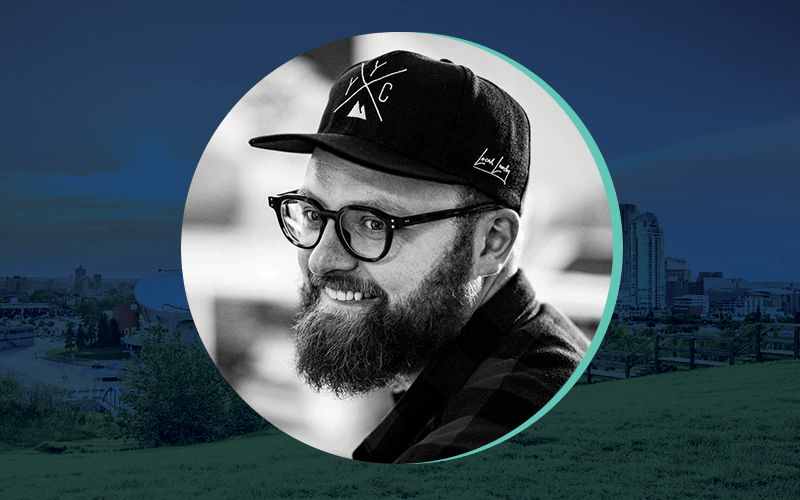
Connor Curran is one of the co-owners of Local Laundry, a Canadian made garments company that uses clothing as a vehicle...
Key takeaways
- Starting a business doesn't require perfect planning or expertise—just begin with what you have, learn from mistakes, and adapt along the way instead of waiting for the perfect moment.
- Building genuine relationships with everyone in your business ecosystem, from manufacturers to customers to team members, is the foundation of a successful enterprise and should never be taken for granted.
- Donating money is just one way to give back to your community—sharing stories, collaborating with like-minded organizations, and supporting local manufacturing are equally powerful ways to create positive impact.
- Consumers have the power to shape the economy and society through their purchasing decisions, so it's important to understand where products come from and what conditions exist behind low prices.
- Protecting your sleep, establishing phone-free boundaries, and taking time for quiet reflection are essential practices for maintaining the energy and clarity needed to sustain an entrepreneurial journey.
Transcript
Full transcript page · Interactive episode
============================================================
TRANSCRIPTION WITH SPEAKERS
============================================================

[00:00] SPEAKER_01: It's Calgary's podcast on the Canada's podcast network.
[00:06] SPEAKER_00: Hi, it's Bonnie at LG.
[00:08] SPEAKER_00: Welcome to the Calgary's podcast.
[00:11] SPEAKER_00: Today I'm with Connor Kerman.
[00:13] SPEAKER_00: Connor is one of the co-owners of Locolandry, a Canadian-made garments company that uses clothing
[00:19] SPEAKER_00: as a vehicle to build community.
[00:22] SPEAKER_00: Connor started Locolandry four years ago after googling how to start a t-shirt company
[00:28] SPEAKER_00: and watch any YouTube video.
[00:31] SPEAKER_00: Now Connor works on Locolandry full time with the commitment to donate over $1 million
[00:37] SPEAKER_00: to local charities across Canada.
[00:40] SPEAKER_00: Locolandry can be found in over 20 stores across the country and is harrathly the importance
[00:46] SPEAKER_00: of supporting Canadian manufacturing.
[00:49] SPEAKER_00: So Connor, welcome.
[00:51] SPEAKER_00: Thanks for being with us here today.
[00:53] SPEAKER_01: My pleasure.
[00:53] SPEAKER_01: Thanks so much for having me on the show.
[00:55] SPEAKER_01: I'm forward to it.
[00:57] SPEAKER_00: Why don't we jump right in and you can tell our listeners a little bit about how you
[01:01] SPEAKER_00: actually got started and what drove you to become, I guess we would say, a social entrepreneur.
[01:08] SPEAKER_00: Sure, yeah, absolutely.
[01:09] SPEAKER_01: So I'd start Locolandry back in 2015.
[01:12] SPEAKER_01: My wife and I were living in Sweden and I was studying for my MBA at the time.
[01:16] SPEAKER_01: And I really wanted something that really represented Calgary and not just, you know, an
[01:22] SPEAKER_01: I-Hart Calgary shirt or shirt with a character on it, something that I thought really represented
[01:27] SPEAKER_01: me and the people that made up this great city.
[01:30] SPEAKER_01: So I kind of just did what every other Indian millennial does and I do a search how to
[01:35] SPEAKER_01: make a t-shirt company.
[01:36] SPEAKER_01: And then from there, I watched a YouTube video and within an hour or two, a day or two,
[01:42] SPEAKER_01: I had an online t-shirt company.
[01:44] SPEAKER_01: I thought this was really great, but I wanted to be something a little bit more.
[01:48] SPEAKER_01: You know, there's so many t-shirt companies out there.
[01:50] SPEAKER_01: There's so many brands that kind of just take city pride or regional pride and turn it
[01:55] SPEAKER_01: into a brand.
[01:56] SPEAKER_01: I didn't want to just be cash-in and cash-in on this whole hashtag while I see things.
[02:01] SPEAKER_01: I wanted it to be something that really gave back and had a positive impact on the community.
[02:06] SPEAKER_01: And ultimately, I wanted a way to take another great Calgary instead of people that were
[02:10] SPEAKER_01: doing their part to make positive impact on this community.
[02:13] SPEAKER_01: So it kind of developed in a few different ways.
[02:16] SPEAKER_01: I mean, the first thing that was really baked in was donating 10% of profits back to
[02:20] SPEAKER_01: the local charities that are customers who are choose.
[02:22] SPEAKER_01: That was a first and foremost.
[02:23] SPEAKER_01: And that was great.
[02:24] SPEAKER_01: I mean, we donated a couple hundred bucks here, a couple of bucks there and get customer
[02:29] SPEAKER_01: feedback and that was great.
[02:30] SPEAKER_01: But you quickly realize that donating money is not the only way you can give back in
[02:34] SPEAKER_01: both communities.
[02:34] SPEAKER_01: So you started to develop pillars of community and how in different ways that we can go
[02:39] SPEAKER_01: community.
[02:39] SPEAKER_01: So now we have five pillars of community.
[02:41] SPEAKER_01: One of them is of course representing where you come from, being proud of the fact
[02:44] SPEAKER_01: that you're from Calgary or we also have a Canada line representing Canada as a whole.
[02:49] SPEAKER_01: The second is by donating a quarter of the local profits back to local charities.
[02:54] SPEAKER_01: And then our third is by sharing stories from those in the community that are creating
[02:57] SPEAKER_01: a positive impact on the new musicians, nonprofits, artists, other local businesses that are doing
[03:04] SPEAKER_01: powerful community building.
[03:06] SPEAKER_01: The fourth is by collaborating with those and actually finding organizations that share
[03:10] SPEAKER_01: values and find ways to work together to get back.
[03:15] SPEAKER_01: And our fifth and final pillar of community building is by always supporting teaming,
[03:20] SPEAKER_01: factoring, and an effort to support diverse community from them.
[03:23] SPEAKER_01: So there's just kind of a few ways that over time our community building efforts grew
[03:27] SPEAKER_01: and evolved to what we say.
[03:29] SPEAKER_01: I'm sure we'll probably add a few more pillars of community along the way.
[03:34] SPEAKER_01: But yeah, we've been going strong about four and a half years now.
[03:38] SPEAKER_01: I've logged every every minute of it.
[03:40] SPEAKER_00: I'm interested to know because that is such a revoked, overbust in a different business model.
[03:46] SPEAKER_00: But what were you doing before you started local laundry?
[03:49] SPEAKER_00: Have you always been an entrepreneurist that always been in your blood?
[03:53] SPEAKER_01: It's definitely been in the blood.
[03:54] SPEAKER_01: My parents moved to Canada from Ireland in the 70s and they opened a pub about 22 years ago here in Calgary.
[04:02] SPEAKER_01: One of the first Irish pubs here in Calgary.
[04:05] SPEAKER_01: One of the only Irish owned pubs in Calgary.
[04:09] SPEAKER_01: So as always, kind of doing my blood.
[04:10] SPEAKER_01: To be honest, I never thought I was quite smart enough to be a business owner.
[04:13] SPEAKER_01: I think I'd be really smart, know everything, know everything about marketing, finance, business,
[04:18] SPEAKER_01: firmness, taxes.
[04:20] SPEAKER_01: And I was always really scared to start a business because I never thought I knew enough
[04:22] SPEAKER_01: and knew it was quite smart enough.
[04:24] SPEAKER_01: So I did what every other animal else does in the city.
[04:28] SPEAKER_01: I thought I'd chase the money, go into oil and gas and...
[04:31] SPEAKER_01: Well, we know where.
[04:32] SPEAKER_00: We would know how that's turned out, right?
[04:34] SPEAKER_01: Yeah, we know where that leads us.
[04:36] SPEAKER_01: So I was one of the first...
[04:37] SPEAKER_01: First of my friend group to get laid off.
[04:39] SPEAKER_01: I worked for a company for two years, got laid off and I was like,
[04:42] SPEAKER_01: Oh, okay, well, I don't think oil and gas is the answer.
[04:45] SPEAKER_01: So I decided to move with my wife to Sweden, to study, to upgrade, you know, get my MBA.
[04:50] SPEAKER_01: And then is there that I really took a hard look at myself and said,
[04:53] SPEAKER_01: What is it that I want to do that will make me happy?
[04:57] SPEAKER_01: And I realized that it was a small business.
[05:00] SPEAKER_01: So idea of a small business day.
[05:01] SPEAKER_01: My parents had done it.
[05:02] SPEAKER_01: They built life for themselves.
[05:03] SPEAKER_01: But they had always kind of been able to find a way to leave that's doing good
[05:08] SPEAKER_01: while creating and growing a business.
[05:11] SPEAKER_01: If you walk into the pub and get in time, they probably have...
[05:14] SPEAKER_01: They're able to attend the 12 different nationalities.
[05:16] SPEAKER_01: They're big supporters of newcomers to Canadians.
[05:19] SPEAKER_01: Newcomers to Canada, since they were in New Canadians themselves.
[05:22] SPEAKER_01: They really helped get people established here, bring people over,
[05:25] SPEAKER_01: bring their families over and that kind of thing.
[05:27] SPEAKER_01: And so they're able to use this business as a way to kind of do good.
[05:30] SPEAKER_01: And so I really wanted to do something similar.
[05:33] SPEAKER_01: So I took a deep hard look and said, You know what?
[05:34] SPEAKER_01: I really want to do this.
[05:36] SPEAKER_01: I really want to be an entrepreneur, but I want to do something that can give back
[05:40] SPEAKER_01: and do some good at the same time.
[05:43] SPEAKER_00: One of the things that I love about local laundry is you really are shining the spotlight on Calgary.
[05:48] SPEAKER_00: And as we know, it's been a rest few years here in the city.
[05:53] SPEAKER_00: So can you share with our listeners who really are from around the world,
[05:57] SPEAKER_00: like in your opinion, even in the hard times, what are some of the benefits of doing business in Calgary?
[06:04] SPEAKER_01: Oh, man, I think Calgary is the greatest place in the world.
[06:07] SPEAKER_01: I really do.
[06:08] SPEAKER_01: My wife, she's from Ontario, and when we got married, I said,
[06:11] SPEAKER_01: if we're going to get married, we're not going to live anywhere else in Calgary,
[06:14] SPEAKER_01: half of the Calgary.
[06:15] SPEAKER_01: Thankfully, she agreed to it.
[06:17] SPEAKER_01: Now she's going to come love it.
[06:19] SPEAKER_01: The interesting thing about Calgary, I find it,
[06:21] SPEAKER_01: that there's Mike Morrison, that kind of explains to me,
[06:24] SPEAKER_01: Mike Morrison is a great local influencer in the area.
[06:26] SPEAKER_00: Yes, we've had him on the show.
[06:28] SPEAKER_01: He is phenomenal.
[06:29] SPEAKER_01: And he said something to me, you know, he's from Audi,
[06:31] SPEAKER_01: so he said, the thing about Calgary is, no one is from here.
[06:34] SPEAKER_01: No one's from here.
[06:35] SPEAKER_01: Everyone's from somewhere else.
[06:37] SPEAKER_01: And at first, I was like, oh, okay, what was that happened to you?
[06:40] SPEAKER_01: He's like, if you go to places like Troll or Vancouver,
[06:43] SPEAKER_01: where they've families have been there for generations.
[06:46] SPEAKER_01: They have their friends, circle of friends,
[06:47] SPEAKER_01: they have their cleaks, they have their niches.
[06:50] SPEAKER_01: No one really wants to talk to anyone or meet anyone new or in Calgary
[06:53] SPEAKER_01: because everyone is from somewhere else.
[06:55] SPEAKER_01: Everyone knows what it feels like to be that new kid at school,
[06:59] SPEAKER_01: to be the new person in the office,
[07:01] SPEAKER_01: to not know very many people, to not know what's going on.
[07:03] SPEAKER_01: So everyone is super friendly.
[07:05] SPEAKER_01: Everyone, I find it just really wants to help each other out.
[07:08] SPEAKER_01: And we see that no more than in the entrepreneurial scene.
[07:12] SPEAKER_01: That was one of my favorite things I'll start the business here was,
[07:15] SPEAKER_01: it's also had this community of like-minded individuals
[07:18] SPEAKER_01: that wanted to build something, wanted to build something wanted,
[07:20] SPEAKER_01: to use it as a way to get back.
[07:22] SPEAKER_01: And then everyone was so eager and willing to help each other.
[07:25] SPEAKER_01: Whether you're a brewery, even clothes, or a big jolato,
[07:30] SPEAKER_01: everyone just wants to see everyone here succeed.
[07:33] SPEAKER_01: And I think that's very different from the places
[07:36] SPEAKER_01: like Toronto, Vancouver, where it's a little bit more putthroat,
[07:39] SPEAKER_01: everyone's kind of stepping over each other
[07:41] SPEAKER_01: to get where they need to go where it's here.
[07:43] SPEAKER_01: It's like, we all want the same thing.
[07:46] SPEAKER_01: We all need to get to the same place,
[07:48] SPEAKER_01: why can't we help each other grow and get there together?
[07:51] SPEAKER_01: Which I think is absolutely phenomenal.
[07:54] SPEAKER_01: And of course, you know, all the things that have been happening over the last few years,
[07:57] SPEAKER_01: Caryans just had this gritty misfits.
[07:59] SPEAKER_01: It's just, you know, we're not going to stand around and complain for very long.
[08:04] SPEAKER_01: We're going to get, we're going to put our heads down,
[08:06] SPEAKER_01: we're going to get to work, we're going to figure it out.
[08:08] SPEAKER_01: We're going to make it happen.
[08:09] SPEAKER_01: We're going to find a solution, slip out, we're going to get out there,
[08:12] SPEAKER_01: get after it, and make it happen.
[08:14] SPEAKER_01: Which is a lot of work.
[08:16] SPEAKER_00: Yeah, yeah, that's great.
[08:18] SPEAKER_00: But when you flip it around and we can't deny that it has been tough here too economically.
[08:22] SPEAKER_00: So what if you bumped into in terms of challenges for doing, you know,
[08:27] SPEAKER_00: starting a business here?
[08:29] SPEAKER_01: Well, I think as a small business, your costs are always higher.
[08:32] SPEAKER_01: You are generally building and promoting a premium product that comes out of premium price.
[08:40] SPEAKER_01: You know, whether you are making pork genetic from Buccia,
[08:44] SPEAKER_01: or you can have beer or kei, or clothing.
[08:47] SPEAKER_01: You know, you don't have the economy as a scale.
[08:48] SPEAKER_01: And you are not cutting corners or doing things the right way and slowly.
[08:55] SPEAKER_01: And that comes out of premium.
[08:57] SPEAKER_01: Most of these small businesses that I'm, that were like ourselves,
[09:01] SPEAKER_01: and other people that are here, are here, and buildings of their premium product,
[09:04] SPEAKER_01: they sell something at a premium price.
[09:06] SPEAKER_01: So for us, for example, we are making kei made garments.
[09:10] SPEAKER_01: And our garlars are very expensive.
[09:12] SPEAKER_01: But they're expensive for a reason.
[09:14] SPEAKER_01: Right? They're expensive because we ensure that our manufacturer is paying their workers Canadian,
[09:20] SPEAKER_01: living wage with benefits.
[09:22] SPEAKER_01: They're green to Canadian labor, Canadian labor environmental laws instead.
[09:28] SPEAKER_01: It's, that's very expensive when larger companies can just produce overseas for a fraction of the labor cost.
[09:34] SPEAKER_01: Because who knows how those workers are getting treated?
[09:37] SPEAKER_01: And they're not contributing to a diverse community.
[09:40] SPEAKER_01: And so that becomes difficult when you're trying to sell a product that's $90 a sweater to a cowgarean.
[09:46] SPEAKER_01: It's on a bit of a hard times.
[09:48] SPEAKER_01: And they can go down a Walmart and get a sweater for $20 to $30 or even less.
[09:52] SPEAKER_01: So we're really trying to pull up the fact that you know what?
[09:55] SPEAKER_01: Cowgareans, you know, while we're not, in the best of times,
[09:58] SPEAKER_01: we can't afford not to buy good clothes.
[10:00] SPEAKER_01: We can't afford not to buy cheap products.
[10:04] SPEAKER_01: Because ultimately, small business owners of down-to-look-udson products
[10:08] SPEAKER_01: are going to better for you than in the last long time.
[10:11] SPEAKER_01: And that's, I think, the biggest challenge is fighting that sort of notion of why should garment cost this much money.
[10:19] SPEAKER_01: And fighting that habit that we've gotten into that we want a t-shirt for the cheapest amount of money possibly.
[10:28] SPEAKER_00: Right, right.
[10:30] SPEAKER_00: Well, it's very obvious you're a huge supporter of the city.
[10:34] SPEAKER_00: And I'm wondering if you can share with our listeners.
[10:37] SPEAKER_00: Where do you go locally if you want to just get inspired?
[10:42] SPEAKER_00: You're in a creative business.
[10:44] SPEAKER_00: So where do you go?
[10:46] SPEAKER_00: Do you have a spot or two that's a favorite to just kind of rejuvenate and get refocused?
[10:52] SPEAKER_01: Yeah, absolutely. There's so many great places.
[10:56] SPEAKER_01: What I typically do, because I work from home to continue my family home office,
[10:59] SPEAKER_01: the local order head, global learning headquarters, and my basement gear.
[11:03] SPEAKER_01: I spend every Wednesday as my meeting day.
[11:06] SPEAKER_01: And so if someone would meet me, I'd say, you know, come meet me.
[11:10] SPEAKER_01: I'm going to be a calorie hair-y dresser in reds either or brand new coffee cafe that I just opened up a June.
[11:18] SPEAKER_01: And it's in the Old Simmons building.
[11:20] SPEAKER_01: And it's all its closed brick.
[11:21] SPEAKER_01: They've built tables floor all by hand from old wood that they found there.
[11:26] SPEAKER_01: And it's a really inspiring place to see.
[11:28] SPEAKER_01: We're quite close to two owners and to see those two guys who went through all sorts of struggles to get that cafe in place in that building.
[11:36] SPEAKER_01: That's always inspiring to me.
[11:38] SPEAKER_01: And similarly, when I look at other great brands like Fiasco, Gerlato, James Boacher, the CEO there's been a big mentor of us.
[11:48] SPEAKER_01: Anytime we need anything, advice, tips, shoulder crown, he's there for us.
[11:52] SPEAKER_01: He's got 10,000 things to do.
[11:54] SPEAKER_01: He always takes the time to spend with us.
[11:58] SPEAKER_01: And then for inspiration, if you're feeling really out of shape or need to get a swim, we always look to our friends over at a wild west cycle.
[12:05] SPEAKER_01: I mean, we were giving Tuesday on Tuesday and we went and walked here with their crew down at the Calgary Food Bank.
[12:12] SPEAKER_01: And I was chatting away with them.
[12:13] SPEAKER_01: And then I've asked, how much money have you guys raised for Cheri so far?
[12:17] SPEAKER_01: They've raised over $700,000 for Cheri.
[12:20] SPEAKER_01: We're trying to get to a million.
[12:22] SPEAKER_01: We're about $40,000, $50,000.
[12:25] SPEAKER_01: They've raised over $700,000.
[12:28] SPEAKER_01: You want to talk about the community.
[12:30] SPEAKER_01: They've figured out how to build community together.
[12:32] SPEAKER_01: So anytime we feel low or bad about ourselves, and that happens a lot.
[12:38] SPEAKER_01: As an entrepreneur, I think most people know it.
[12:40] SPEAKER_01: It's a roller coaster ride.
[12:41] SPEAKER_01: One day you can be a smart person in the world.
[12:44] SPEAKER_01: Nothing can touch in the next day.
[12:46] SPEAKER_01: It's hard to be a state.
[12:47] SPEAKER_01: It's not about doing it.
[12:50] SPEAKER_01: And we all kind of get like that, but to have people to have that network,
[12:55] SPEAKER_01: the support group, the support system, the people like that and inspiration.
[12:59] SPEAKER_01: Just literally around the corner, everywhere you look in this city,
[13:04] SPEAKER_01: it's so, it's so vaguerine.
[13:06] SPEAKER_01: It's so thankful to be a part of it.
[13:08] SPEAKER_00: Awesome.
[13:09] SPEAKER_00: So where do you want to go with local laundry next?
[13:12] SPEAKER_00: Like what's your vision for the future here?
[13:15] SPEAKER_01: How long is this podcast?
[13:17] SPEAKER_01: I can talk about this all the day long.
[13:19] SPEAKER_01: This is a great question.
[13:22] SPEAKER_01: You know, it's funny because we started local laundry.
[13:24] SPEAKER_01: And like I said, just two of these people so I tried to make a tissue.
[13:27] SPEAKER_01: I didn't know anything about e-commerce, wholesale, retail.
[13:30] SPEAKER_01: Certainly did not know anything about fashion.
[13:32] SPEAKER_01: Still no very little about fashion.
[13:33] SPEAKER_01: But we came with the notion that we want to build community together.
[13:37] SPEAKER_01: We want clothing to be that beautiful.
[13:39] SPEAKER_01: It's specifically candy made clothing.
[13:40] SPEAKER_01: We've been candy made for about a year and a half now.
[13:43] SPEAKER_01: We've been getting those two years and just learning so much about the garment industry.
[13:47] SPEAKER_01: How clothing is actually made.
[13:49] SPEAKER_01: How people buy what candy made clothing actually means.
[13:53] SPEAKER_01: And the effect that can have on people, you know, not just the people that are buying it,
[13:57] SPEAKER_01: but the people that are making it, the people that are involved.
[13:59] SPEAKER_01: So we want to, we really want to be, like I said, an introduction.
[14:03] SPEAKER_01: We want to be heralds of the importance of candy made clothing.
[14:07] SPEAKER_01: Candy made factoring as a whole.
[14:09] SPEAKER_01: So what we want to do is we want to make garments of purpose.
[14:12] SPEAKER_01: We want to make clothing that actually matter.
[14:15] SPEAKER_01: That people just don't like, oh, here's a cool design.
[14:17] SPEAKER_01: Or if there's a black front idea, let's pick it up and, you know, for real cheap.
[14:23] SPEAKER_01: We want to make clothing that makes people stop and think, you know, for a good example of that,
[14:29] SPEAKER_01: is our giving garments.
[14:30] SPEAKER_01: So at any given time, any shelter in Canada, the five most giving,
[14:33] SPEAKER_01: the five most in-demand items for donations are two socks, mittens, towels, and other.
[14:39] SPEAKER_01: And this is something that you can never have enough donations to collect for always a need of.
[14:43] SPEAKER_01: And so we decided that we wanted to help introduce the giving garments,
[14:47] SPEAKER_01: which is for our two, and the two that we sell, we donate once to a homeless organization,
[14:52] SPEAKER_01: we pair socks that we sell, we donate once the organization that we tell it up,
[14:55] SPEAKER_01: we sell it during one of the service.
[14:57] SPEAKER_01: So we want to get to the point where we're reintroduced, underwear into that collection,
[15:01] SPEAKER_01: and we want to get to the point where we're introduced, mittens into that collection.
[15:04] SPEAKER_01: And we want to talk about, you know, the way that clothing used to be.
[15:08] SPEAKER_01: My wife goes home to Ontario for a favorite thing to wear,
[15:12] SPEAKER_01: is for dads old roots, I mean, from the 70s.
[15:15] SPEAKER_01: And that thing is so soft, it's got no holes in it,
[15:18] SPEAKER_01: because roots used to make all our stuff in Canada,
[15:20] SPEAKER_01: used to make quality clothing here in this country.
[15:23] SPEAKER_01: This is what offshore overseas, and their stuff is in the same quality.
[15:28] SPEAKER_01: But my wife's favorite sweater is this 50-year-old hoodie.
[15:32] SPEAKER_01: And we want to make clothing that comes with a generational guarantee,
[15:36] SPEAKER_01: that you will be giving this to your children, and to your children's children,
[15:41] SPEAKER_01: guarantee you want to be a heralding the fact that, you know,
[15:44] SPEAKER_01: we should be buying less and buying better.
[15:47] SPEAKER_01: And we should be shrinking our closets, we should be investing in our wardrokes,
[15:52] SPEAKER_01: and we should be buying clothing that's going to last this call that we're going to give to our children.
[15:58] SPEAKER_01: So that's just some of the stuff that we're working on.
[16:02] SPEAKER_01: Working with more sustainable materials, we just introduced our bamboo collection,
[16:06] SPEAKER_01: bamboo is super sustainable, it uses, you know,
[16:10] SPEAKER_01: a tenth of the water that cotton does, it grows like a weed,
[16:14] SPEAKER_01: it's super soft, it's functional, naturally, and time-on-crow-wheel,
[16:18] SPEAKER_01: you know, a lot more sustainable than recycled materials.
[16:21] SPEAKER_01: And so we want to work with stuff like that.
[16:23] SPEAKER_01: Our dream would be one day that we can work with local hemp mills,
[16:28] SPEAKER_01: you know, clothing used to be made out of hemp,
[16:30] SPEAKER_01: a hundred years ago, hemp is one of the most durable materials known to man,
[16:35] SPEAKER_01: because cotton can grow here and there's some free time work that hemp mills
[16:38] SPEAKER_01: actually grows, hemp, hemp, hemp, and make a sweater out of that.
[16:42] SPEAKER_01: So we have a sweater that was grown here and made here,
[16:44] SPEAKER_01: and it lasted a hundred years, like that is our dream.
[16:47] SPEAKER_01: So I could go on for days and days, but I just get so excited that we made the switch came,
[16:53] SPEAKER_01: maybe see the importance of it, and how we get to share this with people,
[16:58] SPEAKER_01: we get to tell people, you know, and I just hope that people are excited as I am, you know.
[17:02] SPEAKER_01: And I still don't see myself as a fashion designer, I don't see myself in the fashion world.
[17:07] SPEAKER_01: You know, we really see ourselves as community builders,
[17:10] SPEAKER_01: and we just think that there's such big opportunity with clothing and shirts
[17:14] SPEAKER_01: to get people excited about it, you know.
[17:17] SPEAKER_00: Yeah, absolutely, absolutely.
[17:20] SPEAKER_00: Well, let's talk a little bit more personally for a few minutes.
[17:24] Speaker UNKNOWN:
[17:24] SPEAKER_00: So can you share with me what is the greatest piece of advice that you've been given,
[17:28] SPEAKER_00: or one that you've really used as a touch point as you've built your business?
[17:33] SPEAKER_01: Yeah, I think, well, one of the greatest pieces of advice that I've been given
[17:39] SPEAKER_01: was, you know, don't ever forget where you came from.
[17:42] SPEAKER_01: Don't ever, and this is one of the James from Fiasco really, really creatures
[17:46] SPEAKER_01: and it really hits home. Don't ever forget where you came from.
[17:48] SPEAKER_01: Don't forget the people that put to where you are.
[17:50] SPEAKER_01: You know, I can talk to all day about how I'm the smartest person in the world,
[17:55] SPEAKER_01: and I figured out this why I asked you this on.
[17:56] SPEAKER_01: But that doesn't mean anything if it wasn't for the people that, you know,
[18:01] SPEAKER_01: really supported us in the get go.
[18:03] SPEAKER_01: Believe it or not, Lou the Lemon was a big, big part of our success in the get go.
[18:07] SPEAKER_01: It was, you know, a couple of lemon stores that we started to buy,
[18:11] SPEAKER_01: our YYC stuff from the very get go, wearing it at their stores,
[18:14] SPEAKER_01: and they kind of really helped legitimize us.
[18:17] SPEAKER_01: And it was the friends that bought right out of the gate, you know,
[18:21] SPEAKER_01: the retailers that took a chance on us, that saw something else that made me wait
[18:26] SPEAKER_01: and see ourselves.
[18:27] SPEAKER_01: So I think it's never forget where you come from.
[18:30] SPEAKER_01: Another great piece of advice that I learned, I read from a book,
[18:35] SPEAKER_01: is that, you know, without relationships, you don't have a business relationship,
[18:38] SPEAKER_01: you're absolutely the key to something that does and I really, really take to heart.
[18:43] SPEAKER_01: That's the night, my business partner does some crazy, you know,
[18:45] SPEAKER_01: we kind of took a day when they were like, what are we good at?
[18:48] SPEAKER_01: What are we good? We're not accountants.
[18:49] SPEAKER_01: When that designer is not clothing, you know, fashionist is what are we good at?
[18:52] SPEAKER_01: You know, what we're good at is really fostering relationships.
[18:57] SPEAKER_01: Everyone from our lawyers, our manufacturer, to our retailers, to our customers,
[19:02] SPEAKER_01: our team, we really genuinely care about everyone that interacts with us and the brand.
[19:07] SPEAKER_01: You know, a great example of that is our manufacturer, you know, the clothing,
[19:11] SPEAKER_01: you know, printing and the manufacturer is a ruthless game, it's a tough game.
[19:15] SPEAKER_01: And we're by far one of our supplier's smallest clients.
[19:18] SPEAKER_01: They say, were they the only client that says, thank you.
[19:23] SPEAKER_01: Which is crazy because they have clients that are so demanding that they spend so much money,
[19:30] SPEAKER_01: that that requires so much.
[19:32] SPEAKER_01: And, you know, as little things as they say, thank you.
[19:36] SPEAKER_01: And that's shocked us because we say thank you like 10,000 times a day to everyone involved.
[19:41] SPEAKER_01: But the only ones that remember birthdays and Christmas gifts and that kind of thing.
[19:46] SPEAKER_01: And I just think without relationships, you don't have a business.
[19:49] SPEAKER_01: Because that's all business is.
[19:52] SPEAKER_01: It's just an entity that's built on relationships.
[19:55] SPEAKER_01: And people that, you know, I think sometimes people can take customers for granted.
[19:59] SPEAKER_01: You know, they can take your business relationships, you know, you never ever ever take your relationship for granted.
[20:05] SPEAKER_01: Always do your best to nurture the foster them.
[20:07] SPEAKER_01: And I even see it, you know, with my business relationship, it doesn't.
[20:11] SPEAKER_01: And sometimes I just check in with this and how you do it and how you feel.
[20:14] SPEAKER_01: You know, are you hungry?
[20:16] SPEAKER_01: Because Dustin eats all the time.
[20:17] SPEAKER_01: So you just gotta always make sure Dustin's fed.
[20:19] SPEAKER_01: You gotta foster that relationship.
[20:20] SPEAKER_01: You never take anything from him.
[20:22] SPEAKER_01: And then, in particular with your family, my wife is one of the biggest supporters of World Quality.
[20:25] SPEAKER_01: There is, she's a big part of why I'm able to do this.
[20:29] SPEAKER_01: And I have to make sure that I'm spending enough time with her and, you know, taking the her needs and that kind of thing.
[20:33] SPEAKER_01: And, you know, the thing about the business is you can love a business all day long.
[20:39] SPEAKER_01: The business itself is never going to love you back.
[20:42] SPEAKER_01: You know, a business will never, it's not cable love in your back.
[20:45] SPEAKER_01: The only people that are capable of loving you back is the people that the business touches.
[20:50] SPEAKER_01: So I'm very, very, very big relationship.
[20:52] SPEAKER_01: And the third and final piece of advice, especially I get asked all the time about entrepreneurs that want to start a business.
[20:57] SPEAKER_01: Let's get a vice-distorted business.
[20:59] SPEAKER_01: I just shut up and do it.
[21:01] SPEAKER_01: Shut up and start a business.
[21:03] SPEAKER_01: Start a podcast. Start paying them. Start just start.
[21:07] SPEAKER_01: I think so many people get caught up in, I don't know if my idea is good.
[21:10] SPEAKER_01: I'm not smart enough.
[21:11] SPEAKER_01: I gotta come on business plan, a marketing plan.
[21:13] SPEAKER_01: It's by the time I get so many people that come out with a perfect plan.
[21:17] SPEAKER_01: And then it's three years later and they still haven't started because they're still planning.
[21:21] SPEAKER_01: You know, I started local laundry with the Google search on YouTube video.
[21:24] SPEAKER_01: Two days later, I had a website.
[21:26] SPEAKER_01: And I thought that I would, I initially initially started, I wanted to do community t-shirts.
[21:32] SPEAKER_01: I didn't even think about the Y-L-C and Y-L-C was just kind of an afterthought.
[21:35] SPEAKER_01: And if I had a plan by business around making community t-shirts, I still be sitting on hundreds of community t-shirts.
[21:40] SPEAKER_01: I couldn't give away.
[21:42] SPEAKER_01: But I started and I adapted and I learned, I made a ton of mistakes.
[21:47] SPEAKER_01: We still make mistakes.
[21:49] SPEAKER_01: And that's the other thing is that people always look touch-binners and think they're all so smart and everything.
[21:54] SPEAKER_01: The reality is we don't have a clue what we're doing.
[21:59] SPEAKER_01: And then the thing that brings me companies, no one knows what they're doing.
[22:04] SPEAKER_01: We're all just making it up.
[22:06] SPEAKER_01: We're all just forgetting the wall and seeing mistakes.
[22:08] SPEAKER_01: I think I take a lot of comfort in that fact that I'm going to get up every day.
[22:12] SPEAKER_01: I'm going to give my darkness and probably going to fall over and hit 10,000 times.
[22:16] SPEAKER_01: But that's part of the fun, this part of the journey and eventually I'm going to get up and go one step further than where I started.
[22:23] SPEAKER_00: Yeah, you just have to have the courage to start sometimes.
[22:26] SPEAKER_00: Absolutely.
[22:27] SPEAKER_01: Yeah, stop talking about it. Just start.
[22:30] SPEAKER_00: Well, are you reading any books that you would recommend to our listeners?
[22:34] SPEAKER_01: Yeah, I got loads of books.
[22:36] SPEAKER_01: I find reading books really difficult.
[22:40] SPEAKER_01: I love audiobooks. I love driving and listening to books.
[22:43] SPEAKER_01: So one, two books I kind of got on the go right now.
[22:46] SPEAKER_01: One book that I'm reading is called Extreme Ownership by Jocco.
[22:52] SPEAKER_01: He's like this crazy ex-maybe-seal guy.
[22:56] SPEAKER_01: And he just says, you know what?
[22:58] SPEAKER_01: Everything that goes wrong in your life or your business,
[23:02] SPEAKER_01: you have to own up and completely take ownership of it.
[23:06] SPEAKER_01: If you have a team member that works under you and they're not doing their job,
[23:10] SPEAKER_01: stop trying to put the blame on them.
[23:12] SPEAKER_01: Maybe you should start putting the blame on you and what can you do to make sure they're doing their job better?
[23:17] SPEAKER_01: And that's kind of mentality if that's what I take.
[23:19] SPEAKER_01: You know, we're never going to point fingers to say, this is someone else's fault.
[23:23] SPEAKER_01: We always look at ourselves first and say, you know, how could we have a fault?
[23:27] SPEAKER_01: What could we have done better in a take over?
[23:29] SPEAKER_01: And then the second book that I'm reading is called Scaling Up,
[23:34] SPEAKER_01: which is based on the Rockefeller habits, which is a really good book
[23:39] SPEAKER_01: that I focus on three main four main pillars.
[23:42] SPEAKER_01: People's strategy, the execution, and cash.
[23:45] SPEAKER_01: And that's been really, really helpful.
[23:46] SPEAKER_01: Particularly the cash part, Dustin, he works for the bank.
[23:49] SPEAKER_01: I'm not very much a numbers guy, but just the idea of how important cash is.
[23:54] SPEAKER_01: The business is the life line.
[23:55] SPEAKER_01: And most entrepreneurs are terrified of it.
[23:58] SPEAKER_01: You know, it's not the part that they're passionate about.
[24:01] SPEAKER_01: It's not the sexy part of the business.
[24:03] SPEAKER_01: And most people would rather just dig their head into the creative part
[24:07] SPEAKER_01: than never ever look at the bank account.
[24:09] SPEAKER_01: It's so important.
[24:10] SPEAKER_01: So Dustin, I really, really, every day we look at cash.
[24:14] SPEAKER_01: Every day we do cash flow analysis.
[24:16] SPEAKER_01: And really make that the life part of our business.
[24:20] SPEAKER_01: And that's what we want to do.
[24:21] SPEAKER_01: We want to be a profitable business wife from the very day.
[24:24] SPEAKER_00: And do you have any favorite podcasts?
[24:26] SPEAKER_00: Yes.
[24:26] SPEAKER_00: You mentioned you like driving, you know, when you're driving around,
[24:29] SPEAKER_00: you like to listen to books or?
[24:31] SPEAKER_01: Yeah.
[24:31] SPEAKER_01: I listen to quite for the few podcasts.
[24:35] SPEAKER_01: I'm like every other, you know, every other male in their late 20s,
[24:39] SPEAKER_01: and there is a love Joe Rogan, and he's the king of podcasts.
[24:42] SPEAKER_01: There's such interesting people on his show.
[24:46] SPEAKER_01: But when I listen to you, oh, Masters of Scale by Reed Hoffman,
[24:50] SPEAKER_01: that's a great one.
[24:52] SPEAKER_01: You know, to have how to learn how to scale up.
[24:54] SPEAKER_01: And then of course, you know, how I built this by MPR.
[24:58] SPEAKER_01: If you ever just like some of the biggest brands in the world, you know,
[25:01] SPEAKER_01: it's a company.
[25:02] SPEAKER_01: In fact, a lot of them never knew how they, you know, how they were doing
[25:07] SPEAKER_01: in that company.
[25:08] SPEAKER_01: So those are those are few of my favorite ones.
[25:10] SPEAKER_01: I tried to stay away from podcasts because it's so addicted to them.
[25:13] SPEAKER_01: I get so into them.
[25:14] SPEAKER_01: So I want to be reading and listening more.
[25:18] SPEAKER_01: One thing that I'm really trying to do right now is I'm a lover of languages.
[25:22] SPEAKER_01: So any chance I get a most familiar language.
[25:27] SPEAKER_01: I went to Turkey last year.
[25:29] SPEAKER_01: I spent a couple months on Turkey.
[25:31] SPEAKER_01: Now I'm revisiting my Swedish.
[25:34] SPEAKER_01: So instead of like listening to books of podcasts and I'm trying to spend as much time learning languages
[25:39] SPEAKER_01: as I just, I just, I just addicted to languages.
[25:42] SPEAKER_01: Because it allows me to get connected with more and more of people.
[25:46] SPEAKER_01: People are my real addict.
[25:48] SPEAKER_01: And I just want to meet so many people.
[25:49] SPEAKER_01: I want to connect with people on a few other stories.
[25:51] SPEAKER_01: And I'm like, do that through language.
[25:53] SPEAKER_01: And so that's what I spend most of my, my podcast is in time too.
[25:58] SPEAKER_01: I know.
[25:59] SPEAKER_00: Where's your favorite spot in the world in terms of outside of Calgary, in terms of travel or where you'd like to go?
[26:07] SPEAKER_01: You know, it's going to maybe settle, please.
[26:08] SPEAKER_01: I've been very fortunate enough to travel.
[26:10] SPEAKER_01: A lot of different places in the world.
[26:12] SPEAKER_01: I like two places.
[26:14] SPEAKER_01: You probably might be my favorite.
[26:15] SPEAKER_01: One is, you know, back home in Ireland.
[26:17] SPEAKER_01: Where my parents are from just being home, being around my family.
[26:21] SPEAKER_01: They'll be around the people there.
[26:24] SPEAKER_01: The way life kind of is kind of slow there.
[26:26] SPEAKER_01: You kind of take the time to relax the green, the ocean.
[26:30] SPEAKER_01: I can love you back home, but then the second is, you know, I don't think Calgary, I think you know,
[26:35] SPEAKER_01: absolutely so slow just out of the mountains that are back here.
[26:38] SPEAKER_01: But I'm not even that big of a hiker.
[26:40] SPEAKER_01: I don't ski.
[26:41] SPEAKER_01: I just love being in the mountains.
[26:42] SPEAKER_01: I like driving through the mountains.
[26:43] SPEAKER_01: You know, my wife and I love to stay out.
[26:45] SPEAKER_01: I can go and tell her to just go on for a short little hike and just kind of just being in awe.
[26:51] SPEAKER_01: The presence of these glorious mountains.
[26:53] SPEAKER_01: I think if you're ever having a bad day or you're going through some must-hushes,
[26:57] SPEAKER_01: drive up the mountains and go for a little walk.
[26:58] SPEAKER_01: It is so feeling and it's just so lovely.
[27:01] SPEAKER_01: And we're so lucky to be able to live 45 minutes an hour away from the most beautiful places in the world.
[27:08] SPEAKER_01: One place my wife and I really want to go to Zulu.
[27:11] SPEAKER_01: That's what it's going to be, just because it's so different.
[27:13] SPEAKER_01: It's beautiful and the food.
[27:16] SPEAKER_01: But I have to learn Japanese first.
[27:18] SPEAKER_01: I would spend probably six months learning Japanese so I can learn how to speak to people.
[27:24] SPEAKER_00: That's awesome.
[27:26] SPEAKER_00: Do you have any non-negotiable routines or ways that you either prefer to start or end your day?
[27:33] SPEAKER_01: Yeah, so I was going to be the stuff when you mentioned the book.
[27:36] SPEAKER_01: Another book I've been reading is Aubrey Marcus's book on your day.
[27:40] SPEAKER_01: And I love it.
[27:42] SPEAKER_01: I love it.
[27:43] SPEAKER_01: And I'm a big, big person on how to start an end of the day.
[27:46] SPEAKER_01: One rule that I have with my wife is that there's no phones in bed,
[27:51] SPEAKER_01: laptops in bed, no screens in bed.
[27:53] SPEAKER_01: I'm really big on, you know, dimming the lights down, getting myself ready for bed and putting the phone outside the room or far out of the room.
[28:01] SPEAKER_01: So what I like to do then is how we wake up is we have this like Phil too light that is our alarm.
[28:07] SPEAKER_01: That brightens the whole room and it feels like natural sunrise.
[28:10] SPEAKER_01: There's like four alarms going off everywhere and there are like places and various parts around the room.
[28:16] SPEAKER_01: So I have to let get up, walk around, and turn them all off.
[28:19] SPEAKER_01: And then from there, the night before I make my wife my lemon water.
[28:24] SPEAKER_01: It's the lemon.
[28:25] SPEAKER_01: And so throw that idea.
[28:27] SPEAKER_01: That helps wake you up.
[28:29] SPEAKER_01: Shower.
[28:30] SPEAKER_01: And then I would be feeling a stretching.
[28:32] SPEAKER_01: I'm like the most, I'm the biggest, most inflexible guy I ever meet.
[28:36] SPEAKER_01: Far from day into year delegated or coordinated.
[28:42] SPEAKER_01: But I love trying to teach toes every day.
[28:44] SPEAKER_01: I also have another goal that one day I'd love to be able to do the splits that caught him a grader.
[28:50] SPEAKER_01: So I always try to stretch my eyes as far as I can.
[28:53] SPEAKER_01: I'll be able to get it at.
[28:55] SPEAKER_01: Yeah.
[28:56] SPEAKER_01: And then I try to do a couple of pushups every day and I can't think.
[28:59] SPEAKER_01: But I'm big, big.
[29:00] SPEAKER_01: I'm working with your team.
[29:02] SPEAKER_01: Yeah, no phones in bed.
[29:03] SPEAKER_01: No, you know, I took off.
[29:05] SPEAKER_01: I deleted all the, as much social media as I could.
[29:08] SPEAKER_01: Off my phone, trying to get away from the phone.
[29:13] SPEAKER_01: Yeah, I think I think it just needs a little bit more quiet time.
[29:17] SPEAKER_01: And protecting that eight hours of sleep.
[29:19] SPEAKER_01: Man, man, that's a big thing.
[29:21] SPEAKER_01: I've been focusing on just as much as the night.
[29:23] SPEAKER_01: I was protecting that seven, eight hours of sleep.
[29:25] SPEAKER_01: I think a lot of people think that, you know, that hustle life, the entrepreneur life.
[29:29] SPEAKER_01: And if you've got to be work, work, work, and four in the morning, sending emails and three, four hours of sleep and guilty.
[29:35] SPEAKER_01: If you're not up at, you know, the crack of dawn, I kind of think that I'm like, I'm getting my sleep.
[29:40] SPEAKER_01: I make a sure I'm getting good.
[29:42] SPEAKER_01: I'm doing all the right.
[29:43] SPEAKER_00: Awesome.
[29:44] SPEAKER_00: Well, and you provide me with the perfect segue for our second last question here.
[29:50] SPEAKER_00: And it's one we ask in every podcast across the country because entrepreneurs are often so connected to technology.
[29:58] SPEAKER_00: This is a hypothetical question.
[30:01] SPEAKER_00: So if you could imagine that you were dropped off on a tropical island and you would not have any connectivity to technology.
[30:10] SPEAKER_00: So there's no Wi-Fi or any of those things.
[30:13] SPEAKER_00: There is a phone booth on the island.
[30:16] SPEAKER_00: So when you're ready to be picked up, we will come and get you.
[30:19] SPEAKER_00: You're there alone, but your basic necessities would be met.
[30:22] SPEAKER_00: So it's not like you have to live like survivor man or something like that.
[30:25] SPEAKER_00: So the question is, how long do you think you would last and what would you do while you're there?
[30:32] SPEAKER_01: Well, man, that is a great question.
[30:34] SPEAKER_01: That is a very, very good question.
[30:35] SPEAKER_01: Well, I think I've probably missed my life.
[30:39] SPEAKER_01: So I probably couldn't stay too long.
[30:41] SPEAKER_01: I'm very busy without her.
[30:44] SPEAKER_01: So I probably would be only able to last for maybe three, maybe five days a week back, if the phone call could go through.
[30:52] SPEAKER_01: And what I think I would do there is I'm just a fan of just kind of being in with my own thoughts.
[30:58] SPEAKER_01: I probably walked the island being deep thought.
[31:02] SPEAKER_01: You know, I tend to have these like what I call shower thoughts where if I don't have any other distraction or mineshower or sometimes I just go sit in the steam room.
[31:10] SPEAKER_01: I just have these like wild thoughts because all I think about is local laundry business.
[31:14] SPEAKER_01: So I probably just be thinking about life, I would be business better.
[31:19] SPEAKER_01: And I'd probably take a stick in the sand and drop all these crazy, de-wacky ideas that you know I present to Dustin my business partner.
[31:28] SPEAKER_01: He probably think, you're crazy.
[31:31] SPEAKER_01: These are terrible ideas.
[31:32] SPEAKER_01: None of these will work.
[31:34] SPEAKER_01: Probably try and build something.
[31:36] SPEAKER_01: I really like building staff of ground hands and figuring things out.
[31:42] SPEAKER_01: So I probably walk, walk, build and think.
[31:46] SPEAKER_01: I probably would be able to last more than three days without my wife.
[31:49] SPEAKER_01: My wife was there and we could stay there for like two weeks.
[31:52] SPEAKER_00: Great answer.
[31:54] SPEAKER_00: So is there anything else that you'd like to share with our listeners before we end our chat today?
[32:00] SPEAKER_01: Yeah, I think just the importance of checking your labels.
[32:04] SPEAKER_01: You know, understanding where your coding has come from.
[32:06] SPEAKER_01: You know, understand where your products come from.
[32:08] SPEAKER_01: Take a look around your house, your room, your office.
[32:11] SPEAKER_01: And have a good heart, think, you know, what is actually made here?
[32:15] SPEAKER_01: And what is actually made overseas?
[32:16] SPEAKER_01: And just kind of looking through your buying habits and purchasing habits with through those lenses and knowing that it's up to you.
[32:25] SPEAKER_01: It's up to you and me as consumers to really be voting with our wallets about what kind of world we want to support.
[32:32] SPEAKER_01: And what kind of economy and products and lifestyle we want to support.
[32:36] SPEAKER_01: I mean, you know, understand the human element in the cost of a bargain.
[32:41] SPEAKER_01: You know, if a Deesher with a ball is $5, what elements in place to put in place to make that Deesher $5?
[32:49] SPEAKER_01: You know, how are those look?
[32:50] SPEAKER_01: How was the environment true in producing it?
[32:53] SPEAKER_01: So I think I just really encourage you.
[32:56] SPEAKER_01: Because I'm as much the blame as anyone else in the up to two years ago, I was just looking for the best deal and didn't care where something was made.
[33:06] SPEAKER_01: And so I just really, if you're particularly able to do a bit of research and understand who's making your clothes, how they're making the clothes, and how you're supporting or not supporting any system.
[33:18] SPEAKER_00: How can our listeners either get in touch with you or find out more about local laundry?
[33:25] SPEAKER_00: Can you give us your online details so we can make sure people can find you?
[33:30] SPEAKER_01: Yeah, absolutely. So people can find us at www.localandry.ca, at local on our Instagram and Twitter and LinkedIn.
[33:38] SPEAKER_01: Yeah, we're 25 stores across Canada.
[33:40] SPEAKER_01: Mark's is a great retail partner in Calgary, Hamilton, Victoria below the belts and all the balls and Calgary.
[33:46] SPEAKER_01: Some great local independent retails like Mariah Supply, Cohen, Kensington here in Calgary, stealing home.
[33:52] SPEAKER_01: There's a lot of places that you can find as opposed to going to be a market collective.
[33:58] SPEAKER_01: Next week in December 13th, then again, for that weekend and then again, December 20th for that weekend.
[34:04] SPEAKER_01: Anyone has any questions? Feel free to fire us and email Instagram, direct message. Always happy to help.
[34:09] SPEAKER_00: Well, I have to tell you, Connie, your enthusiasm for doing business in Calgary is quite inspiring.
[34:14] SPEAKER_00: I'm not sure that I've talked to someone who has so much energy about all the benefits of doing business here.
[34:22] SPEAKER_00: So thank you so much for being a guest today and really enjoy chatting with you.
[34:26] SPEAKER_01: Oh, well, thank you. I appreciate the kind words and thank you for wanting to highlight us and supporting us as well.
[34:34] SPEAKER_01: We're more than happy to be here.
[34:36] SPEAKER_00: Well, truly, keep up the great work.
[34:38] SPEAKER_01: We'll do our best. Thank you.
[34:40] SPEAKER_01: Okay.
[34:41] SPEAKER_00: Hey there, it's Bonnie Elchee. Thanks for taking the time today to listen to Calgary's podcast on the Canada's podcast network.
[34:49] SPEAKER_00: We hope you enjoyed the show. Make sure you sign up for our newsletters.
[34:53] SPEAKER_00: And if you have a minute, please write a review for us on iTunes.
[34:56] SPEAKER_00: You can connect with us on Twitter, Facebook, Instagram and LinkedIn at Canada's podcast.
[35:03] SPEAKER_00: And make sure you check out what other entrepreneurs are doing across the country.
[35:12] Speaker UNKNOWN: And we'll see you next time.