
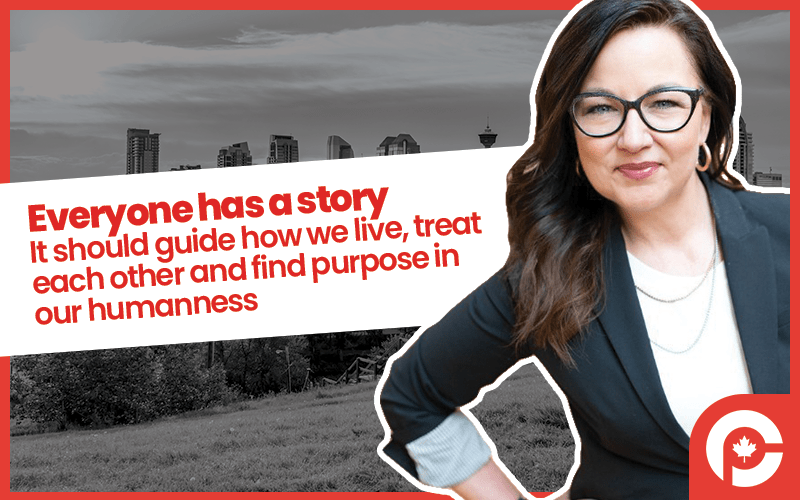
Everyone has a story and it should guide how we live, treat each other and find purpose in our humanness
Episode
Caroline Berglund is the founder and Principal of Talk Talk and The One Stop Special Needs Shop. She is...
Key takeaways
- Life is short, so pursue your entrepreneurial dreams and make a concrete plan to achieve them, even if you need to carve out time daily while still employed.
- Coaches need coaches too, as having an impartial place to discuss challenges, set objectives, and maintain accountability is valuable for professionals at every level.
- Creating psychological safety and showing vulnerability at work helps build trusting relationships where people can be authentically themselves rather than wearing masks.
- Balance doesn't truly exist for entrepreneurs, but being fully present in each moment and deliberately unplugging from technology helps prevent burnout.
- Schedule dedicated time to think, read, doodle, or take walks away from screens, as this mental space is where creativity and new ideas emerge.
Transcript
Full transcript page · Interactive episode
============================================================
TRANSCRIPTION WITH SPEAKERS
============================================================

[00:00] SPEAKER_00: Welcome to Canada's Podcast.
[00:05] SPEAKER_00: Hello, I'm Mario Tonigus,
[00:07] SPEAKER_00: a managing editor of Canada's Podcast.
[00:10] SPEAKER_00: Today on Calgary's Podcast,
[00:13] SPEAKER_00: my guest is Carolyn Berglund,
[00:15] SPEAKER_00: who is the principal of Talk Talk in Calgary.
[00:19] SPEAKER_00: Thanks, Carolyn, for joining us today.
[00:21] SPEAKER_00: Thanks for having me.
[00:23] SPEAKER_00: Well, let me just ask you a little bit about what you do.
[00:26] SPEAKER_00: What is Talk Talk?
[00:29] SPEAKER_01: Yeah, Talk Talk is a company that I started about 15, 16 years ago,
[00:36] SPEAKER_01: and actually stopped the business for a little bit,
[00:39] SPEAKER_01: so I went back into the big consulting houses for about a decade.
[00:43] SPEAKER_01: And then three years ago, actually, this month was in a position to resurrect it.
[00:49] SPEAKER_01: So what we do at Talk Talk is we play in a number of different spaces.
[00:53] SPEAKER_01: One is we work in the leadership space.
[00:56] SPEAKER_01: We work in team development.
[00:58] SPEAKER_01: We also do executive coaching,
[01:00] SPEAKER_01: and we help others be better public speakers.
[01:05] SPEAKER_00: And how did you get into this?
[01:07] SPEAKER_00: How did this all start?
[01:10] SPEAKER_01: It's a good question.
[01:12] SPEAKER_01: If I go back to my career at coming out of university,
[01:15] SPEAKER_01: I worked for a little organization by the name of Kellogg's,
[01:18] SPEAKER_01: so SnapCraftful and Falk.
[01:20] SPEAKER_01: I just spent 10 years in consumer package good sales.
[01:23] SPEAKER_01: But when I was at Kellogg's,
[01:25] SPEAKER_01: a gentleman had suggested we had launched one of my colleagues
[01:28] SPEAKER_01: that I take up a program called Dale Carnegie.
[01:31] SPEAKER_01: So you might be familiar with how to win friends and influence people.
[01:34] SPEAKER_01: So I ended up taking that program as a participant,
[01:38] SPEAKER_01: and then became what is called the graduated assistant,
[01:41] SPEAKER_01: and ended up instructing that program for a couple of years.
[01:44] SPEAKER_01: And so I kind of got a portal into facilitating and presenting in front of groups.
[01:48] SPEAKER_01: And so I've just continued alongside my career to develop that facilitation muscle,
[01:55] SPEAKER_01: if you will, and it's just something that I have adored.
[02:00] SPEAKER_00: What was it, you know, having worked in both areas for somebody and for yourself?
[02:10] SPEAKER_00: What was the biggest transition for you to go on your own and do it on your own?
[02:18] SPEAKER_01: Yeah, so Mary, I spent half of my career working for somebody else in various iterations.
[02:24] SPEAKER_01: Like I mentioned Kellogg's other consumer package good organization,
[02:28] SPEAKER_01: big consulting firms, and then I had my own, my own company.
[02:33] SPEAKER_01: And I think the biggest transition and why I like this space,
[02:37] SPEAKER_01: the entrepreneurial spaces, because you afforded the luxury of being creative.
[02:42] SPEAKER_02: Yeah.
[02:42] SPEAKER_01: So when you're under the tutelage of a big organization,
[02:46] SPEAKER_01: they kind of dictate how you do things and why you do things.
[02:51] SPEAKER_01: And now I get to be super creative in terms of the content that I'm creating for the teams in which I work,
[02:57] SPEAKER_01: the people that I work with.
[02:59] SPEAKER_00: What was your biggest challenge of doing this?
[03:06] SPEAKER_01: Yeah, another good question.
[03:09] SPEAKER_01: I would say just having the confidence in oneself to say that I can make that transition.
[03:14] SPEAKER_01: I believe in myself enough to do this, that I could get the client work.
[03:20] SPEAKER_01: And just making that leap and taking that risk, because it is a risk, right,
[03:25] SPEAKER_01: when you make that transition from the corporate world to yourself.
[03:29] SPEAKER_00: Yeah.
[03:31] SPEAKER_00: Now, you know, if you had some people like that you were mentoring safer and since,
[03:37] SPEAKER_00: and they were asking you questions about being an entrepreneur,
[03:42] SPEAKER_00: what would you tell them?
[03:43] SPEAKER_00: What would advice would you give them?
[03:46] SPEAKER_01: I would say if someone's considering going into having their own organization,
[03:51] SPEAKER_01: whether it's professional services like what I offer,
[03:54] SPEAKER_01: or they have a widget or whatever it is,
[03:58] SPEAKER_01: you know, it's funny, the older I get, the more I think, just go for it.
[04:02] SPEAKER_01: I know that sounds kind of like a little bit,
[04:05] SPEAKER_01: but I think life is really short.
[04:08] SPEAKER_01: And if you have a dream, I think part of our purpose in life is to pursue that dream,
[04:13] SPEAKER_01: whatever that is.
[04:15] SPEAKER_01: And so obviously there's all kinds of other implications, financial implications.
[04:20] SPEAKER_01: Can you do it? All of that.
[04:22] SPEAKER_01: But I would say do it or plan for it.
[04:25] SPEAKER_01: So even if you're in an organization, car vote time each and every day to look at your dream
[04:32] SPEAKER_01: and see if you can make that a reality.
[04:34] SPEAKER_01: So make a plan.
[04:35] SPEAKER_01: Leave in yourself, take the risk.
[04:38] SPEAKER_02: Mm-hmm.
[04:39] SPEAKER_00: We all know those stories, a lot of the famous stories out there where people just,
[04:46] SPEAKER_00: you know, kept going at it, right, kept going at it.
[04:49] SPEAKER_00: And now phenomenal success, right?
[04:53] SPEAKER_00: I guess it's, it's, especially when you're starting something new, it's hard, right?
[04:58] SPEAKER_00: It's hard, but easy to just stop, right?
[05:01] SPEAKER_00: And say, well, do this anymore.
[05:04] SPEAKER_01: And you might, I won't say fail, but I did, I did this twice.
[05:07] SPEAKER_01: So the first time I did it, quite candidly, and to offer, I was going through a divorce
[05:13] SPEAKER_01: and had a little kid.
[05:15] SPEAKER_01: And in the consultant profession, you have really good months.
[05:18] SPEAKER_01: You have some not so good months.
[05:19] SPEAKER_01: And so I needed a kind of a steadier kind of income stream.
[05:24] SPEAKER_01: So went and parked that for a little bit such that I could, could resurrect it some three years ago.
[05:32] SPEAKER_01: So even if it doesn't work the first time, if it still continues to be your dream,
[05:37] SPEAKER_01: yeah, continue to pursue it.
[05:39] SPEAKER_00: Yeah.
[05:40] SPEAKER_00: What do you like about, I guess, doing business here in Calgary and in the province?
[05:47] SPEAKER_01: Oh, well, I've been here 23 years.
[05:50] SPEAKER_01: I was born in Winnipeg, which as you talk to people in the community,
[05:55] SPEAKER_01: a lot of people are from Winnipeg.
[05:57] SPEAKER_01: Oh, yeah.
[05:58] SPEAKER_01: A lot.
[05:59] SPEAKER_01: But this is home now having been here 23 years.
[06:03] SPEAKER_01: There's a variety of industries.
[06:05] SPEAKER_01: I think the network is really strong.
[06:08] SPEAKER_01: I work in Calgary for sure, but I also work both side of Calgary.
[06:12] SPEAKER_01: In fact, a lot of my work.
[06:13] SPEAKER_01: I want to aircraft quite a bit into Toronto, Montreal.
[06:17] SPEAKER_01: But yeah, I think the clients that I have in in Calgary have been terrific in terms of just learning,
[06:24] SPEAKER_01: for example, oil and gas or, you know, that vertical.
[06:28] SPEAKER_01: So it's a great community of, I think entrepreneurs and industries for sure.
[06:34] SPEAKER_00: Can you think, you know, you're in the area of coaching, right?
[06:37] SPEAKER_00: And, you know, this isn't something 20 years ago you would have thought of or that is prevalent out out there in the business world.
[06:49] SPEAKER_00: What's over the years like that now, you know, so many executives seem to have poaches, right?
[06:57] SPEAKER_00: What's changed over that time?
[07:00] SPEAKER_01: Well, coaching is necessarily new, like even with the deal Carnegie program that is telling you,
[07:05] SPEAKER_01: even though it's a workshop, I think there's there's coaching opportunities there.
[07:09] SPEAKER_01: I think even coaches need coaches, I have a coach.
[07:12] SPEAKER_01: So I think it's a safe place to learn to talk about issues that might be happening in your universe.
[07:19] SPEAKER_01: And, and having someone to kind of just talk about how do I get out of that?
[07:24] SPEAKER_01: What do you think?
[07:25] SPEAKER_01: It's, it's an impartial place to have a conversation.
[07:29] SPEAKER_01: And so, for those that don't have coaches, I would encourage everybody to get a coach just because it's, and it's a great place to set objectives and, and be held accountable as well to those objectives in which you're, you're setting.
[07:45] SPEAKER_00: Now, you know, in terms of the coaching, what do you find, I guess, is there anything that is in particular that is a common thread throughout a lot of stuff that is in particular.
[07:59] SPEAKER_00: That people aren't doing and need to do.
[08:03] SPEAKER_01: Yeah, a lot of the people that I coach come to me because there's some kind of conflict going on.
[08:11] SPEAKER_01: So, I don't know, Mario, how conflict became a dirty word.
[08:15] SPEAKER_01: I don't think it's a bad thing.
[08:17] SPEAKER_01: I actually think healthy and passionate debate is, is part of working with other people.
[08:23] SPEAKER_01: So, I, thematically, I think what we work on, again, thematically, is building trusting relationships with those that we work with such that we can go into that passionate conflict.
[08:35] SPEAKER_01: We can have commitment and accountability and results and laying off of what they call Lindsey only's model.
[08:41] SPEAKER_01: The topic of psychological safety is really, really hot right now. It's not a new term, but it seems to have got a resurrection, if you will, which is, you know, just creating an environment of rewarded vulnerability.
[08:55] SPEAKER_01: And I'm borrowing that from Timothy Clark.
[08:59] SPEAKER_01: So, creating an environment where you can kind of show up and be who you are.
[09:03] SPEAKER_01: Right? So often, a lot of us think that we've got to put on some kind of weird mask when we go to the office.
[09:10] SPEAKER_01: And what I work with people is saying, no, let's see if we can get you to show up to be authentically who you are.
[09:17] SPEAKER_01: So, if you think of, you know, the iceberg example, and there's a water line above the water line, is that mask that we're presenting to one another.
[09:25] SPEAKER_01: And if we can lower that water line and show each other vulnerability, who we are, I think we become better human beings. So, we all have a story. I like to say, you know, some of us have kids that are special needs.
[09:39] SPEAKER_01: Some of us have parents that are on palliative care, some of us are dealing with illness.
[09:44] SPEAKER_01: And if we can look at each other as human beings, having a human experience, then, and the humanness of it all, then we can hopefully treat each other with kindness.
[09:56] SPEAKER_01: And at the core of what I do, Mario, that's what I do is teach others how to be kind to one another such that we can work with each other in a safe and trusting environment.
[10:07] SPEAKER_00: Now, the name of your company, tell me the story there like and how that came about.
[10:12] SPEAKER_01: Well, this is going to age me.
[10:16] SPEAKER_01: There was a band in 1981, talk, talk.
[10:22] SPEAKER_01: And it's a play on that.
[10:25] SPEAKER_01: So, there's the song, it's my life. They did a bunch of different really cool songs, but I've always just liked the pattern of repetition of words.
[10:35] SPEAKER_01: So, that's where it came from.
[10:37] SPEAKER_00: And speaking of words on, and looking at your the background screen, where is that from? And so that's an interesting story.
[10:45] SPEAKER_01: So it's not wallpaper. It's a mural.
[10:47] SPEAKER_01: So there's a.
[10:49] SPEAKER_01: These things that you have to stick on the wall, which there might have been some profanity as we're trying to put it up and try to align the words.
[10:57] SPEAKER_01: This is the number one talk I think that ever existed, which is from my favorite novel called to kill a mockingbird, where Atticus Finch defends Tom Robinson.
[11:08] SPEAKER_01: And it's so profound and meaningful to me that I wanted to showcase it in a more visible way.
[11:16] SPEAKER_01: And it's a great conversation stutter because people generally ask.
[11:23] SPEAKER_00: What, what was your attraction to that part of what what what did you like about that book?
[11:30] SPEAKER_01: Well, so I wrote a book called 365 must know talks of all times.
[11:36] SPEAKER_01: So some over a decade, though, and just to give you some background, I decided to blog every day for a year. So 365 entries.
[11:45] SPEAKER_01: And I would look at a talk whether these Steve Jobs to Martin Luther King Jr. try to answer the question.
[11:54] SPEAKER_01: Like what makes a good talk versus a superb one.
[11:58] SPEAKER_01: So I'd offer an analysis and a tip.
[12:01] SPEAKER_01: And as I was undergoing that exercise, I got to this talk and I thought this is a talk that embodies all of the things that I was exploring.
[12:13] SPEAKER_01: So I kind of put myself in my own little presentation skills university by doing that activity through it into a book, but this talk had purpose.
[12:22] SPEAKER_01: It had story and emotion and excited curiosity.
[12:25] SPEAKER_01: And I just think it's powerful words mean something.
[12:29] SPEAKER_01: And you can impact other people by the words in which you say.
[12:34] SPEAKER_01: And so whether you read the book or watch the Gregory Peck version of the movie.
[12:41] SPEAKER_01: If you haven't seen it, I encourage you know, anybody that's listening to this to go ahead and listen to that particular speech.
[12:49] SPEAKER_00: Just as an aside, and a personal note.
[12:52] SPEAKER_01: Yeah.
[12:53] SPEAKER_00: My best friend, I grew up in Ottawa.
[12:56] SPEAKER_00: I'm my best friend from childhood all the way through high school, any minute to university became an English teacher and.
[13:03] SPEAKER_00: Favorite book to kill a mockingbird and that he taught all the time every year.
[13:09] SPEAKER_00: And he always tried to get in touch with the author Harper Lee, I think, her name, right?
[13:16] SPEAKER_00: Yes.
[13:17] SPEAKER_00: And she's a recluse kind of like a JD Salon, your type.
[13:22] SPEAKER_00: So a recluse, but one day low and behold years ago, he received a letter from her and he couldn't believe it.
[13:30] SPEAKER_00: Yeah, I know.
[13:31] SPEAKER_00: Wow.
[13:33] SPEAKER_00: Yeah, he just like he was just worried.
[13:35] SPEAKER_00: He received the letter from her.
[13:36] SPEAKER_00: I think he tried to.
[13:37] SPEAKER_00: What did it say?
[13:38] SPEAKER_00: I can't remember like that, that, that, you know, what, you know, what it was about.
[13:45] SPEAKER_00: But he was just reaching out to say hi and how much you enjoy the book.
[13:50] SPEAKER_00: And I think it was just one of those things.
[13:52] SPEAKER_00: Thank you very much for your interest.
[13:55] SPEAKER_00: That, you know, all that type of stuff.
[13:56] SPEAKER_01: But I was telling you how committed I am to that book.
[13:59] SPEAKER_01: My son's name is out of this.
[14:01] SPEAKER_01: Oh, my.
[14:02] SPEAKER_01: So I'm committed.
[14:04] SPEAKER_01: I actually thought was having a girl and the name picked was going to be scout, which is another character in the book.
[14:10] SPEAKER_01: So there you go.
[14:10] SPEAKER_01: I was committed.
[14:12] SPEAKER_00: Oh, interesting, interesting.
[14:13] SPEAKER_00: So the how difficult, but you know, I'm a writer and so I write every day, but, you know, writing is not an easy thing for a lot of people.
[14:24] SPEAKER_00: And I'm just thinking like very self, like the 365 day.
[14:31] SPEAKER_00: How difficult was that?
[14:33] SPEAKER_01: Well, I don't claim to be any kind of like tool store here.
[14:36] SPEAKER_01: I want to call myself a brilliant writer, but I'm a conversational writer.
[14:41] SPEAKER_01: And I think the practice of writing every day, and I would love to hear your opinion.
[14:46] SPEAKER_01: Like the more you write, I think the better you get.
[14:49] SPEAKER_02: Yeah.
[14:49] SPEAKER_01: And that was my experience is that.
[14:53] SPEAKER_01: And then I fell in love with it.
[14:54] SPEAKER_01: I had written that at that point, a couple of short stories, a couple of, you know, I had written a novel.
[15:00] SPEAKER_01: But this was a way for me to learn.
[15:03] SPEAKER_01: And I'm a big fan of a term called that I learned a couple years ago, which is auto died that, which is an insatiable at appetite to learn.
[15:12] SPEAKER_01: Like just for the sake of it, not because I want to get a PhD or I need more letters behind me.
[15:18] SPEAKER_01: Just because you're curious.
[15:21] SPEAKER_01: And so that project of writing 365 days was just an exercise of learning.
[15:27] SPEAKER_01: Like what is it that makes a great presentation?
[15:30] SPEAKER_00: So when when when you're dealing with these individuals when you're coaching.
[15:39] SPEAKER_00: And I don't know how to phrase it.
[15:43] SPEAKER_00: But it's difficult to deal with like the top end of a company as opposed to the ones down below who are kind of climbing the ladder type thing, right?
[15:56] SPEAKER_00: But because the top end topic, exactly that maybe someone think, oh, you know, there's a reason I'm here because I know it all right.
[16:04] SPEAKER_00: Type thing.
[16:05] SPEAKER_01: Yeah, you know, so I work with all levels of an organization from CEOs to managers, supervisors to union, non union.
[16:13] SPEAKER_01: So the CEOs that come to me for let's say public speaking expertise, they've been awarded that rule because they've been quite technically good at running the company.
[16:27] SPEAKER_01: Then they get there and go, oh, wait, I don't know actually how to run a town hall.
[16:32] SPEAKER_01: I have learned that skill, right?
[16:35] SPEAKER_01: So it's interesting.
[16:37] SPEAKER_01: I'm working with the CEO right now and they were working on public speaking and he sent me his PowerPoint back.
[16:47] SPEAKER_01: And he was quite proud of it. And I said, well, I don't care.
[16:52] SPEAKER_01: Like the content needs to be there. But what we're going to focus our energies on is how are you going to deliver this? That's more.
[16:59] SPEAKER_01: That's the focus of our efforts is what's going to be your body language.
[17:04] SPEAKER_01: How are we going to tell a story? How are we going to incite some emotion and curiosity?
[17:09] SPEAKER_01: So to go back to your question of each, I think each level in a leadership organization has different challenges.
[17:17] SPEAKER_01: So it's that person going from individual contributor, I'm an employee.
[17:22] SPEAKER_01: Now I'm going to make that switch into becoming a leader.
[17:24] SPEAKER_01: Well, there's a whole slew of things that happen. What exercise do I need to pick up? What do I need to let go off and tell people don't let go?
[17:31] SPEAKER_01: And they just keep on being that working manager with that to do this.
[17:36] SPEAKER_01: So each one of those turns up through to the CEO suite.
[17:41] SPEAKER_01: There's there's various challenges that we work with.
[17:44] SPEAKER_01: But there it's difficult to say that there's a theme at any level because everybody's so different.
[17:50] SPEAKER_01: Everybody's got different personalities and desires and you know, yeah.
[17:57] SPEAKER_00: Who are who are some of the top speakers that you enjoy listening to?
[18:04] SPEAKER_01: Well, I must then I kind of start each of my days even now watching a TED talk.
[18:10] SPEAKER_01: I love TED.
[18:11] SPEAKER_01: And there are so many that I think are famous so like the Ken Robinson's out there that he talks about creativity in schools, which I think is a TED talk that's been down a little bit the most.
[18:24] SPEAKER_01: I think that's a brilliant one.
[18:26] SPEAKER_01: But there are other ones that I think are quite interesting and are less well known.
[18:30] SPEAKER_01: So there's a poet by the name of John Reeves that I like. He talks about the pattern of four o'clock in the morning.
[18:36] SPEAKER_01: He has a beautiful cadence in which and how he talks.
[18:41] SPEAKER_01: You know, there's a fellow by the name of Steven Dunne who talks about making small changes in your life.
[18:50] SPEAKER_01: And at the end of the year or five years, then all of a sudden you've really created massive change.
[18:56] SPEAKER_01: An example of his talk.
[18:58] SPEAKER_01: He would walk to work every day and listen to music.
[19:03] SPEAKER_01: And one day he said, well, I really wanted to learn a new language.
[19:06] SPEAKER_01: What if I replaced that activity with learning a new language?
[19:10] SPEAKER_01: So he started listening on those blocks to how to learn German.
[19:15] SPEAKER_01: So at the end of the year of doing that, he decided to go to Germany.
[19:19] SPEAKER_01: He told nobody that he was doing this, by the way.
[19:22] SPEAKER_01: And you know, enrolled in some immersive course of speaking German.
[19:26] SPEAKER_01: So he invites his family to Germany and he's now speaking eloquently German in his family.
[19:32] SPEAKER_01: He's like, what just happened here?
[19:34] SPEAKER_01: So just replacing one activity.
[19:37] SPEAKER_01: And he's got a myriad of other examples and that.
[19:41] SPEAKER_01: So each one of these talks that I think are great have impacted me in some way.
[19:46] SPEAKER_01: Like as a result of that Steven one, I end up creating my own list of things that maybe I need to do differently.
[19:52] SPEAKER_01: And if you've done your job well, then it insights in the other person that, well, maybe I should do that too.
[19:58] SPEAKER_00: That's interesting.
[20:01] SPEAKER_00: So what do you do?
[20:02] SPEAKER_00: Obviously as a, as a entrepreneur and owner of your own business type thing.
[20:09] SPEAKER_00: You know, we're always busy.
[20:11] SPEAKER_00: Right.
[20:11] SPEAKER_00: And so, and you know, many times it's like 24 or 7.
[20:16] SPEAKER_00: And where do you find the balance and how do you create the balance in your life?
[20:23] SPEAKER_01: Well, I don't think balance exists.
[20:25] SPEAKER_01: Mario, I you talked to entrepreneurs all the time and I don't know if that's a theme for that.
[20:30] SPEAKER_01: I'm not just for you, but I don't think I think there are times when you can arrive in an imbalance.
[20:36] SPEAKER_01: You know, I do try to take some time off.
[20:38] SPEAKER_01: I do recognize the power of really unplugging.
[20:43] SPEAKER_01: So that's important to get kind of a clean slate, but I've got a supportive partner, which I think is important.
[20:50] SPEAKER_01: That helps kind of run run the household ship, if you will.
[20:54] SPEAKER_01: And I think I think of anything.
[20:57] SPEAKER_01: It's about being present.
[20:59] SPEAKER_01: So my mom always said to me, when you're in the room, be in the room, which means whatever you're doing at this time, be there.
[21:07] SPEAKER_01: And don't try to be think of everything to everybody.
[21:10] SPEAKER_01: So it's about being being where you are and not being anxious about what's to come.
[21:17] SPEAKER_00: Yeah, also being there.
[21:21] SPEAKER_00: We see in so many, in so many relationships and interactivity that we have, we're seeing people being distracted.
[21:33] SPEAKER_00: You know, you go to a restaurant and people are on their phones, right?
[21:38] SPEAKER_00: Instead of eating and talking to each other or, you know, just different things like that that distract us.
[21:48] SPEAKER_00: Is it difficult because of all that today to be present?
[21:54] SPEAKER_01: Totally. Don't you think?
[21:56] SPEAKER_00: I think so.
[21:57] SPEAKER_01: I think, you know, in my career, I, you know, I didn't have a smartphone.
[22:02] SPEAKER_01: I didn't even have a cell phone until I was 30, right?
[22:05] SPEAKER_01: And who resisted that, I don't want to cell phone.
[22:08] SPEAKER_01: I don't want to be, you know, everybody being able to call me at any given point.
[22:12] SPEAKER_01: And I think there's a real discipline around putting that thing away such that you can give your head a break.
[22:20] SPEAKER_01: So I don't look at the phone first thing in the morning.
[22:23] SPEAKER_01: I make that a practice that we're not, you know, someone really needs to get a hold of me.
[22:27] SPEAKER_01: They can find me, but for that first hour, we're not looking at that device.
[22:31] SPEAKER_01: And then I am very good at putting it away and eating as well.
[22:34] SPEAKER_01: So I think carving out, you know, time to think is really crucial as an entrepreneur.
[22:42] SPEAKER_01: Then I don't hear a lot of people, a lot of people talking about like,
[22:45] SPEAKER_01: I'll often block my calendar to read or to watch a tent talk or to sit down with pen and paper and just doodle.
[22:56] SPEAKER_01: Right? Like it's creating that space to think is where you get ideas.
[23:02] SPEAKER_01: And where creativity is nurtured and creativity for me is critical.
[23:06] SPEAKER_01: And that's one of the reasons that we just talked about why I left the corporate world.
[23:10] SPEAKER_01: It couldn't be creative there.
[23:12] SPEAKER_01: So baking in that time, I think would be my only advice I guess is to big time to think.
[23:21] SPEAKER_02: Yeah.
[23:22] SPEAKER_00: Yeah.
[23:23] SPEAKER_01: What have you found with entrepreneurs and.
[23:25] SPEAKER_00: Same thing.
[23:26] SPEAKER_00: You know, same thing.
[23:27] SPEAKER_00: They're always.
[23:29] SPEAKER_00: You know, when you asked the question about the balance, I've heard that a lot, you know, for entrepreneurs.
[23:36] SPEAKER_00: But, but, you know, the thing too, I think is important is that we need to take the time away from things.
[23:45] SPEAKER_00: You know, not only just to relax, but I find the same thing for myself.
[23:50] SPEAKER_00: Like I try to get out every day to go for a walk, right?
[23:54] SPEAKER_00: And it's when I'm walking is that all these things pop into my head.
[24:00] SPEAKER_00: When I'm away from this and this, you know, the screen, etc.
[24:08] SPEAKER_00: And just out of the blue, boom, things pop into my head.
[24:12] SPEAKER_00: I just came back for my holiday and did a lot of walking there.
[24:17] SPEAKER_00: And, and the other side of rural Saskatchewan.
[24:21] SPEAKER_00: And times of stuff, times of stuff, just popping in my head.
[24:25] SPEAKER_00: Right?
[24:26] SPEAKER_00: And I think that's, you know, I think you have to empty your your mind, I guess, to have things come in.
[24:37] SPEAKER_00: Because your mind's open.
[24:38] Speaker UNKNOWN:
[24:38] SPEAKER_00: But stuff, nothing's going to come in, right?
[24:40] SPEAKER_01: Yeah, I have the opportunity a couple of weeks ago to go to friends cabin and it's off grid.
[24:47] SPEAKER_01: Off the grid.
[24:48] SPEAKER_01: Like no sell service, land line, right?
[24:52] SPEAKER_01: And if that phone rings or like what's happening?
[24:55] SPEAKER_01: So that was an interesting exercise in understanding our addiction to all things connected to Wi-Fi.
[25:03] SPEAKER_01: Where I couldn't even check if I wanted to.
[25:06] SPEAKER_02: Yeah.
[25:07] SPEAKER_01: So there's a period of, oh, this feels deeply uncomfortable.
[25:11] SPEAKER_01: And then you find yourself in this pattern of, well, I don't know if I want to go back yet.
[25:15] SPEAKER_01: I kind of like this space of nothingness.
[25:18] SPEAKER_00: Oh, I hear you.
[25:19] SPEAKER_00: I hear you.
[25:20] SPEAKER_00: I try to do that every so often just to recharge and.
[25:25] SPEAKER_00: And you find you find if you don't rest.
[25:29] SPEAKER_00: And don't unplug in many ways, whether it's from technology or work.
[25:36] SPEAKER_00: I think you know, that's a fine recipe for burning out.
[25:42] SPEAKER_00: And being unproductive as you could be.
[25:46] SPEAKER_01: But it'll be you.
[25:47] SPEAKER_01: I burn some of the couple times in my career.
[25:49] SPEAKER_01: It's not a lot of fun.
[25:50] SPEAKER_01: And it takes a lot of stuff back from that.
[25:53] SPEAKER_01: Yeah.
[25:53] SPEAKER_00: Yeah, exactly.
[25:54] SPEAKER_01: So if you can be preventative, I think that's the real real message.
[25:58] SPEAKER_00: Yeah.
[25:59] SPEAKER_00: All right.
[25:59] SPEAKER_00: Well, thanks very much, Carolyn, for joining us today.
[26:03] SPEAKER_01: Thank you for having me.
[26:04] SPEAKER_01: It's been a pleasure.
[26:05] SPEAKER_00: All right.
[26:06] SPEAKER_00: That was Carolyn Bergland, who is principal of talk talk.
[26:10] SPEAKER_00: I'm Mario Tonigusi, managing editor of Canada's podcast today with Kelli's podcast.
[26:15] SPEAKER_00: Thanks for joining us.