
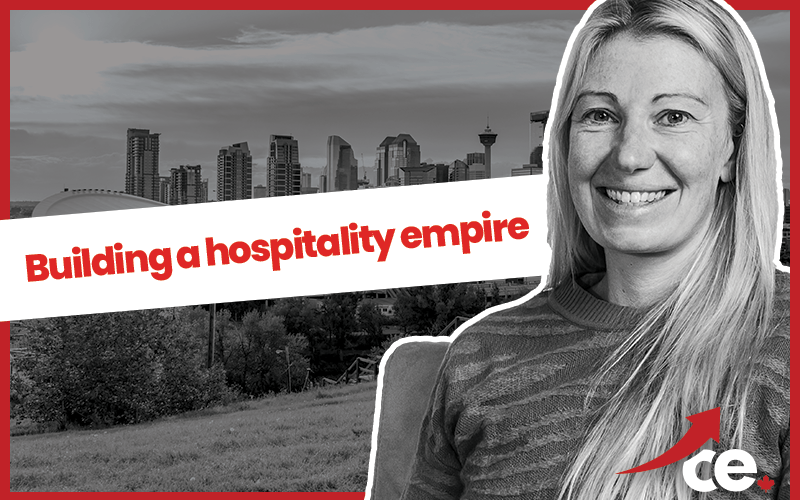
Building a hospitality empire
Watch episode
Episode
Sky McLean is a Canadian entrepreneur building a hospitality empire with her company Basecamp Resorts, the fastest growing hospitality...
Key takeaways
- Sky McLean emphasizes that successful entrepreneurs must embrace calculated risk and execute on their ideas once they have enough data and knowledge, rather than suffering from analysis paralysis.
- Raising capital remains the biggest ongoing challenge for entrepreneurs at every stage, from needing $8 million for the first hotel project to requiring hundreds of millions as the business scales.
- Work-life balance is crucial for entrepreneurial success, and founders should build businesses that can function during their absence rather than believing everything will crumble if they step away.
- Location choices that align with personal lifestyle priorities can provide natural stress relief and better work-life integration, making proximity to outdoor activities a strategic advantage for mental health.
- True entrepreneurs must honestly assess whether they can handle the inherent stress and risk, including extreme measures like paying payroll on credit cards, because entrepreneurship isn't suited for everyone despite its appeal.
Transcript
Full transcript page · Interactive episode
============================================================
TRANSCRIPTION WITH SPEAKERS
============================================================

[00:00] SPEAKER_01: Welcome to Canada's Entrepreneur, where we talk to the entrepreneurs who are making it happen
[00:05] SPEAKER_01: across Canada and deliver the news, trends, knowledge and opinions from entrepreneurs and business
[00:13] SPEAKER_02: influences across the country. Hello, I'm Mario Toneguzi managing editor of Canada's Entrepreneur,
[00:21] SPEAKER_02: joining me on Calgary's podcast is Sky McLean, who is founder and CEO of Everwild Nordic Spa,
[00:29] SPEAKER_02: as well as founder and CEO of Basecamp Resorts. Thanks for joining us, Guy.
[00:37] SPEAKER_00: Thank you so much for having me today. All right, and you're based in Canmore, right?
[00:43] SPEAKER_02: That's right. Okay, let's talk a little bit about each of those entities, and let's start with
[00:51] SPEAKER_02: the Everwild Nordic Spa. Tell me a little bit about that, what that is.
[00:57] SPEAKER_00: Yeah, of course. So as the name would suggest, it's Nordic Spa, but back in time a little bit,
[01:05] SPEAKER_00: we have a hotel in Canmore that's currently called Mountain House Hotel, and we were going to
[01:11] SPEAKER_00: expand the hotel because the hotel itself came with an extra two acres of land. And I was standing
[01:17] SPEAKER_00: on the land and thought, why are we building more hotel rooms? We should build a spa. And so that
[01:22] SPEAKER_00: was the onset of the idea that since we've hired professionals and architects and engineers,
[01:27] SPEAKER_00: and we're actually opening November 20th, which is going to be Canmore's first Nordic Spa.
[01:31] SPEAKER_00: So we're really excited for the grand opening. It's well underway in terms of construction,
[01:35] SPEAKER_00: design, procurement, all of those things. Okay, and what is Basecamp Resorts?
[01:44] SPEAKER_00: The Basecamp Resorts is the name of the hotel company. So back in 2017,
[01:49] SPEAKER_00: I decided I wanted to build a hotel. So this whole thing started with me building a hotel called
[01:55] SPEAKER_00: Basecamp Resorts. That was basically a purpose-built Airbnb. So Stack Town Homes.
[02:02] SPEAKER_00: So there were
[02:05] SPEAKER_00: multi-pill different unit types. They all had their own full kitchen, different size bedrooms,
[02:12] SPEAKER_00: bathrooms, basically a home away from home. The company then evolved and started acquiring
[02:16] SPEAKER_00: different types of hotels, so motel conversions like Lamb House on Main Street, hotel conversions,
[02:23] SPEAKER_00: like Mountain House, and continued to grow. And now we're growing very various on the hot,
[02:31] SPEAKER_00: cold, rest, repeat. And that's the Thermo Cycle, which is kind of the basis of the Nordic Spa.
[02:38] SPEAKER_00: We're bringing that, but also the different sauna rituals and different Nordic Spa-inspired
[02:44] SPEAKER_00: experiences to our various locations with the first one being Canmore.
[02:50] SPEAKER_02: Well, that's the same. So you're not from Canmore, right?
[02:57] SPEAKER_02: No, not originally. I'm from Toronto. Okay, so when did you come out West and why?
[03:07] SPEAKER_00: So I graduated from undergrad and business and was like, you know what, I'm going to go to Calgary
[03:13] SPEAKER_00: for a year, work for Cadbury, sell chocolates, do sort of that like first job out of school thing,
[03:19] SPEAKER_00: move back to Toronto, climb the corporate ladder, do all that. But I never went back other than to do
[03:25] SPEAKER_00: my MBA in real estate development, which I did because I knew I wanted to be in real estate development,
[03:30] SPEAKER_00: came back to Calgary in 2012, worked for a series of different real estate developers before
[03:35] SPEAKER_00: starting my own real estate company in 2016. And why out here though, like all the places,
[03:45] SPEAKER_02: what attracted, what was the appeal of coming out this area?
[03:52] SPEAKER_00: Well, for me personally is the lifestyle. Like I thought Calgary was the best thing ever because
[03:57] SPEAKER_00: you could be in Calgary, you could have a corporate job, make lots of friends, do all the like
[04:01] SPEAKER_00: city stuff, but be an hour from the mountains, from skiing, from mountain biking, from all the things
[04:08] SPEAKER_00: I actually love to do from a lifestyle perspective. That's fundamentally how I actually ended up in
[04:12] SPEAKER_02: Canmore in the end, but it started in Calgary. Okay, and maybe talk about that journey to Canmore and
[04:19] SPEAKER_02: why did you end up there and living there and doing business there?
[04:27] SPEAKER_00: Yeah, you bet. So when I was working for one of those
[04:30] SPEAKER_00: multitude of developers after my MBA in real estate, I wanted to buy a condo in Canmore,
[04:36] SPEAKER_00: which I did, and I commuted into Calgary three days a week and two days a week stayed with a friend,
[04:41] SPEAKER_00: and that condo had this very specific zoning that allowed me to rent it out on Airbnb or live
[04:48] SPEAKER_00: in it full time. So I did a hybrid of both, and that's how I got into hotels. I just still had this
[04:53] SPEAKER_00: random condo that I would put on Airbnb when I was either staying in Calgary or away from the weekends
[04:59] SPEAKER_00: for the weekend story, and then was like, oh my gosh, like this is actually really lucrative,
[05:04] SPEAKER_00: more lucrative than my real job. I'm going to build a hotel. And so long story short, that's how
[05:10] SPEAKER_00: this whole base camp resorts ever world spa started. What do you think the appeal is of Canmore,
[05:19] SPEAKER_02: and to people like, you know, I'm a big fan. I love going out there and spending time,
[05:27] SPEAKER_02: but you'll get people from all around the world. You walk down the main street and you see,
[05:32] SPEAKER_02: and you hear so many different languages. What's the appeal of Canmore?
[05:38] SPEAKER_00: Oh, it's just the best. The appeal, to be honest, it all started in BAMF, I think,
[05:45] SPEAKER_00: like that was always the original place people would visit before Canmore, before I was even born.
[05:52] SPEAKER_00: And people always heard about BAMF, heard about the mountains, heard about the majestic beauty of
[05:56] SPEAKER_00: the rock, the hiking, the skiing, all the things. And then that spilled over to Canmore. And then
[06:03] SPEAKER_00: over the years, Canmore has evolved into its own gem that doesn't rely on BAMF for tourism,
[06:08] SPEAKER_00: because it is, in fact, beautiful. There's amazing biking. There's amazing skiing really close by.
[06:12] SPEAKER_00: The Nordic Center for Cross Country skiing is amazing. And if you're not into those sports,
[06:17] SPEAKER_00: and you just want to hang out and observe the mountains, there's a ton of walking trails,
[06:22] SPEAKER_00: cute shops, great restaurants, all the things for people who might not be, you know, as adventurous,
[06:27] SPEAKER_00: but still want to have a really nice time in the mountains. And that was another reason for this
[06:32] SPEAKER_00: Nordic spa business, was that people love to have really great experiences and really beautiful
[06:37] SPEAKER_00: experiences in the mountains. And not everybody wants to, you know, hike for five hours,
[06:42] SPEAKER_00: and then mountain bike for another three hours. Like that's not for everyone. So the Nordic spa will
[06:47] SPEAKER_00: have, you know, that place in Canmore for people who want to relax, rejuvenate, look at the
[06:53] SPEAKER_00: mountains, but maybe not like go crazy. So I'm really excited about it. Yeah, you know, there's a
[06:59] SPEAKER_02: different vibe among people who live in a place like Canmore, or any mountain resort, whether
[07:08] SPEAKER_00: BAMP or Jasper, or any place like that. Oh, for sure. Yeah. I would say that if you're comparing
[07:18] SPEAKER_00: it to Calgary or Toronto or something like that, it's definitely way different people.
[07:22] SPEAKER_00: And you know, if you're going to live in one of these small towns, you're sacrificing certain
[07:27] SPEAKER_00: elements of like affordable living, because it doesn't exist in these small towns, amenities,
[07:32] SPEAKER_00: proximity to airport, like all these kinds of things that you get in the city, because you really
[07:36] SPEAKER_00: love the lifestyle. You're willing to pay, you know, the Canmore premium, right now I'm sitting in
[07:40] SPEAKER_00: Rubble Stoke, the Rubble Stoke premium to have this lifestyle, which, which to your question really
[07:46] SPEAKER_00: brings in a certain special type of person that's willing to do that because they want to be in
[07:51] SPEAKER_00: the mountains, they want to live that lifestyle, they want their kids raised, you know, close to the
[07:55] SPEAKER_00: ski hill or whatever it may be. So I think it really does drive an outdoor driven person to these
[08:01] SPEAKER_02: markets. Is it a feel that when you get there, like people are kind of chill, right there, they're
[08:11] SPEAKER_02: pretty relaxed and calm and you know, life just goes on at a normal pace, it's not like 100 miles
[08:20] SPEAKER_00: an hour. Yeah, a little bit, but I still think it's pretty fast pace because everyone's trying to
[08:28] SPEAKER_00: go biking, trying to go skiing, trying to do this, trying to do that. So I think it's chill, but it's
[08:31] SPEAKER_00: just different, right? Everyone's trying to do a million things, but maybe it's just a bit of different
[08:35] SPEAKER_02: things. Yeah. Now, being right at the doorstep of all this stuff and the outdoors, you think that
[08:44] SPEAKER_02: helps you as a business owner, just having the breaks, I guess. So like just from the mental
[08:55] SPEAKER_02: kind of a mental point of view that got the outdoors to chill out and relax and not be at your
[09:05] SPEAKER_00: job like every single second of the day. Yeah, I think so. If we compare myself to my colleagues
[09:12] SPEAKER_00: in Toronto, for example, where they're in the concrete jungle and everyone's working or
[09:17] SPEAKER_00: all downtown and it's total chaos, being in the mountains, you can go for a run up the trail
[09:23] SPEAKER_00: at lunchtime, go back to your desk and feel to your point like way better than you did before you
[09:27] SPEAKER_00: started. So having the experiences that I love in the backyard and soon to have the spa to
[09:35] SPEAKER_00: balance that all out, it's really great and does for me promote a better lifestyle and
[09:42] SPEAKER_02: work life balance. Tell me a little bit about, I guess, your attraction to real estate and
[09:51] SPEAKER_00: where did that come from and why real estate? Yeah, well, for me was one of those things that was
[10:00] SPEAKER_00: just just made sense. Like, you know, some people they understand physics or some other people
[10:05] SPEAKER_00: understand chemistry. Some people are really artistic and can sing and can play the piano and all
[10:10] SPEAKER_00: this stuff. Like, to me, real estate was naturally what made sense in my brain, the analysis, the
[10:17] SPEAKER_00: risk factor, like it's high risk business. But on top of all that, when I was a kid, my parents
[10:24] SPEAKER_00: always loved to look at different houses and my mom really wanted to buy homes and renovate them
[10:30] SPEAKER_00: and flip them and my dad was an engineer and she thought he'd be the perfect, you know, partner in
[10:35] SPEAKER_00: this endeavor and then he never wanted to do it because he was so risk averse. So they was
[10:39] SPEAKER_00: talked about this and then they never did it. And so as a kid, I was like dragged all over the
[10:44] SPEAKER_00: place to all these, you know, potential projects. And then we never did them. And I was like, this
[10:48] SPEAKER_00: is stupid. This would be a great project or this would be a great project. And I was like eight
[10:52] SPEAKER_00: years old. So I think I was exposed to all the thought processes and then never did the execution
[10:57] SPEAKER_00: as a kid. So had that sort of like ingrained in me and was like, okay, that's it. Like, when I grow
[11:02] SPEAKER_00: up, I'm going to execute on all these ideas that my parents never did. And so that's probably
[11:08] SPEAKER_00: where it came from. But I really wanted to do the education piece. So like the MBA and real estate
[11:12] SPEAKER_00: development because I felt that that would, you know, be a good foundation for a career and real estate.
[11:17] SPEAKER_00: And it was not just the education itself, but the people that I met, the jobs I got from that,
[11:21] SPEAKER_00: it all sort of like came to fruition. It wasn't always mapped out, but it all worked out in the end.
[11:30] SPEAKER_02: And sorry, where did you do the MBA? The MBA was in Toronto.
[11:35] SPEAKER_00: What school? As Schulik, which is the business school at York University.
[11:40] SPEAKER_02: Okay. And did you go to your regular university there as well?
[11:44] SPEAKER_00: I did actually. Yeah. Oh, okay. I specifically went back there because I would have liked to have
[11:48] SPEAKER_00: a different experience and do an MBA somewhere else. But I specifically went there because they had
[11:54] SPEAKER_00: this quite notable MBA and real estate development. And I knew that that's what I wanted to do.
[11:59] SPEAKER_00: So I didn't want to go just like do an MBA. I wanted to do this specific MBA.
[12:04] SPEAKER_02: Yeah. Okay. What was when you were starting out and you know, starting off your own
[12:11] SPEAKER_00: business, what was the biggest challenge for you? Oh my gosh, they're like 100. I suppose the
[12:19] SPEAKER_00: biggest challenge was raising money like for me and still is frankly. For me, you know, I didn't
[12:27] SPEAKER_00: have all this money to build the first hotel. We needed $8 million, $2 million in equity and
[12:32] SPEAKER_00: $6 million in debt. And you know, I had like five bucks. So it was like, okay, I got to figure out
[12:37] SPEAKER_00: how to get all this money together, phone people. I knew I had the idea. I knew I had the
[12:42] SPEAKER_00: pro forma and I knew I'd identified the piece of land. But I then had to find money for the deposit,
[12:47] SPEAKER_00: find money to acquire the piece of land, which was $800 grand, find the remaining equity required
[12:52] SPEAKER_00: to get a bank loan. And I couldn't get a bank loan because here I am this random person,
[12:56] SPEAKER_00: you know, with no collateral and all that. So I had to go to a private lender and get money from
[13:01] SPEAKER_00: a private lender. And so that was the hardest part was really just pulling all the money together
[13:05] SPEAKER_00: because I was confident in the idea, the design, the stag townhomes, the zoning, my ability and
[13:11] SPEAKER_00: real estate development. And Tim, my boyfriend at the time who's now my husband, I knew he could build
[13:18] SPEAKER_00: the thing. So I was like, Tim, let's build a hotel and he's like, okay, but I had to go and find all
[13:22] SPEAKER_00: the money. So that was the biggest challenge. What's the biggest challenge today?
[13:27] SPEAKER_00: Binding the money. It's a consistent thing. And instead of needing $8 million, we need like $800
[13:34] SPEAKER_00: million. So it's just like, it's just you add zeros as you go along. Yeah.
[13:40] SPEAKER_02: What, yeah, when you, you know, along your journey as an entrepreneur,
[13:46] SPEAKER_02: do you have any kind of mentors or role models that you looked up to and helped you along the way?
[13:57] SPEAKER_00: Yeah, I had a few people on the way I would go to for, you know, various snippets of advice,
[14:03] SPEAKER_00: depending on what the topic was, but I didn't have, you know, like a specific defined mentor
[14:09] SPEAKER_00: the way some people didn't know I didn't have that. Yeah, what about in terms of looking up to
[14:14] SPEAKER_02: saying people out there that that were successful business people and entrepreneurs, you know,
[14:22] SPEAKER_02: in the world, anybody come to the note for you that you know, now there really isn't anyone that
[14:30] SPEAKER_00: comes to mind, but back in the day, I was sitting out and be like Barbara Corcoran, you know, like
[14:35] SPEAKER_00: the New York City woman who's on Shark Tank or whatever and she went from nothing to where she
[14:41] SPEAKER_00: is today and her story is, you know, quite, quite interesting and there's a few others like that,
[14:47] SPEAKER_00: but yeah, she always came to mind just because she was, you know, I guess,
[14:51] SPEAKER_00: semi-famous being on Shark Tank and I was like, I'd like to meet her because I kind of did the
[14:55] SPEAKER_00: same thing she did, but a bit different in development, but yeah. And I'm just curious, any
[15:00] SPEAKER_00: books that you read that helped you along the way? Yes, I'm really in a book now called diary of a CEO,
[15:08] SPEAKER_00: it's really good. And your couple of friends listened to the podcast and I'm in the middle of the book
[15:14] SPEAKER_00: and there's another one that's very notable and I'm like the title is escaping me.
[15:21] SPEAKER_00: If it was sitting over there, I'd go grab it, but there's a few, yeah, but the diary of a CEO is good,
[15:27] SPEAKER_00: so I do like to read those types of books for sure. What advice would you give a young person that
[15:33] SPEAKER_02: as, you know, they're come to you and say, hey, I'm having an idea, I want to be an entrepreneur,
[15:39] SPEAKER_00: what would you tell them? Well, if they really believe in the idea and they have some data, you know,
[15:46] SPEAKER_00: like when I started, I didn't have all the data, I didn't have all the experience in order to
[15:50] SPEAKER_00: have all the knowledge, but I had enough. And so if that person has enough, just enough in their
[15:55] SPEAKER_00: field or the ability and the money to hire experts depending on the field, that they just have to
[16:01] SPEAKER_00: do it. You know, you can really suffer from analysis paralysis. And if you're a true entrepreneur,
[16:08] SPEAKER_00: you do just do it. And if you can't do it because you're too risk averse and it's, you know,
[16:12] SPEAKER_00: you're losing sleep at night and it's just too painful, then go get a job, get paid every two
[16:16] SPEAKER_00: weeks, right? Like it's not for everybody. So I think a lot of people want to be entrepreneurs,
[16:21] SPEAKER_00: because it sounds so like magical, but then like they're innate self entrepreneurs, they can't
[16:26] SPEAKER_00: sleep at night, they can't handle the risk, they can't handle the stress, they can't pay payroll
[16:29] SPEAKER_00: on the credit card, which I've done. Like if you can't do that, then don't do it. Like don't think
[16:34] SPEAKER_00: you're a person that you're not would be my advice. And if you really are that person, then just
[16:38] SPEAKER_00: do it. And it'll work out. So that's what I would say. Outside of the spending time outdoors, what
[16:46] SPEAKER_00: do you have any other interests and hobbies that? Yeah, well, I've two kids. I have a six-year-old
[16:53] SPEAKER_00: girl and a four-year-old boy. So I do a lot of like storm lessons and soccer games and things like
[16:58] SPEAKER_00: that. So I find like their activities have of course become my activities. So it's but it's really
[17:04] SPEAKER_02: cute. Yeah. Now do you think of, you know, especially for entrepreneurs, as said, who are almost
[17:11] SPEAKER_02: always thinking about their company? How important is that to strike that balance in your life?
[17:21] SPEAKER_00: Oh, for me, it's really important. Like I have seen people and read books frankly about people who
[17:27] SPEAKER_00: just work too much and it's just I just it's not good and it runs well, right? It's like the
[17:32] SPEAKER_00: it's important to find that balance and that balance is different for each person. So there's no
[17:38] SPEAKER_00: right and wrong. But it's like for each person, they have to figure out what it is that they need
[17:43] SPEAKER_00: to feel fulfilled. And if you have kids, obviously, that's a huge part of it. If you don't have kids,
[17:48] SPEAKER_00: is it outdoor activity? Is it some form of meditation? Is it travel? Is it, you know, it's not being
[17:54] SPEAKER_00: all consumed and thinking that if you take a week off, the whole business is going to crumble because
[17:59] SPEAKER_00: if you're a good entrepreneur, the business shouldn't crumble if you go on holiday for a week.
[18:03] SPEAKER_02: No, that's true. But this tough though, isn't it for entrepreneurs to get away from their
[18:09] Speaker UNKNOWN: business? Because that's their baby, right? And uh, uh, uh, uh, uh, uh, uh, uh, uh, uh, uh, uh, uh,
[18:13] SPEAKER_00: totally. Yeah. 100%. To your point, you never stopped thinking about it. You never stop.
[18:19] SPEAKER_00: Yeah. Even that I'm, you know, it's like 11 o'clock in the night and I was writing notes of things
[18:23] SPEAKER_00: that I was thinking of that, oh, I got to do this in the morning, that in the morning,
[18:26] SPEAKER_00: you got to think of this. Like, you know, when people put those out of office things on their email,
[18:30] SPEAKER_00: I always laugh. Like, oh, must be nice. Direct your emails to someone else. I've never done that.
[18:36] SPEAKER_02: But you got to wonder like how many times those, uh, like, like, keep checking them though, right?
[18:41] SPEAKER_02: The check of the email, even though they have the out of office thing, right?
[18:45] SPEAKER_00: Yeah, I don't think they're checking them. My staff love them dearly, but I don't know if they're
[18:49] SPEAKER_00: checking their emails when they're out of offices. And no, do I want them to? It's just fine.
[18:54] SPEAKER_02: So, um, where do you see the, the business being in five years?
[18:59] SPEAKER_00: Well, in five years, we'll have a multitude of spas open, not just can, or because we're going to
[19:04] SPEAKER_00: start building it. We started building actually in Fernie, we're starting in Calgary. Hopefully,
[19:08] SPEAKER_00: start in Bayon. Um, we're looking at sites in Ontario. We definitely want to expand. Um, so I think
[19:14] SPEAKER_00: we'll have a bunch of different spas underway and hopefully still growing. Okay, wonderful. Well,
[19:20] SPEAKER_00: thanks so much, Sky, for joining us today. Well, thank you so much for having me. I really
[19:24] SPEAKER_02: appreciate it. Okay, that was Sky McLean, who is CEO and founder of Ever Wild Nordic Spa and
[19:32] SPEAKER_02: base camp resorts. I'm Mario Toniguzzi, managing editor of Canada's Entrepreneur. Thanks for
[19:38] SPEAKER_02: joining us today.