
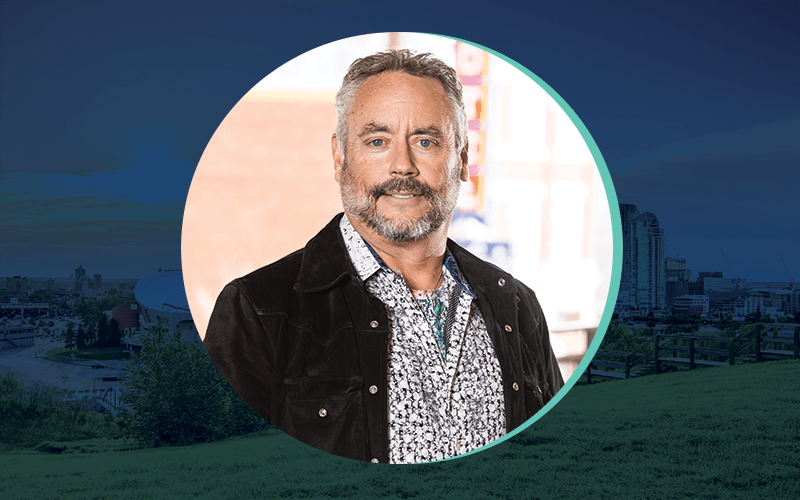
Brett Wilson, Owner of Multiple Businesses and Part Owner of the Nashville Predators Discusses the Short and Long Term Impact of COVID-19 on the Economy
Episode
Brett Wilson is a well-known Canadian entrepreneur and former dragon on Dragons’ Den on CBC TV. He is an...
Key takeaways
- Entrepreneurs need creativity, patience, and tenacity to navigate changing rules and confusion as businesses attempt to recover from pandemic shutdowns.
- Landlords should work collaboratively with their tenants rather than taking an adversarial approach, as their futures are tied to how they treat small businesses that employ 85% of Canadians.
- People are social creatures who will return to normal activities faster than forecasted because they crave connection and engagement that technology cannot fully replace.
- This is a man-made recession caused by shutdowns, not a cyclical long-term recession, which means recovery can happen more quickly than traditional economic downturns.
- During challenging times, businesses should focus on creating community goodwill and keeping staff engaged through initiatives that serve those in need and front-line workers.
Transcript
Full transcript page · Interactive episode
============================================================
TRANSCRIPTION WITH SPEAKERS
============================================================

[00:00] SPEAKER_00: It's Calgary's podcast on the Canada's podcast network.
[00:05] SPEAKER_01: Hello, this is Mario Tonigüzi coming to you today with Calgary's podcast, a member
[00:09] SPEAKER_01: of Canada's podcast network, where we talk to the entrepreneurs who are making it happen
[00:15] SPEAKER_01: in Calgary, Alberta.
[00:17] SPEAKER_01: So you can listen, discover, and engage.
[00:20] SPEAKER_01: Our guest today is Brett Wilson, a well-known Canadian entrepreneur who is co-owner of
[00:26] SPEAKER_01: Kaleigh's restaurants and pubs here in Calgary.
[00:29] SPEAKER_01: He is also a part owner of the Nashville hockey team in the NHL and many other things.
[00:34] SPEAKER_01: So Brett, let's start, just give me your perspective of the COVID virus and the pandemic and the
[00:41] SPEAKER_01: impact that that has had.
[00:44] SPEAKER_01: Let's start with yourself personally and your business operations.
[00:48] SPEAKER_00: Well, I own a couple of gyms or one of them is called Rally Point in Calgary, Global
[00:53] SPEAKER_00: Fitness in Colona.
[00:55] SPEAKER_00: We've had to lay off everybody.
[00:57] SPEAKER_00: We are actively invested thanks to DragonStent in a business out of Regina that had 150 employees
[01:03] SPEAKER_00: making jewelry.
[01:04] SPEAKER_00: We had to lay off everybody.
[01:06] SPEAKER_00: That was probably the most emotionally difficult days of my business career, letting go groups
[01:14] SPEAKER_00: of people and things like that.
[01:16] SPEAKER_00: Then there was the negotiations as a landlord with some of my tenants.
[01:19] SPEAKER_00: Then there were the negotiations as a landlord with my lenders, the banks that were giving
[01:24] SPEAKER_00: us money.
[01:25] SPEAKER_00: And so it was creating, instead of a growth opportunity, building businesses, which is
[01:29] SPEAKER_00: something I love to do.
[01:31] SPEAKER_00: This was all about preservation and keeping things from being destroyed.
[01:35] SPEAKER_00: And I can tell you that mid-March was probably one of the most darkest places I've ever
[01:40] SPEAKER_00: been in terms of my business career.
[01:42] SPEAKER_00: Here we are now six weeks later.
[01:45] SPEAKER_00: The world is coming out in recovery.
[01:48] SPEAKER_00: I think we're coming out in recovery too slow.
[01:51] SPEAKER_00: I think we're overestimating the concern that we need to have.
[01:54] SPEAKER_00: We need to protect the elderly, to protect the infirm, protect the at risk, but we don't
[01:59] SPEAKER_00: need to shut down the world.
[02:00] SPEAKER_00: And so I think we've overreacted.
[02:02] SPEAKER_00: My hope when I say that is that we come back faster than the headlines would let us believe.
[02:07] SPEAKER_00: If you follow some of the mainstream media, the headlines would tell us that, believe
[02:12] SPEAKER_00: it or not, they announced that we're going into a recession.
[02:15] SPEAKER_00: I don't know why that had to be brought to the headlines because it's pretty obvious
[02:19] SPEAKER_00: when you shut down the economy, you are effectively in a recession.
[02:22] SPEAKER_00: But I'm optimistic that we will collectively turn a corner faster than the headlines would
[02:28] SPEAKER_00: let us believe.
[02:29] SPEAKER_01: Now, you mentioned Dragonsden.
[02:31] SPEAKER_01: Obviously you were on Dragonsden a few years back.
[02:34] SPEAKER_01: Well, you're well versed in the whole entrepreneurial world.
[02:38] SPEAKER_01: What kind of qualities do businesses right now to survive this whole thing?
[02:45] SPEAKER_00: Well, creativity, patience, tenacity.
[02:50] SPEAKER_00: We're struggling with rules that are changing.
[02:53] SPEAKER_00: Rules that are being announced and then a day later they're being modified and tweaked.
[02:57] SPEAKER_00: We don't know really if bars and restaurants are open to someone want to go to a bar and
[03:02] SPEAKER_00: order a beer from someone wearing full gear, you mask, a shield, any gloves.
[03:08] SPEAKER_00: I mean, it's not a user-friendly environment.
[03:11] SPEAKER_00: So, there's a lot of confusion as we start to come back into recovery.
[03:15] SPEAKER_00: So that requires creativity, putting up with these challenges requires tenacity and then
[03:21] SPEAKER_00: the classic passion that's needed to keep a business running.
[03:25] SPEAKER_00: So we're testing everyone's entrepreneurial spirit.
[03:29] SPEAKER_00: But, Mary, let's go back to 100, 200 years.
[03:32] SPEAKER_00: The original farmers, the fur traders, the hunters, the fishermen, the people who opened
[03:37] SPEAKER_00: up the West were the original entrepreneurs.
[03:40] SPEAKER_00: And there was nothing easy in that run.
[03:42] SPEAKER_01: Yeah, for sure.
[03:43] SPEAKER_01: So what do entrepreneurs need to do from a business sense to survive?
[03:50] SPEAKER_00: Well, that's quite a challenge.
[03:51] SPEAKER_00: If I'm hoping that most landlords will be a little accommodating, I've certainly, I
[03:56] SPEAKER_00: cut a deal with all of my tenants where I gave them some free rent immediately without
[04:01] SPEAKER_00: asking.
[04:02] SPEAKER_00: I gave them rent deferrals without asking.
[04:05] SPEAKER_00: And every single tenant has signed on to the offer I gave them.
[04:08] SPEAKER_00: Because I said, look, I want to meet you in the middle.
[04:10] SPEAKER_00: I want you to be a long-term relationship.
[04:13] SPEAKER_00: But I'm running into landlords in Calgary who are basically saying, you've got to pass.
[04:17] SPEAKER_00: If you don't pass, now you've got to pass in the future.
[04:20] SPEAKER_00: Completely adversarial in their approach.
[04:22] SPEAKER_00: And I don't think that's in the community's interest.
[04:24] SPEAKER_00: So it's been pretty hard on, call it restaurants and small business.
[04:27] SPEAKER_00: And I've seen statistics that say that 85% of employment in Canada's small businesses.
[04:33] SPEAKER_00: You would think that landlords would respect that their futures tied to how they treat
[04:38] SPEAKER_00: their small businesses.
[04:39] SPEAKER_01: So when you look forward and going forward, what's your biggest fear about the impact that
[04:47] SPEAKER_01: this is going to have?
[04:48] SPEAKER_00: Well, my question really, and it ties to your answers, your question, is how many people
[04:53] SPEAKER_00: are willing to come back out almost right away?
[04:56] SPEAKER_00: How many people are afraid for the rest of their lives?
[04:59] SPEAKER_00: I happen to think that people being social creatures, people wanting to mix and mingle,
[05:04] SPEAKER_00: whether their budget allows them to go to the corner bar or to travel and jump on a plane
[05:09] SPEAKER_00: and go to a beach somewhere.
[05:12] SPEAKER_00: I think people are going to exercise that right.
[05:14] SPEAKER_00: And it's going to happen quickly.
[05:16] SPEAKER_00: I just watch people walking the streets right now.
[05:18] SPEAKER_00: I watch people crave contact and connection.
[05:21] SPEAKER_00: And it's not like you need to man hug every person you run into.
[05:25] SPEAKER_00: But people are looking forward to that opportunity to engage and connect again.
[05:29] SPEAKER_00: And certainly Zoom and Facebook or FaceTime have given people an opportunity to connect
[05:34] SPEAKER_00: in a different way.
[05:35] SPEAKER_00: But it's not what we crave.
[05:38] SPEAKER_01: Now you've mentioned, obviously, the social interaction, you've got businesses that
[05:44] SPEAKER_01: seem to deal with that, right?
[05:46] SPEAKER_01: That deal with that social interaction, whether they're restaurants or whether they're a
[05:50] SPEAKER_01: hockey team or whether they're fitness centers.
[05:53] SPEAKER_01: Do you think people have a short memory?
[05:55] SPEAKER_01: And when this thing is over with, they're going to go back to normal or you think there's
[06:00] SPEAKER_01: going to be a period of time where they're going to be kind of hands off being around people.
[06:05] SPEAKER_00: Well, this example is different than SARS.
[06:08] SPEAKER_00: It's different than H1N1.
[06:10] SPEAKER_00: It's different than the bird flu or whatever.
[06:13] SPEAKER_00: But still, I think people will come back faster than what's being forecast.
[06:18] SPEAKER_00: That's just my sense of optimism that, you know, I work with a group of people who've
[06:23] SPEAKER_00: learned to wash their hands 12 times a day up from once in the morning, maybe once at
[06:28] SPEAKER_00: night.
[06:29] SPEAKER_00: So I think we've got some new call it sanitary habits that are going to be a little different.
[06:33] SPEAKER_00: That would be a positive.
[06:34] SPEAKER_00: And I genuinely believe that people being social creatures are going to look to come together
[06:39] SPEAKER_00: quicker and sooner than before casting right now.
[06:43] SPEAKER_00: We're anxious to watch sport every once, even, and I don't know what the NHL is going
[06:48] SPEAKER_00: to do.
[06:49] SPEAKER_00: But I've seen the social media rumors that maybe they play an empty arena.
[06:53] SPEAKER_00: Is well, I sign on to watch that absolutely because we're craving some active sport watching
[07:00] SPEAKER_00: reruns has gotten old already.
[07:02] SPEAKER_01: I want to get your take on a couple of other different kind of impacts.
[07:06] SPEAKER_01: Number one, you know, a lot of retail experts are experts in consumer spending.
[07:11] SPEAKER_01: Think there's going to be a trend towards frugality now because a lot of people have lost
[07:16] SPEAKER_01: income, a lot of people lost a lot of wealth.
[07:19] SPEAKER_01: But then there's the other side flip side of the coin say there's pent up demand.
[07:23] SPEAKER_01: People have been not spending much money.
[07:26] SPEAKER_01: So there's going to be a lot of money to be spent.
[07:28] SPEAKER_01: What's your take on that?
[07:29] SPEAKER_00: Well, I hate to be quoting Donald Trump, but he thinks that we're going to flip a switch
[07:34] SPEAKER_00: and the economy is going to come back quite quickly.
[07:37] SPEAKER_00: I happen to be on his side of the bell curve believing that we will come back quicker.
[07:42] SPEAKER_00: I mean, has the economy been undermined?
[07:45] SPEAKER_00: No, people have been hurt.
[07:46] SPEAKER_00: Absolutely.
[07:47] SPEAKER_00: But I think people have cut their cost of living dramatically by staying at home.
[07:52] SPEAKER_00: They're not, some people are ordering in, but they're not.
[07:56] SPEAKER_00: I'm told that paint is in short supply across Canada.
[07:59] SPEAKER_00: So people are clearly doing paint jobs at a record pace.
[08:03] SPEAKER_00: I believe that people's desire to engage will bring them back quicker than again, the
[08:08] SPEAKER_00: headlines would have us believing.
[08:10] SPEAKER_01: Okay, the other question about impacts from an investment point of view.
[08:14] SPEAKER_01: What do you think that's going in terms of investors investing in businesses, whether
[08:18] SPEAKER_01: it's real estate or different kind of adventures?
[08:23] SPEAKER_01: Do you think that will be told down?
[08:26] SPEAKER_00: Well, I'm in the process of finishing the design on two buildings, one for Windom Air
[08:30] SPEAKER_00: BC and one for Kelona BC that I intend to build and they're 34 to 1000 square feet.
[08:37] SPEAKER_00: And the engagement by the realtors, by the bankers, by the builders, by the designers
[08:45] SPEAKER_00: and architects is extraordinary.
[08:48] SPEAKER_00: Everybody's got is game on.
[08:50] SPEAKER_00: And most importantly, the real term working with in both cases believes that people are
[08:56] SPEAKER_00: lining us the curve, ask the hill that this COVID is created.
[09:01] SPEAKER_00: So I really genuinely do believe the investors will come back.
[09:05] SPEAKER_00: You know, are things different, are you know, the market price for rent is going to be less
[09:08] SPEAKER_00: than it was.
[09:09] SPEAKER_00: So that's going to change the market, but the cost of construction is going down.
[09:14] SPEAKER_00: The cost of operations is going down.
[09:16] SPEAKER_00: So I think this has set us back in terms of the economy and activity, maybe five years,
[09:22] SPEAKER_00: but not 40 years.
[09:24] SPEAKER_00: We're not back to the dark ages in any way, shape or form.
[09:27] SPEAKER_00: And people talk about this recession that we're going into.
[09:30] SPEAKER_00: Well, we're going into a man made recession, not going into a cyclical long term recession.
[09:35] SPEAKER_00: We're going into a man made recession.
[09:37] SPEAKER_00: We're literally making fun of Trump's analogy.
[09:40] SPEAKER_00: We flip the switch off.
[09:42] SPEAKER_00: The switch won't get turned on, but it's a slider as we dial it back up.
[09:46] SPEAKER_00: As the world, I mean, Italy's back.
[09:48] SPEAKER_00: There's millions of people mingling in a place that we thought might not make it.
[09:52] SPEAKER_01: Yeah, for sure.
[09:54] SPEAKER_01: Switching gears a little bit, just want to talk a little bit about your Kaley's venture.
[09:59] SPEAKER_01: You've got something going on this month for people in terms of initiative.
[10:03] SPEAKER_01: Maybe you could explain that for us.
[10:05] SPEAKER_00: Well, what the staff at Kaley's decided to do, they've been jumping at the bit to do something.
[10:10] SPEAKER_00: And we were looking at, you know, roadside, curbside delivery of somethings to someone
[10:15] SPEAKER_00: and realized that we had an extraordinary line of pizzas that our chef had come up with.
[10:20] SPEAKER_00: And we decided to give away 150 pizzas a day to those in need or those who are front line.
[10:27] SPEAKER_00: And we have said basically very clearly, if someone self declares that they're in need
[10:33] SPEAKER_00: and would like a free pizza, they'll get one.
[10:35] SPEAKER_00: We're not going to discuss it or debate it.
[10:36] SPEAKER_00: We need no facts.
[10:37] SPEAKER_00: We need no identification.
[10:39] SPEAKER_00: We need no information.
[10:40] SPEAKER_00: Just simply 150.
[10:42] SPEAKER_00: But we're opening up to sell pizza as well.
[10:44] SPEAKER_00: So our hope is that we'll sell a bit of pizza, give away a bit of pizza,
[10:49] SPEAKER_00: create some goodwill in the community, and keep some of my staff, the people that work at Kaley's,
[10:54] SPEAKER_00: keep them engaged and doing good things.
[10:57] SPEAKER_00: There's talk of the restaurants being able to open mid-March or mid-May rather coming up ahead of us.
[11:02] SPEAKER_00: I don't know what that looks like.
[11:03] SPEAKER_00: We just don't know.
[11:05] SPEAKER_01: How important is it at this time when you go through periods of economic challenge and
[11:11] SPEAKER_01: troubling times to have that community goodwill and spirit there on support?
[11:17] SPEAKER_00: This is crave local support.
[11:20] SPEAKER_00: And we're no different in that sense.
[11:22] SPEAKER_00: It's going to cost us money to do this in terms of pumping out a couple of thousand pizzas
[11:26] SPEAKER_00: for free.
[11:28] SPEAKER_00: But the staff are happy to engage, happy to come back.
[11:31] SPEAKER_00: We're losing money sitting there quietly.
[11:34] SPEAKER_00: We'd rather lose a bit of money operating and creating some goodwill.
[11:38] SPEAKER_00: We know that the front line people are doing a great job.
[11:42] SPEAKER_00: We also know there's people in need.
[11:44] SPEAKER_00: So as long as they're willing to come and pick it up, there's 150 pizzas a day to go out the door.
[11:48] SPEAKER_01: Okay, super.
[11:49] SPEAKER_01: One last question, Brett.
[11:51] SPEAKER_01: And obviously, since I have you here, I can help captive.
[11:54] SPEAKER_01: I can't let you go without asking this question.
[11:57] SPEAKER_01: And it's regarding the oil patch in Alberta.
[12:00] SPEAKER_01: First of all, how are you surprised or maybe not that there really hasn't been any support
[12:07] SPEAKER_01: given to the oil patch from the federal government during this tough time?
[12:12] SPEAKER_00: Well, when you think about the fact that Alberta has contributed almost a hundred billion
[12:17] SPEAKER_00: dollars in the equalization formula, that the oil patch has generated over 200 billion of
[12:23] SPEAKER_00: taxable wealth that's gone into Ottawa to not see something come back, especially when the
[12:30] SPEAKER_00: federal government said that it would be days or hours about a month ago.
[12:35] SPEAKER_00: We know that Catherine McKenna is working hard to keep fossil fuels in the ground.
[12:40] SPEAKER_00: We know that there's an anti-energy component in Ottawa right now that's disappointing.
[12:47] SPEAKER_00: Given the importance of the energy sector to the world, and especially to Canada,
[12:52] SPEAKER_00: and in particular to Alberta.
[12:53] SPEAKER_00: Now, we're suffering enough that the oil patch doesn't see, you know,
[12:57] SPEAKER_00: world oil prices recovering quickly because of the stupidity of the Saudis and the Russian.
[13:03] SPEAKER_00: So, but if that recovers, as demand recovers, as the economy starts to come back,
[13:09] SPEAKER_00: we'll see demand increase and low oil prices are as stimulus in themselves for travel.
[13:15] SPEAKER_00: I mean, the cost of filling my car yesterday was one half of what it was six weeks ago.
[13:21] SPEAKER_00: So, there's going to be a stimulus for travel, a stimulus in a sense for farmers, for road
[13:27] SPEAKER_00: longhalls. People who are active consumers. The question is, what can the government do?
[13:32] SPEAKER_00: And there's proposals put on the table right now ranging from pre-purchasing oil at higher prices,
[13:38] SPEAKER_00: to doing some sort of tax purchasing, repurchasing tax pools, to the possibility of reintroducing
[13:45] SPEAKER_00: income trusts, but there's structural opportunities that the government hasn't acted on.
[13:50] SPEAKER_00: And my hope is it's because they're designing them, not because they're ignoring Alberta.
[13:55] SPEAKER_01: Okay. Is there anything one last message you want to leave with people and businesses
[14:01] SPEAKER_00: and entrepreneurs during this time? This is a chapter. It's a chapter that will close.
[14:07] SPEAKER_00: I believe we're going to be back in doing what we used to do, which is living.
[14:11] SPEAKER_00: People talk about the new normal. I think we're going to be back closer to the old normal by the
[14:16] SPEAKER_00: fall. And I would like that fall to start in July. Okay. Thanks for joining us today, Brett.
[14:22] SPEAKER_01: Appreciate your time, Mario. Thanks for taking the time today to listen to Calgary's podcast
[14:27] SPEAKER_01: on Canada's podcast network. We hope you enjoyed the show today. Make sure you sign up for our
[14:34] SPEAKER_01: newsletters and write a review for us on iTunes and then connect with us on Twitter, Facebook,
[14:40] SPEAKER_01: Instagram, LinkedIn at Canada's podcast. You can also check out what other entrepreneurs are
[14:47] SPEAKER_01: doing across the country. See you next time.