
Brett Chell, President of Cold Bore Technology, Discusses the Impact of COVID-19 on the Alberta Economy and the Oil and Gas Industry
Episode
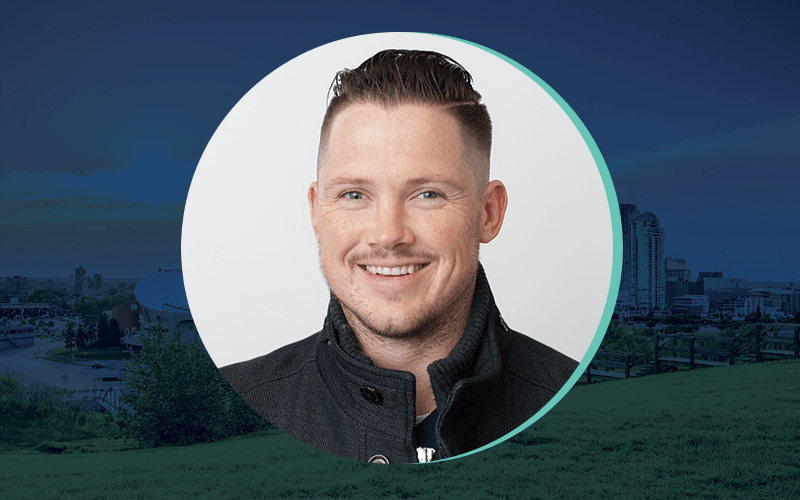
Brett Chell is President of Cold Bore Technology in Calgary. The company uses technology that will change the landscape of the...
Key takeaways
- Learning how capital markets work is as important as developing your product, because without proper financing knowledge, you risk losing your company at critical growth stages.
- Being a non-commoditized technology company provides better resilience during economic downturns compared to businesses competing in commoditized markets where it becomes a race to the bottom.
- Taking complete breaks from work on weekends and pursuing other passions actually increases productivity by allowing your subconscious mind to generate creative solutions.
- Calgary has strong entrepreneurial spirit but lacks sufficient federal and provincial support and access to capital markets compared to the United States, making it harder to scale businesses.
- Maintaining work-life balance requires discipline to recognize that working around the clock decreases productivity, and that most tasks can wait until Monday without impacting the business significantly.
Transcript
Full transcript page · Interactive episode
============================================================
TRANSCRIPTION WITH SPEAKERS
============================================================

[00:00] SPEAKER_00: It's Calgary's podcast on the Canada's podcast network.
[00:06] SPEAKER_00: Hello, this is Mario Toniguzi coming to you today with Calgary's podcast, a member of Canada's
[00:12] SPEAKER_00: podcast network, where we talk to the entrepreneurs who are making it happen in Calgary, Alberta,
[00:17] SPEAKER_00: so you can listen, discover, and engage.
[00:21] SPEAKER_00: Today's guest is Brett Chal, president of Cold War Technology in Calgary.
[00:27] SPEAKER_00: Thanks for joining us today, Brett.
[00:29] SPEAKER_00: Thanks Mario, appreciate it.
[00:31] SPEAKER_00: All right, let's start with simple question.
[00:33] SPEAKER_00: Brett, tell me what Cold War is and what you guys do.
[00:37] SPEAKER_01: Yeah, sure.
[00:39] SPEAKER_01: So for all our oil and gas people out there, this will be a pretty straightforward one.
[00:43] SPEAKER_01: For everybody else, we'll keep it to a high level so we don't lose anybody or put them to sleep.
[00:49] SPEAKER_01: But essentially we're a software, hardware, development company based in Calgary.
[00:54] SPEAKER_01: And we provide the world's first electronic completions recorder.
[00:58] SPEAKER_01: There's some local success stories that everyone might be familiar with company called Pace On.
[01:03] SPEAKER_01: They're a billion dollar plus company that built the electronic drilling recorder 20 years ago.
[01:09] SPEAKER_01: And so from a really high level perspective, it's just a computer that tracks the whole drilling process
[01:14] SPEAKER_01: and gives all relevant information in real time to the the driller and then databases the rest.
[01:19] SPEAKER_01: In completions or fracking, as it's more affectionately known, it's quite a bit more complicated process.
[01:25] SPEAKER_01: There's five or six different companies kind of tripping over each other.
[01:29] SPEAKER_01: Multiple wells happening and everybody's using their own systems right now with different formats,
[01:33] SPEAKER_01: different time stamps and everything's kind of a mess.
[01:36] SPEAKER_01: And that leads to a problem for the operator.
[01:39] SPEAKER_01: So we developed the centralized operating system or the central nervous system, if you will,
[01:44] SPEAKER_01: that is operator focused that plugs everybody else in on location and gives the operator one universal look at their entire operation.
[01:52] SPEAKER_00: Okay, tell me when you started the company and maybe a little history of why you started this.
[01:59] SPEAKER_01: Good question.
[02:02] SPEAKER_00: So we start with self.
[02:04] SPEAKER_01: Yeah, yeah, why I started now, you're retrospective.
[02:07] SPEAKER_01: Hindsight is 20 20 and through a triple recession pandemic.
[02:10] SPEAKER_01: It's a good question.
[02:12] SPEAKER_01: Yeah, we started in 2014, this company specifically.
[02:16] SPEAKER_01: I'm also partners and another advanced automation drilling company that is partnered with Haliburton.
[02:21] SPEAKER_01: We started a few companies around that time.
[02:24] SPEAKER_01: But this one specifically 2014, we started it because I initially had spent a lot of 10 years on the drilling side of things.
[02:33] SPEAKER_01: And drilling was way, way more advanced and way more automated because it had been around longer and seen more cycles.
[02:39] SPEAKER_01: When we went and had a look at completions of fracking, there was a lot of holes in that market.
[02:44] SPEAKER_01: A lot of analog process is still happening and just it was right with opportunity.
[02:49] SPEAKER_01: At that time, we didn't know what the future would hold.
[02:52] SPEAKER_01: So oil field services was still a great place to be lucky for us.
[02:57] SPEAKER_01: We have work technology focused company.
[02:59] SPEAKER_01: So even through the triple recession pandemic, it has the initial knee jerk downfalls.
[03:04] SPEAKER_01: But the pushed automation and technology has actually worked in our favor and now, especially with a remote system like ours is
[03:12] SPEAKER_01: really pushing people out direction.
[03:14] SPEAKER_01: So we just saw a whole that was carried over from the drilling side and our experience and we decided to go after it.
[03:20] SPEAKER_01: And here we are.
[03:22] SPEAKER_00: Okay.
[03:23] SPEAKER_00: So tell me just a little bit about your vision for this company and for the business.
[03:28] SPEAKER_00: So where do you see it in the next few years?
[03:32] SPEAKER_01: Yeah.
[03:33] SPEAKER_01: So I hate to be an entrepreneur and say we got big, big expectations for this because that's what every entrepreneur thinks.
[03:40] SPEAKER_01: If you really logically step back and look at this, the size of the opportunity and the need for a product like this in the market in completions is huge.
[03:49] SPEAKER_01: Complitions is the most expensive part of the operation and completing a wealth of from drilling completed to production.
[03:55] SPEAKER_01: Fracking is the most expensive and it's the most fragmented right now.
[03:59] SPEAKER_01: And there's the least amount of automation in there.
[04:02] SPEAKER_01: Us being the system that connects, you know, our clients first are the operators.
[04:06] SPEAKER_01: But second are the service companies like Halibut and Sumberger, NOV, all these guys.
[04:10] SPEAKER_01: Right.
[04:10] SPEAKER_01: So we have the shells, the exons, the parisies that all start, they say, Hey, we're going to use this.
[04:15] SPEAKER_01: And then the service companies want access to the same screens because a rise in time lifts all ships.
[04:21] SPEAKER_01: I have really big expectations for this worth worth.
[04:24] SPEAKER_01: We're thinking a, you know, pay sounds of billion and a half dollar company.
[04:28] SPEAKER_01: We are the analogy, but in drill it in completions, which is four or five times the cost of what the solution that they're providing.
[04:36] SPEAKER_01: So, you know, I don't know if that translates directly to four or five times evaluation.
[04:39] SPEAKER_01: There's a lot of metrics that have to go into being successful like Pace on is, but they're really high expectations for this in next couple of years, especially with what's happened.
[04:49] SPEAKER_01: You know, this is a remote operating system and everyone needs remote access also.
[04:54] SPEAKER_00: You know, you mentioned a couple of times.
[04:56] SPEAKER_00: Obviously, there are the recessions and COVID and Calgary is an Alberta is also hit.
[05:03] SPEAKER_00: Obviously with the oil price collapsing.
[05:06] SPEAKER_00: How do you survive through all this stuff and continue on?
[05:10] SPEAKER_01: I my, my analogy is kind of like, it's kind of like running a marathon in a hailstorm.
[05:16] SPEAKER_01: Carefully, carefully, right?
[05:18] SPEAKER_01: We're tiptoeing through the tulips.
[05:20] SPEAKER_01: So we're fortunate, you know, being a technology company, we're, we're non commoditized.
[05:24] SPEAKER_01: And I think that's the really hard part to survive right now is if you're a commoditized company, you have equipment that everyone else has or something like that.
[05:32] SPEAKER_01: And it's just a race to the bottom.
[05:34] SPEAKER_01: Then you're fighting the commodity price, you're fighting the pandemic, you're fighting the recessions.
[05:38] SPEAKER_01: And now you're fighting, you know, yourself with a race to the bottom.
[05:41] SPEAKER_01: Yeah.
[05:41] SPEAKER_01: So I feel very fortunate.
[05:43] SPEAKER_01: I don't want to cast too much shadow on this because either other people that have a lot harder than me right now.
[05:48] SPEAKER_01: We have obviously had our own struggles because we're a small company that was scaling fast.
[05:53] SPEAKER_01: You know, our clients are the biggest companies in the world.
[05:55] SPEAKER_01: Shell, X on, all these guys.
[05:57] SPEAKER_01: So we're trying to meet demands, which means we were out putting a ton of capital written for all this happened.
[06:03] SPEAKER_01: And we needed to see our revenue growth, maintain the same pace as our expenditures in that critical phase of growth so that we didn't hit a speed bump that caused us to fall apart.
[06:13] SPEAKER_01: Yeah.
[06:14] SPEAKER_01: Enter the pandemic.
[06:16] SPEAKER_01: And that exact thing happens where revenue just drops off.
[06:19] SPEAKER_01: And so we're not immune to it.
[06:21] SPEAKER_01: But you know, it's all about just being creative, sticking and moving.
[06:26] SPEAKER_01: We've maintained all of our employees luckily, maintained our salaries for them.
[06:30] SPEAKER_01: And we're just finding, you know, you go to the gas producers when this happens.
[06:35] SPEAKER_01: They've got more business happening and kind of shifts back and forth.
[06:37] SPEAKER_01: So you just have to be really valuable and kind of be quick.
[06:41] SPEAKER_01: Okay.
[06:42] SPEAKER_01: What do you like about being an entrepreneur?
[06:45] SPEAKER_01: Oh, it's kind of cliche, but everything.
[06:46] SPEAKER_01: I mean, I even like the hard parts of it, to be honest.
[06:49] SPEAKER_01: It's some days it feels like you don't like it.
[06:52] SPEAKER_01: And it just is a little too much.
[06:53] SPEAKER_01: But I like everything about it.
[06:55] SPEAKER_01: Basically, I'm on employable is what it comes down to.
[06:58] Speaker UNKNOWN: Yeah.
[06:59] SPEAKER_01: So the only choice I had was to start my own companies because I'm just too all over the place and completely unemployable.
[07:05] SPEAKER_01: So I like the freedom of being able to work on a million different things at once within one company and have, you know, be the guy who's in charge of money,
[07:13] SPEAKER_01: raise an in aviation and creation and software development and product development touch everything.
[07:19] SPEAKER_01: And unless you're own in your own business, you're going to get put into one of those places to go do.
[07:24] SPEAKER_01: And for me, that's a challenge.
[07:26] SPEAKER_01: So I really like the freedom to be able to kind of oversee everything work on a lot of things, have your own hours.
[07:33] SPEAKER_01: Obviously, there's been macro challenges the last five years in oil and gas services.
[07:39] SPEAKER_01: But you know, I wouldn't trade it for anything to be honest.
[07:42] SPEAKER_00: Okay.
[07:43] SPEAKER_00: Do you recall any piece of advice, the best piece of advice you may have received from somebody about being an opera trainer and about being a business owner?
[07:53] SPEAKER_00: Absolutely.
[07:54] SPEAKER_01: So I meant to remind was my uncle Cameron and he's very successful business guy here in town.
[08:01] SPEAKER_01: He lives in California now.
[08:03] SPEAKER_01: He taught me the in the notes of early stage step financing and private equity.
[08:07] SPEAKER_01: And that's kind of where I learned how to finance my own businesses.
[08:10] SPEAKER_01: And when we first started, I remember him telling me, he sat down probably 12 years ago and he said,
[08:14] SPEAKER_01: look, it doesn't matter if you want to make wooden spoons or build rocket ships to go to Mars.
[08:20] SPEAKER_01: If you can't finance it, it's not going to, you're not going to be doing either.
[08:24] SPEAKER_01: So as an entrepreneur, we tend to focus on, oh, here's my product.
[08:28] SPEAKER_01: Here's my gizmo.
[08:29] SPEAKER_01: I can't wait to get this out.
[08:30] SPEAKER_01: And they don't take the time to get educated on the capital markets.
[08:33] SPEAKER_01: And so you either have a really tough time getting that initial capital or you have a really tough time financing that second stage.
[08:39] SPEAKER_01: That A round and you fall down there and lose your company or when you're successful and you get to the IPO or whatever you're doing,
[08:46] SPEAKER_01: you have the company stolen from you at that point because you just weren't, you don't understand how convertibles work.
[08:51] SPEAKER_01: You don't understand how the debt guys want to operate and you end up running into trouble where you couldn't make a payment back and you didn't see that coming.
[08:58] SPEAKER_01: So that was the most important information or the most important advice I ever got was to learn at a base level at least how the capital markets work and don't focus so much on just your product.
[09:07] SPEAKER_00: Well, I'm glad you mentioned your uncle because I actually was going to ask you that question off camera because I met Cameron several years ago,
[09:16] SPEAKER_00: through other stuff that I was doing in business and writing for business stories.
[09:22] SPEAKER_00: And it's interesting that you mentioned him because I want to ask you about the entrepreneurial spirit in Calgary.
[09:29] SPEAKER_00: Is it a conducive place to be an entrepreneur?
[09:34] SPEAKER_01: Man, when you ask an entrepreneur that question, you're going to get a biased answer.
[09:37] SPEAKER_01: It's like, we'll do it anywhere.
[09:39] SPEAKER_01: Yeah, has it been easy here?
[09:40] SPEAKER_01: I don't think so.
[09:41] SPEAKER_01: I think Calgary is trying to rebrand itself right now as like a tech hub.
[09:46] SPEAKER_01: I don't think it's going as well as everybody would hope it would go.
[09:49] SPEAKER_01: We don't have a lot of federal and provincial support.
[09:52] SPEAKER_01: There's a lot of spirit in Calgary.
[09:54] SPEAKER_01: So the entrepreneurial spirit is alive and well.
[09:57] SPEAKER_01: People want to do it here, but there's not a ton of support and the biggest restriction
[10:02] SPEAKER_01: is not so much a provincial one or a city one is a federal one.
[10:07] SPEAKER_01: We just don't have the financial support or access to capital markets here to really accelerate a lot of these businesses.
[10:14] SPEAKER_01: It's just a struggle.
[10:15] SPEAKER_01: And if you get down to the States and you go try one down there or ever involved in a US company,
[10:21] SPEAKER_01: maybe you, the light bulb goes off.
[10:23] SPEAKER_01: You're like, what was I ever doing in Canada?
[10:25] SPEAKER_01: What a struggle.
[10:27] SPEAKER_01: So, you know, I think Calgary's got a lot of spirit.
[10:29] SPEAKER_01: I think they got a way is to go in terms of supporting that and actually putting stuff in place to help foster the growth.
[10:37] SPEAKER_00: Everybody struggles with this.
[10:39] SPEAKER_00: Anybody that's working or as a business owner struggles with that.
[10:44] SPEAKER_00: Hold on, quote, work, life balance.
[10:47] SPEAKER_00: How do you deal with that?
[10:49] SPEAKER_00: And what do you think you're at in that and juggling those two?
[10:54] SPEAKER_00: I think I'm pretty good.
[10:56] SPEAKER_01: I mean, this is a good like to say, you know, Cam.
[10:58] SPEAKER_01: He, his passion is work legitimately.
[11:02] SPEAKER_01: I have passions like, you know, other passions, snowmobiling and art and all these things outdoors.
[11:07] SPEAKER_01: I love being in the mountains.
[11:08] SPEAKER_01: So I have a, it's pretty easy for me.
[11:10] SPEAKER_01: I work hard and it's usually 14, 13, 14 hours a day when I'm here.
[11:15] SPEAKER_01: But that's just because, you know, you just, that's what it takes.
[11:17] SPEAKER_01: You're just getting it done on the weekends, though.
[11:19] SPEAKER_01: I, you know, I'm watching my email to see if there's any emergencies I need to deal with,
[11:23] SPEAKER_01: but the switch goes off and I'm out of here.
[11:25] SPEAKER_01: Like I usually am in the mountains and revel soak or golden on the weekends.
[11:28] SPEAKER_01: And that's just a recharge for me.
[11:31] SPEAKER_01: And I'm 10 times more productive because of it.
[11:33] SPEAKER_01: So I think it's, I think it's great.
[11:35] SPEAKER_01: I mean, getting to do call your own schedule, as long as you're disciplined enough to realize
[11:41] SPEAKER_01: that working 24, 7 for me, anyway, is not the answer.
[11:45] SPEAKER_01: I'd be way less productive.
[11:47] SPEAKER_01: And to go do it, just to, you got to realize that it's, Monday is going to be there.
[11:51] SPEAKER_01: You know, your company is not, nothing's going to make a huge difference.
[11:54] SPEAKER_01: If you get these 10 other documents out by Sunday night or Monday morning.
[11:58] SPEAKER_01: So I just look at it that way.
[12:00] SPEAKER_01: Cam, he'll go 24 hours a day.
[12:02] SPEAKER_01: That's just the way he is.
[12:03] SPEAKER_00: So do you find that in whatever interests you have or passions you have that
[12:09] SPEAKER_00: sometimes you, you get ideas for the business while while doing those thinking on the creative level?
[12:15] SPEAKER_01: You know what?
[12:16] SPEAKER_01: It does.
[12:17] SPEAKER_01: Whenever, whenever you get your mind out of the critical thinking phase of just being siloed
[12:22] SPEAKER_01: and you're looking down that same tube all the time, for sure, it may not be that, you know,
[12:27] SPEAKER_01: going mountain biking or sledding directly translates into, oh, I thought of a great idea
[12:31] SPEAKER_01: because of the mountain biking, but because you're doing something where you're just
[12:35] SPEAKER_01: your subconscious is operating and you're just kind of having fun, it allows your critical
[12:39] SPEAKER_01: brain to step aside for a while.
[12:41] SPEAKER_01: And you'll end up having ideas because of it.
[12:44] SPEAKER_01: It's like artists, right?
[12:45] SPEAKER_01: I'm an art, I'm a professional artist as well.
[12:47] SPEAKER_01: This is why I can give this analogy.
[12:48] SPEAKER_01: But my best ideas for my paintings and my drawings and everything I want to create always come
[12:53] SPEAKER_01: in the half hour before sleep because that's where your mind is starting to shut off.
[12:58] SPEAKER_01: You're daily, I need to think about this test, that test, that test, and you're just kind of
[13:02] SPEAKER_01: coasting and your brain is going into the subconscious.
[13:04] SPEAKER_01: And that's where you start, you're like, oh, I'm writing notes at midnight or 12, 13
[13:08] SPEAKER_01: in the morning.
[13:08] SPEAKER_01: I should paint this.
[13:09] SPEAKER_01: I should paint that.
[13:10] SPEAKER_01: So I think it's very similar.
[13:11] SPEAKER_00: Okay.
[13:12] SPEAKER_00: Cool.
[13:13] SPEAKER_00: Everybody's these days seem to have a bucket list, a personal bus bucket list.
[13:18] SPEAKER_00: What would be on top of yours right now?
[13:21] SPEAKER_00: That's a good question.
[13:22] SPEAKER_01: I've had a lot of stuff owning a race team is the top of top of mine.
[13:26] SPEAKER_01: A super trapezo Lamborghini Rooks team.
[13:29] SPEAKER_01: I'm a big car nut.
[13:31] SPEAKER_01: Wow.
[13:31] SPEAKER_01: Love racing cars.
[13:32] SPEAKER_01: So that's my goal right now.
[13:34] SPEAKER_01: That's the top bucket list.
[13:35] SPEAKER_00: Oh, wow.
[13:36] SPEAKER_00: Have you ever been to Italy and visited the Ferrari factory?
[13:42] SPEAKER_01: I have not been to Modena.
[13:43] SPEAKER_01: I would love to.
[13:44] SPEAKER_01: As soon as we're opened up again, I think that that's got to be on my list.
[13:47] SPEAKER_01: I've never been to Santa Aguittat to see the Lamborghini dealer or the Ferrari one,
[13:51] SPEAKER_01: but that's definitely on my list.
[13:53] SPEAKER_00: Speaking of travel over the years, what has been your favorite place that you've visited?
[14:00] SPEAKER_01: Dubai, for sure.
[14:01] SPEAKER_01: Oh, wow.
[14:02] SPEAKER_01: I've been to Oman and Saudi and Dubai and stuff like that.
[14:06] SPEAKER_01: UK is always really cool.
[14:08] SPEAKER_01: Everything in Europe is so much older.
[14:10] SPEAKER_01: I mean, you find yourself walking around looking at a convenience store that's from that's 500 years old.
[14:15] SPEAKER_01: And you're just amazed by the architecture of a 7-Eleven.
[14:17] SPEAKER_01: So I really like the UK for that.
[14:19] SPEAKER_01: But Dubai is just, it's another level.
[14:21] SPEAKER_01: It's a home, different world.
[14:22] SPEAKER_01: It just kind of blows your mind when you're there.
[14:24] SPEAKER_01: What was it?
[14:25] SPEAKER_01: What was or what is it about Dubai?
[14:28] SPEAKER_01: Everything is just not how it's supposed to be.
[14:31] SPEAKER_01: You're not supposed to have grass all over the desert.
[14:33] SPEAKER_01: You're not supposed to have a ski hill there.
[14:34] SPEAKER_01: The buildings aren't supposed to be that tall.
[14:36] SPEAKER_01: You know, there's not supposed to be whole islands that are fake.
[14:39] SPEAKER_01: Like, you know what I mean?
[14:40] SPEAKER_01: It's kind of like, it gives you this really,
[14:42] SPEAKER_01: this kind of like perplexing mental situation to deal with too.
[14:47] SPEAKER_01: Because you look at all that and you're amazed.
[14:49] SPEAKER_01: The biggest mall in the world with a fish tank that has like actual major sharks in it and everything.
[14:54] SPEAKER_01: But it's like, it's kind of cool.
[14:56] SPEAKER_01: But at the same time, it's just so over the top and excessive.
[14:59] SPEAKER_01: And you think of all the cost and energy that would go in to keep something that going.
[15:03] SPEAKER_01: It almost gives you this like impending sense of, you know,
[15:07] SPEAKER_01: doom as a civilization.
[15:08] SPEAKER_01: We're like, we're just doing everything because we can without any real rationalization of,
[15:13] SPEAKER_01: is this what we should be doing?
[15:15] SPEAKER_00: You know, I guess in Dubai too, that they just get things done, right?
[15:20] SPEAKER_01: Yeah.
[15:20] SPEAKER_01: If they dream it, they do it.
[15:22] SPEAKER_01: I mean, that might change now.
[15:23] SPEAKER_01: I mean, we got a different world where even the UAE is going to have to pull the strings in a little bit.
[15:28] SPEAKER_01: Yeah, it's an incredible place, though.
[15:30] SPEAKER_01: I mean, it really, really incredible.
[15:32] SPEAKER_00: Okay, speaking of travel, I'm going to present a scenario to you and just want to get your response to it.
[15:38] SPEAKER_00: Okay.
[15:39] SPEAKER_00: So we're going to take you to a tropical island in the middle of the ocean somewhere.
[15:45] SPEAKER_00: And that does not have any internet, no other technology,
[15:50] SPEAKER_00: except for this one phone booth that sits there.
[15:53] SPEAKER_00: Couple of questions.
[15:54] SPEAKER_00: How long do you think it would take you to pick up that phone and call us and say,
[15:59] SPEAKER_00: get me back home.
[16:01] SPEAKER_00: And the second question is, what do you think you'd be doing while you were there on that island?
[16:08] SPEAKER_01: Honestly, it sounds great, but it would be a couple days.
[16:12] SPEAKER_01: Max.
[16:13] SPEAKER_01: Yeah.
[16:14] SPEAKER_01: I mean, I like a beach and going to really beautiful places.
[16:16] SPEAKER_01: I've gone to a bunch of really nice places and it's usually day two when I'm sitting on the beach and I'm going,
[16:23] SPEAKER_01: okay, we need something to do here.
[16:25] SPEAKER_01: So yeah, I mean, it would be a couple of days.
[16:29] SPEAKER_01: And for the two days that I was there, I would be nice to out in plug.
[16:32] SPEAKER_01: Just unplug it and relax and do nothing.
[16:35] SPEAKER_01: Hang out on the beach and swim.
[16:36] SPEAKER_01: I love being in the water.
[16:37] SPEAKER_01: But then after that, it would maybe be two days and I'd have to come get picked up.
[16:41] SPEAKER_00: Okay. Great.
[16:42] SPEAKER_00: Thanks, Sam, for bread for being our guest on Calgary's podcast.
[16:46] SPEAKER_00: Yeah, my pleasure. Thank you.
[16:48] SPEAKER_00: Thanks for taking the time today to listen to Calgary's podcast on Canada's podcast network.
[16:55] SPEAKER_00: We hope you enjoyed the show today.
[16:58] SPEAKER_00: Make sure you sign up for our newsletters and write a review for us on iTunes and then connect
[17:03] SPEAKER_00: with us on Twitter, Facebook, Instagram, LinkedIn at Canada's podcast.
[17:09] SPEAKER_00: You can also check out what other entrepreneurs are doing across the country.
[17:14] SPEAKER_00: See you next time.