
Brandy Gallagher, ‘Place-making’ entrepreneur invites communities across Canada to ‘Go Village’
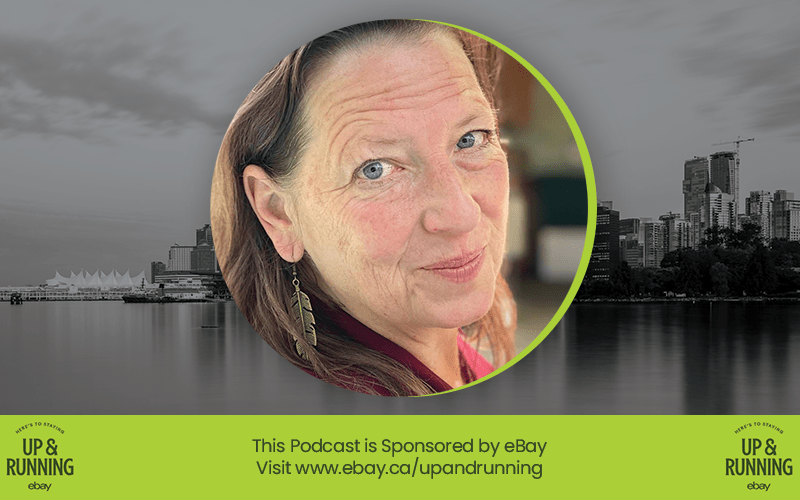
Episode
Brandy Gallagher (BSW, MA) is one of the original founders and developers of O.U.R. ECOVILLAGE, Shawnigan Lake (Vancouver Island) BC. She...
Key takeaways
- Cooperation and resource-sharing between businesses, organizations, and individuals can significantly reduce costs and improve profit margins while creating more resilient communities.
- Eco-villages are scalable solutions that can be implemented anywhere from rural farms to urban neighborhoods, with over 10,000 examples worldwide demonstrating their viability.
- The hyper-local approach of creating community pods or eco-villages allows people to pool resources for emergency planning, food security, childcare, and business support, which is increasingly essential during climate crises and pandemics.
- Successful sustainable community development requires both incremental improvements to existing systems and completely new models running simultaneously, rather than choosing one approach over the other.
- Multi-stakeholder cooperative business models allow nonprofit organizations to serve community needs while enabling multiple businesses to operate within one framework, creating shared value across social, economic, and environmental dimensions.
Transcript
Full transcript page · Interactive episode
============================================================
TRANSCRIPTION WITH SPEAKERS
============================================================

[00:00] SPEAKER_00: This podcast is sponsored by eBay Canada.
[00:03] SPEAKER_00: eBay Canada has been supporting Canadians small business retailers for 25 years.
[00:07] SPEAKER_00: With their up and running program, you can access eBay's 180-plus million buyers
[00:13] SPEAKER_00: in 190 countries around the world.
[00:16] SPEAKER_00: With up and running, there are no listing fees on up to 200 listings per month
[00:19] SPEAKER_00: and you only pay fees when you sell.
[00:22] SPEAKER_00: As part of the eBay community, you get real-time advice and inspiration
[00:26] SPEAKER_00: and access to powerful selling tools and insights.
[00:30] SPEAKER_00: Go to eBay.ca, forward slash, up and running, stay local and sell global.
[00:37] SPEAKER_01: Welcome to Canada's podcast, the number one podcast for entrepreneurs by entrepreneurs.
[00:44] SPEAKER_03: Hi, this is Angela Faye coming to you from Canada's podcast today
[00:48] SPEAKER_03: with Brandy Gallagher from our eco village.
[00:53] SPEAKER_03: I'm going to get Brandy explaining a little bit about what ours stands for.
[00:56] SPEAKER_03: Let's kick off right away with a little bit about your entrepreneurial story, Brandy.
[01:01] SPEAKER_02: Well, my entrepreneurial story leads me to being nowhere else other than our eco village
[01:08] SPEAKER_02: that I could end up.
[01:09] SPEAKER_02: My early roots are being raised in the wilderness
[01:14] SPEAKER_02: and what became a family homestead into becoming Whistler Mountain International
[01:21] SPEAKER_02: ski resort and my family, including a father who was like the head of the Ray Pairs Association
[01:29] SPEAKER_02: for Whistler as it developed.
[01:31] SPEAKER_02: So I was always in the midst of the visionaries, the ones who were willing to go out into the wild
[01:39] SPEAKER_02: and make stuff happen.
[01:41] SPEAKER_02: And I think that is the big journey about if we want to call that entrepreneurial,
[01:46] SPEAKER_02: but creating the possibilities in life that we know we all need to make happen, especially now.
[01:54] SPEAKER_02: And our eco village is a great example of that and pulling together many experiences,
[02:01] SPEAKER_02: possibilities and people into one place.
[02:04] SPEAKER_03: Awesome.
[02:05] SPEAKER_03: Brandy, can you give me a describe it?
[02:07] SPEAKER_03: I mean, for those of us who are skiers and have been to, or mountain bikers and have been to Whistler,
[02:12] SPEAKER_03: we know that it's massive and the reality is our eco village is actually a smaller version.
[02:18] SPEAKER_03: You have lots going on.
[02:19] SPEAKER_03: Can you describe the physical scene of what's happening there?
[02:24] SPEAKER_02: Yeah, well, I want to just point out that my early underpinnings of this,
[02:30] SPEAKER_02: I was my family owned Brandy Wine Falls Perventual Park and thus my name.
[02:35] SPEAKER_02: So when you're named after place and we use this term place making all the time,
[02:41] SPEAKER_02: when you are raised in the environment of land protectors and land stewards,
[02:47] SPEAKER_02: I think people naturally gravitate together.
[02:50] SPEAKER_02: How can community come together, make something happen?
[02:54] SPEAKER_02: How do we live with and protect the land and the natural ecosystems?
[02:59] SPEAKER_02: How does that become viable and what happens when the whole world shows up to the party?
[03:05] SPEAKER_02: And I mean not in the sense of how do we calculate our footprint in the world?
[03:12] SPEAKER_02: And so a lot of that is the work we do here at our eco village.
[03:17] SPEAKER_03: And again, just describe the physical setting, how physically big is the space? What's in the village?
[03:25] SPEAKER_02: So we're in Seanigan Lake, we're a 25 acre, regenerative living demonstration site and education center.
[03:32] SPEAKER_02: And within the property we're actually part of a land use zoning that is very unique and unusual,
[03:41] SPEAKER_02: that we created in 2002, we're a comprehensive development zone, we're a park, we're a school,
[03:49] SPEAKER_02: we're an organic farm, we're a residential village, and we have unbusinesses related to agriculture,
[03:55] SPEAKER_02: for profit, non-profit, we're kind of like a community commons with multiple stakeholders,
[04:03] SPEAKER_02: multiple organizations that utilize the space and all those different activities that I describe to you.
[04:10] SPEAKER_02: So you know some people are very much into food security, other people are doing research and design for ecological built environments.
[04:20] SPEAKER_02: There's really quite a range of humans, social, economic and ecological,
[04:27] SPEAKER_02: wow, regenerative living that happens on site.
[04:30] SPEAKER_02: We're also really renowned for having very interesting and curvilinear little hobbit home, cob homes on site.
[04:42] SPEAKER_02: So our buildings are hands sculpted and very beautiful as well.
[04:47] SPEAKER_03: Wow, fantastic. Now you don't hear that very often in actual functioning business practices where the human,
[04:56] SPEAKER_03: the social, the economic and ecological are all intertwined. I just, I love it.
[05:02] SPEAKER_03: I mean, you know, I've talked about me coming down for a visit, I can't wait to do that.
[05:06] SPEAKER_03: One thing I would like to get, can we talk about Seanigan Lake, you talked about the zoning a little bit.
[05:12] SPEAKER_03: And why is Vancouver Island, what are the opportunities here that has led to this unique eco village?
[05:20] SPEAKER_02: Yeah, so Seanigan and part of the Cowwich and Valley regional district.
[05:25] SPEAKER_02: And I have to say that a lot of credit needs to go to the CVRD for their kind of very forward thinking in helping create allowances for regulatory processes
[05:40] SPEAKER_02: and environmental and ecological design. So from land use zoning, working with building officials, working from local government to provincial and even federal government on innovation, climate change, adaptation strategies, all kinds of systems that we have built into the demonstration site.
[06:05] SPEAKER_02: They're kind of engineered models. We have teams of professional engineers and designers that come together from across the country.
[06:14] SPEAKER_02: And the couch is kind of become a mecca of ecological design and food systems.
[06:22] SPEAKER_02: Actually, I would say the island as well, but we're kind of, we are as a bio region, a mecca of environmentally designed life.
[06:33] SPEAKER_03: Nice. I love it. Now, of course, as you and I were talking in our introductory call, I'm so excited about it. I'm like, why isn't this happening everywhere, right? Why? Why aren't there more municipal governments progressive, you know, on this innovation style of things? It isn't scalable.
[06:50] SPEAKER_02: It's totally scalable. There's 10,000 eco villages and sustainable community projects around the world and growing consistently, curiously during the advent of COVID, I think it's become a logical progression for community, never mind government to see that this is an ethical and very healthy way to live.
[07:15] SPEAKER_02: One, we need to be mutually resourcing each other way more as individuals and organizations, but also that in terms of just the effort of living sustainably growing food, raising our kids, education and trying to navigate school systems right now, being hyper local in our efforts, really means that teaming up with each other cooperating,
[07:45] SPEAKER_02: with individual and organizational efforts is almost imperative at this point. So what was once something that is happening around the world and culturally might be the norm much more obviously in places other than North America?
[08:02] SPEAKER_02: I think now in Canada, we're seeing an upsurge like we have 85% more traffic inquiring how we might help replicate this place with other.
[08:16] SPEAKER_02: I love it. Yeah, and people are urgent.
[08:20] SPEAKER_03: They are urgent. Okay. So where are you getting the inquiries from Randy? I'm curious. Who's making those calls? Who's the one who are the leaders of that transition?
[08:31] SPEAKER_02: You know, it's not everyone's leading. So there's groups of families that are saying, we just need to cooperate together and just pool our abilities and start doing this together.
[08:46] SPEAKER_02: How did you and they'll phone and ask, how can we rezone our farm? It could be community individuals that are saying, we need to move this forward.
[08:56] SPEAKER_02: How can we fast track replicating things more quickly and get allowances for the legal and the regulatory process?
[09:05] SPEAKER_02: I'd say government is looking. I'd say farmers are looking if you know there's such a shortage of farm support and farm labor with COVID happening.
[09:18] SPEAKER_02: There's a desperation for how can people work together better. And I think government overall is realizing as we have systemic challenges and economic and business challenges that redesigning for cooperation is again, it's essential.
[09:39] SPEAKER_03: What do you believe is the, and I kind of describe it as, you know, there's a there's a circle of systems, if you like, and institutions that we have, whether it's education training, governments that are here and we know that we want to make this change.
[09:55] SPEAKER_03: So we make this, you know, a few small steps to get 10% improvement. And then you have the mindset of, you know, the futurist who say, you know, actually we need to completely redesign something with a little bit of ignorance and in a good way, a blissful ignorance, if you like, and redesign it from scratch.
[10:17] SPEAKER_03: And then we'll get 10 fold the uptake and the momentum of adoption versus the 10% marginal improvement.
[10:28] SPEAKER_03: If you and I, which you know, we're going, okay, let's, if we could scale this in fast track it and answer some of those questions.
[10:34] SPEAKER_03: One of the two or three things that need to be in place to achieve this redesign, let's, you know, get 10 fold the uptake of the concept of an eco village in a hyper local environment.
[10:52] SPEAKER_03: What do you think needs to be there? What are the foundations?
[10:54] SPEAKER_02: We could start by noticing that so much of how we speak of design and community development is based in kind of a polarized notion of we do this or that.
[11:09] SPEAKER_02: I think now we're starting to suggest we need both and so we need both the ramping up and the change process going on and we need the brand new model to be experimenting in the process.
[11:24] SPEAKER_02: And if you will, right alongside of this ramping and escalation process, so go for the 10% go for the complete change simultaneously.
[11:35] SPEAKER_02: You know, instead of dismantling a system and watching it not work so well, you do that, build something up alongside and do.
[11:45] SPEAKER_02: And that offers something that gives a bit more of a security net in that case, you know, what we're talking about isn't all that innovative.
[11:55] SPEAKER_02: It's happening all over the world.
[11:57] SPEAKER_02: Our great challenge perhaps is in integrating our systems, integrating organizations and again, creating collaboration.
[12:07] SPEAKER_02: And, you know, corporate models of business and sole proprietorship is often based in a competitive market.
[12:17] SPEAKER_02: If you went to Italy for example, in places like Amelia Romano where the whole community is based on cooperation between co-ops, it's a cultural way of being that your family has the best dairy for generations.
[12:34] SPEAKER_02: And my family makes the best palm ragano that I'm we're going to cooperate.
[12:39] SPEAKER_02: We're not in competition and shift the mindset perhaps of businesses and corporate stakeholders to start to cooperate and collectivize ourselves.
[12:52] SPEAKER_02: But also to bring in academia, you know, there's research and design and modeling all over the world that can support that kind of shift change.
[13:02] SPEAKER_02: And have government on side incentivizing that kind of collective behavioral change and maybe taxing the heck out of those who can't cooperate yet in the design model.
[13:17] SPEAKER_02: And so within that, there's also really getting the kind of on the ground businesses as well.
[13:25] SPEAKER_03: I just want to touch on, you know, the rational business system transition that you are a the eco village is a co-op.
[13:33] SPEAKER_02: This is interesting because in Canada, we have on co-op models that are that are pretty innovative.
[13:41] SPEAKER_02: So we're a nonprofit. It's called a community services multi stakeholder co-op.
[13:48] SPEAKER_02: And you can design co-ops that are a bit hybridized in Canada and it allows for multiple stakeholders to be involved in one framework for cooperation.
[14:01] SPEAKER_02: And in our case, we're we're here to serve the community as a nonprofit.
[14:06] SPEAKER_02: No business is the one that profits only and we have to be serving the social and environmental justice of the wider community.
[14:17] SPEAKER_02: And yet everybody then can share in the ability to do business.
[14:23] SPEAKER_00: This podcast is sponsored by eBay Canada.
[14:26] SPEAKER_00: eBay Canada is powering Canadian small businesses go to eBay dot CA forward slash up and running.
[14:33] SPEAKER_00: Chilp in your new global e-commerce business.
[14:36] SPEAKER_03: So and and playing just devil's advocate for a little bit like or more the curious entrepreneur is cash flow is king and you know it just making sure that we're
[14:46] SPEAKER_03: having a little bit of a profit to invoke.
[14:49] SPEAKER_03: Where does your revenue come from? Where are your expenses there? And what does the bottom line look like?
[14:54] SPEAKER_02: I want to say one thing before we go there.
[14:56] SPEAKER_02: Everybody is starting to turn their heads towards co-working spaces.
[15:01] SPEAKER_02: So we know those in urban spaces really well and people are starting to see how they're trading off resources.
[15:09] SPEAKER_02: And you know perhaps from administration to just infrastructure in your workspace.
[15:16] SPEAKER_02: Those are obvious. How do we cut costs share resources?
[15:21] SPEAKER_02: Switch that over to not just an office environment or a coffee bar kind of get together space and start to think of how you can do that with whole towns.
[15:34] SPEAKER_02: Yes, one of the city of expo is he was a co-working space.
[15:40] SPEAKER_02: And so now we start to demonstrate things collectively.
[15:44] SPEAKER_02: So again you're looking for the needs and yields in the situation when you design that how that looks here at our eco village is.
[15:53] SPEAKER_02: I mean on a very obvious level we can do outreach for the entire grouping of organizations and our individuals.
[16:03] SPEAKER_02: Sharing somebody who can run around on one bookkeeping system and have one really amazing accountant who knows how to do corporate and other.
[16:16] SPEAKER_02: Then now you're buying services products, whatever you might be using for business and you can scale your purchase.
[16:26] SPEAKER_02: So you could hire one person to work for many organizations instead of getting one of their five days a week.
[16:34] SPEAKER_02: And then they're shifting hats all the time in and for that day versus in their day they can probably be more responsive.
[16:44] SPEAKER_02: If they can do acme this and such and such limited that and you know Jane does little individual business.
[16:53] SPEAKER_02: And then also can see where people that are administrating things can say to the other stakeholder.
[17:02] SPEAKER_02: Did you know this is happening?
[17:04] SPEAKER_02: You guys might want to work together on this.
[17:07] SPEAKER_02: And again if whole towns could do that now the hyper local element I would notice that the chamber of commerce is in BC have been very responsive since COVID began and started to outreach for whole town.
[17:23] SPEAKER_02: And so there are a lot of different groups of businesses, you know, both small business and larger businesses.
[17:31] SPEAKER_02: But you know London drugs put on a local shelf and sold everything for local people because folks were able to go in the door of the drug store.
[17:41] SPEAKER_02: Those kind of things in community they don't cost us a lot to cooperate.
[17:46] SPEAKER_02: In fact the savings and our bottom line can actually change the profit margin by quite a large amount.
[17:55] SPEAKER_03: Exactly.
[17:57] SPEAKER_03: So I'm going to go back to my initial question which hopefully is insight as opposed to scary question.
[18:03] SPEAKER_03: Just give me an idea of revenues and I mean pure currency and economics here.
[18:09] SPEAKER_03: Obviously the human and social value I'm guessing is 100 fold this but just on the economic side of things revenue expenses.
[18:19] SPEAKER_03: Where do they come from?
[18:21] SPEAKER_03: What how are we measuring success from the pure money financial side of things?
[18:26] SPEAKER_02: I can speak for the co-op itself.
[18:30] SPEAKER_02: So the co-op actually has revenue from giving away under market value space utilization.
[18:40] SPEAKER_02: You want to come in and have an event here or it will backdrop your whole organization into an immerse learning environment with alternative wastewater organic foods or buildings that are very unique and ecologically designed.
[19:00] SPEAKER_02: And then you might have we have a lot of K to 12 programs here.
[19:06] SPEAKER_02: Okay.
[19:07] SPEAKER_02: Obviously not right now.
[19:09] SPEAKER_02: We have 13 universities and colleges that utilize the space.
[19:14] SPEAKER_02: We do a lot of research and design work.
[19:17] SPEAKER_02: We have food systems that mostly break even so.
[19:22] SPEAKER_02: Obviously that if you looked at the services or fees for services out in the wider business world.
[19:31] SPEAKER_02: We're always a couple points under it and we still probably bring in 20% better than break even.
[19:39] SPEAKER_03: Nice.
[19:39] SPEAKER_02: Yeah.
[19:39] SPEAKER_02: So that fluctuates of course, but you're constantly able to design within that somewhat and still offer a brilliant space that is unlike anything else in Canada for people to then build their economics from as well.
[19:54] SPEAKER_03: So I'm hearing democratization has led to demonetization right meaning it's much more even keel and yet we're getting this amazing fantastic shared experience.
[20:07] SPEAKER_03: Right.
[20:08] SPEAKER_03: Okay.
[20:08] SPEAKER_02: Interestingly in this setting because we're a nonprofit educational enterprise.
[20:15] SPEAKER_02: We have volunteers who are normally here from around the world.
[20:19] SPEAKER_02: They're contributing like we're a magnet for engineers and people who will bring professional services lawyers who volunteer for us.
[20:28] SPEAKER_02: People that bring in really high level skills and yet do not actually a cost into the financing.
[20:37] SPEAKER_02: And if you were to put a dollar value to that on a balance sheet or a profit and loss.
[20:45] SPEAKER_02: And you actually paid the people for what was happening there.
[20:48] SPEAKER_02: There would be an amazing level of different monetization going.
[20:54] SPEAKER_02: So the whole idea of doing a triple bottom line accounting on this kind of balance sheet is very different way to look at.
[21:03] Speaker UNKNOWN: Of course.
[21:04] SPEAKER_03: So I have a question.
[21:06] SPEAKER_03: I'm totally envisioning now inviting municipalities and collect small collective groups of stakeholders to the eco village.
[21:16] SPEAKER_03: You know, how many can you handle if we set up these visits.
[21:20] SPEAKER_03: What would you, is that something you'd like to encourage?
[21:24] SPEAKER_02: I can tell you that we've had 850 people for lunch before.
[21:30] SPEAKER_02: So we can do this.
[21:32] SPEAKER_02: Yeah. Well, that was feast of fields.
[21:35] SPEAKER_02: And it's a, it's a fundraiser for farmers that's done across BC moves around different farms.
[21:42] SPEAKER_02: And it brings chefs and breweries and distilleries and educators around food all together for an afternoon.
[21:50] SPEAKER_02: And to go village here is a really great experience for people.
[21:55] SPEAKER_02: It's way beyond going to a farm.
[21:58] SPEAKER_02: It's very, it's kind of like a space out of time.
[22:03] SPEAKER_02: But it's very high tech and innovative and different ways.
[22:07] SPEAKER_02: There's a lot of complexity here.
[22:09] SPEAKER_02: So that really lights people up.
[22:11] SPEAKER_02: They leave the like,
[22:12] SPEAKER_02: after their experience.
[22:15] SPEAKER_02: So we, we can do those kind of events.
[22:18] SPEAKER_02: We've dropped corporate retreat groups into the space.
[22:22] SPEAKER_02: There's something about deconstructing the norming patterns in certain teams and getting them out of their comfort zone or their norm, bringing them through a process and doing like trust building and team building together.
[22:39] SPEAKER_02: In a, in an innovative environment that actually feels like an expedite things, but essentially whoever comes down this driveway becomes a learner.
[22:50] SPEAKER_02: So whether you're from an organization, whether you're traveling from across the world, we have Airbnb here.
[22:58] SPEAKER_02: It could be that you showed up for a government conference that we're holding on site.
[23:04] SPEAKER_02: We've done trainings with government.
[23:06] SPEAKER_02: It could be that your university program is giving you credit to be here, which we do a lot of.
[23:14] SPEAKER_02: So however you show up, we can go large small.
[23:17] SPEAKER_02: We can do very focused our own curriculum.
[23:21] SPEAKER_02: Other people organizations bring in their own program.
[23:25] SPEAKER_02: So it's pretty custom designed in a way too.
[23:29] SPEAKER_03: Right. And we talked about you said there were like 10,000 eco villages worldwide.
[23:35] SPEAKER_03: Any sense, Brady of what, what, how many we have in Canada?
[23:39] SPEAKER_02: Generally, we talk about sort of eight to 10.
[23:43] SPEAKER_03: 8, 10 in Canada. So if we were to set a new goal.
[23:48] SPEAKER_03: Or just we're going to correct a car of a pathway for the future.
[23:52] SPEAKER_03: What do you think is realistic in the next?
[23:55] SPEAKER_03: Let's pick a random timeframe. What would you like to see happen if you could wave a magic wand?
[24:01] SPEAKER_02: Right now, I think everywhere should become an eco village.
[24:06] SPEAKER_02: And then I wouldn't even put a number on it.
[24:08] SPEAKER_02: I would just say all in any mostly because a neighborhood could re village.
[24:14] SPEAKER_02: We don't need to go buy a farm in Seanigan Lake and build 10 houses and become an eco village.
[24:22] SPEAKER_02: There is an eco village in downtown LA and East and LA that has just bought up existing tenement buildings.
[24:31] SPEAKER_02: They produce an unbelievable amount of food right in the most unlikely space and have dropped.
[24:37] SPEAKER_02: And crime by an unprecedented amount.
[24:41] SPEAKER_02: There's 5,000 person large eco villages in India.
[24:46] SPEAKER_02: It could be large. It could be small. It could be urban. It could be rural.
[24:49] SPEAKER_02: But right now, particularly when you're trying to pod in the middle of pandemics,
[24:55] SPEAKER_02: it easily could and needs to be a cul-de-sac on your street.
[25:01] SPEAKER_02: I love it.
[25:01] SPEAKER_02: If everybody just started to help with raising food, resourcing things, looking after kids,
[25:10] SPEAKER_02: helping the vulnerable sector in elder population just in that little area,
[25:15] SPEAKER_02: and then the obvious emergency planning, like who's got backup generators,
[25:21] SPEAKER_02: if the power goes out, like we're heading into climate crisis season.
[25:26] SPEAKER_02: We got stuff coming up where we have all kinds of possibilities of things that might not go well in the next six months in particular.
[25:35] SPEAKER_02: How can we keep things afloat, business-wise, community scale?
[25:40] SPEAKER_02: We could all start teaming up and re-village into large small pods.
[25:47] SPEAKER_02: An eco village is really just teams of people looking at environmental aspects of how they've designed their community setting.
[25:57] SPEAKER_02: Eco-uncute design isn't rocket science.
[26:00] SPEAKER_02: We're looking at our footprint. We're trying to live sustainably.
[26:04] SPEAKER_02: And then we're putting together the human and social with the economic as well.
[26:09] SPEAKER_03: Brandy, how can people get a hold of you post-podcast?
[26:12] SPEAKER_03: Because I'm feeling compelled to come down to the eco village.
[26:16] SPEAKER_03: I'm suddenly compelled to create a whole entire series called Go Village about how to make this happen locally for yourself.
[26:24] SPEAKER_03: And maybe get together a group of like-minded people to start a local village.
[26:30] SPEAKER_03: There's just some of the things that are happening for me in this one conversation.
[26:34] SPEAKER_02: Our eco village has a website that is just simply that.org.
[26:40] SPEAKER_02: There's a contact form on there and just follow through with your questions, your ideas.
[26:47] SPEAKER_02: A few of existing groups, which there is many of everywhere in British Columbia and in my Canada.
[26:54] SPEAKER_02: There's people who are on the move.
[26:56] SPEAKER_02: One thing we really support is not to reinvent the wheel in terms of the legal, the financial cost to redo regulatory work is also something that people should be working on cooperatively.
[27:13] SPEAKER_02: So if you're in a town where a number of groups are working, work together, use each precedent that is happening in Canada to replicate and or take the precedent further.
[27:25] SPEAKER_02: And again, this exists lots of places in the world.
[27:28] SPEAKER_02: So we're not really all that innovated, but we're trying to put the pieces of the pop up back together.
[27:35] SPEAKER_03: And maybe remove the obstacles for people to get there faster on their own, right?
[27:41] SPEAKER_03: Just create a space for them to be able to do it themselves.
[27:45] SPEAKER_03: I have just a love, love what we're talking about.
[27:50] SPEAKER_03: I'm super excited about sharing your wealth and your knowledge and your insights.
[27:56] SPEAKER_03: And I feel like I know you a lot more intimately right now.
[28:00] SPEAKER_03: And yeah, congratulations on our our eco village.
[28:03] SPEAKER_03: And I appreciate everything that you do for Vancouver Island.
[28:07] SPEAKER_03: And yes, or anything else you would like to add before we head off for the day.
[28:12] SPEAKER_02: I think just an encouragement to all of us as communitarians and people who care.
[28:20] SPEAKER_02: Someone lent me the acronym earlier this year when the pandemic first hit and I will quote, gourd bears.
[28:27] SPEAKER_02: We need gas in the tank right now to carry forward where we have to go and gas is an acronym for give a right.
[28:37] SPEAKER_02: So I encourage us all to give up our fossil fuel level, but put the gas in in a very difficult way.
[28:47] SPEAKER_02: And that's the human heart intention and vision to see that we were born for this world village or somewhere back in our ancestral rounds and our lineage.
[28:57] SPEAKER_02: So we just kind of have to get out of our own way and start cooperating again.
[29:03] SPEAKER_03: Awesome. Brandy, thanks for joining us on Canada's podcast.
[29:06] SPEAKER_03: I look forward to coming for an on-site visit soon.
[29:09] SPEAKER_02: We'll see you then and thank you so much for what you're doing.
[29:12] SPEAKER_02: And this is a great show of contributing what people need right now.
[29:17] SPEAKER_02: Thank you all.
[29:19] SPEAKER_00: This podcast is sponsored by eBay Canada.
[29:22] SPEAKER_00: eBay Canada is here to help.
[29:23] SPEAKER_00: They've been supporting Canadian small business retailers for 25 years and their up and running program is getting Canadian businesses online today.
[29:32] SPEAKER_00: Visit eBay.ca forward slash up and running.
[29:36] SPEAKER_00: Stay local and sell global with eBay.