
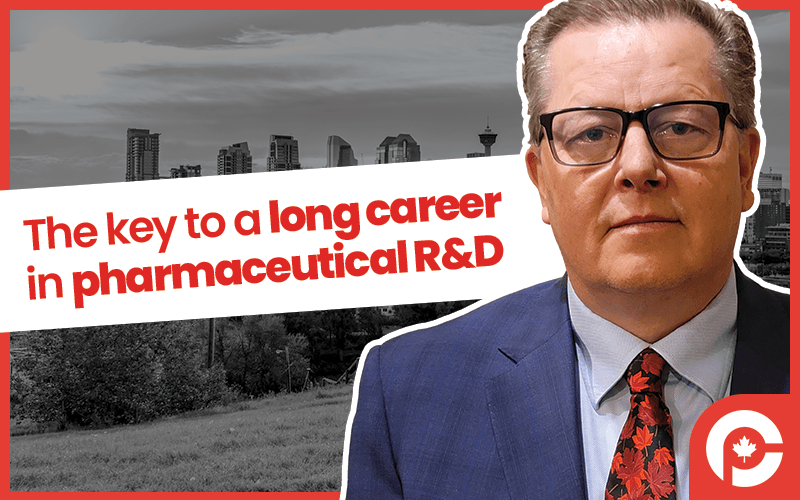
The key to a long career in pharmaceutical R&D
Episode
Dr. Allen Davidoff is the founder and CEO of XORTX. Allen has 15 years of drug development experience across...
Key takeaways
- Building relationships and maintaining a strong network of contacts is absolutely essential in the pharmaceutical industry, especially when operating in a location without an established pharmaceutical sector.
- Entrepreneurs must be prepared to make an unwavering commitment and rapidly learn across multiple disciplines including legal, finance, scientific, and regulatory matters when starting a company.
- Reformulating existing molecules with established safety profiles can provide significant advantages in drug development by reducing risk and accelerating the pathway to approval.
- Seeking and integrating input from mentors, colleagues, and board members is crucial for problem-solving and advancing novel ideas in pharmaceutical development.
- Scientists transitioning to entrepreneurship should expect their day-to-day role to shift significantly toward business operations and public relations while maintaining their scientific foundation for strategic decisions.
Transcript
Full transcript page · Interactive episode
============================================================
TRANSCRIPTION WITH SPEAKERS
============================================================

[00:00] SPEAKER_00: Welcome to Canada's Podcast.
[00:05] SPEAKER_00: Hello, I'm Mario Tonigus,
[00:07] SPEAKER_00: a managing editor of Canada's Podcast,
[00:10] SPEAKER_00: starting me today on Calgary's Podcast,
[00:13] SPEAKER_00: is Dr. Alan Davidoppa,
[00:14] SPEAKER_00: who is founder and CEO of ZorTeX.
[00:18] SPEAKER_00: Thanks for joining us today.
[00:20] SPEAKER_01: My pleasure, Mario.
[00:21] SPEAKER_01: Thank you for the invitation and the opportunity
[00:23] SPEAKER_01: to chat with your listeners.
[00:25] SPEAKER_00: Well, let me just start by asking,
[00:28] SPEAKER_00: can you talk a little bit about ZorTeX,
[00:31] SPEAKER_00: what it is, and what you guys do?
[00:34] SPEAKER_01: Yeah, my pleasure.
[00:37] SPEAKER_01: We're a company that was founded in 2013.
[00:41] SPEAKER_01: Our focus over the course of time has been to develop therapies
[00:45] SPEAKER_01: in the kidney disease space.
[00:51] SPEAKER_01: For your listeners,
[00:53] SPEAKER_01: many people don't really realize that they have kidney disease.
[00:56] SPEAKER_01: It affects about one in seven folks,
[01:00] SPEAKER_01: but because there are a few symptoms,
[01:02] SPEAKER_01: it's rarely diagnosed until it's in its middle stages.
[01:07] SPEAKER_01: For us, we recognized in the 2013 period
[01:12] SPEAKER_01: on an ongoing basis that there are very few therapeutic options
[01:18] SPEAKER_01: for individuals with progressing kidney disease.
[01:21] SPEAKER_01: And having delved into the research and the evidence,
[01:25] SPEAKER_01: we realized that one of the accelerating factors
[01:30] SPEAKER_01: seems to be higher-accessed and overexpression
[01:33] SPEAKER_01: of an enzyme that creates it.
[01:35] SPEAKER_01: And so we've developed tools to be able to inhibit
[01:38] SPEAKER_01: that enzyme and its role in injuring the kidney over time.
[01:44] SPEAKER_01: So very focused on developing kidney therapies,
[01:46] SPEAKER_01: not only in polycystic kidney disease,
[01:50] SPEAKER_01: but in diabetic nephropathy, diabetic kidney disease,
[01:53] SPEAKER_01: which accounts for about half of all individuals
[01:56] SPEAKER_01: with kidney disease.
[01:58] SPEAKER_01: Tell me what the name signifies.
[02:01] SPEAKER_01: Well, the name is an acronym.
[02:04] SPEAKER_01: It sounds a little bit like Xerox,
[02:07] SPEAKER_01: but it's an acronym that really is an homage
[02:11] SPEAKER_01: to the fact that the Xanthane oxidase enzyme
[02:14] SPEAKER_01: can harm organs and specifically the kidneys.
[02:18] SPEAKER_01: So the acronym stands for Xanthane oxidase
[02:21] SPEAKER_01: reducing technologies.
[02:24] SPEAKER_01: So we're very focused on inhibiting that enzyme
[02:27] SPEAKER_01: to protect individuals and slow the progression
[02:30] SPEAKER_01: of their kidney disease.
[02:32] SPEAKER_00: Okay, tell me how you got involved in this.
[02:34] SPEAKER_00: In the history behind that.
[02:39] SPEAKER_01: Well, without going back 50 plus years,
[02:45] SPEAKER_01: my PhD is in cardiovascular physiology
[02:48] SPEAKER_01: and specifically heart failure.
[02:53] SPEAKER_01: Cardiovascular physiology includes the blood vessels
[02:57] SPEAKER_01: and arteries and veins and the heart and the kidney.
[03:02] SPEAKER_01: And while my PhD really focused on congestive heart failure,
[03:06] SPEAKER_01: or my very first industry job was with a company called Cardiome,
[03:11] SPEAKER_01: In Vancouver at that time,
[03:13] SPEAKER_01: the team was developing therapies for arrhythmia,
[03:18] SPEAKER_01: the therapy is now marketed across Europe.
[03:22] SPEAKER_01: But we were also developing oxypyrinol
[03:26] SPEAKER_01: as a replacement for individuals who can't tolerate alopeyrinol.
[03:32] SPEAKER_01: That was developed and submitted to the FDA
[03:36] SPEAKER_01: and led to an approvable letter
[03:39] SPEAKER_01: for that use in replacing alopeyrinol.
[03:44] SPEAKER_01: But for business reasons,
[03:46] SPEAKER_01: that program was mothballed.
[03:51] SPEAKER_01: I left after a couple years at Cardiome
[03:54] SPEAKER_01: and started another company with colleagues from Cardiome
[03:59] SPEAKER_01: here in Calgary, Stem Cell Therapeutics
[04:02] SPEAKER_01: and was the chief scientific officer for about seven years.
[04:07] SPEAKER_01: We left in 2012 and then the opportunity arose
[04:13] SPEAKER_01: to be an executive in residence at the University of Florida
[04:16] SPEAKER_01: in Gainesville.
[04:18] SPEAKER_01: And half a dozen or so portfolios were handed to me
[04:22] SPEAKER_01: and I was diligently writing business proposals at that time
[04:28] SPEAKER_01: and happened to come across one that was based on new discoveries,
[04:34] SPEAKER_01: discoveries that when your recacid is high
[04:37] SPEAKER_01: or when Zanthin oxidase is overexpress,
[04:40] SPEAKER_01: so too much of that protein in disease,
[04:44] SPEAKER_01: there was a disease access that was created
[04:47] SPEAKER_01: that drove weight gain, high blood pressure, insulin resistance,
[04:53] SPEAKER_01: the symptoms of prediabetes,
[04:56] SPEAKER_01: and diabetes and the health consequences of diabetes.
[05:00] SPEAKER_01: And so there was an opportunity to start the company
[05:04] SPEAKER_01: with this colleague that I consulted with and think very highly of
[05:08] SPEAKER_01: and start looking at ways to reformulate the oxypyrinol drug
[05:14] SPEAKER_01: which I had worked on at Cardiome in a way that would be beneficial
[05:19] SPEAKER_01: to deliver the drug in a better way,
[05:23] SPEAKER_01: allow us to dose across the full therapeutic range
[05:26] SPEAKER_01: and really work on slowing the progression of kidney disease.
[05:30] SPEAKER_01: And so that's kind of the impetus,
[05:31] SPEAKER_01: the starting points.
[05:33] SPEAKER_01: In some ways it's a full circle,
[05:36] SPEAKER_01: close on my first industry job,
[05:39] SPEAKER_01: but is underpinned by a lot of e-discovery and patents.
[05:43] Speaker UNKNOWN:
[05:45] SPEAKER_00: So tell me, you know, in terms of setting up Zortex as a company,
[05:53] SPEAKER_00: like what were some of the key challenges you faced in that kind of
[05:58] SPEAKER_00: the business side of things?
[06:02] SPEAKER_01: Right, well, I think for an entrepreneur any time you started company,
[06:09] SPEAKER_01: you really need to make a commitment that's unwavering.
[06:17] SPEAKER_01: You know, there are many aspects of developing a business
[06:23] SPEAKER_01: and especially a pharmaceutical business that include legal considerations,
[06:27] SPEAKER_01: and finance and fundraising, and building a scientific team,
[06:33] SPEAKER_01: and really driving a methodical, stepwise process
[06:37] SPEAKER_01: as a trained scientist who had some business and industry experience,
[06:46] SPEAKER_01: starting my own company with colleagues who did have some business experience,
[06:51] SPEAKER_01: really forced you to jump on a steep learning curve
[06:55] SPEAKER_01: and swim as fast as you can forward.
[06:59] Speaker UNKNOWN:
[07:00] SPEAKER_01: And, you know, we had developed very good contacts with Bioelverda,
[07:06] SPEAKER_01: with legal counsel and security counsel,
[07:10] SPEAKER_01: and of course our scientific team,
[07:12] SPEAKER_01: which is largely based on individuals who I worked with in my first industry job at Cardium,
[07:18] SPEAKER_01: came together in a way that allows us to take small steps that were really
[07:25] SPEAKER_01: bite size, well, re-raised money and raised awareness,
[07:29] SPEAKER_01: and reached out not only to the private financing markets and angel investors,
[07:35] SPEAKER_01: but in 2018 we did a reverse takeover of a company that was a gold mining shell, APEC,
[07:46] SPEAKER_01: and that led us to the public markets.
[07:48] SPEAKER_01: So we've been in the public market since 2018,
[07:51] SPEAKER_01: NASDAQ listed in October of 2021,
[07:58] SPEAKER_01: and since that time our Toronto Exchange listing,
[08:03] SPEAKER_01: our German Frankfurt Bourse listing, and the NASDAQ listing are really key to
[08:12] SPEAKER_01: liquidity, to raising funds, to raising awareness,
[08:17] SPEAKER_01: and ultimately working with partners who we hope will be key drivers of our technology
[08:23] SPEAKER_01: from where we are today into the future.
[08:27] SPEAKER_00: So setting up a business that is in the medical field,
[08:32] SPEAKER_00: the pharmaceutical field, how different is it than setting up a normal and normal business?
[08:41] SPEAKER_00: Are there more intricacies and more things, not who loopholes,
[08:47] SPEAKER_00: but whoops, and that you have to go through to get set up?
[08:53] SPEAKER_01: Yeah, I mean, I think the key considerations,
[08:57] SPEAKER_01: so if you take a so-called normal business that might be retail focused,
[09:03] SPEAKER_01: there are aspects of medical privacy of public markets,
[09:10] SPEAKER_01: fair disclosure rules, certainly the links to the specialized folks that provide services,
[09:22] SPEAKER_01: whether they're manufacturing of the drug or manufacturing of
[09:25] SPEAKER_01: the regulations or packaging of drugs or regulatory filings or clinical trial filings,
[09:35] SPEAKER_01: those aspects are very unique to either the nutraceutical business,
[09:40] SPEAKER_01: but more rigorous with respect to the pharmaceutical business,
[09:44] SPEAKER_01: and so what needs to embrace those skills and their breadth,
[09:50] SPEAKER_01: because when you look to a team that can make those contacts or has those contacts
[09:59] SPEAKER_01: to take the step you need at any given development pace,
[10:04] SPEAKER_01: in a place like Calgary where there isn't a well-established pharmaceutical industry,
[10:10] SPEAKER_01: you really need to rely on your national and international contacts
[10:15] SPEAKER_01: and their contacts as well.
[10:19] SPEAKER_01: Relationship building in what is really a global industry,
[10:23] SPEAKER_01: because we look around the globe for the best of services that we can possibly organize,
[10:34] SPEAKER_01: contacts and relationships really are the key, absolutely the key to success.
[10:41] SPEAKER_01: So I'm going to be so burdened enough to succeed.
[10:44] SPEAKER_00: Yeah, the exam always right there.
[10:47] SPEAKER_02: Yeah.
[10:47] SPEAKER_00: Well, I'm curious now, like, do you consider yourself more now of a businessman
[10:54] SPEAKER_00: or you still got the medical side of you and the science side of you as well?
[11:02] SPEAKER_00: Like, how do you mesh the two and what you do there on a day-to-day basis, I guess?
[11:08] SPEAKER_00: Yeah, great question.
[11:10] SPEAKER_01: I think ever since I was a small child, I would grab a puzzle and not stop until I solve it.
[11:22] SPEAKER_01: And I don't have the ability to turn off the scientist in me,
[11:27] SPEAKER_01: but I would say my day job is 90% public relations and much more business focused
[11:36] SPEAKER_01: than I imagined.
[11:38] SPEAKER_01: But, you know, that's the evolution of a scientist to a scientist entrepreneur.
[11:42] SPEAKER_01: So my day job is entrepreneur, my job until midnight,
[11:48] SPEAKER_01: and probably every time I wake up at 4 a.m., his scientist.
[11:53] SPEAKER_00: So you can't really turn it off much.
[11:57] SPEAKER_00: It seemed to have this is part of your life almost every second of the day it seems.
[12:06] SPEAKER_01: I often wake up solving problems.
[12:14] SPEAKER_00: What do you think that comes from?
[12:17] SPEAKER_00: I'm just curious because, you know, I often ask people of, you know,
[12:22] SPEAKER_00: where do they get their ideas and, you know, many people talk about, you know,
[12:28] SPEAKER_00: they're going for a walk and something pops into their head or whatever.
[12:32] SPEAKER_00: Where do your ideas for the company come from?
[12:36] SPEAKER_01: Well, you know, I really have to give credit to some fantastic mentors and colleagues.
[12:45] SPEAKER_01: I tend to be engaged with folks on what they, you know,
[12:52] SPEAKER_01: what they see in the market and science in various disciplines that we need to move our products forward.
[13:02] SPEAKER_01: And so I've been the benefactor of a lot of very solid, constructive, well-informed thinking
[13:08] SPEAKER_01: and I reach out for it on a frequent basis.
[13:14] SPEAKER_01: I like the solution side of science and problem solving and so novel ideas are often the food
[13:24] SPEAKER_01: for thinking about how they apply to what we're doing and discoveries from all sorts of fields become part of the process,
[13:34] SPEAKER_01: really trying to assimilate what we see and what we learn.
[13:38] SPEAKER_01: And science has this wonderful aspect of never being stable and never being sure and always advancing
[13:48] SPEAKER_01: and so as new technologies or new ways of looking at problems arise, integrating them into what we do
[13:56] SPEAKER_01: and writing patents in the area to accommodate for those new discoveries or new pieces of information
[14:03] SPEAKER_01: is really a big part of the process.
[14:07] SPEAKER_01: And you know, I have a fantastic team.
[14:09] SPEAKER_01: I have very experienced colleagues at a wonderful board with a company and so I have a room full of sounding boards at my disposal.
[14:22] SPEAKER_01: And so some of my, some of the company's ideas are original but many are really the product of a fantastic board
[14:31] SPEAKER_01: and fantastic development team research and development but also finance and corporate as well.
[14:37] SPEAKER_00: Okay then. Now, you know, as you look forward, you know, what are the plans for the company and what are you looking to do with it?
[14:49] SPEAKER_01: Yeah, we have had, we've had a very busy 18 months as anyone who cares to read our news release portfolio would be concerned.
[15:02] SPEAKER_01: We have taken a lot of steps and put a lot of work into reformulating the oxypyridol molecule.
[15:10] SPEAKER_01: There are real benefits from that. This is a molecule that has a very well established profile as clinically safe.
[15:21] SPEAKER_01: We know it works well for inhibiting the xanthenoxidase enzyme and so as we reformulated it and did those studies and more recently used both the pharmacokinetic bridging studies that we completed last year for this formulation.
[15:37] SPEAKER_01: But the basic science to gain our orphan drug designation and as of this Monday speak with the FDA about an accelerated approval pathway.
[15:50] SPEAKER_01: I think we're well positioned to kick off phase three trial. It looks like we can conduct a trial that's perhaps nine months of recruiting and a year of treatment.
[16:03] SPEAKER_01: And look at the end results from that phase three trial has possibly slowing the expansion of kidneys and polycystic kidney disease, which is our lead area of drug development.
[16:19] SPEAKER_01: But perhaps demonstrate the slowing of decline of filtration. Either one of those end points would be clinically meaningful to a patient with polycystic kidney disease.
[16:33] SPEAKER_01: And so starting that phase three trial is really a key part of our activities.
[16:39] SPEAKER_01: We anticipate because we're at the very latest stages and potentially are two years, two and a half years away from marketing approval.
[16:50] SPEAKER_01: So revenue for the company that some of the discussions we have ongoing may lead to partnership deals that substantially allow us to move this program forward.
[17:03] SPEAKER_01: But we know from our recent discoveries that are partly disclosed that does Anthony Nox today's enzyme is a significant player in diabetes and diabetic kidney disease.
[17:19] SPEAKER_01: So a partnership would allow us to expand our activities and accelerate them in a way that would be very meaningful for the company.
[17:26] SPEAKER_00: Hey, what I was going to ask you a couple personal stuff. I'm just curious.
[17:34] SPEAKER_00: You probably didn't want to be like a doctor from the get go as a young kid. What did you want to do as a kid?
[17:44] SPEAKER_01: Well, I'm sorry to be contrary, but I actually in high school started out thinking that I would be a dentist.
[17:52] SPEAKER_01: Oh, really?
[17:52] SPEAKER_01: I don't know if that seems weird when I say don't loud, but that was the initial intent.
[18:02] SPEAKER_01: Yeah, I love the idea of being helpful to people and finding solutions for people.
[18:08] SPEAKER_01: And so I hate to say that I'm on an inescapable path, but at some, sometimes it does seem like they.
[18:17] SPEAKER_00: Yeah, so what do you do?
[18:21] SPEAKER_00: Alan, what do you do to kind of relax?
[18:26] SPEAKER_00: I get obviously the business part of it and is very time consuming for anybody that you run so business.
[18:35] SPEAKER_00: What are your interest passions hobbies that take you away from work?
[18:42] SPEAKER_01: Yeah, well, I mean family family, of course, is paramount.
[18:46] SPEAKER_01: I think organizing and doing family activities is key for my wife and I.
[18:55] SPEAKER_01: Getting out and cycling is great.
[18:57] SPEAKER_01: We ski when we can.
[19:00] SPEAKER_01: And the Calgary is notable for the fact that it has one of the best trout fisheries in the world.
[19:10] SPEAKER_01: And you probably tell by the sunburn on my nose, I had a nice weekend on the river.
[19:17] SPEAKER_01: So outside as much as can be arranged catch anything.
[19:24] SPEAKER_01: A couple of very nice brown trout and a couple medium sized rainbows.
[19:30] SPEAKER_01: So yeah, it was a good good afternoon.
[19:32] SPEAKER_00: So you one of those guys I see sometimes along the river that is actually walks out into the river at certain spots where it's shallow.
[19:43] SPEAKER_01: I did.
[19:44] SPEAKER_01: Yes, absolutely.
[19:46] SPEAKER_01: I also have a drift boat.
[19:49] SPEAKER_01: And so my wife and my brothers and a variety of friends go out on occasion to drift the river.
[19:59] SPEAKER_01: So I'm probably the guy in the middle rather than the guy on the edge, but it's been a very busy spring.
[20:06] SPEAKER_01: The river is I would say, you know, 2030 fishermen per kilometer.
[20:14] SPEAKER_00: So why do you like fishing so much?
[20:19] SPEAKER_01: You know, I get skunked frequently.
[20:22] SPEAKER_01: And so I the honest answer is the peace and tranquility on the river.
[20:29] SPEAKER_01: And especially downstream of the city, you know, it's largely undeveloped.
[20:33] SPEAKER_01: It's highly undiscovered.
[20:35] SPEAKER_01: Yeah.
[20:36] SPEAKER_01: And even if you get skunked and have a picnic, it's just a wonderful place to depressurize and enjoy a day.
[20:46] SPEAKER_00: Yeah, exactly.
[20:49] SPEAKER_00: Well, thanks very much, Ellen, for joining us today.
[20:52] SPEAKER_00: Yeah, my pleasure, Mario.
[20:54] SPEAKER_00: And thank you again for the invitation.
[20:56] SPEAKER_00: All right.
[20:56] SPEAKER_00: That was Dr. Ellen David Opin was founder and CEO of Zortax based in Calgary.
[21:03] SPEAKER_00: I'm Mario Tonoguzi, managing editor of Canada's podcast.
[21:07] SPEAKER_00: This has been Calgary's podcast.
[21:09] SPEAKER_00: Thanks for joining us today.