
Alexandra Daignault Combines Activism, Tea and Feminism Into One Perfect and Impactful Blend
Episode
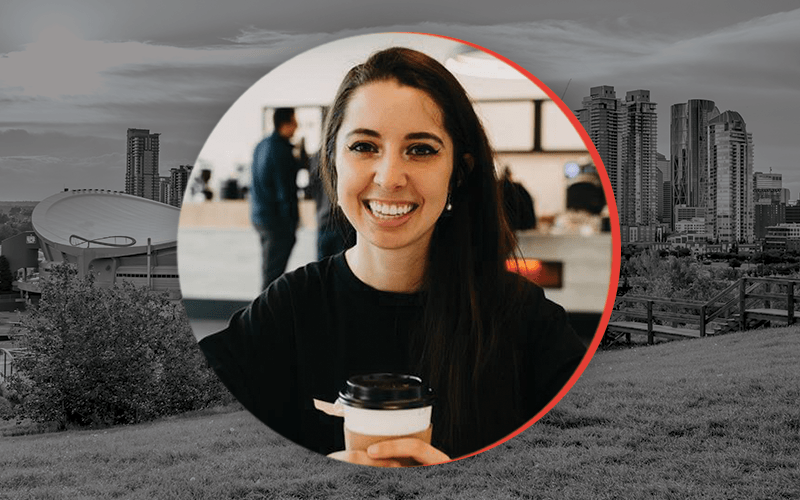
Alexandra Daignault is a young female entrepreneur, her company combines activism, tea, and feminism into one perfect and impactful blend...
Key takeaways
- When facing business challenges, focus on learning how people solve problems rather than just seeking general advice, as context-specific solutions are more valuable.
- Differentiate between general mentors who guide your professional development and technical experts who can solve specific problems unique to your business.
- Work-life balance becomes less of a struggle when all aspects of your work align with your values and passions, creating a natural flow rather than forced separation.
- Effective time management with limited hours requires strong systems, careful prioritization, and learning to delegate tasks rather than trying to do everything yourself.
- Building a business with a social mission that connects to your personal values and community can create deeper motivation and sustainable entrepreneurship beyond just financial goals.
Transcript
Full transcript page · Interactive episode
============================================================
TRANSCRIPTION WITH SPEAKERS
============================================================

[00:00] SPEAKER_00: Welcome to Canada's Podcast, the number one podcast for entrepreneurs by
[00:06] SPEAKER_00: entrepreneurs. Hello and welcome to Calgary's Podcast on Canada's Podcast
[00:12] SPEAKER_00: Network. I'm your host Mario Taniguchi and joining me today is Alexandra
[00:16] SPEAKER_00: Dainio who is the founder and CEO of Sargesa in Calgary. Thanks for joining us
[00:24] SPEAKER_00: today Alexandra. Thanks for having me. Well let me just start by asking you
[00:29] SPEAKER_00: Alexandra what is Sargesa what what do you guys do? So we're a tea company
[00:34] SPEAKER_01: that raises awareness for domestic violence and funds a local shelter here in
[00:39] SPEAKER_01: the city with some of our profits. We use a combination of Canadian grown and
[00:44] SPEAKER_01: herbs as well as international fair trade fees to make our products. How did you
[00:50] SPEAKER_00: let me just ask when did you first start this? I started it three and a half
[00:55] SPEAKER_01: years ago when I was a university student. What were you taking at
[00:58] SPEAKER_00: university? English. Oh wow. So tell me the story behind how you started the
[01:06] SPEAKER_01: company and why? So as part of my degree I was doing a minor in Indigenous
[01:10] SPEAKER_01: studies and I was in this phenomenal course led by Dr. Renee Watchman from
[01:15] SPEAKER_01: Mount Royal University and in the course we were challenged to bring resistance
[01:20] SPEAKER_01: into our everyday experience and we had been learning about the missing and
[01:25] SPEAKER_01: murdered Indigenous women girls and two-spirit peoples crisis that is really
[01:31] SPEAKER_01: really terrible and is happening across Canada and one day I was at my favorite
[01:37] SPEAKER_01: local coffee shop and I looked down at their line of teas and I started to
[01:40] SPEAKER_01: think that you know I can buy products that support Indigenous farmers elsewhere
[01:46] SPEAKER_01: in the world and small businesses but there's no tea that really educates me
[01:51] SPEAKER_01: about Canadian herbs as well as like raises awareness for important Canadian
[01:57] SPEAKER_01: social issues and that is kind of how Sarjessa came to be. I made it as a prototype
[02:03] SPEAKER_01: before a class project where I worked with an Indigenous artist as well as
[02:09] SPEAKER_01: connected with two elders to learn about the herbs and ingredients in the tea and
[02:14] SPEAKER_01: then I presented it and after that the project just kind of took hold of me and I
[02:18] SPEAKER_00: couldn't stop. Cool so where's the name come from and what's the significance of
[02:24] SPEAKER_01: the name for the company? So we actually started with a different name,
[02:29] SPEAKER_01: Solidarity's and I ran into a trademarking issue and so I had to rename it and I
[02:36] SPEAKER_01: was in a bit of a pinch for time so I started looking through my English
[02:40] SPEAKER_01: textbooks and finding sounds that I felt really were beautiful and worked when
[02:46] SPEAKER_01: I thought about tea and then it became it started out as I think we started with
[02:52] SPEAKER_01: Sarjessa which is it like one of my favorite books is Why'd Sarjessa see and we
[02:58] SPEAKER_01: couldn't name it that because it's like such a common name and it was already
[03:02] SPEAKER_01: taken and then we started then we started playing around with words and like
[03:06] SPEAKER_01: looking at different translations and there was a couple that we couldn't use
[03:11] SPEAKER_01: because one of them meant spit in a different language and finally we landed
[03:16] SPEAKER_01: on Sarjessa and I was so worried and I didn't want to give up like the
[03:19] SPEAKER_01: original name and I was sitting with my grandmother as well as like another
[03:24] SPEAKER_01: community elder and I had brought this up to them separately and both of them
[03:28] SPEAKER_01: had said it's such a beautiful feminine name and it can represent like the
[03:31] SPEAKER_01: spirit of all of these women who are experiencing domestic violence and kind of
[03:36] SPEAKER_01: the dancer on your packaging and so that's how the name came to be. And how many
[03:41] SPEAKER_01: different herbs do you use? Well we try and use at least one Canadian ingredient
[03:47] SPEAKER_01: per tea but for some blends like our chai tea we use like multiple spices the
[03:54] SPEAKER_01: Canadian grown herb is rose hip but we have five flavors and then we probably
[03:59] SPEAKER_00: have about 40 ingredients total. Oh okay that's super great and the tea is sold
[04:08] SPEAKER_01: where? Like you can buy it at sobies and safeways as well as like small cafes
[04:14] SPEAKER_01: and boutiques across Canada it's all on our website too if people are interested.
[04:20] SPEAKER_00: Okay and you mentioned working and supporting a community organization can you
[04:28] SPEAKER_01: explain that which one it is and why? So we don't need 20% of our profits to the
[04:35] SPEAKER_01: out and healing large society and they are a phenomenal women's shelter where
[04:40] SPEAKER_01: they are grounded in indigenous frameworks and teachings but they're really open
[04:45] SPEAKER_01: to like all women from different cultures and they have just been such a force
[04:50] SPEAKER_01: in Calgary with like remembering women who've experienced domestic violence
[04:55] SPEAKER_01: and the missing and murdered indigenous women and girls as well as really
[04:59] SPEAKER_01: advocating for their rights of families and looking at like holistic family
[05:04] SPEAKER_00: based supports for like trauma survivors. Okay so tell me maybe a little bit more about
[05:13] SPEAKER_00: personally yourself why why this is so important to you why this touches you
[05:20] SPEAKER_01: you know this this issue. So I'm mixed race into Caribbean Canadian women my mom
[05:27] SPEAKER_01: and her family is from Trinidad and England and my dad's side of the family is French Canadian.
[05:34] SPEAKER_01: Now there has been a large amount of domestic violence in the Indo-Caribbean community
[05:40] SPEAKER_01: a lot of which is hypothesized to come from our experience of indentureships so like working
[05:48] SPEAKER_01: on the sugar cane plantations and so it was something that I experienced and heard stories about
[05:55] SPEAKER_01: growing up and so when I first encountered like learning about missing and murdered
[06:01] SPEAKER_01: indigenous women and girls it struck a chord with me because even though we are complicit
[06:08] SPEAKER_01: as settlers and like live on indigenous land we we also have our own experience of colonialism
[06:16] SPEAKER_01: and our own intersecting history and so I was interested in how we have similar experiences
[06:25] SPEAKER_01: but how can we come together in solidarity and like really work to overcome these issues
[06:30] SPEAKER_01: as a larger community that has to live and work together. Okay how has business been for you
[06:37] SPEAKER_01: like since you started? Business has been really good. Last year we had like a major growth year
[06:43] SPEAKER_01: we moved into our own factory space so we were able to like upsize our manufacturing capabilities
[06:49] SPEAKER_01: as well as work on sourcing more ingredients and that was really exciting.
[06:55] SPEAKER_00: Tell me also a little bit about how I guess for him or that for last lack of a better word
[07:02] SPEAKER_00: who comes up with these ideas for the kinds of teas that you sell?
[07:07] SPEAKER_01: Well I do. In the original days it was just like as a university student it was me and my
[07:12] SPEAKER_01: kitchen mixing teas together with a grandmother and she would teach me a little bit about like
[07:17] SPEAKER_01: what we use and like why we use the different spices and what things I couldn't put into tea and
[07:23] SPEAKER_01: we tasted lots of bad batches of tea, things that were just like not ideal and then now we have our
[07:30] SPEAKER_01: like five staple flavors and then we work as a team to sort of develop new recipes as well as
[07:35] SPEAKER_01: like really looking into how the herbs are grown and what we can do to increase flavor or like um
[07:43] SPEAKER_01: you know sometimes how a tea is grown really impacts its flavor and so we might have to we might
[07:51] SPEAKER_01: have a recipe or a formulation in mind and try like several different suppliers for the same tea
[07:58] SPEAKER_01: to really get that like the taste that we want. We want people to open up these bags and be like
[08:03] SPEAKER_00: blown away by the smell and the flavor. Excellent. What has been the biggest challenge for you
[08:10] SPEAKER_01: being an entrepreneur and starting up a business? I think it's challenging to really train your mind
[08:21] SPEAKER_01: to overcome problems and to just really be focused when you're like coming up against a challenge.
[08:31] SPEAKER_01: I think a lot of people don't have techniques or ways of solving problems and it can be really easy
[08:39] SPEAKER_01: to just hit a problem and be like I'm going to just give up or I'm not going to like push forward
[08:44] SPEAKER_01: or I'm going to try a different way. Instead of like really looking at well how might this be
[08:49] SPEAKER_01: solved and going through it like really systemically?
[08:57] SPEAKER_00: Now you know when you were setting up or even you know to this day when you look back
[09:04] SPEAKER_00: I'm sure a lot of people give you a lot of advice. There's anything stick with you as sort of
[09:09] SPEAKER_00: the best piece of advice you received on being an entrepreneur and running a business?
[09:15] SPEAKER_01: I don't know if it's advice per se. I work in the daytime at the Trichot charitable foundation
[09:23] SPEAKER_01: but I started as a summer student for them working on my venture and they have a whole bunch
[09:30] SPEAKER_01: of tools and resources to help build your capacity and really learn how to solve your own problems
[09:37] SPEAKER_01: and bring in what we call friendly wise skeptics which is like people with technical skills. You can
[09:43] SPEAKER_01: ask like the nitty gritty questions and I think the best thing you can do as an entrepreneur is
[09:49] SPEAKER_01: really differentiate between general mentors who can like mentor you on how to like be professional
[09:55] SPEAKER_01: in this phase and then people with technical skills need to solve very specific problems like for
[10:02] SPEAKER_01: example peppermint root chemistry. Like not every business mentor is going to have that specific
[10:09] SPEAKER_01: skill and you're going to have to look for people with those expertise. Yeah exactly. Yeah so when you
[10:17] SPEAKER_00: you know obviously being an entrepreneur takes a lot of time and effort etc you're also doing
[10:24] SPEAKER_00: something else. Where do you find the time for it for this? I think that when you have like really
[10:30] SPEAKER_01: good systems in place it just the time is there and like when you have a limited amount of time
[10:37] SPEAKER_01: or like constraints say I have weekends and evenings to do my business and I don't particularly
[10:45] SPEAKER_01: resonate with the term side hustle with stardesta because I lucked so much and I like the goal is to
[10:51] SPEAKER_01: change the world with tea. But when you have those specific constraints you have to be really
[10:57] SPEAKER_01: careful with how you manage your time and really dedicated and you have to learn to delegate.
[11:02] SPEAKER_01: It's not helpful for me to do all of the different pieces and I'm lucky to have like a great team
[11:07] SPEAKER_00: who can be doing different things when I'm not there. Yeah okay then and in terms of you know everybody
[11:15] SPEAKER_00: talks about work light balance these days everybody's busy with work a lot of times how do you
[11:22] SPEAKER_00: juggle that you know your work like balance and I guess what do you do outside of work?
[11:28] SPEAKER_01: So work like balance is tricky because I don't think I think you kind of get to a state where
[11:34] SPEAKER_01: all of the things you do are in alignment and it all sort of flows together so you're not
[11:40] SPEAKER_01: experiencing that burnout because it just feels like a natural cycle and progression
[11:46] SPEAKER_01: and that is one of the biggest learnings for me is like I thought in the beginning I needed to be
[11:52] SPEAKER_01: so like balance like I need to have a certain amount of time set aside for like wellness or like
[11:59] SPEAKER_01: mental care those sorts of things but when you're doing something you love and you're setting good
[12:03] SPEAKER_01: parameters within it so that you're delegating where you need to do what you need to do and the
[12:10] SPEAKER_01: pieces that you can as well as like finding joy in it it's it's really it doesn't become that
[12:18] SPEAKER_01: big of an issue at least it hasn't for me. One of the things that I love to do is read and so
[12:27] SPEAKER_01: I recently read a book called Burn Out which talks about completing the stress cycle
[12:33] SPEAKER_01: and that was really helpful for me in understanding you know there are times where I get really tired
[12:37] SPEAKER_01: and I just don't want to do things and that's okay and I had just have to complete that cycle to be
[12:43] SPEAKER_00: able to move forward in a good way. It's kind of like that old saying right that if you're
[12:50] SPEAKER_00: working at something you love it's not really work right. Exactly. Yeah anything else you know you
[12:58] SPEAKER_01: mentioned reading anything else that you do to relax. I love to write when COVID is not happening I
[13:07] SPEAKER_01: do a lot of volunteering and real sorts of things. I'm also an iter my grandmother says that when
[13:15] SPEAKER_01: you have a really difficult problem you should always have a really complicated meeting pattern on the
[13:20] SPEAKER_01: go. Wow. Then you have something else to put your brain focusing on. Yeah. You like just kind of
[13:27] SPEAKER_01: decompress and then you can go back to the problem with fresh eyes. What are you next?
[13:32] SPEAKER_01: Socks and sweatiers. Yeah I like I have a lot of unfinished knitting projects that are just there
[13:39] SPEAKER_00: for like when I'm feeling like I eat it. Yeah I guess everybody needs that outlet right. Sometimes
[13:45] SPEAKER_00: to take their minds off of everything else that's say important or serious right. Yes. Yeah okay
[13:55] SPEAKER_00: any advice that you would pass on to you know I'm not going to ask you your age but you're obviously
[14:02] SPEAKER_00: fairly young but any advice that you would give to fellow young entrepreneurs out there and that
[14:09] SPEAKER_00: want that are thinking or maybe want to embark on a journey of entrepreneurship. I would say that
[14:17] SPEAKER_01: when people encounter a problem or a challenge find somebody that you can ask how they solve the
[14:23] SPEAKER_01: problem. I think that that is the most important thing you can always ask people what they did in
[14:30] SPEAKER_01: different situations but if they have no experience or their context is different than the context
[14:35] SPEAKER_01: you're coming from it's really hard to match up those answers. Yeah okay super then. Well thanks
[14:42] SPEAKER_00: very much for joining us today Alexandra. Thank you so much for having me. Okay that was Alexandra
[14:48] SPEAKER_00: Daniel who is the founder and CEO of Sargesa in Calgary. This has been Calgary's podcast on Canada's
[14:56] SPEAKER_00: podcast network. I'm your host Mario Toniguzzi. Thanks for joining us today.