
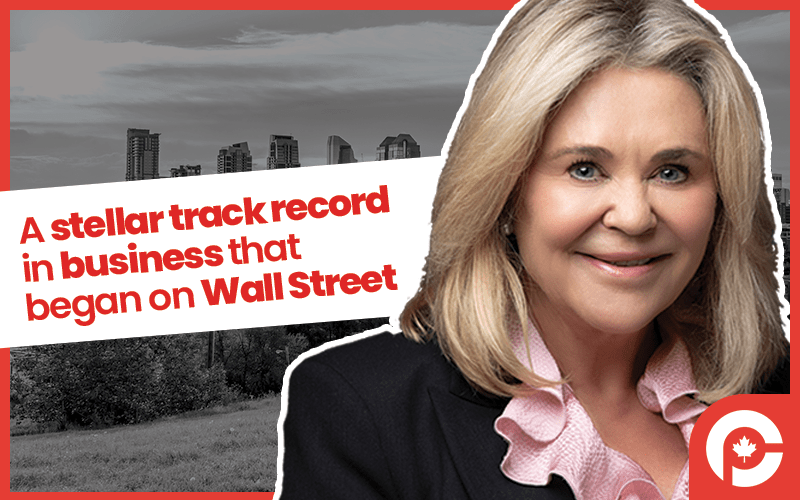
A stellar track record in business that began on Wall Street
Episode
Patricia Phillips is CEO and Chair of The PBA Group of Companies, a diversified real estate company headquartered in...
Key takeaways
- Resilience and hard work are foundational to success, as nothing of value comes without earning it through commitment, drive, and the courage to face challenges head-on.
- Pursue happiness over money as your primary motivator, because finding what makes you happy is essential to sustained success and fulfillment in your career.
- Strategic capitalization and access to private capital are critical for long-term survival, especially in capital-intensive and cyclical industries like energy.
- Creating a collaborative and safe learning environment where people feel brave enough to take risks brings out the best in your team and drives innovation.
- Being agile and managing change effectively are essential leadership skills, allowing you to adapt quickly when circumstances shift unexpectedly.
Transcript
Full transcript page · Interactive episode
============================================================
TRANSCRIPTION WITH SPEAKERS
============================================================

[00:00] SPEAKER_01: Welcome to Canada's Podcast.
[00:05] SPEAKER_01: Hello, I'm Mario Tonigüzi, managing editor of Canada's Podcast.
[00:09] SPEAKER_01: My guest today on Calgary's Podcast is Patricia Phillips, who is CEO and chair of the
[00:16] SPEAKER_01: PBA Group of Companies.
[00:18] SPEAKER_01: Thanks for joining us today, Patricia.
[00:21] SPEAKER_02: Thank you very much, Mario.
[00:22] SPEAKER_02: It's my pleasure.
[00:23] SPEAKER_01: Well, let me just start by asking you.
[00:25] SPEAKER_01: To tell me what the company does, and we'll go from there.
[00:30] SPEAKER_02: Sure.
[00:31] SPEAKER_02: So PBA, first of all, is in its second generation.
[00:35] SPEAKER_02: My father founded the company actually 60 years ago this year.
[00:40] SPEAKER_02: So we're celebrating our second or 60th anniversary in our second generation.
[00:45] SPEAKER_02: We are a land developer, a property manager, asset manager, and also we are in hospitality
[00:54] SPEAKER_02: development.
[00:54] SPEAKER_02: And management.
[00:57] SPEAKER_02: So we are, since I took over the leadership of the company, after my father's passing,
[01:03] SPEAKER_02: we have quadrupled in size, and we're opening our third hotel this summer.
[01:11] SPEAKER_02: The element, and we will have a total of, through our partnerships, about 200 or sorry,
[01:18] SPEAKER_02: about 320 people that will be working for us.
[01:22] SPEAKER_01: Okay, wonderful.
[01:26] SPEAKER_01: Before I forget, what are the initial stand for?
[01:30] SPEAKER_02: Okay, that's an interesting question.
[01:31] SPEAKER_02: So when my father first started the company, it was called Phillips Brothers and Associates.
[01:39] SPEAKER_02: And that was because two of his brothers, my uncle Bob and my uncle Marion, both came
[01:46] SPEAKER_02: up to Canada to Calgary from Blackstone, West Virginia with my father.
[01:52] SPEAKER_02: He was the elder one of the three of them.
[01:56] SPEAKER_02: There were eight boys in their family.
[01:59] SPEAKER_02: And the three of them were founders of PBA, PBA, our Phillips Brothers and Associates.
[02:04] SPEAKER_02: So when my sister Michelle, my late sister Michelle, who unfortunately passed away in June
[02:11] SPEAKER_02: of last year.
[02:12] SPEAKER_02: So she and I, after my father passed away in August of 2003, she and I bought out my
[02:21] SPEAKER_02: other sister and brother.
[02:23] SPEAKER_02: And we decided because it was a women-owned that we would take it into the second generation
[02:29] SPEAKER_02: and revamp the company as PBA rather than, there were no boys or brothers involved in the
[02:36] SPEAKER_02: out business at this time.
[02:39] SPEAKER_01: No, I'm curious.
[02:40] SPEAKER_01: I'm curious.
[02:41] SPEAKER_01: Like, what made your father and his brothers come to Calgary from Virginia?
[02:47] SPEAKER_02: A great question.
[02:48] SPEAKER_02: So it was West Virginia.
[02:50] SPEAKER_02: The Blacksville was an interesting, a really neat small town that straddled the Mason-Dixon
[02:58] SPEAKER_02: line.
[02:59] SPEAKER_02: And my father was the second generation in the energy business.
[03:04] SPEAKER_02: And so he moved up to Canada with both of his brothers to explore the Western Canadian
[03:11] SPEAKER_02: sedimentary basin.
[03:12] SPEAKER_02: So he was well known to be a very successful wildcatter of his time.
[03:17] SPEAKER_02: And the first two companies that he founded were on the energy side.
[03:22] SPEAKER_02: And so what he did when he sold his second company, he took some of the proceeds from that
[03:28] SPEAKER_02: organization and redeployed into land to start a real estate company.
[03:34] SPEAKER_02: So the theory was you're taking money from a more of a depleting asset and taking that
[03:41] SPEAKER_02: cash flow and pumping it into what he believed was an appreciating asset at the time.
[03:45] SPEAKER_02: And so he started to do his own developments on the lands that he purchased.
[03:51] SPEAKER_01: Oh, wow.
[03:52] Speaker UNKNOWN: Yeah.
[03:53] SPEAKER_01: I'm just curious.
[03:55] SPEAKER_01: Did you ever yourself personally, do you ever go back to his old hometown?
[03:59] SPEAKER_02: Blacksville, yeah.
[04:00] SPEAKER_02: As a matter of fact, I went a number of times and my father's father died when they were
[04:07] SPEAKER_02: quite young.
[04:08] SPEAKER_02: So my grandma actually raised her eight boys on her own.
[04:11] SPEAKER_02: And she had a letter from the president at the time congratulating her for her courage
[04:18] SPEAKER_02: for having six of her sons in the World War II and active service together and how incredibly
[04:24] SPEAKER_02: last she was for having them return home all alive.
[04:29] SPEAKER_02: So I would call the last time I went to Blacksville because my father actually then lived in
[04:36] SPEAKER_02: Northern town for a while before he moved north into Calgary.
[04:39] SPEAKER_02: And the last time I was in Blacksville was when my grandma passed away and they all described
[04:43] SPEAKER_02: her as being sort of an angel that they could see her or a vision of her walking through
[04:48] SPEAKER_02: the street.
[04:48] SPEAKER_02: She had quite a quite incredible reputation.
[04:53] SPEAKER_01: What do you think Patricia, you learned from those roots from your father and from your
[05:00] SPEAKER_01: grandmother?
[05:02] SPEAKER_02: You know, that's a great question.
[05:04] SPEAKER_02: I think for me what I learned from my grandma is being resilient.
[05:14] SPEAKER_02: I mean she was an incredibly resilient woman and very devoted to her family and making
[05:21] SPEAKER_02: it the best possible for her.
[05:23] SPEAKER_02: She didn't have a lot of money, but she was very supportive of her sons.
[05:27] SPEAKER_02: And then from my dad in that experience, I think I learned, you know, he always taught
[05:33] SPEAKER_02: me every day you get up, you need to be happy.
[05:36] SPEAKER_02: And he said, I really feel sorry for people that go through their life not, sorry, not
[05:42] SPEAKER_02: how, you know, you're not understanding what makes them happy.
[05:47] SPEAKER_02: So we don't be motivated by money, be motivated by happiness.
[05:52] SPEAKER_02: And also from both of them, I learned resilience and great factor.
[05:58] SPEAKER_02: Like it was never easy.
[06:00] SPEAKER_02: I remember telling the story of my dad's funeral when he graduated from high school in
[06:06] SPEAKER_02: Blacksville.
[06:07] SPEAKER_02: He had been up really early one morning, laying track on the train track.
[06:12] SPEAKER_02: Like I think it's three in the morning.
[06:13] SPEAKER_02: He was so tired when he got to his graduation.
[06:17] SPEAKER_02: He could barely walk across the stage to get his graduation certificate.
[06:23] SPEAKER_02: So you know, I knew that I learned, you know, that I had to work hard.
[06:28] SPEAKER_02: That nothing comes, you can't expect anything to just drop in your lap.
[06:33] SPEAKER_02: You have to earn it.
[06:34] SPEAKER_02: You have to earn respect.
[06:36] SPEAKER_02: And it takes commitment and drive.
[06:38] SPEAKER_00: Join our thriving community of like-minded individuals who share a passion for success
[06:43] SPEAKER_00: and innovation.
[06:45] SPEAKER_00: Canada's podcast.com subscribe now.
[06:48] SPEAKER_01: Let's talk a little bit more about the business.
[06:50] SPEAKER_01: And like what are some of the, I guess, signature properties and development set that is under
[06:59] SPEAKER_01: your portfolio?
[07:01] SPEAKER_02: Sure.
[07:01] SPEAKER_02: Some of it, I'd say most recently.
[07:04] SPEAKER_02: So an interesting thing that we've done and I'm thinking of just sort of a bit about my
[07:09] SPEAKER_02: father in our current location where our headquarters are.
[07:12] SPEAKER_02: My father had originally planned for it to be a sort of a European launch.
[07:19] SPEAKER_02: And that was later on in his career and he could never quite successfully launch that.
[07:25] SPEAKER_02: And so after he died, I looked at a lot of the properties that we had that were undeveloped.
[07:31] SPEAKER_02: And I did my own little research and figured out that we downtown, one of the barriers
[07:38] SPEAKER_02: to entry was land for a hotel.
[07:41] SPEAKER_02: We needed more hotels in downtown.
[07:43] SPEAKER_02: So what I thought about, I looked more into, you know, what was the best, best use of that
[07:49] SPEAKER_02: property from a return standpoint, market standpoint.
[07:53] SPEAKER_02: And we got to a hospitality and then looked at what the best flights were.
[07:57] SPEAKER_02: So that our first hotel was a dual flag, Marriott Hotel.
[08:02] SPEAKER_02: We were the first ones to bring the autograph collection into Alberta.
[08:08] SPEAKER_02: We were the first in Alberta to do a dual flag, Marriott Hotel.
[08:13] SPEAKER_02: We combined that with a courtyard hotel.
[08:15] SPEAKER_02: We were the first to introduce the generation 7.0 hotel.
[08:20] SPEAKER_02: And so it's a flagship hotel for us given all the awards that we won.
[08:25] SPEAKER_02: Which, you know, that's one thing my dad always saw me.
[08:28] SPEAKER_02: You can be really smart.
[08:30] SPEAKER_02: You can work really hard, but you've got to be lucky.
[08:33] SPEAKER_02: And so, you know, with a lot of luck, our hotel has won incredible amounts.
[08:40] SPEAKER_02: We won the opening of the year with both the autograph and the courtyard with Marriott.
[08:45] SPEAKER_02: We won developer of the year with Marriott in both properties,
[08:48] SPEAKER_02: waters awards.
[08:49] SPEAKER_02: We were one, our, as recognized as one of the best hotels in the world for the dorm.
[08:54] SPEAKER_02: We recently just wanted to you're aware of the Michelin key.
[09:00] SPEAKER_02: We won that and they're only for other three other hotels,
[09:05] SPEAKER_02: two of them being the BAMS rings and also the Chateau Lake Louise.
[09:12] SPEAKER_02: So we were the only cosmopolitan hotel in Alberta.
[09:16] SPEAKER_02: So I think it's a flagship, you know, sort of new sector for us in our evolution from G1 to G2.
[09:25] SPEAKER_02: And we've really kind of really set the stage for Calgary and put it on the world map.
[09:30] SPEAKER_02: And we've also really pioneered on what we call our average daily rates and occupancies.
[09:35] SPEAKER_02: We've really increased the ceiling for that and to allow other hotel operators and owners
[09:42] SPEAKER_02: to achieve a higher profitability.
[09:45] SPEAKER_02: And which means more tax revenue for the city too.
[09:48] SPEAKER_02: So when you look at it from a sustainability perspective, that's what really keeps us going.
[09:54] SPEAKER_02: I think we're really looking forward to opening our third hotel, which is the element hotel,
[10:00] SPEAKER_02: which is the only hotel that we, that's participating in the revitalization program with the city of Calgary.
[10:07] SPEAKER_02: And that's going to bring on another 226 rooms.
[10:11] SPEAKER_02: Element was a brand that was generated from the Western hotel and Maryott bought the West.
[10:17] SPEAKER_02: And so it will add to a lot longer term stay.
[10:20] SPEAKER_02: We're already booking for that.
[10:22] SPEAKER_02: It's an incredible part of downtown on the West end where the city is spending a lot of money
[10:29] SPEAKER_02: revitalizing that and activating the landscape around there and the river.
[10:35] SPEAKER_01: Now Patricia, having grown up in Calgary and what?
[10:41] SPEAKER_01: I was born here, but I actually never grew up here.
[10:45] SPEAKER_02: Oh really?
[10:46] SPEAKER_02: I grew up.
[10:47] SPEAKER_02: I was born in Calgary and I was raised in England and Europe.
[10:53] SPEAKER_02: And then I graduated from high school in the US, went to undergrad and graduate school,
[10:58] SPEAKER_02: and then worked on Wall Street for a while before I moved back.
[11:02] SPEAKER_01: Okay.
[11:03] SPEAKER_01: Oh yeah, no, no, it's not.
[11:05] SPEAKER_01: No, while we're at the topic, I was going to ask you that because I saw in your bio that
[11:10] SPEAKER_01: that you were one of the first female analysts on Wall Street.
[11:14] SPEAKER_01: How was that experience going through that?
[11:19] SPEAKER_02: You know what?
[11:21] SPEAKER_02: It was, I'm looking at you.
[11:23] SPEAKER_02: It was interesting.
[11:24] SPEAKER_02: I got a couple of offers, one with Goldman Sachs, the other with First Boston.
[11:30] SPEAKER_02: And I loved the opportunity.
[11:32] SPEAKER_02: It was really challenging being on Wall Street and not coming from an investment or a finance
[11:40] SPEAKER_02: background. I had a degree in economics and and French literature.
[11:45] SPEAKER_02: So I took on the challenge on someone that never accepts the word no, no, me equals challenge,
[11:54] SPEAKER_02: challenge, equals opportunity.
[11:56] SPEAKER_02: And I kind of moved forward from there and really established myself as one of the,
[12:00] SPEAKER_02: I established my own areas of expertise in both the energy and the sovereign sector.
[12:05] SPEAKER_02: And so I had a lot of people within fixed income and capital markets that really relied upon me.
[12:10] SPEAKER_02: So I really enjoyed it.
[12:12] SPEAKER_02: It was an exceptionally good training ground for me.
[12:15] SPEAKER_02: It really, it really taught me in that environment,
[12:20] SPEAKER_02: really to believe in myself and believe in what I knew, make sure that I was
[12:26] SPEAKER_02: very well educated on any topic that I went to do, but to know that I have the opportunity,
[12:33] SPEAKER_02: not to be combative, combative with people, but to mentor them.
[12:37] SPEAKER_02: And I think that was my ability to really come in and collaborate with people.
[12:43] SPEAKER_02: But I was really the only woman. I think the couple other women that were on my team
[12:47] SPEAKER_02: are within the firm were not overly collaborative with each other.
[12:52] SPEAKER_02: So I found that my strongest alliances were with men, which I think really served me
[12:58] SPEAKER_02: well later in my career as a new deaf, obviously the only woman in probably anything I do.
[13:06] SPEAKER_02: How long were you on Wall Street?
[13:08] SPEAKER_02: I was on Wall Street for five years before I went back and got my MBA at the University of Texas.
[13:16] SPEAKER_01: Okay. And what did you come back, so to speak?
[13:23] SPEAKER_02: So I came back to Calgary in 1992. And Mario, the reason I came back is my father actually
[13:31] SPEAKER_02: became quite ill. He got cancer and his life expectancy was not very good. And so he asked me to come
[13:39] SPEAKER_02: back after I graduated. I had planned on actually opening up or leading the office in Toronto for
[13:46] SPEAKER_02: First Boston. But he said, listen, I want you to come back. I think this is our opportunity to
[13:51] SPEAKER_02: try and do some stuff together. I did a bunch of stuff on the energy side, but I first did the,
[13:57] SPEAKER_02: you might be aware of the Strathcona Square Shopping Center that was my first real estate development.
[14:03] SPEAKER_02: And I won the International Council of Shopping Centers Award for that. I didn't know anything
[14:08] SPEAKER_02: about real estate at the time, but I made that happen and it was a good asset, but I really wanted
[14:15] SPEAKER_02: to get back onto the energy side. And didn't spend too much time with my dad on that, got a little
[14:21] SPEAKER_02: frustrated. So I thought, well, I'm already in Calgary now and it's difficult for me to be
[14:26] SPEAKER_02: moving back and forth across the border. So that launched me into another opportunity, which I
[14:31] SPEAKER_02: founded as CEO, three energy companies that I sold each time and made a significant amount of
[14:40] SPEAKER_02: money for all of our stakeholders. And so on the third one is my father had died sort of in the
[14:47] SPEAKER_02: middle of me running, founding the CEO of my third energy company. So after I sold that is when I
[14:53] SPEAKER_01: moved into the leadership role of PBA. Now, when you look at Calgary, you know, you've been on,
[15:00] SPEAKER_01: you know, as I said, in real estate and energy. And we all know how the energy sector has gone in
[15:09] SPEAKER_01: this province over the last whatever, 50, 50 years, say, you know, the ups and downs and ups and
[15:16] SPEAKER_01: downs. What do you think it took for companies? And your father, you know, probably was right in
[15:24] SPEAKER_01: the throws of that. What was it that made those companies survive and carry on and continue?
[15:35] SPEAKER_02: I'm just thinking over, gosh, there's so many ways I could answer that question. I think
[15:41] SPEAKER_02: for him, because he was in it for the long hole on the energy side, people, you need to have
[15:49] SPEAKER_02: really good people, even if you're in a very capital intensive business, you need to have really
[15:54] SPEAKER_02: good teamwork, but you also need to be capitalized appropriately and effectively. And I think a lot
[16:01] SPEAKER_02: of sort of the smaller energy companies that started off were not what I would call strategically
[16:07] SPEAKER_02: capitalized, where they'd have sort of institutional shareholders in the beginning of their capital stack.
[16:12] SPEAKER_02: And when they'd go to need more money, it was not necessarily accretive and they didn't have the
[16:18] SPEAKER_02: capital behind them. They didn't, they weren't, they were typically overlaveraged in a lot of
[16:25] SPEAKER_02: circumstances. And then I think as the energy sector, as we became, you know, as it aged through
[16:32] SPEAKER_02: the Western Canadian sedimentary basin, I think size operating efficiencies and stuff become more
[16:38] SPEAKER_02: important. And if you look today, you know, the junior energy companies just aren't, they're just not
[16:45] SPEAKER_02: effective. I think the other thing, I think, is as we, as the cycle became more mature, or as the
[16:52] SPEAKER_02: energy business became more mature, I think one of the keys to success is private access to private
[16:58] SPEAKER_02: capital. I think that when you're running, you know, a smaller energy company that is more
[17:04] SPEAKER_02: focused on public equity, you're focused more on the short term and that's a, that's a,
[17:11] SPEAKER_01: a difficult cycle to maintain value. I guess you know, especially in this city and this province,
[17:19] SPEAKER_01: having a long-term view of things is important, right? Because you do know,
[17:26] SPEAKER_01: when things will, you know, the cycles will be there, right? And have been over the years.
[17:33] SPEAKER_02: You're right, it is, and it's interesting because it has been very cyclical. I think what's
[17:39] SPEAKER_02: interesting now is just how our ecosystem has really been redefined. I think that I've seen in
[17:45] SPEAKER_02: the last 10 years and the more we see of, I think we've, I see a much stronger leadership coming out
[17:54] SPEAKER_02: of all the different sectors, including the energy sector than we had 20 years ago. But I also see
[18:01] SPEAKER_02: a renewed sense of optimism in our, in the depth of our diversity in our ecosystem.
[18:09] SPEAKER_02: And I see, you know, Calvary's also, we've cleared the one million mark on population, and I think
[18:16] SPEAKER_02: that makes it more of a sustainable city. And so I think you look at, you know, how do we,
[18:21] SPEAKER_02: as developers now, pivot and recreate those communities that we need to create sustainability
[18:30] SPEAKER_02: for all the different types of demographics. And I think that's the interesting cycle that we're
[18:35] SPEAKER_00: going through right now from a development perspective. Stay ahead of the game with our expert
[18:40] SPEAKER_00: tips and strategies that will help your business thrive in a digital era.
[18:45] SPEAKER_01: Canada's podcast.com subscribe now. As a business owner and Calvary and in Alberta,
[18:51] SPEAKER_01: what would you say the advantages are of operating a business here?
[18:58] SPEAKER_02: A tax is one for sure. I mean, we have the lowest tax environment, I think, in North America.
[19:06] SPEAKER_02: I also think that, you know, you talked to a lot of younger entrepreneurs, we study a lot of them
[19:11] SPEAKER_02: that I mentioned and ask them, why, why are you here? Like, why are you not in the rest of Canada?
[19:16] SPEAKER_02: And I think we have such a strong entrepreneurial environment in the city, where all of various
[19:23] SPEAKER_02: different backgrounds and expertise are very supportive and really encourage and create that
[19:31] SPEAKER_02: opportunity for success for entrepreneurship. And there's such a strong can-do attitude.
[19:38] SPEAKER_02: I think it just makes it really unique. And I think Canada now, especially now, is quite uniquely
[19:45] SPEAKER_02: positioned as a country, relative to the rest of the world with what's going on down in the U.S.
[19:51] SPEAKER_02: And also in Europe, we see a lot of capital coming in from other European countries.
[19:57] SPEAKER_02: Canada has a strong banking system. We have a strong education system. So I think there's a lot
[20:03] SPEAKER_02: to celebrate about that. I mean, we all have, everyone has its challenges for sure, but I think
[20:09] SPEAKER_02: we've got a lot of, like, again, focused on the long-term gain, I think, Albert, it has a lot to offer.
[20:15] SPEAKER_01: And when you see the economic environment today here in Calgary, what are your thoughts about
[20:23] SPEAKER_01: where we sit on the economic side of things in the city right now?
[20:30] SPEAKER_02: In the, I'll tell you in the city, it is a challenge with the inflationary environment
[20:39] SPEAKER_02: making your developments work. I think there's a real need for a lot of developments and revitalization,
[20:47] SPEAKER_02: I'll say, for instance, in our downtown, but with the costs that we face as developers,
[20:54] SPEAKER_02: it's not easy to make that risk reward work to attract the capital that you need.
[20:59] SPEAKER_02: But I also think, you know, it's a challenging municipal environment to operate into. Calgary's got
[21:05] SPEAKER_02: one of the more challenging environments that just lengthens the investment cycle,
[21:10] SPEAKER_02: that makes it less competitive. But I think, again, every place has its challenges. So I just,
[21:18] SPEAKER_02: I think that's, again, that you brought up, you got to stay focused on the long-term.
[21:24] SPEAKER_01: Vision. All right, tell me a little bit about the Phillips Foundation and what that is.
[21:29] SPEAKER_02: The Phillips Foundation, Sure, we are, we founded that 10 years ago. And we are, we actively
[21:38] SPEAKER_02: give to say, big brothers, big sisters. It's for cancer. I'm the vice chair, the glenbo.
[21:45] SPEAKER_02: We put money in and support a number of the charities within Calgary.
[21:51] SPEAKER_02: So focused on sports, health, and the arts and culture.
[21:58] SPEAKER_01: Okay, now you mentioned sports. And I think I read correctly in your bio that you were
[22:04] SPEAKER_02: involved in Alpine racing? I was, yes, I was, I was on the US development sk team for a while
[22:11] SPEAKER_02: until I had an injury. And that was a, again, great learning opportunity for me. It also provided
[22:17] SPEAKER_02: I was around a lot of men. So I think that's one of the reasons why I'm so comfortable.
[22:22] SPEAKER_02: Being, why, why was so comfortable when I was on Wall Street? But it really teaches you how to
[22:28] SPEAKER_02: manage your time well. It taught me how to be resilient. But it also teaches you how to manage
[22:35] SPEAKER_02: change. When you're going down a course and you miss a gate or you have to go up, it just,
[22:40] SPEAKER_02: it just teaches you to be agile. And I think that's one of the important things of a leader as well.
[22:47] SPEAKER_02: So what, what was it? Downhill or? No, no, I might, my event was in slow. That was my, yeah,
[22:56] SPEAKER_01: I was not a good downhill. I can never understand those guys. Remember the good old days.
[23:02] SPEAKER_02: Crazy connox, like, yes, yes, can read and can read a good front of mind in his, his children
[23:08] SPEAKER_02: skiing with my kids, see where he's from, children, oh, he's an amazing guy.
[23:12] SPEAKER_01: You know what, I was actually reminiscing just the other day about the crazy connox and,
[23:19] SPEAKER_01: and jungle gym hunter, the initial ones and, yeah, and just how much they brought a profile to
[23:29] SPEAKER_02: Canada over the day. Oh, yeah, to get to the world state. They just were amazing athletes.
[23:33] SPEAKER_02: Those guys, what got you into that? That's a good question. I'll tell you how appear our
[23:40] SPEAKER_02: skis that my grandfather made me. My grandfather was from Norway and he carved me out a pair of
[23:46] SPEAKER_02: skis that says head on them and they have leather bindings and they're the ones that I learned
[23:50] SPEAKER_02: how to ski on. I strap them on the back and went into the backyard and I just, I don't know,
[23:55] SPEAKER_02: I think it's my parents wanted us while we lived here when we were younger to really be outdoors.
[24:01] SPEAKER_02: And I just, I just love this for it. And that's why my kids did it too. We just love being outside.
[24:07] SPEAKER_02: I love the outdoors. As I quote, I feel the need for speed, which doesn't mean I'm always staying
[24:16] SPEAKER_02: within the speed limit on the highway. I love the challenge. I really do. I thought I think it's
[24:22] SPEAKER_02: a great sport. It really teaches you also to look ahead. I remember when my kids were younger.
[24:29] SPEAKER_02: A lot of their teachers asked me, do your kids ski race? And I said, why would you ask that? And
[24:33] SPEAKER_02: because they're always anticipating, they're always one of the first kids in the class to anticipate
[24:38] SPEAKER_01: the next question. That was interesting. Yeah, very interesting. Now Patricia, you know, running
[24:46] SPEAKER_01: the company and over the years, I just wondering how would you describe what your leadership style is?
[24:54] SPEAKER_02: That's a good question. My leadership style is, I believe, truly in collaboration.
[25:04] SPEAKER_02: I believe it's really important to be empathetic. And also to really, I really foster
[25:13] SPEAKER_02: a learning environment here at PVA that we really need to bring out the best in everyone.
[25:18] SPEAKER_02: We need to celebrate our losses as well as our wins, but it's important to be able to establish
[25:25] SPEAKER_02: a safe environment where people feel brave enough to take risks. And I think, and I also believe
[25:33] SPEAKER_02: it's really important to hire people that are a lot smarter than me that really set the stage for
[25:38] SPEAKER_02: me to challenge myself to be a better leader and mentor to them. Okay, wonderful. Well, thanks so
[25:47] SPEAKER_02: much, Patricia, for joining us today. Not a problem, Mariel. Let me know when you want to go to the
[25:52] SPEAKER_02: Dorian or La Lepitechchef again. I'd be happy to host you. All right, super. Thanks so much.
[25:59] SPEAKER_01: Thank you. You too. That was Patricia Phillips, who is the O and Chair of the PBA Group of
[26:06] SPEAKER_01: Companies in Calgary. I'm Mario Toniguzzi, Managing Editor of Canada's podcast. Thanks for joining us
[26:11] SPEAKER_01: today.